Gullwick, the Island That Shares · Reader · ages 6-8
Listen along
Loading audio…
Read by an AI-generated voice. The words on this page are the transcript.
Chapter 1. Planks Without Nails
The hammer rang once. A spark jumped off the anvil and did not go out. It waited. They followed.
It was the hottest day of the summer on the Green. The grass had gone yellow. The ducks on the pond were sitting in the shade under the bridge with their beaks open. Grandmother had hung wet sheets on the line to keep the kitchen cool, and Tí was lying under them in his vest, pretending to be a fish.
When the spark came, Lan was so hot she nearly didn't follow it. Then she remembered Gullwick, and the bridge, and Poppa Pike waiting, and she ran.
The ferry horn blew once. Beto was right behind her.
On the water it was a little cooler. The fog had burned off in the heat, so for once Gullwick did not come out of the fog. It was just there, bright and small, with the gulls wheeling over the lighthouse and the long beach shining white.
And the bridge. Two spans of it now. The first span with FAIR carved on its last plank. The second span with LIKELY. Then the posts of the third span, sticking up out of the water, waiting.
Poppa Pike was sitting on the end of the second span with his feet in the sea. Beside him was a pile of planks. Good ones, too: straight and pale and smelling of sap.
"Islanders have been bringing me wood all week," he said, when they had walked out to him. "One here, two there. Spares, mostly. A few from the Commons. I've got all the planks I need for the third span."
"Then what's wrong?" asked Lan.
Poppa Pike held up a tin. He turned it upside down and shook it. Nothing came out.
"No nails," he said. "Planks without nails are just a raft."
Chapter 2. The Hold
The ferry they had come on was still tied up at the jetty. The captain was unloading crates onto a cart: tins of paint, coils of rope, a sack of potatoes for the bakery.
She was a tall heron in a peaked cap and a navy jacket with brass buttons. She moved crates with her beak as if they weighed nothing.
"Nails?" said the captain, when Poppa Pike asked. "Down in the hold. Have a look, if you like."
Lan and Beto climbed down the little ladder into the ferry's hold. It was dark and cool and smelled of tar and string. There were shelves all the way round, packed with hardware. Hinges. Hooks. Tins of screws. A whole wall of rope.
On the bottom shelf were two boxes of nails.
One was a plain wooden box with a rope handle. Someone had written NAILS on the lid in pencil, and under that, 12 COINS.
The other box was not plain at all. It was painted red, with gold letters, and the lid was open to show what was inside. Nails, yes, but also brass brackets, curly and gleaming, the kind that go on the corners of a very fancy gate. They shone even in the dark of the hold. On the lid it said 20 COINS.
Lan touched one of the brackets with one finger. It was cool and smooth.
"Imagine the bridge with these on," she whispered. "It would look like a palace."
"It would look like a bridge with brass on," said Beto, who was reading the side of the plain box. "Look. These are the right size for planks. The others are smaller."
But Lan was still looking at the brackets when they climbed back up the ladder into the sun.
Chapter 3. Coins
Beto sat down on the planks. "Where do nails come from?"
"The ferry," said Poppa Pike. "The captain keeps a hold full of hardware. Rope, paint, hinges, nails. She sells them to the islands. A box of nails is twelve coins."
"Then we'll buy some," said Lan.
"With what?" said Beto.
Lan opened her mouth, and shut it again.
On Gullwick, people did not really use coins. They swapped. Rope for planks, buns for fish, a basket mended for a pot of honey. Gilly's market ran on swaps and on knowing who had spares. There were a few coins on the island, in jars and in the backs of drawers, but not many.
"The ferry only takes coins," said Poppa Pike. "The captain has to buy her nails on the mainland, and the mainland doesn't swap. Twelve coins. I've got none. And I can't ask the whole island to empty its jars for the bridge. Some of those coins are somebody's last."
Lan thought of Rafi. Ask for a spare, never someone's last.
The heat sat on them like a blanket. Somewhere a gull was complaining. Lan watched the water slap against the posts.
The ferry was going to come back at four o'clock to take people to the mainland. It came back every afternoon. On a hot day like this it would be full.
She thought about all those people on the ferry, sitting in the sun on the long benches, fanning themselves with their hats.
"Everybody on that ferry is going to be thirsty," said Lan.
Beto looked at her.
"We could sell them lemonade," said Lan.
Chapter 4. Gilly's Basket
"Lemons cost something," said Beto. "So does sugar. We don't have any of those either."
They went to find Gilly at the market. Gilly was the busiest otter on Gullwick, and on a hot day she was the busiest she ever got, because everyone wanted ice and nobody had any.
"Lemonade!" said Gilly, when they explained. "Oh, that's a good idea. Spares! Who's got spares?" She dived under the counter. "I've got lemons. I've got sugar. I've got paper cups from the festival."
She came up with a basket of lemons, a paper bag of sugar, and a tall stack of cups.
"How much are they?" asked Lan.
Gilly thought. "Well, I'd have swapped them for something. But you haven't got anything to swap." She looked at the empty tin in Poppa Pike's fin. "So you can borrow them. Pay me back after, out of what you sell."
"Thank you!" said Lan, and she grabbed the basket.
"I never sit on spare goods," said Gilly. "But I do like them back."
Chapter 5. Cost Writes It Down
They set up a table at the end of the jetty, where the ferry would tie up. Beto found a big jug and a wooden spoon. Lan cut lemons. The juice ran down her wrists and stung a scratch on her thumb.
A crow landed on the end of the table. She had a small slate under one wing and a stub of chalk in her beak, which she took out to talk.
"You're making lemonade," said the crow.
"For the ferry," said Lan. "To buy nails for the bridge."
"Then write down what the supplies cost first," said the crow. "Before you sell a single drop."
"This is Cost," said Gilly, who had followed them down to watch. "Cost keeps the books for the stand on market days. She's very good. She's also very gloomy."
"I'm not gloomy," said Cost. "I'm honest. Every cup costs something before it earns anything. People forget that. Then they wonder where the money went."
She put the chalk back in her beak and began to write on her slate. When she had finished she held it up.
Lemons: four coins. Sugar: two coins. Cups: two coins.
"Four for lemons, two for sugar, two for cups," said Cost. "That's eight coins we owe already."
"Eight?" said Lan. "But we haven't even sold anything yet."
"Exactly," said Cost. "So before we sell anything, we are eight coins down. Caw. Supplies before sales."
Lan looked at the slate. She did not like the look of it. Eight coins owed, and they needed twelve for the nails. That meant they needed to make more than twelve. They needed to make the eight back first.
"So we need twenty," said Beto slowly. "Eight for Gilly. Twelve for the nails."
"Now you're keeping books," said Cost, and she nearly smiled.
"Why does it matter so much?" asked Lan. "Writing it down, I mean. We know we owe Gilly."
"Do you?" said Cost. "Will you still know at four o'clock, with twenty people shouting for lemonade and coins all over the table?"
Lan was not sure she would.
"Last summer," said Cost, "two young rabbits ran a stand on the beach. They sold fifty cups. Fifty! They were very proud. Then they counted up, and it turned out they had bought the most expensive lemons on the island, and the fancy cups with the stripes. They had spent more than they took. Fifty cups, and they ended up three coins down."
"Three coins down?" said Beto. "After all that work?"
"After all that work," said Cost. "Nobody had written anything down, so nobody noticed until the end. That's why I'm gloomy. I'm the one who notices."
"I don't think you're gloomy," said Lan. "I think you're careful."
Cost ruffled her feathers and looked pleased, though she tried not to show it.
Chapter 6. Price Paints a Sign
"What do we charge?" asked Lan. "For a cup."
A pelican came up the jetty carrying a blank wooden sign and a pot of paint. He wore a blue apron with drips on it from lots of other signs.
"That's my job," said the pelican. "I'm Price. The price is what goes on the sign, where everybody can see it. The sign tells everyone the same thing."
"One coin a cup," said Beto. "Then everybody will buy one."
Price looked at Cost's slate. He counted on the end of his wing.
"Too low and we can't cover the lemons," said Price. "Say we sell ten cups. That's all the lemons will make. Ten cups at one coin each is ten coins. Take away the eight we owe Gilly, and we have two coins left. Two. That's nowhere near twelve."
Beto frowned. He had not thought of that.
"Ten coins a cup, then," said Lan. "Then we'd have loads."
"Too high and nobody stops at all!" said Price, quite loudly. Price said most things quite loudly. "Would you pay ten coins for a paper cup of lemonade?"
Lan thought about it. She would not. She would rather be thirsty.
"So not too low and not too high," she said.
"Fair for the buyer, fair for the stand," said Price. "Two coins a cup, painted big."
He dipped his brush and painted it, in big red letters: LEMONADE, 2 COINS A CUP. Then he hung the sign on the front of the table.
"Ten cups at two coins each," said Beto. "Twenty."
"Twenty," said Cost, writing it on her slate under the eight.
Twenty was exactly what they needed.
Chapter 7. The Ferry Comes In
At four o'clock the ferry came round the lighthouse, low in the water and packed with people. They were hot and pink and cross. The heron captain threw the rope to the jetty and tied up.
The passengers came down the gangplank. The very first one, a man with a briefcase and a red face, saw the sign and stopped.
"Lemonade!" he said. "Two cups, please. One for me and one for my daughter."
"That's four coins," said Lan. Her heart was thumping.
The man held out a big silver coin. "Sorry," he said. "I've only got fives."
Lan looked at the coin. She looked at the tin. The tin was empty. They had nothing to give him back.
"Oh," said Lan. "I'm sorry. I haven't got any change. We've only just started."
The man's face fell. So did his daughter's. They started to walk away.
Chapter 8. Coin Counts Up
"Wait, wait!" said a small, quick voice.
A chipmunk came hurrying down the jetty with a little wooden cash box. The cash box had a brass catch and a slot in the lid. The lid had split along the grain long ago, and somebody had mended it with a neat square of tin and four tacks. Beside the tin, scratched so small you had to tip the box to the light, was a tiny hammer. Coin set it down on the table and flipped it open. Inside, in neat rows, were small coins. Ones and twos.
"I'm Coin," said the chipmunk. "I make the change for Gilly's market on swap days, when people want to buy a bit and swap a bit. Gilly sent me down. She said you'd need me."
"Thank goodness," said Lan.
The man came back.
"Two cups at two coins is four," said Coin. "You gave five. Now. Count up from the price to the coin they gave."
Coin put a small coin in Lan's hand.
"Four," said Coin, "and one more makes five. One back."
Lan gave the man his one coin. He smiled.
"Here's your change, and thank you kindly," said Coin, and bowed.
"Why count up?" asked Beto, who liked to know how things worked. "Why not just take away?"
"You can," said Coin. "Five take away four is one. Same answer. But counting up is easier with coins in your hand. You start at the price, and you add coins until you get to what they paid. The coins you added are the change."
The next passenger wanted one cup and gave a five. "Two," said Coin, and added coins to Lan's hand. "Three, four, five. Three back."
After that, nobody had to be turned away. Big coin in, small coins out. Coin's cash box went click, click, click.
Chapter 9. Twenty Coins
They sold cup after cup.
Lan poured. Beto stirred, and squeezed, and stirred again, and tasted, and added sugar. Price stood on the jetty shouting, "Fair for the buyer, fair for the stand!" to anyone who walked past. Cost wrote every sale on her slate in a little row of marks. Coin made change and said thank you kindly every single time.
Halfway through, a queue formed. It went all the way down the jetty and round the bollard. People were waving coins.
"Look how many there are!" Lan whispered to Price. "We could change the sign to three coins. They'd still pay. They're so thirsty."
Price looked at the queue for a long moment. Then he looked at his sign.
"The sign tells everyone the same thing," said Price. "The first person paid two. The last person pays two. If we change it now, the people at the back pay more just for being at the back. That's not fair for the buyer."
"But we'd make more," said Lan.
"We'd make more than we need," said Price. "Fair for the buyer, fair for the stand. Two coins a cup, painted big. It stays."
So the sign stayed. And the people at the back of the queue, who had been watching nervously to see if the price would go up, smiled when it didn't.
By the time the ferry horn blew for leaving, the jug was empty. The basket was empty. The last of Gilly's lemons had been squeezed flat.
Cost counted the marks on her slate. "Ten cups," she said.
Lan tipped the tin out onto the table. The coins slid out in a heap. She counted them twice to be sure.
Twenty coins.
It was more money than Lan had ever had in her hands at once. The coins were warm from the sun. They clinked.
"Twenty coins for the bridge!" said Lan.
She was so happy she could hardly stand still. Then she remembered the red box in the ferry's hold. The shiny one, with the brass brackets inside, gleaming, the kind that would make a bridge look like a palace.
"We can buy the shiny box!" said Lan. "The one with brass brackets! It's twenty coins, and we've got twenty!"
She scooped the coins back into the tin, all of them, and turned to run for the ferry before it left.
Chapter 10. Takings and Profit
Somebody was standing in her way.
It was a porcupine. He was large and round and wore a green jumper with holes in it where the quills came through. He was holding a small wooden box, and he was very slow and very steady, and he did not move.
"Excuse me," said Lan. "I need to get to the ferry."
"Takings take away costs. Then we'll see," said the porcupine.
"What?" said Lan.
"This is Profit," said Coin, from behind the cash box. "Profit always comes at the end."
"Twenty is what we took in," said Profit. "Those are the takings. It isn't what's left yet. That isn't what's left yet at all."
"But it's twenty!" said Lan.
Profit nodded slowly towards Cost's slate. There, at the top, in the crow's neat chalk, it said: Owed to Gilly, eight coins.
"Pay back what we owe before we count it ours," said Profit.
Lan stood very still.
She had been about to spend all twenty coins on brass brackets. Gilly's eight coins were in that tin. If she had run onto the ferry with it, she would have spent Gilly's lemons on something shiny, and Gilly would have been left short. It was just like Vera's plank. She had nearly done it again, only with coins this time.
Her ears went hot. They went so hot she thought they might light up like the spark.
"I nearly spent Gilly's coins," she said in a small voice.
"Nearly," said Profit. "Nearly is when you can still put it right."
Lan opened the tin. Her hands were shaking a little. She counted out eight coins, one at a time, and walked over to Gilly, and put them in her paw.
"Thank you for the lemons," said Lan. "And the sugar. And the cups."
"Thank you for paying me back first," said Gilly, and she gave Lan a quick otterish hug that smelled of lemons.
Lan came back to the table. Twelve coins were left in the tin.
"Twenty take away eight," said Beto. "Twelve."
"What's left is the part that's really ours," said Profit. "That's profit. Not what you took. What you took, take away what it cost."
He looked into the tin.
"Twelve left over," said Profit. "That's enough."
Chapter 11. The Plain Box
They ran to the ferry. The captain was just untying the rope.
"A box of nails, please," said Lan. "The plain one."
The heron raised her eyebrows. "Not the shiny one? I saw you looking at it this morning."
Lan thought about it. The brass brackets were beautiful. But they cost twenty, and the twenty wasn't theirs. And the bridge didn't need brackets. It needed nails.
"The plain one," said Lan. "Twelve coins."
She counted them out. The captain counted them again, because captains always do, and handed down the plain wooden box. It was heavy. It rattled.
"Does the bridge need brass brackets?" Lan asked Poppa Pike, as they carried it back along the jetty.
"The bridge needs nails," said Poppa Pike. "It needs them to be strong and it needs them to be paid for. That's all a bridge has ever needed."
Chapter 12. Enough
"Everybody drives one," said Poppa Pike.
They laid the planks across the third gap, and then everybody took a turn with the hammer.
Gilly drove one, quickly. Cost drove one with her beak, which was surprisingly good at it. Price drove one and shouted, "There!" Coin drove one, very neatly, right in the middle. Profit drove one at the speed of a porcupine, which is not fast, but it went in straight. Beto drove four, because he liked hammering, and he checked each one twice. Poppa Pike drove most of the rest.
Lan drove the last nail into the last plank.
When she turned the plank over to see the end of it, there was a word carved there, just like the others. FAIR, LIKELY, and now this one.
It said ENOUGH.
"Why enough?" asked Beto. "Why not lots? Or most?"
Lan looked at the word for a long time. She thought about the shiny box. She thought about twenty coins, and eight, and twelve.
"Enough isn't the most," she said. "It's the right amount. We needed twelve. We made twelve. If we'd taken twenty we'd have left Gilly short."
"Twelve left over," said Profit, nodding. "That's enough."
The third span held. Three spans of the bridge stretched out over the water now, FAIR and LIKELY and ENOUGH. Only one gap was left.
The ferry horn blew twice.
"Two means home," said Lan.
The spark was waiting on the rail. The ferry slid out into the hot evening, and Gullwick got small behind them, with the bridge three-quarters built, shining in the low sun.
The spark dimmed to a warm dot and settled back on the anvil. The Green was just the Green again.
Back on the Green
The next morning Tí decided he was going to sell his drawings on the Green. He had six drawings. Most of them were of fish.
"One coin each," said Tí.
"First," said Lan, sitting down next to him, "how much did the paper cost?"
Tí didn't know. So they went and asked Grandmother, and she said the paper was hers and he could have it for one coin. Lan wrote it down on the back of a fish. Paper, one coin, owed to Grandmother.
Tí sold three fish. He gave Grandmother her coin first. He had two left.
"Two left over," said Lan. "That's enough."
Tell the story back to someone in your own words. Then cover the names on one page and guess who is talking. Who stopped Lan, and what did he say?
Saved. The next chapter will be here whenever you come back.
Who you met
-
 Poppa Pike The bridge is built by everyone laying one plank from IslePals
-
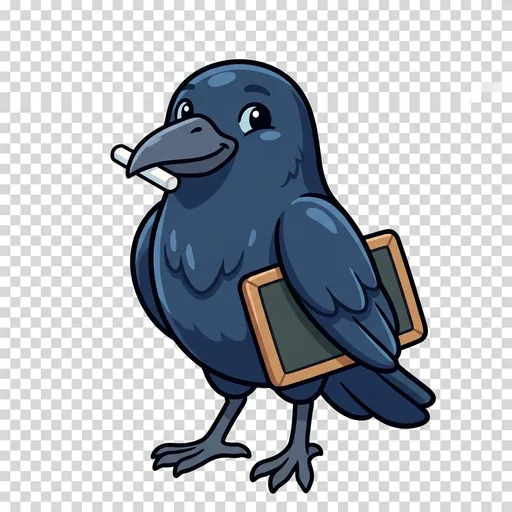 Cost the Crow Cost — what the lemons, sugar and cups cost you from StandPals
-
 Gilly Know your spares before you swap from IslePals
-
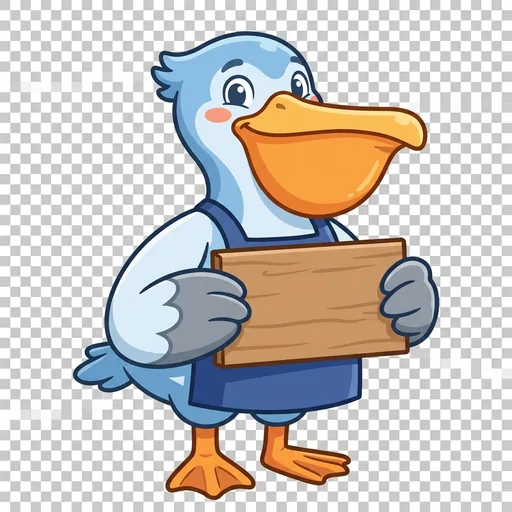 Price the Pelican Price — what to charge, on the sign where everyone can see it from StandPals
-
 Beto a child of the Green Takes things apart
-
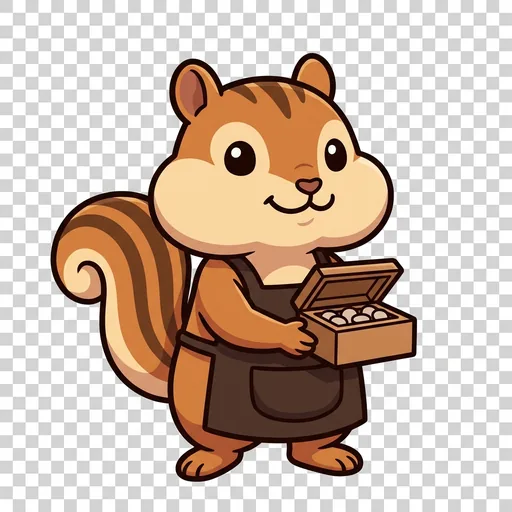 Coin the Chipmunk Change — count up from the price to what was paid from StandPals
-
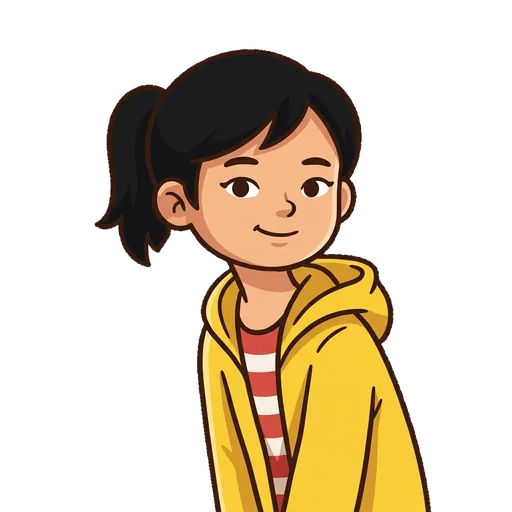 Lan a child of the Green Goes first; makes a friend in a minute
-
 Profit the Porcupine Profit — what you took in, take away what the supplies cost from StandPals
Every recurring character has a short tune, so you can tell who is on stage before a word is said. The tunes play only when you tap, and the Reading Access sound switch turns them off.
The Honest Page
Which parts of this story are true, stretched or made up?
True
- The cost is what the supplies cost you. Four coins of lemons, two of sugar and two of cups make eight.
- Ten cups at two coins each take in twenty coins. At one coin each they would take in only ten.
- Profit is what you took in, take away what it cost: twenty take away eight is twelve. Source
- To give change, count up from the price to the coin you were given: four, then five, so one back.
Stretched
- The stand's only costs were lemons, sugar and cups. What we simplified: A real stand also pays for its jug, its table and the time of the people working it; the story leaves those out to keep the sum small.
Made up
- Gullwick, the ferry that sells nails, and a crow, a pelican, a chipmunk and a porcupine who run a lemonade stand are made up.