
The Slow Lake Academy · Chapter book · ages 9-14
Listen along
Loading audio…
Read by an AI-generated voice. The words on this page are the transcript.
Chapter 1. The Thaw
The hammer rang once. A spark jumped off the anvil and did not go out. It waited. They followed.
It was the first warm morning of the spring. The snow had gone from the Green in a week of rain, and the grass underneath was flattened and pale, like hair that has been under a hat all winter. The pond had come back to life. There were ducks on it again, and frogs somewhere in the reeds making a noise like a creaky gate.
Inkling had been waiting for the spark since the end of Café Night. She had two score sheets now, pressed flat inside the back cover of her notebook: the Opera Game and Légal's Mate. Two pages of a scorebook, the Captain had said. When you have four, you will have the start of one of your own.
So when the hammer rang, she was ready. She had her boots on. She had a new pencil. She had drawn two columns on a fresh page of her notebook the night before, because the Captain had told her, at the very end of Café Night, that in the Immortal Game White would give away almost everything he owned, and she had wanted to be able to count it.
The spark drifted east off the Green and down the lane. Inkling followed it along the road to the Slow Lake. Everything was dripping. Every hedge had a hundred small birds in it, all talking at once. At the top of the last hill she stopped, as she always did, to look.
The ice had gone. The lake was silver again, but a wilder silver than in autumn, ruffled by the wind and full of brown water from the hills. Along the near shore the village was hanging out its washing for the first time in months. There was the library, and the bakery with its crooked chimney, and the long low hall with the chequered roof.
The spark settled on the brass rook knocker. It looked brighter than she remembered.
Inkling knocked.
Chapter 2. Two Columns
The hall smelled of floor polish and wet coats. The big pieces were out of their crates again, standing in their starting rows on the giant board, and the children were sitting on the benches swinging their legs.
Captain Castle was on his stool. No rug this time. Just his waistcoat with the too-large brass buttons.
"Our prompter," he said. "Spring has arrived, and so have you. Good. We have five weeks."
"Five weeks?" said Inkling. "Café Night was three."
"Café Night was seven moves," said the Captain. "This is twenty-three. And it is a very strange game." He clapped twice. "Children! In five weeks the village holds its Spring Fair. There will be stalls and a cake competition and a man who juggles fish, and on the last afternoon, in this hall, we will re-stage the most famous attacking game ever played. It is called the Immortal Game."
"Why immortal?" asked the boy who knew a great many names. "Did somebody not die?"
"Because it will never be forgotten," said the Captain. "That is what people meant. A game that will live for ever." He looked round at them. "But I will tell you something now that most people do not notice until the end. In this game, White gives away a bishop. Then a rook. Then the other rook. Then the queen. And White wins."
There was a silence. Then everyone started talking at once.
"That's impossible," said the girl by the window.
"You can't give away your queen AND your rooks," said somebody else.
"You can give away anything," said the Captain, "if what you keep is in the right place. That is the whole game." He turned to Inkling. "Prompter. Show them your notebook."
Inkling held it up, a little embarrassed. On the page she had drawn two columns. At the top of the first she had written MATERIAL. At the top of the second she had written IN PLAY.
"I thought I'd count both," she said. "After every few moves. What each side has on the board, and what each side has that can actually do something."
"Good," said the Captain. "Do that. And here is your task this time, the hardest one yet. In the last game you had to wait one move before you named a pin. In this game you will have to wait a very long time before you name a winner. Because for most of the game, one of your columns is going to tell you one thing, and the other column is going to tell you the opposite."
"Which one is right?" asked Inkling.
"That," said the Captain, "is what you are going to find out."
Chapter 3. London, 1851
That evening, after the others had gone, the Captain told her the story.
"In 1851," he said, "London held the greatest fair the world had ever seen. They built a palace out of glass in a park, as big as a cathedral, and filled it with every machine and wonder they could find. Steam engines. Telescopes. A diamond the size of a hen's egg. People came from all over the world to see it."
"Was there chess?" asked Inkling.
"There was," said the Captain. "Because so many people were coming, somebody had the idea of holding a chess tournament at the same time. The first international tournament ever. The strongest players in the world, all in one city, playing each other one after another. It had never been done."
"Who won?"
"A schoolteacher from Breslau," said the Captain. "Adolf Anderssen. He taught mathematics. He was a quiet man who wore spectacles and did not look like anybody's idea of a champion. He won the whole tournament." He smiled. "But the game we are going to play is not from the tournament. It was a game he played in between the rounds, for fun. A casual game, against Lionel Kieseritzky, who came from the Baltic coast and lived in Paris."
"Was Kieseritzky good?"
"Very good," said the Captain. "He made his living from chess, in Paris. He taught at the Café de la Régence." He paused, and Inkling sat up.
"Légal's café," she said.
"The very same, a hundred years later," said the Captain. "Chess is a small world. Anyway. Kieseritzky played Black. They played for fun. And Anderssen did something so wild and so beautiful that a few years later another master, a man named Falkbeer, gave the game its name. The Immortal Game."
Inkling wrote: London, 1851. Casual game. Anderssen (a teacher!) v. Kieseritzky. Named "Immortal" later, not at the time.
"Now," said the Captain. "Write this too, because it is true and most books leave it out. Kieseritzky himself said that the game ended before checkmate. The last few moves, the beautiful ones, the ones with the mate, may never have been played on the board at all. Somebody may have worked them out afterwards and added them."
"So they're made up?" said Inkling.
"Not made up," said the Captain. "Probably found. The position really was lost. The mate really is there. But nobody can say for certain that the two men in London ever moved those last pieces." He began setting the board back up. "We will play it to mate, because the mate is the lesson. And we will tell the village that we are not sure it was played. That is the honest way to tell a good story."
Inkling wrote it down: The mate is real. Whether it was played is not certain. Then she drew a small question mark next to it, so she would remember.
Chapter 4. The Faculty Arrives
Over the next few days the faculty arrived for rehearsal, one at a time.
Merle the Gleaner came first. She had walked up from the low end of the lake with her basket on her arm, and she was in a cheerful mood, because spring is a good season for gleaning: the thaw uncovers all sorts of things that were dropped in the snow.
"A trowel," she said, showing Inkling. "A good one. And a single mitten, and a jar with no lid. People drop everything in winter."
"Did you ask why they were there?" asked Inkling.
Merle laughed. "I asked. Nobody was coming back for them. I checked." She sat down on the bench. "I hear I'm in this one too. Taking things again."
"Lots of things," said the Captain. "More than ever."
The second to arrive was Warden Snare. He was a broad, unhurried badger in a long keeper's coat, with a great ring of keys at his belt that jingled softly when he walked. He kept the walled garden in a town a long way off, and he had come because the Captain had written to him.
"I don't chase," said the Warden, when the Captain introduced him. "Remember that. Don't chase. Close the gates."
"What gates?" asked Inkling.
"You'll see," said the Warden. "There's a queen in this game who goes for a long walk. I'm going to make sure she has nowhere to walk to."
The third was a mole in a dusty apron, short and square, with large pink hands. His name was Mason, and he built walls in a hill town where every house was made of the same grey stone. He looked at the big chessboard for a long time without saying anything.
"What do you see?" asked Inkling.
"Lines," said Mason. "Lines everywhere. Between that piece and that one. Between that bishop and that corner." He pointed with one pink hand. "Break the line, and the far end's alone."
The last two Inkling already knew from the Opera Game. Sir Sidetrack, the lean, courteous stoat in his travelling cloak, bowed to her very low. "If I may," he said. "A pleasure to be prompted again." And Kester the Finisher, the young hedgehog, came in last with crumbs on his nose and sat down on the end of the bench.
"Then I'll finish it," said Kester. "Same as last time."
"Five teachers," said the Captain. "A warden, a gleaner, a mason, a sidetrack and a finisher. Prompter, you will call them. But I warn you. For a long time, nobody you call is going to look like they are winning."
Chapter 5. The Garden Game
Before the rehearsals began properly, Warden Snare took the children out into the academy yard to play a game.
"In my town," he said, "there's a walled garden with four gates. And there's a game the children play there. A runner starts in the middle. I start at a gate. If the runner gets out of any gate before I tap them, the runner wins." He jingled his keys. "Who wants to run?"
Every hand went up. The Warden chose the girl by the window, who was the fastest runner in the school, and chalked a big square on the flagstones with a gap in the middle of each side for a gate.
"Go," said the Warden.
The girl darted for the north gate. The Warden did not chase her. He did not even hurry. He walked, at an ordinary badger's pace, to the east gate, and stood in it.
"One more gate shut," he said.
The girl swerved for the west gate. The Warden walked across the middle of the square, not toward her but toward the south gate, and stood there with his back to the gap.
"Walk, don't run," he said to the watching children. "You can't catch a fast thing by running after it."
The girl was laughing now, and dodging, and feinting left and right. But every time she went for a gate, the Warden had already walked somewhere that made another gate harder to reach. She ran for the north gate again. He stepped one pace sideways, so that he was between her and both north and east at once.
"Where can she go now?" said Warden Snare.
She stopped running. She looked round the chalk square. Every gap had the Warden standing near it, or was too far away to reach before he could step across. She had run more than he had by ten times. She was out of breath. He was not.
He walked over and tapped her gently on the shoulder.
"Caught, kindly," said the Warden.
"That's not fair," said the girl, but she was grinning. "I'm faster than you."
"You're much faster," said the Warden. "That's why I didn't chase. If I'd chased, you'd have won every time. I just made sure there was nowhere left to go." He turned to Inkling. "That's what I'll be doing to the black queen. She's faster than anything on the board. She can go anywhere in one move. So I won't chase her. Don't chase. Close the gates."
Inkling wrote it down. Don't chase. Close the gates. Then she wrote underneath, because it seemed important: The fastest piece is not always the one that wins.
They played the garden game four more times. Nobody escaped. On the last go, the boy who knew a great many names tried running straight at the Warden to get past him, which was brave, and was caught anyway.
"A trapped piece falls where it stands," said the Warden, patting him on the head. "Even a quick one."
Chapter 6. The King Takes a Walk
The first rehearsal began on a grey wet afternoon. The Captain played the opening himself.
White pushed the king's pawn two squares. 1. e4. Black did the same. 1... e5. And then White did something that made the children gasp. White pushed the pawn in front of the king's bishop two squares as well, right next to the first one, where Black's pawn could simply take it. 2. f4.
Black took it. 2... exf4.
"White gave away a pawn on the second move!" said the girl by the window.
"On purpose," said the Captain. "It is called the King's Gambit. White gives a pawn to open the f-file and pull Black's pawn away from the middle. It was very popular in 1851. Prompter, write it down. White is a pawn down."
Inkling wrote, in the MATERIAL column: White −1.
White brought the king's bishop out to c4, aiming at f7. 3. Bc4. And Black's queen leapt out across the board to h4 and gave check. 3... Qh4+.
The white king had to move. It could not castle now, ever, once it had moved. It stepped sideways to f1. 4. Kf1.
"The king's walked," said the boy who knew a great many names. "He's lost his castling."
"He has," said the Captain. "Count the pieces in play."
Inkling counted. White had the bishop on c4 and the pawn on e4. Black had the queen out on h4, all on her own, far from home. Everything else was asleep.
Black pushed a pawn on the queen's side two squares, offering it to the bishop. 4... b5.
"Another gift," said the Captain. "Black gives back the pawn, to pull the bishop away from f7."
White's bishop took it. 5. Bxb5. Black brought out a knight. 5... Nf6. White brought out a knight, attacking the black queen. 6. Nf3. The queen stepped back to h6. 6... Qh6.
Inkling looked at her columns. Material: level again, a pawn each. In play: White had a bishop and a knight and a king that couldn't castle. Black had a queen and a knight.
"It's even," she said.
"It is even," said the Captain. "For now. Enjoy it. It is the last time it will be."
Chapter 7. The Warden Closes a Gate
White pushed a pawn one square in the middle, opening a road for the queen's bishop. 7. d3. Black's knight jumped to the edge of the board, to h5. 7... Nh5. White's knight went to the edge as well, to h4. 8. Nh4. The black queen came out again, to g5. 8... Qg5. The white knight jumped forward to f5, right into Black's half of the board. 9. Nf5. Black pushed a pawn to attack the bishop on b5. 9... c6.
"Now," said the Captain. "Warden. Your gate."
Warden Snare got up from the bench. He walked onto the board slowly, jingling, and stood next to the white pawn on g2. He did not look at the bishop on b5, which was being attacked. He looked at the black knight on h5, and the black queen on g5 beside it.
"Don't chase," said the Warden. "Close the gates."
The Captain moved the white pawn two squares forward to g4. 10. g4.
The pawn on g4 attacked the black knight on h5. The knight had to move or be taken. It went back to f6. 10... Nf6.
"The knight was the queen's friend," said the Warden. "It stood next to her. Now it's gone back home. One gate shut."
"But White's bishop is still attacked," said Inkling. "On b5. The pawn on c6 can take it."
"Yes," said the Warden placidly. "It can."
The Captain moved a white rook from h1 to g1, behind the pawn on g4. 11. Rg1.
And Black's pawn took the bishop. 11... cxb5.
The children groaned. Inkling looked at her MATERIAL column and wrote, slowly: White −3. Down a bishop.
"He just let it go," said the girl by the window. "He let the bishop go and moved a rook instead."
"He did," said the Warden. "Because the rook does something the bishop couldn't. Watch what happens to the queen."
Chapter 8. Where Can She Go Now?
The next morning they played on.
White pushed the h-pawn up one square, attacking the black queen on g5. 12. h4. She had to move. She went to g6. 12... Qg6.
White pushed the same pawn again, to h5, attacking her again. 13. h5. She went back to g5. 13... Qg5.
"Another gate," said Warden Snare, who was walking slowly round the edge of the board with his keys jingling. "Two pawns, g4 and h5. Look at all the squares she can't go to now."
Inkling looked. The black queen on g5 was hemmed in. The pawns on g4 and h5 covered some of her squares. The white knight on f5 covered more.
White's queen came out at last, to f3. 14. Qf3.
Black's knight on f6, the one that had been chased back from h5, went all the way home to g8. 14... Ng8.
"Why's he going backwards?" asked the small boy at the back.
"To make room," said the Warden. "His queen is running out of squares, and the knight was standing on one of the last ones she had. So the knight goes home to give her f6." He stopped beside the board. "Where can she go now?"
The white bishop on c1 came out at last and took the black pawn on f4, the one from the very start of the game. 15. Bxf4. It was attacking the queen. She went to f6, the square the knight had given her. 15... Qf6.
Inkling looked at her columns.
MATERIAL: White was a bishop down. Black was ahead.
IN PLAY: White had a queen on f3, a bishop on f4, a knight on f5, a rook on g1, pawns on g4 and h5 shutting gates. Black had a queen on f6 who had been chased all over the board, a knight that had just gone home, and nothing else out at all.
"Black's ahead," said Inkling slowly. "But Black's pieces are all at home. And the ones that came out keep being sent back."
"Caught, kindly," said the Warden, and went back to the bench to sit down. "I don't need to take her. I just need her not to be able to help."
Chapter 9. Merle Starts Gathering
White brought out the last knight, to c3. 16. Nc3. Black brought out a bishop at last, to c5, where it attacked the white rook on g1. 16... Bc5.
"The rook's attacked," said Inkling. "Is White going to move it?"
"No," said the Captain.
White's knight jumped from c3 to d5, right into the middle of the board. 17. Nd5. The knight attacked the black queen on f6. It also attacked the square c7, next to the black king.
"Now, Merle," said the Captain.
Merle the Gleaner put her basket down and walked onto the board. She went to the black queen and looked about. She saw the white pawn on b2, on the far side of the board, with nothing guarding it.
"Nobody's guarding that one," said Merle. "Look, it's just lying there."
The black queen swept across the board and took the pawn on b2. 17... Qxb2.
"And look," said Merle, peering along from b2. "From here she can take the rook on a1 as well. With check. Nobody's guarding that one either."
Inkling's pencil hovered over the MATERIAL column. She wanted to write Black is winning. She could feel the words rising up the way they always did. Black was a bishop up and a pawn up and about to win a rook.
She did not write it. She wrote, instead, in very small letters: Wait.
Then she looked at the IN PLAY column, and at the board, and she noticed something. The black queen, the only black piece that had been doing anything all game, was now on b2. In the far corner of the board. As far from her own king as she could possibly be.
"She's gone a long way," said Inkling.
"Free is free," said Merle cheerfully, and stayed where she was.
Chapter 10. The Second Rook
That night Inkling could not sleep. She got up and set the position out on the folding chessboard in the kitchen by candlelight, and sat in front of it in her nightdress with her columns.
Her grandmother found her there at midnight.
"It's not going well for White, is it?" said her grandmother, looking at the board.
"That's the thing," said Inkling. "I don't know. If you count the pieces, Black's ahead. Black's got a bishop more and a pawn more, and next move Black can take a rook. But if you count what's actually doing anything..." She pointed. "Black's king hasn't moved. Black's rooks haven't moved. Black's queen's bishop hasn't moved. Black's queen is in the corner. And look at White. Everything's round the black king. Everything."
Her grandmother sat down. "Which column does the Captain say is right?"
"He won't say," said Inkling. "He says I have to find out."
Her grandmother looked at the board for a long time with her chin in her hand.
"When I was young," she said, "we had a cat who caught mice. She wasn't a big cat. There were a lot of mice. If you'd counted, you'd have said the mice were winning." She smiled. "But the mice were always all over the house. And the cat was always exactly where the mouse was going to be."
The next day the Captain played White's eighteenth move. The bishop on f4 went to d6. 18. Bd6.
"He's attacking my bishop," said Merle, who was still standing on b2. "On c5. And he's still letting me have the rook."
Black's bishop on c5 took the rook on g1 instead. 18... Bxg1.
"There's a second rook," said Merle, "and I'll have that too."
"There is an argument about this move," said the Captain quietly to Inkling. "A great player named Steinitz said, years later, that Black should have taken the other rook first, with check. That it would have been better. Even then, White would have had chances. People still argue about it."
Inkling wrote it in her notebook, next to a small question mark: 18...Bxg1. Steinitz said 18...Qxa1+ was better.
Then she looked at her MATERIAL column, and wrote: White −8. Down a bishop and a rook and a pawn.
Chapter 11. One Stone Across the Line
"Mason," said the Captain. "It's your turn."
The mole in the dusty apron got up from the bench and walked onto the board. He did not look at the queen on b2, or at the white rook on a1, or at the black bishop that had just taken the other rook. He walked to the white pawn on e4 and stood beside it, and looked along the board.
"Lines," said Mason. "Look at the line from the black queen."
Inkling looked. From b2, the black queen could see a long way. She could see diagonally across the board: c3, d4, e5, f6, all the way to g7. The g7 square was right next to the black king. If the queen ever wanted to come home and defend her king, that was her road.
"Can it still see what it guards?" said Mason. "Not if I put one stone across the line."
The Captain pushed the white pawn from e4 to e5. 19. e5.
The pawn stood right in the middle of the queen's diagonal. From b2 she could see c3 and d4, and then the white pawn on e5, and nothing past it. Her road home was gone.
"Break the line, and the far end's alone," said Mason. "She's in the corner. Her king's on the other side. And now there's a wall between them."
"But it's just a pawn," said the boy who knew a great many names. "It's not even attacking anything."
"It doesn't need to attack anything," said Mason. "A wall doesn't attack. A wall just stands there. That's all walls do. You'd be surprised how much it matters."
He went back to the bench. Inkling sat very still and looked at the little pawn on e5.
It was the quietest move in the game. It had not taken anything. It had not given check. And she knew, the way you know a song is going to change key, that it was one of the most important moves of all.
Chapter 12. The Lamp and the Doorstep
Later that afternoon, when the rehearsal was over, Mason took Inkling outside to the village square to show her something.
In the middle of the square stood an old iron lamp post. Its foot had cracked once and been bound with an iron band, and on the band, worn almost smooth, was a tiny hammer. Across from it, on the far side, was the baker's doorstep. The lamp had just been lit, and its light fell all the way across the cobbles and onto the step, so that the baker could see to lock up.
"Lines," said Mason. "There's a line from that lamp to that step. You can't see it. But it's there. The lamp is guarding the step. Keeping it lit."
He took a wooden board from a pile by the wall, a spare one from a fence, and stood it up on its end in the middle of the square, right in the path of the light.
The baker's doorstep went dark.
"One stone across the line," said Mason. "The lamp's still burning. It's just as bright as it was. It hasn't been hurt at all. But it can't see the step any more. Break the line, and the far end's alone."
Inkling looked at the dark step, and at the bright lamp, and at the plain wooden board standing between them.
"The pawn on e5," she said.
"The pawn on e5," said Mason. "The black queen is still the strongest piece on the board. She's just as strong as she was. But she's on one side of a wall, and her king's on the other." He picked the board up again, and the step lit up. "Can it still see what it guards? That's the only question that matters. Not how strong it is. Whether it can see."
"Does it always work?" asked Inkling.
"No," said Mason honestly. "Sometimes there's another way round. Sometimes the defender just walks to the other side of the wall. But a queen in the far corner, with no time, a long way from home?" He shook his head. "No line, no defence."
The baker came out of the shop at that moment, looked at the mole holding a fence board in the middle of the square, and went back in again without asking.
Chapter 13. Almost Everything
Merle took the second rook.
The black queen swept from b2 to a1, taking the white rook in the corner, and gave check. 19... Qxa1+.
"And that's the rook," said Merle, holding it up. "Both of them. Nobody was guarding either."
The white king stepped forward to e2. 20. Ke2. It was the king's third move of the game. It was now standing in the middle of the board, where kings are not supposed to stand.
Black brought a knight out to a6. 20... Na6. It was trying to come to c7, to guard the king.
Inkling looked at her columns, and for a moment she felt dizzy.
MATERIAL: White had given away a bishop, both rooks and two pawns. Black was ahead by a whole army. If you just counted the pieces, the game was over.
IN PLAY: White had a queen on f3, a bishop on d6, knights on d5 and f5, and pawns on e5, g4 and h5. Every one of them was aimed at the side of the board where the black king lived.
Black had a queen in the corner on a1, a bishop on g1 far away on the other side, a knight on a6 at the edge, and a knight on g8 that had been sent home twice. The black king was on e8. The black rooks on a8 and h8 had never moved. The black bishop on c8 had never moved.
"I can't name a winner," said Inkling at last. "If I go by one column, it's Black. If I go by the other, it's White."
"Then wait one more move," said Captain Castle. "And look at who can reach the king."
Chapter 14. Kester's Check
"Kester," said the Captain.
The young hedgehog brushed the crumbs off his nose and walked onto the board. He went to the white knight on f5, the one that had jumped forward on the ninth move and had been sitting there ever since, looking at g7.
"Escape, block or capture," said Kester. "That's all a king can do when he's in check. Let's see how many he's got left."
The knight took the pawn on g7, with check. 21. Nxg7+.
The black king had to move. It could not take the knight. It could not block. Inkling counted the squares round it: d7 was its own pawn. f8 and e7 were watched. The king had one square to go to. It went to d8. 21... Kd8.
"One square," said Kester. "Only one."
Inkling looked at the board. The black king was on d8 now. White's pieces were all around it. And there, on g8, was the black knight that had been sent home, standing guard over the square e7 next to the king.
"The knight on g8 is guarding e7," she said. "That's the last thing between the king and..."
She stopped. She saw it. The white bishop on d6 could go to e7. If e7 were not guarded, the bishop could go there with check, and the king would have nowhere to run.
But the knight on g8 guarded it.
"Who comes next?" asked the Captain softly. "Prompter. This is your choice point. White is a queen and two rooks down. Who can finish this?"
Chapter 15. A Small Errand
That evening Inkling walked Sir Sidetrack to the edge of the village, because he was staying at the inn by the bridge and she wanted to ask him something.
"In the Opera Game you gave the queen away too," she said. "To pull the knight off its file. Is it always the queen?"
"Not at all," said Sir Sidetrack. "It is whatever the guard cannot refuse. If I may show you?"
They had reached the baker's yard. The baker's old dog lay in the gateway as he always did in the evenings, guarding the back door where the flour sacks were kept. He was a good dog and took his job seriously. He would not let anyone past.
"The guard has one job," said Sir Sidetrack. "He guards that door. Now, would you be so kind as to step aside?"
He took a biscuit from the pocket of his cloak and tossed it, gently, to the far side of the yard.
The dog's ears went up. He looked at the door. He looked at the biscuit. Duty, and biscuit. Duty, and biscuit. Then he got up and trotted across the yard to fetch it.
The gateway was empty.
"The guard cannot be in two places," said Sir Sidetrack, quite pleased. "That is all a deflection is. You find the one piece doing the one job, and you offer it something it cannot refuse somewhere else. After you, as they say. A small errand, nothing more."
"Isn't that a bit sneaky?" asked Inkling.
Sir Sidetrack considered this seriously.
"In a game, it is only clever," he said. "Everybody knows the rules, and everybody is trying to do it to everybody else. A good player expects it. But you are right that one should never do it to a dog in real life, except to show a prompter how chess works." He bowed to the dog, who had come back with the biscuit and was looking at them both suspiciously. "My apologies, sir. Your door was never in danger."
The dog lay back down in the gateway and went to sleep.
"In the Immortal Game," said Inkling, "the guard is the knight on g8. It's guarding e7."
"And what can it not refuse?" asked Sir Sidetrack.
Inkling thought about it all the way home. By the time she reached her grandmother's gate she knew. A knight cannot refuse a queen that is giving check to its king. It has to take her. And the moment it takes her, it has left its post.
Chapter 16. Three Questions
The day before the dress rehearsal, Kester gave the youngest children a lesson of his own, at a small table at the side of the hall, with an ordinary board and a handful of pieces.
He set up a black king in a corner and a white rook at the far end of the board, and gave check.
"Escape, block or capture," said Kester. "That's all a king can do when he's in check. Three questions. If the answer to all three is no, it's mate." He pointed at the black king. "Can he escape?"
"He can go sideways," said a small girl.
"Then it's not mate," said Kester. "Not yet. Someone has to put the last plank down."
He added a white king, two squares away, covering the escape squares. "Now can he escape?"
"No," said the small girl, after counting.
"Can he block?"
"There's nothing to block with."
"Can he capture?"
"The rook's too far away."
"No squares left," said Kester. "Escape, block or capture. None of them. Done."
He set up another position, and another. The children got quicker at the three questions. By the end they were shouting them out together, like a song: escape, block, capture.
Inkling watched from the bench and wrote the three questions in the margin of her page.
"You don't do the attacking," she said to Kester afterwards. "In any of the games. The others do it all. You just come at the end."
"Then I'll finish it," said Kester, quite contentedly. "Somebody has to. The others make the mess. I check whether it's really over." He brushed a crumb off his nose. "Almost isn't fine, in chess. It's either mate or it isn't. Most games are lost by people who thought it was over when it wasn't."
Inkling thought about the MATERIAL column, and the man at Café Night who had said "Well, that's that, then," and put his coat on.
"Most people stop counting too early," she said.
"Most people," agreed Kester, and went to look for biscuits.
Chapter 17. The Guard Cannot Be in Two Places
Inkling looked along the bench.
There was Warden Snare, who had closed the gates. There was Mason, who had built the wall. There was Merle, holding two rooks and a bishop. There was Kester, who had just given check and was waiting to finish. And at the end of the bench, sitting quietly in his travelling cloak, was Sir Sidetrack, the courteous stoat, who had not moved all game.
"The knight on g8 has a job," said Inkling slowly. "It's guarding e7. If it does anything else, it can't guard e7 any more. So someone has to give it something else to do."
She looked at Sir Sidetrack. He was smiling very slightly.
"Sir Sidetrack," said Inkling.
The stoat stood up, bowed to her, and walked onto the board without hurrying.
"If I may," he said. He went to the white queen on f3, the only big piece White had left. "Would you be so kind as to step aside?" he said, to nobody in particular.
The white queen went from f3 to f6, right in front of the black king. Check. 22. Qf6+.
The queen could be taken. The black knight on g8 could take her. It was the only piece that could.
"A small errand, nothing more," said Sir Sidetrack.
The black knight took the queen. 22... Nxf6.
And as it did, it left g8. It left the square from which it had been guarding e7. Its new square, f6, did not guard e7 at all.
"The guard cannot be in two places," said Sir Sidetrack gently. "After you, Kester."
Chapter 18. Done
Kester the Finisher walked to the white bishop on d6, and the Captain moved it one square, to e7. 23. Be7.
"Check," said Kester. "Now. Escape, block or capture."
Inkling counted aloud, because she wanted to be sure.
"Escape. C7? The knight on d5 covers it. C8? That's Black's own bishop, still at home. D7? Black's own pawn. E8? The knight on g7 covers it. So no escape." She swallowed. "Block? The bishop's right next to him. You can't block a piece that's next to you. Capture? The king can't take the bishop, because the knight on d5 guards it. And nothing else can reach."
"Escape, block or capture," said Kester. "None of them."
23. Be7#.
Nobody in the hall said anything at all for a long moment.
Then the girl by the window said, in a very small voice: "But he only had three pieces."
It was true. Inkling looked at the board. White had one bishop and one knight doing the mating, another knight on g7 covering the last square, and some pawns. No queen. No rooks. Black had a queen, two rooks, a bishop and a knight more than White had. Almost all of them had never moved, or were stuck in the far corners of the board.
She looked at her two columns. Then she drew a line under the MATERIAL column, and wrote underneath it, in her neatest handwriting:
Material is not the same as pieces that can reach the fight.
"Done," said Kester, and went to look for more biscuits.
Chapter 19. The Count on the Wall
Two days before the fair, the children decided that the village would never understand the game unless they could see the count.
So they got a long roll of brown paper from the print shop and pinned it along the wall beside the great board, and painted two columns on it in thick black letters, MATERIAL and IN PLAY, the same as Inkling's notebook. The boy who knew a great many names was put in charge of the ladder, because he was the best at sums and the least afraid of heights.
They practised. Every time a piece was taken in the rehearsal, he climbed the ladder and painted in the new MATERIAL count. Every few moves, Inkling called out the IN PLAY count, and he painted that too, in a different colour.
By the end of the first practice the wall looked very strange. The MATERIAL column went one way, further and further toward Black, move after move. The IN PLAY column went the other way, further and further toward White.
"They're opposite," said the boy, standing on the ladder with paint on his nose. "Almost the whole way. Look."
The children stood back and looked at the wall. It was true. For nearly twenty moves the two columns disagreed about everything. Only at the very end, on the last three moves, did the MATERIAL column suddenly stop mattering at all.
"People will think the material one is right," said the girl by the window. "Because it's the one with numbers."
"Both of them have numbers," said Inkling.
"Yes, but the material numbers are the ones in books. A queen's nine, a rook's five. Everybody knows those."
Inkling thought about that. It was true. Everybody knew what a queen was worth. Nobody had a number for "a queen in the far corner who can't get home".
"Then we'll tell them," she said. "Before the last three moves. We'll tell them to stop looking at the material column."
"Or keep looking at it," said the Captain, who had been listening from his stool. "And see how little it helps. That is a better lesson. A number that everyone trusts, and that is no use at all, is worth seeing up close."
Chapter 20. The Dress Rehearsal
On the morning before the Spring Fair, the Captain held a dress rehearsal. Each teacher had to step onto the board when Inkling called them and say, out loud, in one sentence, what their move was for. The children on the benches would listen. If they could not tell which teacher was talking with their eyes shut, the Captain said, the rehearsal would start again from the beginning.
"Eyes shut," said the Captain. "Everybody. Prompter, call the first."
The children shut their eyes. Inkling called Warden Snare.
"Don't chase, close the gates," said the Warden, from somewhere near g4. "Walk, don't run. She's fast, so I make sure she's got nowhere to go."
"The Warden!" said the children, all together, with their eyes still shut.
Inkling called Merle.
"Nobody's guarding that one, and I'll take it," said Merle, from the far corner of the board. "Free is free, I always say. Is anybody coming back for it? Nobody ever is."
"Merle!" said the children. Somebody giggled.
Inkling called Mason.
"Break the line, and the far end's alone," said Mason, from e5. "A wall right there, across the diagonal. Can it still see what it guards? No line, no defence."
"Mason!"
Inkling called Kester.
"Escape, block or capture, that's all he can do," said Kester, from g7. "One square left for him. Just the one."
"Kester!"
Inkling called Sir Sidetrack, and there was a soft rustle of cloak.
"If I may," said Sir Sidetrack. "Would you be so kind as to step aside? It is only a small errand. The guard cannot be in two places, after all."
"Sir Sidetrack!" said the children, and the small boy at the back added, "He's so POLITE," which made everyone laugh with their eyes shut.
Then Inkling called Kester again for the last move.
"No squares left, and then I'll finish it," said Kester. "Escape, block or capture. None of them. Done."
The children opened their eyes.
"Not one wrong," said Captain Castle, sounding pleased. "Six voices, and you knew every one of them in the dark. That is how it should be. A teacher who sounds like every other teacher is not much use to a prompter."
"What about you?" asked the girl by the window. "We didn't hear you."
"Count the pieces in play, not the pieces on the board," said the Captain. "Take your time. The board will wait. Everyone comes to the party in the end."
"The Captain!" said every child in the hall, with their eyes wide open.
"And the prompter?" said the Captain.
Inkling went pink. "I noticed something," she said. "Wait, I can name it. I think it's called a lot of teachers who are very different from each other."
"That," said the Captain, "is called a faculty."
Chapter 21. The Spring Fair
On the last afternoon of the Spring Fair, the whole village crowded into the academy hall.
They came straight from the fair with their hands full: toffee apples, paper windmills, a goldfish in a bag that the baker's son had won at the hoopla. The man who juggled fish came, with the fish. Inkling's grandmother came with her folding board under her arm, and sat in the front row with her hands folded.
On the wall beside the great board, the children had hung a long strip of paper with two columns painted on it, MATERIAL and IN PLAY, and every few moves the boy who knew a great many names climbed a ladder and painted in the new count, so that everyone could see.
Inkling stood beside the board with her notebook. She knew every move now. She held it anyway.
When the King's Gambit pawn went forward and was taken, she said: "White is a pawn down, on purpose." When the black queen gave check on h4 and the white king stepped to f1, she said: "The king can never castle now. Watch where he ends up."
When the bishop on b5 was left to be taken, a woman at the back said loudly, "Oh, he's blundered," and Inkling said, clearly: "He's let it go. Watch the queen instead."
Warden Snare closed his gates, one by one, and the village watched the black queen being chased round the board with nowhere to settle. Merle gathered, and gathered, and the MATERIAL column on the wall swung further and further toward Black, and a man near the door said, "Well, that's that, then," and started to put his coat on.
Then Mason put his pawn on e5. Inkling turned to the audience and said, "That pawn is a wall. The queen can't get home now." The man near the door stopped with one arm in his coat.
When Kester's knight gave check on g7, she did not call the next name. She turned to the hall instead.
"White has given away a bishop, both rooks and the queen is next," she said. "Who can finish this?"
There was a pause. Then Inkling's grandmother, in the front row, said quietly, "The one who sends the guard on an errand."
Sir Sidetrack bowed to her, very low. The queen went to f6. The knight left its post. Kester finished it.
The hall went up like a firework. The man near the door took his coat off again and clapped with both arms. The goldfish, in its bag, went round and round.
Chapter 22. Three of Four
Later, when the crowd had spilled out onto the green with their toffee apples, Inkling found the faculty sitting together on the academy steps in the spring evening.
"I've never held so much in my life," said Merle, looking at her basket, which had two rooks, a bishop and a pawn in it. "And I've never been so little use to anyone. All of it, gathered. None of it where it was needed."
"You gathered well," said Warden Snare kindly. "You just gathered in the wrong corner."
"I'll know next time," said Merle. "The fallen apple's no good to you if it's in the next field when you're hungry."
"I didn't take anything," said Mason, to nobody in particular. "Not one piece. I just stood across a line."
"That," said Sir Sidetrack, "was the most elegant thing anyone did all afternoon."
Mason went pink and said nothing more.
The Captain came out with a sheet of paper. On it, in his square, careful handwriting, were all forty-five moves of the Immortal Game, numbered, with the place and the year at the top. Underneath the last three moves he had drawn a small bracket, and next to the bracket he had written: Probably found afterwards. The mate is real.
"Three of four," he said. "One more, in the summer. The Evergreen Game. Same man, Anderssen. A different lesson."
"What lesson?" asked Inkling.
"You've learned to wait one move before naming a pin," said the Captain. "And to wait a long time before naming a winner. In the Evergreen Game you will learn the last thing: how to see the end before you get there. A chain of checks, every one forced, all the way to mate. You'll have to see the whole of it before you call the first name."
Inkling put the score sheet in the back of her notebook with the other two.
The spark was waiting on the brass rook knocker when she came down the steps. It was nearly as bright as a candle now.
The spark dimmed to a warm dot and settled back on the anvil. The Green was just the Green again.
Back on the Green
On Saturday the children on the Green played a big game of capture the flag, two teams, with jumpers for goalposts.
Inkling's team had fewer players. Six against nine. Tí was on her side, but Tí was four, and he mostly ran in circles shouting.
The other team spread out all over the Green. Some of them were guarding things at the edges that nobody wanted. Two of them were sitting under the chestnut tree eating an apple.
Inkling counted. Not how many players each side had. How many could reach the flag in the next minute. Then she put all six of her team, even Tí, on the side of the Green nearest the other team's flag.
They won. Nine players are not much use if only three of them can get there in time.
Tell the story back to someone in your own words. Then set up a board, or draw one, and play the last three moves of the Immortal Game with a grown-up. You take White. Before each move, count both columns.
Saved. The next chapter will be here whenever you come back.
Who you met
-
 Warden Snare A trapped piece — close its safe squares one by one, and it falls where it stands from GambitTales
 -
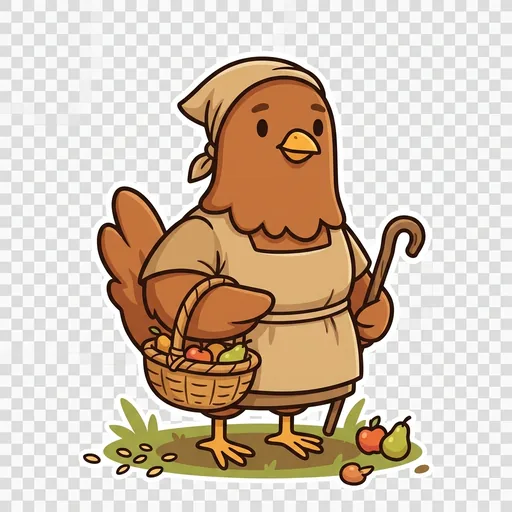 Merle the Gleaner A hanging piece — a piece with no defender is a free piece (and the bait that only looks free) from GambitTales
 -
 Mason the Interposer Interference — put a piece across the line between a defender and what it defends from GambitTales
 -
 Kester the Finisher Checkmate — a check the king cannot escape, block or capture from GambitTales
 -
 Sir Sidetrack Deflection — chase the guard off its duty, then take what it protected from GambitTales
 -
 Inkling a child of the Green Names what she notices
Every recurring character has a short tune, so you can tell who is on stage before a word is said. The tunes play only when you tap, and the Reading Access sound switch turns them off.
The Honest Page
Which parts of this story are true, stretched or made up?
True
- Every move in this story is the game as it is usually published: Adolf Anderssen against Lionel Kieseritzky, twenty-three moves, mate.
- It was a casual game, played in London in 1851 during a break in the first international chess tournament. Source
- At the end, White had given up a bishop, both rooks and the queen. Black's two rooks and queen's bishop had never moved.
Stretched
- The story plays the game all the way to mate. What we simplified: Kieseritzky himself said the game ended before mate, and the last few moves may never have been played on the board. Versions also disagree about the order of some moves. Source
- It is called the Immortal Game. What we simplified: Nobody called it that in 1851. Ernst Falkbeer gave it the name in 1855. Source
Made up
- Captain Castle's academy, the re-staging and chess pieces who talk are made up.