
The Slow Lake Academy · Chapter book · ages 9-14
Listen along
Loading audio…
Read by an AI-generated voice. The words on this page are the transcript.
Chapter 1. Frost on the Lake
The hammer rang once. A spark jumped off the anvil and did not go out. It waited. They followed.
It was the first frost of the winter, and Inkling had come out onto the Green with a scarf wound three times round her neck to see whether the pond had frozen. It had not, quite. A skin of ice lay over the shallow end, thin as a sheet of paper, with the reeds standing up through it like pins in a pincushion. She was crouching to touch it with one glove when the hammer rang.
She knew the sound now. She had heard it on the night before Lantern Night, and she had followed it to the academy and become the prompter for the Opera Game, and she had written seven pages of notes about it that she still read before bed. So when the spark jumped off the anvil and hung there, the colour of an orange peel held up to a window, she did not stand and stare. She took out her notebook.
First frost, she wrote. Spark came back. 8.14 in the morning.
Then she followed it.
The spark went the way it always went, east off the Green and down the lane that became, after the last house, the road to the Slow Lake. The road was white with frost. Her boots crunched. The hedges were full of small birds puffed up into balls against the cold, and each time she passed one it looked at her as if she were being unreasonable.
At the top of the last hill she stopped to breathe. Below her the Slow Lake lay in its valley, and for the first time she had ever seen, it was not silver. It was white at the edges, where the ice had begun, and dark grey in the middle, where it had not. The village sat against the near shore with smoke going straight up from every chimney, because there was no wind at all.
The spark drifted down the hill and settled on the brass rook knocker of Captain Castle's academy.
Inkling lifted it and knocked.
Chapter 2. Café Night
The hall was warmer than the road, but only just. Someone had lit the big stove at the back, and the children were crowded round it with their hands out, arguing about whose turn it was to stand nearest. At the front of the hall the giant chessboard stood empty. The pieces had been put away for the winter in long wooden crates, like sleeping people.
Captain Castle was on his stool beside the board, wrapped in a tartan rug.
"Ah," he said, when he saw her. "Our prompter. You found the road in the frost."
"The spark found it," said Inkling. "I just followed."
"That is usually how it works," said the Captain. He clapped twice. The children by the stove turned round, slowly, because nobody wanted to give up a warm place.
"In three weeks," said the Captain, "it will be the shortest day of the year. The village has asked us to put on something for the evening. Not a long show. Lantern Night was long, and the children's feet got cold. Something short." He smiled. "So we are going to turn the hall into a café. A café in Paris, two hundred and fifty years ago or so. There will be hot chocolate and little cakes, and in the middle of the café there will be a chessboard, and on it we will play the shortest famous game there is."
"How short?" asked the boy who knew a great many names. He was sitting on the front bench with his feet tucked under him.
"Seven moves," said the Captain.
There was a murmur. Somebody said "That's not a game, that's a sneeze."
"It is a trap," said the Captain. "The oldest trap still worth knowing. It has caught people in parks and cafés and school clubs for a very long time, and it will catch somebody in this village before the spring, I promise you. It is called Légal's Mate."
"Legal?" said a girl near the window. "As in allowed?"
"Légal, with an accent," said the Captain. "It was a man's name. You'll see." He looked at Inkling. "You'll prompt it, of course. There are only three members of the faculty in this one. But I warn you now: it is the hardest game to prompt that we have ever done."
"Why?" asked Inkling. "It's only seven moves."
"Because," said the Captain, "the most important move in it is one that every rule you have learned tells you not to play."
Inkling wrote that down. She underlined every rule.
Chapter 3. The Café de la Régence
That evening the Captain kept her behind after the others had gone. He lit the lamps along the walls and put more wood in the stove. Then he got down off his stool, which he did not often do, and lifted a few of the big pieces out of their crates, and set them on the board.
"There was a café in Paris," he said, "called the Café de la Régence. For a long time it was the most famous place in the world to play chess. People came in from the street, ordered a coffee, and sat down at a board with whoever was there. Rich and poor. Famous and nobody. If you were good, you became known. If you were very good, you became the man everyone wanted to beat."
"Who was the man everyone wanted to beat?" asked Inkling.
"For a while it was a nobleman called Légal," said the Captain. "Kermur de Légal. He was the strongest player in the café. Some say the strongest in France. He was so strong that he would give other players odds."
"What are odds?"
"A gift, to make it fair," said the Captain. "He would play without one of his pieces. It is said that in this game he took his own rook off the board before he started, the one on a1, the corner square, and still won."
Inkling looked at the white rook the Captain was holding. "Are we going to leave it off?"
The Captain thought about it. "It never moves in the game," he said. "Not once. So it makes no difference to the moves. We will set it up, because the village will want to see a whole army. But we will tell them about the odds. And we will tell them that we are not certain, because nobody is."
"Not certain about the rook?"
"Not certain about a great deal," said the Captain cheerfully. "The game is usually dated 1750. People who have searched the old papers think it may have been later, in the 1780s. And the moves, the ones in all the books, may have been tidied up afterwards. Somebody may have changed the order of a move or two so that the trap looked cleaner than it really was." He set the rook down on a1. "So we will play the version everyone knows. And we will say that it is the version everyone knows. The moves have been played by a great many people since, and they work. That much is certain."
Inkling wrote: Date: 1750 (or maybe 1787). Rook odds (said to be). Moves may have been tidied. Then she wrote underneath, A story can be true and still be tidied.
"Who was Black?" she asked.
"A man named Saint Brie," said the Captain. "We know almost nothing about him except that he lost this game. Which is a hard way to be remembered." He paused. "So be kind to him, when we play it. He made one mistake, and it was a mistake that looked like the cleverest move on the board."
Chapter 4. Three Teachers
The next morning the faculty came in from the cold, stamping snow off their feet, one by one.
Sir Pinwell came first, because he always came first. He was tall and narrow, a bishop with a pencil behind his mitre and a long grey muffler that his library assistant had knitted for him. He took his usual seat at the end of the front bench, put his notebook on his knee, and nodded to Inkling very slightly.
"Good morning," said Inkling. "You're in this one too."
"I am in most of them," said Sir Pinwell. "Pins are everywhere. That is the trouble with them."
The second to arrive was somebody Inkling had never met. She was a hen, a plain brown hen with a plainer walk, wearing a shawl over her shoulders and carrying a basket on one arm. The basket was full of odds and ends: a cotton reel, a single glove, half a candle, a button.
"This is Merle the Gleaner," said Captain Castle. "She lives at the low end of the lake, past the last of the barns."
"Morning," said Merle. She put her basket down on the bench and looked round the hall with quick, bright eyes, as if counting everything in it. "Is that a glove under the stove? Nobody's guarding that one."
"It's mine," said the boy who knew a great many names, and went to get it before she could.
"Merle gathers what nobody wants," said the Captain. "Things that have been dropped, and left, and forgotten. In chess we have a name for a piece like that. A piece with nobody guarding it is called a hanging piece. Merle can spot one from across a room."
"Free is free, and I'll take it," said Merle, quite happily.
The third teacher came in last, and quietly, through the high window over the door rather than the door itself. It was a small bird, a weaverbird, with a wisp of dry grass in her beak. She landed on the top of the big board's frame and looked down at the empty squares as if they were already full of pieces.
"Linnet the Netweaver," said the Captain. "From the willow-banks."
Linnet put the wisp of grass down carefully.
"I see the whole net already," she said. Her voice was calm and very clear. "The first strand forces the second."
Inkling did not know what that meant. She wrote it down anyway.
"Three teachers," said the Captain. "One pin, one grab, and one net. Prompter, you will call each of them when their moment comes. But this time I am going to make it harder for you. Sir Pinwell?"
Sir Pinwell looked up from his notebook. "Before you call anyone," he said to Inkling, "you will ask yourself one question. Not whose move it is. Whether the move is really what it looks like."
"Hmm," said Sir Pinwell, and went back to writing.
Chapter 5. The Willow Bank
Inkling could not stop thinking about what Linnet had said. The first strand forces the second. So after the first rehearsal had been cancelled for a snowstorm, she walked down to the willow-banks at the far end of the lake to find her.
It took most of the afternoon. The path along the shore was icy, and twice she sat down on it suddenly. The willows were bare, their long thin branches hanging down to the frozen reeds like hair. And in the willows, hanging from the branches, were nests.
They were not like any nests Inkling had seen. They were baskets, woven out of grass, round and closed at the top, with a little doorway underneath. Some hung low enough to touch. Inkling stood under one and looked up at it. Every knot was tight. Every strand went somewhere. She could not see a single loose end.
"You came a long way to look at a nest," said a calm, clear voice above her.
Linnet was sitting on the branch, with a wisp of dry grass in her beak.
"I wanted to know what you meant," said Inkling. "About the first strand forcing the second."
Linnet put the grass down on the branch.
"Watch," she said.
She took one strand and looped it round a thin twig, and pulled. The twig bent toward her. Only one way. It could not bend any other way, because the strand was holding it.
"Now where does the second strand go?" asked Linnet.
Inkling looked. There was only one place it could go: across the bent twig, from the other side, to hold it there. Anywhere else, and the twig would spring back.
"There," said Inkling, pointing.
"There," said Linnet, and wove it. "I did not choose that second strand. The first one chose it for me. That is why I never waste a strand. Most creatures build one piece at a time and hope. They make a move, and look, and then think about the next. But a first strand is not important for its own sake. It is important for what it forces."
"So you see the whole nest before you start," said Inkling.
"I see the whole net already," said Linnet. "Before the first knot. Then I make the first knot, knowing that it takes every choice but one away from the second."
Inkling wrote it all down, with her gloves off, though her fingers were freezing.
"In the game," she said, "is there a move like that? A first strand?"
Linnet looked at her for a long time with her small dark eyes.
"There is," she said. "But you will not see it while you are looking at the queen. Everyone looks at the queen. Look at what the queen is not guarding."
That was all she would say. Inkling walked home in the blue winter dusk with the words going round and round in her head. Look at what the queen is not guarding. She did not understand them yet. But she had the feeling she would, the way you know a word is on the tip of your tongue.
Chapter 6. The Pin Again
The first rehearsal began after lunch, when the hall had warmed up a little.
The Captain played the first moves himself, sliding the big pieces across the board while the children watched from the benches with their coats still on.
White pushed the king's pawn two squares. 1. e4. Black did the same. 1... e5. White brought the king's bishop out to c4, where it looked straight down the diagonal toward the little black pawn on f7. 2. Bc4.
"That pawn on f7," said the Captain, tapping it with one hand. "Remember it. It is the weakest square in Black's camp at the start of a game, because only the king guards it."
Black pushed a pawn one square to defend the pawn on e5. 2... d6. White brought out a knight. 3. Nf3.
And then, just as in the Opera Game, Black's queen's bishop came sliding out along its diagonal and stopped on g4. 3... Bg4.
Inkling's breath caught. It was exactly the same picture. The black bishop on g4. The white knight on f3. The white queen behind the knight on d1. If the knight moved, the bishop could take the queen.
She felt the word rising up inside her like a bubble in a pan. A pin!
She did not say it.
She held it in her mouth for a moment, the way you hold a hot drink. Then she looked at Sir Pinwell. He was looking at her, very slightly, over the top of his notebook.
"It looks like a pin," said Inkling carefully. "The knight is in front of the queen. If it moves, the queen can be taken. But I'm going to wait one move before I name it."
There was a small pause.
"Hmm," said Sir Pinwell. And then, which was much more unusual for him, he smiled.
The boy who knew a great many names said, "It IS a pin, though."
"It's a pin," said Sir Pinwell. "But Inkling has learned the second half of the lesson. A pin is a promise. She is waiting to see whether Black can keep it."
Inkling wrote in her notebook: Bg4. Looks like a pin. Waited. She felt very grown up for about ten seconds.
Then the Captain said, "Good. Keep waiting. It gets harder from here," and she stopped feeling grown up and started feeling nervous instead.
Chapter 7. Counting the Party
White brought out the other knight. 4. Nc3. Black pushed the g-pawn one square, so that the king's bishop could come out to g7 later. 4... g6.
"Now," said Captain Castle. "Count the pieces in play."
It was what he had made them do in the Opera Game, and the children knew the drill. They counted aloud.
White had the pawn on e4, the bishop on c4, a knight on f3 and a knight on c3. Four pieces doing something, and the king ready to castle at any moment.
Black had the pawn on e5, the pawn on d6, the bishop on g4, and the little pawn on g6 that had made a hole for a bishop that hadn't come out yet.
"Black's quite slow," said the girl by the window.
"Black is slow," agreed the Captain. "And Black has been slow in a particular way. Everything Black has done has been about the bishop on g4 and that pin. Black is relying on it. Black thinks that knight on f3 cannot move." He looked round. "Now. Here is the question I want the prompter to think about tonight. Take it home with you, Inkling. White's next move is the one that wins the game. Whose move is it?"
Hands went up all over the hall.
"Castle," said the girl by the window. "You always castle when you can."
"Bring out another piece," said somebody else. "The queen's bishop. It hasn't moved."
"Push the d-pawn," said a third. "Make room."
The Captain listened to all of them and nodded at each one. "Those are all good moves," he said. "Sensible moves. Moves you would find in a book. Any one of them would give White a perfectly comfortable game." He paused. "And none of them wins. The move that wins is the one nobody has suggested, because every one of you has already decided that the knight on f3 is not allowed to move."
"But it's pinned," said the boy who knew a great many names.
"Is it?" said the Captain.
The boy opened his mouth to say yes, and then, for the first time Inkling could remember, closed it again without saying anything. He looked at the knight. He looked at the queen behind it. He looked very puzzled.
"A rule is a short way of remembering something that is usually true," said the Captain. "It saves you thinking, which is useful, because you cannot think about everything at once. But usually is not always. And the moment a rule stops being true, the person who is still following it without thinking is the easiest person in the world to catch."
"Can I see the list?" asked Inkling.
"No," said the Captain. "Tonight you guess."
Inkling walked home along the slow road in the dark. The frost had come down harder. Her breath made clouds. At home her grandmother had the stove going and a pot of soup on the back of it, and she had already set up the old folding chessboard on the kitchen table, because she knew Inkling would want it. The board's hinge had cracked long ago and been mended with a strip of brass and two small nails, and beside the brass somebody had scratched a tiny hammer. It had always been there. Inkling had never asked about it.
Inkling set up the position. White's bishop on c4, knights on f3 and c3. Black's bishop on g4, pinning the knight.
She stared at it for a long time.
"Well?" said her grandmother.
"The Captain says White's next move wins the game," said Inkling. "And he says it's a move every rule tells you not to play."
Her grandmother sat down opposite her. "Which rules do you know?"
Inkling counted on her fingers. "Bring your pieces out. Don't move the same piece twice. Castle early. Don't give away your queen." She stopped. "Don't move a pinned piece."
Her grandmother didn't say anything. She just raised her eyebrows.
Inkling looked at the knight on f3. Pinned. If it moved, Black's bishop could take the queen.
"He wouldn't," said Inkling slowly. "He wouldn't move the knight. Would he?"
"I don't know," said her grandmother. "I've never seen the game. What would happen if he did?"
Inkling picked up the knight and put it down again. She picked it up again. There was a black pawn on e5, sitting right there in front of it, guarded by the pawn on d6. If the knight took that pawn, then Black's bishop could take White's queen. That would be terrible. You don't give away your queen.
She put the knight back on f3 and went to bed with her head full of it.
Chapter 8. The Pin That Wasn't
The next morning she got to the academy before anyone else. Sir Pinwell was already there, of course, sitting on the end of the front bench in his muffler with the stove only just lit.
"I can't see it," said Inkling, before she had even taken her coat off. "I think the knight wants to take the pawn on e5. But then Black takes the queen. So it can't be that. Nobody gives away their queen for a pawn."
"Sit," said Sir Pinwell. He moved his notebook so she could sit next to him. "What did I tell you a pin was?"
"A promise," said Inkling. "It says I will hold you here."
"And what makes a promise worth anything?"
Inkling thought. "Being able to keep it."
"Then look at it the other way round," said Sir Pinwell. "Black is promising: if that knight moves, I will take the queen. But a pin only holds if moving the pinned piece is really bad. So do not ask whether the knight is pinned. Ask what happens if it moves anyway."
He got up, walked to the big board, and moved the white knight from f3 to e5, taking the black pawn. Then he stood back.
"There," he said. "The knight has moved. The queen is hanging. Now, what can Black do?"
Inkling stood up and looked. There were two things. Black could take the queen with the bishop. Or Black could take the knight with the pawn on d6.
"Try the second one first," said Sir Pinwell.
She moved the black pawn from d6 to e5, taking the knight. Then she looked again. With the knight gone, the bishop on g4 was sitting there all alone, and White's queen on d1 was looking straight at it along the diagonal.
"The queen takes the bishop," said Inkling. She moved it. Qxg4. "And then... White has lost a knight, but taken a pawn and a bishop. So White is a pawn up."
"A pawn up," said Sir Pinwell. "And Black's pin is gone, and Black's only developed piece is gone, and White's queen is in the middle of the board. If Black does not take the queen, White is simply better." He put the pieces back the way they had been. "So the knight can move. The pin was never really a pin. A pin you cannot keep is not a pin. It is a bishop in the wrong place, waiting to be found out."
"But what if Black does take the queen?" asked Inkling.
Sir Pinwell looked at her for a long moment over his glasses.
"That," he said, "is not my department."
Chapter 9. The Choice Point
When the others had arrived and warmed up, the Captain called the rehearsal to order. He played the position up to move four again, quickly, and then stopped.
"White to play," he said. "Prompter. The knight on f3 is pinned to the queen. Should it move anyway? And if it does, whose move is it?"
Inkling took a breath.
"It should move," she said. "It should take the pawn on e5. Because if Black takes the knight back, White wins the bishop and is a pawn up. Sir Pinwell showed me." She glanced at him. "So the pin isn't really a pin."
"Good," said the Captain. "And if Black takes the queen instead?"
"I don't know," said Inkling honestly. "I can't see that far. But I don't think it's Sir Pinwell's move any more. I think it's..." She looked along the bench. Merle was sitting with her basket in her lap, looking at the white queen on d1 with great interest. Linnet was perched on the top of the board's frame, very still, looking at nothing in particular, as if she were looking at the whole thing at once.
"I think it's Linnet's," said Inkling. "Because she said she sees the whole net. And I can only see one move."
The Captain clapped his hands once.
"Then play it," he said.
The white knight leapt forward and took the pawn on e5. 5. Nxe5.
The children on the benches gasped. Even the ones who had been told to expect it gasped. The white queen stood alone on d1, with nothing in front of her and the black bishop on g4 pointing straight at her.
"He's left his queen!" said a small boy at the back. "He's just left her!"
"He has," said the Captain. "On purpose. Now. Black to play. And this is the part of the game where Black makes a decision. I am going to ask Merle to make it."
Chapter 10. Nobody's Guarding That One
Merle the Gleaner got up from the bench, put her basket down, and walked onto the board in her shawl. She walked straight past the white knight on e5 without looking at it. She walked up to the black bishop on g4 and stood beside it, and looked along its diagonal at the white queen.
"Look, it's just lying there," said Merle, with real wonder in her voice. "A queen. The biggest piece on the board. And nobody's guarding that one. Not a single piece. Is anybody coming back for it?"
Nobody answered her. The hall was very quiet.
"Then I'll take it," said Merle. "Free is free."
She lifted the black bishop and swept it along the diagonal to d1, and took the white queen off the board, and held it up in the air like an apple she had found in the grass. 5... Bxd1.
And Inkling, who had promised herself all night that she would wait one move before naming anything, forgot.
"Black wins the queen!" she shouted. "Black's won the queen! That's it, Black's ahead!"
She heard it come out of her mouth and wished immediately that it hadn't. She had named it too soon again. The very thing.
Up on the frame of the board, Linnet the Netweaver turned her small head and looked at her.
"Has she?" said Linnet.
Inkling's ears went hot.
"Black has a queen in her hand," said Linnet. "That is true. Whether Black has won it is a different question, and it is answered on the next two moves, not this one. You can see the queen. Can you see the king?"
Inkling looked. The black king was still at home on e8. In front of it, on f7, was the little pawn that only the king defended. Next to it, on e7 and d7, were empty squares. And the white pieces were all around it: the bishop on c4, aimed at f7. The knight on e5, which also attacked f7. The other knight on c3, which could jump to d5.
She saw it, slowly, like a picture coming up on photographic paper.
"Oh," she said.
"Every choice but one, taken away," said Linnet. "Watch."
Chapter 11. The First Strand
Linnet the Netweaver flew down from the frame and landed on the white bishop on c4. She did not push it. She did not drag it. She simply sat on it, and the Captain, who knew what was coming, lifted the bishop and moved it down its diagonal to f7, and took the little black pawn, and set the bishop down right beside the black king.
"Check," said the Captain quietly. 6. Bxf7+.
"The first strand forces the second," said Linnet. "Look at the king. Where can he go?"
The children leaned forward. Inkling counted, out loud, because she had stopped trusting herself to see things all at once.
"He can't take the bishop," she said. "The knight on e5 guards it. He can't go to d7, because the knight on e5 covers that too. He can't stay. He can't block, because the bishop's right next to him." She ran her eyes over the squares. "He can only go to e7."
"One move," said Linnet. "Only one. That is what a first strand is for. Not to win anything by itself. To take every choice but one away."
Black's king stepped forward to e7. 6... Ke7. There was nothing else it was allowed to do.
The boy who knew a great many names said, under his breath, "Oh no."
"First this," said Linnet, "which forces that."
Chapter 12. The Second Strand
Linnet flew off the bishop and landed on the white knight on c3, the one that had been sitting quietly at the edge of the board all game, doing nothing much, while everyone looked at the bishop and the queen.
The Captain lifted the knight and jumped it to d5. 7. Nd5.
For a moment nobody in the hall said anything. Then Inkling said, very slowly, checking each square as she went:
"The knight on d5 gives check. The king can't take it. The king can't go to d6, because the knight on e5... no, wait." She stopped. She made herself look again. "The knight on d5 covers e3, c3, b4, b6, c7, e7, f6 and f4. So the king's in check on e7. Can it go to e8? No. The bishop on f7 covers e8. Can it go to d6? The knight on e5 doesn't cover d6. But the pawn... no, there's no pawn." She frowned. "What covers d6?"
"Nothing needs to," said Linnet. "Look at what is standing on d6."
Inkling looked. Black's own pawn was standing on d6. It had moved there on the second move, to protect the pawn on e5. It was still there. It was in the king's way.
"Then e6," said Inkling. "The bishop on f7 covers e6. F6? The knight on d5 covers f6. F8? The bishop covers that? No. The bishop on f7 doesn't... the king can't get to f8 from e7 anyway. Is that a square?"
"It is a square," said Sir Pinwell gently from the bench. "Look at what is on it."
Black's own bishop was on f8. It had never moved.
Inkling went through every square round the black king one more time. Every single one was covered by a white piece, or blocked by a black piece that had never got out of the way.
"There's nowhere," she said. "He can't escape, he can't block, he can't take. It's mate."
"Then the net closes," said Linnet. 7. Nd5#.
The hall burst into noise. The children were on their feet, shouting, pointing, arguing. The boy who knew a great many names was saying "Three pieces! Two knights and a bishop! He mated with three little pieces!" The small boy at the back was saying "But Black took his QUEEN," as if that were deeply unfair.
Merle the Gleaner was still standing on d1, holding the white queen in her wing. She looked at the queen. She looked at the black king, surrounded, on e7. She looked a long way across the board at the bishop on d1 she had used to take the queen, now standing in a corner with nothing to do.
"It only looked free," said Merle quietly.
Chapter 13. Why It Was There
After the rehearsal, when the hall had emptied, Inkling found Merle sitting by the stove with her basket on her knees, turning the white queen over and over in her wings.
"I'm sorry I shouted," said Inkling. "When you took her. I said Black had won. I named it too soon."
"Oh, I thought so too," said Merle. "I thought it was the best thing I'd ever found." She held up the queen. "I've been gleaning a long time, you know. Out in the orchards. After the pickers have gone. And I've always been good at telling a guarded apple from a fallen one. A guarded apple has a ladder under it and a dog asleep at the trunk. A fallen apple has nothing. So I take the fallen ones. They're free."
"This one looked fallen," said Inkling.
"It looked as fallen as anything I've ever seen," said Merle. "No ladder. No dog. Nobody." She turned the queen round. "But I never asked the other question."
"What question?"
"Why it was there," said Merle. "A queen doesn't just roll under a hedge. Somebody put her there. On purpose. And if somebody leaves something valuable lying out in the open on purpose, it's because they want you to pick it up. While you're looking at the apple, they're doing something else."
Inkling thought about that. She took out her notebook and wrote: Before you take something free, ask why it's there.
Then, underneath, because she was being honest: Before you name something, ask whether it's what it looks like.
"It's the same question," said Inkling slowly. "Mine and yours. You took it too soon. I named it too soon."
"That's the trouble with things that look like presents," said Merle. "You want to get your wings on them before anyone else does." She put the queen in her basket, on top of the cotton reel and the single glove. "I'll give her back on Café Night. But I think I'll keep the question."
Sir Pinwell, passing on his way out with his muffler round his neck, stopped at the stove.
"Black's mistake was not taking the queen," he said. "Black's mistake was three moves earlier. Black played the bishop to g4 and believed the pin would hold, and then built everything on that belief. When the belief turned out to be wrong, there was nothing else to stand on." He wound the muffler once more round his neck. "Do not follow a rule you have not checked, Inkling. Not even mine."
"Not even yours?"
"Especially not mine," said Sir Pinwell. "I am usually right. That is when people stop checking."
Chapter 14. The Trap at the Club
On the Thursday before Café Night, the academy had its ordinary club evening, and every child in the hall tried the trap on someone else.
It was chaos. Bishops went to c4 all over the room. Knights were left pinned on f3 on purpose and then leapt onto e5 with shouts of glee. Queens were abandoned on d1 at every table. And at almost every table, the person playing Black took the queen, and then stared in horror as a bishop took f7, the king stepped to e7, and a little knight landed on d5.
"Got you!" said the girl by the window, three times in a row, to three different people.
Inkling walked round the tables with her notebook, watching.
At the table by the stove, the boy who knew a great many names was playing Black against a small girl of seven who had only been coming to the club for a month. She had played the trap perfectly. Her knight had just jumped to e5, and her queen stood alone on d1, and she was bouncing in her chair waiting for him to take it.
The boy looked at the queen for a long time.
"No," he said at last. "I know this one." And instead of taking the queen, he took the knight with his pawn. 5... dxe5.
The little girl's face fell. Then she looked again, and brightened, and took the black bishop on g4 with her queen. 6. Qxg4.
"Hey," said the boy.
"I'm a pawn up," said the girl, and counted it on her fingers to make sure. "You took my knight. I took your pawn and your bishop. I'm a pawn up."
"But I didn't fall for the trap," said the boy.
"No," said the girl. "But your pin still didn't work."
Inkling wrote that down, word for word, and drew a box round it. Your pin still didn't work. It was the thing Sir Pinwell had been trying to tell her all month, said by a seven-year-old in six words.
She showed it to Sir Pinwell afterwards. He read it twice.
"Hmm," he said. "She has put it more clearly than I did. I shall have to write that down." And he did.
Later, at the very last table, Inkling saw one game where Black did something else altogether. Black did not play the bishop to g4 at all. Black brought the knights out first, and castled, and never put the bishop in front of the knight. The trap never happened. White's bishop went to c4 and sat there looking at f7, and nothing came of it, and the game went on for forty moves and ended in a draw.
"That," said the Captain, who had come to stand beside her, "is the best defence to Légal's Mate there is."
"Not falling for it?"
"Not setting it up for him," said the Captain. "Every trap needs two people. The one who sets it, and the one who builds on a rule he has not checked. If you never pin a knight you cannot keep pinned, you can never be caught like this."
That night Inkling's grandmother asked to see the trap. So Inkling set up the folding board on the kitchen table and played White, and her grandmother played Black, and when White's bishop went to c4, her grandmother brought her own bishop out to g4 in front of the knight, exactly as Saint Brie had.
Inkling's knight jumped onto e5. Her queen stood alone.
Her grandmother looked at the queen for a long time. She looked at her own king. She looked at the little pawn on f7, guarded only by the king. Then she smiled and did not take the queen. She took the knight with her pawn instead, and Inkling took the bishop with her queen, and her grandmother was a pawn down.
"You knew," said Inkling.
"I didn't know," said her grandmother. "But I've lived a long time, and when somebody leaves their queen lying about, I've learned to wonder why." She moved a knight out. "When I was a girl, there was a boy at school who always left his best marble just outside the ring. Every day. And every day somebody went for it, and while they were bending over to pick it up, he won all the others."
Inkling laughed. She wrote it down: The marble outside the ring. It was the same trap. It was the same everywhere, once you started looking.
Chapter 15. The Basket by the Gate
Two days before Café Night, Inkling went down to the low end of the lake to find Merle, because she had a question she could not ask in front of the others.
Merle's orchard was past the last of the barns, where the road gave up and became a track. The trees were bare and black against the snow. Under them, in the frozen grass, there was almost nothing left to glean. But Merle was out there anyway in her shawl, walking slowly between the rows with her basket, looking.
"Nothing much this time of year," said Merle, when she saw Inkling. "A walnut here and there. A wizened pear. You get your eye in, though. You learn to see what's been left."
They walked together for a while. Merle found a walnut under a hedge and put it in her basket. Then she stopped.
By the gate at the end of the orchard, sitting on the frozen grass in plain view, was a whole basket of apples. Red ones. Shiny. It was the finest thing Inkling had seen all winter.
"Look, it's just lying there," said Merle softly. Her eyes had gone bright.
Inkling watched her take a step toward it. Then another.
Then Merle stopped. She stood quite still in the snow and looked at the basket for a long moment, and Inkling saw her face change.
"Why is it there?" said Merle, half to herself. "Nobody leaves a whole basket of apples by a gate in winter. Not by accident. Is anybody coming back for it?"
She looked along the track. In the distance, by the barns, a girl in a red hat was pushing a wheelbarrow toward them, slowly, through the snow. The miller's daughter. She had set the basket down to go and fetch the barrow, because it was too heavy to carry all the way home.
"She is," said Inkling.
"She is," said Merle. She let out a long breath that made a cloud. "A month ago I'd have had three of those in my basket before she got here. And I'd have thought I was being clever."
The girl in the red hat arrived with the barrow, and lifted the apples into it, and said good morning, and gave each of them one apple, because she had seen them standing there not taking any.
Merle held her apple in her wing and looked at it.
"That's the difference," she said. "That one's mine. Somebody gave it to me. The others only looked free."
Inkling asked her question then, the one she had come to ask.
"In the game," she said. "When you took the queen. Did you know it was a trap?"
Merle thought about it honestly, which took a while.
"No," she said. "I knew a queen. I didn't know a trap. That's what makes it a good trap. If it looked like a trap, nobody would take it." She put the apple in her basket on top of the walnut. "The trick isn't spotting traps. You can't always. The trick is asking the question every time, even when the answer's usually no."
Chapter 16. Café Night
On the shortest day of the year, the academy hall became a café.
The children had spent a week on it. There were little round tables with cloths on them, borrowed from every kitchen in the village, and candles in jars, and a hand-painted sign over the door that said CAFÉ DE LA RÉGENCE in letters that got smaller towards the end because the painter had run out of room. The baker had made tiny cakes with pink icing. There was hot chocolate in the big festival pot. Somebody's uncle played the accordion in the corner, not very well, but with feeling.
In the middle of the café stood the great chessboard, with the whole army set up on it. The white rook on a1 stood in its corner like everyone else. On the board's frame hung a card in Inkling's handwriting: It is said Légal played without this rook. It never moves.
The village came in from the cold, stamping, and sat at the little tables, and drank the chocolate, and looked at the board. Inkling's grandmother came in her best coat, with her folding chessboard under her arm in case anyone wanted a game afterwards. The little girl from the club came with her whole family, and told every one of them, very loudly, that she was a pawn up.
Inkling stood beside it with her notebook. She knew every move. There were only thirteen. She held the notebook anyway.
The Captain played the first moves. When the black bishop came out to g4, a man at the front table said loudly, "Oh, that's a pin, the knight's stuck now," and Inkling said, clearly enough for the back of the café to hear: "It looks like a pin. But a pin only holds if moving the pinned piece is really bad. Let's wait and see."
At the side of the café, Sir Pinwell gave her the smallest nod in the world.
When White's knight took the pawn on e5, and the queen was left alone on d1, the whole café gasped, exactly as the children had. Somebody spilled their chocolate. Inkling turned to face them.
"Black has a choice," she said. "Who would like to choose for Black?"
A dozen hands went up. She picked an old man in a flat cap near the door.
"Take the queen, of course," said the old man. "She's just sitting there. Nobody's guarding her."
Merle the Gleaner, at the edge of the board, made a small sound that might have been a laugh.
"Merle?" said Inkling.
Merle walked onto the board in her shawl, and stopped beside the bishop, and looked along the diagonal at the white queen. She looked at the café. Then, for the first time all month, she did something different. She looked at the black king.
"Is anybody coming back for it?" she asked the café. "Ask that first."
Nobody answered. So Merle took the queen, because that was the game, and the game was true. 5... Bxd1.
"And now," said Inkling, "the net."
She did not call Linnet's name. She didn't need to. Linnet was already flying down from the top of the frame. The bishop took f7 with check. The king stepped to e7, the only square there was. The knight on c3 jumped to d5.
"Mate," said Inkling. "With three small pieces. While the black bishop sits in the corner holding a queen."
The café was silent for one breath. Then the accordion player played a chord that was mostly wrong notes, and everybody cheered.
Later, when the café had emptied and the candles in jars were burning low, Inkling found the three teachers sitting together by the stove, drinking the last of the chocolate.
"You asked them the question," said Linnet to Merle. "In front of everyone. Is anybody coming back for it."
"Somebody had to," said Merle. "I've been gleaning forty years and nobody ever asked me." She fluffed her shawl. "I took it anyway, mind. That's the game. But I looked at the king first. That's new."
"I named it," said Inkling. "The pin. But I waited. And I asked if it was really what it looked like."
"And was it?" asked Sir Pinwell.
"No," said Inkling. "It looked like a pin and it wasn't. And the queen looked free and she wasn't. Everything in that game looks like something else."
"That," said Linnet, "is why it is the oldest trap still worth knowing."
Sir Pinwell said nothing at all. He was writing in his notebook. Inkling leaned over to look. It said: The prompter waited, and then asked the second question. The gleaner asked it too. Café Night, a success.
"Hmm," said Sir Pinwell, and closed the notebook before she could read any more.
Afterwards the Captain gave Inkling a sheet of paper. On it, in his square, careful handwriting, were all thirteen moves of Légal's Mate, numbered, with the place at the top and two dates, one of them with a question mark.
"The shortest of the four," he said. "Put it with the Opera Game. That makes two pages of your scorebook. The Immortal Game is in the spring."
"Is it short?" asked Inkling.
"No," said the Captain, and smiled. "In the Immortal Game, White gives away almost everything he owns. You will have to wait a very long time before you name anything at all."
The spark was waiting on the brass rook knocker when she came out into the snow. It looked a little brighter than before.
The spark dimmed to a warm dot and settled back on the anvil. The Green was just the Green again.
Back on the Green
The next week Inkling played Beto on the bench by the anvil, with the folding board between them and their gloves on.
Beto put his bishop on g4, in front of her knight, and grinned. "Pinned," he said. "You can't move that now."
Inkling's hand went to the knight, and stopped. A month ago she would have left it there. She would have believed him, because it looked like a pin and he had said it was.
Instead she asked the question. What happens if it moves anyway?
She checked. She counted. She looked at his king, and at what was guarding it.
Then she moved the knight, and Beto stopped grinning, and started to think.
Tell the story back to someone in your own words. Then set up a board, or draw one, and play the seven moves of Légal's Mate with a grown-up. You take White. Before the fifth move, ask: is the knight really pinned?
Saved. The next chapter will be here whenever you come back.
Who you met
-
 Sir Pinwell A pin freezes a piece along a line from GambitTales
 -
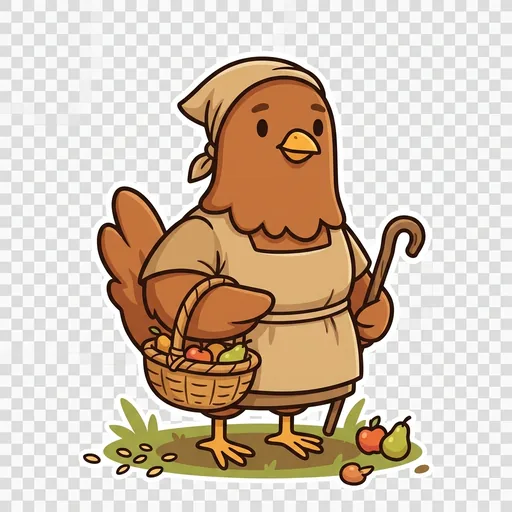 Merle the Gleaner A hanging piece — a piece with no defender is a free piece (and the bait that only looks free) from GambitTales
 -
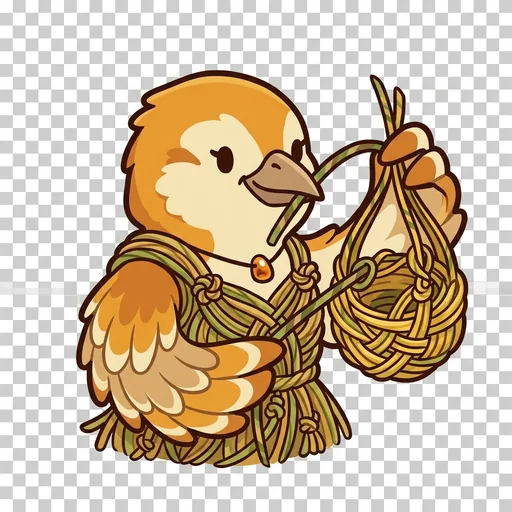 Linnet the Netweaver Mate in two — the first move forces the reply, the second springs the mate from GambitTales
 -
 Inkling a child of the Green Names what she notices
Every recurring character has a short tune, so you can tell who is on stage before a word is said. The tunes play only when you tap, and the Reading Access sound switch turns them off.
The Honest Page
Which parts of this story are true, stretched or made up?
True
- Every move in this story is the game as it is usually published: seven moves, mate by three minor pieces.
- After 3...Bg4 the knight on f3 is pinned to the queen. It moves anyway, because taking the queen loses.
- The game was played at the Café de la Régence in Paris, where Légal was the strongest player of his day. Source
Stretched
- The story shows a full set of pieces. What we simplified: Légal is said to have given his opponent the odds of a rook: he played without his a1 rook. It never moves in the published game, so the moves are the same. Source
- The date is given as 1750. What we simplified: That is the traditional date; research suggests 1787 is more likely. The move order may also have been tidied afterwards to remove a flaw in the original game. Source
Made up
- Captain Castle's academy, the re-staging and chess pieces who talk are made up.