The Stretched Page · Reader · ages 9-14
Listen along
Loading audio…
Read by an AI-generated voice. The words on this page are the transcript.
1. Another True
Danya's correction came out on a Friday. It was printed on the back page, in a little box under From the Real World, with a line across the top that said A correction. Under it, in small capitals, was his name. He read it four times on the notice board by the anvil. Then he went home and did not mention it to anyone, which took a great deal of effort.
The next Friday he read the back page first, as he always did.
This week's story was about a man called Galileo. There was a drawing of a tall, leaning tower, with a little figure at the top holding two balls over the edge. Underneath it said:
In 1589 Galileo climbed the Leaning Tower of Pisa and dropped a heavy ball and a light ball over the side, in front of the whole university. They hit the ground at the same moment, and in one afternoon he proved that Aristotle had been wrong for two thousand years.
And beside it, on the Honest Page, in neat black capitals: TRUE.
Danya read it twice. Then he said what he always said.
"How do we know?"
"Know what?" said Beto.
Beto was sitting on the edge of the notice board's stone step with a broken alarm clock in his lap. He had taken the back off and was lifting the little wheels out one at a time, laying them in a row on his knee. He was nine. He took most things apart sooner or later.
"This." Danya pointed. "Galileo and the tower. It says true."
"Isn't it?"
"I don't know," said Danya. "That's the problem. Nobody's told me how they know."
Beto put a tiny brass wheel on his knee with the others. "Why does it matter?"
"Because last week somebody changed a line from Stretched to True," said Danya. "Without any source. And now here's another True."
Beto looked at the drawing. He looked at the little figure with the two balls. He looked interested in a way he had not looked a moment ago.
"How does it work?" he said. "The balls. Why would they land together? A heavy thing should fall faster. Shouldn't it?"
"Aristotle said so, I think," said Danya. "Says who, though?"
"Then why didn't they?"
Danya didn't know that either. He folded the paper and put it in his back pocket, next to his notebook.
"Come on," he said. "Print shop."
2. The Box by the Door
The printer was setting type when they came in. She had a long tray of little metal letters in front of her and was picking them out one by one with a pair of tweezers, without looking.
"Your correction went down well," she said. "Three people stopped me in the bakery."
"Thanks," said Danya. His ears went warm. Then he held up the new paper. "Who sent in the Galileo story?"
"Same as always. The box." She nodded at the wooden box by the door. Notes for the Friday Paper.
"Can I look?"
"Help yourself. I haven't emptied it."
Last week Danya would have said something about checking. He thought about it. He decided not to. The printer had one press and one pair of hands. It was not her job to check every story. It was his, now, apparently.
He lifted the lid of the box. On top was his own correction from last week, with a pin through the corner and the printer's tick on it. Under it was a note about a lost tortoise. Under that was a slip of paper torn from a notebook.
Galileo. Mark it True. It's in every science book.
There was no name. The words had been written in pencil first, quite lightly. Then somebody had inked over the pencil, carefully, following every letter.
Danya held it up to the window. The grey pencil showed through under the ink, the way a shadow shows under a sheet.
"Same person," he said.
"Why the same person? How does that work?" said Beto. He had come to look. He liked anything with a mystery in it.
"Pencil, then ink over the top. Same as the apple note." Danya put the slip in his notebook, carefully, so it would not crease. "Somebody who wants to be sure. Or somebody who changed their mind."
"From where?" said Beto. "Where did they get it? The tower thing."
"That's the right question," said Danya. "There's a book at the back."
The big leather book was still on the back table, with the dip in the middle. Somebody had turned it to a new page. At the top was a picture of a tall white tower, leaning hard to one side. A man in a black gown stood at the top. Two balls were in the air below him, side by side.
The Tower, said the heading.
Beto put his finger on the tower. "It really leans that much?"
"I think so," said Danya.
He bent over the page.
3. The Pisa Corridor
The hammer rang once. A spark jumped off the anvil and did not go out. It waited. They followed.
The note came across the Green and in under the print shop door. The spark came with it, bright as a match head. It hopped once on the leather book, then once on the floor, and then it went to the green curtain at the back of the shop and waited.
The spark slid under the green curtain into the drying room, and the drying room went back much further than the shop did.
Beto went first. He did not look as if he minded. Danya went after him with his notebook open.
The corridor was the same as before, long and tall, with printed pages pegged up overhead like washing. But this time the doors were different. The cards beside them all had years on them, and the year on the nearest card was this year.
"The oldest telling is always at the back," said a voice. "Hello again."
Trace was leaning against the first doorway, with his notebook in his cardigan pocket and his pencil behind his ear.
"This is Beto," said Danya. "There's a new one. Galileo and the Leaning Tower. Somebody's marked it true."
"The tower," said Trace. He looked down the corridor and whistled. "That's a long one. Where did they get it from?"
"Who checked that? The note just says it's in every science book," said Danya.
"Then let's see what every science book got it from," said Trace. "Keep going back."
4. Two Stones
The first doors were full of the tower. In one, a cartoon Galileo leaned off the top with his hair standing up. In another, a schoolbook showed the two balls with little arrows and the words SAME TIME! A third had a model of the tower made of matchsticks, with two marbles stuck to it with glue.
Beto stopped at a shelf in the corridor. On it were jars of buttons and pebbles and dried beans, the kind of shelf every print shop has, for weighing down paper.
"I can check this," he said.
He took a big round pebble from one jar and a dried plum stone from another. The pebble was much heavier. He weighed them in his hands, one in each, like a pair of scales.
"How does it work?" he said. "If the heavy one falls faster, it'll hit first. Watch."
He climbed onto a stool, held both arms out over the floor and let go.
Clack. Tick.
They were so close together that it was hard to tell them apart. Danya thought they were the same. Beto was sure.
"Same time!" said Beto. "They landed together. So it's true. Galileo did it. He was right, so it happened."
Danya opened his notebook. Beto was right about the stones. He had heard them.
"What exactly does it say?"
The voice came from a doorway on the other side. A young bear in a striped scarf and a blue cardigan was sitting on a stool with a pot of glue and her red pencil.
"Claim," said Danya. "This is Beto."
"I heard," said Claim. "Clack, tick. Very good. Now. What exactly does the paper say?"
Danya read it out. Galileo, the tower, the whole university, the two balls, one afternoon.
"Say the claim in one sentence," said Claim.
"Galileo dropped two balls off the tower," said Beto, "and they landed together."
"Which part did your stones check?"
Beto looked at the pebble and the plum stone on the floor.
"The landing together part," he said.
"Did your stones check that Galileo stood on the tower?"
Beto opened his mouth. He closed it again. He climbed down off the stool, slowly.
"No," he said. "They checked how things fall. Not what Galileo did."
"A true idea," said Claim, "is not a true event. The stones tell you the idea is good. They can't tell you who stood where, four hundred years ago. So what's the claim?"
Beto picked up the plum stone and turned it over. His face had gone flat. He had been so pleased.
"It was a good test, though," said Danya. "You checked one claim. That's not nothing."
"It's not nothing," said Claim. "It's one line out of four. Shall we find the other three?"
Beto put the plum stone in his pocket. "Four?" he said. "Why four?"
5. Four Claims
Claim took a fresh strip of paper and slid it across to Danya with the red pencil.
"Write them out. One claim per line."
Danya thought about it. Then he wrote:
1. Heavy and light things fall at the same speed. Aristotle was wrong.
2. Galileo dropped two balls from the Leaning Tower of Pisa in 1589.
3. The whole university watched him.
4. He proved it in one afternoon.
"Good," said Claim. "Four claims. Any of them could be true and the others false. Which one did Beto check?"
"Number one," said Beto. "Sort of. With a pebble."
"And which one is the story about?"
Danya looked at the list. The picture in the big book had been of the tower. The cartoon was of the tower. The matchstick model was of the tower.
"Number two," he said. "The tower. Everybody draws the tower."
"Underline the exact words," said Claim. "Twice."
Danya underlined from the Leaning Tower twice. Beto watched him do it.
"That's the bit that's a story," Beto said. "Not the falling. The falling's physics."
"Exactly," said Claim, looking pleased. "Fell, or hit? Tower, or idea? Those are different claims."
"So who checked the tower part? Who first said he did it?" said Danya.
"Underline it, then go and find Trace," said Claim. "He likes a long corridor."
6. The Pupil's Book
They walked a long way. The years on the cards went down: last century, the century before that. A textbook with gold edges. A painting of Galileo at the top of the tower, with a crowd of men in robes below, all looking up. Danya stopped at that one.
"Where did the painter get the crowd from?" he asked Trace.
"Good," said Trace. "Where did they get it from? Look in the corner."
In the corner of the painting there was a little brass plate. It said the painter had followed the account of Galileo's pupil.
"His pupil," said Danya. "So there's a pupil. Keep going back."
The corridor went on. The doors thinned out. Then, near the very back, they came to a door whose card said 1717.
Inside was a room with a printed book open on a stand. It was in Italian. Beside it, on a card, someone had written in English:
A life of Galileo, by Vincenzo Viviani, his last pupil. Written in 1654. Printed in 1717.
Trace was already reading the card beside the book.
"This is the one the painters copied," he said. "Here. Viviani says Galileo made repeated drops from the height of the Leaning Tower, in the presence of other professors and all the students."
"So that's it," said Beto. "That's the source. It's real."
"Older isn't the same as first," said Trace. "Check the date. Look how far apart they are. Written in 1654. Printed in 1717."
Danya did the sum in his notebook. 1717 take away 1654. "Sixty-three years," he said. "The book sat there for sixty-three years before anyone printed it?"
"Check the date. Before anyone printed it," said Trace. "So everybody who drew the tower drew it after 1717. Before that, almost nobody had read it."
"Show me the source before Viviani," said Danya. "Anything older that says the tower?"
Trace walked to the very back of the room. There was one more door. It had no card at all. He opened it. Inside were Galileo's own books, a whole shelf of them, in Italian and Latin, with ribbons in them.
"These are Galileo's," said Trace. "He wrote a great deal. He wrote about falling bodies again and again. He argued with Aristotle on page after page."
"And the tower?"
"Who wrote it down first?" said Trace. He ran his finger along the shelf. "Not him. He never mentions dropping anything off the Leaning Tower. Not once."
Danya stared at the shelf.
"He did the most famous experiment in the world," he said, "and he never wrote it down?"
"Keep going back and you run out of tower. Or he didn't do it," said Trace. "Or he did something smaller, that he didn't think was worth writing down. A copy is not a source. And here the first source isn't even his."
7. Who Was There
They came out of the room. On the bench in the corridor sat an old bear with round glasses and a long blue scarf, wound twice round his neck. He was eating a biscuit, very slowly.
"Weigh," said Danya. "We found the first telling. It's Galileo's pupil."
"Who was there?" said Weigh.
"At the tower? Galileo," said Danya. "And the professors and students, if it happened."
"And Viviani?"
Danya looked at the card in his notebook. He had copied the date. Vincenzo Viviani, born 1622.
"No," he said slowly. "Galileo came to Pisa in 1589. Viviani was born in 1622."
He wrote it as a sum. 1622 take away 1589.
"Thirty-three years," he said. "Viviani wasn't born for thirty-three years. He couldn't have been there."
"How long after did they say it?" said Weigh.
1654 take away 1589. "Sixty-five years," said Danya.
"Sixty-five years," said Weigh. He finished his biscuit and brushed the crumbs off his scarf. "So who told Viviani?"
"Galileo, maybe," said Beto. "If he was his pupil."
"Who was there with Galileo, and when was he his pupil?" said Weigh.
Trace had it in his notebook. "From 1638," he said. "When Viviani was sixteen. Galileo was an old man by then. He was blind. He died four years later."
"An old man," said Weigh, "telling a boy about something he did when he was young. If he told him at all. And the boy writing it down twelve years after the old man died." He took off his glasses and polished them. "In a position to know is not the same as remembering right."
"Why would he make it up? He loved him," said Beto. "He was his pupil. He wouldn't make it up."
"Weigh it. I didn't say he made it up," said Weigh. "I said weigh it. Don't count it. Viviani was close to Galileo. That counts for something. He was writing a life of his hero, to make him famous. That counts for something too. And he was a long way off. A good witness can still be a long way off."
Danya sat down on the bench.
"So did it happen or not?"
Weigh thought about it for a long time. Nobody hurried him. You could not hurry Weigh.
"Nobody knows," he said. "Galileo never says so. One pupil says so, sixty-five years later. Many people who study this think it was an experiment he only did in his head. You can write Nobody knows. That's allowed."
Danya wrote it down.
8. A Tower in Delft
"Keep going back, but there's a side door," said Trace. "Off the corridor. Not about Galileo. You'll want to see it."
He led them back a few steps to a narrow door they had walked straight past. The card beside it said 1586.
"That's before Pisa," said Danya. "Three years before."
Inside was a small room with a window. On the table was a thick book in Dutch, with diagrams of pulleys and weights. A card beside it said:
Simon Stevin, an engineer in the Dutch town of Delft. He wrote this book in 1586.
"Check the date first. Then read the page that's marked," said Trace.
Danya read the translation pinned beside it. It said that Stevin and his friend Jan Cornets de Groot had taken two balls of lead, one ten times heavier than the other, and let them fall together from about thirty feet, from the church tower in Delft. And the light one did not take ten times longer. They fell together, Stevin wrote, so that they seemed to hit the board below with one sound.
Beto read it over his shoulder. His face lit up.
"Clack," he said. "One clack. That's my stones!"
"Who was there?" said Weigh, from the doorway.
"Stevin was there," said Danya. "He did it. And his friend. And he wrote it down himself."
"How long after did they say it?"
Danya looked at the date. "The same year," he said. "He wrote it down the same year he did it."
"Weigh it," said Weigh. "Don't count it. One man who was there, writing it the same year, is worth more than a whole wall of paintings."
"How does that work, then? Somebody really did drop two balls off a tower," said Beto. "It's just that it was a Dutchman, in Delft."
"It was Stevin, in Delft," said Danya. "And he said so himself."
"Keep going back and there are others before him, too," said Trace. "People had been testing Aristotle for years. Galileo wasn't the first to think he was wrong."
Beto sat on the floor and took the plum stone out of his pocket.
"Why does everybody say Galileo, then?" he said. "Why not Stevin?"
"Who is famous?" said Weigh gently.
"Galileo."
"Whoever is famous is not always right," said Weigh. "But whoever is famous gets the story. A story grows towards the famous person, the way a plant grows towards the window."
9. Twenty-Five
Danya sat with his notebook open on his knee. He looked at his four claims.
1. Heavy and light things fall at the same speed. Aristotle was wrong.
That one was Galileo's. Trace had shown them the shelf. Galileo argued it again and again, and set it out properly in his big book about motion. That one was True. Beto's stones had even backed it up.
"When did his big book come out?" Danya asked.
"1638," said Trace. "The year Viviani came to him."
"Weigh the man, too. How old was he at Pisa?" said Weigh.
Trace checked his notebook. "Born in 1564."
Danya did the sum. 1589 take away 1564. "Twenty-five," he said. "He was twenty-five. A young teacher. And the big book came out when he was old."
"One afternoon. Is that the exact claim?" said Claim. She had come along the corridor with her glue pot and was sitting on the step beside them. "What exactly does it say?"
Danya read claim four out loud. He proved it in one afternoon.
"No," he said. "He spent his whole life on it. Stevin tested it first. Other people argued about it before both of them. One afternoon is the stretched bit."
"And three?" said Claim.
3. The whole university watched him.
"Says who? Only Viviani," said Danya. "Sixty-five years later. It makes a better picture. A crowd looking up."
"Then it's stretched," said Claim, pleased. "It's nearly true, and someone made it a better story."
"And two," said Beto. "The tower."
Danya underlined it again.
"Nobody knows," he said.
Beto was quiet for a bit. He was rolling the plum stone between his palms.
"So were they lying?" he said. "Viviani? The painters?"
"Did they think it was true?" said Weigh.
"Probably."
"Then they weren't lying," said Weigh. "They wanted a hero on a tower, and a tower makes a better story than a shelf of books. People like a better story. That's why the story grew."
"Stretching is honest," said Trace, "when you say that you did it."
"That's what the Honest Page is for," said Danya.
10. The Line, Fixed
He wrote the correction out on a clean page of his notebook.
From the Real World — a correction.
Galileo argued that heavy and light things fall at almost the same speed, and that Aristotle had been wrong. He set it out in his book Two New Sciences in 1638. TRUE.
Galileo dropped two balls from the Leaning Tower of Pisa. NOBODY KNOWS. Galileo never says so. The only account is by his pupil Vincenzo Viviani, written in 1654, sixty-five years later. Viviani was not born yet in 1589.
The whole university watched him prove it in one afternoon. STRETCHED. Only Viviani mentions a crowd. The work took Galileo years.
In 1586, three years before Galileo came to Pisa, Simon Stevin and Jan Cornets de Groot dropped two lead balls from a church tower in Delft. They landed together. Stevin wrote it down that year. TRUE.
He showed it to Claim. She underlined argued and only account and nodded.
He showed it to Trace. Trace checked every date against his own notebook and said, "Yes. That's the oldest telling. Good."
He showed it to Weigh. Weigh read it twice, slowly, and handed it back.
"Weighed," said the old bear. "Not counted."
Beto read it last.
"You put Stevin in," he said.
"He did it," said Danya. "He should be in."
"And my stones?"
Danya thought, and then wrote one more line at the bottom, in pencil, very small: Tested again on the Green with a pebble and a plum stone, by Beto. They landed together. Then, because the printer would need to read it, he went over the pencil in ink. He did not think about it at all.
On the inside of his notebook's cover, under FELL, he wrote a second word, in small letters: DROPPED.
The spark slid back under the curtain, and the drying room was just a cupboard again.
They were standing by the back table. The big book lay open at the picture of the tower. Danya looked at it closely now. The man at the top was holding two balls. There was no crowd in this picture at all. Just the tower, and the sky, and one man.
He took the correction to the printer. She read it through, slowly, with her finger under each line.
"Who's Stevin?" she said.
"A Dutchman," said Beto. "He did it first."
"Next Friday," said the printer. "With both your names."
"And the note in the box?" said Danya. "The pencil one, inked over?"
"Still no name," said the printer. "You'll find them." She went back to her letters and her tweezers.
The spark dimmed to a warm dot and settled back on the anvil. The Green was just the Green again.
Back on the Green
Outside, Beto sat on the step of the anvil and put his alarm clock back together. He did it quickly. The wheels went back in the right order. He had laid them out in the order he took them out.
"Why do you do that?" said Danya. "Lay them in a row."
"So I know what came first," said Beto. "If you don't know what came first, you can't put it back."
Danya looked at him for a moment.
"That's what Trace does," he said.
Beto shrugged. He held up the pebble and the plum stone, one in each hand, at arm's length over the grass.
"Again?" he said.
Lan and Tí had come over to watch. Beto let go. Thud. Tick. They landed together in the grass.
"Again!" said Tí.
Beto did it again, and again, and every time they landed together. It did not matter who was famous. It did not matter who was watching. The stones did the same thing every time.
"That part's true," said Danya. "You can check that part any day you like."
"What's the other part?" said Lan.
"The story," said Danya. "That part you have to go back for."
Saved. The next chapter will be here whenever you come back.
Who you met
-
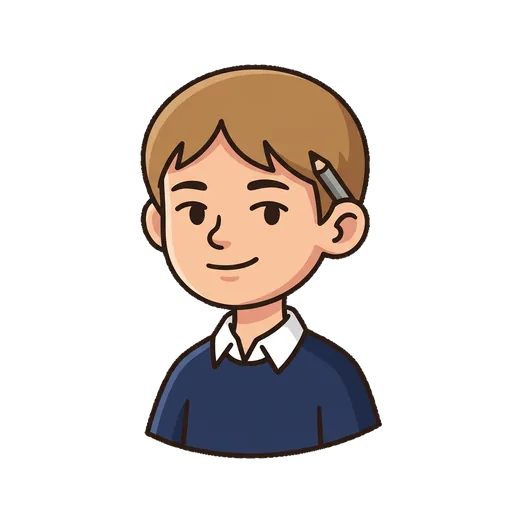 Danya a child of the Green Asks "how do we know?"
-
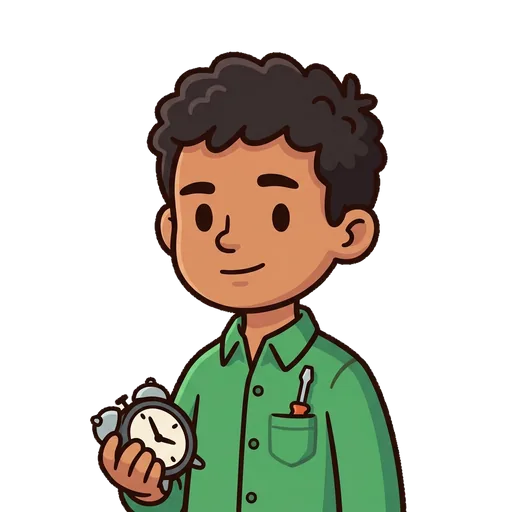 Beto a child of the Green Takes things apart
-
 Trace Follow a story back to where it started; copies are not sources from TruthQuest
-
 Claim Before you check a story, say exactly what it claims from TruthQuest
-
 Weigh Ask who was in a position to know, and when they said it from TruthQuest
-
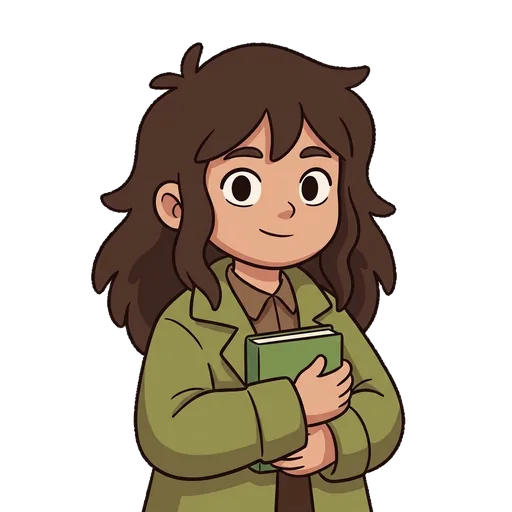 Inkling a child of the Green Names what she notices
-
 Lan a child of the Green Goes first; makes a friend in a minute
- Tara a child of the Green Listens longest, speaks last
Every recurring character has a short tune, so you can tell who is on stage before a word is said. The tunes play only when you tap, and the Reading Access sound switch turns them off.
The Honest Page
Which parts are true, stretched or made up — and what does nobody know?
True
- Galileo argued that a heavy body and a light one, falling through air from the same height, reach the ground at very nearly the same time, against Aristotle's teaching. He set the argument out in his Two New Sciences, published in 1638. Source
- The only account of Galileo dropping weights from the Leaning Tower comes from his last pupil, Vincenzo Viviani, in a life of Galileo composed in 1654 and published in 1717. Viviani says the drops were made 'in the presence of other professors and all the students'. Source
- Viviani was born in 1622, thirty-three years after Galileo came to Pisa in 1589, and became Galileo's assistant in 1638. He wrote the tower story sixty-five years after 1589. Source
- In 1586 Simon Stevin and Jan Cornets de Groot dropped two lead balls together from the Nieuwe Kerk in Delft, about thirty feet, and they reached the ground at the same time. Stevin printed it that year. Source
- Galileo was twenty-five when he came to Pisa in 1589 (born 1564). Two New Sciences came out forty-nine years later.
Stretched
- The whole university watched Galileo prove Aristotle wrong in one afternoon. What we simplified: Only Viviani mentions a crowd, writing decades later. The argument against Aristotle took Galileo years, and others had tested it before him.
Made up
- The drying room, the corridor of doors, Claim, Trace and Weigh as people in it, the Friday Paper and the notes in the box are made up. Galileo, Viviani, Stevin, de Groot and their dates are real.
Nobody knows
- Whether Galileo ever dropped anything from the Leaning Tower. Galileo never describes it, and many historians think it was a thought experiment. Source