The Piper at the Bridge
The idea: a town legend told three ways; the oldest tellings of Hamelin have a piper and children, and no rats.
Read it
Who is in this book
-
 Danya a child of the Green Asks "how do we know?"
-
 Beto a child of the Green Takes things apart
-
 Claim Before you check a story, say exactly what it claims from TruthQuest
-
 Trace Follow a story back to where it started; copies are not sources from TruthQuest
-
 Weigh Ask who was in a position to know, and when they said it from TruthQuest
-
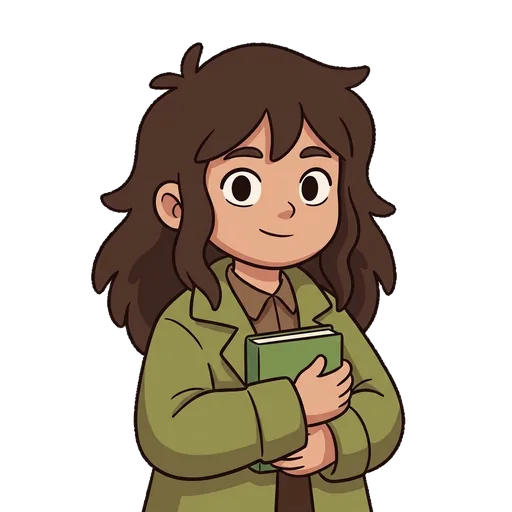 Inkling a child of the Green Names what she notices
-
 Lan a child of the Green Goes first; makes a friend in a minute
- Tara a child of the Green Listens longest, speaks last
Every recurring character has a short tune, so you can tell who is on stage before a word is said. The tunes play only when you tap, and the Reading Access sound switch turns them off.
The Honest Page
Which parts are true, stretched or made up — and what does nobody know?
True
- The Lüneburg manuscript, written about 1440 to 1450, says that in 1284, on the feast of Saints John and Paul, a well-dressed young man of thirty crossed the bridges into Hamelin and played a silver pipe, and 130 children followed him out of the town and were lost. It has no rats in it. Source
- A church window in Hamelin from about 1300 showed a colourful piper and children dressed in white. It was destroyed in 1660. We know it from people who described it. Source
- Writers about Hamelin's town records report an entry from 1384: 'It is 100 years since our children left.' Source
- The rats first appear in a chronicle written by Froben Christoph von Zimmern, about 1559, some 275 years after 1284. The Brothers Grimm printed the story in 1816, and Robert Browning's poem came out in 1842. Source
- In Hamelin there is a street called Bungelosenstrasse, the street without drums, where music and dancing are not allowed. Source
Stretched
- The piper rid Hamelin of rats, and when the town would not pay him, he took the children. What we simplified: The oldest tellings have the piper and the children but no rats and no unpaid bill. Those were added about 275 years later.
Made up
- The drying room, Claim, Trace and Weigh as people in it, the Friday Paper and the notes in the box are made up. Hamelin, the window, the manuscript, the chronicles, the Grimms and Browning are real.
Nobody knows
- What happened to the children of Hamelin. Historians have many ideas. One is that young people left to settle land far to the east, which people from that region really did. None of them is agreed. Source
Tell it back
Tell the story in your own words: who was there, what went wrong, and what they found out. Then the sixth page of Danya's two-column notebook goes on your belt.
On your belt: the sixth page of Danya's two-column notebook.
Your belt lives on this device. Nothing is sent anywhere.
Ring the hammer for someone
Pick this book for someone younger. The link carries only the book, and it will wait for them on the Green.