The Stretched Page · Reader · ages 9-14
Listen along
Loading audio…
Read by an AI-generated voice. The words on this page are the transcript.
1. One Year Old
The Friday Paper was one year old, and the printer had decided it should have a birthday.
"A special issue," she said. "Four sides instead of two. And on the front, the very first story we ever printed."
Danya knew which story that was. He had written it.
He had been eleven, and the paper had been a single sheet that nobody read, and the printer had said, "If you want a desk, bring me a story." That same afternoon something had happened at the duck pond, and he had run home and written it down, and the next Friday it was on the front.
BETO DIVES IN, it said. On Tuesday Beto dived into the deep end of the duck pond and swam Tí to the bank. Beto says he didn't even think. Tí is fine.
Now here it was again, a year later, printed in big black letters on the front of the birthday issue. And because the birthday issue had an Honest Page under every story, there was one under his too. Beside the first line, in neat capitals: TRUE.
Danya read it twice and felt warm all over. His first story. On the front, again.
"Hm," said Tara.
She was sitting on the step of the print shop, reading the same page. She was fifteen, and she read things more slowly than anybody he knew, and she almost never said anything until she had read them all the way through.
"What?" said Danya.
"Let me listen first," said Tara, and kept reading.
Danya went inside to check the box. He always checked the box on a Friday. He had checked it every week since the apple.
There was a slip in it, under a note about a choir practice. He knew what it would look like before he unfolded it.
Duck pond. Mark it True. I was there.
No name. Pencil first, then inked over, every letter. And on the back, pressed so hard it stood up like braille, the word True.
Danya laughed out loud. The printer looked up from the press.
"It's the duck pond one," he said. "Somebody wants it marked true."
"It is marked true," said the printer.
"I know. So for once they're right." He put the slip in his notebook with all the others. Eight weeks of slips, now. "Who checked that? I did. I was there too."
He went back out to the step. Tara had finished reading. She was looking at the front of the print shop, at the wooden box beside the door, with its slot in the lid and its card on the front.
"Can I say one thing?" she said.
"Go on."
But she shook her head. "Later," she said. "When I'm sure."
2. Beto Doesn't Like It
Beto came past at lunchtime with a bicycle wheel under one arm and a spanner in his back pocket. Danya held up the birthday issue.
"You're on the front!"
Beto looked at it. He did not smile.
"I don't like that one," he said.
"Why not? It's the best story we've ever had."
"Why?" said Beto, frowning at the headline. "Why is it the best? I didn't do anything."
"You saved Tí."
"Why? I only picked him up," said Beto. "He sat down in the water and he couldn't get up because his coat was full of pond. I picked him up. Everybody keeps saying I dived. People at the market say it. Somebody bought me a cake."
"Says who? Everyone. That's because you were brave," said Danya.
"How does it work, being brave," said Beto, "if you only got your knees wet?"
He went off across the Green with his wheel. Danya watched him go.
"He's being modest," he said. "He always does that."
Tara said nothing. She was still looking at the card on the box.
"That's not fair," said Danya. "You think I got it wrong."
"I didn't say that. I was going to say something," said Tara. "I'm still going to. I just want to be sure first."
The printer leaned out of the door.
"Back table," she said. "The big book's open. You'll want to see where it's open."
The big leather book lay on the back table as it always did. But it was not open at a famous scientist this time. It was open at a page Danya had never seen before, near the very end, where the paper was new and white.
At the top, in small type, it said: The Green.
And underneath was a picture of the duck pond.
Danya bent over the page.
3. A Story from the Green
The hammer rang once. A spark jumped off the anvil and did not go out. It waited. They followed.
The spark came in under the print shop door and landed in the middle of the duck pond in the picture, and the little printed water seemed to ripple. Then it went to the green curtain and waited.
The spark slid under the green curtain into the drying room, and the drying room went back much further than the shop did.
Tara went in slowly. Danya went in after her, holding his notebook.
The corridor was the same as always: the pages pegged overhead like washing, the doors, the cards with their years. But it was much shorter. He could see the far end. There were only a few doors, and the card on the last one did not have a year on it at all.
It said: One year ago.
"What exactly does it say?" said a voice, and there was Claim, on her stool by the first door, with her red pencil and her pot of glue.
"It's my story," said Danya. "The duck pond. It's from the Green."
"It's a story," said Claim. "The drying room doesn't mind whose. What exactly does it say?"
Danya read it out, proudly. He knew it by heart.
"Say the claim in one sentence," said Claim.
"I just did. It's all true. I was there."
Claim did not write anything down. She looked at him over her red pencil for a long moment.
"Underline the exact words," she said. "Then come and look at the doors."
4. The Front of the Corridor
The first door was the newest. Inside was a chalkboard from the Whetstone, the café on the Green, the kind they wrote the cakes on. In pink chalk it said: TODAY: BETO'S DIVE. Blue sponge, white icing, a sugar swan.
"A swan?" said Danya. "There wasn't a swan."
The next door held a drawing, in felt pens, pinned to the wall. A boy was leaping off a high rock into a wide dark lake, with a waterfall behind him. A small child was waving in the middle of the water. Underneath, in big careful letters: BETO by Inkling, age 8.
"How do we know? There isn't a rock," said Danya. "Or a waterfall. The duck pond's flat."
The next door had a voice in it. It was Lan, telling the story to somebody at the Saturday market, the way she told everything, quickly and all at once. In her telling, Beto swam right across the pond and back, twice, and fought off a swan that had wanted to take Tí away.
"I know what that means," the voice of Lan was saying. "It means he was a hero!"
Danya stood in the doorway with his mouth open.
"They've stretched it," he said. "My story. They've all stretched my story."
"A copy is not a source," said a voice behind them. Trace was leaning in the next doorway, with his notebook in his cardigan pocket and his pencil behind his ear. "Those are all copies. Where did they get it from?"
"From me," said Danya. "From the paper."
"What exactly does it say? Let's look at the paper," said Claim, and held out her red pencil. "One claim per line."
Danya wrote, leaning on the wall:
1. Beto dived in.
2. Into the deep end.
3. He swam Tí to the bank.
4. Tí is fine.
"Underline the exact words," said Claim.
He underlined dived, deep end and swam.
"Now," said Claim, "which of those did the swan come from?"
Danya thought about it. The swan wasn't in his story. But the swimming was. And if you swam in a pond, there might be a swan. And the waterfall wasn't in his story either. But diving was. And if you dived, there had to be something high to dive from.
"The cake people needed a swan because I said he swam," he said slowly. "And Inkling needed a rock because I said he dived."
"Fell, or hit? Dived, or something else? Those are different claims," said Claim. "And every one of these doors grew out of one of your words."
5. The Last Door
They walked to the end of the short corridor. It did not take long. Trace walked beside them.
"Keep going back," he said. "Who wrote it down first?"
"I did," said Danya. "In the paper."
"Older isn't the same as first. Check the date," said Trace. "The paper came out on the Friday. Did you write it on the Friday?"
Danya stopped walking.
"No," he said. "I wrote it on the Tuesday. In my notebook. Straight after."
Trace pointed to the last door. One year ago.
Inside was a little table, with a lamp on it, and on the table, open, was a cheap notebook with a black cover. It was not his notebook now. It was his old one, the one before, the one he had lost at the end of the summer. He had thought it had gone to the tip with the recycling.
It was open at a page near the front. There was his handwriting, a year younger and much messier. There was the story, written in pencil, and then gone over in ink, every letter, so the ink sat on top of the grey like a coat.
Beto dived into the deep end and swam Tí to the bank.
"That's it," said Danya. "That's the first one. See? It's the same."
Trace did not say anything. He lifted the lamp, and tilted it, so that the light came in low across the page.
Under the ink, the grey of the pencil showed through. Danya had seen that a hundred times on the slips from the box. He had never looked for it on his own page.
The pencil did not say dived.
Danya bent closer. Under the ink, in faint grey letters, the pencil said:
Tí sat down in the shallow end. Beto waded in up to his knees and picked him up.
And then, after it, in pencil too, a little line he had forgotten he had ever written:
Not much of a story.
6. The Page
Danya's ears went hot. Hotter than they had gone in the print shop with the apple, hotter than they had ever gone.
"That's not fair," he said. "That's private. That's my notebook. Nobody was supposed to see that."
Tara was standing beside the table. She did not say anything.
"Nobody needs to see this," said Danya.
He put his hand on the page. He had it by the top corner, between his finger and thumb, and he was going to pull. It would come out easily. It was a cheap notebook. Then the last door would be empty, and the corridor would start with the paper, and the paper said dived, and that was all anyone would ever know.
"A copy is not a source," said Trace.
Danya stopped.
"Keep going back. Those doors at the front are copies," said Trace, very quietly. "This isn't. This is the only page in the whole corridor that's a source. If you tear it out, the story starts with a stretch, and nobody can ever go back past it. Not you. Not anybody."
"Everybody will know I made it up."
"Keep going back. You didn't make it up," said Trace. "It happened. Tí sat in the pond, and Beto went in after him. You made it a bit better. That's not the same."
Danya's hand was still on the page.
"Stretching is honest," said Trace, "when you say that you did it."
Danya let go of the corner. He smoothed it down flat, where his fingers had creased it.
"I said that," he said. "Every week. I said it to Inkling, and Beto, and Lan. Stretching is honest when you say you did."
"You did," said Tara. "You say it very well."
"But I never said it about me."
7. Who Was There
They sat on the bench outside the last door. After a while Weigh came along the corridor with his lamp, very slowly, the way he always did, and lowered himself onto the end of the bench.
"Who was there?" he said.
Danya made himself think about it properly, the way he would for Galileo or Franklin.
"Tí," he said. "Beto. Me. I was on the path. And Bà Tư was at her window, because she was the one who shouted."
"How long after did they say it?"
"I wrote the pencil that afternoon. Straight after. I was still wet from carrying his boot."
"And the ink?"
Danya had to think harder about that. He remembered running home. He remembered his mum's face when he came in dripping. He remembered supper.
"That evening," he said. "After supper. I told it at supper. Then I told it again to my sister. Then my dad came home and I told it to him."
"How long after did you ink it? How many times did you tell it," said Weigh, "between the pencil and the ink?"
Three at supper and after. And once in pencil, before that. "Four tellings," said Danya. "Four, before I inked it."
"In a position to know is not the same as remembering right," said Weigh. "You were there. You were a good witness. In the afternoon you wrote down what you saw. Then you told it three times, and every time somebody's eyes went wide, and every time it got a little bigger. By the evening, when you went over the pencil, your hand didn't follow the pencil any more. It followed the story you'd been telling."
"I didn't decide to change it."
"Weigh it. Don't count it," said Weigh. "I don't think you did decide. A good witness can still be a long way off. Even four hours. Even from his own pencil."
Danya looked at the page through the open door. Not much of a story.
"I wanted it on the front," he said. "Waded in up to his knees doesn't go on the front."
"No," said Weigh. "It doesn't. That's usually the reason."
8. Smashed or Hit
"There's a side door," said Trace. "Check the date. You'll want this one."
It was not on the corridor at all. It was a narrow door behind the bench, so narrow that Weigh had to stay outside it. The card said 1932.
Inside was a small room with a book on a stand, and a card in plain English.
Remembering, by Frederic Bartlett. A psychologist at the University of Cambridge.
"Who was he?" said Danya.
"Where did they get it from? Somebody who tested this," said Trace. "Not in the record. In a room, with people, on purpose. He gave them a story to read, a folk tale from far away that they had never heard before. Then he asked them to tell it back, later. And again, later still. Some of them passed it on from person to person, the way a story goes round a market."
"And?"
"Read the card."
Danya read it. When people told the story back, the card said, it got shorter. The parts that seemed strange to them were left out, or changed into things they were used to. Nobody was trying to change it. It changed anyway.
"That's the swan," said Danya. "And the waterfall."
"Who wrote it down first? Bartlett," said Trace. "Born 1886. He was forty-six when the book came out."
1932 take away 1886. Danya checked it. Forty-six.
There was a second door inside the first one. The card said 1974. Claim was sitting beside it on her stool, as if she had been waiting there all along.
"What exactly does it say?" she said. "This is the one for me."
Inside, a film was playing on the wall, a short one, a minute long, of two cars bumping into each other at a crossroads. The card underneath said that two scientists, Elizabeth Loftus and John Palmer, had shown a film like it to a hundred and fifty students.
"Say the claim in one sentence: they asked them all how fast the cars were going," said Claim. "But they didn't ask them all the same way. Some of them were asked how fast the cars were going when they smashed into each other. Some were asked how fast they were going when they hit each other. One word different."
"How do we know? I bet the smashed people said faster," said Danya.
"They did," said Claim. "And a week later, they asked them all something else. Did you see any broken glass?"
Danya looked at the film. It was playing again. Two cars, a bump, a little crumple. He watched carefully.
"There isn't any glass," he said.
"Underline the exact words: there wasn't any glass," said Claim. "In the whole film. Sixteen of the fifty who'd heard smashed said they saw broken glass. Seven of the fifty who'd heard hit."
16 take away 7. "Nine more people," said Danya. "Remembering glass that wasn't there. Because of one word."
"Fell, or hit? Smashed, or hit? Those are different claims," said Claim, and underlined it twice. "And the word you choose doesn't only change the story. It changes what people remember."
Danya thought about Lan, at the market, telling it with the swan. Lan had been six. She had been on the Green that day.
"Lan was there," he said. "But she'd remember the paper. She'd remember my word."
"Hm," said Tara, very quietly, from the doorway. "Yes."
9. Not Who. What.
They came out of the side door. Weigh was still on the bench. Tara sat down beside him. She had been waiting all day, and Danya could see that she was ready now.
"Can I say one thing?" she said.
"That's not fair. You've been going to say it since this morning," said Danya.
"I was going to say it four weeks ago," said Tara. "Since the Martians. I think we missed someone."
"You said that. And then you said not who, but what."
"Not who. What." Tara took out a folded square of card from her pocket. "I borrowed this off the box this morning. The printer said I could."
It was the card from the front of the wooden box. Notes for the Friday Paper, it said, in big letters. Danya had seen it every week for a year. He had stopped reading it a long time ago.
Tara turned it over. Underneath the big letters, in much smaller writing, there were three more lines. The ink had faded a bit in the sun.
Write your note in pencil first, so you can be sure.
Then go over it in ink, so the printer can read it.
Thank you! From the Friday Paper desk.
Danya stared at it.
"I wrote that," he said. "I wrote that the week I started. Because people's notes were too messy to read."
"Hm. Everybody does what the card says," said Tara. "That's why every slip was pencil, inked over. It was never one person. It was everybody who ever used the box, doing what you told them."
"Who checked that? Not me. I said same person," said Danya. "Every week. I said it to Beto and Lan and Inkling. Same person."
"You did," said Tara. "I should have said sooner. I noticed in the fourth week, when I felt the back of the slip. I wanted to be sure. I'm always waiting to be sure." She folded the card up again. "That's my stretch, maybe. Waiting too long to say a thing."
"So nobody was changing the Honest Pages on purpose."
"Who was there? Weigh it. People who believed the story," said Weigh. "People who loved a better one. Somebody's grandad. Somebody who'd seen the picture all their life. The witnesses were not lying."
"And the duck pond slip? I was there?"
"Hm," said Tara. "I'm not sure. But I think you know who was there."
Danya did.
10. The Line, Fixed
He went back into the last room one more time and looked at the old notebook. He did not touch it. He copied the pencil out, exactly, into his own notebook, on a clean page.
Then he wrote the correction. He wrote it in pencil first, because he wanted to be sure. Then, before he inked it, he read it out loud to Tara, slowly, word by word, to make sure the ink would follow the pencil this time.
From the Green — a correction, by the person who wrote the story.
Beto dived into the deep end of the duck pond. STRETCHED. Tí sat down in the shallow end and couldn't get up, because his coat was full of water. Beto waded in up to his knees and picked him up.
He swam Tí to the bank. STRETCHED. He carried him. It was three steps.
Beto went in straight away, without being asked, and got wet, and didn't make a fuss. TRUE.
I wrote it in pencil that afternoon, the way it happened. Then I told it four times, and when I inked it over I made it bigger. I didn't notice I had done it until this week. — Danya
Then he inked it, and the ink followed every letter.
He showed it to Claim. She underlined waded and carried and three steps.
He showed it to Trace. "Keep going back," said Trace. "You did. All the way back to yourself. That's further than most people go."
He showed it to Weigh. The old bear read it twice.
"Weighed," he said. "Not counted. And you put your name on it."
On the inside of the cover of his notebook there were seven words now, one under the other, every one in pencil, gone over in ink. Danya took his pencil and wrote an eighth: MINE.
He looked at it for a while. Then he left it in pencil.
The spark slid back under the curtain, and the drying room was just a cupboard again.
The big book on the back table had closed by itself. Danya took the correction to the printer. The printer read it all the way through with her finger under each line, and then she read it again.
"That goes on the front," she said. "Under the old one. Birthday issue. With your name."
"Can I change the card too?"
The printer handed him the pen on its string.
Under the three small lines on the card he added a fourth, in pencil first, then in ink:
If you change your mind between the pencil and the ink, say so.
Lan was outside on the step. She had a plum in each hand.
"Did you mark it true?" she said. "The duck pond? I put a note in. I was there!"
"I know," said Danya. "You were six. Do you remember it?"
"I remember Beto jumping off the—" Lan stopped. "Off the. Off the side." She frowned. "There isn't a side, is there. It's flat."
"Do you remember it," said Danya gently, "or do you remember the paper?"
Lan thought about it for a long time, for Lan.
"I remember the cake," she said at last. "The cake had a swan on it."
"Says who? Me," said Danya. "Come here. I'll show you the pencil."
The spark dimmed to a warm dot and settled back on the anvil. The Green was just the Green again.
Back on the Green
On Saturday morning the birthday issue went up on the notice board by the anvil, four sides instead of two. On the front were two stories, one above the other. The old one, BETO DIVES IN. And under it, the new one, with Danya's name.
People stopped to read it. Some of them laughed. Bà Tư read it with her glasses on the end of her nose and said, "Up to his knees. Yes. I was at the window. I told everyone it was up to his knees, and nobody listened to me."
Beto read it last. He read it twice. Then he went and stood by the duck pond.
The duck pond was very small, and very flat, and at the shallow end the water was so clear you could see the stones. Tí was sitting on the edge in his boots, looking at a beetle.
"Again!" said Tí, as soon as he saw Beto.
"You can't sit in it again," Beto told him. "Your gran will shout."
"Not sit in it," said Tí. "Tell it again."
So Beto told it, the small true way. Tí sat down. His coat filled up with pond. He couldn't get up. Beto walked in, up to his knees, and picked him up, and carried him three steps to the grass.
"That's it?" said Inkling, who had come to listen with her felt pens.
"That's it," said Beto. "That makes three. Three steps."
Inkling looked at her drawing, the one with the rock and the waterfall. Then she turned it over and started a new one on the back. A flat pond. A small boy. A bigger boy, wet to the knees. No swan.
"I noticed something," she said. "It's a better story small. You can see everybody's face."
Danya sat in the grass beside them with his notebook open at the eighth page. He wrote nothing on it. He just looked at the word in pencil, MINE, and let it stay that way.
"How do we know?" he said, mostly to himself.
"Hm. You ask somebody who was there," said Tara, sitting down beside him. "And then you check your own pencil."
Saved. The next chapter will be here whenever you come back.
Who you met
-
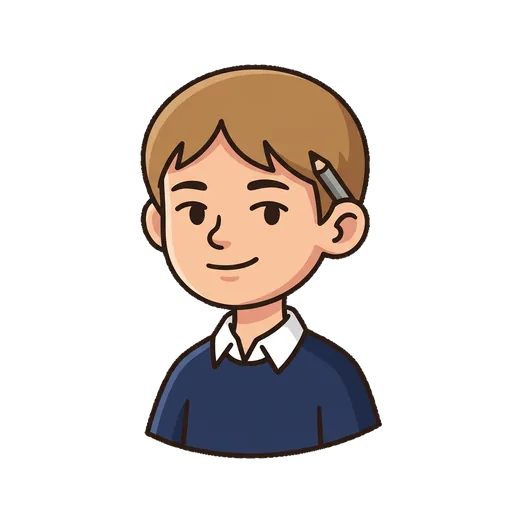 Danya a child of the Green Asks "how do we know?"
- Tara a child of the Green Listens longest, speaks last
-
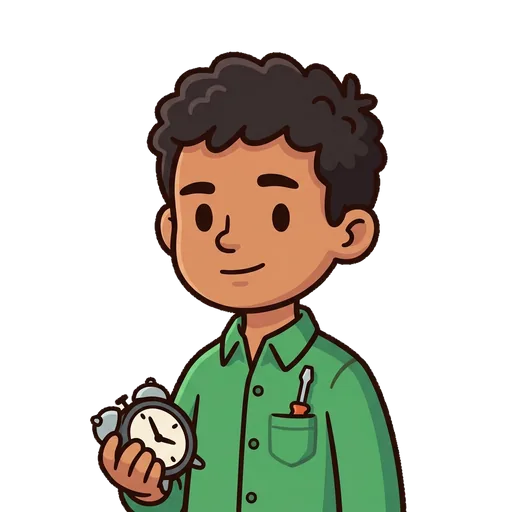 Beto a child of the Green Takes things apart
-
 Claim Before you check a story, say exactly what it claims from TruthQuest
-
 Trace Follow a story back to where it started; copies are not sources from TruthQuest
-
 Weigh Ask who was in a position to know, and when they said it from TruthQuest
-
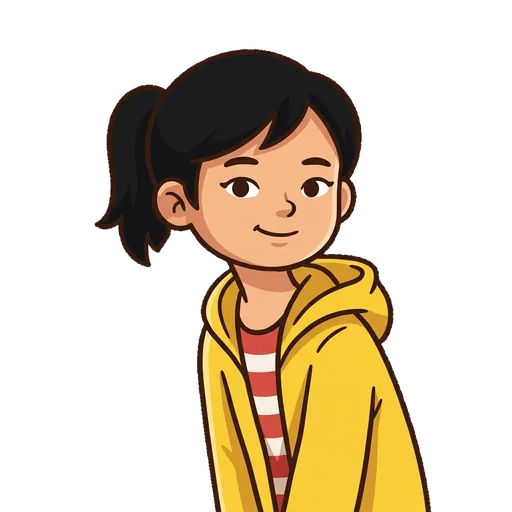 Lan a child of the Green Goes first; makes a friend in a minute
-
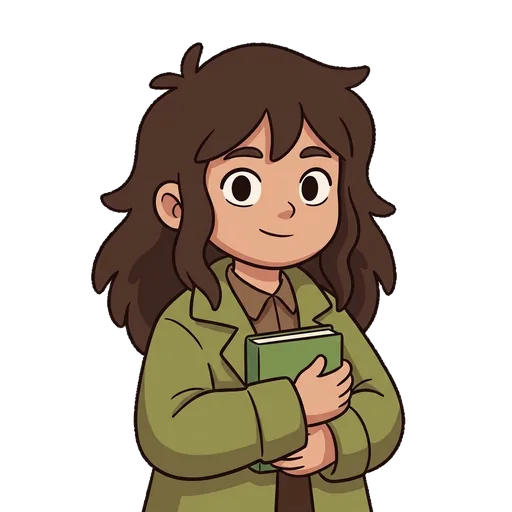 Inkling a child of the Green Names what she notices
Every recurring character has a short tune, so you can tell who is on stage before a word is said. The tunes play only when you tap, and the Reading Access sound switch turns them off.
The Honest Page
Which parts are true, stretched or made up — and what does nobody know?
True
- In 1932 the psychologist Frederic Bartlett, at the University of Cambridge, published a book called Remembering. When people retold a story from memory, the parts that did not fit what they expected were left out or changed into more familiar things. Source
- In 1974 Elizabeth Loftus and John Palmer showed 150 students a short film of a car crash. A week later, 16 of the 50 who had been asked how fast the cars were going when they 'smashed' said they had seen broken glass. Only 7 of the 50 asked about cars that 'hit' said so. There was no broken glass in the film. Source
- Bartlett was born in 1886, so he was forty-six when Remembering came out. Loftus and Palmer published forty-two years after him.
Stretched
- Beto dived into the deep end of the duck pond and swam Tí to the bank. What we simplified: In the story, Tí sat down in the shallow end and Beto waded in to his knees and picked him up. Danya changed waded to dived when he inked the page over.
Made up
- The Green, the duck pond, the Friday Paper, its box and card, Danya's first story, the drying room and Claim, Trace and Weigh as people in it are made up. Bartlett, Loftus, Palmer and their studies are real.
Nobody knows
- How much any of us has changed a story we have told many times. Nobody can check their own memory from the inside. That is why the pencil page is worth keeping.