The Clock That Skipped
The idea: measuring time against a steady beat.
Read it
One story, three ways: Sprout for a new reader, Grower in short chapters, Reader as a full chapter book. Same plot, same ending.
Who is in this book
-
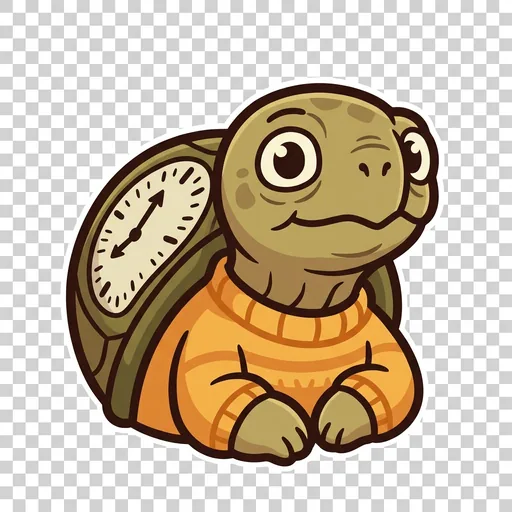 Tock A minute is sixty seconds, and you check a clock against a steady beat from MeasurePals
-
 Inkling a child of the Green Names what she notices
-
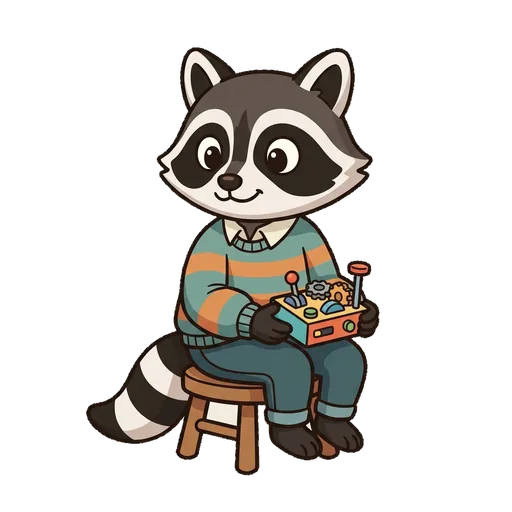 Fiddle You learn what a thing does by trying it — the playing is the learning from AweForge
-
 Inchy Measure by laying the same unit end to end, with no gaps from MeasurePals
-
 Stax Stack the counts into bars, and a pattern you could not see stands up from MeasurePals
-
 Beto a child of the Green Takes things apart
Every recurring character has a short tune, so you can tell who is on stage before a word is said. The tunes play only when you tap, and the Reading Access sound switch turns them off.
The Honest Page
Which parts of this story are true, stretched or made up?
True
- A longer pendulum swings more slowly, and a shorter one swings faster. Source
- Sixty seconds make one minute. Losing eight seconds every minute adds up to eight minutes in an hour.
- Clockmakers really do adjust a pendulum clock by moving the weight on the rod up or down. Source
- From the real world: Galileo studied swinging pendulums around 1602 and found that how long a swing takes depends on the pendulum's length. Source
Stretched
- The swing counts in the book are rounded: at eight lengths the pendulum makes about 51.96 swings a minute, not exactly 52. What we simplified: Whole numbers are easier to count and stack; the engine check allows half a swing either way.
- An Inchy is not a real unit of length. What we simplified: Clockmakers measure in centimetres or inches; any same-size unit laid end to end works the same way.
Made up
- Tickwell, its talking townspeople and Fiddle's travelling cart-forge are made up.
Corrections
When a book gets something wrong, we fix it and say so here.
-
2026-10-06
Was:
"The clock said ten minutes," said the baker. "My loaves were in for twenty."Now: "The clock said fifty-two minutes," said the baker. "My loaves were in for the hour."
A clock making 52 swings a minute shows 52 minutes when an hour has passed, not 10 when 20 have.
Found by an outside reader (Three Commons brief, §5.5) · now guarded by a consequence check: clock elapsed.
-
2026-10-06
Was:
A man was sweeping the market stalls as if it were evening, though the sun was high.Now: A man was still setting out the market stalls, though the sun was high.
A slow clock makes a town late by the sun: at true noon it still reads morning.
Found by an outside reader (Three Commons brief, §5.5) · now guarded by a consequence check: clock sun.
-
2026-10-06
Was:
"The day before, the market opened in the dark."Now: "The day before, nobody noticed a thing."
A slow clock opens a morning market late, in full light; and eight minutes an hour is only about four hours after a day and a bit.
Found by an outside reader (Three Commons brief, §5.5) · now guarded by a consequence check: clock drift.
Tell it back
Tell the story in your own words: who was there, what went wrong, and what they found out. Then a tick-weight goes on your belt.
On your belt: a tick-weight.
Use it somewhere else: keep a steady beat in ClapPals · time an experiment in KitchenLab
Your belt lives on this device. Nothing is sent anywhere.
Ring the hammer for someone
Pick this book for someone younger. The link carries only the book, and it will wait for them on the Green.