← The Bridge of Unequal Halves
The Wandering Forge · Reader · ages 6-8
Listen along
Loading audio…
Read by an AI-generated voice. The words on this page are the transcript.
1. One Bell
The hammer rang once. A spark jumped off the anvil and did not go out. It waited. They followed.
This time Beto saw it first. He had been waiting for it. Every morning for a week he had come to the Green and sat on the bench by the anvil, just in case. Inkling had a tick-weight swinging from her belt, and Beto did not have anything on his yet, and he minded more than he said.
The spark hopped across the grass to the edge of the lane, where Fiddle's cart stood under the trees. It dropped into the forge. The coals glowed red, then orange.
Fiddle put her masked face out from under the canvas. She had a bent spoon in one paw and a pair of pliers in the other.
"Oh, good," said Fiddle. "It's lit. That means a town has broken something."
"What did they break this time?" said Beto.
"I don't know," said Fiddle. "Try it and see."
They climbed up onto the seat beside her. Inkling's tick-weight swung against the wood, tick, tock. Beto held his empty belt in his lap and turned the buckle over and over.
"Will I get a tool this time?" said Beto.
"If you mend something," said Fiddle. "And then tell the story back."
She tugged the cord. The cart's bell rang once, and the wheels began to turn.
For a while they rolled along without talking. Then Inkling held out her tick-weight.
"You can hold it, if you like," she said.
Beto shook his head. "It's yours. You told the story back. I want to make my own."
"You will," said Inkling. "You took the whole clock apart. That's why we found the weight."
"And then I couldn't put it back," said Beto.
"You did, in the end," said Inkling. "That counts. Fiddle says the tool is for mending, not for being quick."
Fiddle, who was steering, said nothing, but her ears twitched as if she agreed.
2. Two Ends
The lane went down a long hill, through a wood of silver trees, and out into a wide valley. At the bottom of the valley was a town, and right through the middle of the town ran a river.
It was a wide brown river, slow and deep, with ducks on it. Houses stood along both banks, with gardens running down to the water. On the east bank was a bakery and a school. On the west bank was a market and a well.
"Halvingford," said Fiddle, reading a sign. "Half on one side, half on the other."
In the middle of the town, there was a new footbridge. Or there was most of one.
It came out from the east bank, plank after plank, on strong wooden legs. It came out from the west bank too, plank after plank, on strong wooden legs. But in the middle of the river, the two ends did not meet.
They did not miss by a gap. That would have been easier to understand. Instead, they missed sideways. The east end stuck out past the west end, so the two ends lay side by side in the middle of the river, one a little upstream of the other, like two hands that reach for a high five and miss.
On the east bank stood the east crew, with hammers and sawdust in their hair. On the west bank stood the west crew, with hammers and sawdust in their hair. They were shouting across the water at each other.
"We were told to build half!" shouted the east crew.
"So were we!" shouted the west crew.
"Then why doesn't it meet?" shouted everybody.
Beto climbed out onto the east span and counted the planks. It was easy, because each plank had a number painted on the end. "Eight," he called back.
Inkling ran round by the old stepping stones further down, where the river was shallow and the stones were wide and flat, and crossed to the west bank. She counted those planks too. "Six," she called.
Eight planks and six planks make fourteen planks.
"Fourteen planks," said Beto. "But how many do we need?"
Nobody knew.
An old woman on the east bank told them how it had started. For years, she said, the only way across had been the stepping stones downstream, which were fine in summer and dangerous in winter, when the river rose. So the town had saved up for a bridge. The east side bought the wood. The west side bought the nails, and then found they didn't need nails, because the east side had decided to use pegs.
"So we said, east crew, you build half from your side," said the old woman. "And west crew, you build half from yours. Then you meet in the middle. It seemed so simple."
"It is simple," said Fiddle, to nobody in particular. "Once you know what half is."
3. Saw Both Ends
Inkling came back across the stepping stones and stood on the east bank, frowning at the two ends in the middle of the river.
She hated not knowing what a thing was. When she didn't know, she felt itchy. When she named it, the itch went away. So she named it.
"Saw a bit off both! I can name it," said Inkling. "The ends are too long. Take one plank off each end and they will fit."
The east crew looked interested. The west crew looked interested. One of them picked up a saw.
"What is the whole?" said a voice.
A beaver was waddling up the bank. She was broad and brown and slow, with a flat tail and a coil of rope over her shoulder. She sat down beside Inkling and looked at the bridge for a long time.
"First the whole, then the parts," said Bundle. "What is the whole?"
"The whole bridge?" said Inkling.
"The whole river," said Bundle. "How far is it from bank to bank?"
"I don't know," said Inkling. "But if we take one off each end, we'd have seven and five. That would fit. I'm sure it would."
"It might fit," said Bundle. "Would seven and five be halves?"
Inkling opened her mouth to say yes. Then she shut it again.
Seven was more than five. If one side was seven and the other was five, that wasn't half and half. That was more and less. The town had asked each crew to build half, and you couldn't build half and end up with more.
Inkling's ears went pink. She had done it again. She had named it before she knew.
"I don't know what the whole is," she said quietly. "So I can't know what half is."
"Now you know one thing," said Bundle kindly.
Fiddle was sitting on the cart step with her chin in her paws, looking delighted. She did not say anything at all.
4. The Whole River
"Show me the whole bar," said Bundle. "Hold it all together and look."
She unslung the rope from her shoulder. It was a long rope with knots tied in it, all the same distance apart.
"One knot for every plank's length," said Bundle. "I tied them myself. I measured each one against a plank before I tied it."
"We could count the planks the river would need," said Beto.
"We could," said Bundle. "But the planks aren't there yet. The river is. So we measure the river."
Beto held one end of the rope on the very edge of the east bank, where the first plank started. Bundle took the other end in her teeth, slid into the water with hardly a splash, and swam across, the way beavers do. She climbed out on the west bank and held her end on the very edge, where the west crew's first plank started.
The rope stretched straight across the river, just above the water.
Then they counted. Beto counted from his end. Inkling stood on the east span and counted along. The west crew counted from their end, shouting each number.
"Ten," called the west crew. "Eleven. Twelve!"
Twelve knots. The river was twelve planks wide.
"Twelve," said Beto. "The whole is twelve."
"And the crews built fourteen," said Inkling. "Fourteen take away twelve is two."
"Two too many," said Beto.
Bundle swam back, climbed out, and shook herself so that water flew everywhere, all over Inkling.
"Hold it all together and look," said Bundle. "Twelve is the whole. Fourteen is what we built. Two is what doesn't fit."
5. The Bit That Sticks Out
"But which two?" said Beto. "Two from the east? Two from the west? One from each?"
"One from each!" said Inkling, and then put her hand over her own mouth.
Something small and green scrambled onto a flat stone in the mud by the river. It was a gecko, with big round eyes and sticky round toes.
"Line them up and find me," said the gecko. "I'm Jut. I live in the bit that sticks out."
With the tip of his tail, Jut drew in the wet mud. He drew a long bar. "The east span," he said. Then, right underneath it, starting at exactly the same place, he drew a shorter bar. "The west span."
The two bars lay side by side, like the two spans in the middle of the river. They started together. But the long bar went further.
Jut ran to the end of the long bar, the bit that went further than the short one, and sat right on it.
"Look at the bit that sticks out!" said Jut. "That's the difference, right there."
Beto counted. The long bar was eight, the short bar was six. The bit that stuck out was the bit of eight that six did not reach.
"Eight is longer than six by two," said Beto.
"One's longer by this much," said Jut, and he wiggled on the spot so hard that his tail smudged the drawing.
"So the east crew built two more than the west crew," said Inkling slowly. "And there are two too many. Is that the same two?"
"Sticking-out bit, sticking-out bit!" said Jut, which might have meant yes.
6. Two Equal Pieces
An ant came marching along the rope that still lay across the grass. She was very small and very tidy. She wore a little blue cap, and on her back she carried a tiny saw.
"Halves," said the ant crossly. "Everybody keeps saying halves. I'm Sawyer. Do you know what halves are?"
"Two pieces?" said Beto.
"Two equal pieces," said Sawyer. "Equal parts, or it isn't halves. Every piece the same. If one piece is bigger, those are not halves. Those are just two pieces."
"Then how do you find half of the river?" said Inkling. "You can't fold a river."
"You can fold a rope," said Sawyer.
"I could just look," said Inkling. "I'm good at looking." She squinted at the rope lying across the grass and put a pebble down where she thought the middle was.
"Measure twice, cut once," said Sawyer. "Let's see."
Beto counted the knots on each side of Inkling's pebble. Seven on one side. Five on the other.
"Seven and five again," said Inkling, and laughed, even though she felt silly. "My eyes keep doing that."
"Eyes are good at noticing," said Sawyer. "They are not good at equal. For equal, you need a check."
She pointed at Bundle's twelve-knot rope. Inkling took one end and Beto took the other. Then, following Sawyer's instructions, they walked towards each other and laid the two ends together, so the rope was folded in two.
"Measure twice, cut once," said Sawyer. "Don't cut anything. Just look where the fold is."
The fold was right at the sixth knot. On one side of the fold, there were six knots. On the other side, there were six knots.
"Two equal pieces make halves," said Sawyer. "Same length, same length."
"Half of twelve is six," said Beto.
"So each crew should have built six," said Inkling. "Not eight. Not seven and five. Six and six."
Sawyer folded her arms and tapped her foot, but she looked pleased.
7. The Part We Don't Know
A soft, pale-gold moth came fluttering down the river. She had feathery antennae and wide patterned wings. She landed on the very end of the east span, out in the middle of the river, and folded her wings and sat there, very still.
"This is the part we don't know," said the moth. "I'm Q. I'll wait here."
"What don't we know?" said Beto. "We know the whole is twelve. We know half is six."
"What goes where I'm sitting?" said Q.
Beto thought about it. He liked questions with a missing piece. They were like a clock with a gear gone.
"The west span is six," he said. "Six is already half. So the west crew is right. They don't need to change."
"Not yet. Keep looking," said Q.
"The east span is eight," said Inkling. "It should be six. Eight take away six is two."
"So the east crew has to give up two planks," said Beto. "And the west crew keeps all of theirs."
"Now you know my number," said Q. She opened her wings, and closed them again, and stayed exactly where she was, on the end of the east span, on the two planks that did not belong.
Inkling looked at Jut's drawing in the mud, at the bit that stuck out. Then at Q on the end of the bridge. "The bit that sticks out and the part we don't know," she said. "They're the same two planks."
8. Nobody Wants to Lose
But when Beto explained it to the east crew, they folded their arms.
"We built more," said the east crew. "We worked harder. We worked late. We worked in the rain. And now you want us to take ours away?"
"And if we saw two planks off, they're wasted," said one of them. "Good wood. We carried it all the way from the forest."
The west crew said nothing, but some of them looked pleased with themselves, which made the east crew crosser.
Everybody went quiet. The ducks quacked. The river went on flowing between the two ends of the bridge that did not meet.
One of the east crew, a tall young man with a bandaged thumb, sat down on the end of the east span with his back to everybody. Beto saw that his shoulders were shaking. He had hit his own thumb with a hammer on the very first day, and he had kept working anyway, because he wanted the bridge to be his.
Beto went and sat next to him. He didn't know what to say. So he said what Inkling had said to him in Tickwell.
"I made a mistake last time too," said Beto. "I took a whole clock to pieces and couldn't put it back."
The young man wiped his face. "Did you fix it?"
"In the end," said Beto. "One piece at a time."
Beto felt stuck. He knew the answer. Six and six. But knowing the answer didn't make the east crew feel better. It made them feel worse.
He turned to Fiddle. "What do we do?" he said. "Tell us. Please."
"What does the wood tell you?" said Fiddle.
Beto almost stamped his foot. Then he didn't. Instead he did what he always did, which was the thing he was best at. He went to look at how it worked.
He walked out along the east span to the end, where Q was sitting. He knelt down on the planks and looked very closely. Then he lay on his tummy and looked underneath.
The planks were not nailed down. Each one was held to the beams by two round wooden pegs, pushed through holes.
"How does it work?" said Beto out loud. He took hold of one peg and wiggled it. It slid out with a pop. He wiggled the other one. Pop. Then he lifted the plank with both hands. It came up whole, with no saw marks at all.
On the underside of the plank, burned into the wood, was a tiny hammer, no bigger than his thumbnail.
"It's the same hammer," said Inkling, who had crawled out after him. "From the clock in Tickwell."
The old woman on the east bank had followed them out. She bent and looked. Her grandmother's grandmother, she said, had been shown how to peg a plank by somebody who came through with a cart. Nobody remembered who. Nobody had ever thought to ask.
"It's pegged!" said Beto. "They don't have to saw anything. The planks come out whole!"
Fiddle smiled, and still said nothing.
9. Six and Six
Beto carried the plank back to the bank. He picked up a stick and, next to Jut's drawing, drew two new bars in the mud. They started at the same place, and they ended at the same place. There was no bit sticking out at all.
"This one is six," said Beto, pointing. "And this one is six. Six and six make the whole twelve. That's halves."
The east crew looked at the bars for a long time.
"You didn't build wrong," said Beto. "You built more than half, that's all. And you built it so well, with pegs, that nothing has to be wasted. The two extra planks can go along the sides, as a railing. Then nobody falls in."
"A railing," said one of the east crew. She looked at the planks. "We'd still have built them."
"You'd still have built them," said Beto. "You'd just have built them in a different place."
The east crew looked at each other. Then, slowly, they walked out onto their span. Together they pulled the pegs from the last two planks and lifted them out, whole. The east span was six planks long now, exactly half.
Very gently, the west crew pushed their span and the east crew pushed theirs, and the two ends of the bridge met in the middle of the river with a soft knock.
Inkling hammered in the last peg.
Then both crews, east and west together, fixed the two spare planks along the sides of the bridge as a railing. The first person to walk across was the baker from the east bank, carrying a basket of bread to the market on the west bank. The market cheered.
"Show me the whole bar," said Bundle, and for the first time she smiled a wide, beaver smile.
"Every piece the same," said Sawyer. "Equal parts. Halves."
"No more sticking-out bit," said Jut, a little sadly.
Q opened her wings at last and fluttered away down the river. Inkling watched her go until she was only a gold speck over the water. She thought that Q had sat on the hardest part the whole time, very still, and had never once told them the answer.
10. The Second Tool
That night, the forge glowed on the back of the cart, right beside the new bridge. Fiddle worked the bellows, and the coals roared.
"Every mend makes a tool," said Fiddle. "What should this one be?"
Beto knew at once. "Something that finds half," he said. "Something I can check with."
So Fiddle let them hammer out two thin strips of brass, exactly the same length. Beto checked them side by side, like Jut's bars, and filed one until they matched. Then they joined them with a tiny hinge in the middle.
It was a little brass ruler that folded exactly in half. An even-rule. When it was folded, the two ends met perfectly. When it was open, the hinge sat right in the middle.
It went on Beto's belt, on the very first loop.
In the morning, before they left, the two crews did something that nobody had asked them to do. The east crew painted the planks on their side with the numbers one to six. The west crew painted the planks on their side with the numbers one to six as well. Right in the middle of the bridge, on the post where the two spans met, they painted a small mark: a line with a six on each side.
"So everybody remembers," said the young man with the bandaged thumb. "Half and half. Six and six."
Children from both banks were already running across, counting the planks out loud as they went.
Beto looked down at it and grinned. Inkling looked at her tick-weight and grinned too.
"Push it, pull it, twist it, see," said Fiddle. She tugged the cord.
The cart's bell rang twice, and the road ran home.
The spark dimmed to a warm dot and settled back on the anvil. The Green was just the Green again.
Back on the Green
The next day there was one apple in the fruit bowl, and there were two of them who wanted it: Beto and his little cousin, who was five.
Beto cut it on the board. One piece was bigger. His cousin's lip wobbled.
"Why is mine smaller?" said his cousin.
"Because I didn't make halves," said Beto. "Two pieces aren't halves. Halves are two equal pieces."
He laid the two pieces side by side, starting at the same place, like Jut's bars. One stuck out past the other. He cut a thin slice off the bit that stuck out, and checked again. Now they matched. He gave his cousin her half, and he ate the thin slice himself, because that was only fair.
"How did you know?" she said.
Beto unclipped his even-rule from his belt and folded it shut. "Can I tell you a story?" he said.
Tell the story back to someone. Why couldn't they saw a plank off each end?
Saved. The next chapter will be here whenever you come back.
Who you met
-
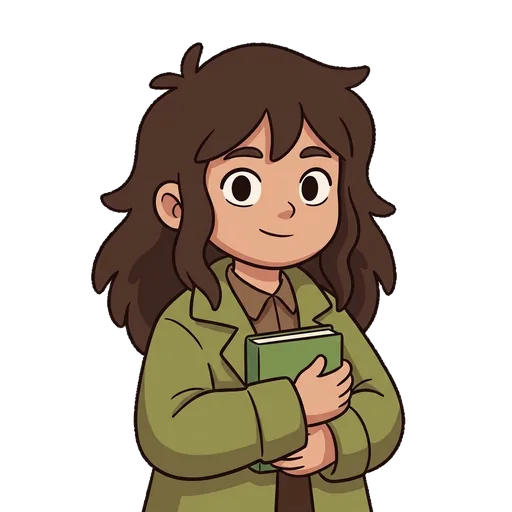 Inkling a child of the Green Names what she notices
-
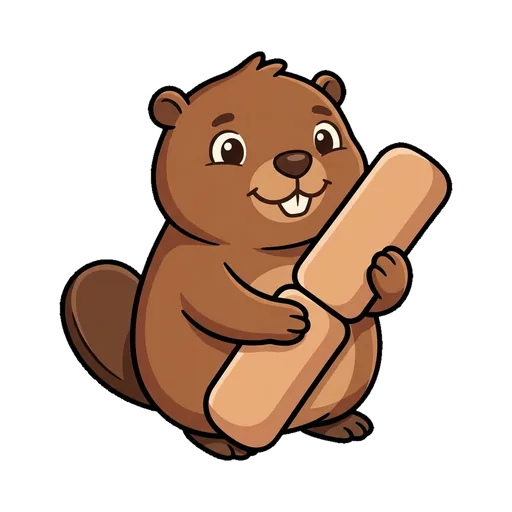 Bundle Name the whole first, then talk about its parts from BarPals
-
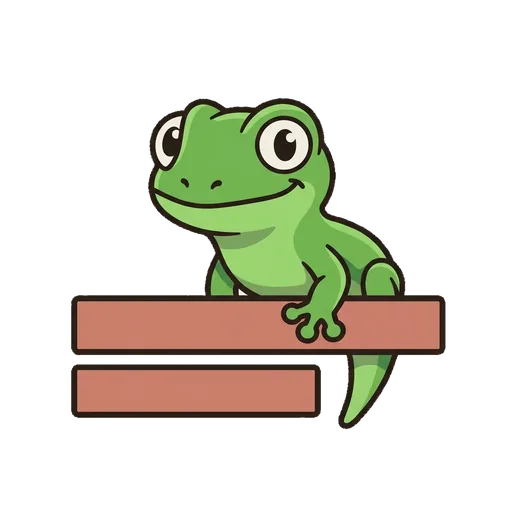 Jut The bit that sticks out is the difference from BarPals
-
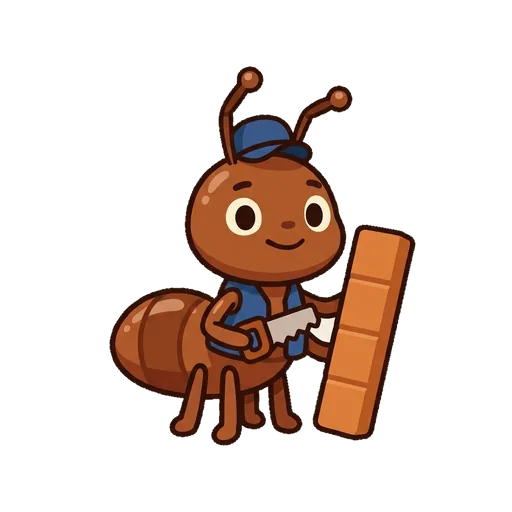 Sawyer Halves are two equal parts — every piece the same length from BarPals
-
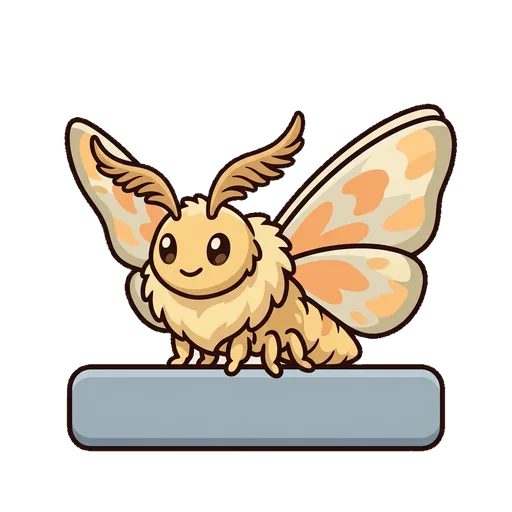 Q Sit on the part we don't know yet, and stay until we find it from BarPals
-
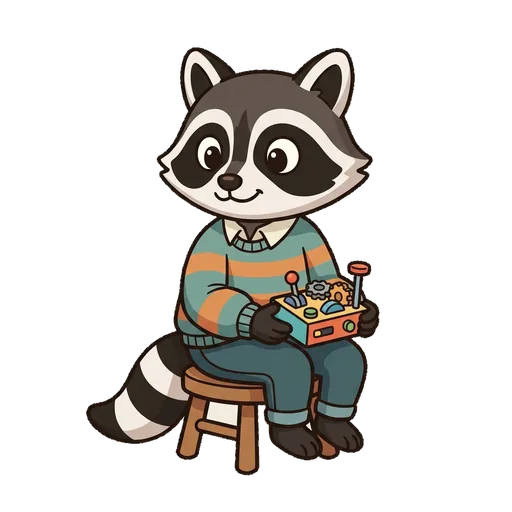 Fiddle You learn what a thing does by trying it — the playing is the learning from AweForge
-
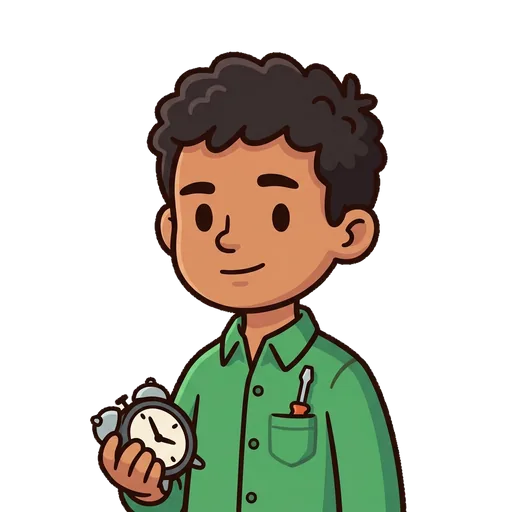 Beto a child of the Green Takes things apart
Every recurring character has a short tune, so you can tell who is on stage before a word is said. The tunes play only when you tap, and the Reading Access sound switch turns them off.
The Honest Page
Which parts of this story are true, stretched or made up?
True
- Halves are two equal parts of one whole. Seven and five make twelve, but they are not halves. Source
- Eight and six make fourteen, two more than twelve. Half of twelve is six.
- Some real bridges are built out from both banks at once and joined in the middle. Source
- From the real world: the crews who dug the Channel Tunnel started from England and from France and met in the middle, under the sea, in 1990. Source
Stretched
- Real bridge builders measure in metres, and they check where the two ends will meet long before they build. What we simplified: Counting planks and knots keeps the numbers small enough to hold in your hands.
Made up
- Halvingford, its two crews and the talking BarPals are made up.