The Wandering Forge · Grower · ages 6-8
Listen along
Loading audio…
Read by an AI-generated voice. The words on this page are the transcript.
1. One Bell
The hammer rang once. A spark jumped off the anvil and did not go out. It waited. They followed.
It dropped into Fiddle's forge. Inkling had two tools now: the tick-weight and the tally-peg. Beto had one: the even-rule.
"A town has broken something," said Fiddle. "Try it and see."
The cart's bell rang once, and the wheels began to turn.
2. The Marsh
The cart came to Reedmere, a little town on the edge of a wide marsh. Reeds grew taller than Beto. Water lay in still brown pools.
On the far side of the marsh stood the mill. Its big wheel had stopped. The axle had cracked.
"The miller needs the forge," said a woman with a lantern. She was the old ferry keeper. "But the boat leaks, and the stepping stones are hidden in fog."
In the town hall hung an old map of the crossing. It had little marks all over the marsh: some filled-in dots, some hollow circles, some wavy lines. But the bottom corner was torn off.
"That's where the key was," said the ferry keeper. "The bit that says what the marks mean."
3. Dots Are Stones
Inkling looked at the map. She was sure.
"Dots look solid! Dots are stones. I can name it," said Inkling. "And the dots make a straight line across. That's the way!"
She ran down to the wooden jetty.
"How do we know that?" said Aska. A grey fox in a striped jumper stepped in front of her. "Who made this map?"
"I don't know," said Inkling.
"Let's check before we trust it," said Aska.
Inkling looked at the brown water. Her tummy went cold. She had named it too soon. This time it could have been wet.
4. Test It
"What does the marsh tell you?" said Fiddle.
Beto found a long pole. From the jetty, he poked the first dot on the map's straight line. The pole pushed down, down, into soft green leaves. A lily pad! It would never hold a person.
Then he poked a place where the map showed a hollow circle. Clunk. Hard stone.
"How does it work?" said Beto. "The dots are lily pads. The circles are stones."
5. The Torn Key
"Ask the one who drew it," said Aska.
The ferry keeper had drawn the map, long ago. She opened a drawer in the town hall and took out a little torn corner of paper.
The key! A circle meant stone. A dot meant lily pad. A wavy line meant deep water.
"It agrees with your pole," said Aska. "Now we can trust it."
6. North First
A red cardinal landed on top of the map.
"North first, always north," said Cardi. "Turn the map to match the world."
Somebody had cleaned the map and hung it back upside down. Cardi looked at the sun coming up over the reeds. "The sun rises in the east," said Cardi. So north was the other way.
They turned the map round until north on the paper pointed north in the marsh.
7. You Are Here
A little map pin with a round red head stood on the map.
"You are here," said Pinnet. "Pin it before you plan."
Pinnet pinned the town jetty. Now the first stone on the map was the real stone in front of their feet. Somebody had set it in cement long ago. A tiny scratched hammer was on top.
"Four towns," whispered Inkling. "Somebody mended here before us. Every time."
"Start from the pin," said Pinnet.
8. Guess First
An Arctic tern swooped low over the reeds.
"Guess first. Which is farther?" said Ternwick. "The straight line, or the stones?"
The straight line looked shorter. It was only five steps. But it crossed a lily pad.
The safe stones went in a zig-zag: seven steps. Two more steps than the straight line, but every one of them dry.
"Was your guess close?" said Ternwick.
They set off, with the ferry keeper in front and a long guide rope held by everyone. But on the fourth stone, thick fog rolled in. Beto could not see the next stone at all.
9. North, Then East
Beto did not guess. He held up the map, turned to north. He found the pin and counted along the stones.
"Fourth stone," said Beto. "Next is north. Then east."
He stepped. Stone! Then the next. Stone! The fog thinned, and there was the mill bank.
That afternoon, the whole town painted a new key right onto the map, big and clear: circle, stone; dot, lily pad; wavy line, deep water.
10. The Fourth Tool
At the mill, Fiddle and the miller mended the cracked axle in the forge. The mill wheel turned again.
Then Fiddle let them stamp a brass key-tag with the three marks and what they meant. It went on Beto's belt. Two tools each.
"Push it, pull it, twist it, see," said Fiddle.
The cart's bell rang twice, and the road ran home.
The spark dimmed to a warm dot and settled back on the anvil. The Green was just the Green again.
Back on the Green
Beto drew a map of the Green for his cousin. He drew north at the top. He drew a pin: you are here. And he drew a key: circle for a tree, square for a bench, star for the anvil.
"Now you can't get lost," said Beto.
Tell the story back to someone. What three things does a map need?
Saved. The next chapter will be here whenever you come back.
Who you met
-
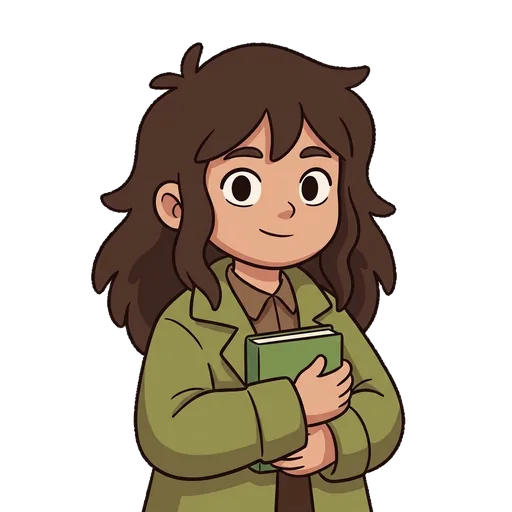 Inkling a child of the Green Names what she notices
-
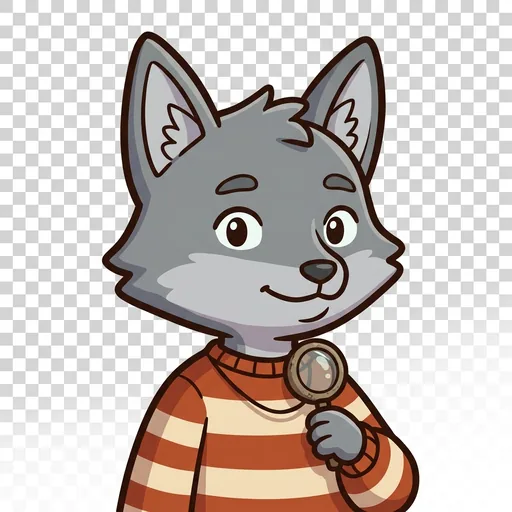 Aska Ask who made it and check the source before you trust it from CompassQuest
-
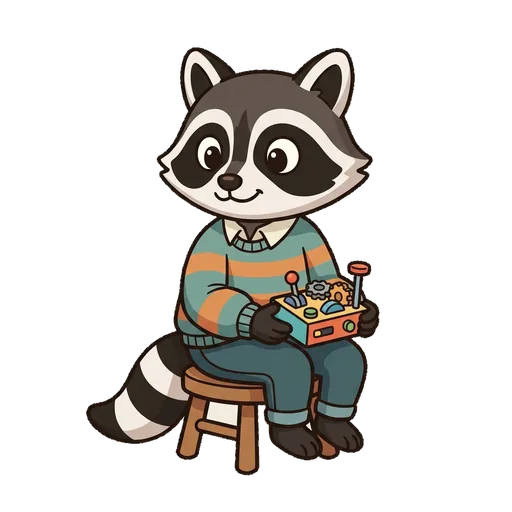 Fiddle You learn what a thing does by trying it — the playing is the learning from AweForge
-
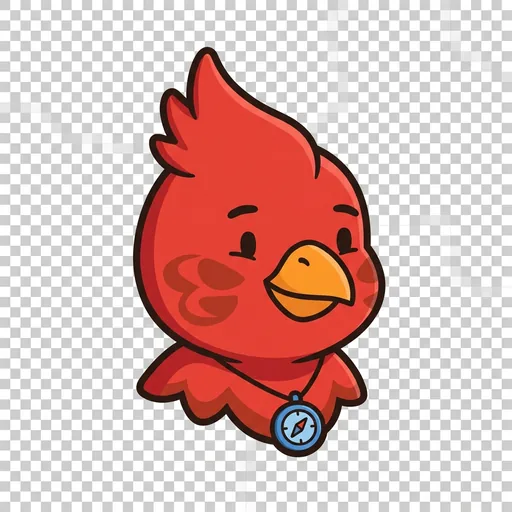 Cardi Turn the map so north on the paper points north in the world from CompassQuest
-
 Pinnet Mark where you are, so the map can tell you where to go from GlobePals
-
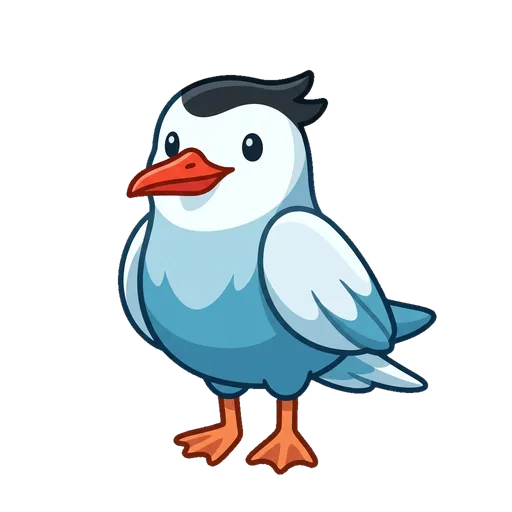 Ternwick Guess which is farther first, then count it and see from GlobePals
-
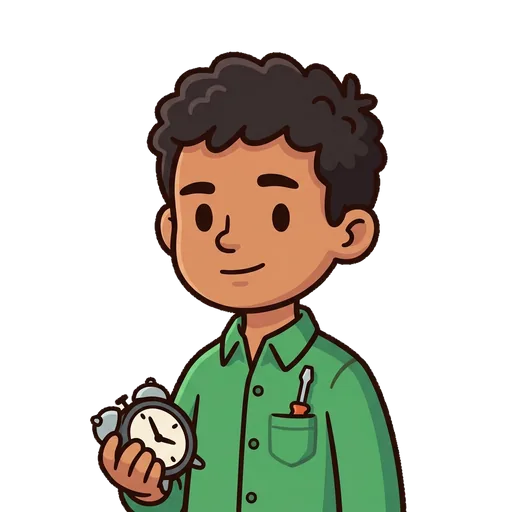 Beto a child of the Green Takes things apart
Every recurring character has a short tune, so you can tell who is on stage before a word is said. The tunes play only when you tap, and the Reading Access sound switch turns them off.
The Honest Page
Which parts of this story are true, stretched or made up?
True
- A map key (also called a legend) tells you what each mark on the map means. Source
- Maps are usually drawn with north at the top. Turning a map so it matches the land is called orienting it. Source
- The straight line crosses a lily pad; the seven-stone zig-zag reaches the far bank on stones only. Seven is two more than five.
- From the real world: in orienteering, people race across fields and forests with only a map and a compass, and the first skill they learn is turning the map to match the land. Source
Stretched
- In the book, Cardi finds north from the morning sun. What we simplified: The sun rises roughly in the east, not exactly, and the direction changes through the year. A compass is more exact.
Made up
- Reedmere, its marsh and its talking map-makers are made up. Never cross real water on stepping stones without a grown-up.