The Wandering Forge · Grower · ages 6-8
Listen along
Loading audio…
Read by an AI-generated voice. The words on this page are the transcript.
1. One Bell
The hammer rang once. A spark jumped off the anvil and did not go out. It waited. They followed.
It dropped into Fiddle's forge. Inkling had two tools: the tick-weight and the tally-peg. Beto had two: the even-rule and the key-tag.
"Four towns, and four tiny hammers," said Inkling. "Somebody mended there first."
"Try it and see," said Fiddle.
The cart's bell rang once, and the wheels began to turn.
2. The Bell on the Bank
The cart came to Brimwater, a town on a wide river. On one bank sat a new bell, big and dark and shiny. On the other bank stood the bell tower, empty.
"The bell came by road," said the ferryman. "Now it has to cross. But look."
He pointed at a post by the ferry. It said: NO MORE THAN 400 KG.
"How heavy is the bell?" said Beto.
Nobody knew. The market balance could only weigh twenty kilograms at a time. The bell was far too big to lift onto it.
3. It Looks Small
"It looks smaller than our cart! I can name it," said Inkling. "Call it three hundred. Load it!"
A round green frog hopped onto the ramp in front of her. His name was Glug.
"Looking is not the same as knowing," said Glug. "If you guess wrong, the ferry sinks, and the bell goes to the bottom of the river."
Inkling's cheeks went hot. She had named it too soon again.
"How would we know for sure?" said Glug.
4. What the Water Says
"What does the water tell you?" said Fiddle. She would not say more.
Beto stepped into the empty ferry. It dipped down a little. Inkling stepped in too. It dipped down more.
"How does it work?" said Beto. "The more it carries, the lower it sits."
5. The Same Mark
A small white bunny in orange dungarees was sitting on the town see-saw. Her name was Evenly. A bear cub called Teeter rode the other end.
"Same on both sides, and it's level," said Evenly. "Level means equal."
She looked at the ferry. "The same mark means the same," she said. "If the bell makes the boat sit at one line, then anything that makes it sit at that same line weighs the same as the bell."
6. Two Lines
The town rolled the bell onto the ferry on planks. The boat sank low in the water.
Beto leaned over the side and scratched a line exactly where the water came.
Then he stopped. Just above his line was an older line, worn almost smooth. Beside it was a tiny scratched hammer.
"Five towns," whispered Inkling. "Somebody weighed something here too."
7. Stones
The bell rolled off again. Now the town filled the ferry with river stones, basket by basket.
A round yellow bean called Bop hopped on the ferry rail. "One more! That's one more," said Bop, every time a basket went in. He did not skip a single one.
The sun went down. Everyone was tired. Then Beto looked over the side.
His line was under the water. They had put in too much.
"Just call it four hundred," said somebody. "Let's go home."
8. Not Yet
Inkling wanted to say a number. She always wanted to say a number. This time she didn't.
"Not yet," said Inkling. "The same mark. Not nearly the same mark."
They lifted stones out, one at a time. Bop counted them back. At last the water just touched Beto's line, and stopped.
In the morning, Teeter weighed the stones on the market balance. "Put it on the pan and watch," said Teeter. Each basket went on one side. The twenty-kilogram weight went on the other. When the beam sat level, the basket was twenty.
Seventeen baskets were full twenties. The last basket was twelve.
9. Tens and Ones
A soft heavy loaf of bread rolled up. His name was Loaf.
"Ten ones make one ten," said Loaf. "Seventeen baskets is one ten and seven."
Seventeen twenties is three hundred and forty. And twelve more is three hundred and fifty-two.
"Under four hundred," said Beto. "By forty-eight!"
The ferryman nodded. The bell crossed the river. By noon it was ringing in its tower.
10. The Fifth Tool
Fiddle let them draw a thin brass point in the forge: a scriber, for scratching a level line. It went on Inkling's belt.
"I won't tell you. It will," said Fiddle, when Inkling asked who had made the old marks.
The cart's bell rang twice, and the road ran home.
The spark dimmed to a warm dot and settled back on the anvil. The Green was just the Green again.
Back on the Green
Lan wanted to know how heavy her big shell was. Inkling floated a plastic tub in the washing-up bowl with the shell in it, and marked the line with her scriber. Then she took the shell out and dropped in marbles until the tub sat on the same line. Twelve marbles.
At the mending shed, Bà Tư's sewing basket sat on the bench. Its old handle had been mended with wire. Beside the mend was a tiny scratched hammer.
"I rode the cart once," said Bà Tư, "when I was eight. Somebody older rang the hammer for me."
Inkling mended the wheel of Lan's toy boat. Beside the mend, she scratched a tiny hammer. She did not write her name.
Then she walked to the anvil and rang the hammer, once, for Lan.
Tell the story back to someone. How did they weigh the bell? One day, someone will ring the hammer for you.
Saved. The next chapter will be here whenever you come back.
Who you met
-
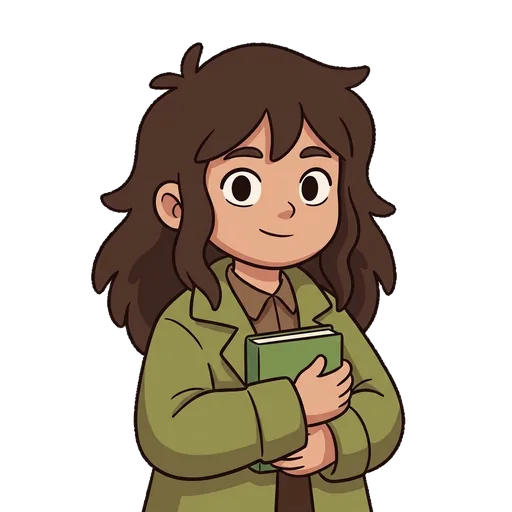 Inkling a child of the Green Names what she notices
-
 Glug Looking is not the same as knowing — check it from PourTots
-
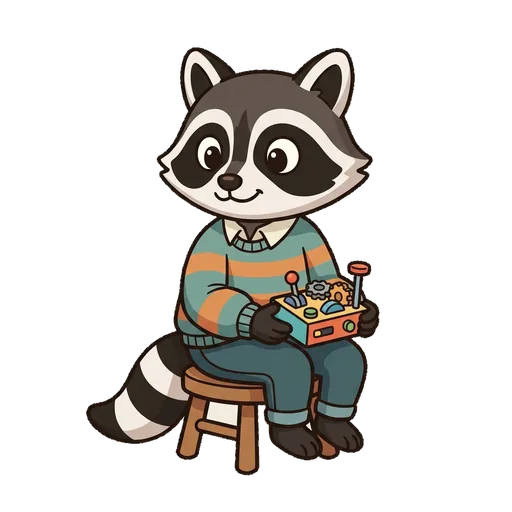 Fiddle You learn what a thing does by trying it — the playing is the learning from AweForge
-
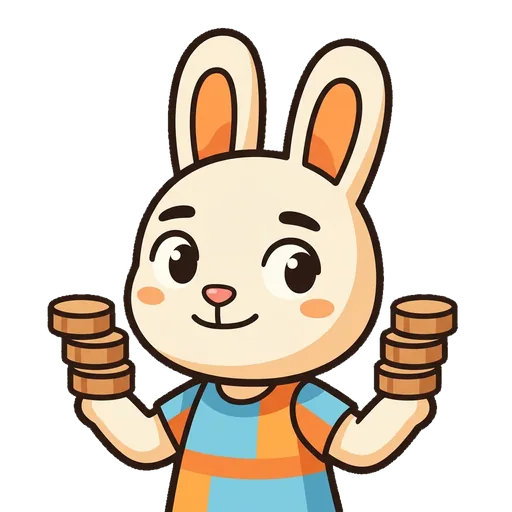 Evenly The same on both sides means level, and level means equal from TeeterTots
-
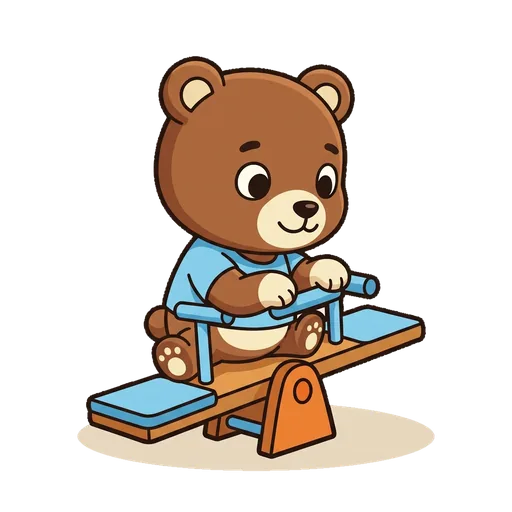 Teeter The heavier side goes down — a balance tells you which is more from TeeterTots
-
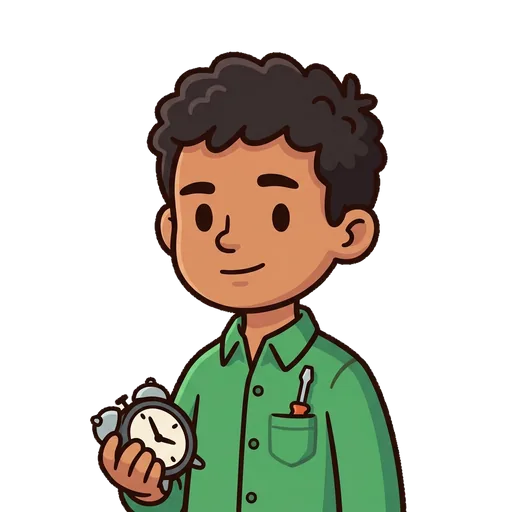 Beto a child of the Green Takes things apart
-
 Bop Count one at a time, every single one from CarryPals
-
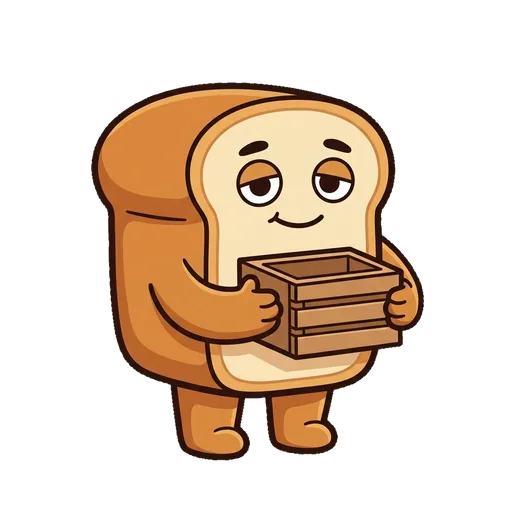 Loaf Ten ones squish into one ten, so a big count is tens and ones from CarryPals
Every recurring character has a short tune, so you can tell who is on stage before a word is said. The tunes play only when you tap, and the Reading Access sound switch turns them off.
The Honest Page
Which parts of this story are true, stretched or made up?
True
- A floating boat sinks lower when it carries more weight. If two loads make the same boat sit at the same waterline, they weigh the same. Source
- Seventeen baskets of twenty kilograms make 340 kilograms. With one more basket of twelve, that is 352, which is 48 under the limit of 400.
- Lương Thế Vinh (1441–1496) was a real Vietnamese mathematician. He wrote a book of mathematics that was used to teach and test students for hundreds of years. Source
- In Vietnam, schoolchildren read a lesson called Cân voi, Weighing the Elephant, about this trick; in today's Kết nối tri thức textbooks it is in third grade. Source
Stretched
- Lương Thế Vinh is said to have weighed an elephant this way, with a boat, a mark and a pile of stones. What we simplified: This is a giai thoại, a story told about a real person. Nobody wrote it down when it happened, and almost the same story is told in China about a boy called Cao Chong. The man is in ink; the story is in pencil.
- In the book the water stops exactly on Beto's line. What we simplified: A real boat bobs, so people read the line when the water is still and allow a little either way. A boat also has to be safe for the load; the ferryman checks that too.
Made up
- Brimwater, its talking frog, bunny, bear cub, bean and loaf, and the tiny hammer on the hull are made up. Never load or ride a boat without a grown-up.