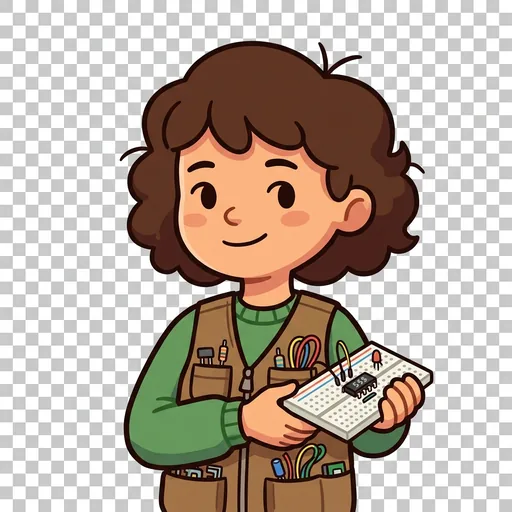
Bijan
CHECK THE SOURCE — *before you believe a claim, ask who made it, how they'd know, and why they're telling you.*
Loading audio…
Press play to listen along. The line being read lights up as you go.
Show full transcript
Loading transcript…
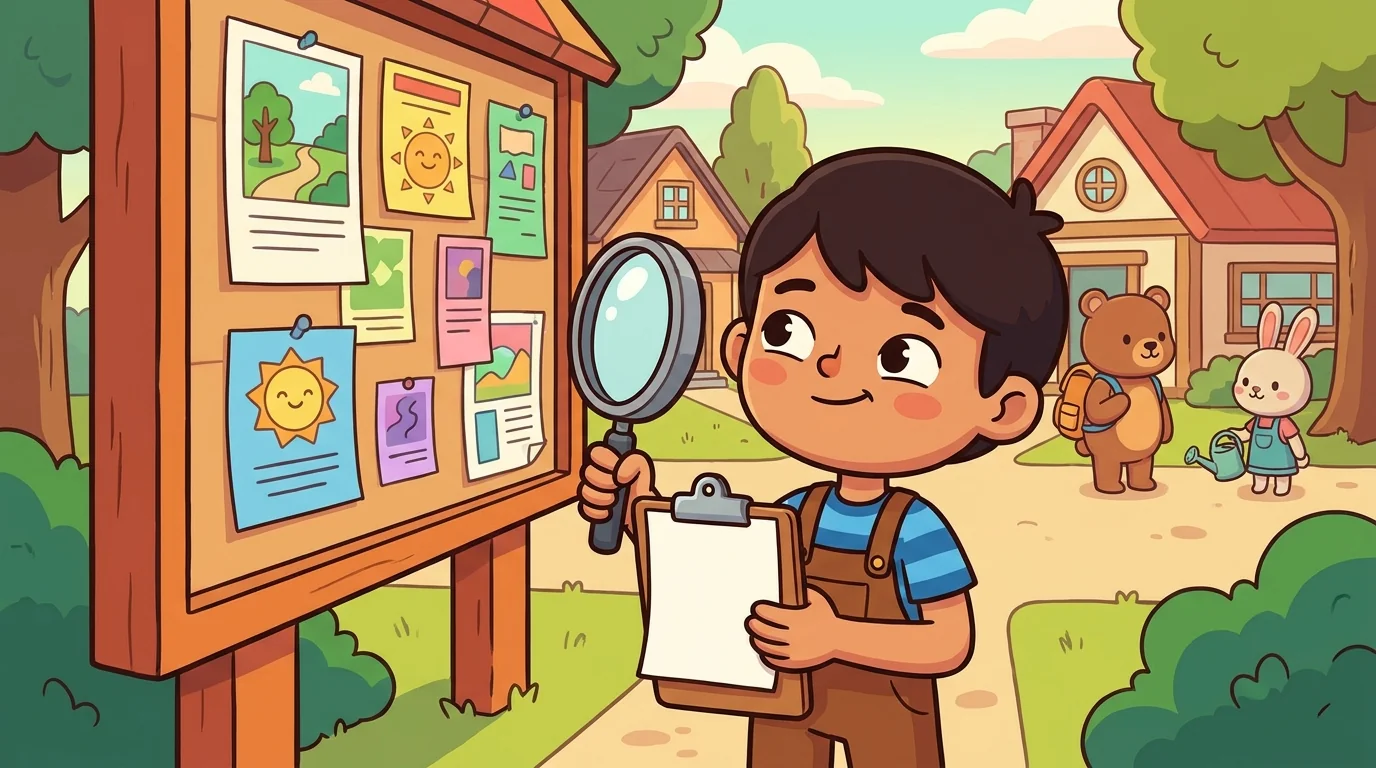
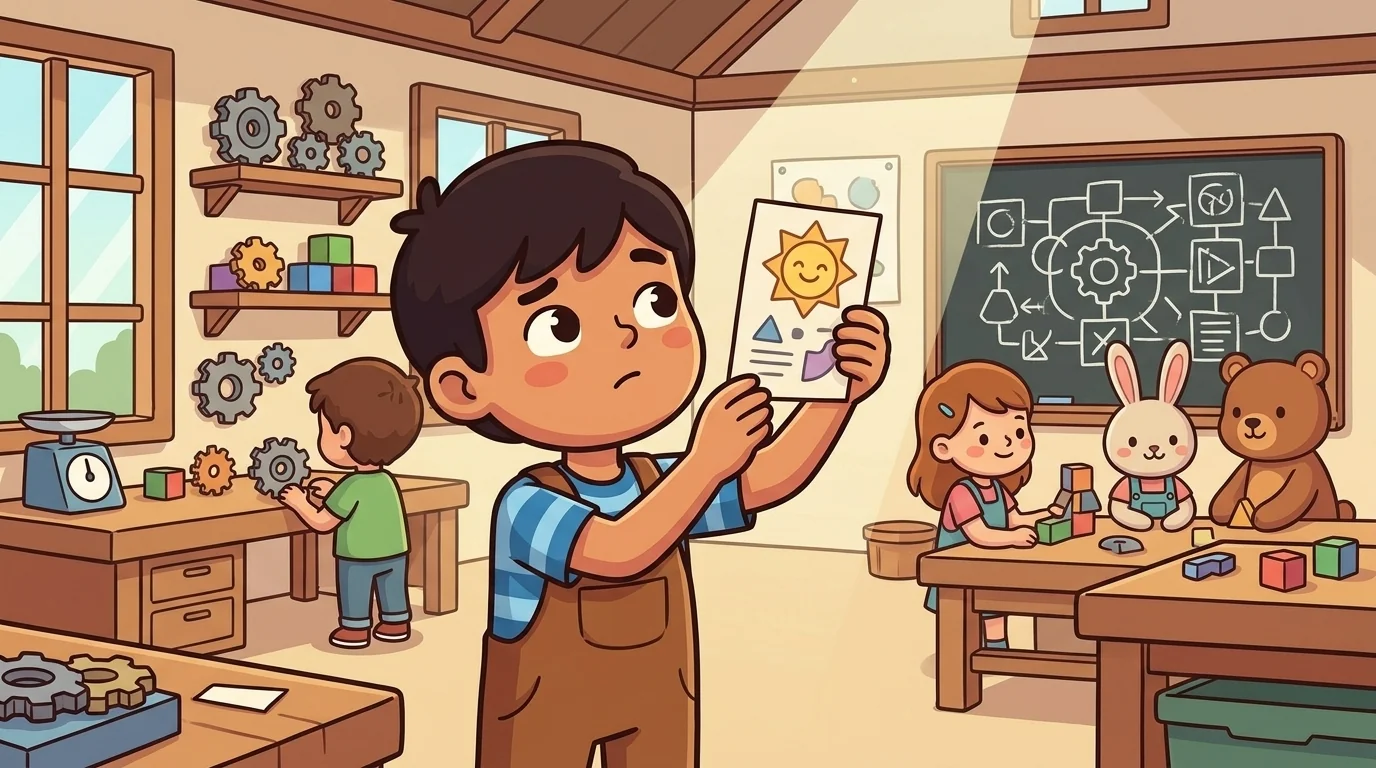
In the Change Lab, once you have a question, you need facts — and facts are where you can get fooled. Bijan is the friend who checks them. He is not a grump and he is not a know-it-all; he just has a habit he loves, a little pause he takes before he believes anything. He holds a claim up to the light and asks it three quiet questions: Who made this? How would they know? Why are they telling me?
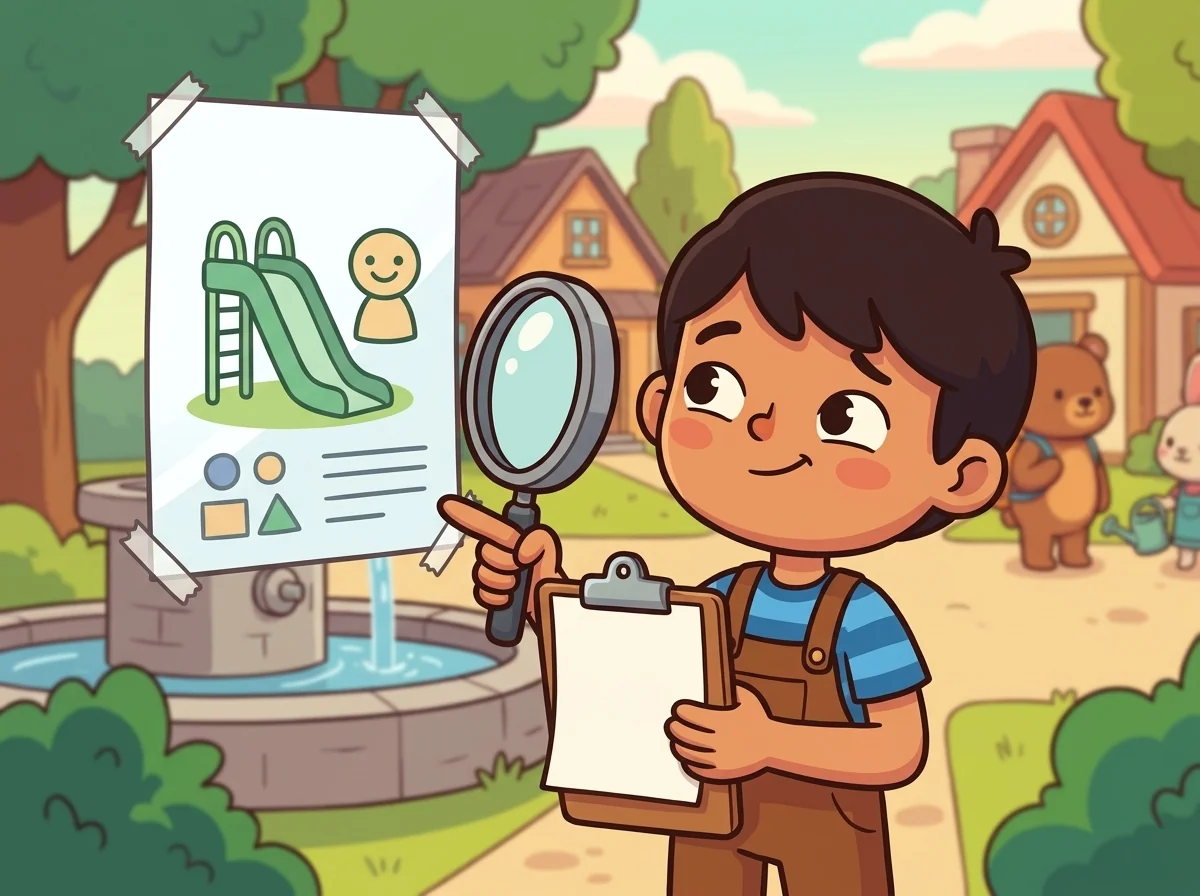
One week the group found a glossy poster taped by the water fountain: "9 OUT OF 10 KIDS SAY THE OLD PLAYGROUND IS DANGEROUS." A few kids got excited — that was exactly what they'd hoped to prove. Bijan felt the pull of it too; it matched what he already wanted to believe, and that, he'd learned, is exactly the moment to slow down. He didn't sneer at the poster. He just tilted his head and asked, softly, "Nine out of ten... out of how many? And who counted?"
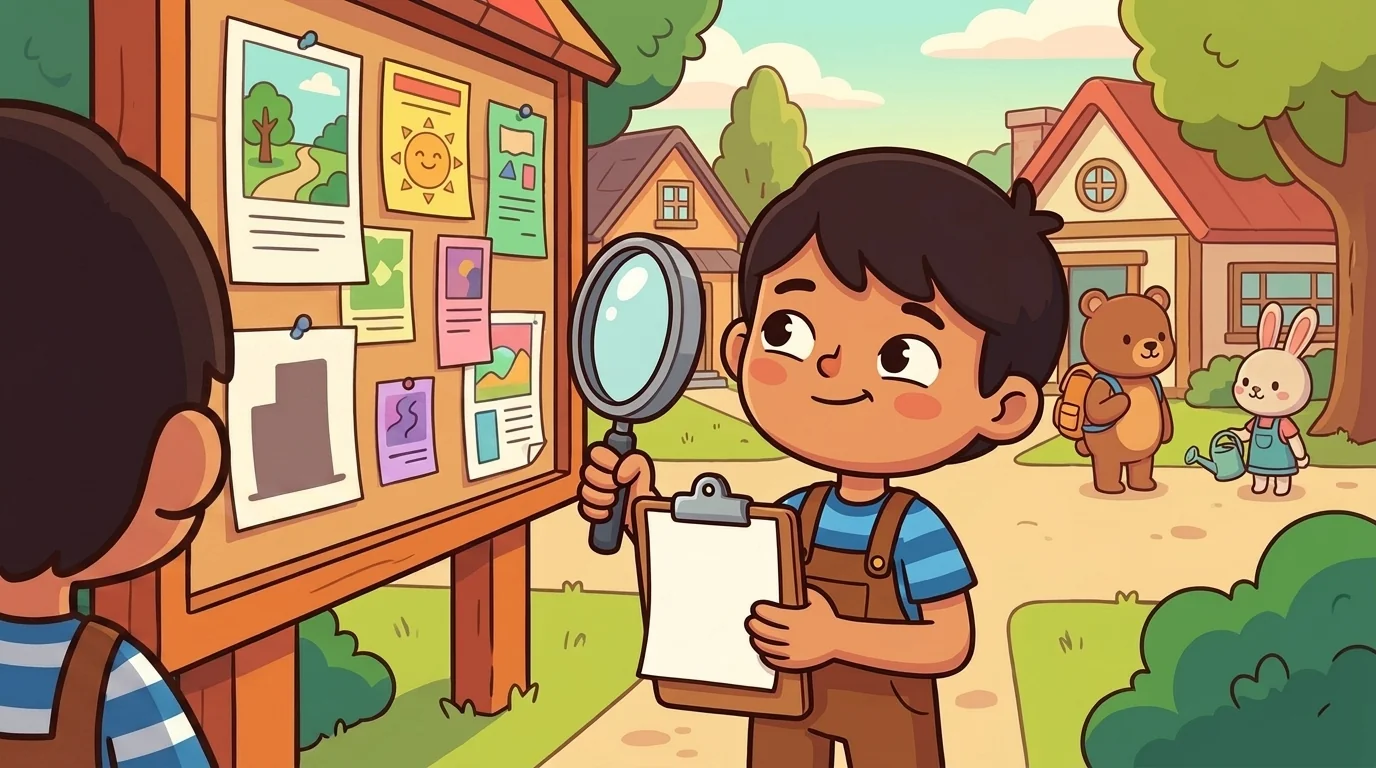
Nobody knew. There was no name on the poster, no date, no "we asked 200 kids." The number felt solid, but it was standing on nothing. Bijan feels a small, honest thrill at moments like this — not the mean kind, the careful kind, like catching a step before you trip. "It might be true," he told the group. "But right now it's just a shape that looks like a fact. We can go count for ourselves. Then it's ours, and nobody can knock it over."
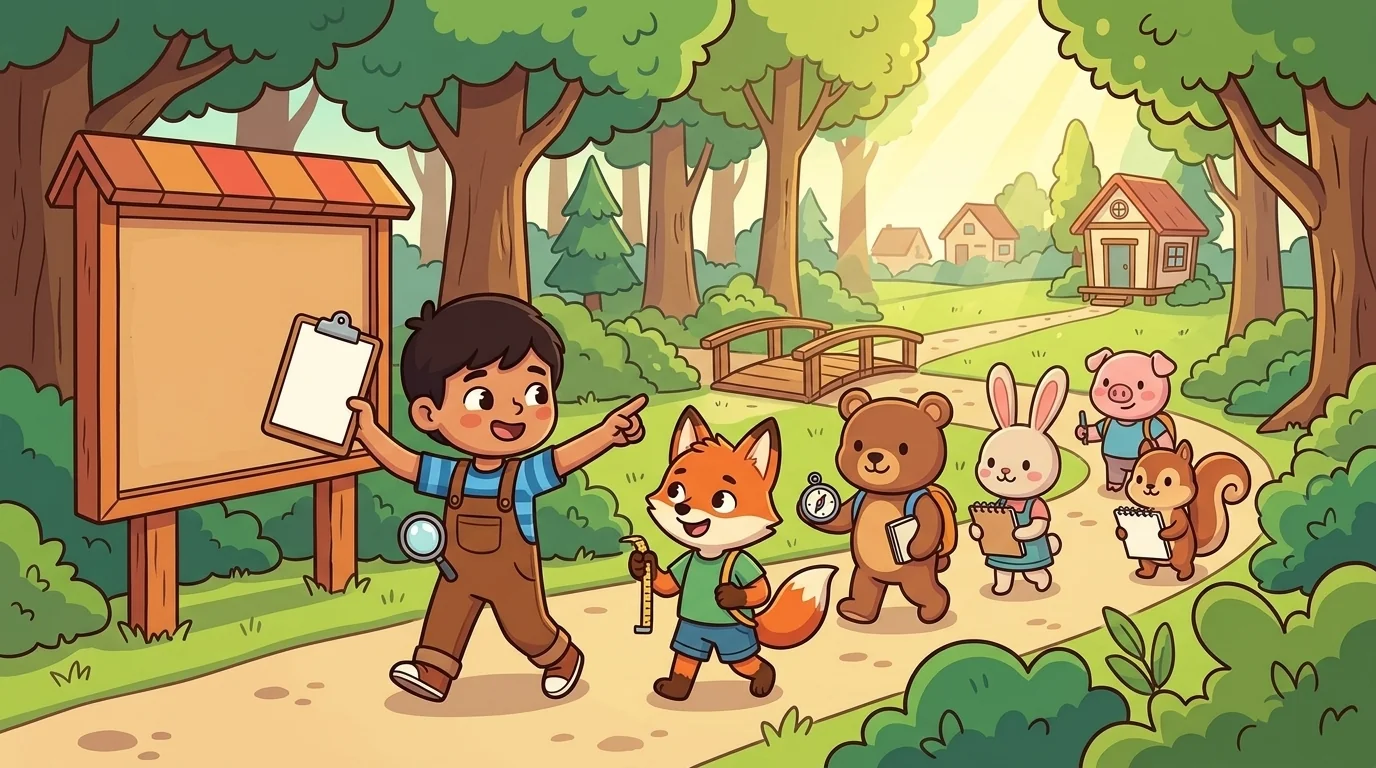
A newer kid looked a little embarrassed for having believed it, and Bijan caught that quick and gentle. "Hey — everybody believes the confident poster at first. That's normal. Checking is a skill, not a scold." Say it with Bijan, out loud: "Before you share it, ask who made it." The kid repeated it, and the embarrassment turned into something better: a plan to go ask a real, countable question.
That is checking the source, and it is really a kind of self-respect. Bijan is not trying to make anyone feel dumb — least of all himself, when a claim tugs at him. He just refuses to hand his belief to a stranger who won't say their name. Ask who made it, ask how they'd know, ask why they're saying it — and if the answers are missing, go find your own. A fact you gathered yourself is one no clever poster can take away.
The CauseQuest ensemble
Bijan is part of CauseQuest's distributed-narrative cast. Each character embodies a different curricular primitive; together they teach the full subject.
-
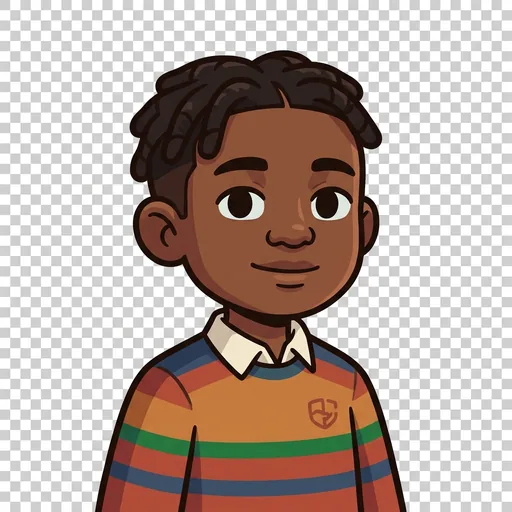
Kwesi
the issue-framer — names a fixable mechanism to fix, never a person to blame
-

Wrenna
the stakeholder-mapper — asks who is affected AND who can decide
-
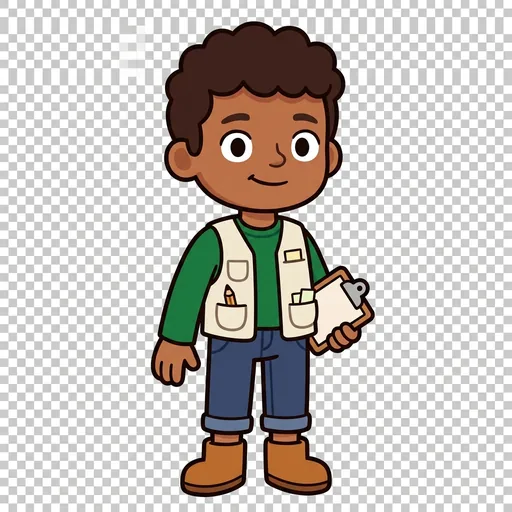
Tavi
the feasibility-checker — turns a big wish into a real first step
-

Miko
the fair listener — hears the other side and makes the plan better
-

Ansel
the honest reporter — shares what happened, including what did not work