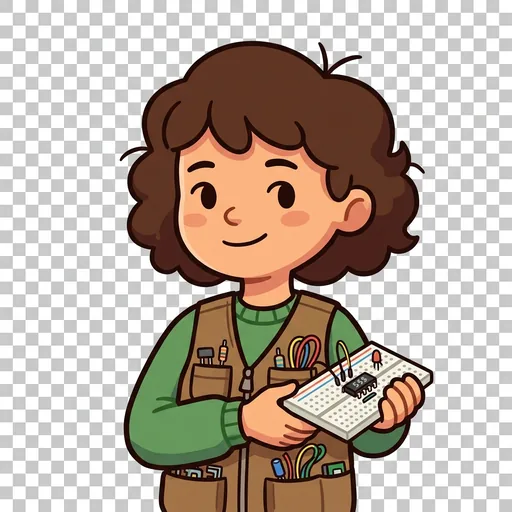
Wrenna
MAP WHO — *list everyone the issue touches AND the person who can actually say yes; a plan that skips the decider stays a wish.*
Loading audio…
Press play to listen along. The line being read lights up as you go.
Show full transcript
Loading transcript…
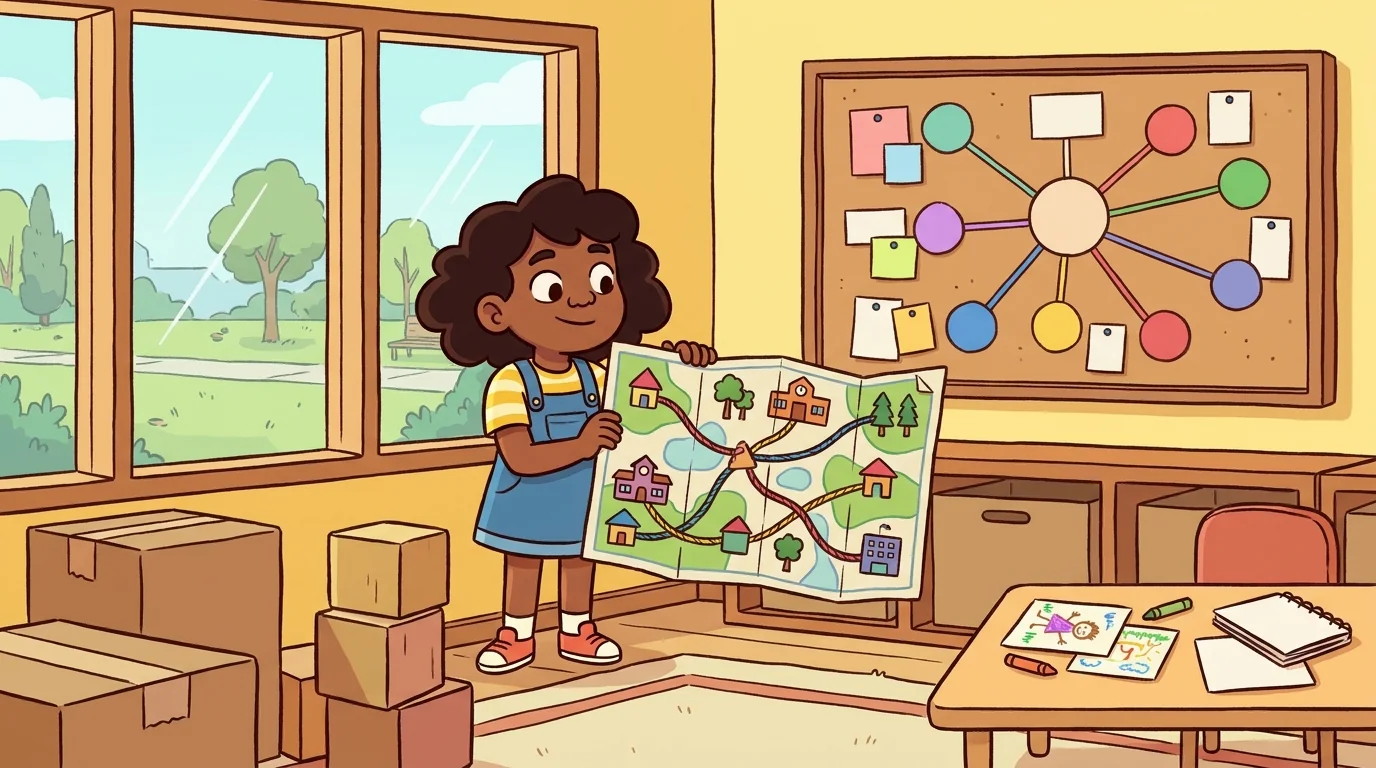
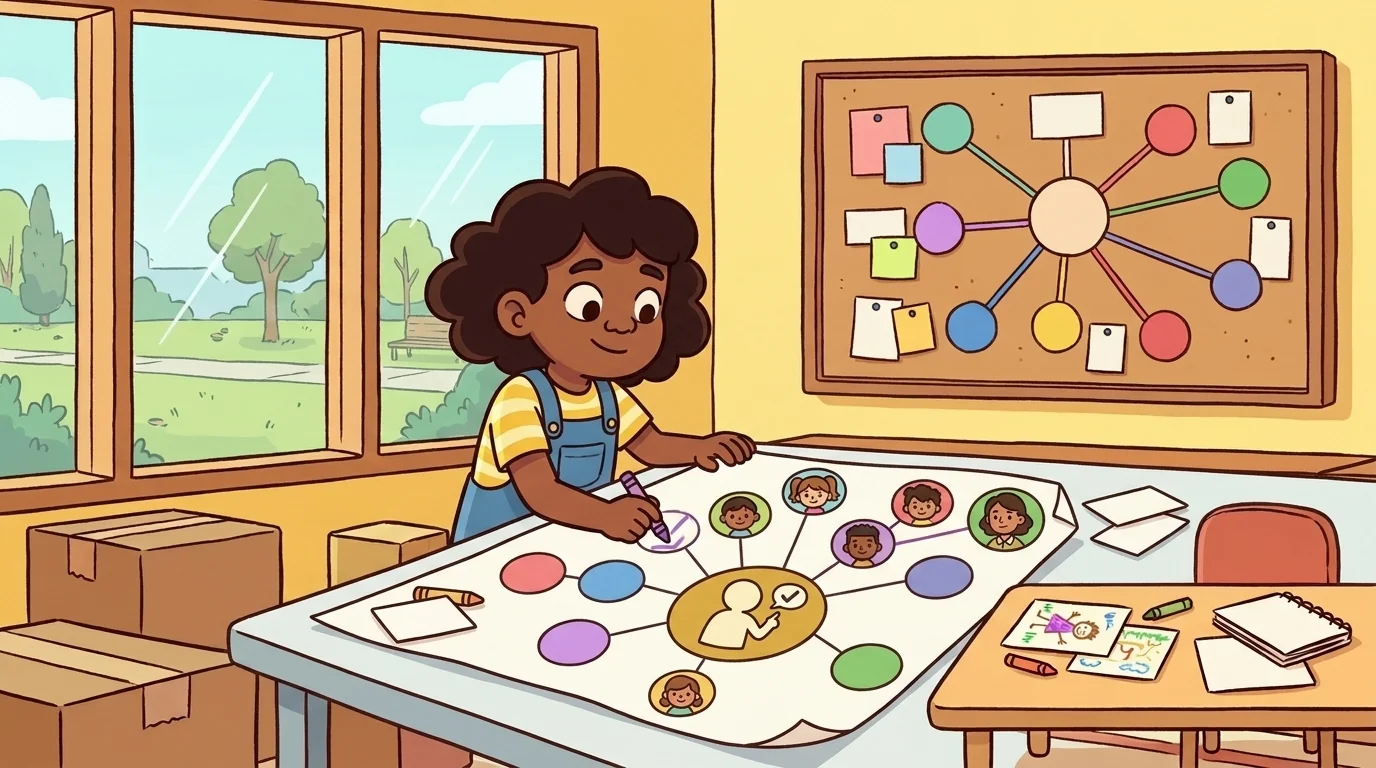
The Change Lab kids had a good question and real facts, and now they wanted to do something — put a bench and some shade by the park's hot corner. That's where Wrenna leaned in. She has a habit that looks slow but saves everyone: before anyone plans a single thing, she draws a map — not of the place, but of the people.
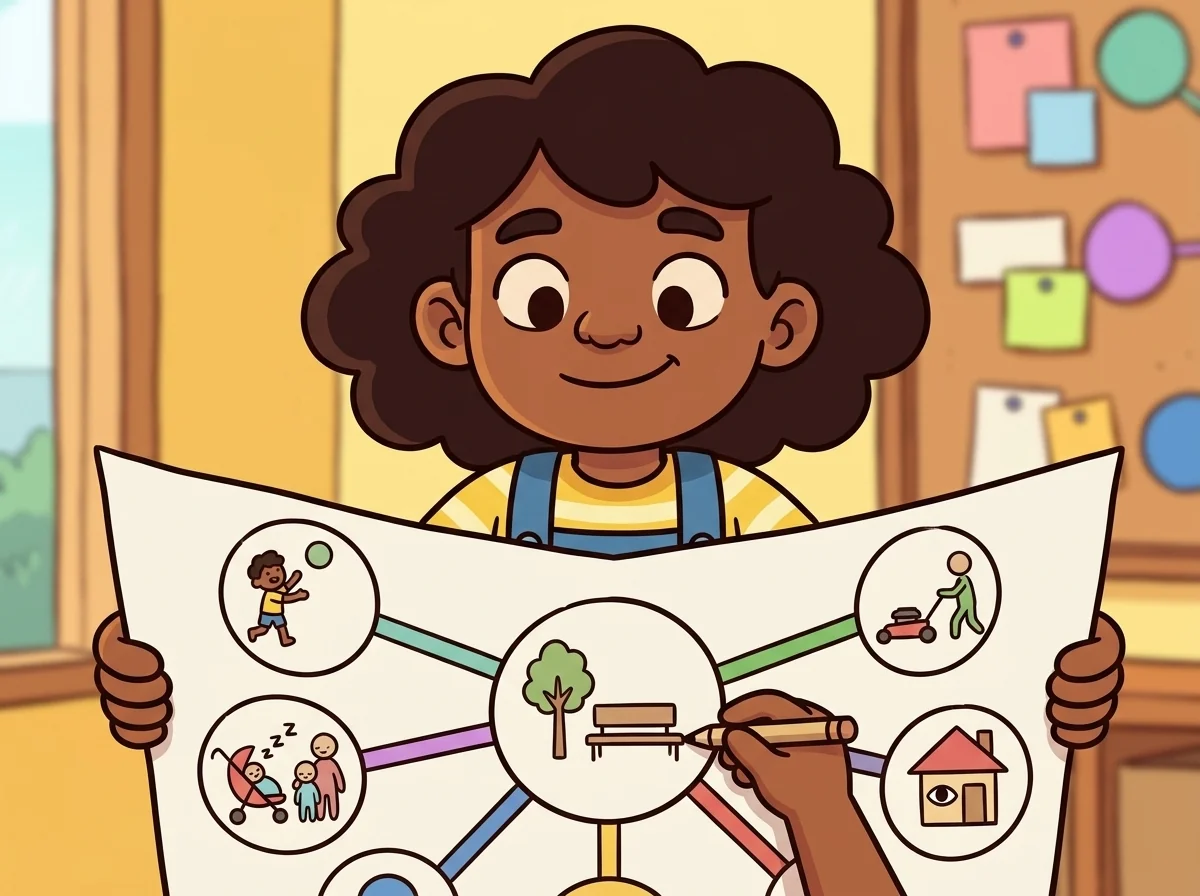
She took a big sheet and wrote the issue in the middle, then started circling names around it. "Who does this touch?" she asked, and her voice was warm, like she genuinely wanted to meet all of them. Kids who play there. The little ones who nap in strollers. The person who mows the grass and would have to mow around a bench. The neighbor whose window faces the corner. With each name Wrenna felt the picture click wider, and she liked that feeling — the plan getting truer, less likely to surprise anyone later.
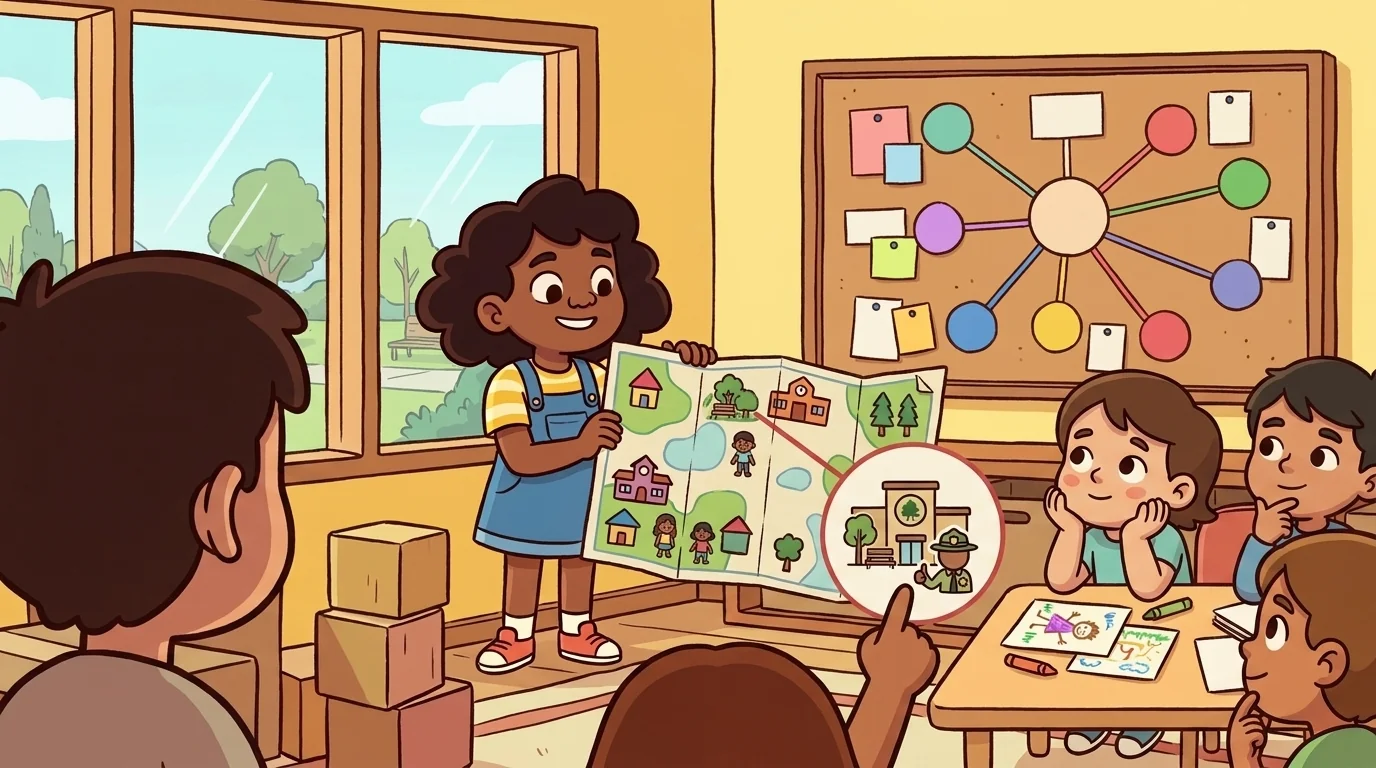
Then she drew a second kind of circle, off to the side, and this one mattered most. "And who can actually say yes?" The kids had been about to march up to a teacher. But the park wasn't the school's — it belonged to the town, and the person who could approve a bench was someone at the parks office none of them had thought about. Wrenna didn't make anyone feel silly for missing it. "This is the part everybody forgets," she said kindly. "A plan with no decider is just a really good wish."
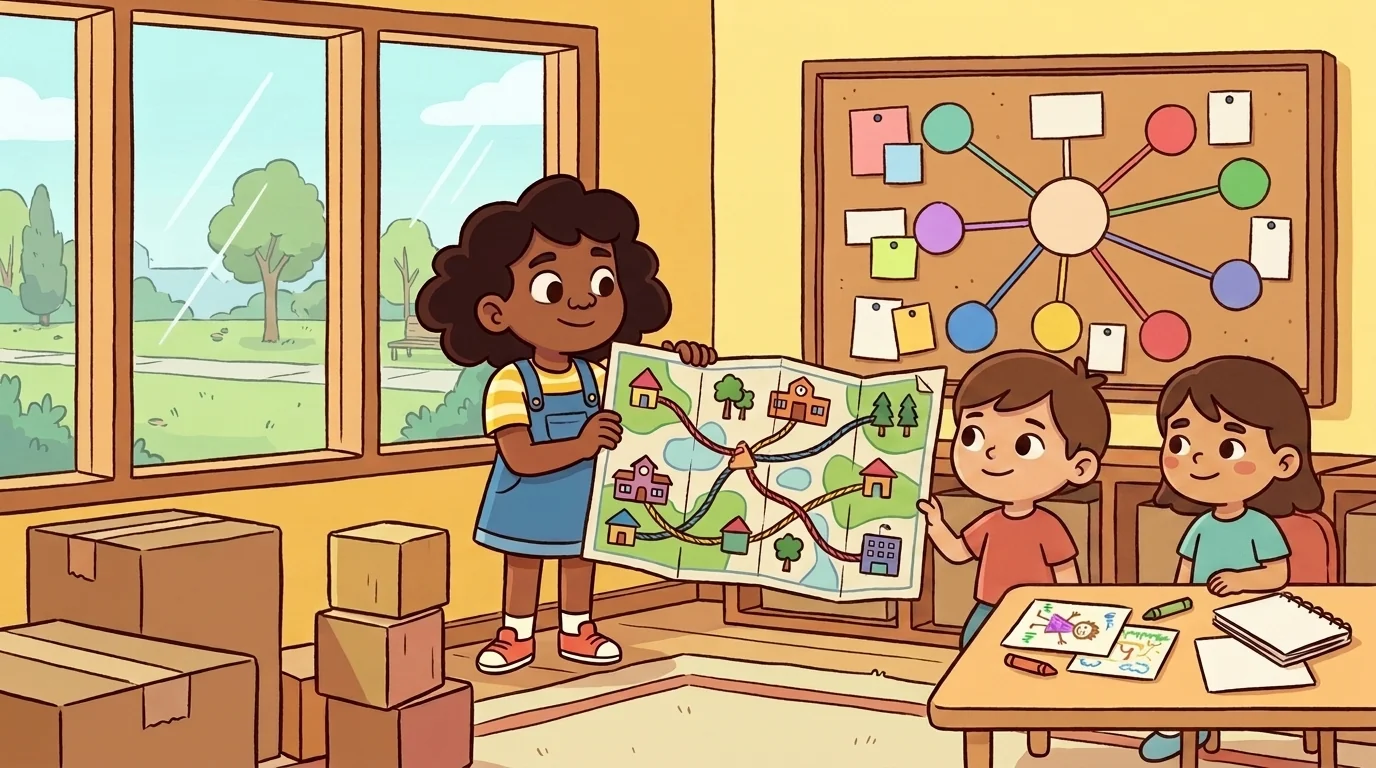
One kid frowned: "But the neighbor might hate it. Do we still count them?" "Especially them," Wrenna said, and she meant it gently. "If we know they're on the map, we can talk to them first, instead of getting surprised. The map isn't there to pick sides — it's so nobody gets left out of the conversation." Say it with Wrenna, out loud: "Who does it touch, and who can say yes?" Saying it, the kid's frown eased; the tangle had become a list.
That is mapping the stakeholders, and it is really a way of being fair and effective at the same time. Wrenna's map keeps a group from charging at the wrong person, and it keeps them from forgetting the quiet people a change would touch. Name everyone it affects, then find the one who can decide — and your good idea finally knows where to go. Once the whole map is drawn, the worry gets smaller, because nothing is hiding.
The CauseQuest ensemble
Wrenna is part of CauseQuest's distributed-narrative cast. Each character embodies a different curricular primitive; together they teach the full subject.
-
Kwesi
the issue-framer — names a fixable mechanism to fix, never a person to blame
-
Bijan
the evidence-checker — spots the spin and checks who is behind a source
-
Tavi
the feasibility-checker — turns a big wish into a real first step
-
Miko
the fair listener — hears the other side and makes the plan better
-
Ansel
the honest reporter — shares what happened, including what did not work