Delve and Crumb
DELVE & CRUMB
Loading audio…
Press play to listen along. The line being read lights up as you go.
Show full transcript
Loading transcript…
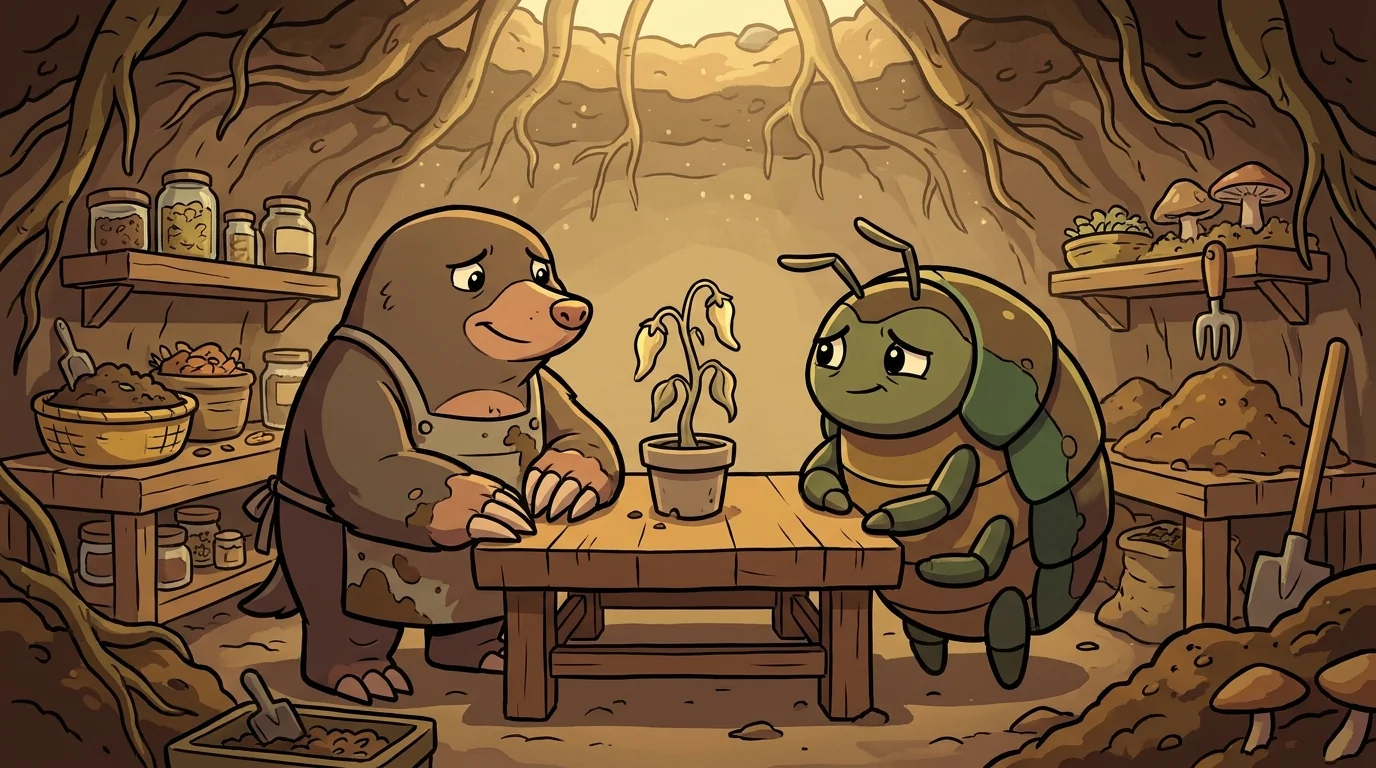
A pale, sad little pepper plant sat on the workbench, and for once neither Delve nor Crumb was showing off. They were standing on either side of it, exchanging a look — the look of two workers who both already knew the answer and knew it was the same answer.
"You start," said Crumb, round and armored and smelling faintly of forest floor.
"No, you," said Delve, muddy to the elbows. "It's your food. I only fetch it."
The kids didn't understand yet. The plant was fed, watered, in the sun. And it was starving anyway — small, pale, going nowhere. To fix it, the two of them would have to show the half nobody watches: the whole kitchen hidden under the dirt, where Crumb cooks and Delve carries and the plant lives on what the two of them do together in the dark.
"Both of us, then," Delve decided. "That's the only way it makes sense anyway."
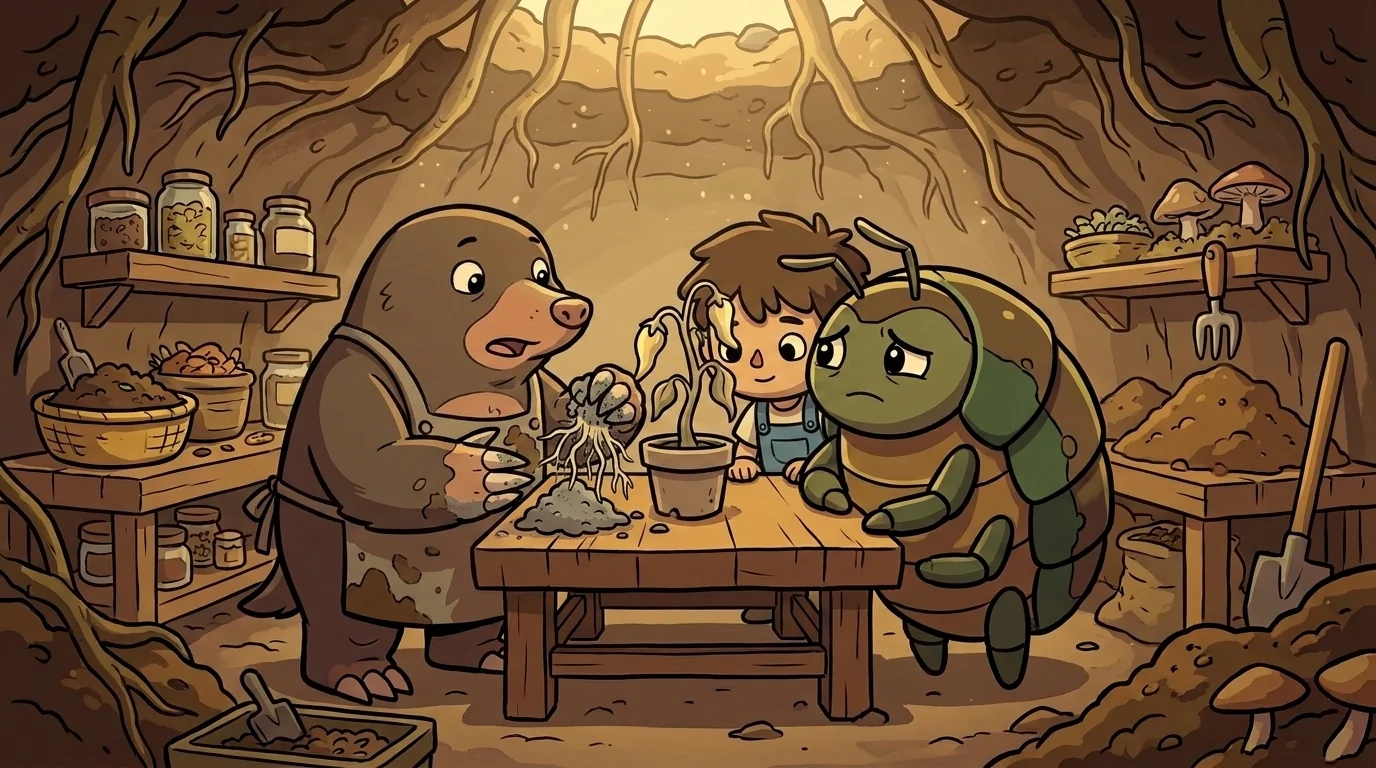
Delve went first, because you have to see the reaching before the rest of it means anything.
She backed out of the pepper's pot with a clump of soil in her paws and turned it to the light, and there were the roots — pale, threadlike, reaching in every direction. "This is the plant's mouth," she said. "All of it. It doesn't eat with the leaves. It drinks, down here, through these. Water, and the little bits of food dissolved in the soil, pulled up through a thousand tiny straws." She spread the roots gently. "See how they reach? A root's whole job is to go looking. It grows toward the food. But —" she frowned at the soil, rubbed it between her fingers, gray and dusty — "reaching only works if there's something down here to reach for. And this soil's empty. The straws are out, hunting. There's just nothing on the plate."
A boy leaned in. "So it's the roots' fault?"
"No," said Delve. "The roots are doing their part perfectly. They're just set at an empty table. And that's not my department." She looked across the plant. "That's hers."
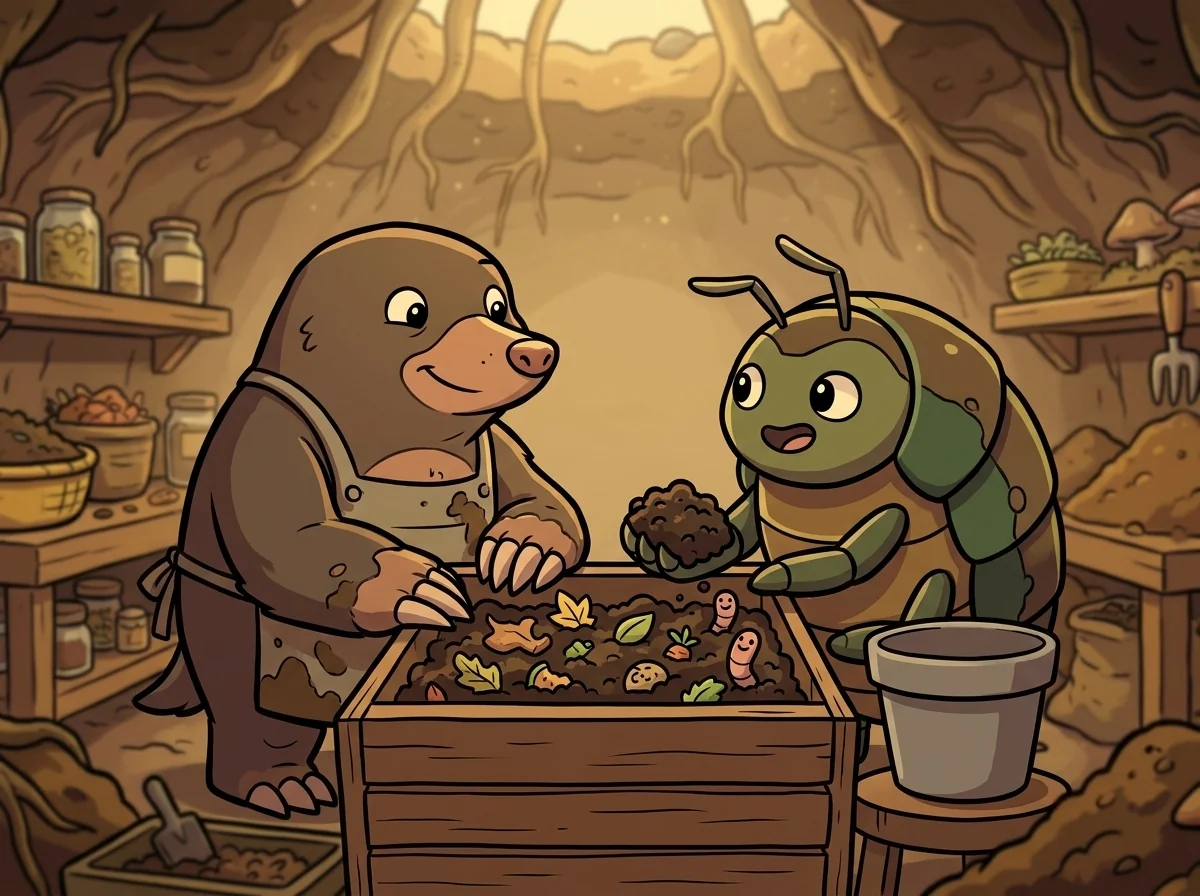
Crumb took over, because you can't set a table you don't understand.
She led them to the warm, busy compost bin and lifted the lid on the rich smell of it. "This is where the food comes from," she said. "Dead leaves. Old scraps. Yesterday's ends. The worms and the bugs and me — we take it apart, crumb by crumb, break the big dead things down into tiny bits of food, until it's soft black soil packed with everything a plant could want to drink." She scooped up a fistful of the black gold. "But here's the thing nobody thinks about: the food I make doesn't do a plant any good sitting in a bin." She held it out toward the empty gray pot. "It has to get into the soil the roots are searching, dissolved in the water, right where the straws can reach it. I can cook the best meal in the garden. If it never reaches the roots, the plant still starves." She looked across at Delve. "Which is where he comes in."
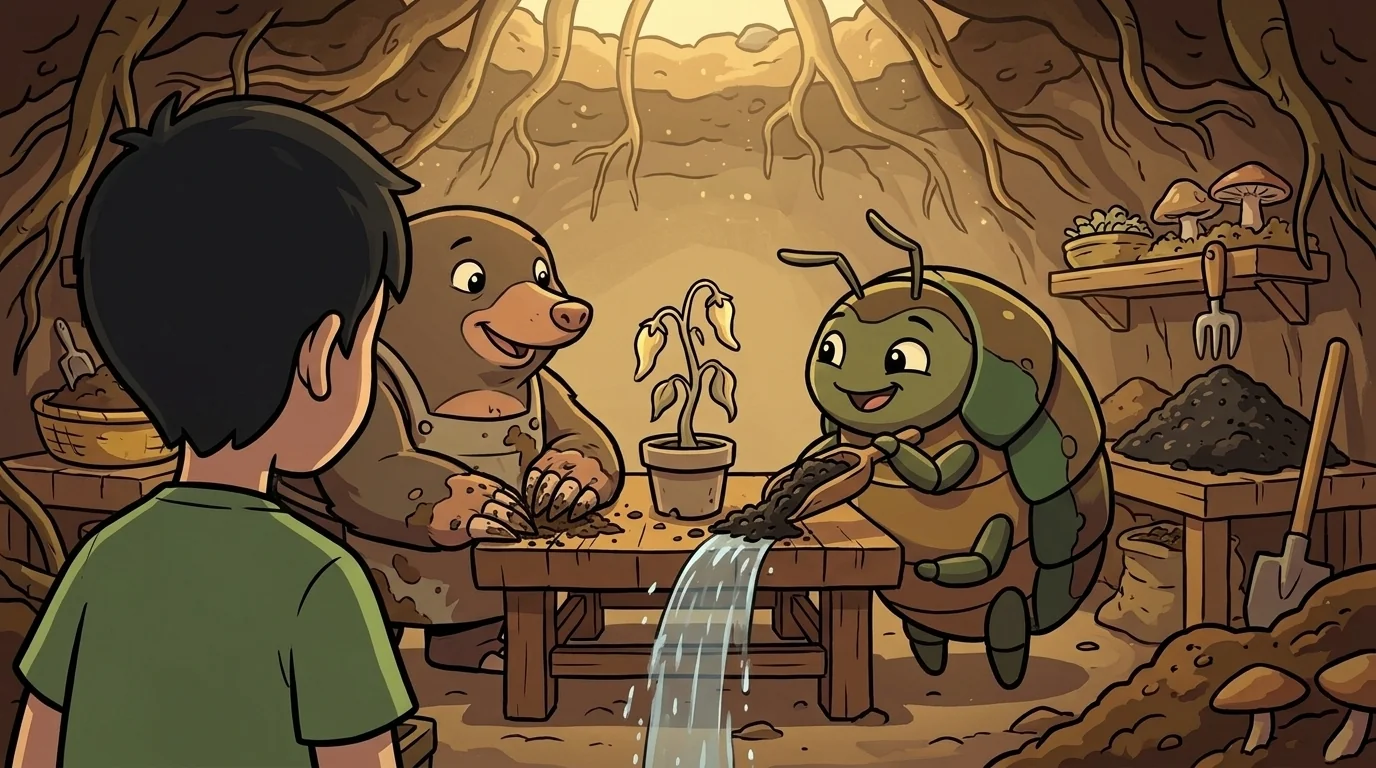
And then, together, they showed the loop.
Delve dug two fingers into the pepper's gray pot. Crumb tipped a generous scoop of her finished black compost in beside the roots. Delve worked it gently down through the soil, right against the reaching threads, and they watered it in — and the two of them narrated it like a relay, one handing to the other.
"Crumb takes the dead stuff," Delve said, "and turns it into food."
"And Delve's roots," said Crumb, "reach out and drink the food up."
"The dead leaf becomes soil —"
"— the soil dissolves into the water —"
"— the roots pull the water up —"
"— and the plant builds a whole new leaf out of it." Crumb pressed the last of the compost in. "That's the loop. That's the kitchen under the dirt. I cook the meal, out of endings nobody wanted. He carries it up, through straws nobody sees. And the plant eats it — but only because we're both doing our half." She looked at the boy. "You watered it. You gave it sun. And it still starved, because the food wasn't there and the roots had nothing to grab. You were only ever looking at the top. The whole meal happens down here — and it takes two of us to serve it."
The boy stared at the pot, at the black compost worked in against the pale roots, seeing suddenly the two halves that had been one thing all along.
"So neither of you could fix it alone," he said slowly.
"Not even close," Delve said. "I could dig all day. If she's not cooking, I'm just fetching from an empty kitchen."
"And I could cook forever," said Crumb. "If he's not carrying, the meal just sits in the bin while the plant dies six inches away."
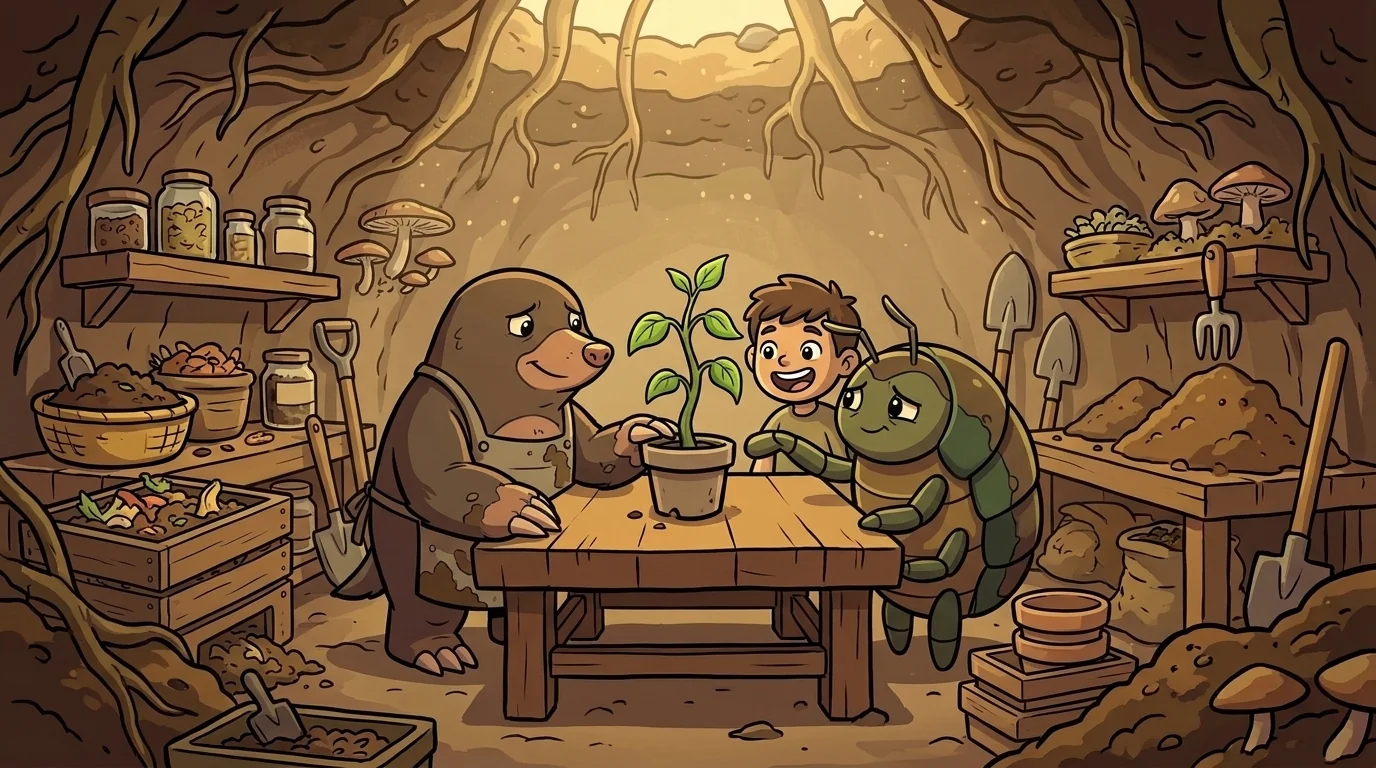
A few days later the boy came back, and the pepper had two new leaves, small and green and unmistakably reaching toward the light. He was grinning.
"It ate," he said. "It actually ate."
"It ate," Delve agreed, muddy and pleased. "Because the table finally had food on it."
"And the food finally reached the table," said Crumb, round and content.
The boy looked from the digger to the composter, the two of them so different — one always reaching down into the dark for what's hidden, one always turning yesterday's ends into tomorrow's dinner — and understood, at last, that they were two halves of a single quiet machine that fed the whole garden.
"You're a team," he said.
"We're a kitchen," said Crumb, delighted. "The oldest one there is. Something dies. I turn it into food. He carries the food to the roots. The plant grows. The plant drops its leaves. I turn those into food. Round and round, forever, under the dirt, where nobody claps." She bumped Delve gently, shell to muddy paw. "It only ever looks like magic because you can't see us working. But there's no magic. There's just the two of us, down in the dark, making sure tomorrow gets fed."
Delve nodded, and for a moment the two of them just stood there over the little pepper reaching for the sun — the cook and the carrier, the maker and the fetcher, the whole invisible kitchen breathing quietly under the workbench.
And they both felt it at once, warm and low and shared — that steady, joined-up, neither of us alone, both of us together feeling that comes when two different kinds of work finally show themselves to be one thing. The garden ran on it. It always had. Down in the reaching dark, an ending became a meal, and a meal became a leaf, and the loop turned on, and on, and on.
Hear it as an audio drama
A short play starring Delve and Crumb, from GrowForge. Different voices, same idea. Listen any time after you read.
Loading audio…
Read the drama script
- Narrator: From Spark and Anvil and GrowForge — this is Delve and Crumb, in chapter 1 of the GrowForge cast.
- Narrator: This drama uses an AI-generated voice. Voiced via Gemini 2.5.
- Narrator: Crumb the composter and Delve the root-tender worked at opposite ends of the same darkness, and a young earthworm named Squiggle couldn't see why they were always mentioned together.
- Squiggle: You do the rotting, and you do the roots. Those are two different jobs.
- Crumb: They're two halves of one job — the garden's kitchen. I'm the cook. When anything dies, my shredders and fungi and bacteria break it down into humus, packed with the minerals a plant needs.
- Crumb: But here's my problem, Squiggle: I can cook a feast all day, and I have no mouth to feed it to. The food just sits in the soil, waiting. On my own, I'm a kitchen with no diners.
- Delve: And that's where I come in. I'm the eater — the plant's eater. My root hairs drink the dissolved minerals Crumb cooked and pull them up to build new leaves and fruit.
- Delve: But here's MY problem: I'd drain the soil empty in a season. Roots take and take. On my own, I'm a diner at a table that never gets refilled. I'd starve the ground bare.
- Squiggle: So Crumb makes food but can't use it — and Delve uses food but can't make it. Each of you would fail alone!
- Crumb: Now you've got it. I refill the table Delve empties.
- Delve: And I eat the feast Crumb would otherwise leave to rot.
- Crumb: Round and round: a leaf dies, I cook it into soil-food, Delve's roots drink it, the plant grows new leaves, those leaves die and come back to my kitchen.
- Delve: It's not a straight line from alive to dead. It's a cycle — the same minerals going around and around, cook to eater to plant to cook again, forever.
- Narrator: So the three followed one mineral all the way around — out of a rotting leaf, through Crumb's kitchen, up through Delve's roots into a bright new spring leaf.
- Delve: Decomposing without roots to drink it is a feast nobody eats.
- Crumb: Roots without decomposers is a diner that starves the table bare. One cooks, one eats — and neither of us works alone.
- Narrator: You've been listening to a Spark and Anvil chapter, written by the Spark and Anvil writing team for ages 9 to 14.
- Narrator: Apps stay free forever.
- Narrator: Curriculum aligned to Next Generation Science Standards.
- Narrator: Released under Creative Commons BY-NC-SA 4.0 for educational reuse. Visit Spark and Anvil for the full transcript.
The GrowForge ensemble
Delve and Crumb is one of the friends in GrowForge. Each friend shows you one idea by how they act; meet them all and you have the whole subject.
-

Tuck
Seed + planting — every seed knows what it wants; read-the-packet-then-the-soil
-

Drip
Water + irrigation literacy — water is the patient teacher; don't-drown-the-thirsty framing
-
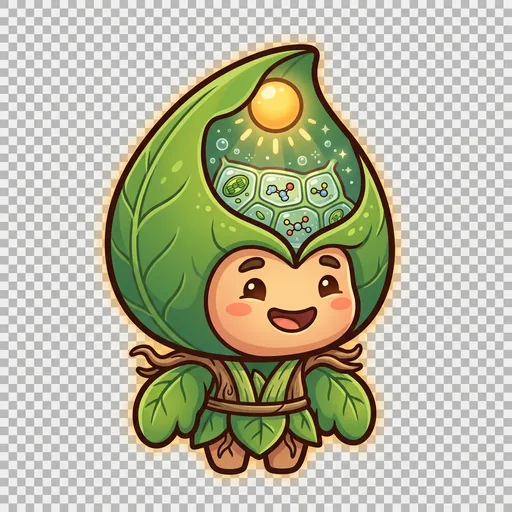
Glow
Photosynthesis + plant biology — leaf-makes-lunch-from-light; cell-level wonder framing
-
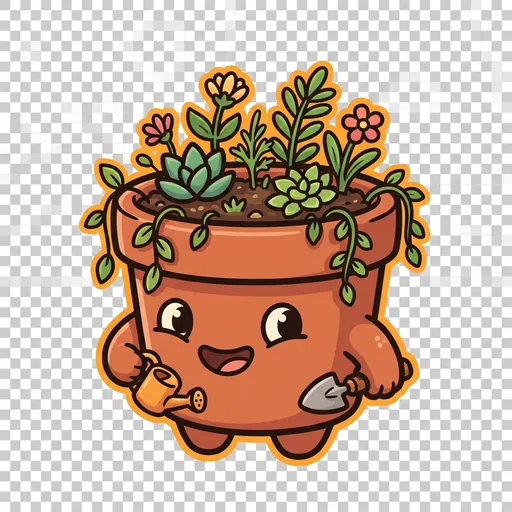
Pot
Container + apartment gardening — a windowsill is a garden too — you don't need a yard to grow things
-
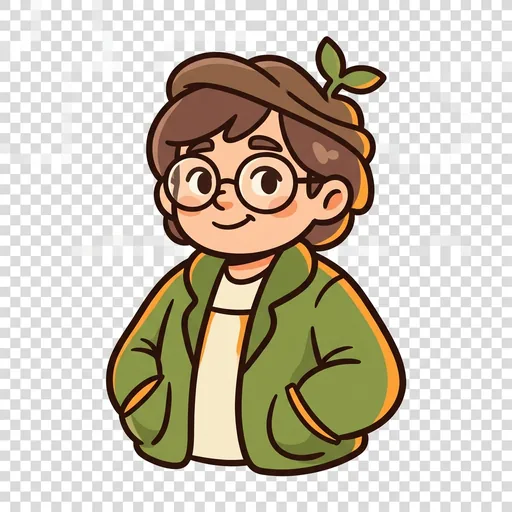
Vigil
Observation + plant-doctoring patience — look-every-day-don't-pluck-what's-working; intellectual humility framing
-
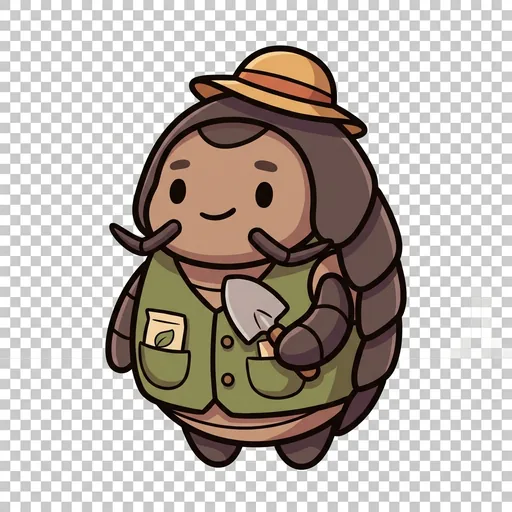
Crumb
Compost & soil life — decomposition posture (the underground food loop: decay makes the meal; feed the soil, not just the plant)
-
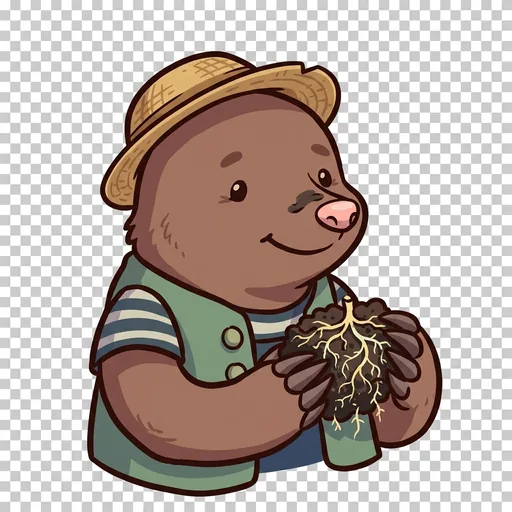
Delve
Roots & uptake — underground-nutrient posture (a plant eats through its roots; the hidden half below does the feeding)
-

Drowse
Seasons & dormancy — right-timing posture (rest is not death; a plant's dormant nap is how it survives to grow again)
-
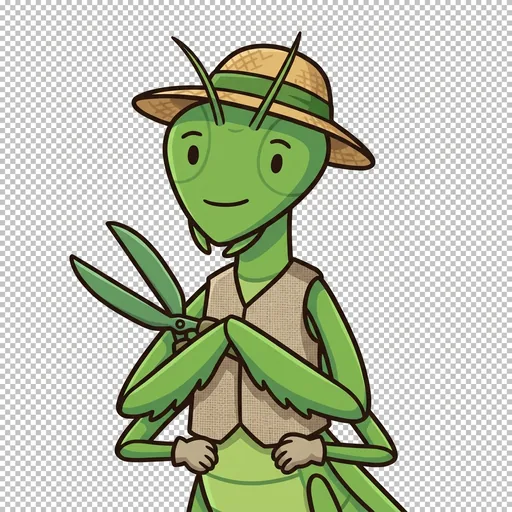
Shear
Pruning — redirect-the-growth posture (cutting the right stem sends the plant's energy where you want it to go)
-
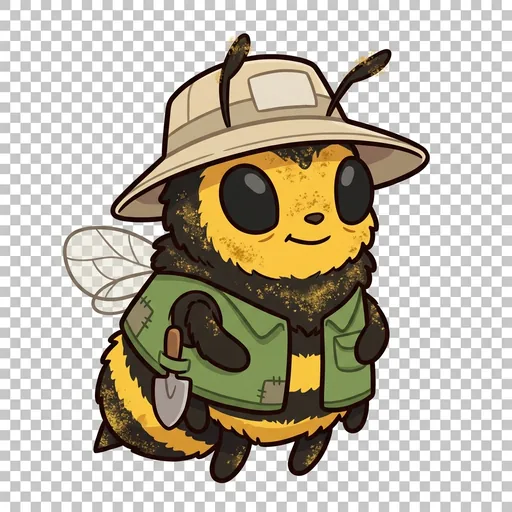
Sip
Pollination — flower-to-fruit partnership posture (a flower becomes fruit only with a pollinator partner as the bridge)