
Vero
MIND THE LEADER — *think about who a trade helps most; giving the front-runner the good they're missing only widens their lead, so trade to keep the island close.*
Loading audio…
Press play to listen along. The line being read lights up as you go.
Show full transcript
Loading transcript…

Vero likes to be out in front. He's quick, he's sharp, and he's usually leading the island by a cottage or two — which is exactly why he keeps tripping over the same mistake. Vero looks at a trade and asks only one question: does this help me a little? And a lot of trades help you a little. The trouble is the ones that help someone else a lot.
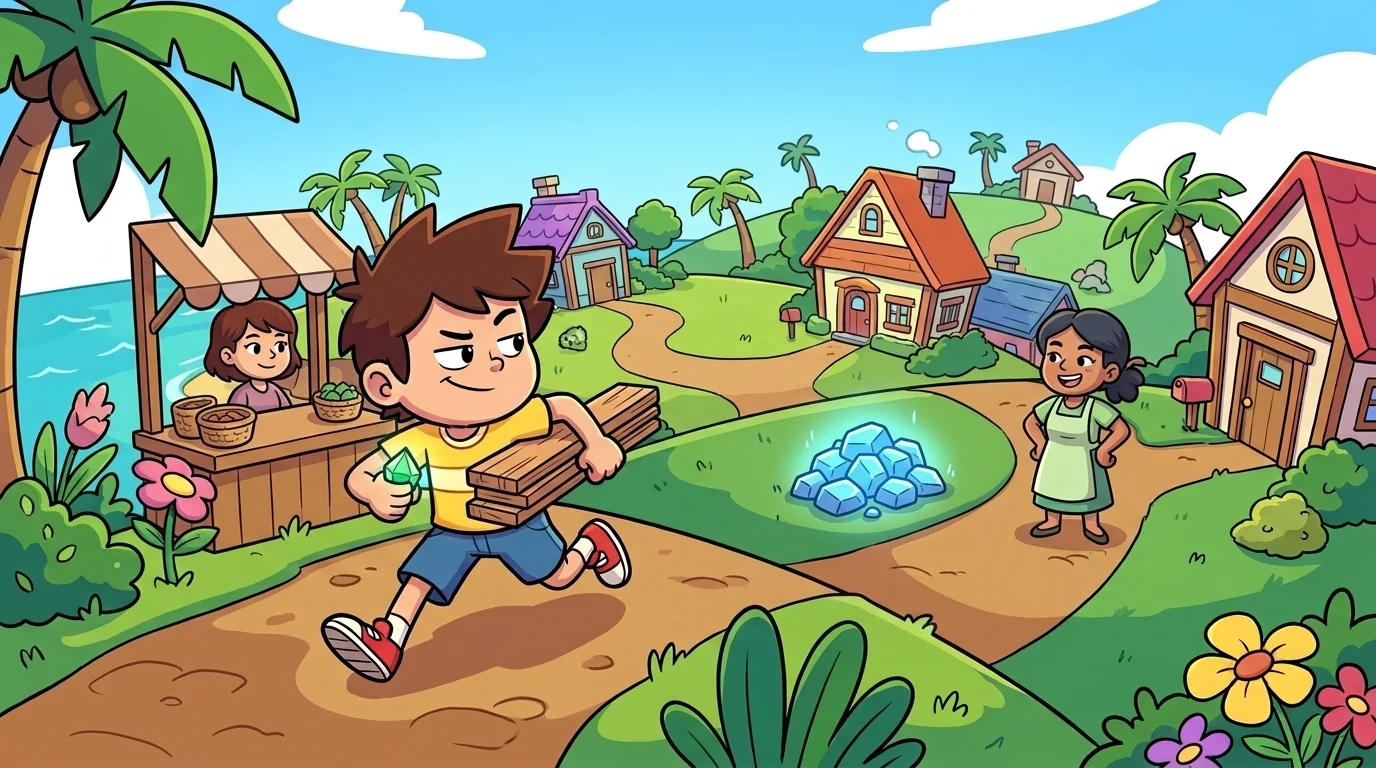
It happened at Zara's post one afternoon. The trader in the lead that day — call her Marlo — was one good short of a whole new hall. She had spare wood; Vero wanted wood; so Vero, thinking only of his own basket, traded her the stone she was missing for the wood he wanted. A fine deal for him, on its own. He got his wood.
But Marlo got her hall. She leapt ahead. And by the end of the round she'd won the island — on the strength of the one stone Vero had handed her.
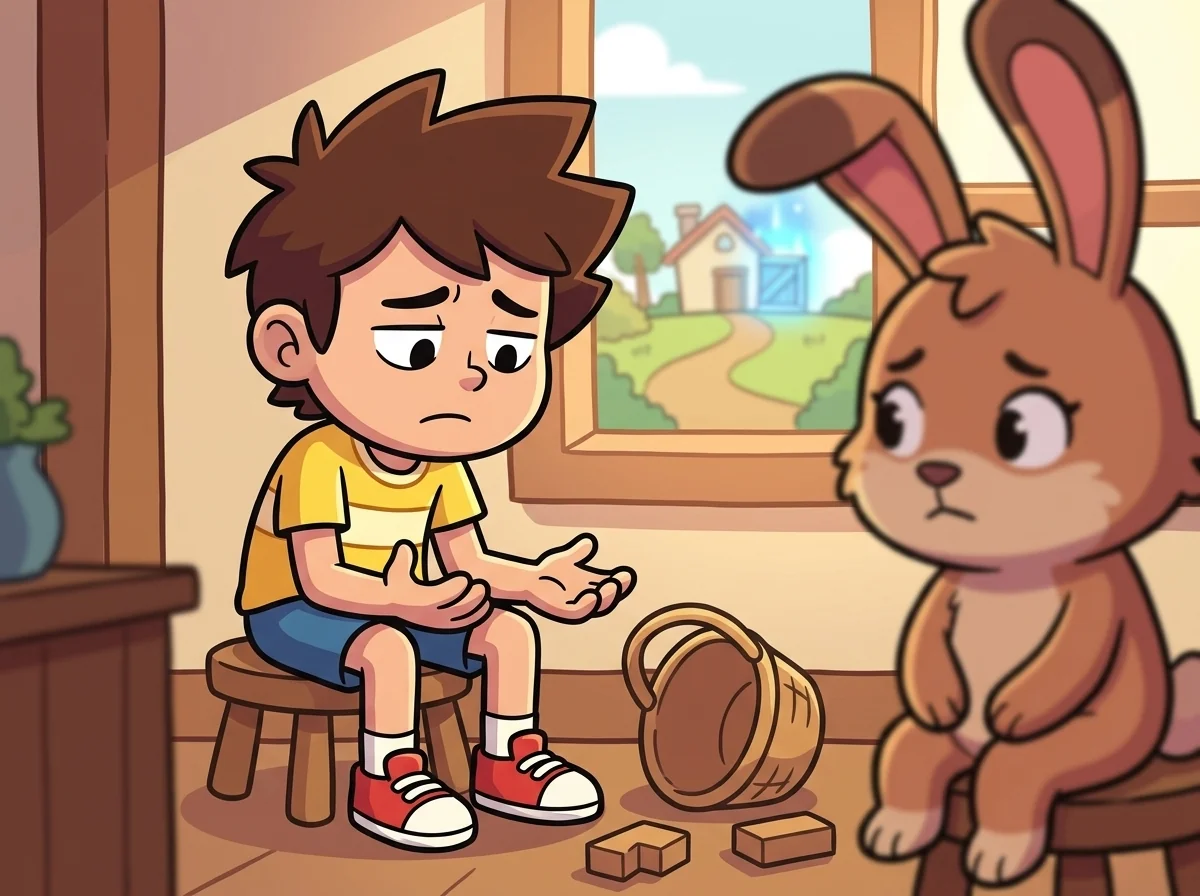
Vero sat down heavily beside Zara. "I don't understand. It was a good trade for me. How did I lose?"
Zara's ears tipped forward, kind but plain. "Because you only asked whether it helped you. You never asked who it helped most. Vero — Marlo was one good from winning. You gave her that good. A little wood for you, the whole island for her. The deal wasn't unfair to you exactly; it was just... blind. You didn't look up from your own basket to see the whole board."
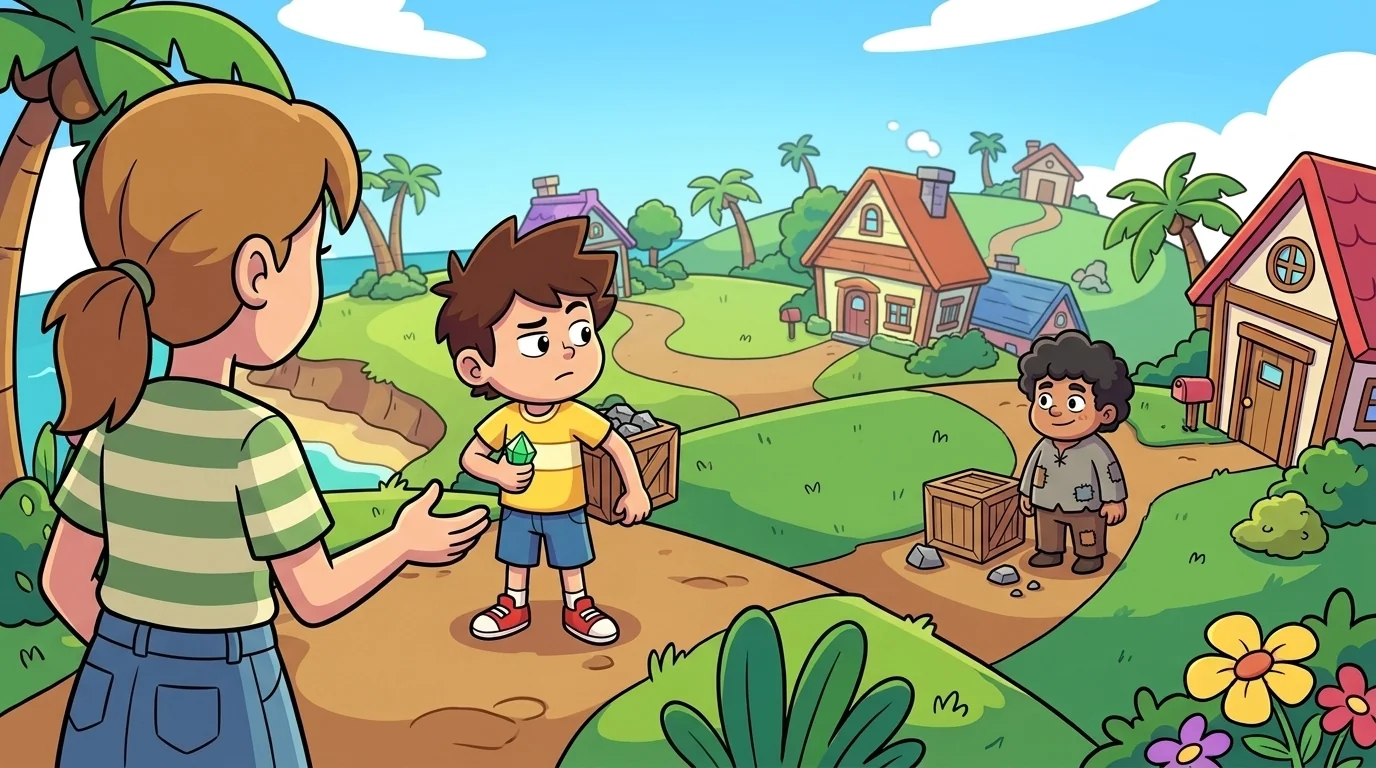
"So I shouldn't trade with the leader?"
"Not that, not never," said Zara. "Just — notice them. When someone's already out in front, think twice before you hand them the very thing they're short of. There's almost always another trader who needs that stone just as much, who isn't about to win. Trade with them instead. Keep the island close." She smiled. "A game where everyone stays in it is a better game for everyone — including you. The runaway leader is nobody's friend, not even their own, because then folk stop trading with them at all."
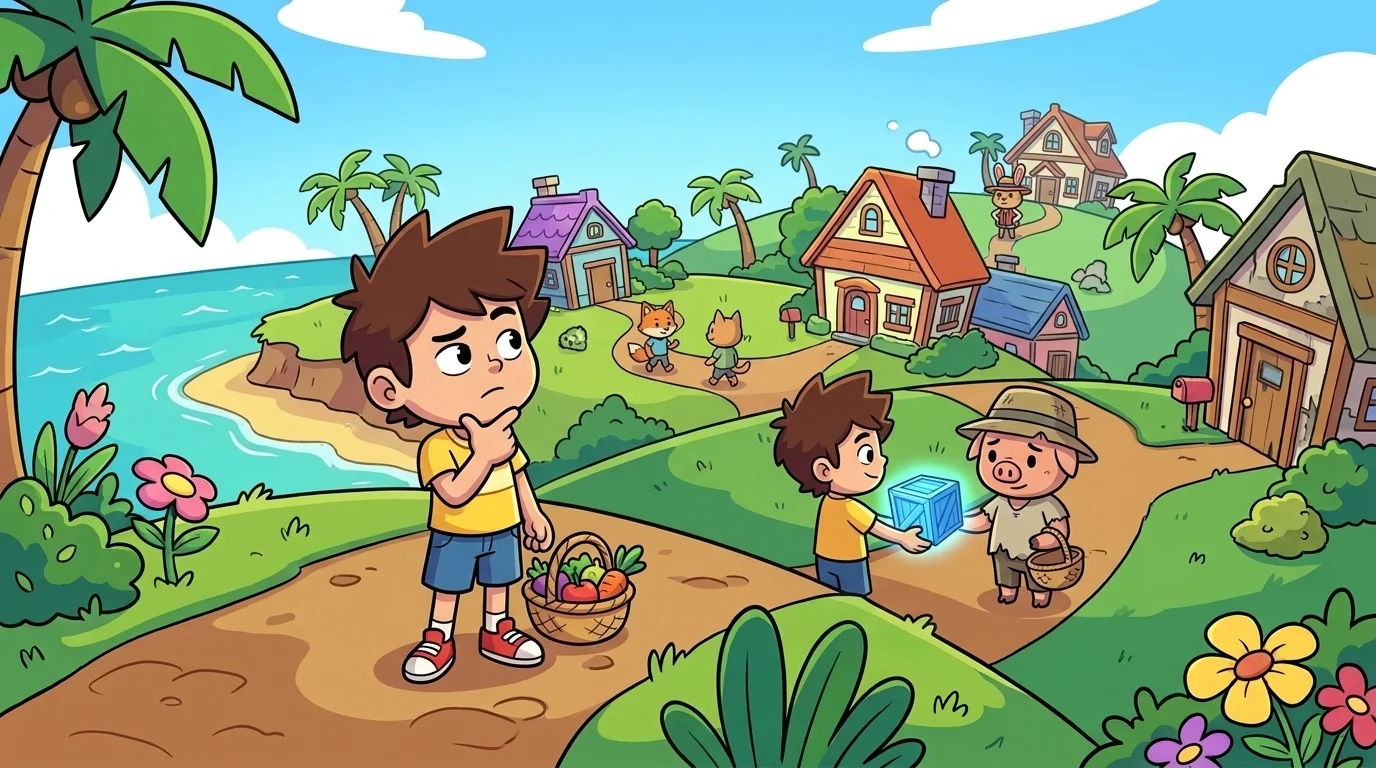
Vero chewed on that. It stung, but it was true, and the next round he played differently. When the leader came asking for the one good she needed, Vero looked up from his basket, glanced at the board, and — kindly, no drama — traded that good to the islander in last place instead, who used it to catch up. The round stayed close. It stayed fun. And Vero, for once, wasn't the reason someone else ran away with it.
That is what Vero teaches, having learned it the hard way: a trade isn't only about whether it helps you. Ask who it helps most. Handing the front-runner the good they're missing only speeds them along. Look up from your own basket, see the whole island, and trade to keep it close.
Don't hand the front-runner the very thing they need — helping whoever's already winning only speeds them further ahead. That's Vero.
The hagglequest ensemble
Vero is part of hagglequest's distributed-narrative cast. Each character embodies a different curricular primitive; together they teach the full subject.