
Zara
WEIGH THE OFFER — *a trade is worth taking only when it helps you, stays fair to both sides, and is asked kindly — and knowing your walk-away first is what keeps you calm.*
Loading audio…
Press play to listen along. The line being read lights up as you go.
Show full transcript
Loading transcript…
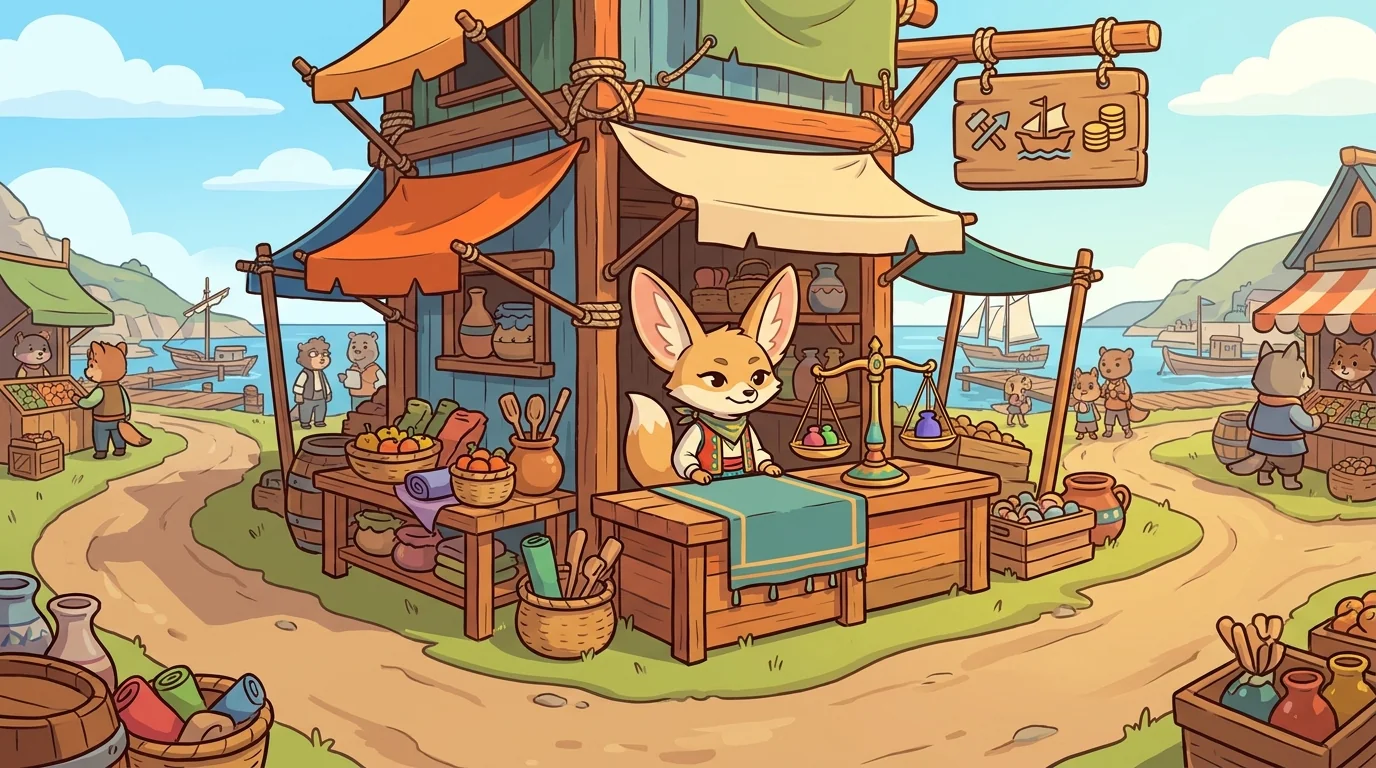
Zara set up her Trading Post at the busiest bend of the Gullwick road, and she runs it the way a good harbourmaster runs a harbour — steady, fair, and never in a rush. She is a fennec, all big ears and calm half-smiles, and she has weighed offers at more trading tables than there are coves on the island. She doesn't make people's deals for them. She teaches them how to weigh one, so they never have to be tricked again.
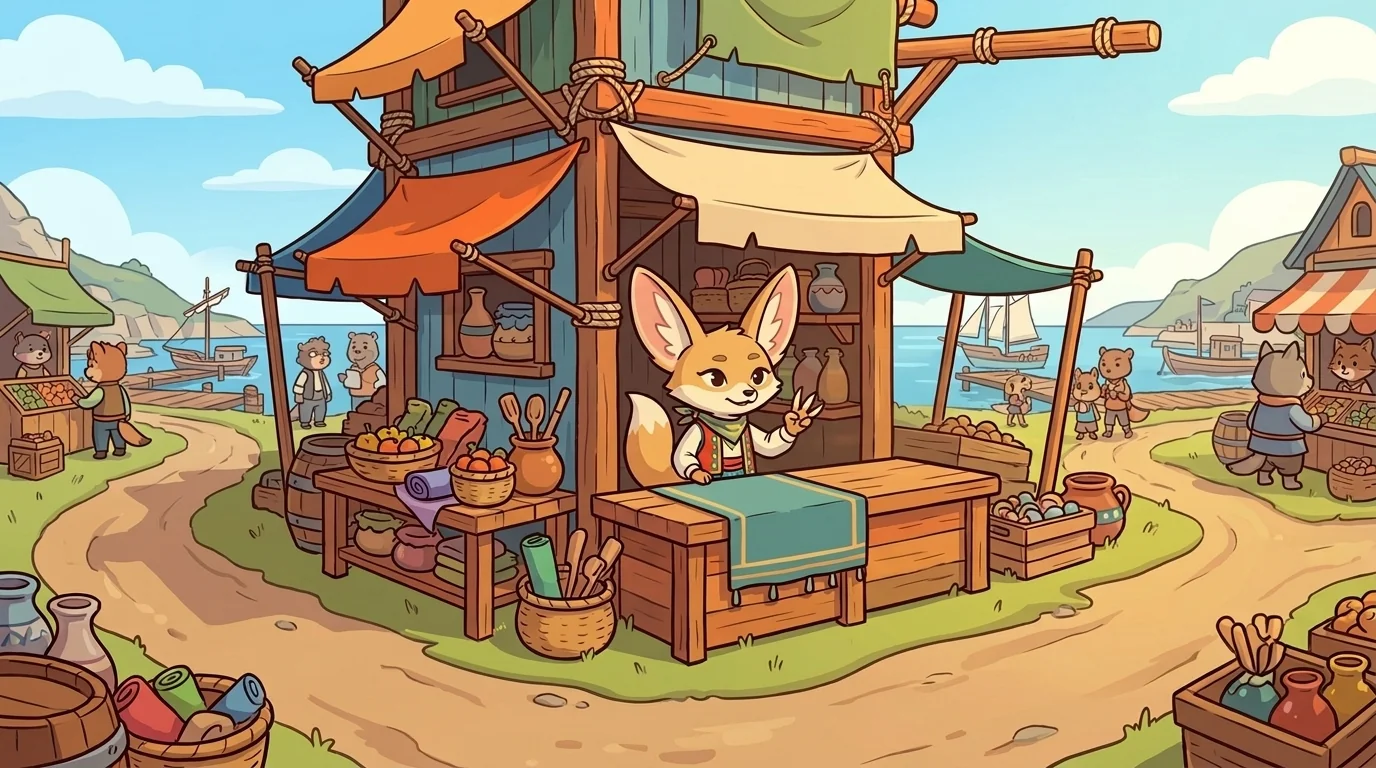
Three young traders come to her post most days — Bo, Juno, and Vero — and each of them brings her the same worried question in a different shape. Is this a good trade or not? And every time, Zara sets down whatever she's holding and walks them through the very same three-part weighing.
"First," she says, holding up one claw, "does it help you? Not 'is it nice' — does it get you closer to the thing you're actually building? Second," — a second claw — "is it fair to both? A trade that only fills your basket and leaves the other trader worse off isn't a deal, it's a grab, and grabs come back around. Third," — a third claw — "did you ask it kindly? You can drive a hard bargain and still be good to the person across the table." She lowers her paw. "Help you. Fair to both. Asked kindly. Weigh every offer those three ways before you say yes."
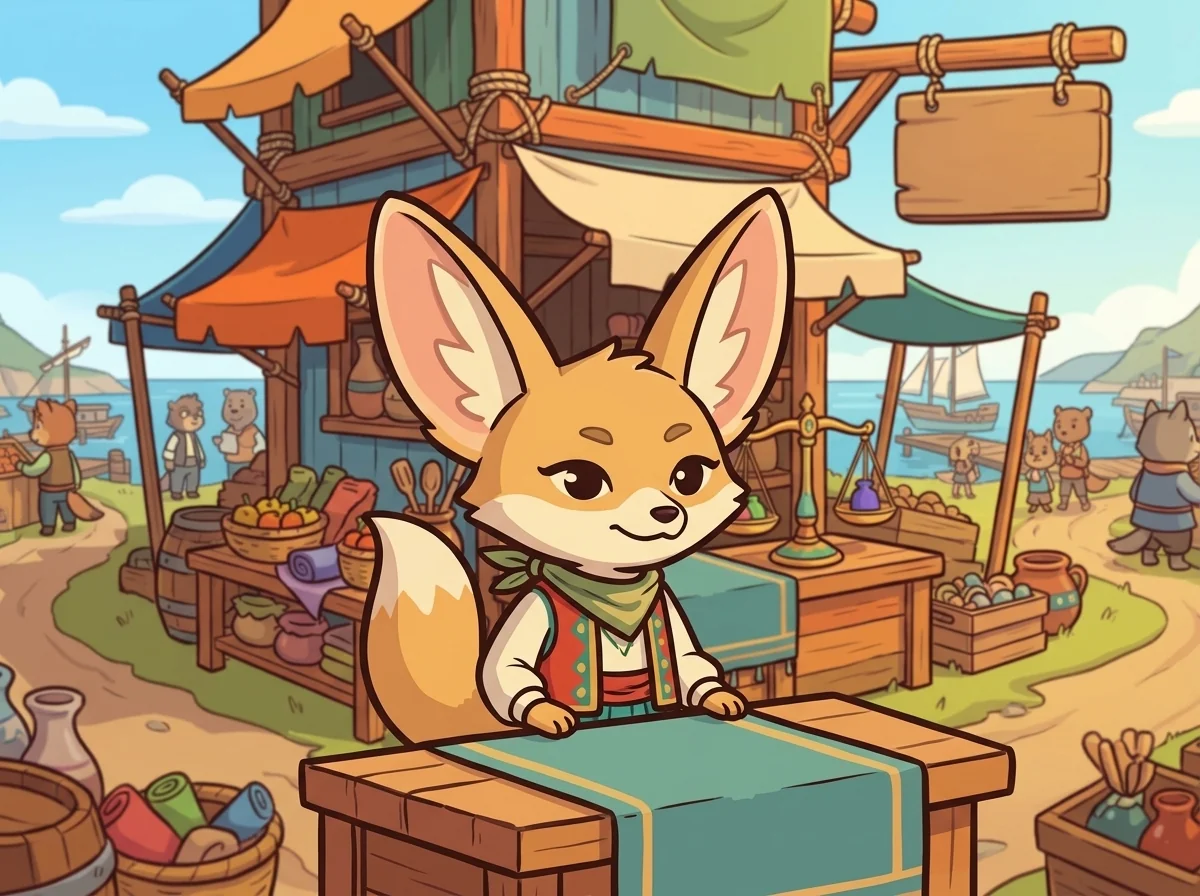
But the thing Zara teaches first, before any of that, is the quiet secret that keeps her so calm: know your cove. Before you ever walk up to trade, decide what you'll do if there's no deal at all — dig your own clay at the far cove, wait a round, trade with someone else. That back-up is your floor. "Once you know you'll be all right either way," she tells them, "the fear goes out of you. You stop grabbing at bad offers out of worry. You can look any trade in the eye and simply ask — is this better than my cove, or worse?"
The three of them roll their eyes sometimes, because she says it so often. But Zara has watched what happens when they forget. Bo, keen to build, takes a lopsided deal because he's short of wood and panics. Juno, who barely needs anything, wanders into a trade that helps her not at all. Vero, always out in front, hands a good straight to the trader already winning, and can't understand why the gap keeps closing. Each of them learned the hard way what Zara had told them the easy way.
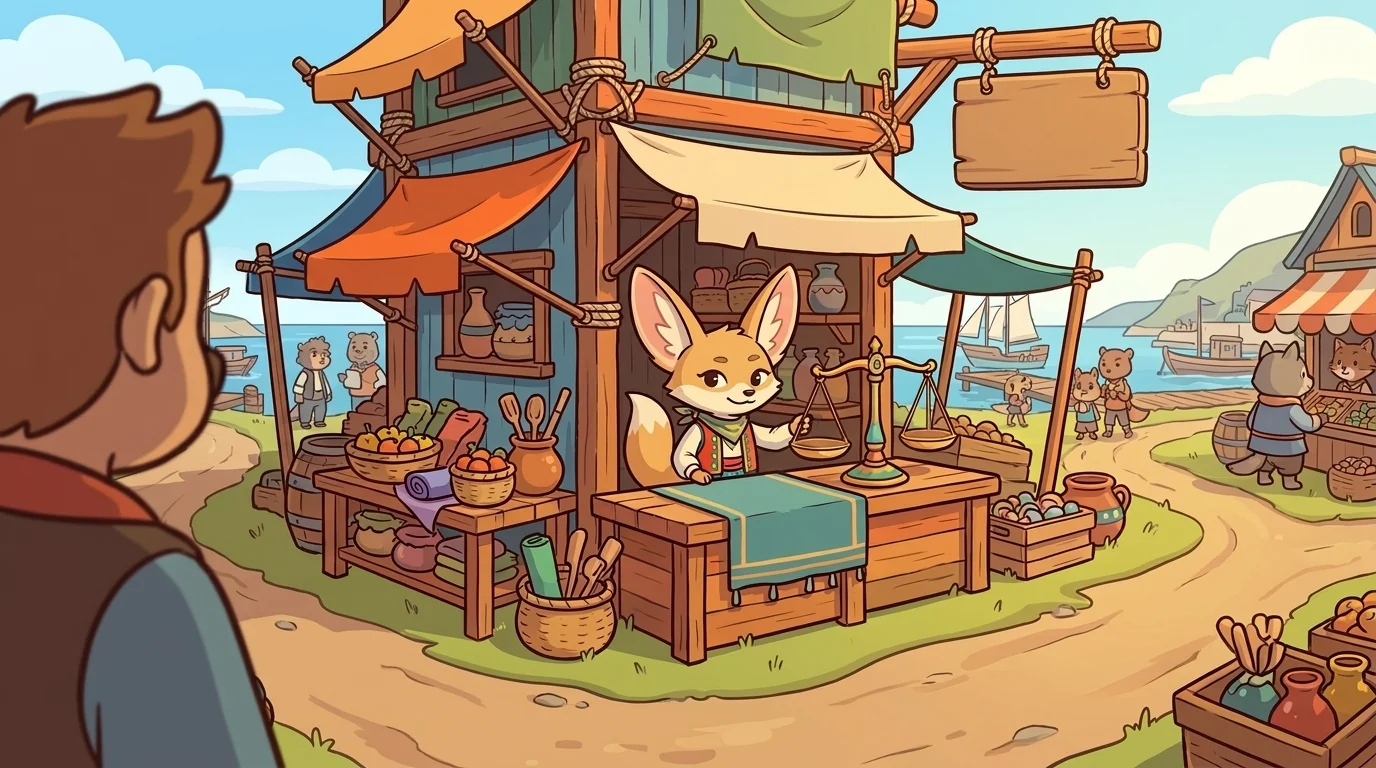
"I'm not here to win for you," she said to Vero once, ears tipping forward, warm and plain. "I'm here so nobody can win off you. Weigh the offer three ways. Know your cove. And when a trade fails all three — walk, with no drama at all. Half the time, walking is what brings the fair offer back to you."
Vero grumbled, but he felt the steadiness settle into him — the calm that comes from knowing you'll be all right either way, and from having a fair, plain way to weigh any deal the world puts in front of you.
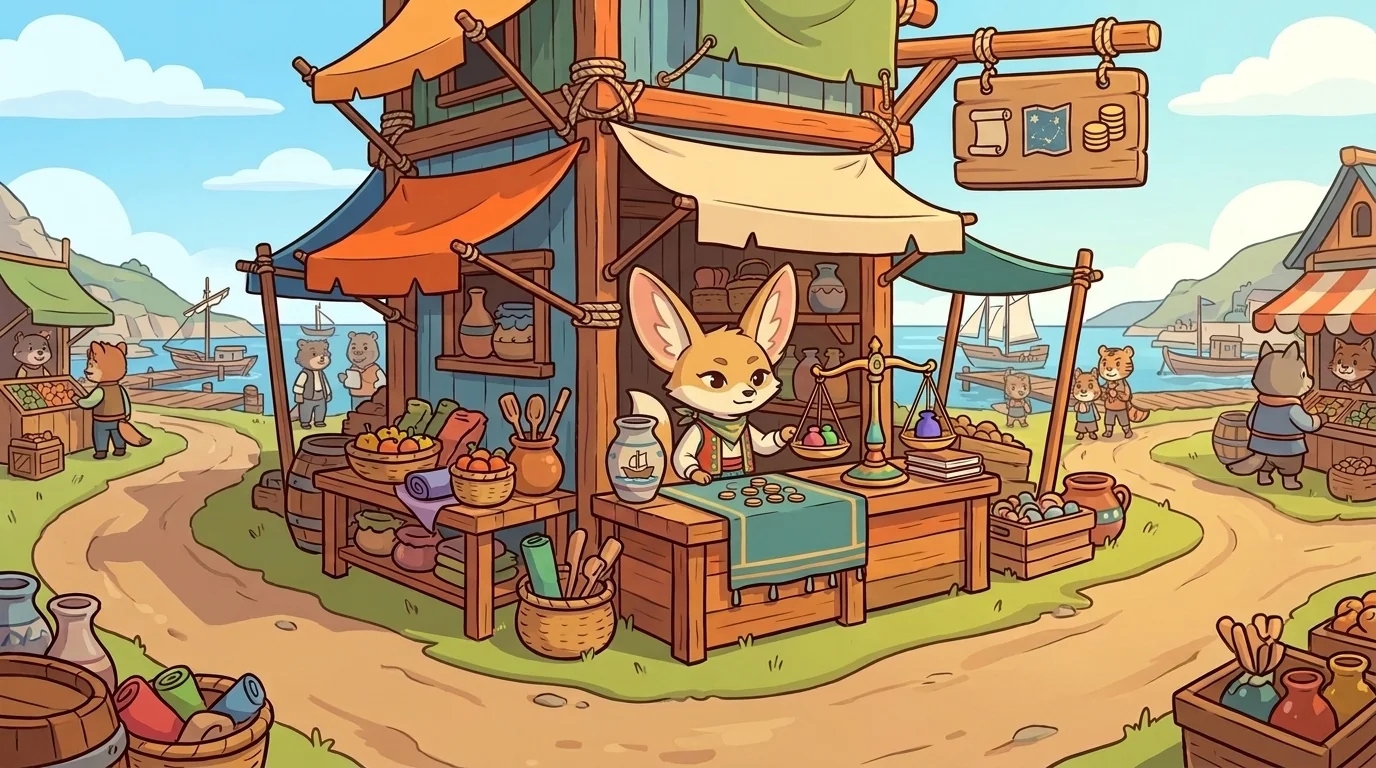
So the next time someone offers you a trade, a swap, a bargain of any kind — do what Zara does. Know your back-up first. Then weigh it three ways: does it help you, is it fair to both, was it asked kindly. If it passes, wonderful. If it doesn't, you already know your cove — and you can walk away calm.
Weigh every offer three ways — good for you, fair to both, asked kindly — and know your cove before you start. That's Zara.
The hagglequest ensemble
Zara is part of hagglequest's distributed-narrative cast. Each character embodies a different curricular primitive; together they teach the full subject.