Again
One result is a maybe
Loading audio…
Press play to listen along. The line being read lights up as you go.
Show full transcript
Loading transcript…
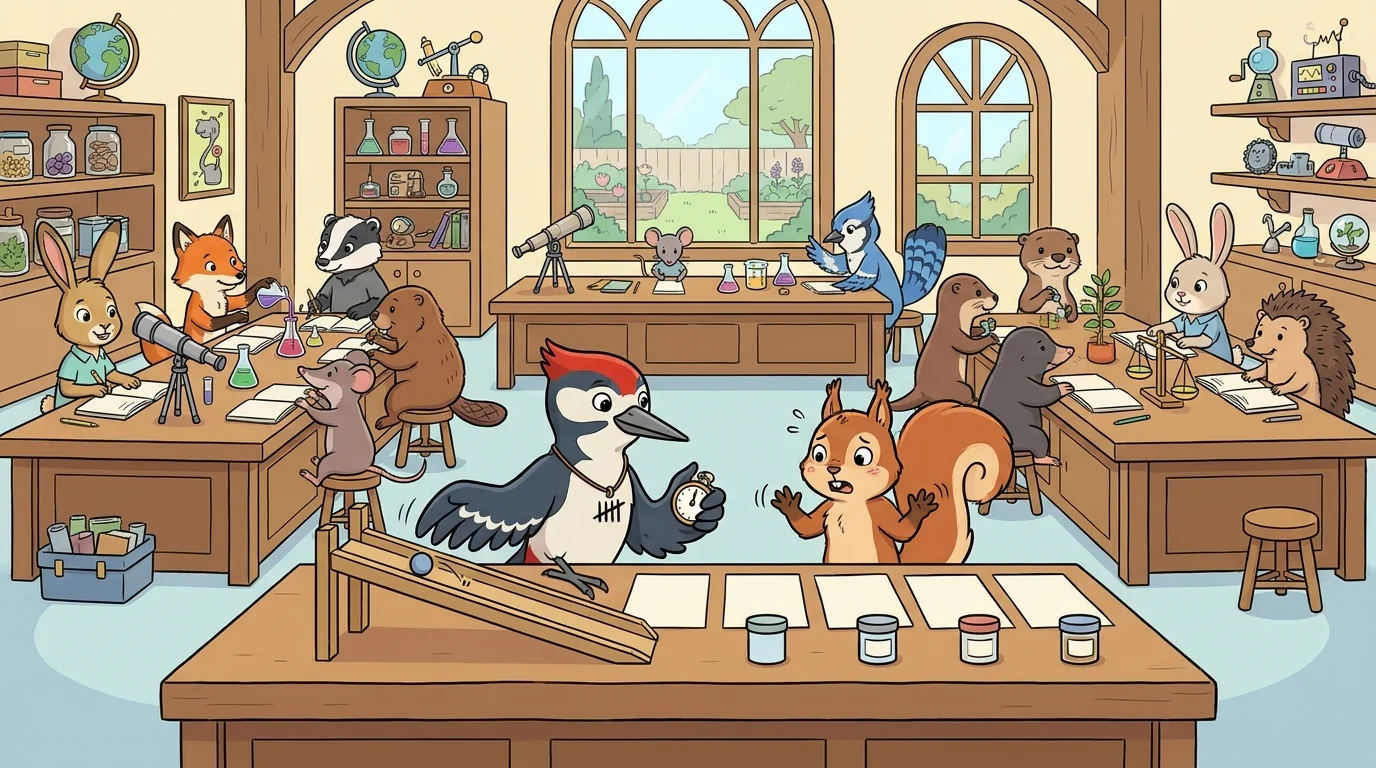
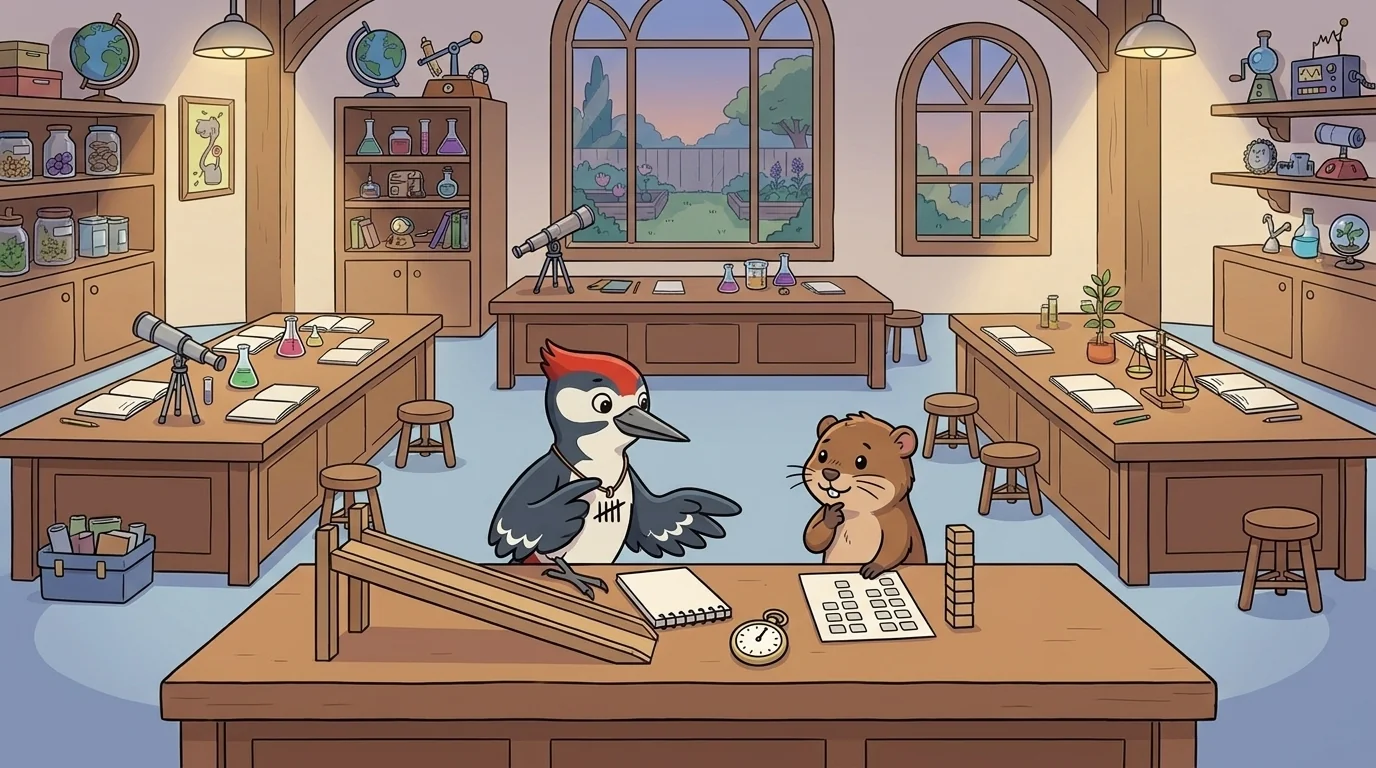
At a workbench in the Grand Laboratory, a steady woodpecker named Again was running the same small experiment for the eighth time in a row — while beside him a squirrel who had done his own experiment once could not fathom why Again refused to just stop.
Again was patient and unhurried, tapping out each repeat with the same calm rhythm, a little tally-mark charm strung at his throat. He rolled a ball down a ramp, timed it, wrote the number, reset. Rolled it, timed it, wrote it, reset. The squirrel practically vibrated. "You already KNOW how long it takes! You've done it seven times! Why do you keep doing it AGAIN?"
"Because once could be luck," Again said, tapping out the ninth. "The very first time I timed it, I got a number. But maybe my thumb was slow on the timer. Maybe a breeze nudged the ball. Maybe I just got lucky, or unlucky, and I have no way to tell from a single try. One result is a maybe — it might be the truth, it might be a fluke, and a maybe wearing a confident face is the most dangerous thing in a lab." He wrote the ninth down beside the others and turned the page so the squirrel could see. "But look at these nine. They're all clustered close, huddled around the same spot. That's what tells me the answer is real. If one had come out wildly different, I'd know something odd happened that run — and I'd go find out what. Repeating isn't me being slow. It's me telling luck and truth apart, which is the one thing a single try can never do." He touched his tally-charm. "One result is a maybe. The same result, again and again, is a truth."
The squirrel slowed for the first time all afternoon. "So my one time... might've just been luck? And doing it a bunch of times is how you find out if it's real?"
"Exactly," Again said. "Anyone can get a result once. Getting the same result again, and again, and again — that's what turns a lucky roll into a discovery."
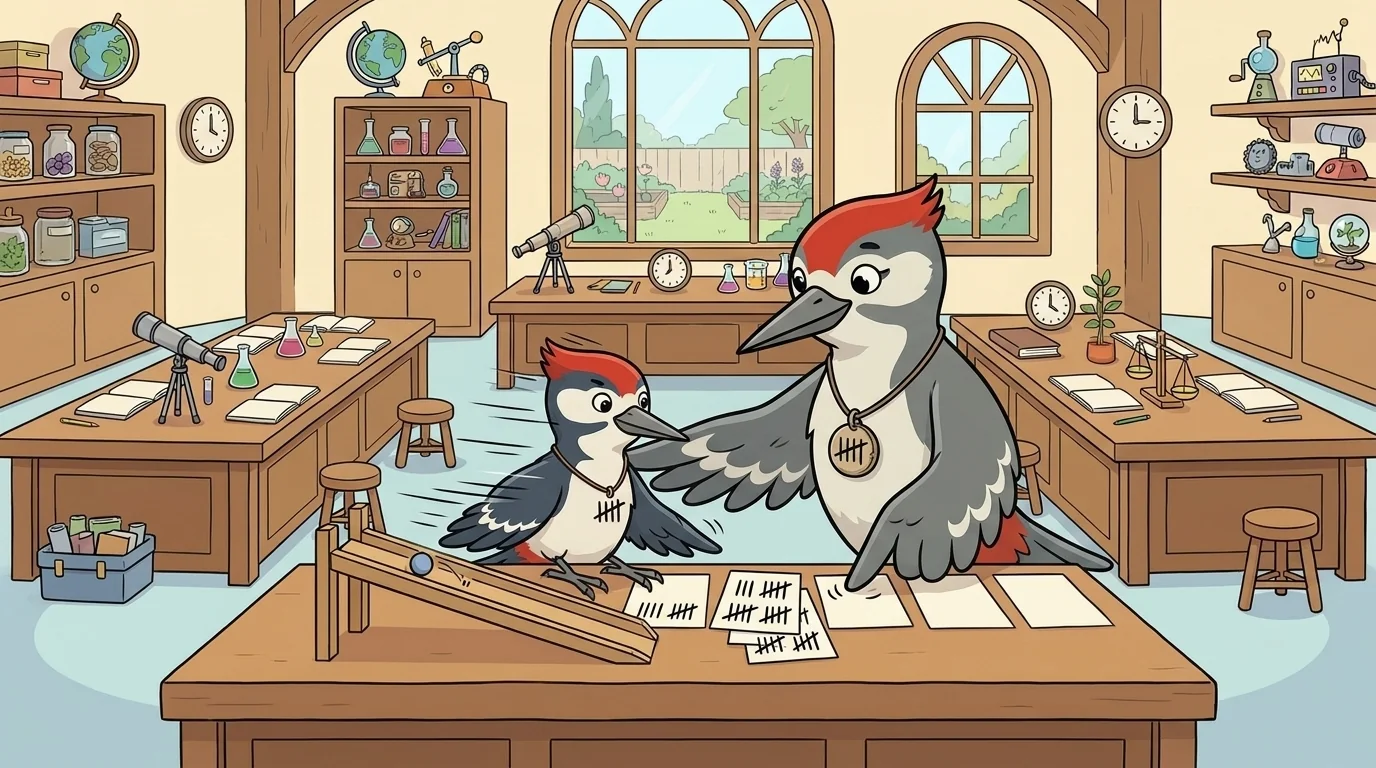
Again had not always been patient. When he was young, he'd been a one-try woodpecker, quick and certain and constantly, quietly wrong.
He'd tapped a hollow log once and a beetle had come tumbling out, and he had announced to the whole forest that this was the beetle log — that any time you wanted a beetle, you tapped right here. He was so sure. He'd found it in one try. But when the other birds came and tapped, nothing came out. He tapped again himself — nothing. Again and again — nothing. That first beetle had just been passing through. And the awful part wasn't only being wrong; it was that he'd sent everyone chasing a fluke he'd dressed up as a law, and he'd done it so confidently that they'd believed him. He sat by the empty log with a hot, ashamed churn in his stomach, and made himself a slow, plain promise: I will never again build a rule on a single tap. I'll tap until I'm sure it's the log and not just one lucky beetle. The promise felt heavy at first — like it would make everything take forever. But over time it settled into something that felt, oddly, like safety: he would never again be the bird who led everyone off a cliff on the strength of one lucky moment.
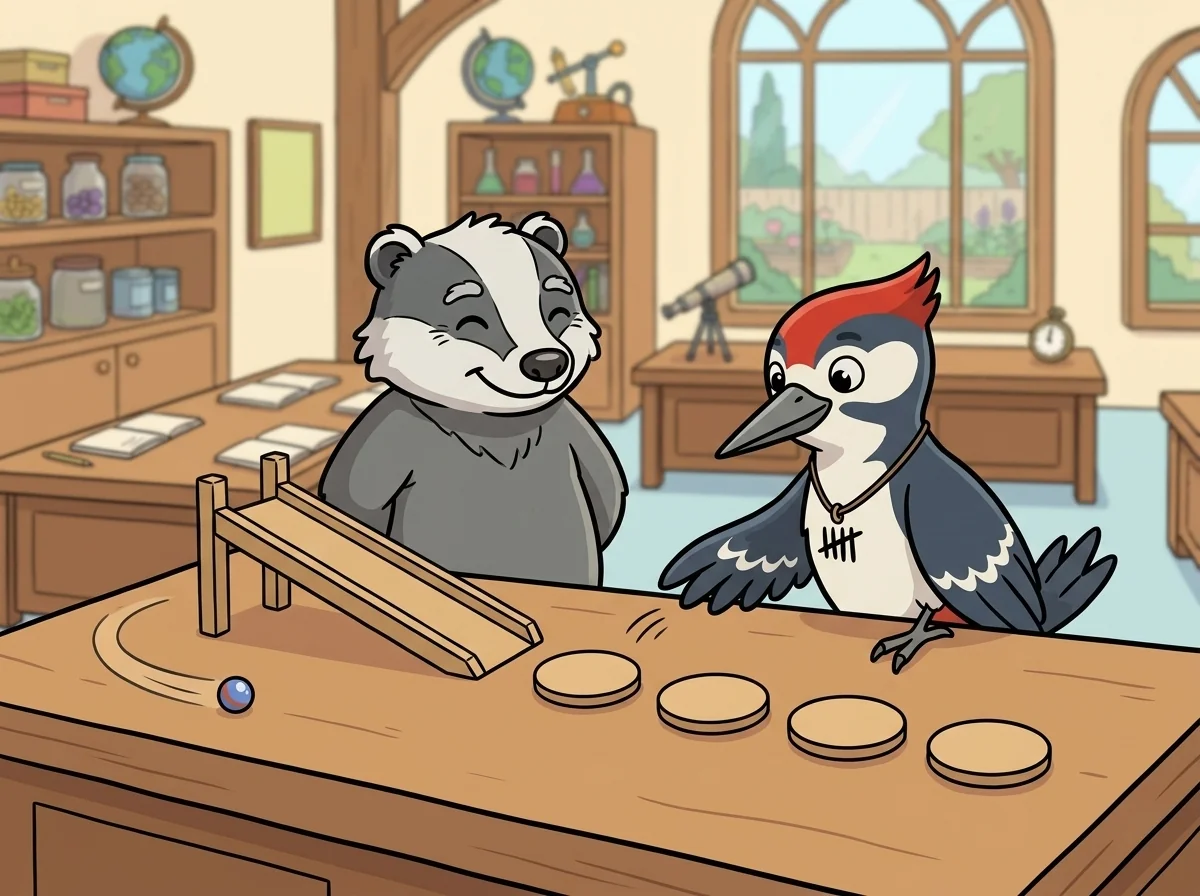
He walked to the Grand Laboratory at twelve, drawn to the one place where doing something ten times was called wisdom instead of dawdling.
Smithy, the badger who ran the lab, met him at the door and dropped a coin. "Heads," he said. "So a dropped coin lands heads. True?"
The old one-try Again would have nodded. This Again picked up the coin and dropped it himself. Heads. Again — tails. Again — tails, heads, tails, heads, heads. He counted. "Out of ten, six heads, four tails. So no — a coin doesn't 'land heads.' It lands about half and half, and your one drop just happened to be heads. One drop couldn't have told us that. Ten started to."
Smithy's eyes crinkled. "Most young ones agree with me after the first coin," he said. "You made me earn it, ten times over. That instinct — to never trust one — is the whole spine of the method. You belong here."
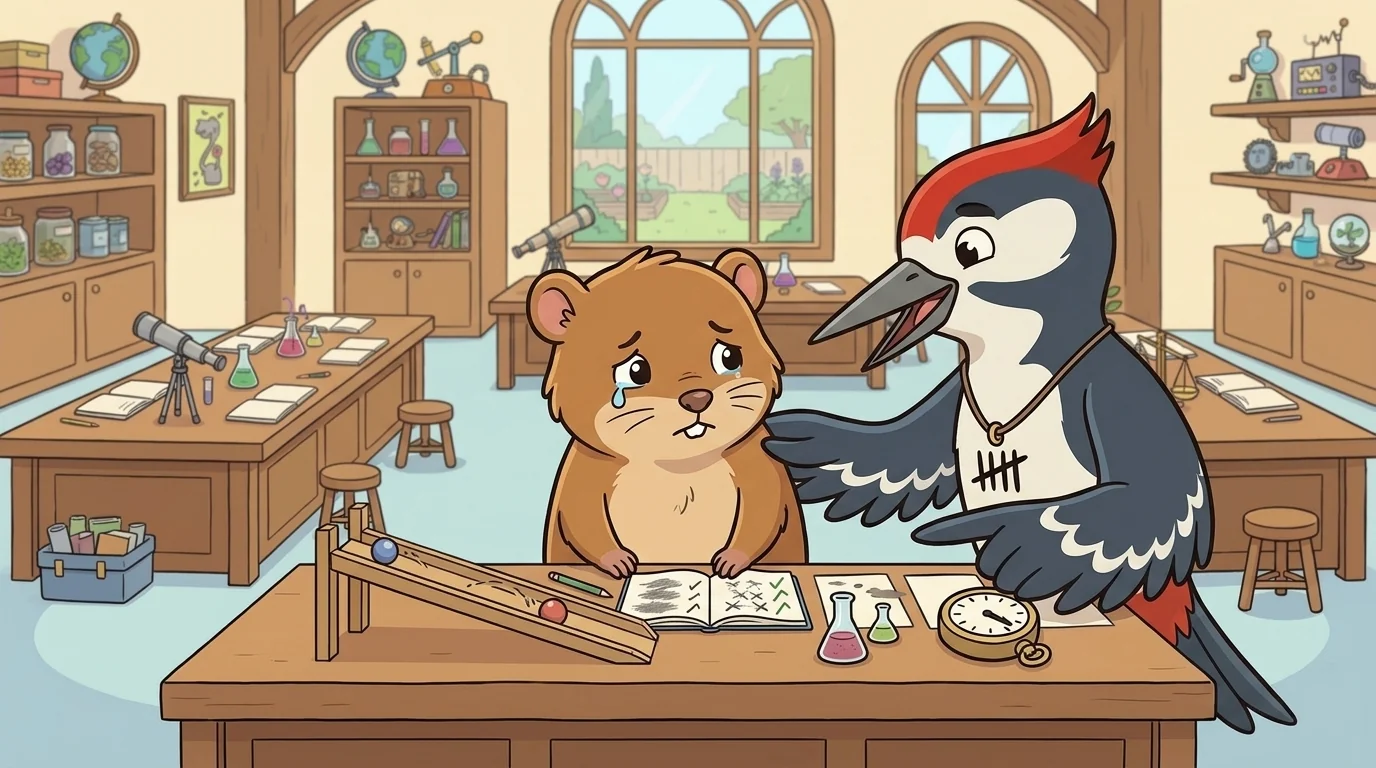
Over the years, Again's bench filled with kids who'd struck gold once and wanted to plant a flag on it.
One afternoon a girl burst in, glowing. "I found it! Plants grow taller with music! I played a song to my bean and it grew a whole centimeter overnight!" Again didn't pop her balloon. He handed her four more bean pots. "Wonderful," he said. "Now let's find out if it's true or if it was a good night to be a bean. Four more plants — two with music, two without, all the same light and water. Measure them all in a week." A shadow crossed her face. "But... what if the music ones don't grow more?" "Then you've saved yourself from telling the whole world a fluke," Again said gently. "That's not a failure. That's the win. The scientist who shouts 'I discovered it!' after one plant might be right — or might be about to embarrass herself in front of everyone, like a certain woodpecker and a beetle log once did." He tapped his charm. "Repeating doesn't take your discovery away. If it's real, it survives being repeated — and now it's bulletproof. If it's not, better you find out quietly, at your own bench, than loudly, in front of the forest." The girl set up her five pots, and Again watched the frantic excitement steady into something calmer and far more durable: the patience of someone willing to earn being right.
When the lab had emptied and the light had gone soft, the girl came back with a smaller question.
"Doesn't it ever feel like you're being a coward?" she asked. "Never trusting the first amazing result — always checking, checking, checking?"
Again thought about a hollow log, and a forest full of birds he'd sent chasing nothing.
"It felt like cowardice to me once," he said. "Like I didn't have the nerve to just believe." He touched the tally-charm at his throat. "But it isn't cowardice. It's the opposite. Believing one lucky result is easy — anyone can do that. Making your discovery stand up straight, again and again, until it can't be knocked down — that takes nerve. The repeat isn't doubt. It's how you build something strong enough to hand to other people without leading them off a cliff."
He felt it as he said it — that grounded, sure-footed steadiness spreading through his chest, his tapping settling into an easy calm, his whole body quiet in the way of someone who no longer had to hope he was right because he'd checked. Not the fizzy thrill of a first result. The deep, settled confidence of a truth that had survived being tested nine times over.
"That's the feeling I trust now," he told the girl, and his tally-charm caught the last of the light. "Not the first time. The tenth — when it's the same, and I finally know."
Hear it as an audio drama
A short play starring Again, from LabSmith. Different voices, same idea. Listen any time after you read.
Loading audio…
Read the drama script
- Narrator: From Spark and Anvil and LabSmith — this is Again, in chapter 1 of the LabSmith cast.
- Narrator: This drama uses an AI-generated voice. Voiced via Gemini 2.5.
- Narrator: Again is a patient woodpecker, tapping out a calm and even rhythm. A tiny tally-mark charm hangs at his throat, one notch for every careful repeat.
- Narrator: At his workbench in the Grand Laboratory, a young squirrel fidgets, baffled that Again won't just stop.
- Again: I am Again. What I teach is *replication*. The move is simple: do it again. And again.
- Again: One result is a maybe. It might be true, it might be luck, and from a single try you can't tell the difference.
- Squirrel: But you already got a number the first time! Why keep rolling the ball down the ramp?
- Again: Because my thumb might have been slow on the timer. A breeze might have nudged it. I need to know if that number is real or just one lucky roll.
- Narrator: Again rolled the ball an eighth time, then a ninth, writing each timing beside the others.
- Again: Look — nine numbers, all clustered close together. That tells me the answer is real. If one were wildly off, I'd know something odd happened that run.
- Smithy: Again's discipline is the spine of the whole method. Anyone can get a result once. The same result, again and again, is what makes it a discovery.
- Smithy: A confident claim built on a single try is the most dangerous thing in a lab. It might be leading everyone off a cliff.
- Again: Repeating isn't boring busywork. If a result is real, it survives being repeated — and then it's bulletproof.
- Narrator: One result is a maybe. Many results is a truth. That is the difference between luck and knowing. That is Again's craft.
- Narrator: You've been listening to a Spark and Anvil chapter, written by the Spark and Anvil writing team for ages 9 to 14.
- Narrator: Spark and Anvil is a 501(c)(3) public charity. Apps stay free forever.
- Narrator: Curriculum aligned to Common Core and Next Generation Science Standards.
- Narrator: Released under Creative Commons BY-NC-SA 4.0 for educational reuse. Visit Spark and Anvil for the full transcript.
The LabSmith ensemble
Again is one of the friends in LabSmith. Each friend shows you one idea by how they act; meet them all and you have the whole subject.
-

Query
Ask a good question — sharp + answerable; 'Where science starts.'
-

See
Observe — gather raw data first; 'Look first. Talk later.'
-

Guess
Hypothesize — frame a testable guess; 'What if…?'
-
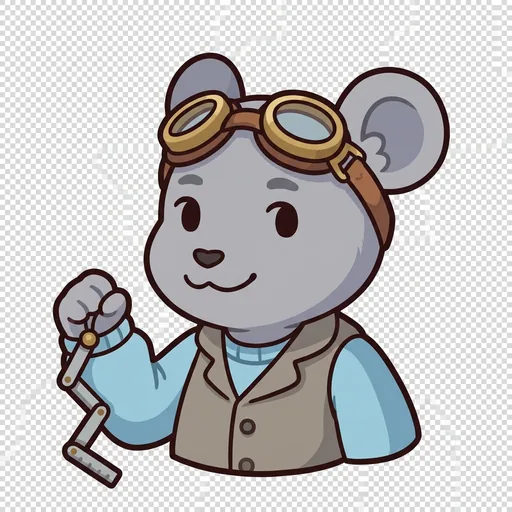
Model
Model it — build a small stand-in you can poke; 'Learn the big thing from the little one.'
-
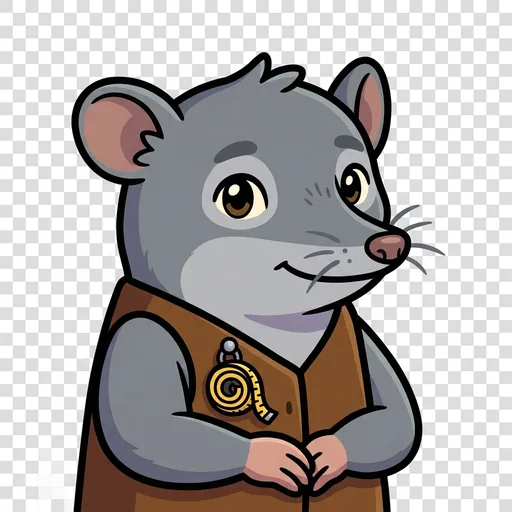
Meter
Measure precisely — a number and a unit; 'How much, exactly?'
-

Check
Experiment — design + run the test; 'One test at a time.'
-

Because
Argue from evidence — back a claim with the reason; 'I think Y, because I saw X.'
-

Explain
Explain the mechanism — the how-and-why that connects cause to effect; 'Know THAT, then know WHY.'
-

Reflect
Learn — interpret results + revise; 'What did we learn? What surprised us?'