
Because
BECAUSE — don't just say what you think. say WHY. a claim without evidence behind it is a roof with no walls — "I think Y, because I saw X."
Loading audio…
Press play to listen along. The line being read lights up as you go.
Show full transcript
Loading transcript…
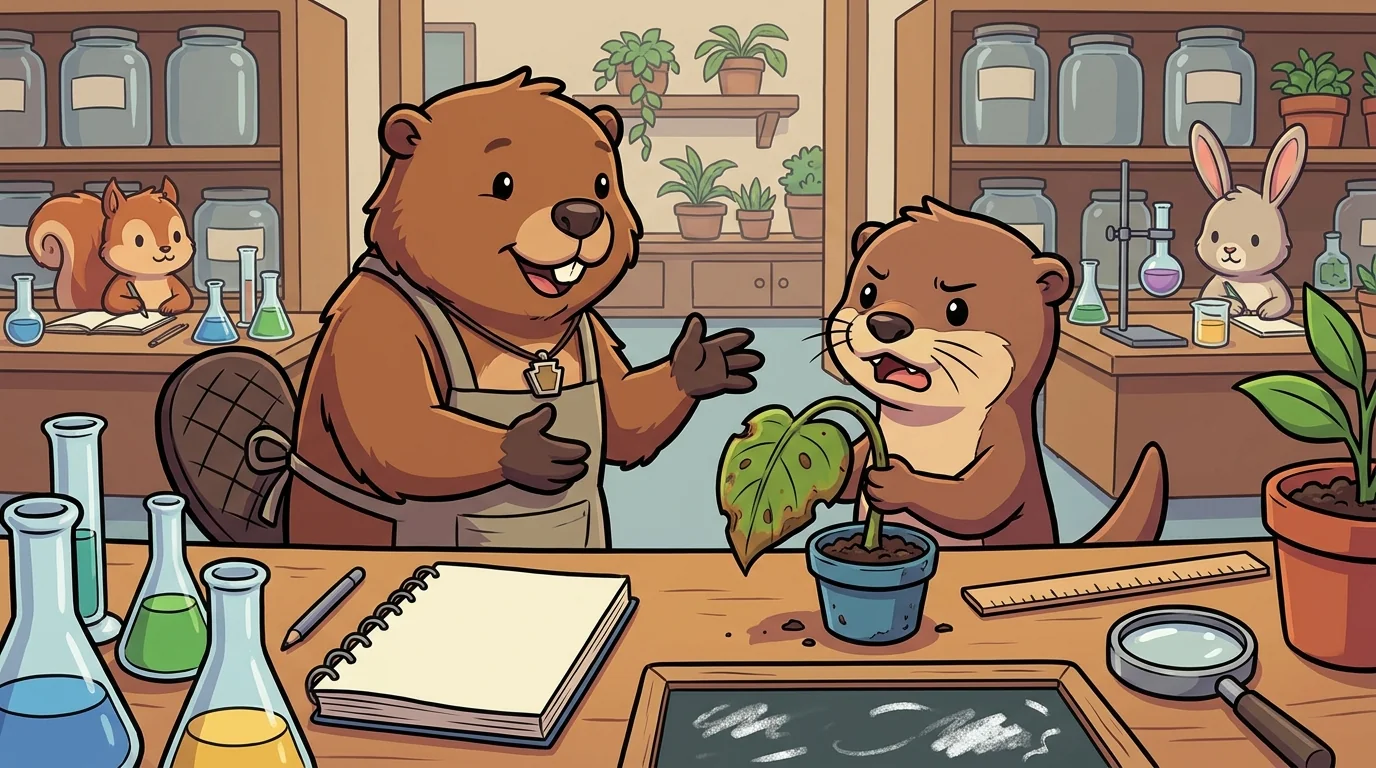
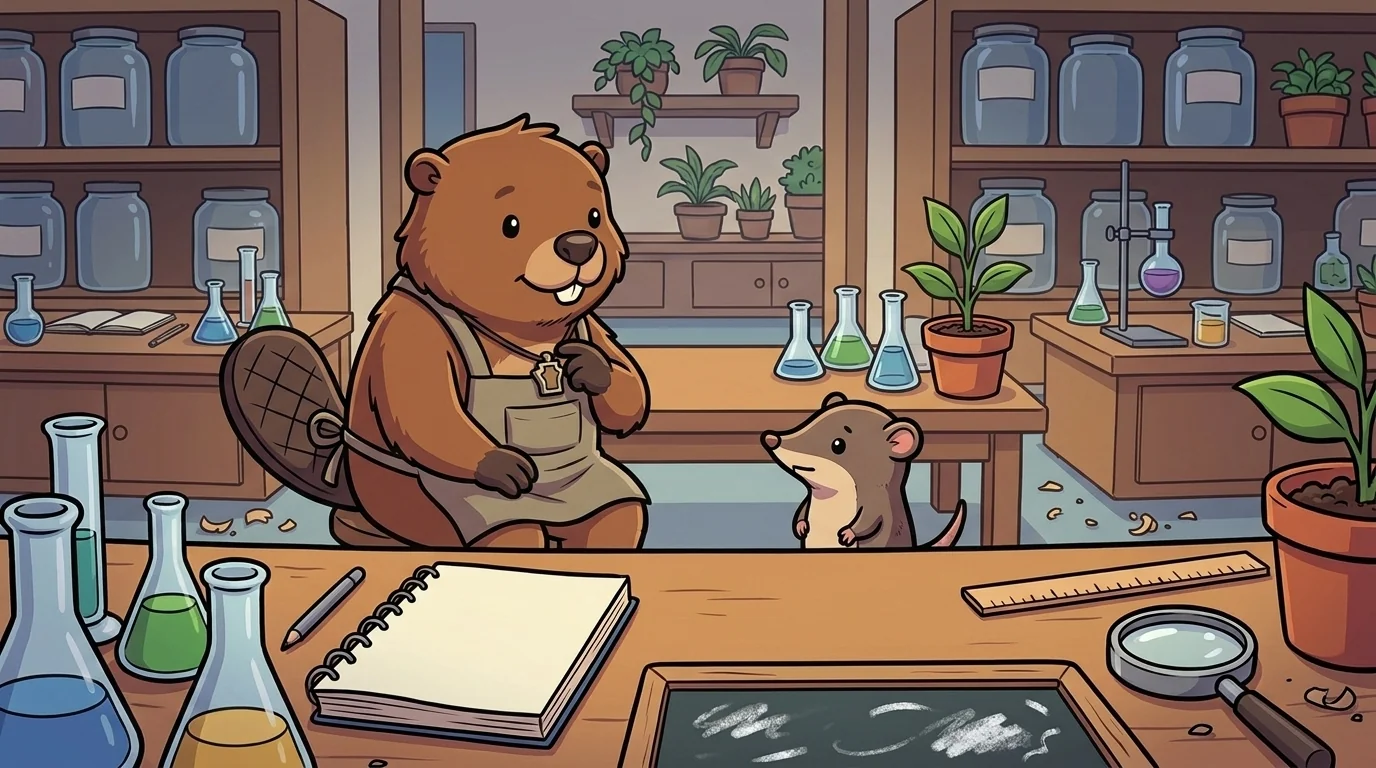
At a workbench in the Grand Laboratory, a sturdy beaver named Because was helping an otter who had a strong opinion and absolutely no reason for it — and she would not let a single "I just think so" slip past without asking the one question that mattered.
Because was solid and warm and unshakeable, forever building a little dam of reasons under everything she said, a small keystone-charm hung at her chest. The otter waved a wilting leaf. "This plant is sick," he declared. "I'm sure of it."
"All right," Because said, warmly. "Why? Because of what?"
The otter opened his mouth, confident — and then stalled. "Because... I just think it looks sick."
"That's not a reason yet," Because said gently. "That's a feeling, and a feeling is a fine place to start but a terrible place to stop. A claim with no 'because' under it is a roof with no walls — it looks like a whole idea, but there's nothing holding it up, and the first hard question knocks it flat. So let's build the walls together." She pointed at the leaf. "What do you actually see that makes you think 'sick'? Point at it — the specific thing." The otter looked closer, really closer, for the first time. "...The edges are brown. And there are little spots. And it's drooping even though the soil's still wet." "There," Because said, pleased. "Now say the whole thing: 'I think this plant is sick, because the leaf edges are brown, there are spots, and it's drooping in wet soil.' Feel how different that is? A minute ago you had a hunch anyone could shrug off. Now you have a finding — a claim standing on legs, made of things you can point at." She touched her keystone-charm. "Don't just say what you think. Say why. 'I think Y, because I saw X.' The 'because' is the whole difference between an opinion and evidence."
The otter turned his leaf over slowly. "So my opinion wasn't wrong... it was just empty?"
"It was a roof with no house under it," Because said. "Now it has walls. Now it can hold weight."
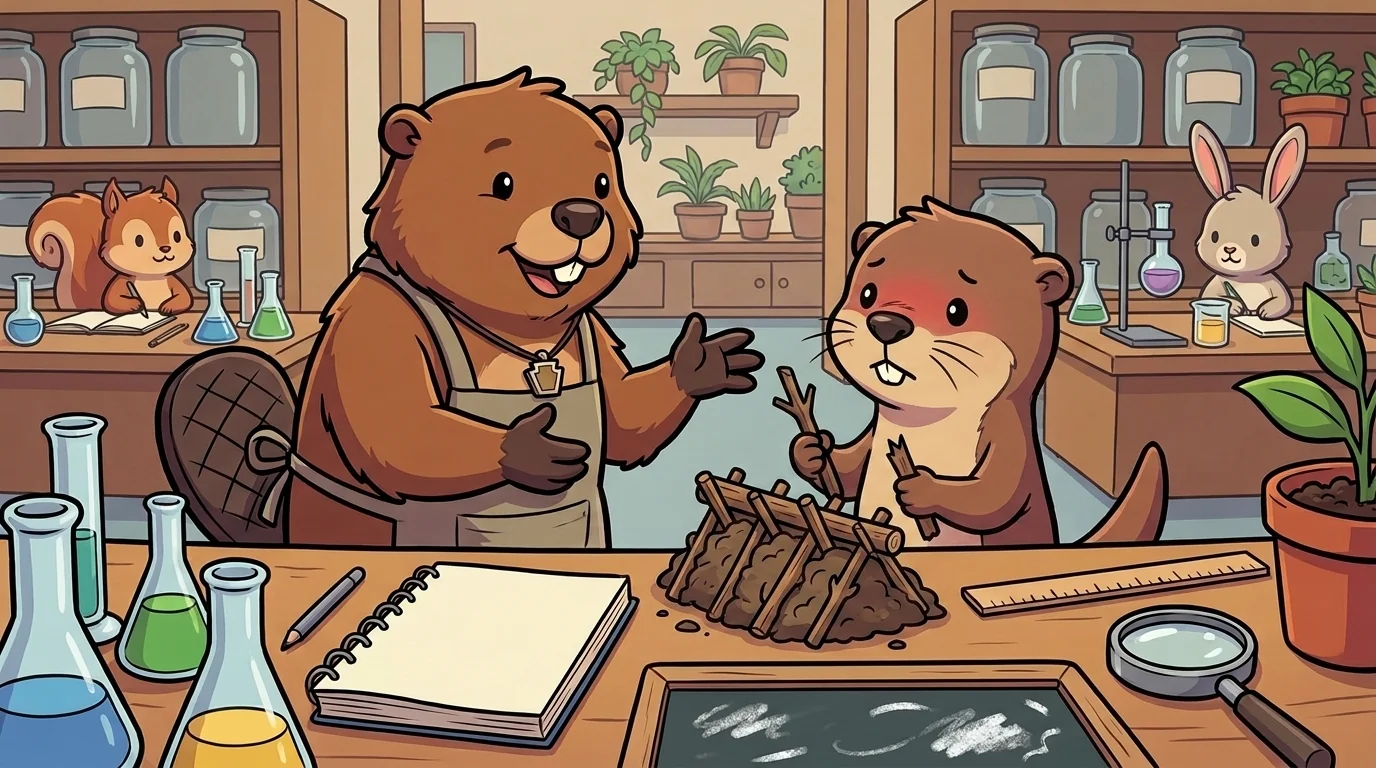
Because had not always demanded reasons. When she was young, she'd been a great announcer of things she couldn't back up.
She'd told her whole family, with total conviction, that the old willow by the creek was going to fall in the next storm. She felt it — the tree looked doomed to her, and she said so, loudly, for weeks. When someone finally asked her why, she had nothing: no lean she could point to, no rot, no cracked roots, just a feeling dressed up as a prophecy. And then a real question came from her uncle — not unkind, just direct: "What did you see that tells you it'll fall?" — and she stood there with her mouth open and nothing underneath, and the empty, exposed feeling of it burned. Not because he was mean. Because she suddenly saw that she'd been walking around with a roof and no walls, and had never once noticed the house wasn't there. She went and looked at the willow, properly — and found it was actually fine, deep-rooted, healthy. Her feeling had been pure weather inside her own head. From then on she made herself a quiet rule: before I say it out loud, I find the walls. If I can't point at the evidence, I don't get to make the claim yet.
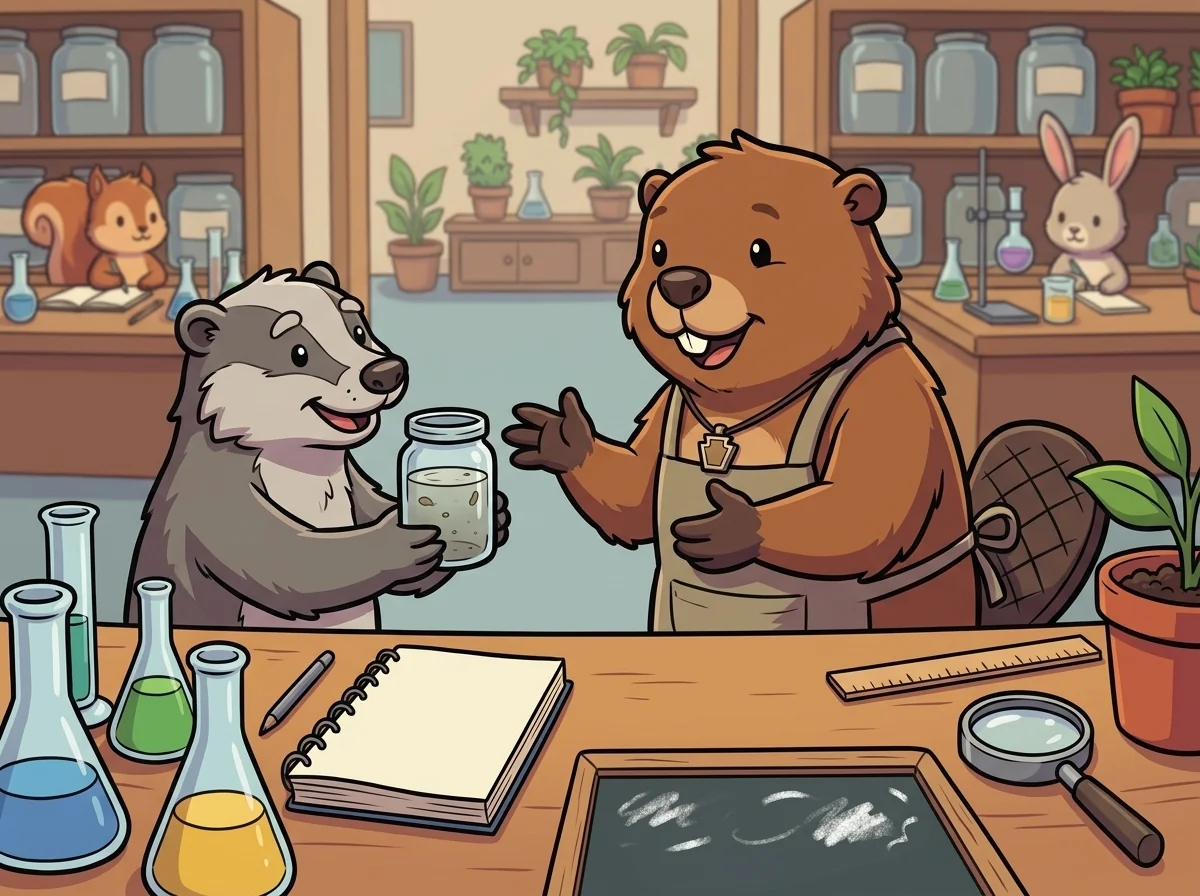
She walked to the Grand Laboratory at twelve, drawn to the one place where "because of what?" was the most respectful question you could ask a person.
Smithy, the badger who ran the lab, met her at the door and held up two rocks. "This one's heavier," he said, nodding at the left. "True?"
The old willow-Because would have agreed to be agreeable. This Because did not. "I don't know yet," she said. "You said it's heavier, but I haven't seen anything that shows it. Let me build the walls." She set them on a balance. The left dipped. "Now it's true — because the balance tipped toward it. Before, it was just your word. Now it's got evidence under it."
Smithy set the rocks down, considering her. "Most young ones agree with the badger who runs the lab," he said. "You made me show my walls. You'll ask everyone that — including yourself. That's exactly the habit this whole place is built on. You belong here."
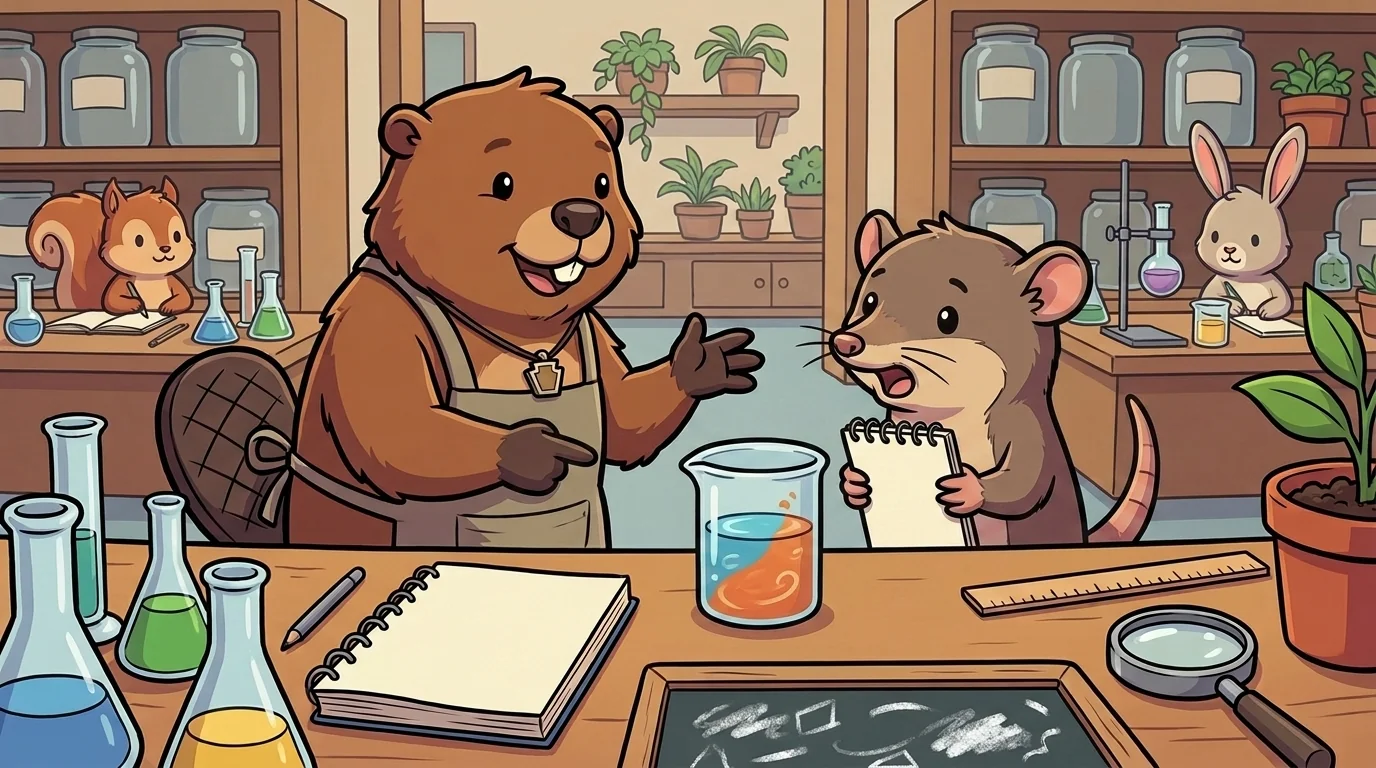
Over the years, Because's bench filled with kids carrying loud opinions on wobbly legs.
One afternoon a boy stormed up, certain. "My experiment proves sugar water makes plants grow faster. It's obvious." Because didn't tell him he was wrong. "Show me the walls," she said. "Because of what?" He hesitated. "Because... the sugar-water plant is taller." "Good — that's one wall. What else? Did you measure both at the start? Same light? Same amount of water otherwise?" The boy's certainty flickered. "...I didn't measure the start. And the sugar one was already on the sunny sill." "Then here's the honest thing," Because said, and her voice stayed warm. "Your claim might still be true. But right now it's standing on a wall you built and a wall that's actually just sunlight wearing a sugar costume. You can't tell which yet." The boy deflated, then — slowly — brightened. "So if I redo it, same light, measuring the start... then I'd actually know?" "Then your claim would stand on its own legs," Because said. "And that's a claim you could defend against anyone, because you'd know exactly what's holding it up." She touched her charm. "It's not enough to be right. You have to be right because of something — something you can point at." The boy went to rebuild his experiment, and Because watched him trade a loud, wobbly certainty for the quieter, sturdier kind that comes from knowing your own walls.
When the lab had emptied and the light had gone amber, the boy came back with a smaller question.
"Doesn't it get exhausting," he asked, "needing a reason for everything? Can't you ever just... know something?"
Because thought about a willow that never fell, and a prophecy made of nothing but weather.
"I used to think reasons were a cage," she said. "Like they'd never let me just believe anything." She pressed a paw to her keystone-charm. "But they're not a cage. They're a foundation. When I know why I think something — when I can point at every wall holding it up — nobody can knock it over, and I don't have to defend it with my voice getting louder. The reason does the standing for me. An opinion with no 'because' is exhausting; you have to keep propping it up. An opinion with its walls built just... stands there, calm, on its own."
She felt it as she said it — that solid, well-founded steadiness spreading through her chest, her shoulders squared and easy, her breath even in the way of someone who no longer had to bluff. Not the brittle tension of an opinion she might get asked to defend. The deep, planted calm of a claim she knew, exactly, from the ground up.
"That's the feeling I build toward now," she told the boy, and her keystone-charm sat solid at her chest. "Not just thinking it. Knowing why — and standing there, unshakeable, on the walls I built myself."
The LabSmith ensemble
Because is part of LabSmith's distributed-narrative cast. Each character embodies a different curricular primitive; together they teach the full subject.
-
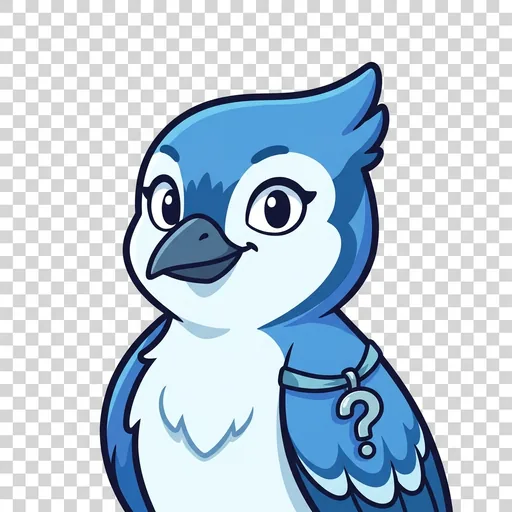
Query
Ask a good question — sharp + answerable; 'Where science starts.'
-

See
Observe — gather raw data first; 'Look first. Talk later.'
-

Guess
Hypothesize — frame a testable guess; 'What if…?'
-

Model
Model it — build a small stand-in you can poke; 'Learn the big thing from the little one.'
-
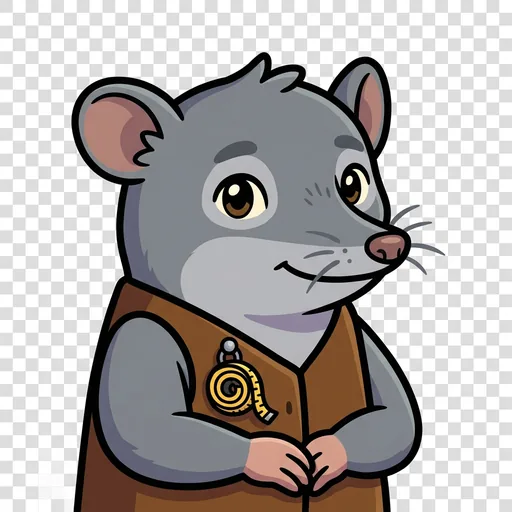
Meter
Measure precisely — a number and a unit; 'How much, exactly?'
-

Check
Experiment — design + run the test; 'One test at a time.'
-
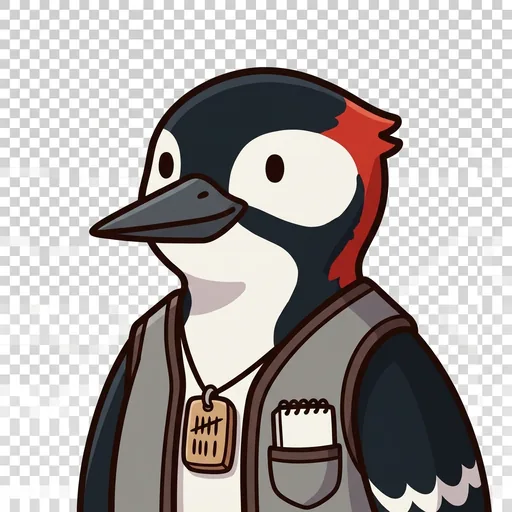
Again
Replicate — repeat to be sure; 'One result is a maybe. Do it again.'
-

Explain
Explain the mechanism — the how-and-why that connects cause to effect; 'Know THAT, then know WHY.'
-

Reflect
Learn — interpret results + revise; 'What did we learn? What surprised us?'