Mete and Course
METE & COURSE — *many of a map's most powerful lines were drawn by people, not the land. Mete's lines divide (borders); Course's lines connect (routes). the very same river can be one person's wall and another's road — a human meaning laid over the land's own line.*
Loading audio…
Press play to listen along. The line being read lights up as you go.
Show full transcript
Loading transcript…
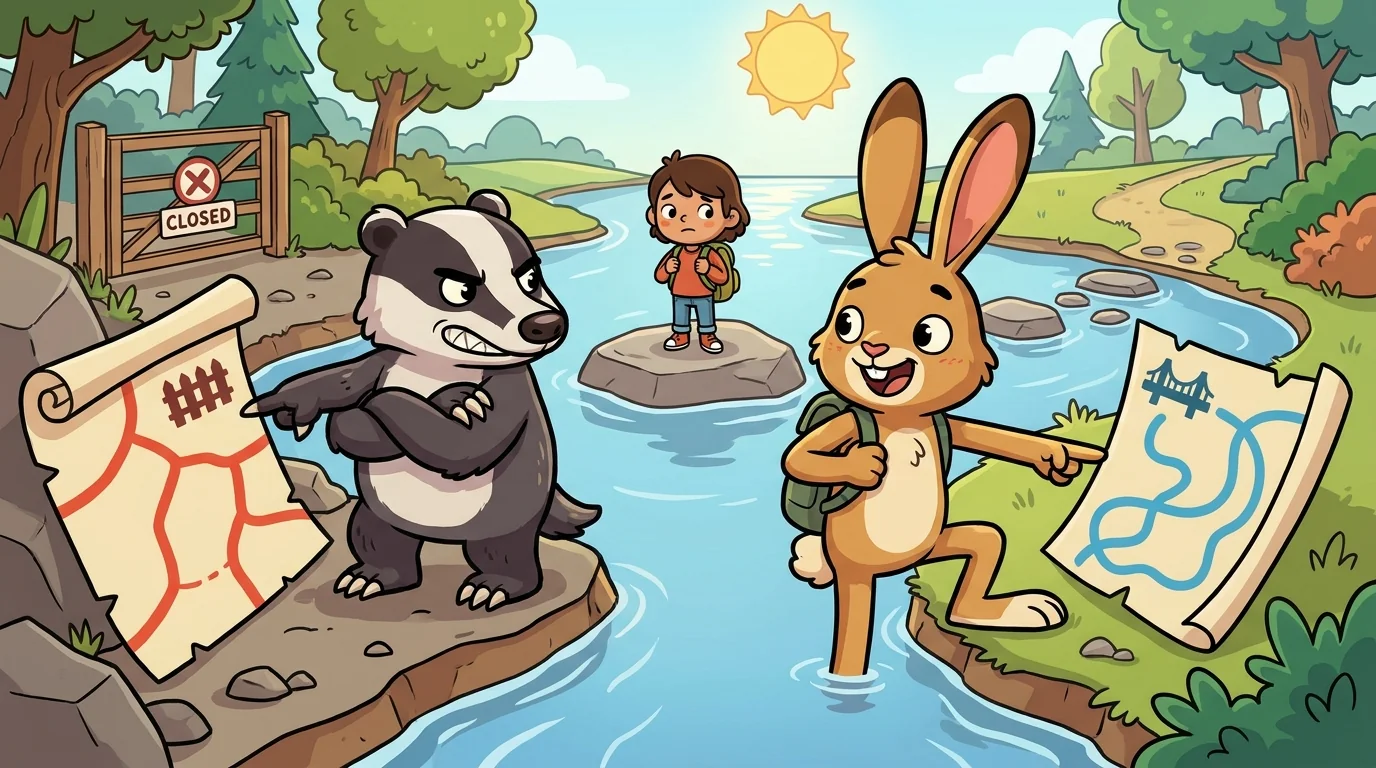
Mete the badger and Course the hare stood on opposite banks of the same river, and could not agree what it was.
"It's a border," Mete called across, blunt claws in the mud. "The map says so. One country stops here; another begins. My kind of line — it divides."
"It's a route," Course called back, ears up, already eyeing the shallows. "People have crossed here for a thousand years — it's the easiest ford for a day's walk. My kind of line — it connects."
The young traveler stood on a rock in the middle, looking from badger to hare, from one bank to the other. "But it's one river," she said. "How can it be both a wall and a road?"
Mete and Course looked at each other across the water, and then, slowly, they both grinned.
"Because," they said together, "the river doesn't care what it is. People decided. And people decided two things at once."
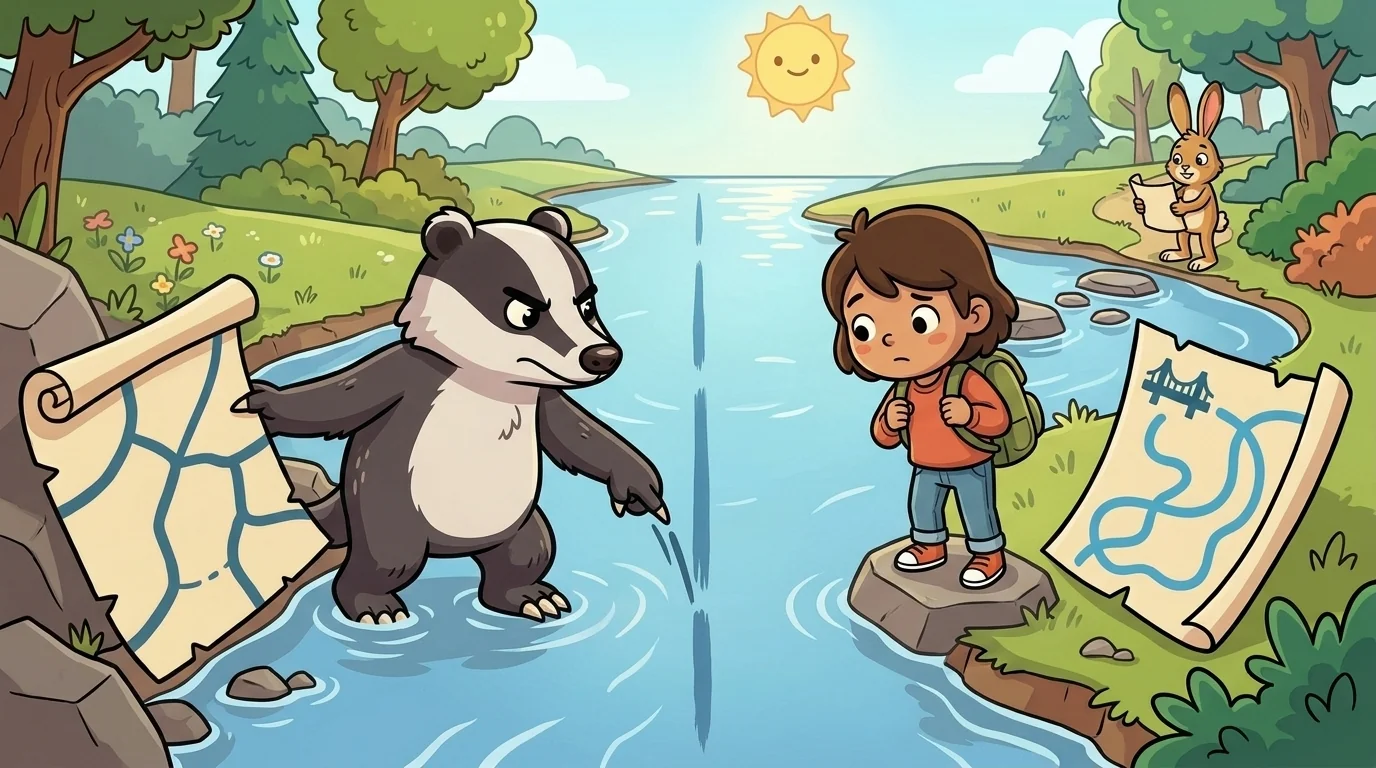
Mete waded in first, because a wall is the loudest kind of line.
"Look what my line does," she said, drawing a straight mark down the middle of the current — a mark the water swallowed instantly, indifferent. "It says: this side, that side. Different country. Different rules. Different signs. It keeps things apart." She patted the mud on her own bank. "And here's the thing a mapmaker must never forget — the land didn't draw it. The river was here first, being a river, joining a mountain to the sea. People came and laid a meaning over it: let this river be an edge. They wrote it on the map, and now it divides."
The traveler frowned from her rock. "So the border's the river?"
"The border uses the river," Mete said. "It's a human line wearing the land's line like a coat. The river is real all on its own. The border is a promise people painted onto it." She looked across the water at Course. "My lines divide. But watch — the very same river Course is about to call something else entirely. Because a line people drew can hold more than one human meaning at once."
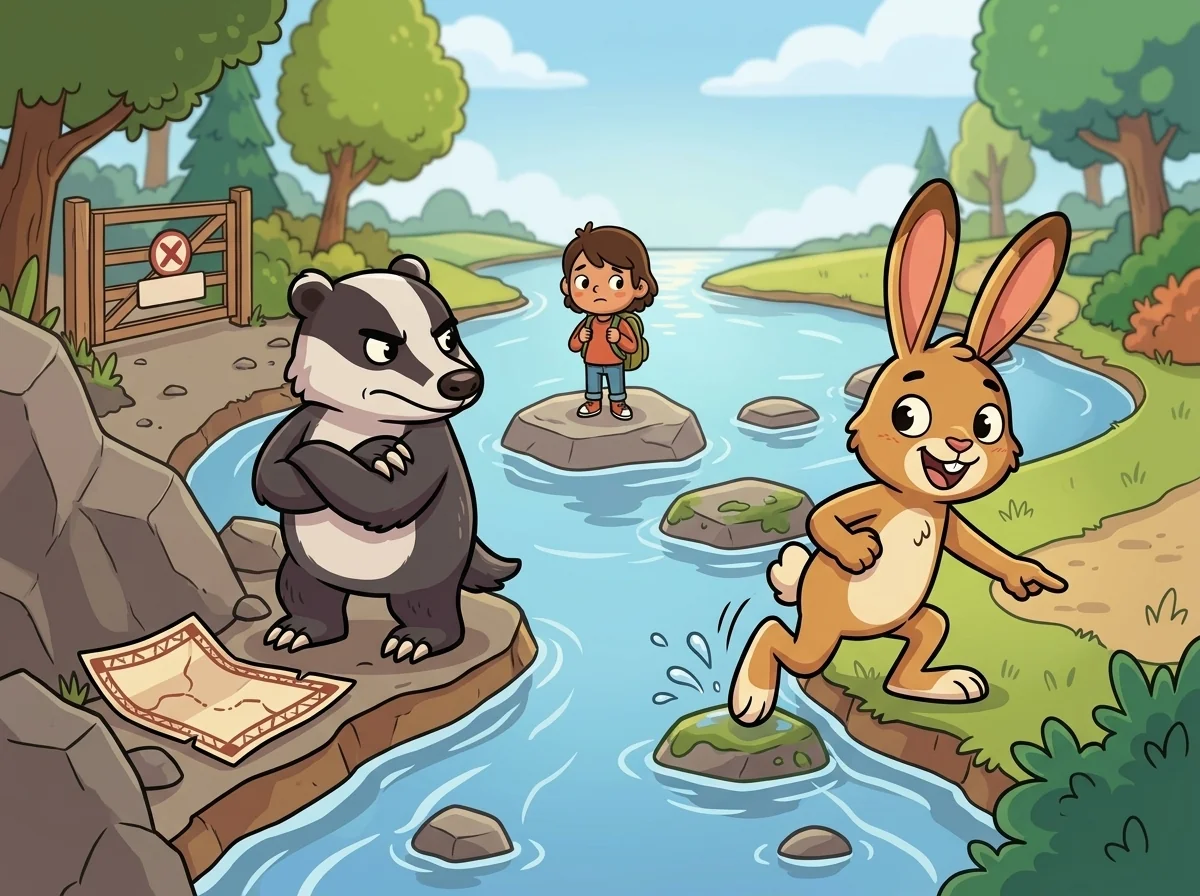
Course splashed in from her side, quick and bright.
"Mete's right that people drew the meaning," she said, "but people drew my meaning here too — the opposite one." She traced the shallow ford, the gentle place where the banks slope kind. "For a thousand years, travelers looked at this exact spot and thought: this is where we cross. Not a wall — a doorway. The one place the river lets you through." She thumped a hind foot on the wet stone. "Traders met here. Families visited across here. Two towns grew up facing each other over this ford because it connected them." She grinned at Mete. "Your border and my route are the same water. You painted 'keep apart' on it. Somebody else painted 'come together' on it. And both meanings are true, laid right on top of each other."
The traveler looked down at the ford beneath her rock. "So the same river is a wall for you," she said to Mete, "and a road for you," she said to Course. "At the exact same place."
"At the exact same place," they said together.
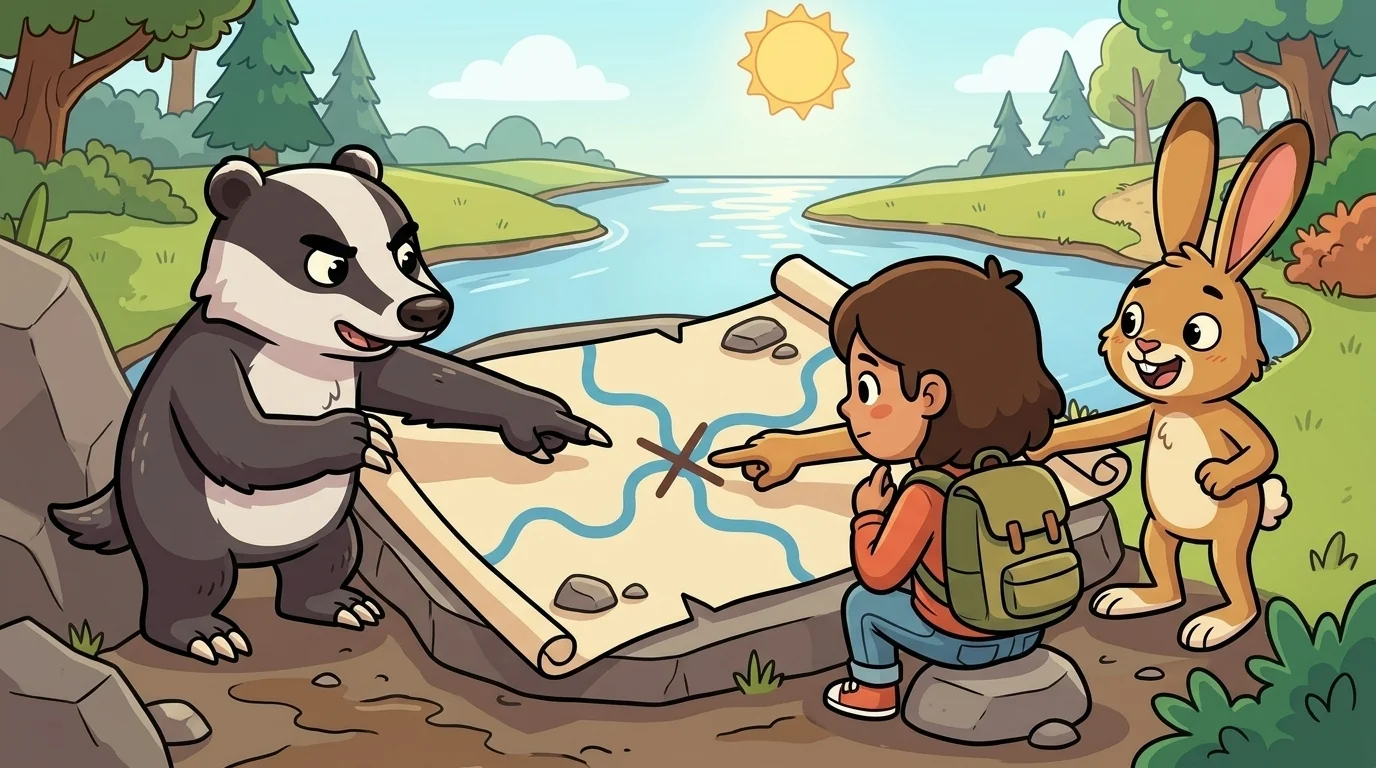
Then they showed her the thing neither line could be alone, and she saw it whole.
Mete drew her dividing line down the river on the map. Course drew her connecting line — the ford, the crossing — across the very same spot. The two human lines met and crossed right there on the water, an X of opposite meanings.
"Here's the whole secret of the lines people draw," Mete said, tapping the crossing point. "My line stops here — 'you are leaving one country.' Her line goes right through the same spot — 'you are crossing to your neighbors.' Same water. Same map. Two humans' meanings, both painted on, both true." She snuffled. "A traveler who only sees my line thinks: a wall, keep out. A traveler who only sees Course's line thinks: a road, come through. But the real place is both — and a mapmaker who shows only one has hidden half of what people made here."
"Watch what happens to a border town," Course added, drawing a little dot right on the crossing. "It sits on Mete's dividing line — so it's the edge of two countries. And it sits on my connecting line — so it's where two peoples meet and trade and marry. The very same dot is 'the last town before the border' and 'the first town where two worlds shake hands.' Divide and connect, in one place, because two humans laid two meanings on one river."
The traveler pressed her finger to the crossing dot, where the wall-line and the road-line met. "It's not that one of you is right," she said slowly. "The river's a wall and a road. People made it both. And the honest map has to draw... both your lines."
"Both lines," said Mete and Course together. "Because people drew both — and a map that shows only the wall, or only the road, is telling you half of what we did to this river."
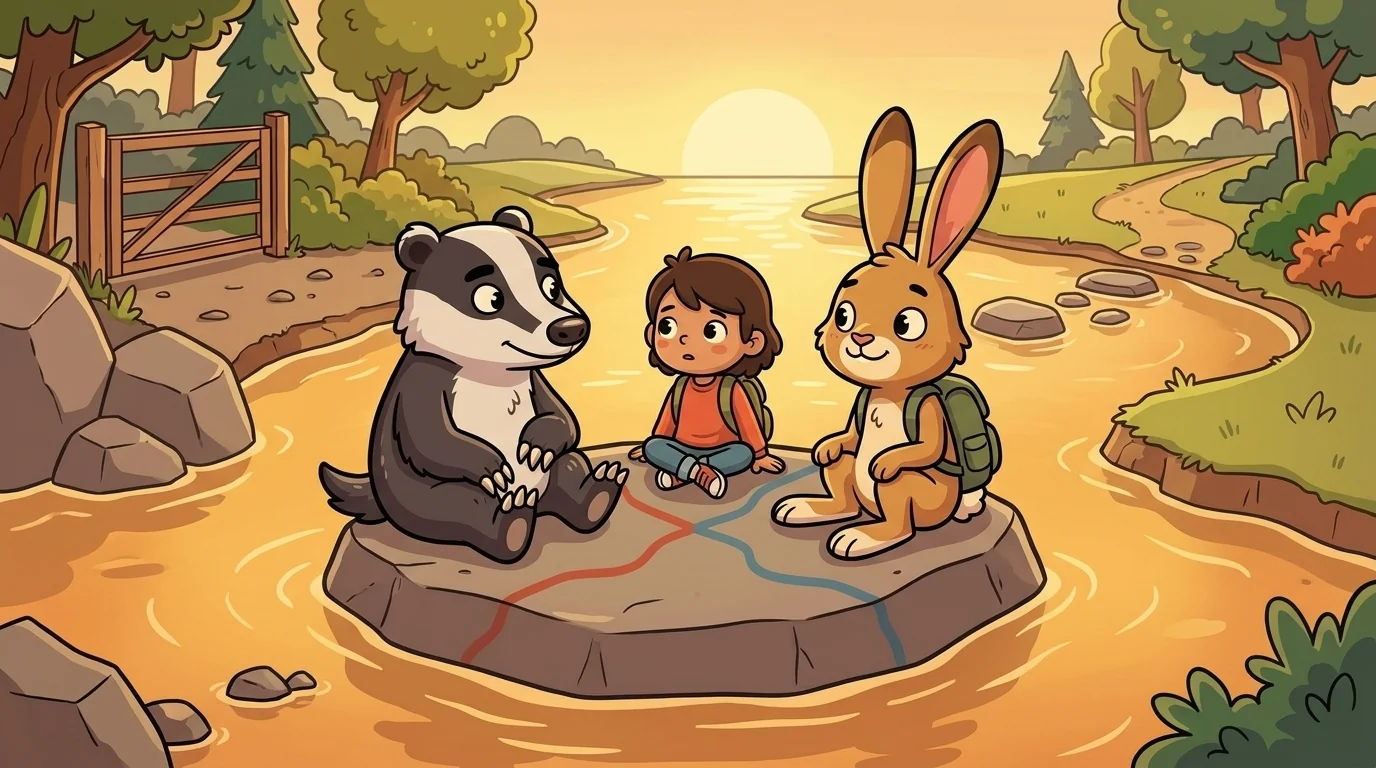
Later, when the light went gold on the water and the guild had quieted, the three of them sat on the middle rock, the border-line and the route-line crossing beneath them.
"Doesn't it get confusing?" the traveler asked. "The same river being two opposite things? A wall for Mete, a road for Course? How does anyone know what it really is?"
Mete dug her claws into the wet stone. Course wiggled her ears. Neither rushed.
"It confused me for a long time," Mete admitted. "I wanted my lines to be the lines — borders, edges, the map's true bones. And I forgot that every one of them was a meaning people painted on. Once you remember people drew it, you have to admit other people drew other meanings on the very same spot."
"And I wanted my lines to be the true ones," said Course. "Routes, crossings, the ways that join us. I forgot that the same ford someone crossed in friendship, someone else guarded as an edge. The water held both, whether I liked it or not."
"So here's what we found," Mete went on, and Course nodded along, "on the far side of the confusion. The land draws some lines — rivers, coasts, ridges — and those just are what they are. But the loudest lines on any map, the borders and the routes, the walls and the roads — people drew those. And people are complicated. So the same river gets painted 'keep apart' by one hand and 'come together' by another, and both are true, and the honest map draws them both, crossing, and lets you see that a place people share is never just one meaning."
The traveler looked at the two lines crossing under her, the wall and the road, the divide and the join.
"So the river's not a wall or a road," she said. "It's whatever people needed it to be — and they needed it to be both."
"And a map that loves the truth," said Mete and Course together, softly, "draws every meaning people gave it, and never lets a wall hide a road." And the three of them watched the gold water carry a border and a crossing along together, indifferent to both, and something in the traveler went quiet and warm and glad — the settled gladness of seeing, for the first time, that the strongest lines on a map were never the land's at all. They were ours, every one, painted on a patient river by people who needed it, at once, to keep them safe and to bring them together.
The MapForge ensemble
Mete and Course is part of MapForge's distributed-narrative cast. Each character embodies a different curricular primitive; together they teach the full subject.
-
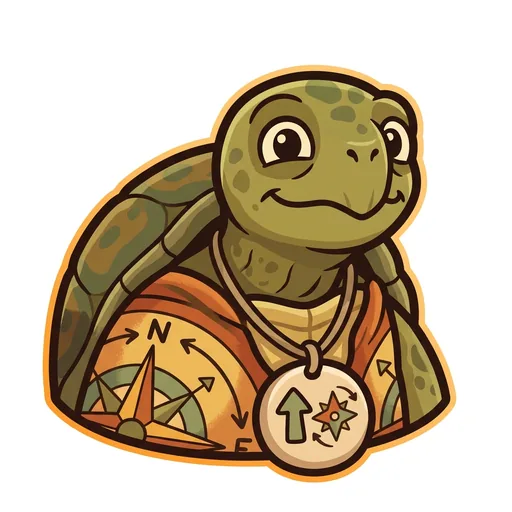
Bearing
Orientation — the tortoise-elder who treats north-up as a convention, not a truth ('north is one direction, not the direction'); teaches that orientation is a choice mapmakers make
-
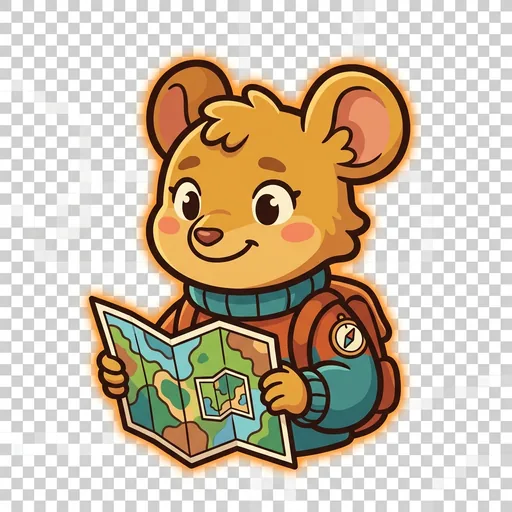
Inset
Scale — the field-mouse-tween with a folded map-within-a-map who teaches scale-choice as a political act ('bigger map, less detail; smaller map, more story — pick on purpose')
-
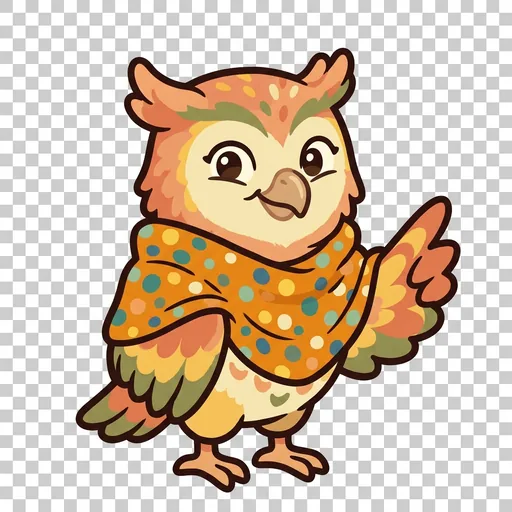
Key
Legend literacy — the owl-tween in a dot-shawl who treats the legend as the mapmaker's confession ('what's NOT on the map — that's also a map')
-
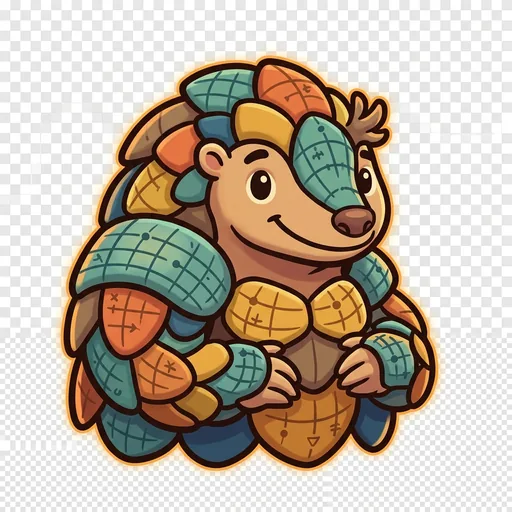
Plot
Coordinates — the pangolin-tween with graticule-scale armor who teaches that coordinate systems are human inventions, plural across cultures ('every place has many addresses; many cultures have many ways of saying here')
-
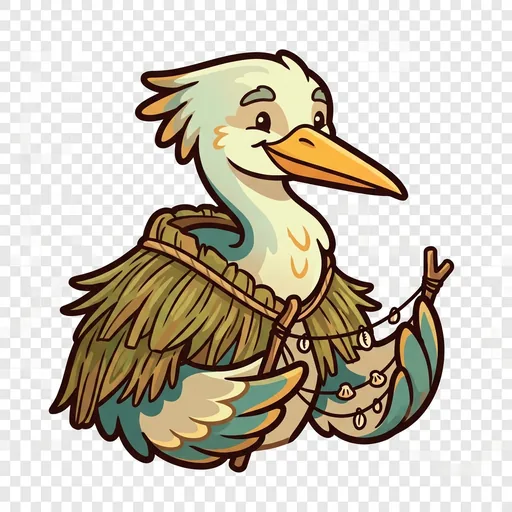
Wayfind
Non-Western mapping traditions — the heron-elder in a woven-grass cloak with stick-chart props who structurally elevates Polynesian wayfinding, Aboriginal songlines, and Indigenous TEK as peer cartographies ('some maps you sing, some you walk, some you only learn from elders')
-
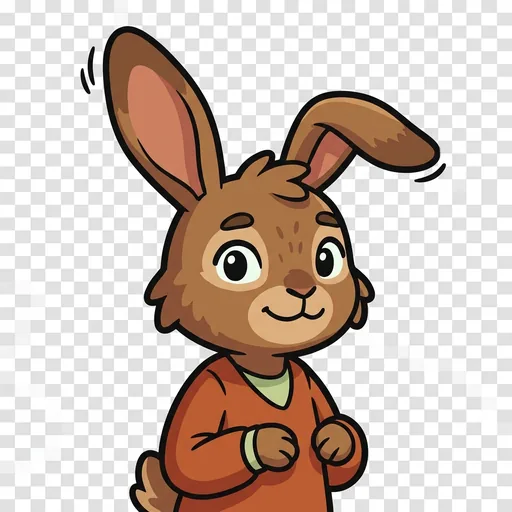
Course
Routes — a map holds every way from here to there; which is best depends
-
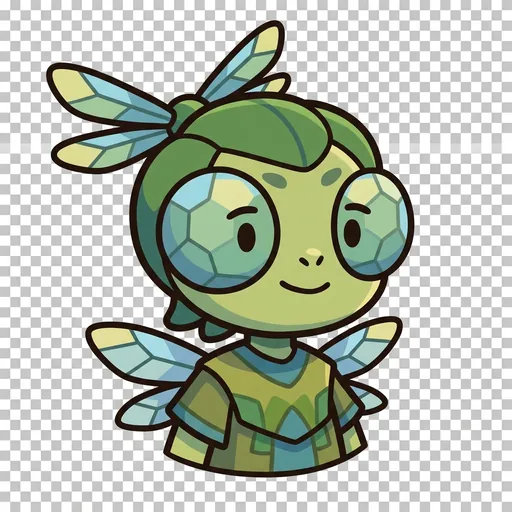
Facet
Thematic mapping — the same land mapped for different purposes
-
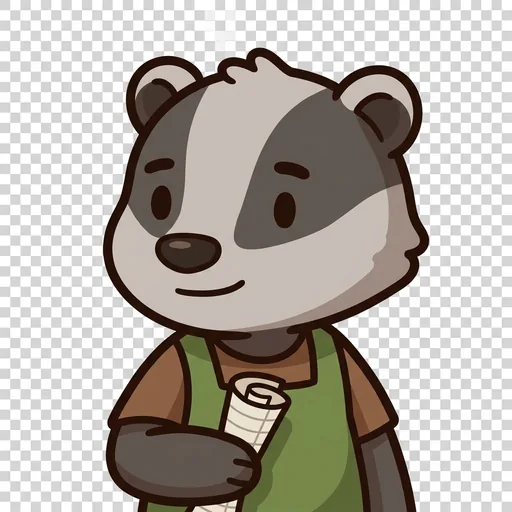
Mete
Borders — a line people agreed on, not a thing the land grew
-
Relief
Relief — a flat map remembers the mountains; contour lines ring a hill
-
Splay
Projection — you cannot flatten a round world without stretching somewhere