Warp
MATH IN CRAFT
Loading audio…
Press play to listen along. The line being read lights up as you go.
Show full transcript
Loading transcript…
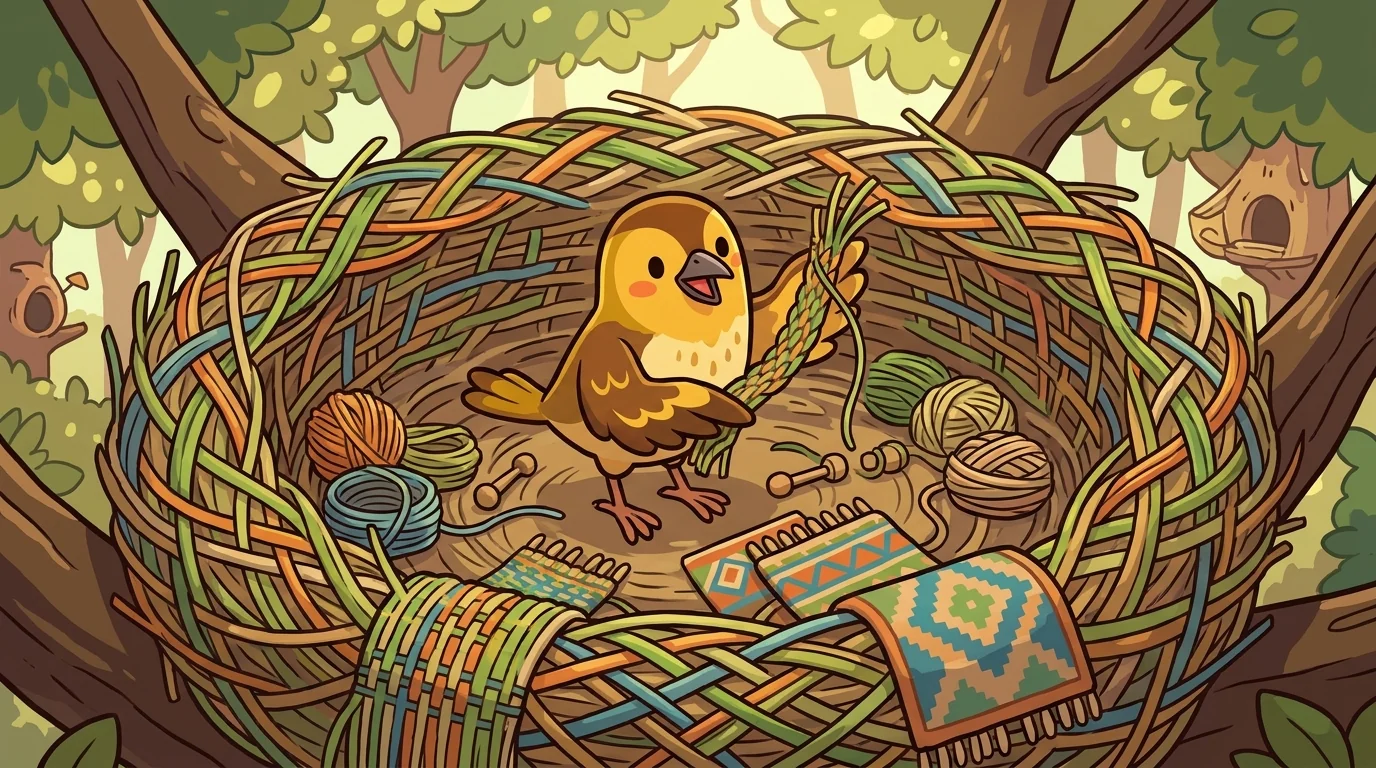
Warp was a small, tidy weaver-bird, and like all weaver-birds she built her nest by weaving — threads and grasses crossing over and under, over and under, in a careful repeating pattern. And one day, looking at her own nest, Warp saw something that stopped her cold.
There was math in it. Real math. She had not read it in a book. She had woven it with her own beak and feet.
"Look," she says now, holding up a strip of weaving. "Over, under, over, under — that's a pattern that repeats, and I have to count to keep it even. If I want the two halves to match, I need symmetry — the same on the left as the right. To fit a border, I have to measure. I'm doing counting, and geometry, and measuring — all of it — just by weaving. Nobody handed me a maths book. The math was already in the craft."
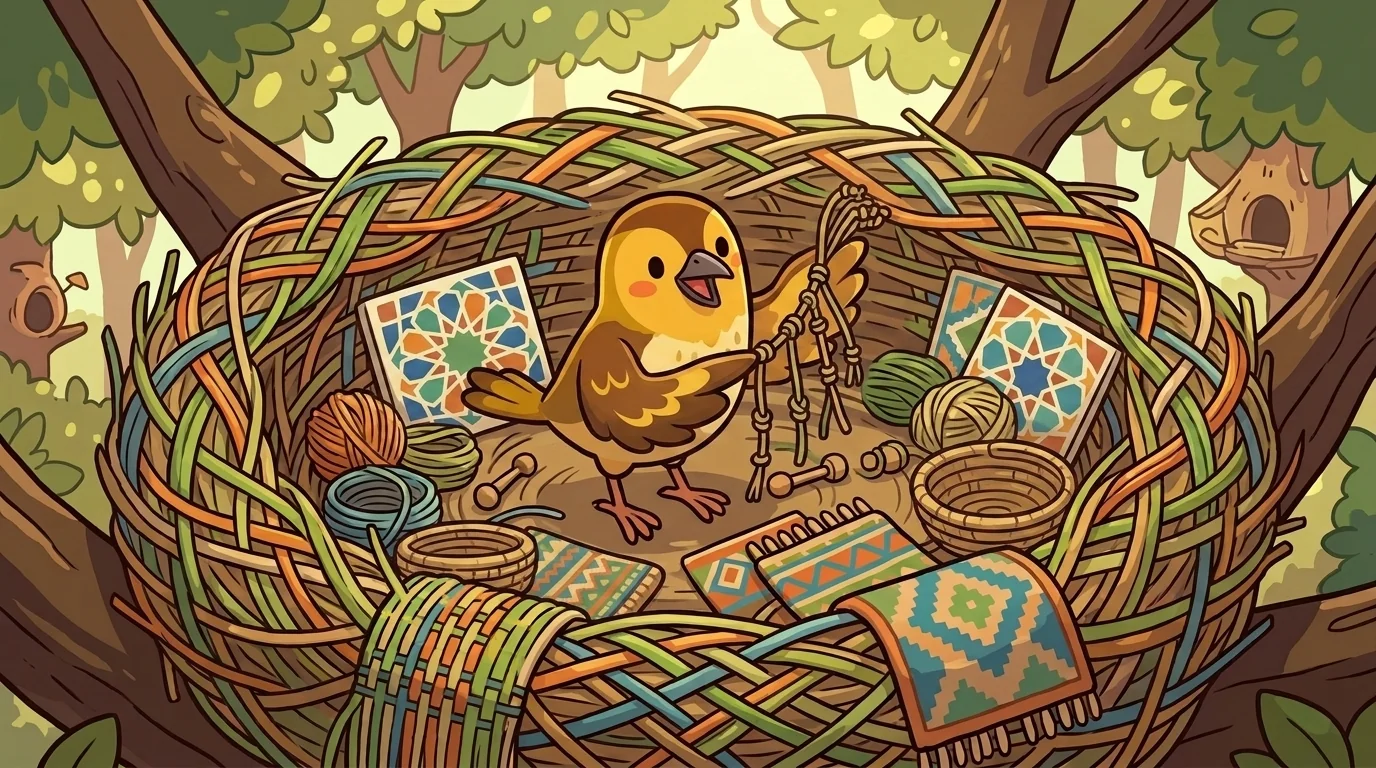
Once Warp had seen it in her own weaving, she began to see it everywhere people made things — and to learn that this was true all over the world, and had been for a very long time.
She learned that in the Andes, people kept records with khipu — bundles of knotted cords, where the kind and position of each knot recorded a number. A whole system of arithmetic, tied into string, by people who never wrote a sum on paper. She learned that makers of Islamic geometric art fitted shapes together into vast, dazzling tile patterns of perfect symmetry — deep geometry, worked out by hand and eye. She learned that builders, potters, drummers, and navigators across every land had folded careful mathematics into their craft, often long before anyone wrote it in a book, and often without ever being called mathematicians at all.
Warp thought about this for many days. It changed how she saw the world. All those makers — the weavers, the knot-keepers, the tile-fitters — had been doing real, careful, beautiful math with their hands. It made her feel that math was not a cold thing kept in schools, but a warm thing that lived in everything people lovingly made.
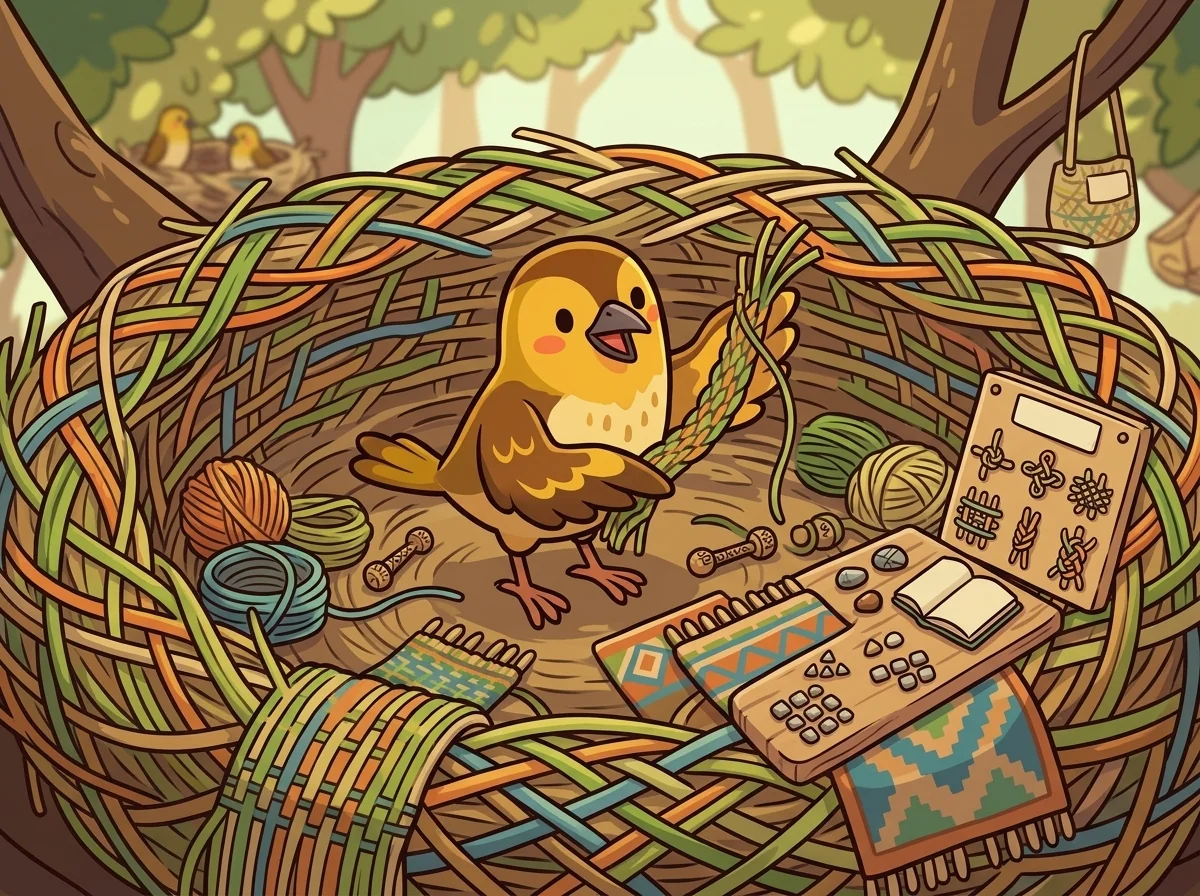
When she was older, Warp flew to the MathLore hall, where the stories of how math grew are kept, and where they had been hoping for someone who could find the math in ordinary hands.
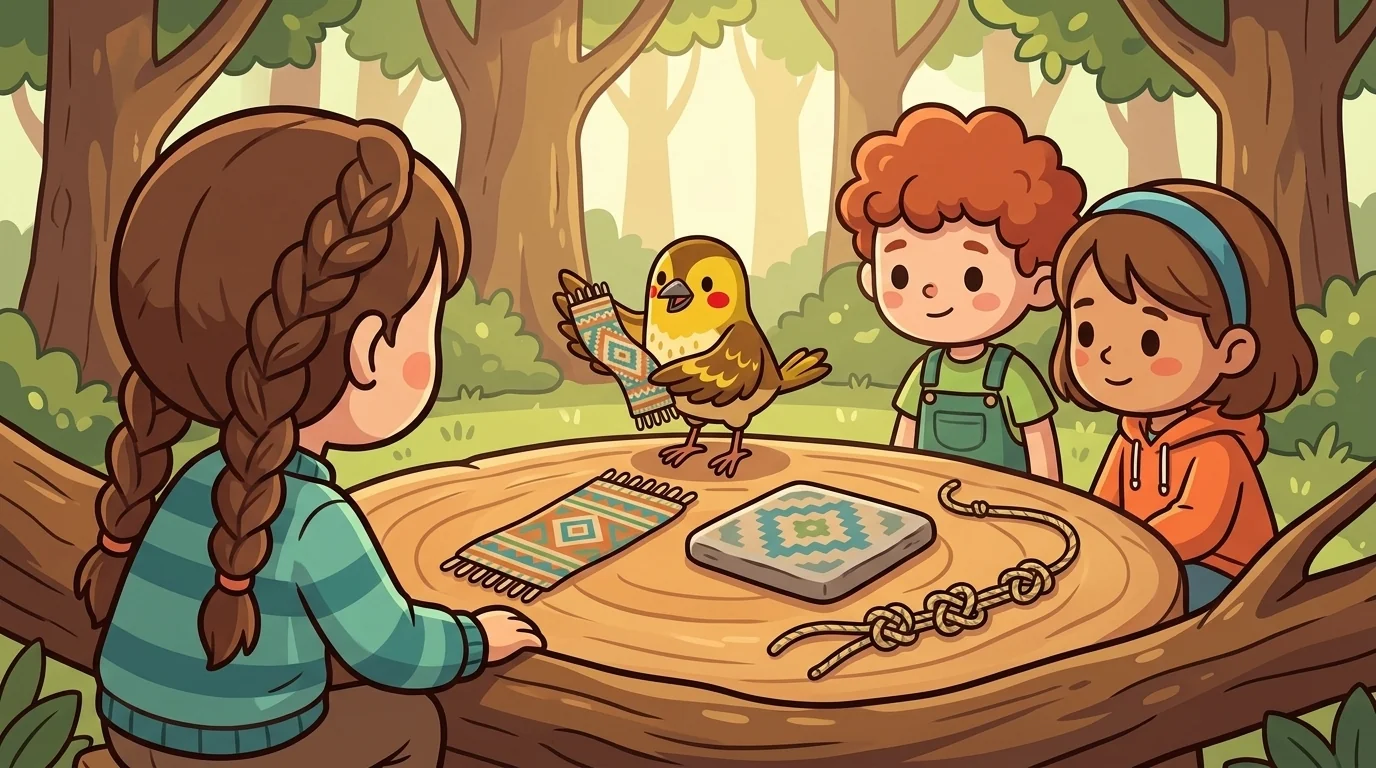
She teaches the children to see the math in what people make.
"Math isn't only in books," she says, laying out a woven strip, a photograph of a tiled wall, a knotted cord. "It's woven, and built, and knotted, and drummed. This weaver counts her threads — that's arithmetic. This tile-maker fits shapes with no gaps — that's geometry. These knots record numbers — that's a record-keeping system, made of string." She looks at the children. "People all over the world did deep math in their craft, often before it was ever written down, and often without being given credit for it."
"So they were mathematicians too," a boy says, "even without the books."
"Every bit as much," says Warp. "The weaver, the knot-keeper, the tile-fitter — they were doing real mathematics with their hands. When you learn to see it, you find math living in the most ordinary, beautiful made things — and you learn to respect all the clever people who put it there."
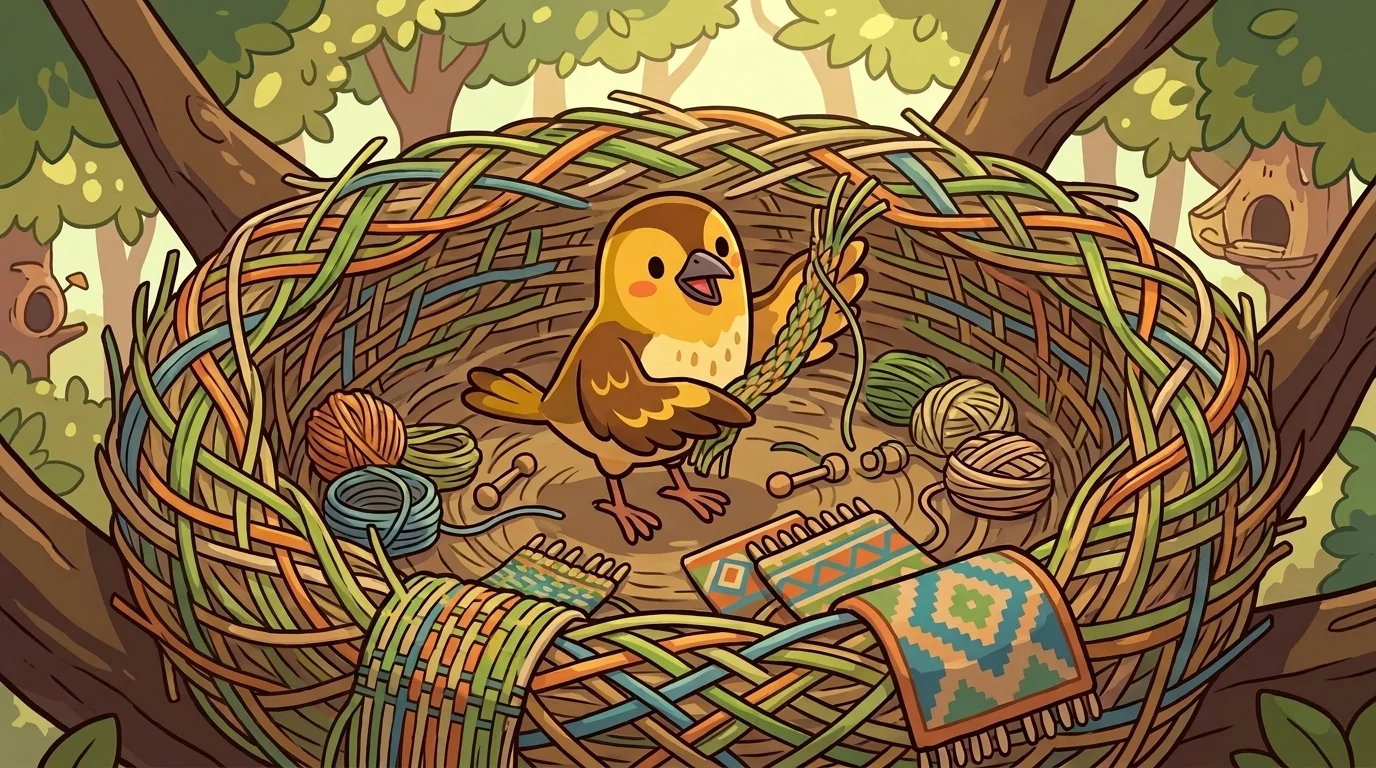
She still weaves, and still cannot make a single row without feeling the quiet math in it.
The thing Warp hopes the children carry is that mathematics is not something that only happens in classrooms and books — that it lives in the everyday things people make with skill and love, all over the world, and that many of its cleverest makers were never called mathematicians at all. Real math is wherever careful hands are working.
"Look at what people make," she tells them. "The weave, the tile, the knot — there's real math in all of it, put there by clever hands long before any book. Learn to see it, and you'll find mathematics everywhere people are."
When the hall empties, Warp weaves a few quiet rows in the corner, over and under, counting to keep it even, and feels the warm, threaded gladness she first felt looking at her own nest: that she comes from a whole world of makers who did beautiful math with their hands, and that every careful thing she weaves joins their long, patient, uncredited work.
Hear it as an audio drama
A short play starring Warp, from MathLore. Different voices, same idea. Listen any time after you read.
Loading audio…
Read the drama script
- Narrator: From Spark and Anvil and MathLore — this is Warp, in chapter 1 of the MathLore cast.
- Narrator: This drama uses an AI-generated voice. Voiced via Gemini 2.5.
- Narrator: Warp is a small, tidy weaver-bird who builds her nest by crossing threads over and under, over and under, in a careful repeating pattern.
- Warp: One day, looking at my own work, I saw something that stopped me cold. There was math in it. Real math. I had not read it in a book. I had woven it with my own beak and feet.
- Narrator: She held up a strip of weaving.
- Warp: Over, under, over, under, a pattern that repeats on a fixed period, and I count to keep it even. That's modular counting. If the two halves match, that's symmetry. And there are only so many ways a pattern can repeat and reflect. Mathematicians later named those the symmetry groups. I wasn't naming them. I was using them.
- Narrator: A young sparrow was doubtful. But that's just crafting. It's not real maths, is it?
- Warp: That is exactly the mistake, and an old and unfair one. For a long time people called what scholars wrote in books real mathematics, and what makers did with their hands just craft, quietly treated as lesser.
- Warp: But look closely. A tiling that covers a courtyard with no gaps is tessellation, a deep geometry. The proportions a builder holds are ratio. The counted repeats in a woven band or a knotted record are arithmetic and pattern. Peoples worldwide worked this into cloth and clay and stone, often centuries before anyone wrote it down.
- Narrator: There's even a name now, Warp added, for the study of the mathematics inside these traditions.
- Warp: Ethnomathematics. Which is really just scholars catching up to what the makers knew. The knot that stored numbers, the tiling a book took a thousand years to classify, the weave that is a counted, mirrored, modular structure. All of it is mathematics, done by hands never called mathematicians.
- Narrator: She learned it from her own nest, from the shock of finding symmetry and counting and measure in a thing she'd made purely by feel.
- Warp: Craft isn't like math. Craft is math, one of the oldest and most human ways it has ever been done. The math was already in the weave. Someone just had to look with the right eyes and call it what it is.
- Narrator: You've been listening to a Spark and Anvil chapter, written by the Spark and Anvil writing team for ages 9 to 14.
- Narrator: Apps stay free forever.
- Narrator: Curriculum aligned to Common Core math.
- Narrator: Released under Creative Commons BY-NC-SA 4.0 for educational reuse. Visit Spark and Anvil for the full transcript.
The MathLore ensemble
Warp is one of the friends in MathLore. Each friend shows you one idea by how they act; meet them all and you have the whole subject.
-

Heap
Counting-as-first-story — every people figured out their own way to count
-
Spire
Pattern-as-discovery — patterns are everywhere when you slow down enough to see them
-
Vouch
Proof-as-shared-knowledge — show me why; if your why holds up, I'll build on it
-
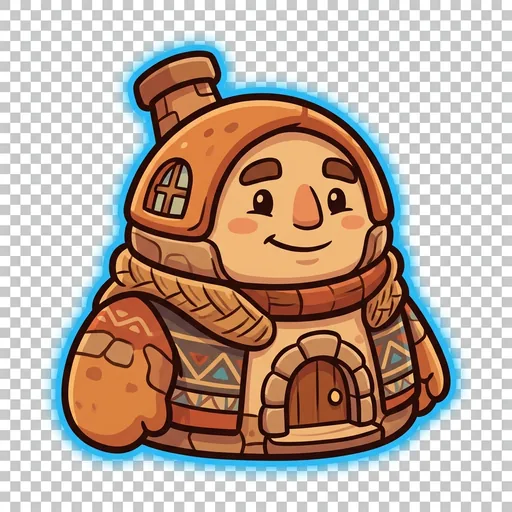
Home
Math-as-cultural-context — this idea was born somewhere, for someone, with reasons
-
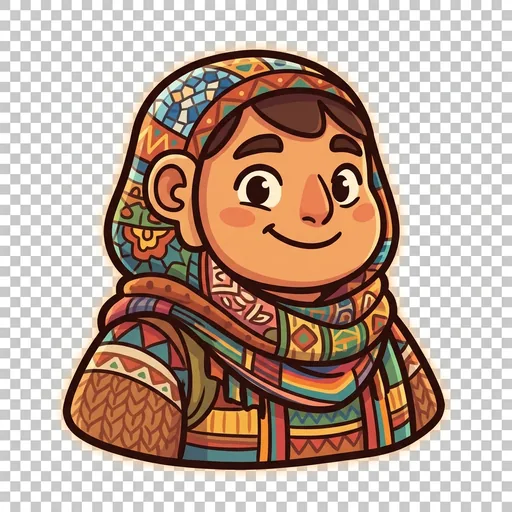
Carry
Cultural-transmission — the idea traveled; every place it visited, it grew
-
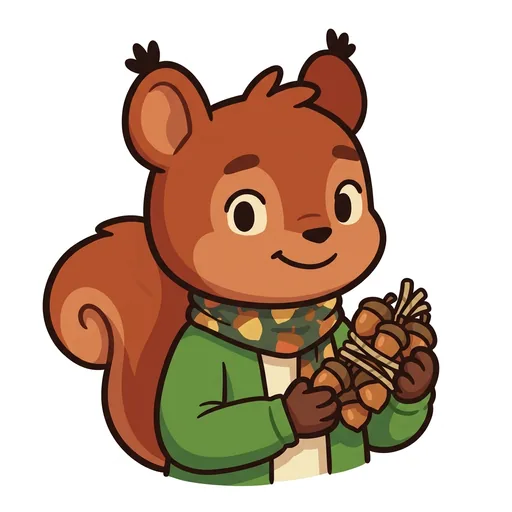
Dozen
Number bases (counting in twelves, tens, or twos — the base is a choice)
-
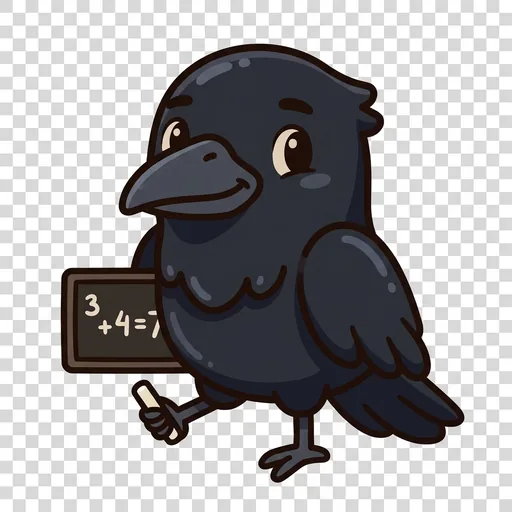
Etch
The invention of notation (writing math down so ideas can travel across time)
-
Frontier
Mathematics is unfinished (there are still open questions no one has answered)
-
Naught
The invention of zero (a symbol for nothing that changed everything)