Warp
FIBER → CLOTH — cloth is made from a fiber that a real place could grow or raise, so the cloth remembers the land it came from
Loading audio…
Press play to listen along. The line being read lights up as you go.
Show full transcript
Loading transcript…
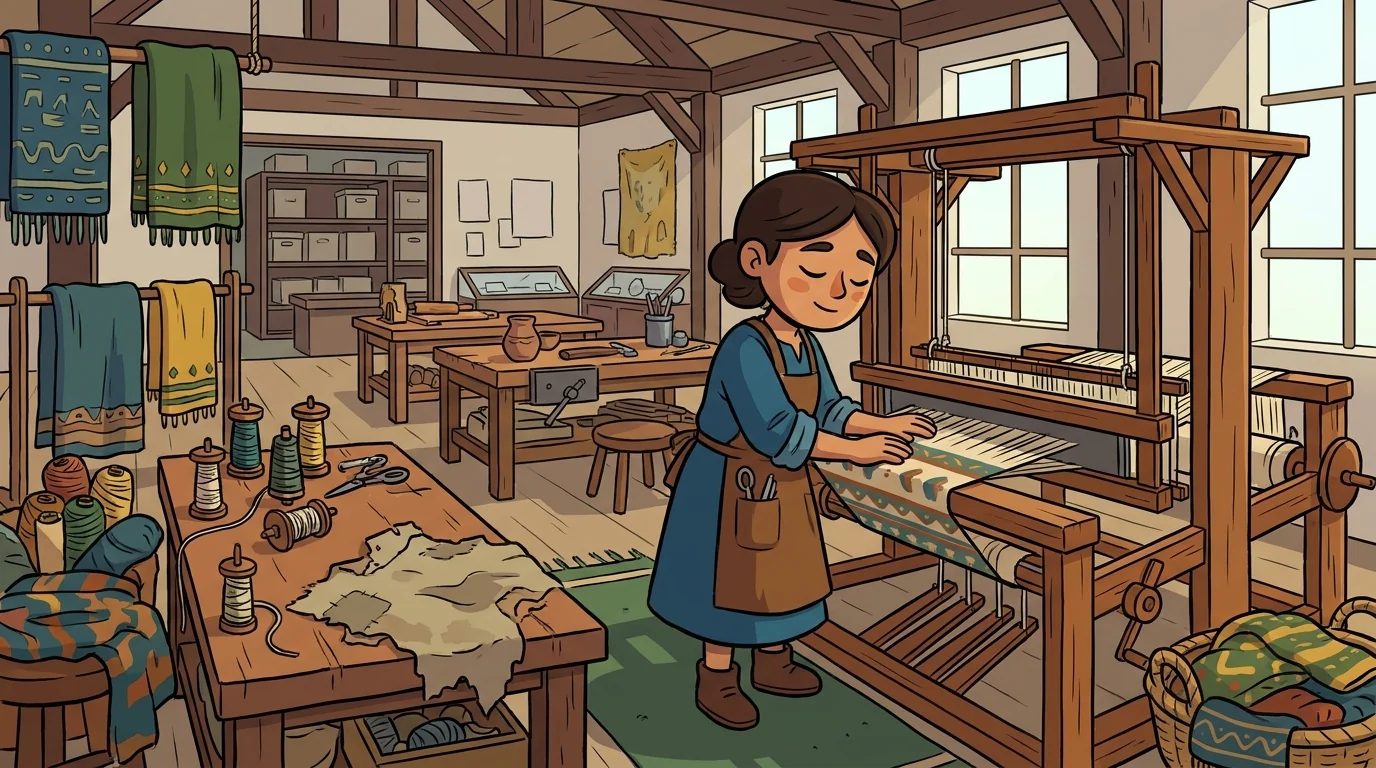
In the Maker's Hall, where every craftsperson kept a workbench and the curator kept an Evidence Room, there worked a young weaver named Warp. She was the one people came to when a scrap of old fabric turned up and nobody could say what it was.
Warp loved cloth the way some people love music. She could feel a weave with her eyes closed and tell linen from wool from cotton by the way it wanted to fold. But she had a quiet worry she told no one: knowing what a cloth was felt like only half of knowing. A cloth was a clue to something bigger, and she didn't yet know how to read it.
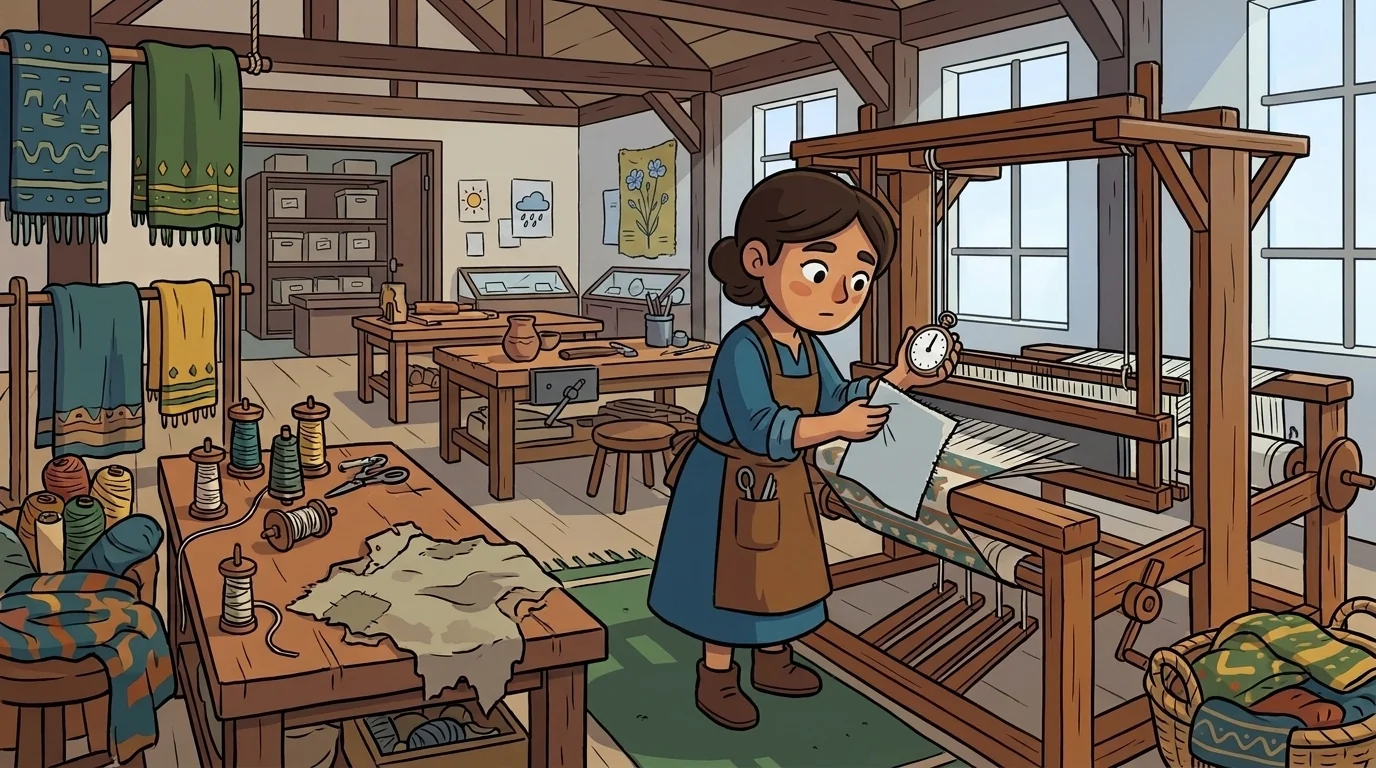
One grey morning the curator, Relic, set a small square of pale, cool cloth on Warp's bench. "A trader brought this in," Relic said. "No label. No story. Only the cloth. Tell me where it's from."
Warp turned it over and over. She named the weave easily — linen — but "linen" wasn't a place, and she felt herself getting stuck, staring harder and harder at the same threads as if they'd suddenly speak.
Then she remembered something her grandmother used to say while spinning: cloth doesn't fall from the sky. Someone had to grow it or raise it first.
So Warp changed her question. Instead of "what is this?" she asked, "what would have to grow here to make this?"
Linen came from the flax plant. Flax liked cool, damp river country with long soft summers. That single question turned a blank scrap into a map.
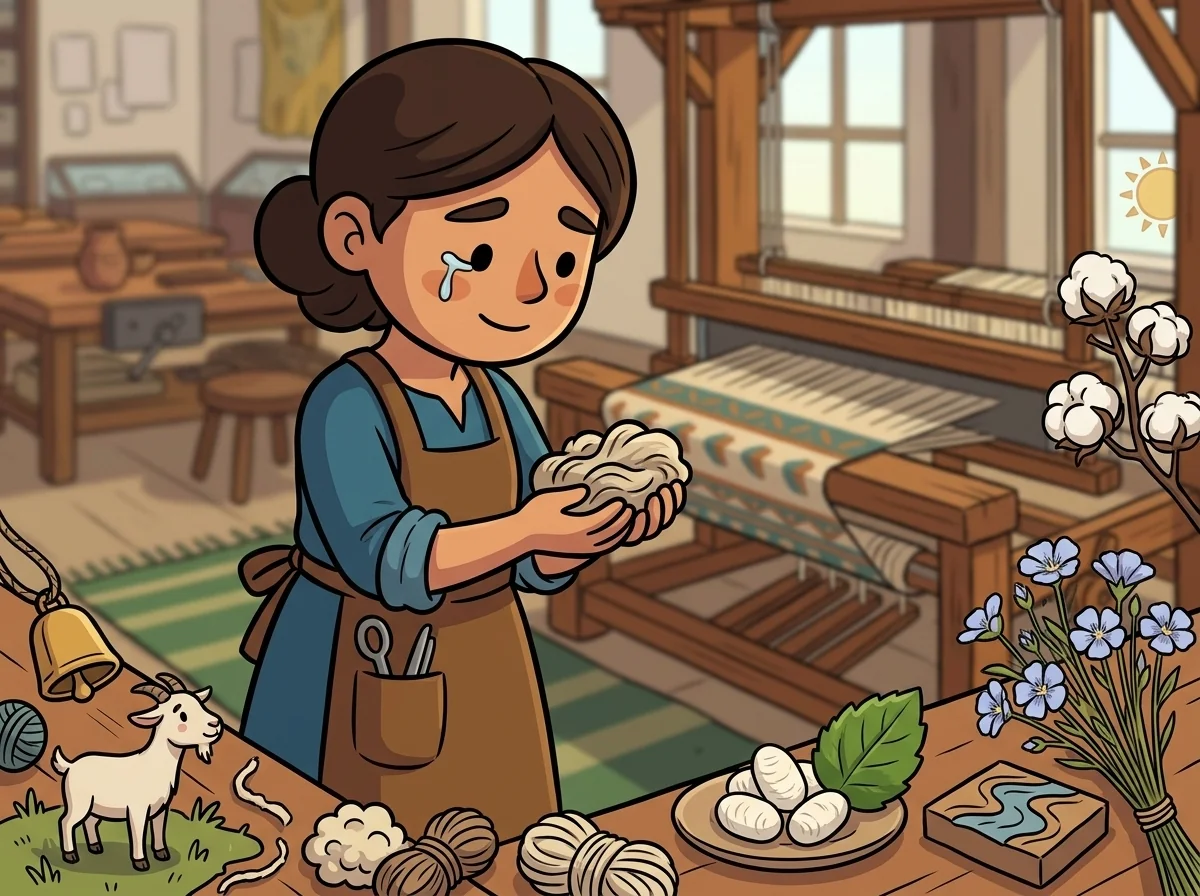
"Fiber first," Relic agreed, pleased. "That is the whole secret, and most people skip it. They see the cloth and forget it began as something alive."
Warp learned the family of it slowly, at her own pace. Wool meant animals — sheep, goats, sometimes camels or alpaca — which meant grazing land, hills, cold nights a warm coat could answer. Cotton meant a warm, sunny field with plenty of water. Silk meant a place that could keep mulberry trees for the silkworms that fed on their leaves. Linen meant flax, and flax meant cool river country.
Each fiber was picky about where it would grow. So each fiber was a kind of return address. If you knew the plant or the animal, you knew the land. If you knew the land, you knew a great deal about the people — what they could make easily, and what they'd have to trade for.
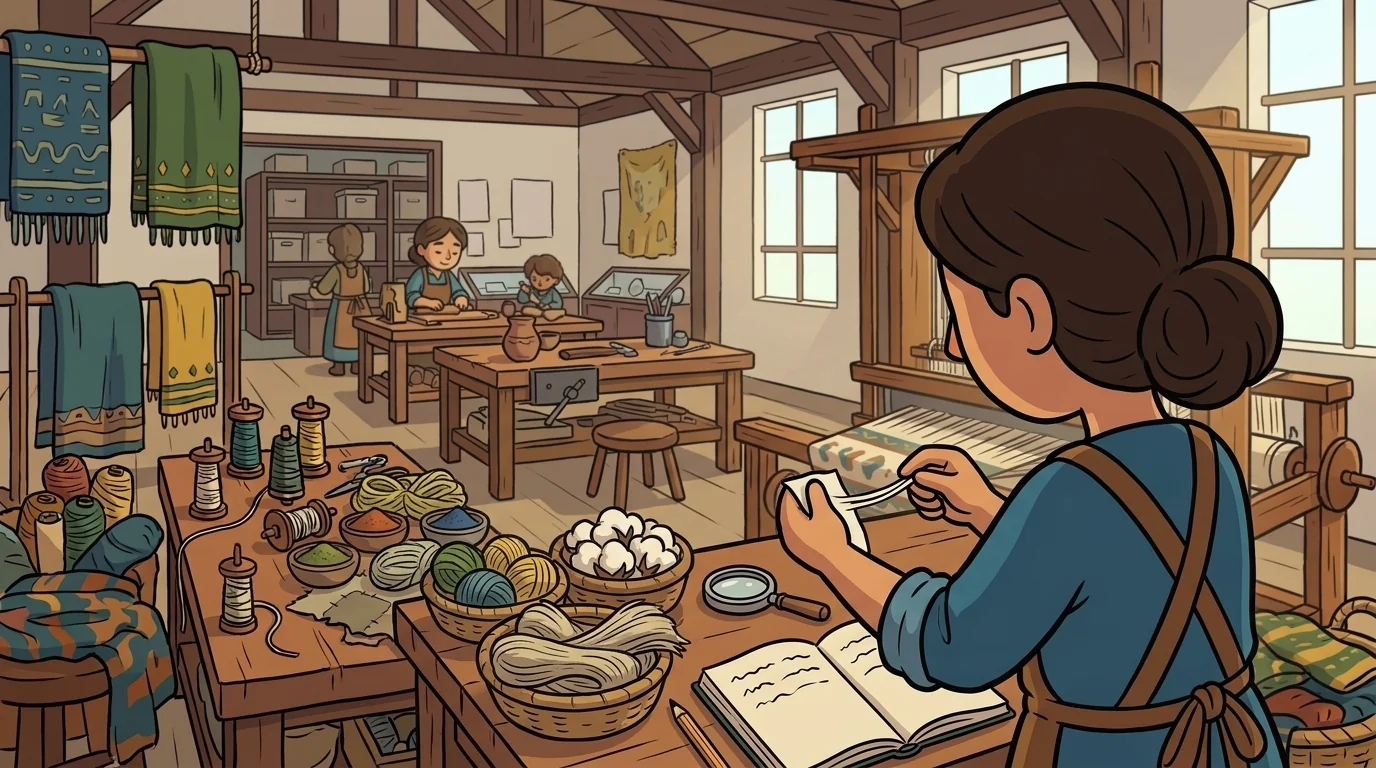
To test herself, Warp tried it on the cloth she was wearing and on everything in the Hall. A rough brown blanket — wool — from somewhere with sheep and cold. A gauzy scarf so fine it floated — silk — from a place that could afford to keep mulberry groves. Her own everyday tunic — cotton — from somewhere warm and watered.
She made one honest mistake, and it taught her the most. She held up a soft, warm cloth and announced "wool" — but Relic shook her head gently and had her look closer. Under a lens the fibers weren't the crimped, springy curls of wool at all; they were straight and fluffy. It was cotton, made warm by how it was spun and woven, not by what it was made of. "Feel is a hint," Relic said, "never a verdict. Check the fiber itself." Warp wrote that down.
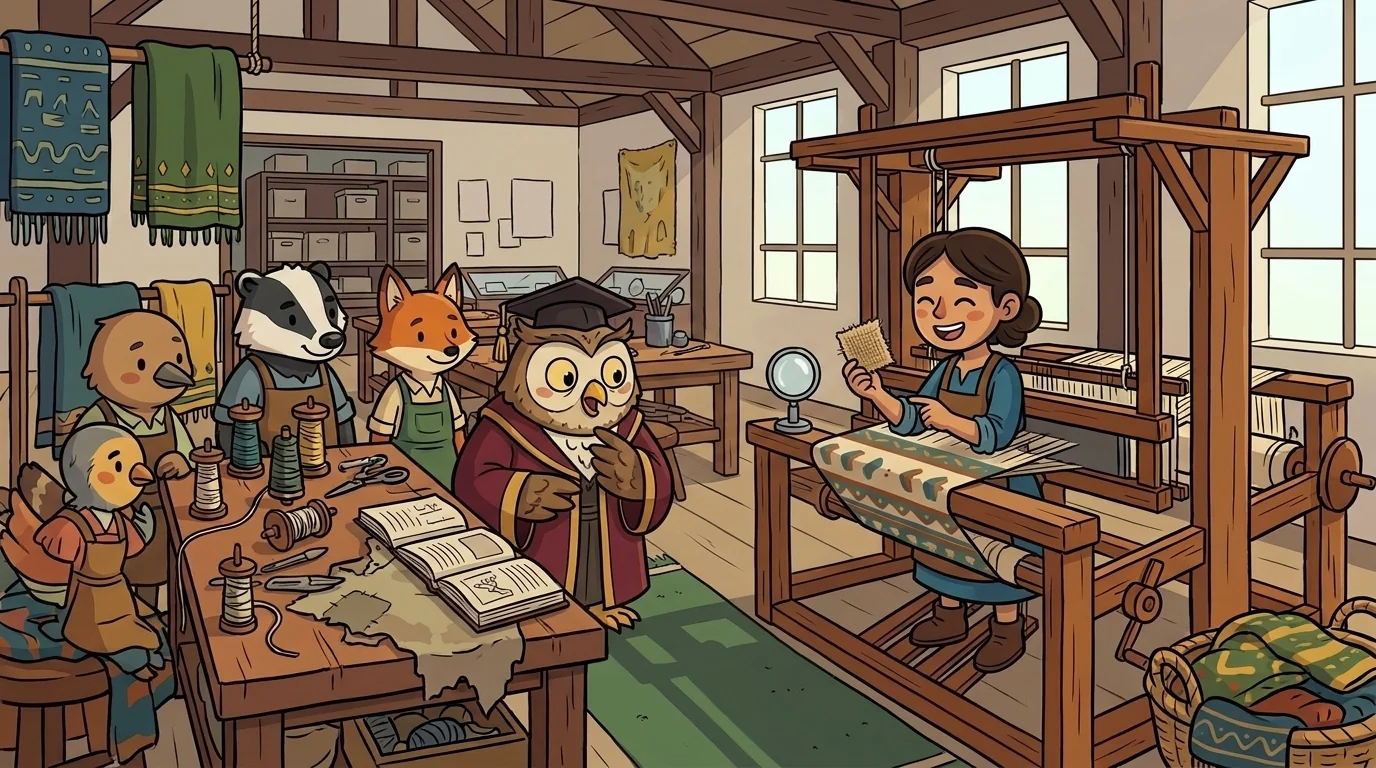
Weeks later a scholar arrived arguing loudly that the pale scrap "must be from the desert kingdoms, because it looks so fine and precious."
Warp didn't argue back. She simply laid the fiber under the lens. Flax. Then she unrolled her reasoning like a thread: flax needs cool, damp river-country to grow, so the linen itself could not have begun in a hot dry desert — it would have been traded there, prized because it came from far away. The cloth hadn't lied. The scholar had only forgotten to ask what could grow where.
The room went quiet. The scholar looked at the little square of cloth as if seeing it for the first time.
"How did you know that?" someone whispered.
"I didn't guess," said Warp. "I asked what the land could give. Every cloth remembers its land — you just have to ask." She smiled, a weaver who had finally learned to read. "The fabric was telling us the whole time. We only had to listen from the fiber up."
The EraForge ensemble
Warp is part of EraForge's distributed-narrative cast. Each character embodies a different curricular primitive; together they teach the full subject.
-
Madder
Natural dye — before factories every colour came from a plant, root, or shell; a rare colour meant a long reach
-
Selvage
Silhouette → era — the outer shape a dressed figure makes dates the look, even from a shadow
-
Toile
A motif is a message — read a woven pattern on its own makers' terms, never guess
-
Argent
Status dress — what a person may wear encodes rank and role; read the whole society
-
Vane
Climate & geography — clothing is a clever answer to a place's weather and terrain
-
Skein
Trade & exchange — where a fabric is worn traces the route that carried it, not just its source
-
Relic
Source-reading (the curator & mentor) — read an object as evidence: who made it, when, and why
-
Damask
Revival & anachronism — old styles return re-made; the out-of-time detail reveals the real age
-
Lexi
Design vocabulary — the exact word (silhouette, motif, drape, hue) lets you describe and compare