Dram
Medicine helps in the right amount and harms in the wrong one
Loading audio…
Press play to listen along. The line being read lights up as you go.
Show full transcript
Loading transcript…
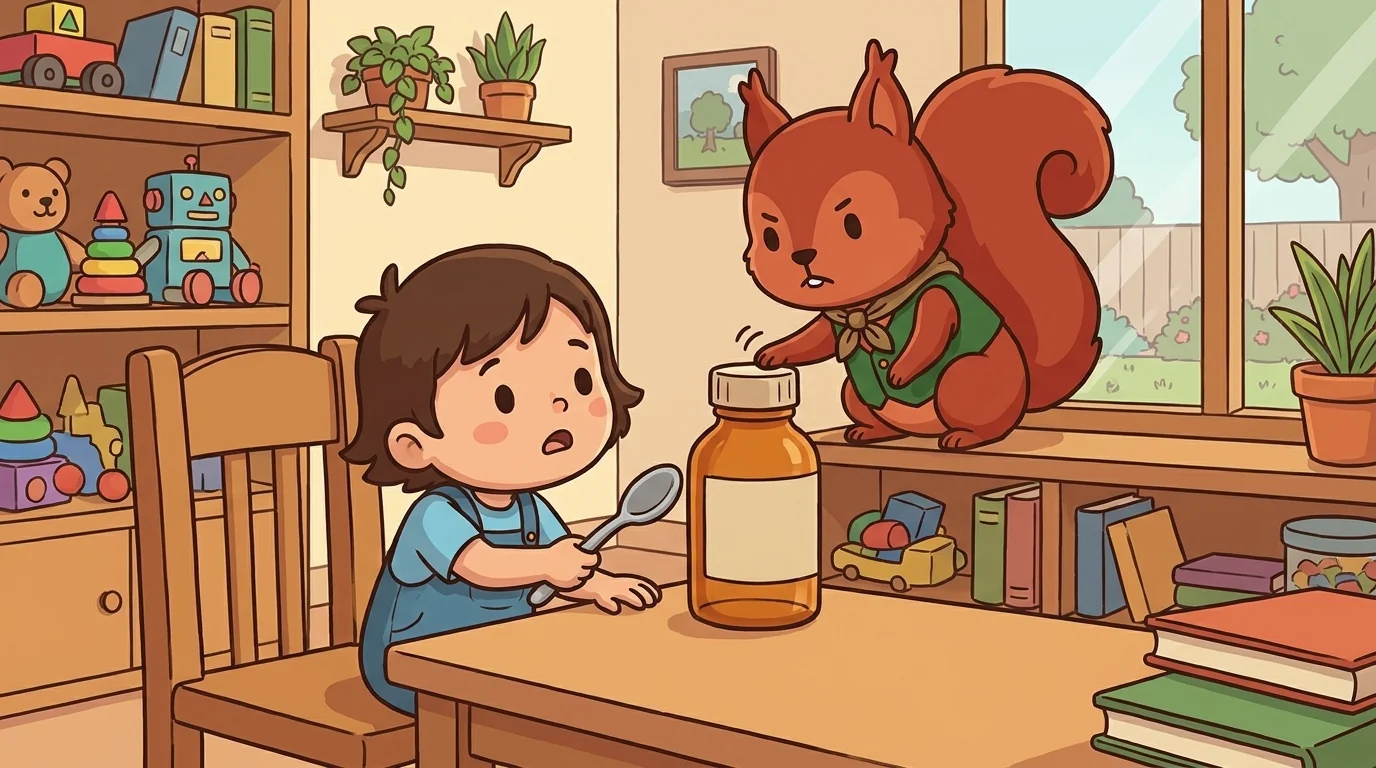
A student was about to make a dangerous mistake, cheerfully, out of pure logic.
"My head still hurts a little," she reasoned, eyeing the medicine bottle a grown-up had left out. "The label says one spoon. But one spoon only helped a little. So three spoons will help three times as much, right? That's just math."
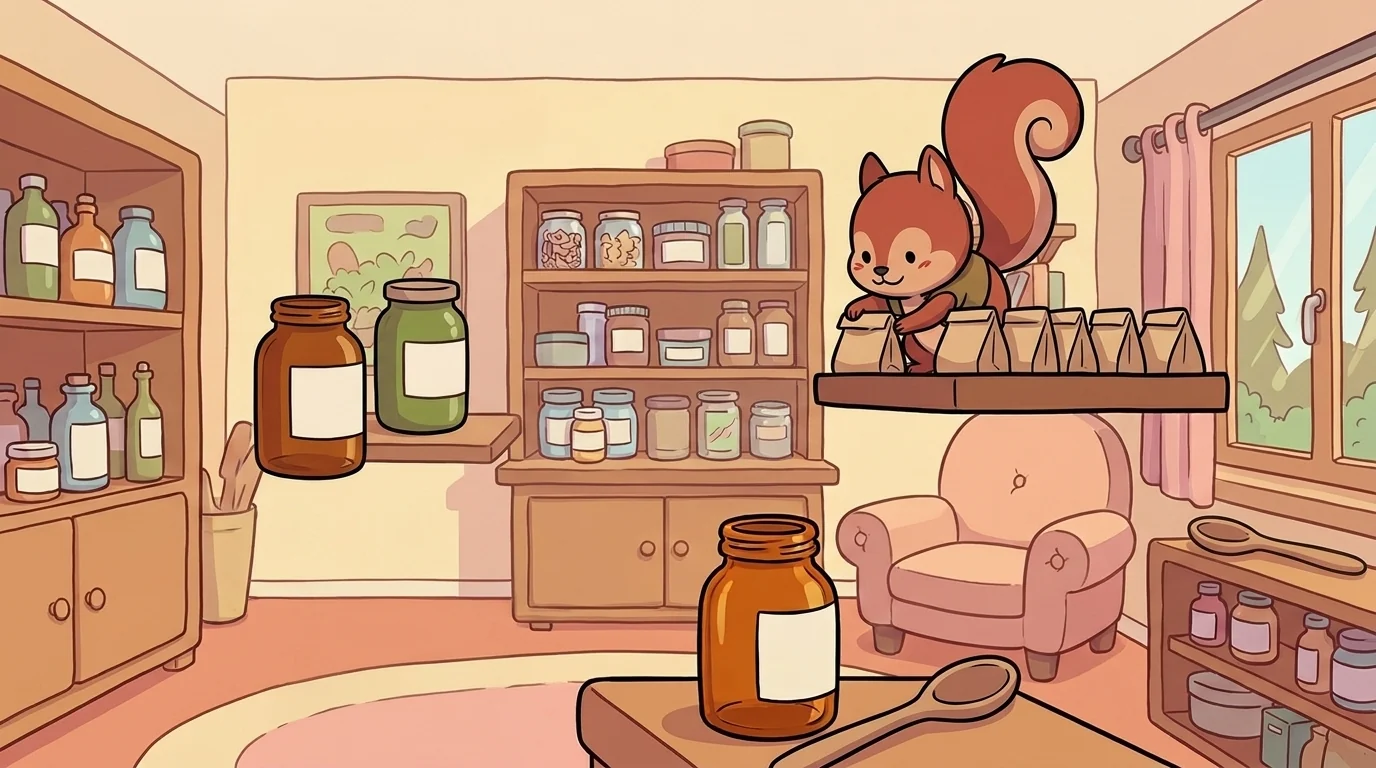
"That's exactly the math that gets people hurt," said Dram, scampering down from a shelf. She was a squirrel, quick and careful, forever sorting and portioning things into precise little amounts, and she put herself gently between the student and the bottle. "Medicine isn't like blankets, where more is warmer. It's like salt in soup. The right pinch makes it good. Too much makes it poison — the same stuff that helped you in a little amount will hurt you in a big one." She tapped the label. "One spoon isn't the medicine being stingy. One spoon is the medicine. Three spoons is a different, dangerous thing wearing the same label."
The student froze, spoon halfway. "So more isn't stronger-better?"
"More is stronger-worse," Dram said. "And here's the most important part, the part that matters more than any number: a trusted grown-up gives medicine. Not you, alone, guessing. If your head still hurts, you don't fix it with extra spoons — you tell the grown-up, and they decide what's safe."
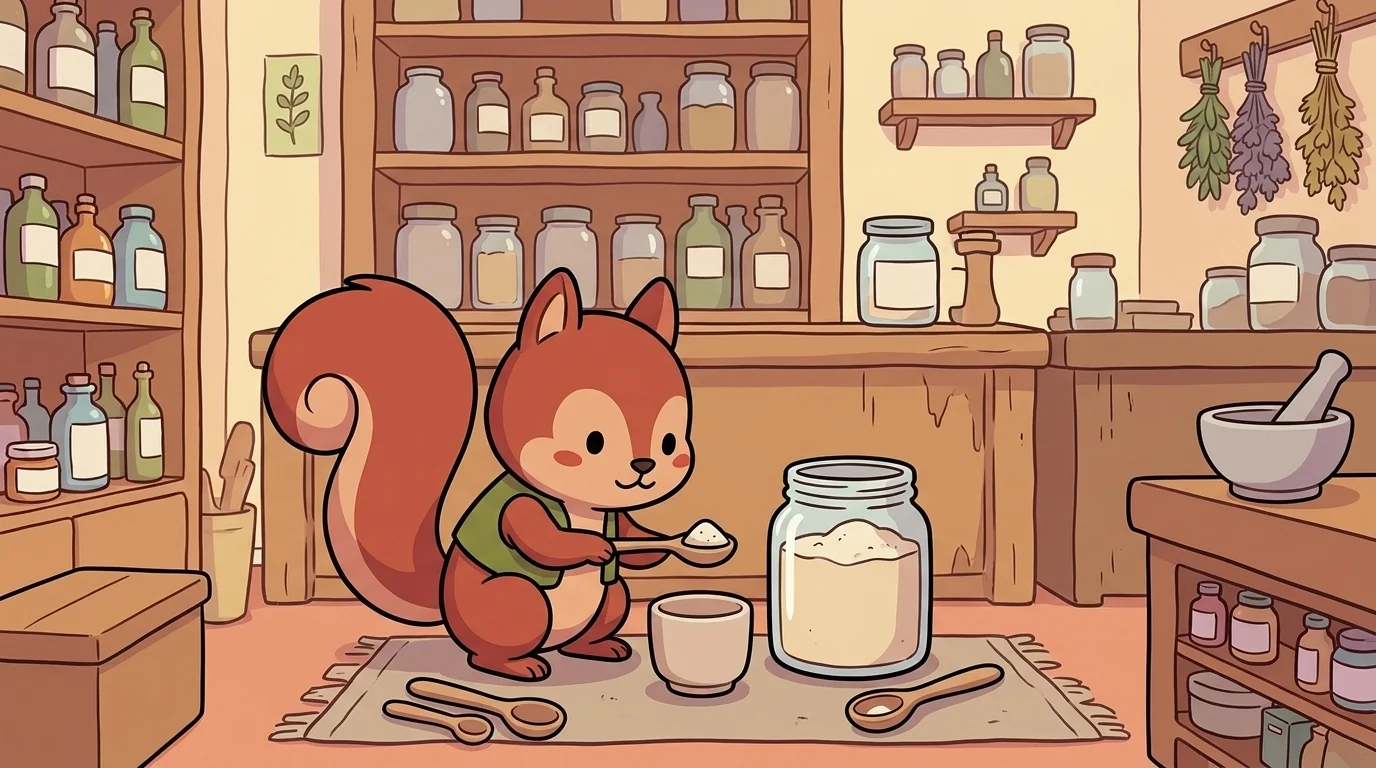
Dram had learned the danger of "more" young, in a way that scared her into carefulness forever.
Her family were the apothecaries of MedicQuest — squirrels, because a creature that spent its life measuring out exact little portions was trusted with amounts that mattered. They ground the powders, counted the drops, wrote the careful labels, because a medicine mismeasured could do the opposite of heal.
When Dram was small, she watched a frightened parent, desperate to help a sick child, decide that if one dose helped a little, a double dose would help twice as fast. Nurse Poultice caught it just in time, gently taking the cup away.
"You love that child," the mentor said, kind and firm. "That's exactly why you must never guess with medicine. The dose on the label isn't a suggestion — it's the line between helps and harms, worked out carefully by people who know. Cross it out of love and you can hurt the very person you're trying to save." Nurse Poultice re-measured the single, correct dose. "When medicine doesn't seem to be working, the answer is never more. The answer is ask someone who knows." Small Dram held that: the right amount is the whole medicine; the wrong amount is a different thing entirely.
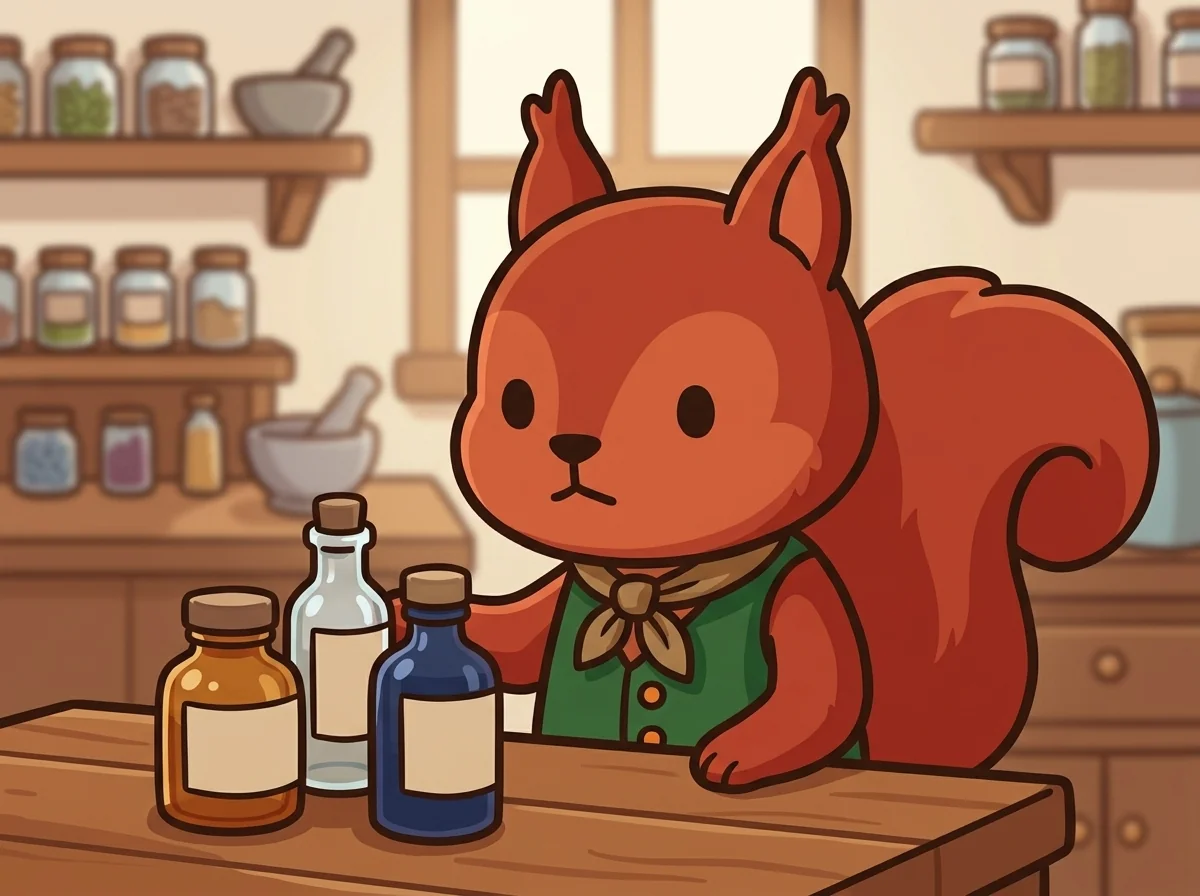
She stayed on at MedicQuest, and one day the mentor tested her, quietly.
Nurse Poultice set out three bottles and asked Dram just one thing: "How do you keep medicine a help and never a harm?"
Dram didn't rush. She read each label aloud — the amount, how often, who it was for. "This one's for a grown-up, not a child — the amount's too big for a small body." "This one says every six hours, not every hour — take it too soon and it stacks up." "This one has someone else's name on it — so it isn't mine to take, ever, no matter what it's for." Three bottles, three careful readings, and one rule under all of them: the right person, the right amount, the right time, and always a trusted grown-up in charge of it.
Nurse Poultice nodded slowly. "Most young ones think medicine is simple — swallow it, feel better," the mentor said. "You understood it's only safe inside careful lines, with a trusted adult holding them. Stay. You've got the most careful craft there is."
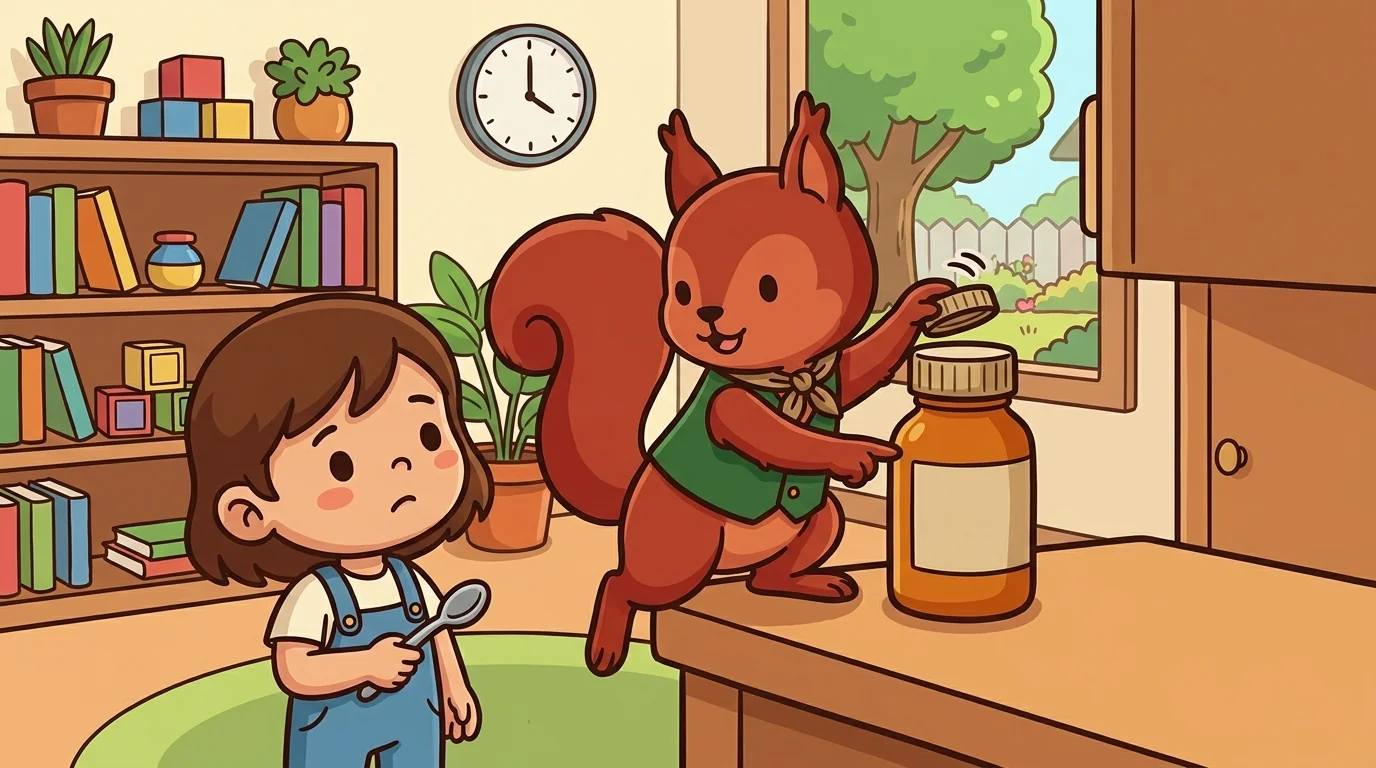
Weeks later, that same student stood in front of Dram, headache mostly gone, eyeing the bottle again out of habit.
"Same bottle," Dram said, scampering up beside it. "Watch me read it the safe way. Who is it for — check the name, check whether it's for a kid or a grown-up. How much — one spoon, and the spoon that came with it, not a soup spoon. How often — every six hours, and I look at the clock, because 'it still hurts' is not the same as 'six hours have passed.'" She set the cap firmly back on. "And then, the rule that beats all the others: I don't do any of this alone. A trusted grown-up gives the medicine. My job is to tell them how I feel and let them decide."
The student frowned. "But what if a grown-up isn't around and I feel bad?"
"Then you still don't guess with the bottle," Dram said gently. "You find a grown-up — a parent, a teacher, a school nurse, a neighbor you trust. Feeling bad is a reason to tell someone, not a reason to take medicine alone." She lowered her voice, steady and unfrightening. "And if you ever do swallow something you shouldn't have — too much, or something that isn't yours, or something you're not sure about — that's not a moment to hide or feel ashamed. That's a moment to tell a grown-up right away, so they can call the poison helpline. There are people whose whole job is to answer that call, any hour, for free, and telling fast is the bravest, smartest thing you can do."
The student set the bottle down and stepped back from it. "So medicine's a help," she said slowly, "but only inside the careful lines — and a grown-up holds the lines, not me."
"Now you've got it," Dram said. "The right amount, the right time, the right person — and a trusted grown-up in charge. That's how a medicine stays a medicine."
The student left the bottle alone and went to tell the grown-up her head still ached a little, and the grown-up handled it, safely. There was a small settled feeling in her chest: the relief of handing a careful thing to someone steady.
Dram tucked a last measured packet into its place and gave a quick, satisfied flick of her tail — the calm of a creature who'd spent her life keeping "help" from tipping over into "harm." Somewhere in the memory of it, a frightened parent set down a double dose and reached, instead, for someone who knew.
"The right amount is the whole medicine," she said softly. "More isn't better, it isn't yours to guess, and a trusted grown-up holds the lines. That's the careful part. That's the part worth slowing down for."
The MedicQuest ensemble
Dram is one of the friends in MedicQuest. Each friend shows you one idea by how they act; meet them all and you have the whole subject.
-

Notice
Symptom-noticing without alarm — most symptoms are minor + temporary; notice without catastrophizing
-

Framer
How the body is put together; bones, muscles, heart and lungs are systems that work as one team
-

Sentry
Prevention and everyday protective habits
-

Mote
Germs and how sickness spreads
-

Rally
Immunity and the body's defenses
-

Triage
What needs help first; sorting a problem into right now, soon, or can rest, and always telling a trusted adult
-

Ask
Clinical-history-taking + questioning — your questions are MEDICAL EVIDENCE; never feel silly asking
-

Balm
Rest, recovery, and comfort
-

Boundary
Body-autonomy + consent — your body is YOURS; ask-first is universal; pangolin curl-pose models self-protection-as-positive
-

Tell
Help-seeking from a trusted adult — telling is the most powerful medical move (shared design language with SafetyForge Wave 24 Tell — cross-app continuity)
-

Whole
Wellness-as-multi-factor-system — health is sleep + food + movement + relationships + meaning + safety; never single-factor; explicit health-equity foregrounding