Mote
Sickness that spreads is often caused by tiny living things
Loading audio…
Press play to listen along. The line being read lights up as you go.
Show full transcript
Loading transcript…
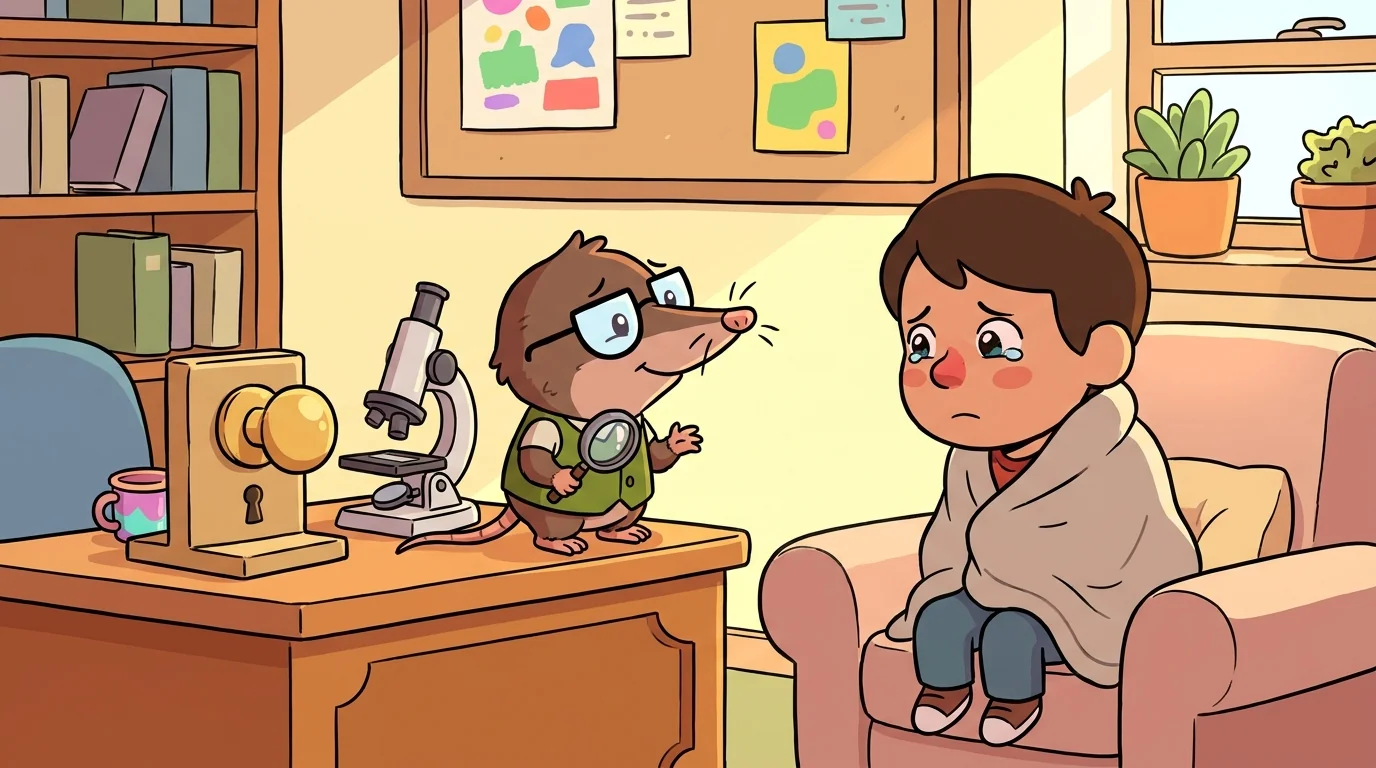
A student had a cold and was miserable — not from the sneezing, but from something a classmate had said.
"Someone told me I'm gross," she sniffled to Mote. "That I got sick because I'm dirty, or did something wrong. I keep trying to figure out what I did to deserve this."
Mote — a shrew, tiny and quick and twitchy-nosed, forever peering at things too small for anyone else to notice — went very still, then very gentle. "Now that," she said, "is the most important thing I'll ever teach anyone, and it isn't about sneezing. You did nothing to deserve this. A cold isn't a punishment. It isn't dirtiness. It isn't badness." She twitched her nose. "A cold is germs — tiny living things, far too small to see, that spread from person to person. One rode in on a doorknob, or a shared cup, or a cough in the air. It found you. That's not a moral failing. That's just biology doing what biology does. Germs don't care if you're good or bad. They only care if you're reachable."
The student blinked back tears. "So it's... not my fault?"
"It has never been your fault," Mote said firmly. "Getting sick is something that happens to you, not something you are. Anyone who tells you a sick person is gross or bad doesn't understand what a germ is. Once you understand — really understand — that it's just tiny life, spreading the only way it knows how, all the shame falls right off."
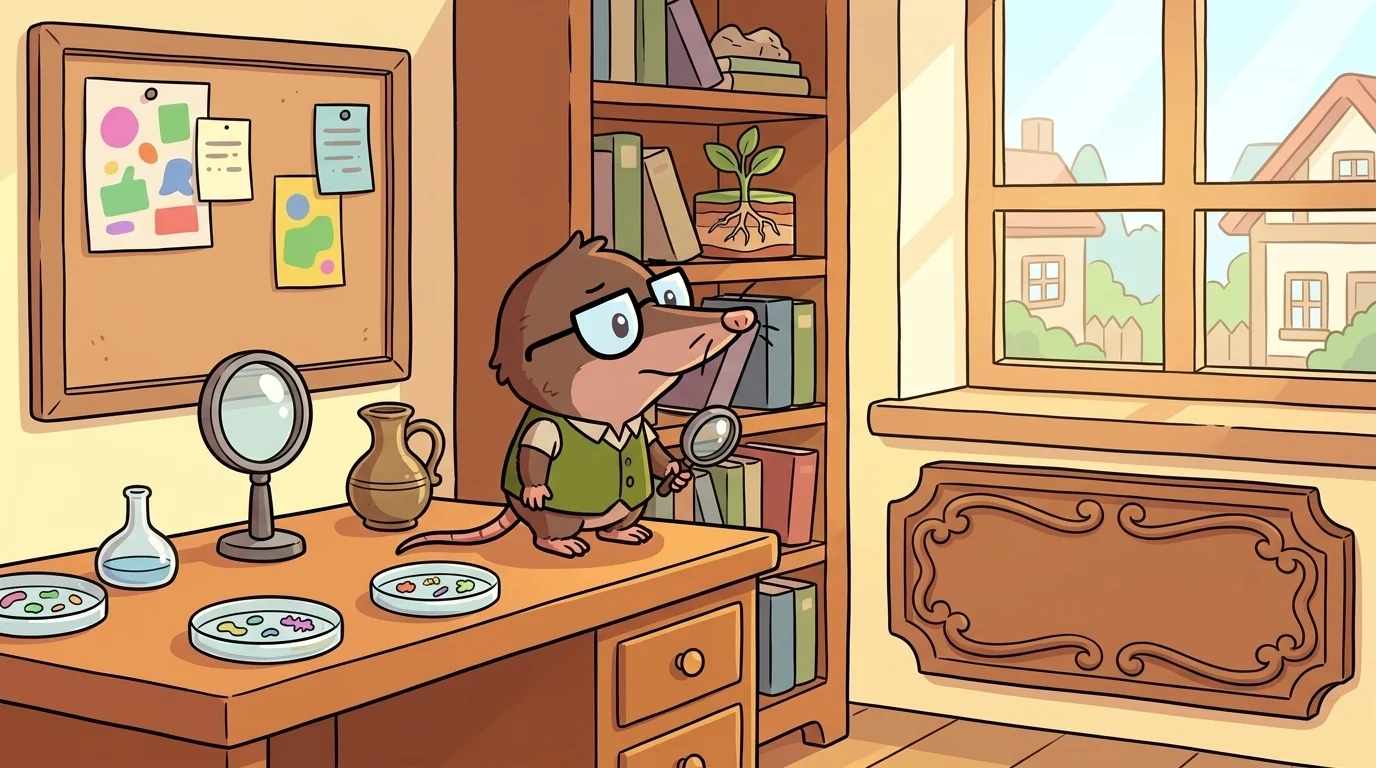
Mote had learned to see the unseen young, and it had changed how her whole village treated sickness.
Her family were the tiny-watchers of MedicQuest — shrews, because their small quick eyes and endless curiosity were suited to noticing what everyone else was too big to see. They studied why sickness moved through a village the way it did — who caught it, how, in what order — long before anyone had words like "germ."
When Mote was small, sickness was treated as a curse or a shame — a sick family was whispered about, avoided, blamed. It broke her heart. Then she watched Nurse Poultice trace a stomach bug through the village — not by who was good or bad, but by who had shared a water jug. It followed the jug, exactly, person to person, ignoring how kind or clean or careful anyone was.
"See?" the mentor said. "It's not a curse. It's not a judgment. It followed the jug — a path, not a punishment. Understand the path and you can stop the sickness and stop the blame in the same breath." Nurse Poultice looked at her steadily. "The cruelest thing about sickness has always been the shame people pile on top of it. You, little watcher, get to lift that shame off — just by showing people it's tiny life on a path, and never a verdict on who they are." Small Mote held that: a germ is biology, not badness — and knowing that heals a hurt no medicine can reach.
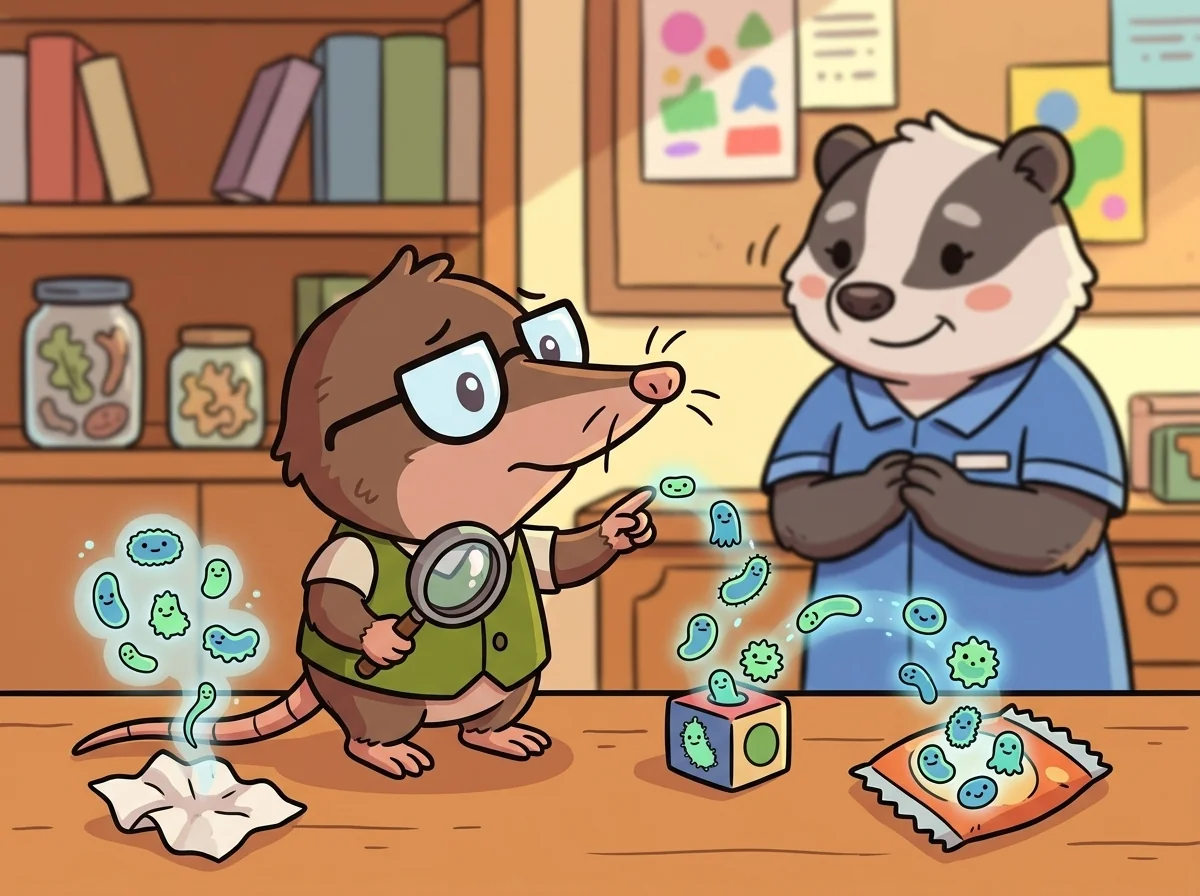
She stayed on at MedicQuest, and one day the mentor gave her the tiny-watcher's test.
Nurse Poultice laid out a scene — a shared snack, an uncovered sneeze, a passed-around toy — and asked Mote just one thing: "How does a sickness travel, and what does that mean for how we treat the sick?"
Mote didn't rush. She traced the paths: the sneeze that sprayed tiny droplets into the air, the unwashed hand that carried germs to the snack, the toy that went mouth to hand to mouth. "It moves by touch, by droplets, by shared things," she said. "Not by badness. Not by who deserves it." Then she added the part that mattered most: "So when someone's sick, we help them and keep the germs from spreading — but we never blame them or shame them. The germ chose a path, not a person."
Nurse Poultice nodded slowly. "Most young healers learn how sickness spreads and stop there," the mentor said. "You learned that understanding the how is also how we end the shame. Stay. You've got the kindest science there is."
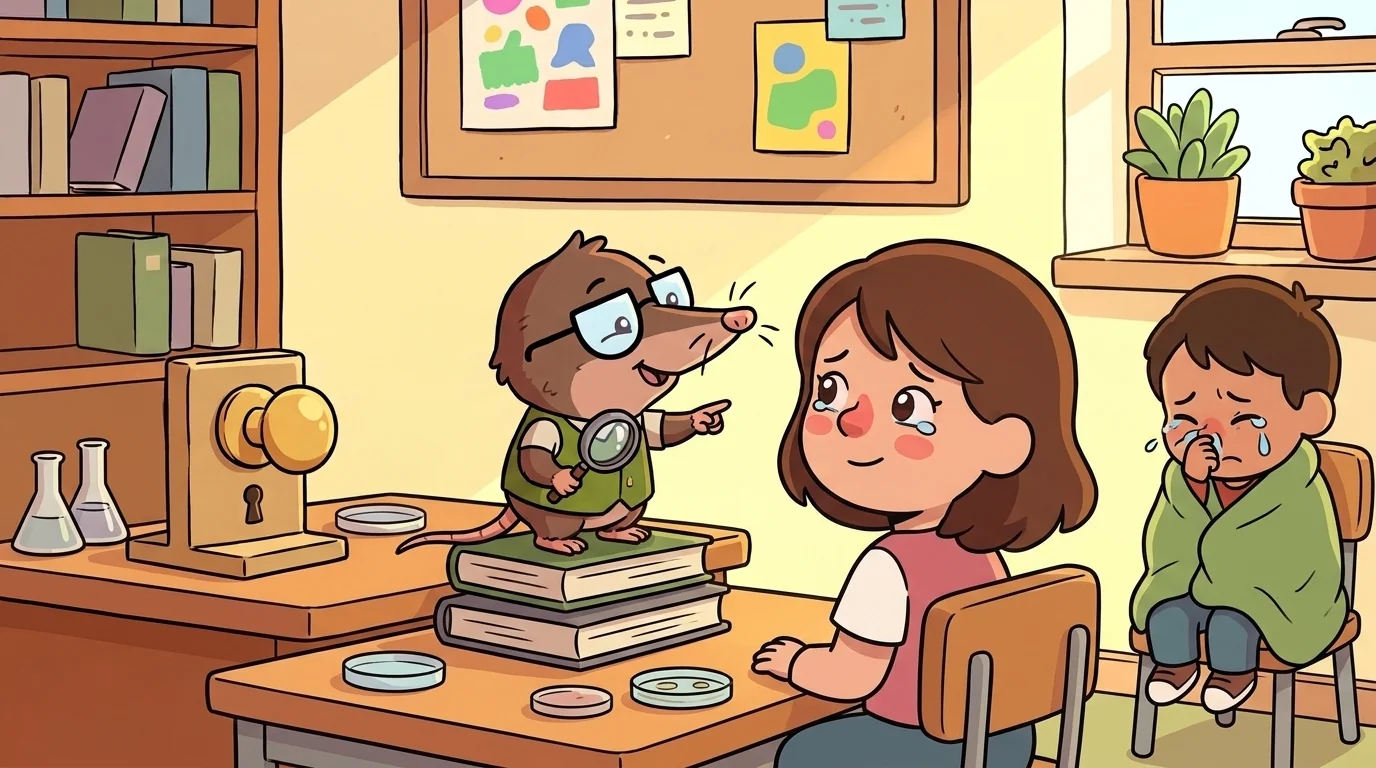
Weeks later, that same student, cold nearly gone, sat with Mote, and a new classmate nearby was sniffling and looking miserable and singled-out.
"Watch," Mote said softly, nodding at the sniffling child. "Someone's already whispering that he's gross. And you know now that's not true. So — what really happened to him?" She twitched her nose toward the room. "A germ — tiny, alive, invisible — traveled to him. Maybe on a doorknob, maybe in the air from a cough. It didn't check whether he was good. It just found a path. He's not gross. He's not bad. He's a person a tiny living thing reached, exactly like you last week."
The student looked at the sniffling boy, and something in her face softened. "So the kind thing isn't to keep away because he's bad," she said slowly. "It's to be gentle with him, and just... wash my hands and cover my cough so the germ's path stops."
"That's it," Mote said, delighted. "You break the germ's path — and you break the shame at the same time. Kindness and clean hands, together. Because the germ was only ever biology." She paused, gentle. "And if a sickness ever feels big or scary — going on too long, getting worse, frightening you — that's not shame either. That's a message to tell a trusted grown-up, who can help you understand it and get the right care."
The student went and sat, at a friendly distance, near the sniffling boy, and told him he wasn't gross. Something in her chest had gone warm and settled.
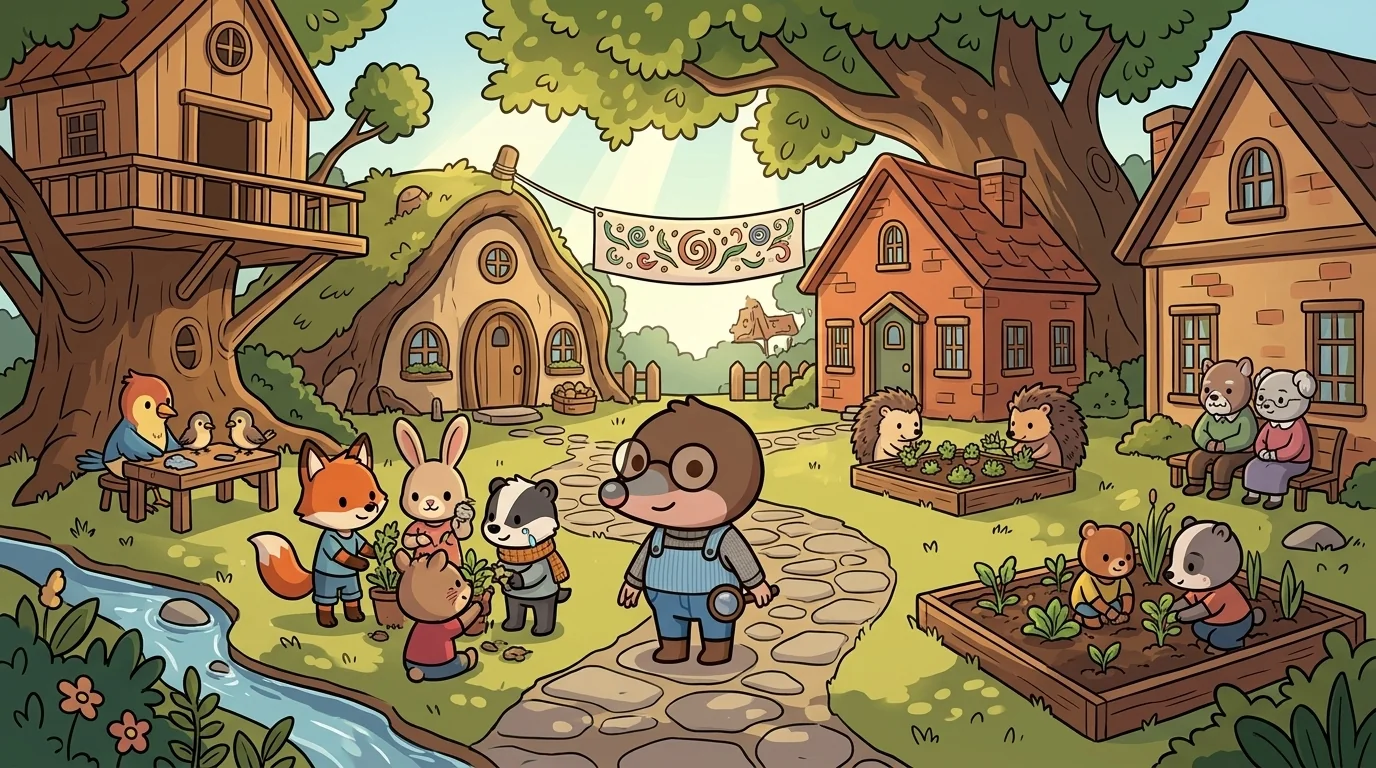
The whispering about the sniffling boy quieted, because the student explained, in Mote's words, that a cold is just tiny life on a path and never a person's fault. There was a small settled feeling in her chest: the relief of shame lifted — his, and her own.
Mote twitched her nose, peering at the calm room, and went still with quiet satisfaction — the ease of a creature who'd spent her life turning an invisible fear into something you could picture, and picture without blame. Somewhere in the memory of it, a whole village stopped whispering about the sick and started, instead, to help them.
"A germ is tiny life on a path — never a punishment, never a verdict on who you are," she said softly. "Understand the path, and you break the sickness and the shame. That's the kind part. That's the part worth seeing clearly."
The MedicQuest ensemble
Mote is one of the friends in MedicQuest. Each friend shows you one idea by how they act; meet them all and you have the whole subject.
-

Notice
Symptom-noticing without alarm — most symptoms are minor + temporary; notice without catastrophizing
-

Framer
How the body is put together; bones, muscles, heart and lungs are systems that work as one team
-

Sentry
Prevention and everyday protective habits
-

Rally
Immunity and the body's defenses
-

Triage
What needs help first; sorting a problem into right now, soon, or can rest, and always telling a trusted adult
-
Ask
Clinical-history-taking + questioning — your questions are MEDICAL EVIDENCE; never feel silly asking
-

Balm
Rest, recovery, and comfort
-

Dram
Medicine safety and dosing
-

Boundary
Body-autonomy + consent — your body is YOURS; ask-first is universal; pangolin curl-pose models self-protection-as-positive
-

Tell
Help-seeking from a trusted adult — telling is the most powerful medical move (shared design language with SafetyForge Wave 24 Tell — cross-app continuity)
-

Whole
Wellness-as-multi-factor-system — health is sleep + food + movement + relationships + meaning + safety; never single-factor; explicit health-equity foregrounding