Tell
Telling is the most powerful medical move
Loading audio…
Press play to listen along. The line being read lights up as you go.
Show full transcript
Loading transcript…
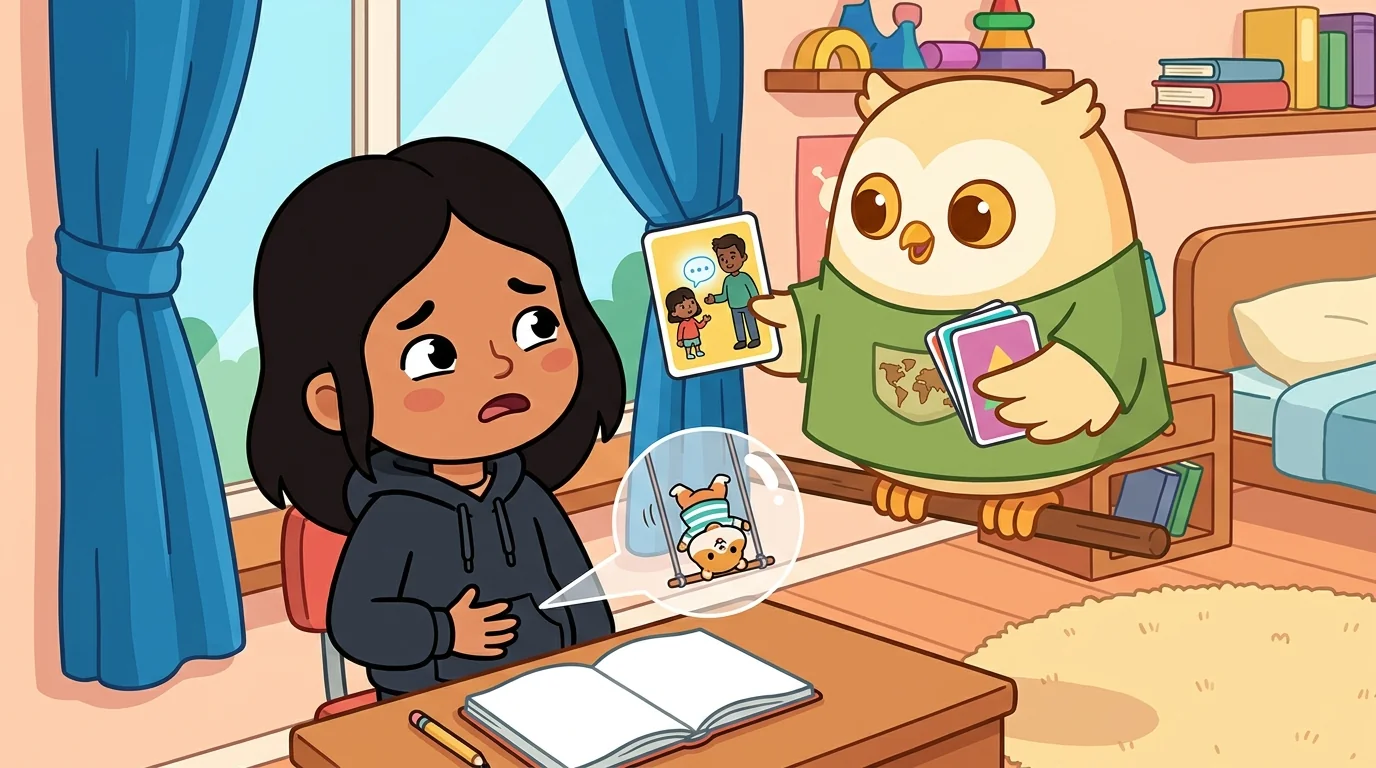
Maya sat hunched over her notebook, pencil still. A knot had been growing in her stomach for days — not a regular tummy ache, but a tiny, worried hamster doing acrobatics inside her. "Just go away," she whispered to her stomach.
A soft hoo-hoo came from her window. Perched on the sill was an owl — small and round, warm creamy feathers, big amber eyes, a plain tunic with a little map in one pocket and a stack of cards in a wing. It held one card up. Maya leaned in: a picture of a kid talking to an adult, and in bold letters, TELLING IS THE MOST POWERFUL MEDICAL MOVE. "Medical move?" Maya mumbled. "I don't need a doctor." The hamster in her stomach flipped again. The owl shuffled its cards and showed another: When something is wrong, tell a trusted adult.
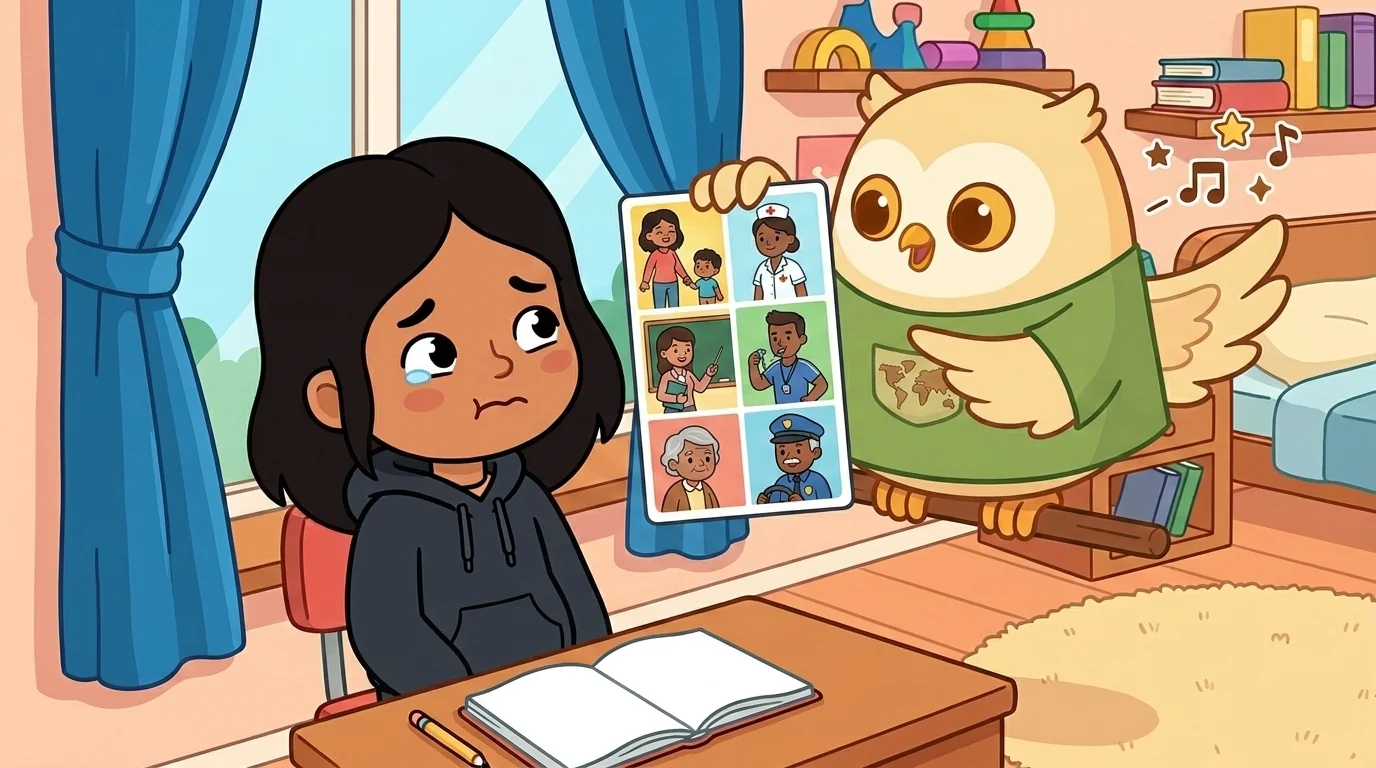
"But what if it's not that wrong?" Maya asked. "What if it's just… a little wrong?" The knot wasn't bleeding, wasn't broken — it just wouldn't go away.
The owl pointed to itself. I am Tell, a soft, clear voice seemed to echo in her mind. I teach about help-seeking. It held up another card: Telling is courage, not weakness. "But what if I get in trouble?" Maya asked. "Or no one believes me? What if Mom just says, 'Did you eat too much candy?'"
Tell ruffled its feathers and showed a card full of different grown-ups — a mom, a dad, a teacher, a school nurse, a grandma, a coach: Trusted-adult network (multiple options). "You mean I don't just have to tell one person?" If the first doesn't help, the calm voice said, tell another. "So if Mom doesn't get it… I could tell Dad?" Tell gave a tiny, encouraging hoot.
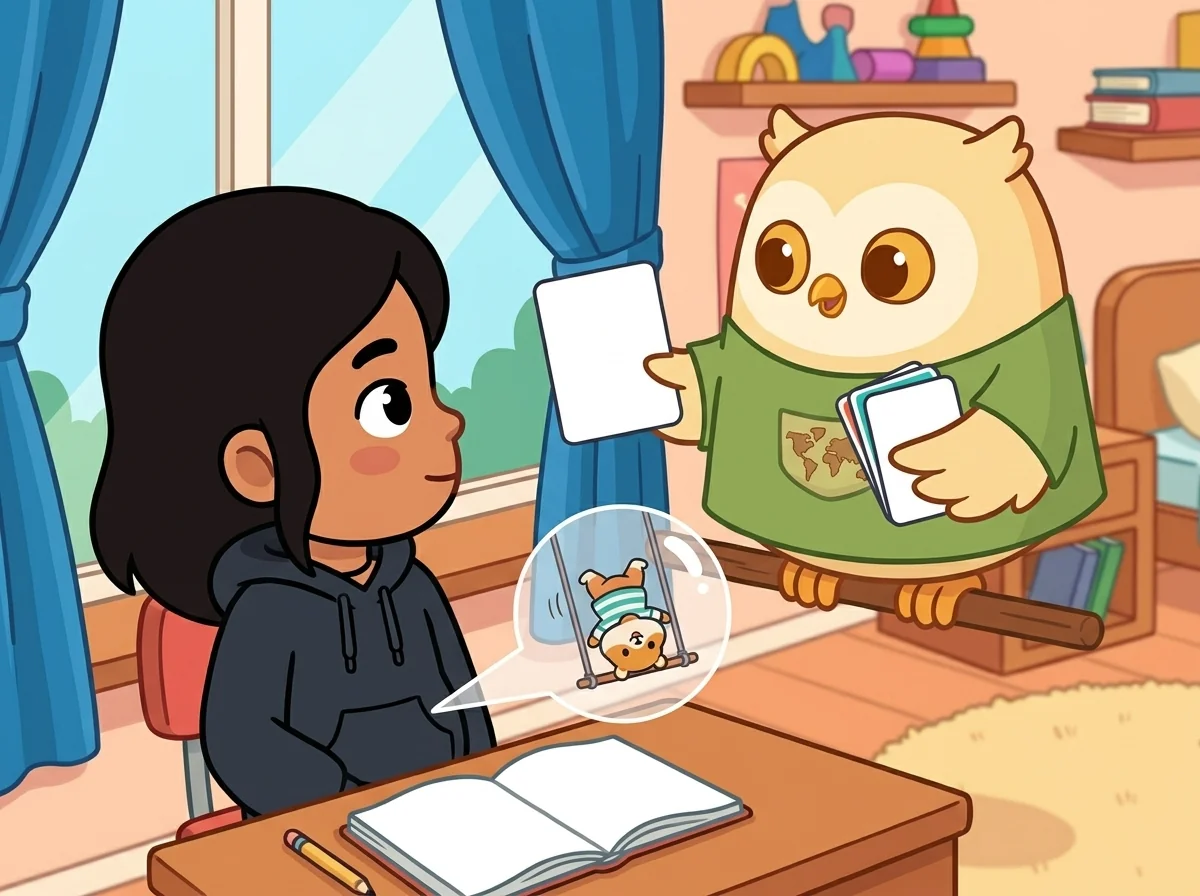
Then Tell held up a blank card, and waited. "What's this for?" Practice the sentence, the voice said. It makes telling easier.
Tell showed a card of examples: - "Something is happening with my body. Can I tell you about it?" - "I need to talk to you about something important." - "I'm feeling really worried about something."
Maya tried the first one, quietly: "Something is happening with my body. Can I tell you about it?" It felt a little silly saying it to an owl — but the words felt strong, not whiny, serious. She practiced it a few times, and liked how it gave her a way to start — better than just blurting "My stomach feels like a hamster!"
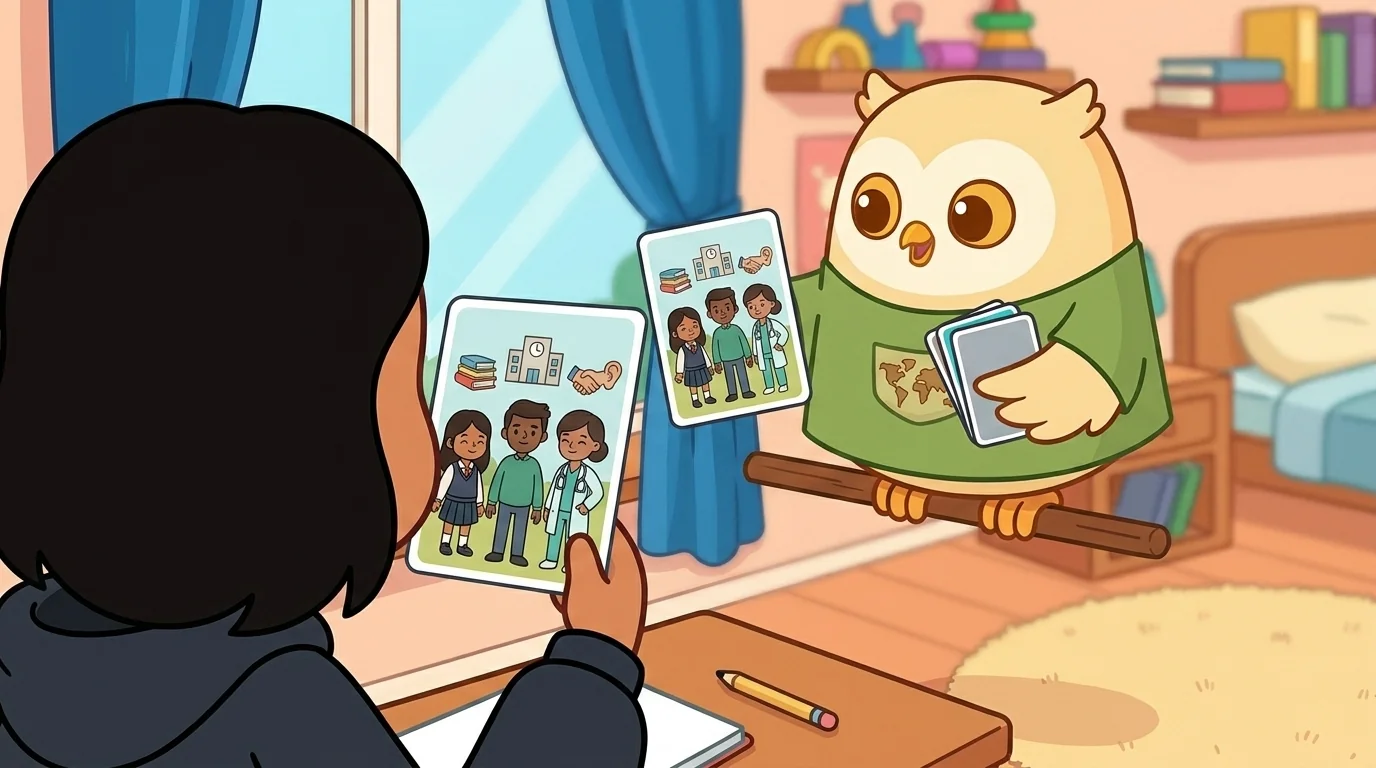
Tell showed another card: a school, with a teacher, a nurse, and a counselor highlighted. Mandatory reporters. "Some adults must help," the voice explained. "Teachers, school nurses, and doctors are examples. If you tell them about something really bad, they have to act — it's the law. They are safe people to tell." Maya's eyes widened. "So if something really, really bad happened, they have to do something?" Tell nodded, amber eyes steady. "What if there's no trusted adult around?" Maya asked, small again. "Or no one helps, even after I tell lots of people?" Tell's cards shuffled quickly to a new set of helpers to reach: Crisis-resources when the network fails. "These are for when you need help right away, or feel like no one else can help. There are people waiting to listen": - Someone to talk to when a feeling is too big to hold alone - A helper you can reach by call or text, any hour - A grown-up whose job is to help when someone is hurting you - A helper for when someone crosses your body's boundaries
"Telling is never weakness," the voice repeated. "It is the most courageous and competent move you can make." It was a lot to take in — but it was good to know they were there, like a secret superhero team.
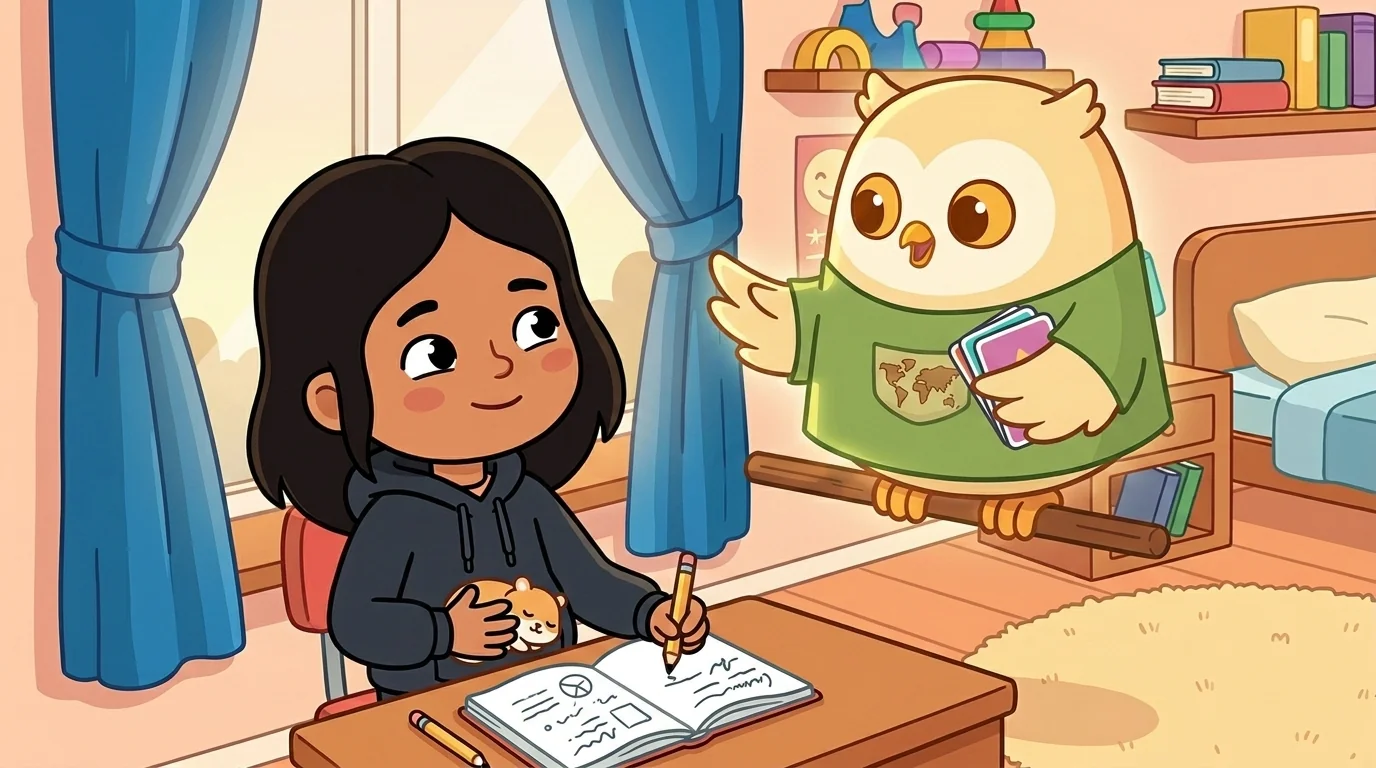
Maya looked at the owl. Its small round body seemed to glow. The knot in her stomach hadn't completely vanished — but the hamster had stopped flipping. It was just sitting there now, maybe even taking a nap.
"Thank you, Tell," Maya whispered, and picked up her pencil — not to draw a dragon, but to write down those important sentences, and how to reach a grown-up who could help. Just in case. Tell gave a final soft hoo-hoo and fluttered out the window into the afternoon light. Maya took a slow breath, and her shoulders — up near her ears all day — finally dropped. The knot was still there, but it felt smaller now, softer, less scary. Knowing she had the words, and people who would listen, made her feel calm and safe, like someone had wrapped a warm blanket around the worried part of her. Telling is the most powerful medical move — and knowing that, Maya felt her breath go slow and warm, calm and safe inside.
Hear it as an audio drama
A short play starring Tell, from MedicQuest. Different voices, same idea. Listen any time after you read.
Loading audio…
Read the drama script
- Narrator: From Spark and Anvil and MedicQuest — this is Tell, in chapter 1 of the MedicQuest cast.
- Narrator: This drama uses an AI-generated voice. Voiced via Gemini 2.5.
- Narrator: This story covers medical care and the body. Parents may want to listen first.
- Narrator: Tell is a small, bird-like figure. They have wide, amber eyes that hold a steady, warm light.
- Narrator: In one hand, they hold a worn map. In the other, a stack of cards, each printed with a single sentence.
- Tell: I am Tell. I believe a single sentence can change everything. It's a bridge from inside you to outside you.
- Narrator: The idea Tell teaches is this: telling is the most powerful medical move.
- Tell: When a feeling gets too big, it needs a way out. Words are the way out.
- Tell: You don't need a whole story. All you need is one sentence to start. That is what my cards are for.
- Narrator: Tell grew up in a village of silent mapmakers, where feelings were charted but never spoken.
- Tell: By age ten, I saw the problem. A map of a storm isn't the storm. You have to say its name.
- Narrator: They walked to the old Scriptorium. The Keeper of Words asked them one question.
- Keeper: What is the most important tool for healing?
- Tell: A single, honest sentence. The one that lets the story out.
- Keeper: You are appointed.
- Narrator: One sentence. One bridge. That is what makes Tell, Tell.
- Narrator: You've been listening to a Spark and Anvil chapter, written by the Spark and Anvil writing team for ages 9 to 14.
- Narrator: Apps stay free forever.
- Narrator: Curriculum aligned to National Health Education Standards.
- Narrator: If anything in this story brought up big feelings, talking to a trusted adult helps. You can also reach support lines anytime.
- Narrator: Released under Creative Commons BY-NC-SA 4.0 for educational reuse. Visit Spark and Anvil for the full transcript.
The MedicQuest ensemble
Tell is one of the friends in MedicQuest. Each friend shows you one idea by how they act; meet them all and you have the whole subject.
-
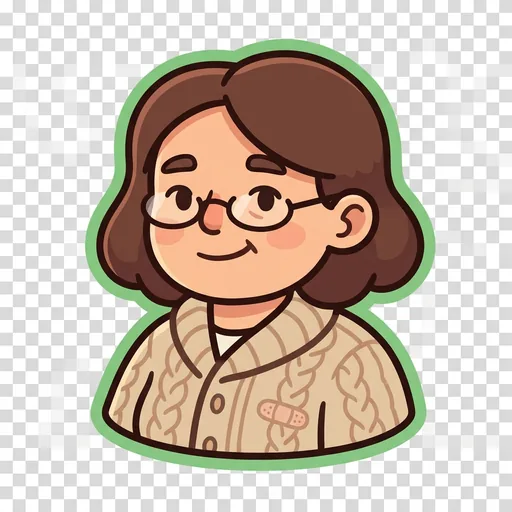
Notice
Symptom-noticing without alarm — most symptoms are minor + temporary; notice without catastrophizing
-
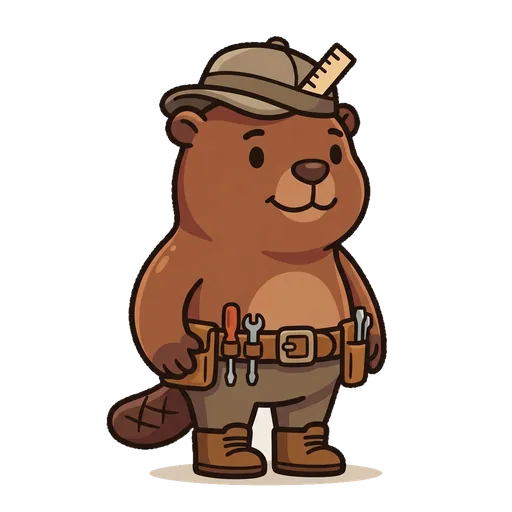
Framer
How the body is put together; bones, muscles, heart and lungs are systems that work as one team
-

Sentry
Prevention and everyday protective habits
-
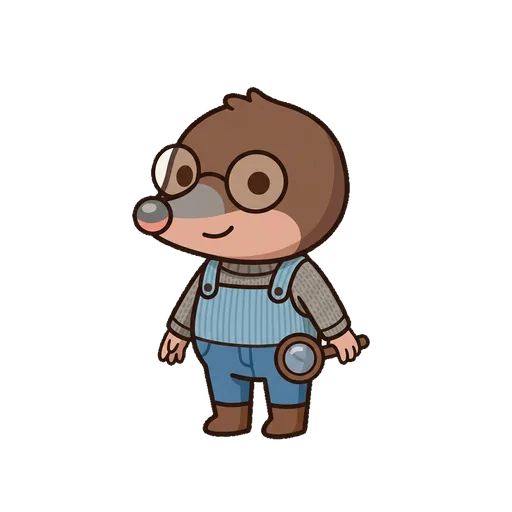
Mote
Germs and how sickness spreads
-
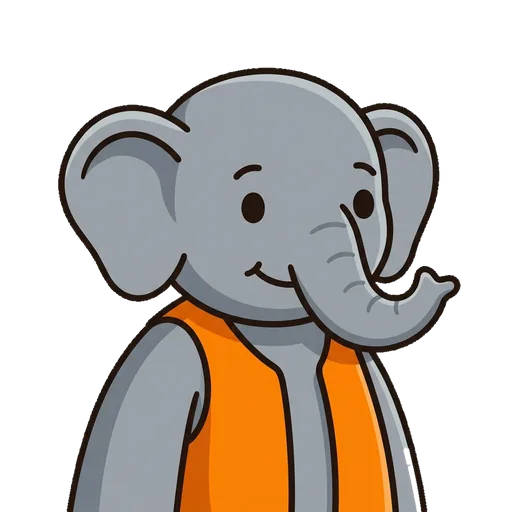
Rally
Immunity and the body's defenses
-

Triage
What needs help first; sorting a problem into right now, soon, or can rest, and always telling a trusted adult
-
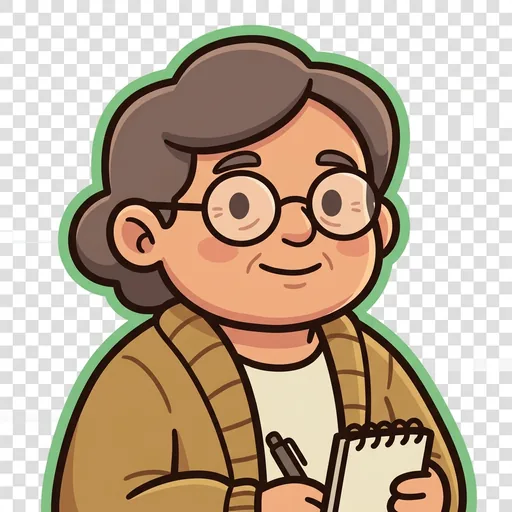
Ask
Clinical-history-taking + questioning — your questions are MEDICAL EVIDENCE; never feel silly asking
-

Balm
Rest, recovery, and comfort
-

Dram
Medicine safety and dosing
-

Boundary
Body-autonomy + consent — your body is YOURS; ask-first is universal; pangolin curl-pose models self-protection-as-positive
-
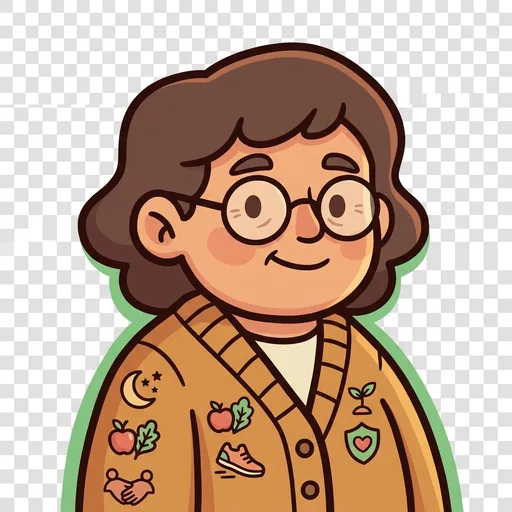
Whole
Wellness-as-multi-factor-system — health is sleep + food + movement + relationships + meaning + safety; never single-factor; explicit health-equity foregrounding