Bio
bio = LIFE
Loading audio…
Press play to listen along. The line being read lights up as you go.
Show full transcript
Loading transcript…
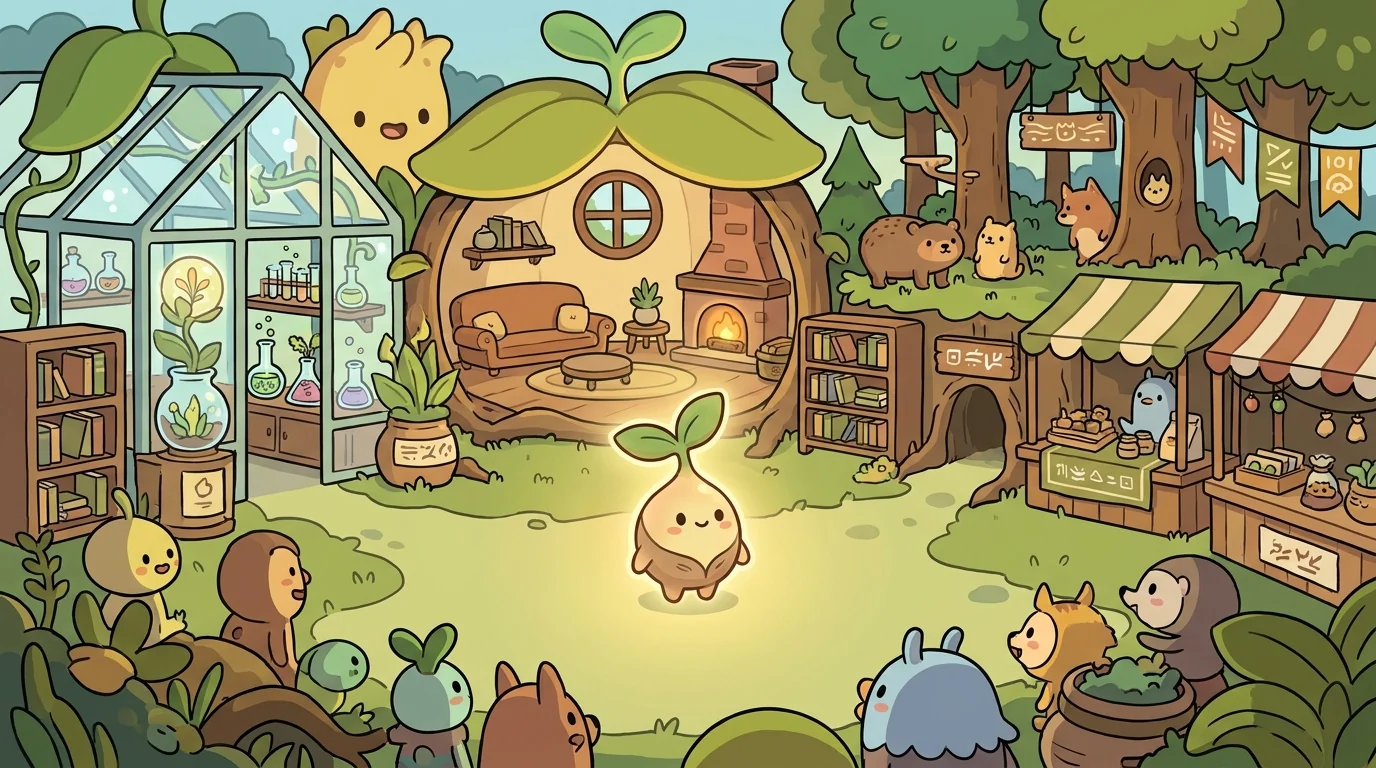
Bio was a small, warm, softly-glowing creature, and it carried the biggest idea of all: life. Everywhere Bio went, a word became about living things.
The young creatures had met Bio in science-words and assumed it belonged only there. Bio, glowing gently, showed them it reached much further.
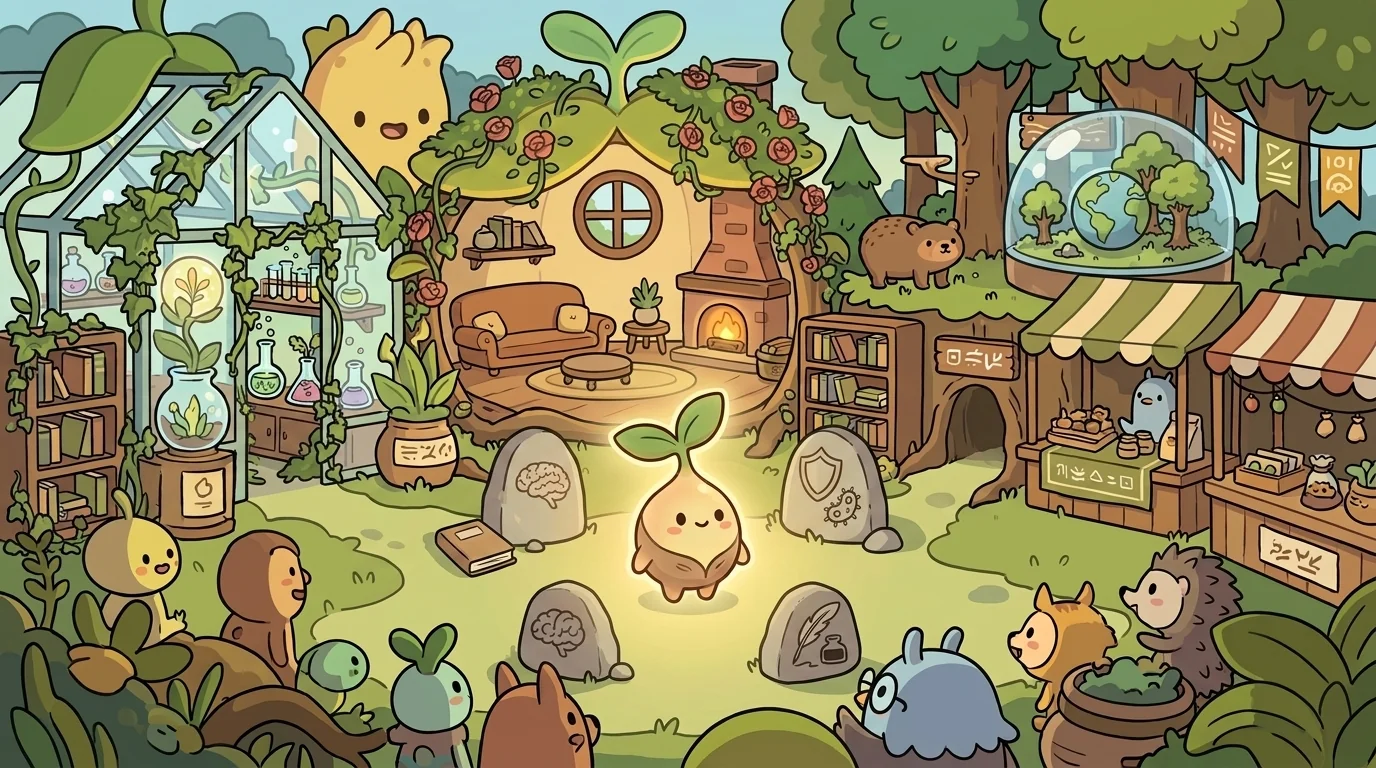
"I mean life — living things — anywhere I go," Bio said. "Not just in a lab."
It drifted into word after word. Joined to a root meaning study, it made biology — the study of living things. Joined to a root meaning writing, it made biography — the written life story of a person. Joined to a word meaning against, it made antibiotic — something that works against living microbes. Joined to a root meaning ball/globe, it made biosphere — the zone of the planet where life exists.
Science, stories, medicine, geography — Bio lit up a word in every one of them, and each time it meant the same warm thing: life.
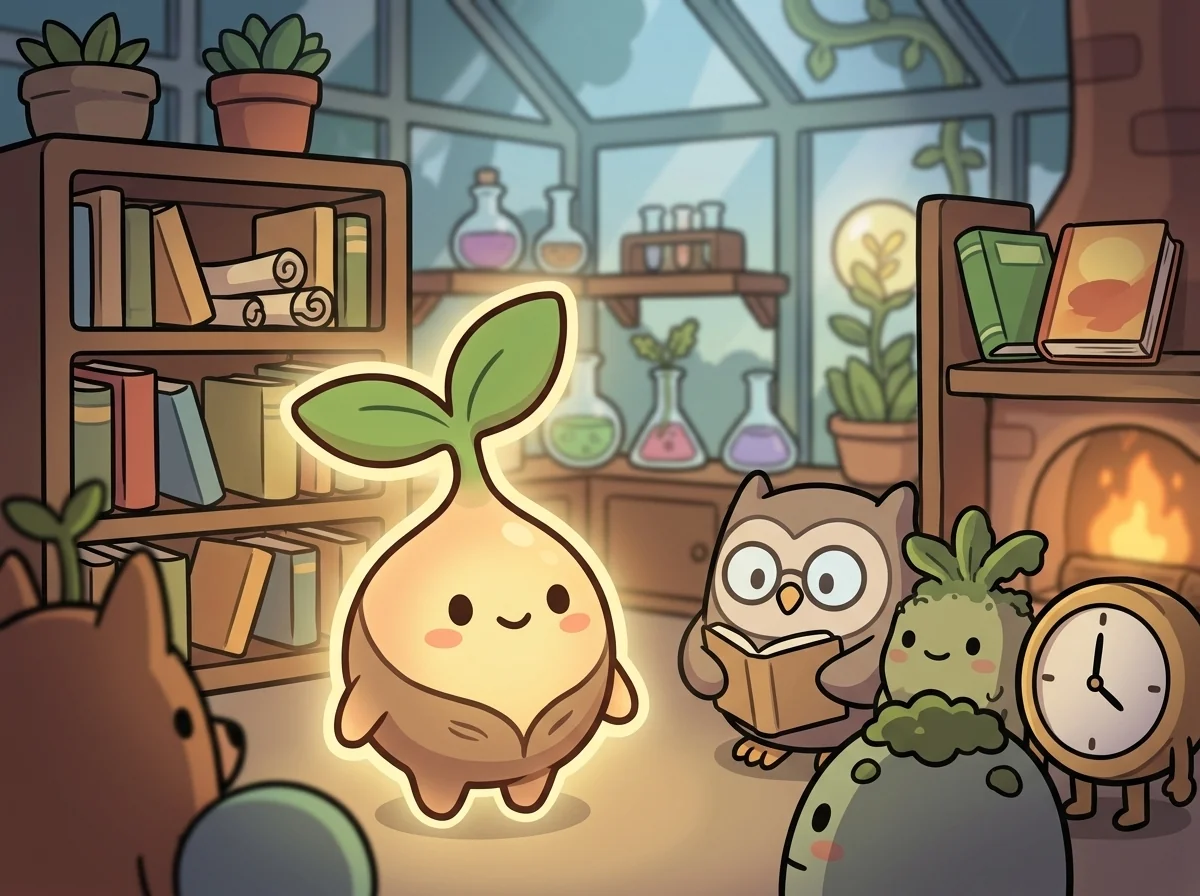
"That's the quiet power of a meaning-part," Bio said. "I connect a whole family of words you'd never guess were related. Biology and biography look like they belong to different worlds — one's science, one's a life-story on a shelf. But they're cousins. They both have me. They're both, underneath, about life."
The creatures started noticing Bio everywhere, and every time, it handed them the same free clue: this word is about living things. Even in a subject they thought was unrelated.
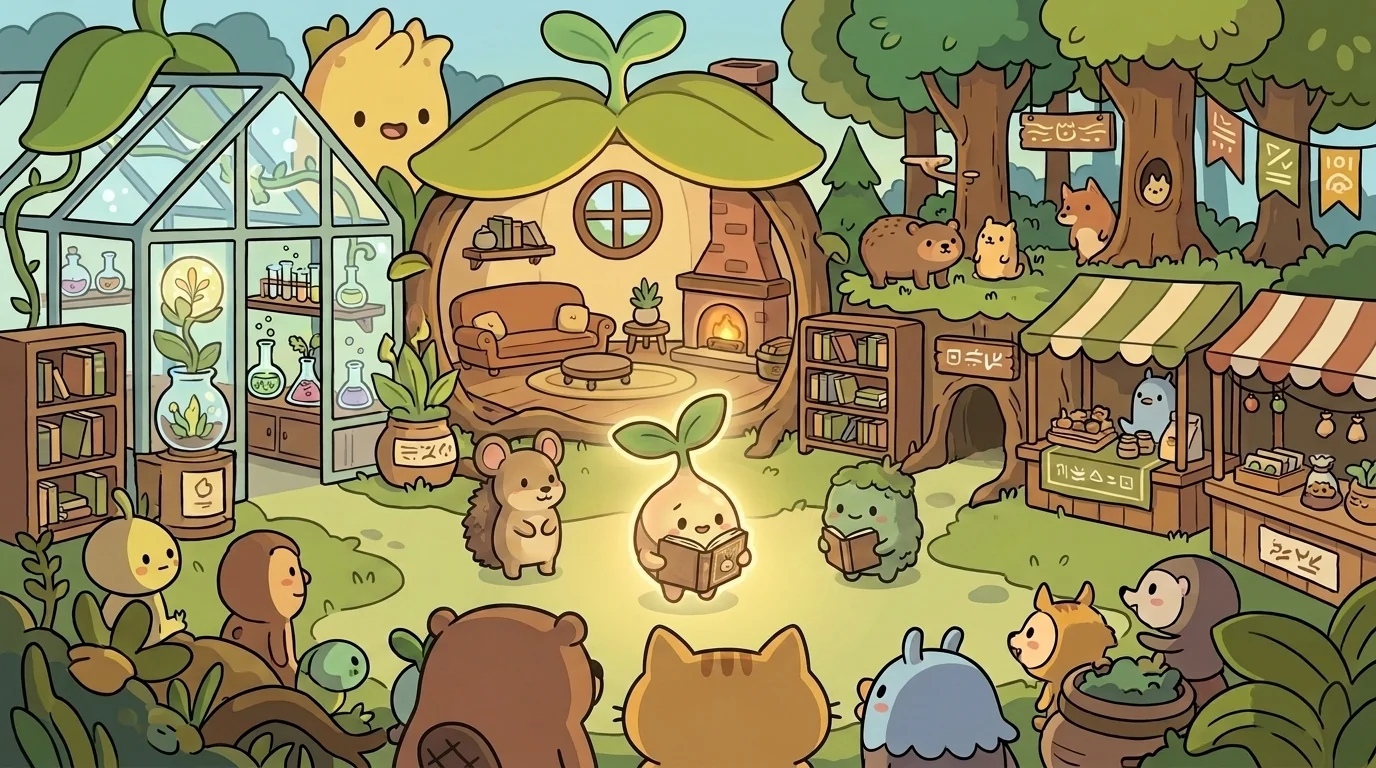
Bio made an honest note about care. "Because I mean life," it said softly, "the words I'm in often matter to real, living people — a biography is someone's actual life; a biopsy is about someone's health. Read those words gently, the way you'd want your own story read." Meaning carries feeling, too.
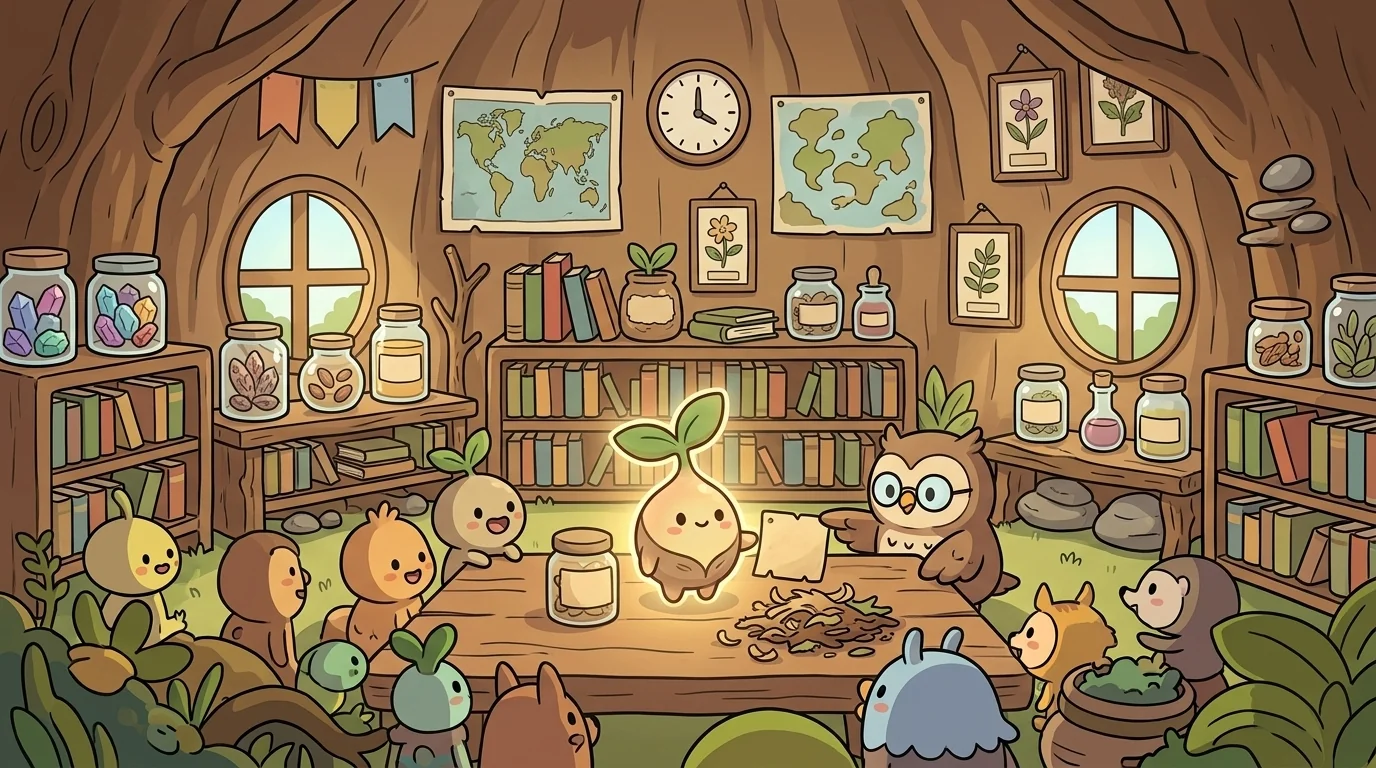
The test came with the unfamiliar word biodegradable on a label.
"Bio — that's life," a young creature reasoned, "and the rest is about breaking down. So... something that living things can break down? That rots back into nature?" Right on the mark — a long everyday word cracked from its living heart.
"How'd you read that?" the others asked.
"Bio was in it," the creature said, glowing a little itself. "'bio' means life — it names the whole living-things family. Once you know Bio, you find life hiding in words all across every subject."
Hear it as an audio drama
A short play starring Bio, from MorphQuest. Different voices, same idea. Listen any time after you read.
Loading audio…
Read the drama script
- Narrator: From Spark and Anvil and Morphquest — this is Bio, in chapter 1 of the Morphquest cast.
- Narrator: This drama uses an AI-generated voice. Voiced via Gemini 2.5.
- Narrator: Bio is a small, warm, softly-glowing creature, and it carries the biggest idea of all: life. Everywhere Bio goes, a word becomes about living things.
- Narrator: A young learner named Pip had met Bio only in science words and assumed it belonged there and nowhere else.
- Pip: I've only ever seen "bio" in science class, so I figured it was just a science part.
- Bio: I mean life — living things — anywhere I go, not just in a lab. Watch me cross every subject.
- Bio: Joined to a part meaning study, I make "biology," the study of life. Joined to a part meaning writing, I make "biography," the written story of a life. Joined to a part meaning against, I make "antibiotic," something that works against living microbes.
- Pip: So biology and biography look like different worlds, but they are cousins that both carry you.
- Bio: Exactly — I am a thread that ties distant subjects together. And here is a secret about me: I am still building. I am what word-scientists call productive.
- Bio: Nobody had words like biotechnology or biodegradable a lifetime ago. I made them by doing the same simple thing I always do — clipping onto a root and making the word about life.
- Narrator: Bio was always careful to warn learners about a look-alike that fooled many of them.
- Bio: Be careful — not every "bi" is me. The little part "bi" means two, as in bicycle and bilingual. The difference is the letter o. I am "bio," with the o, carrying life.
- Bio: "Bio" with the o means life; "bi" with no o means two. One letter changes everything, so read the whole part, not just the first two letters.
- Narrator: When Pip saw "biodegradable" stamped on a lunchbox, Pip read me at the front first.
- Pip: "Bio" means living things, "degrade" means break down, and "able" means able to be — so it is able to be broken down by living things.
- Bio: You read a word off a lunchbox by knowing I mean life. See me at the front of a long word and you already know one warm, true thing: this word is about living things.
- Narrator: You've been listening to a Spark and Anvil chapter, written by the Spark and Anvil writing team for ages 9 to 14.
- Narrator: Apps stay free forever.
- Narrator: Curriculum aligned to Common Core and Next Generation Science Standards.
- Narrator: Released under Creative Commons BY-NC-SA 4.0 for educational reuse. Visit Spark and Anvil for the full transcript.
The MorphQuest ensemble
Bio is one of the friends in MorphQuest. Each friend shows you one idea by how they act; meet them all and you have the whole subject.
-

Radix
Root (radix) — every long word is built around a small root that carries its core meaning; find the root and the word tells you what it means
-

Morph
Shape / change (morph) — the shapeshifter; a morpheme changes a word's form and the job it does
-

Chrono
Time (chrono) — the time-morpheme; fuse it in and a word becomes about time
-

Phage
Eat (-phage) — the devouring suffix that turns a word into an eater of something
-

Aqua
Water (aqua / hydro) — every water-word carries this morpheme
-

Tele
Far / distant (tele) — stretches a word's reach across a distance
-

Scope
See / look / examine (-scope) — the seeing suffix, an instrument for looking
-

Phobia
Fear / strong dislike (-phobia) — the fear suffix, gentle and never distressing
-

Ology
The study of (-ology) — turns any topic into a field of study (the scholar)