Attest
ATTRIBUTION
Loading audio…
Press play to listen along. The line being read lights up as you go.
Show full transcript
Loading transcript…
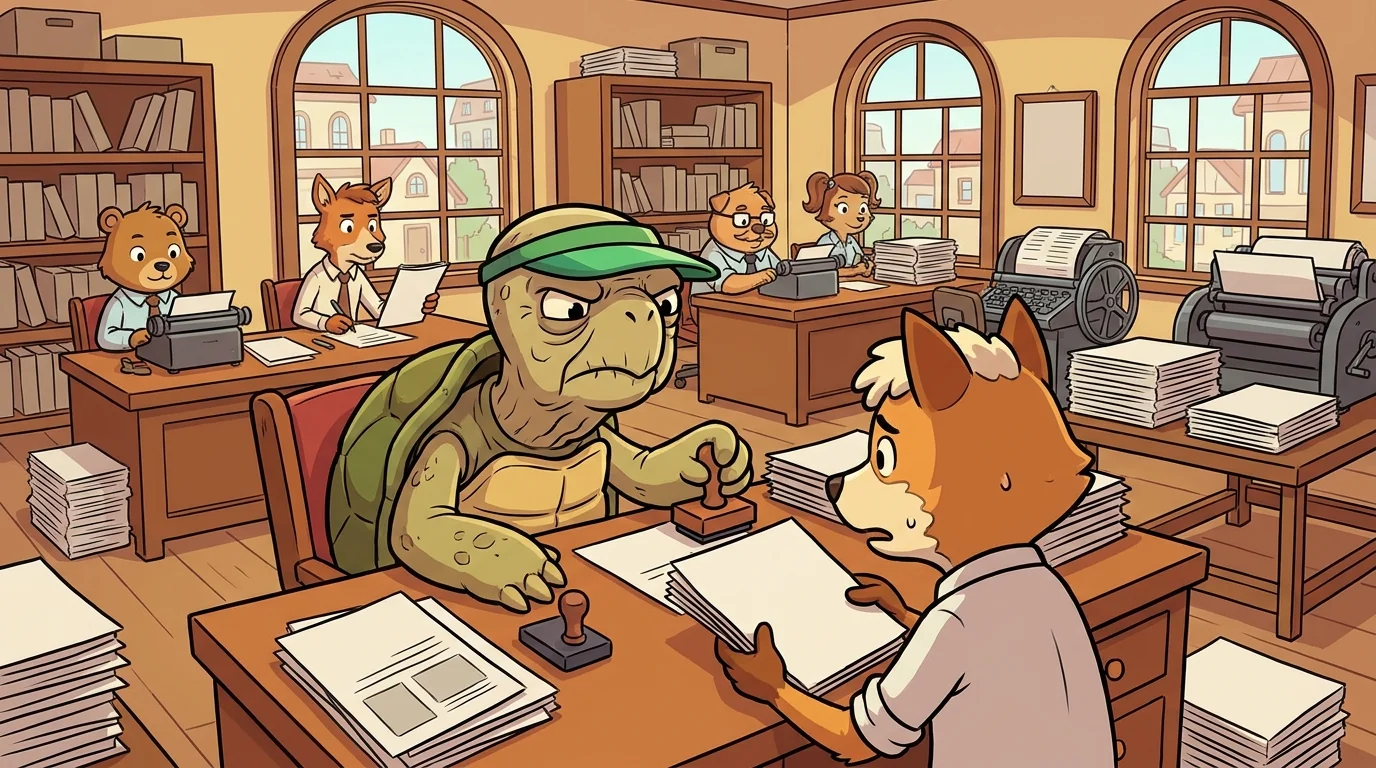
The newsroom had a juicy line ready to print, and Attest was the one who slowed it down.
He was a careful old tortoise in a green eyeshade, a rubber stamp in one hand that read simply WHO? A reporter had a sentence he loved: "Sources say the festival is cancelled."
Attest read it and thumped his stamp gently on the desk. "Which sources?"
"You know. Sources."
"I don't know," Attest said, unhurried. "And neither will the reader. 'Sources say' is a hand pointing at nobody." He turned the sentence around on the desk. "A claim is only as trustworthy as the name behind it. So — who told you the festival was cancelled? A festival organizer? A ticket-seller? Someone's cousin who heard a rumor?" He tapped each word. "'The festival organizer confirmed it' — that I can trust. 'Sources say' — that's a rumor in a suit." He stamped the vague line: WHO? "Bring me a name," he said, "or bring me a reason there's no name. But don't bring me a shadow and call it a source."
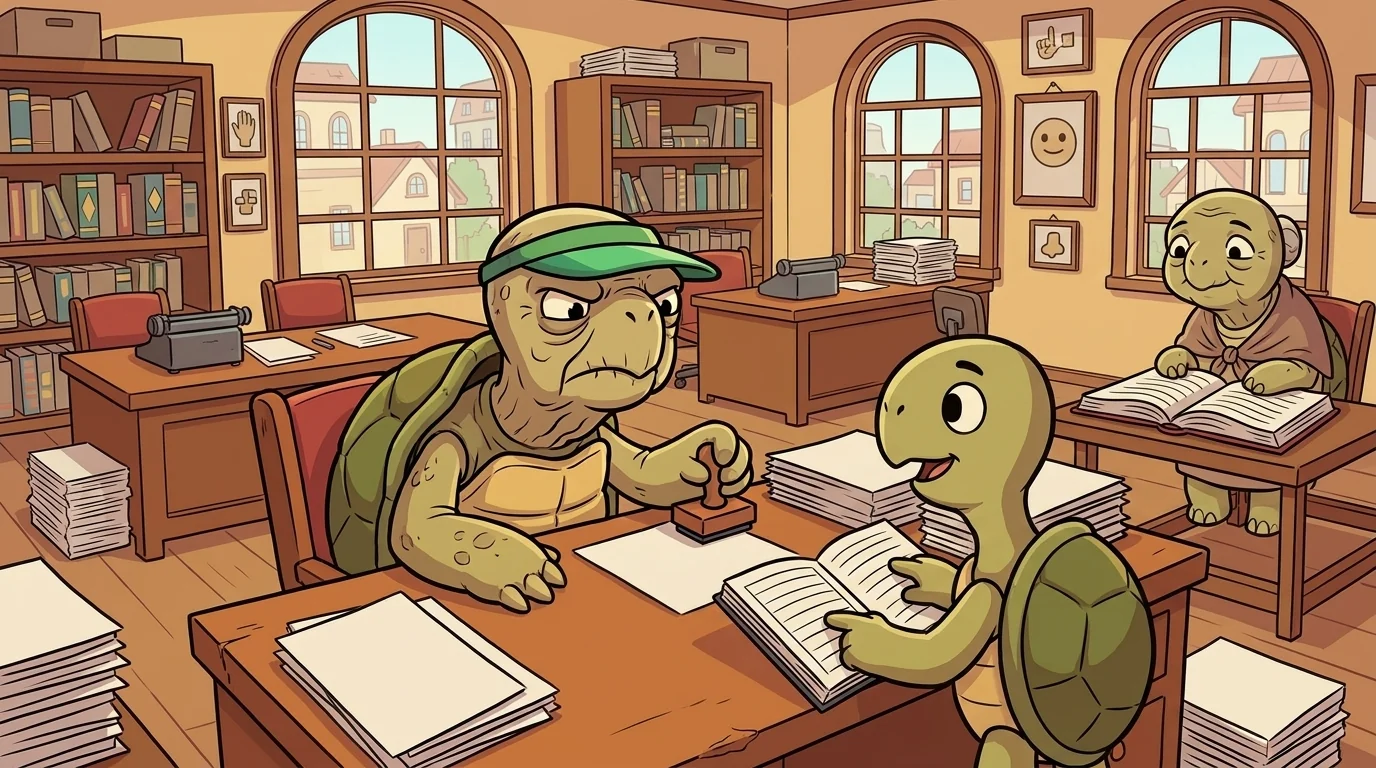
Attest grew up beside a small-town courthouse, in a family of tortoises who kept the town's record of who-said-what, sworn and signed.
His grandmother worked the witness ledger, and she had a saying she repeated until it was second nature: A claim without a name is a stone thrown from behind a wall. She taught young Attest that every statement in the ledger had to carry the name of whoever swore to it. "Anyone can say a thing," she told him. "The question is whether they'll put their name on it. A name means they'll stand behind the words. No name means they won't — and that tells you something too."
Once, young Attest wrote down a hot piece of gossip in the ledger with the note "everyone knows it." His grandmother drew a calm line through it. "'Everyone' is no one," she said. "Who, exactly? Point at a face." When he couldn't, she nodded, unbothered. "Then it doesn't go in the book. Not because it's false — because we can't tell. And 'we can't tell' is not the same as 'it's true.'"
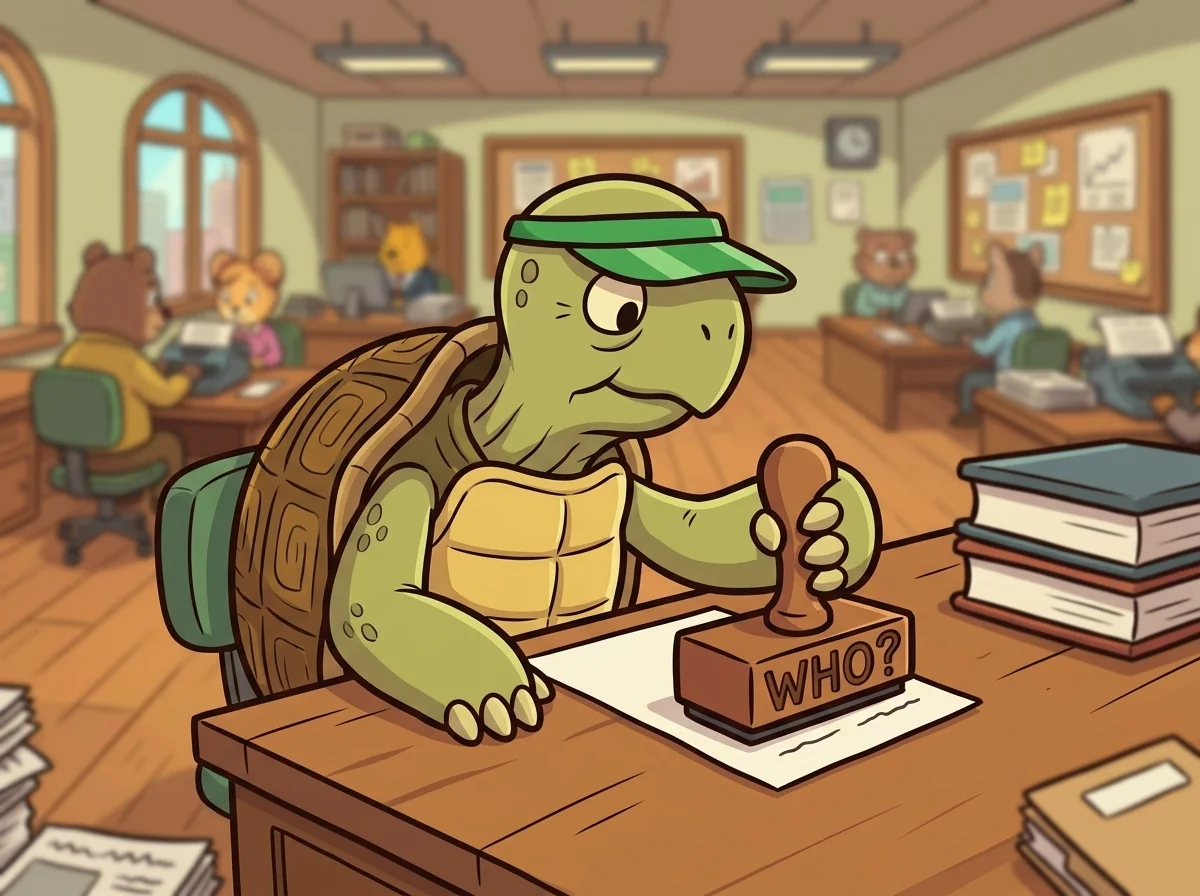
When Attest was twelve, he carried his WHO? stamp into the NewsForge newsroom to meet his mentor, Scoop, a rumpled and thoughtful old editor.
Scoop was staring at a story stuffed with "experts believe" and "many feel" and "it is said." "The whole thing is built out of nobodies," Scoop said. "How do you make it stand up?"
Attest set his stamp on the desk. "You give every claim a name to stand on," he said. "Not 'experts believe' — which expert, and how do they know? Not 'many feel' — a poll of how many, taken by whom? Every important claim gets a who, right there in the sentence, so the reader can weigh it themselves." He tapped the eyeshade over his careful eyes. "And when a source truly can't be named — to keep them safe — then you say that, and say why, so the reader knows it's a real person with a real reason, not a convenient ghost."
Scoop looked at the ghost-filled story, then at the tortoise with the stamp. A slow, relieved smile. "That's the job," he said, and slid the newsroom's attribution desk to Attest's corner.
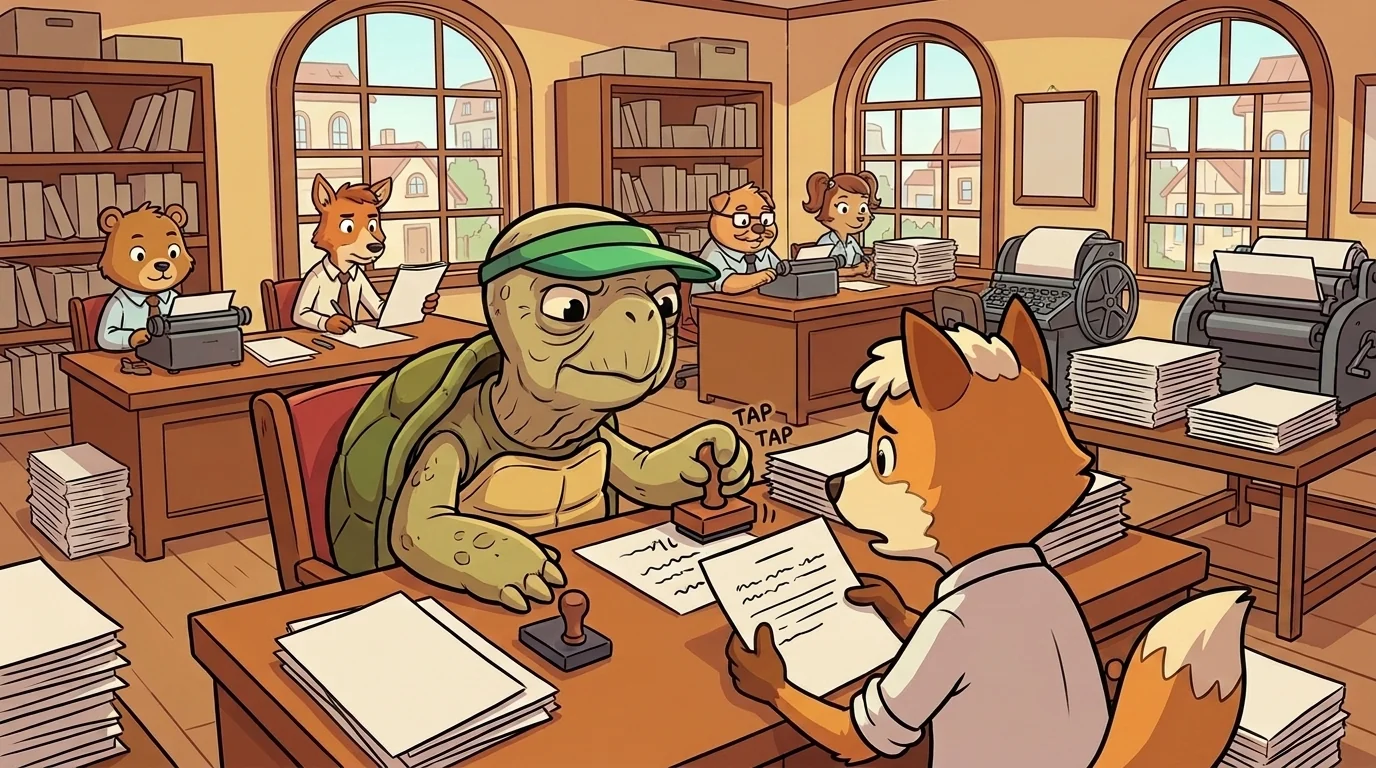
In Attest's corner, a young reporter named Willa brought him a line she was proud of: "People are saying the new bridge is unsafe."
"Which people?" Attest asked, gently.
"Um. I saw it a lot online."
"'A lot online' is a crowd with no faces," Attest said. "Let's find out who's actually behind it. Is it the engineers who inspected the bridge? Is it worried neighbors? Is it one loud account repeated a thousand times?" They dug in together. It turned out the "people saying" traced back to a single unnamed post — copied and copied until it looked like a chorus. "See?" Attest said. "It felt like many voices. It was one voice with no name, echoed." Then he taught the whole habit as one steady rule: attach a name to every claim that matters, because a named source can be weighed and a nameless one can only be guessed at; "sources say," "experts believe," and "people are saying" are fog, not evidence — ask which sources, which experts, how many people; and when there's a good reason a name is held back, that reason should be shown to the reader, never hidden, so anonymous never means unaccountable. "A claim you can't attach to anyone," he said firmly, "is a claim floating in the air. Don't let the reader mistake floating for standing."
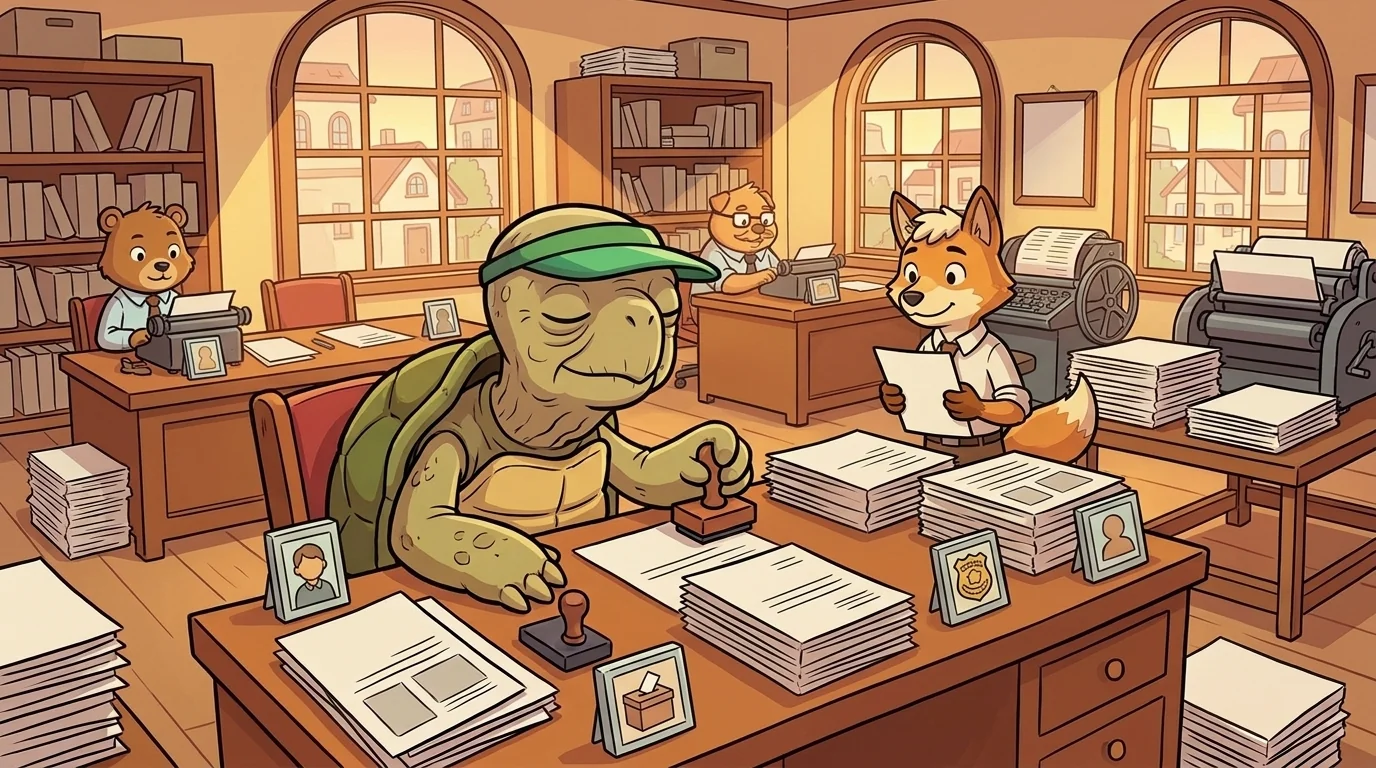
At the end of the day, Attest read down the newsroom's stories, and beside every important claim sat a name — an organizer, an inspector, a named study, a counted poll.
Willa stood beside him. "Every claim has a who now," she said. "It feels different."
"It feels anchored," Attest said. He set his WHO? stamp down, capped his ink, and drew his old head halfway into the calm of his shell. Under the quiet, a warm, grounded steadiness settled over him — the ease you feel when nothing in front of you is hiding its face. It felt, he thought, like standing in a room where everyone who spoke had said their own name first: no shadows behind the wall, no stones thrown from nowhere, just people willing to stand behind their words — and the deep, unbothered calm of knowing exactly whom you were listening to. That anchored, clear-eyed, nothing-hidden feeling was, to Attest, precisely why the slow question who? was worth asking, gently, every single time.
Hear it as an audio drama
A short play starring Attest, from NewsForge. Different voices, same idea. Listen any time after you read.
Loading audio…
Read the drama script
- Narrator: From Spark and Anvil and NewsForge — this is Attest, in chapter 1 of the NewsForge cast.
- Narrator: This drama uses an AI-generated voice. Voiced via Gemini 2.5.
- Narrator: This story covers news literacy and misinformation. Parents may want to listen first.
- Narrator: Attest is an old tortoise in a green eyeshade. He works the newsroom's sourcing desk, slow and unhurried.
- Narrator: In one wrinkled hand he holds a heavy rubber stamp. It reads a single word: WHO?
- Attest: I am Attest. Before a claim goes to a reader, I ask the one question that matters — who said it?
- Narrator: A reporter hurries up with a line he loves.
- Reporter: Attest, listen — "Sources say the festival is cancelled!" It's a great line.
- Attest: Which sources?
- Reporter: You know. Sources. People close to it.
- Attest: I do not know. And neither will the reader. "Sources say" is a hand pointing at nobody.
- Attest: A claim is only as trustworthy as the name behind it. A name is a promise — it means someone will stand behind the words if they turn out wrong.
- Narrator: Attest sets three slips on the desk.
- Attest: One: a named person, on the record — I can trust that. Two: a name we hide on purpose, with an honest reason we tell the reader. Three: "sources say" — a name hidden for no reason at all. That one is a rumor in a suit.
- Reporter: So the difference between protecting a source and hiding behind one... is whether I did the work.
- Attest: That is the whole difference. Bring me a name — or an honest reason there isn't one. But never bring me a shadow and call it a source.
- Narrator: A claim without a name is a stone thrown from behind a wall. Attest makes every claim show its face.
- Narrator: You've been listening to a Spark and Anvil chapter, written by the Spark and Anvil writing team for ages 9 to 14.
- Narrator: Apps stay free forever.
- Narrator: Curriculum aligned to media literacy standards.
- Narrator: If anything in this story brought up big feelings, talking to a trusted adult helps. You can also reach support lines anytime.
- Narrator: Released under Creative Commons BY-NC-SA 4.0 for educational reuse. Visit Spark and Anvil for the full transcript.
The NewsForge ensemble
Attest is one of the friends in NewsForge. Each friend shows you one idea by how they act; meet them all and you have the whole subject.
-

Source
Source-quality evaluation — who would KNOW this best? who has a stake? source-card-comparison the routine
-

Tilt
Bias-and-perspective detection — every story has a frame; name the frame, then read; structural NOT partisan
-

Frame
Headline-and-framing craft — a headline is a SUMMARY not a HOOK; counter-clickbait
-

Verify
Verification + lateral-reading discipline — SIFT (Stop, Investigate, Find, Trace); open four tabs, never one
-

Serve
Community-information-needs framing — what does my reader NEED to know to DO something? agency-foregrounding; counter-doomscroll
-

Deed
Primary source — go to the original document, not a summary of a summary
-

Errata
Corrections — a story is living; when the facts change, the record is fixed
-

Uncrop
Framing — an image or chart is cropped; ask what sits outside the frame
-

Widen
Context — one number means little without comparison; widen the view