
Sample
A SMALL SAMPLE IS NOISY — a result from a few viewers can swing wildly by luck, so a difference from tiny numbers is often just variance; as the sample grows the number STEADIES (the law of large numbers), and stopping a test the moment it looks good is how you fool yourself
Loading audio…
Press play to listen along. The line being read lights up as you go.
Show full transcript
Loading transcript…

Sample was the crew's skeptic — not a gloomy one, just a patient one, the sort who would not cheer at the first spark because sparks so often go out. When the young creators rushed in waving an early result — "This version is winning!" — Sample asked the one question that separates a guess from a finding: "Winning by how much, out of how many?"
"A number from a few people isn't wrong," Sample said. "It's just noisy. It hasn't settled down yet. And a noisy number that happens to look exciting will fool you every single time if you let it."
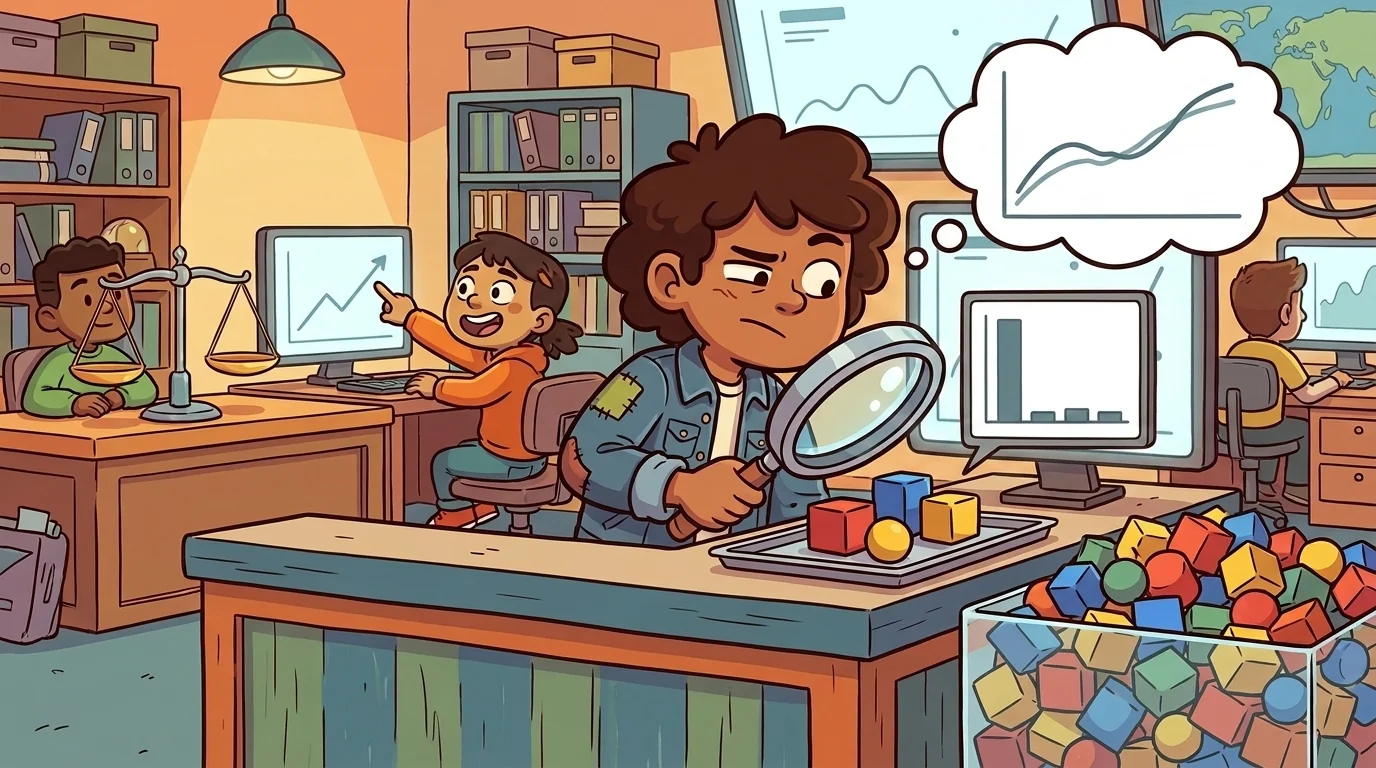
Sample taught the first Advanced idea with a coin, not a chart.
"Flip a coin four times and you might get three heads," Sample said. "Does that prove the coin is unfair? Of course not — with only four flips, three heads is ordinary luck. But flip it a thousand times and get seven hundred heads, and now something's genuinely strange." Sample let that land. "That's the whole idea. With a small sample, luck can swing the result wildly — a couple of extra chance-clicks and one version looks like a winner. With a big sample, luck averages out and the true number shows through. Small samples are noisy; big samples are steady. The number doesn't change its nature — it just gets quieter as more data arrives."
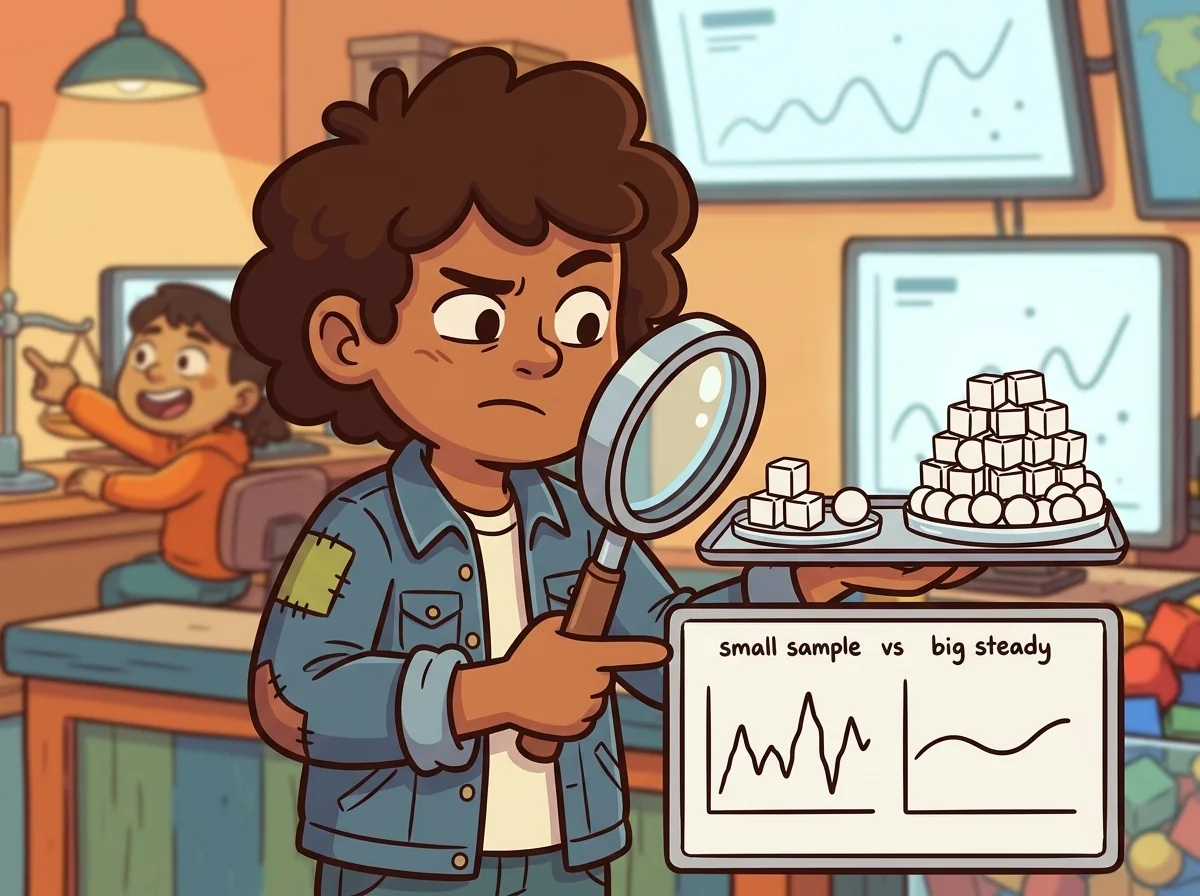
"This has a name worth keeping," Sample went on. "The law of large numbers. As your sample grows, your measured result gets closer and closer to the true rate underneath. Ten viewers tell you almost nothing. A hundred start to whisper. A thousand speak clearly. So the size of the sample isn't a boring detail — it's the difference between a rumour and a fact."
The young creators started asking a new question about every result they saw online: not just "what did it find?" but "how many people was that based on?" A shocking claim from a handful of people, they learned, was a rumour wearing a lab coat.
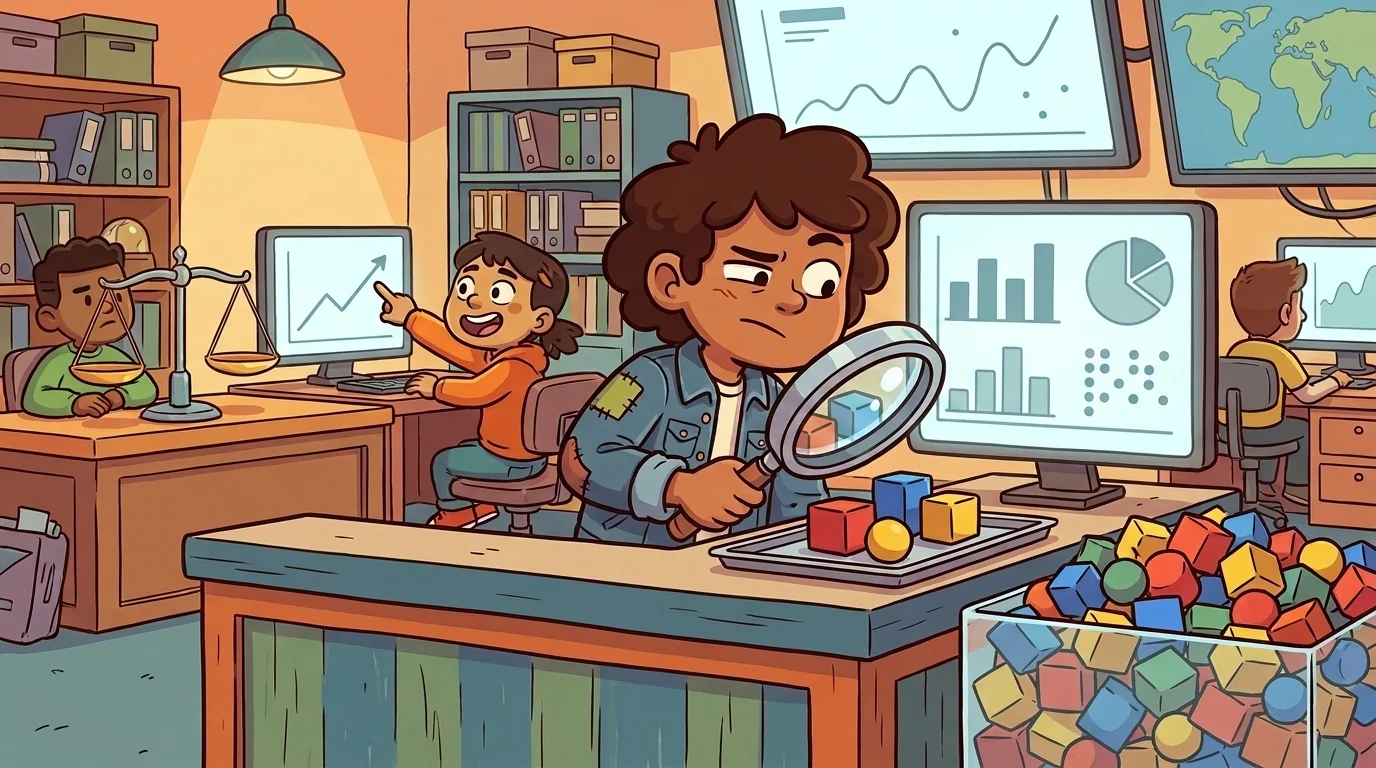
Then Sample taught the trap that catches the impatient — stopping early.
"Here is the sneaky one," Sample said. "Early in a test, the numbers swing the most, because the sample is smallest. So if you watch a test and stop it the instant it looks good, you are basically stopping on a lucky swing — you've chosen the noise. That's called stopping early, and it's a way of fooling yourself that feels like being decisive." Sample's patient eyes were firm. "Decide how much data is enough before you start. Then wait for it. A result you grabbed because it looked good early is a result you can't trust — you didn't measure the world, you measured your own impatience."

The test came when Devi's new intro seemed to be winning after a handful of viewers.
"It's ahead!" Devi said. "Can we call it?"
"How many viewers?" Sample asked. Devi checked — barely a dozen. "Then it's a spark, not a finding. A dozen people can swing on luck alone. Let it run until the number stops jumping around." Devi waited, and by the time the sample was large, the two intros were nearly tied — the early lead had been noise all along. "A few clicks can fool you," Sample said, satisfied. "Wait for enough before you believe a difference. Small samples are noisy; big samples are steady."
The SignalForge ensemble
Sample is part of SignalForge's distributed-narrative cast. Each character embodies a different curricular primitive; together they teach the full subject.
-

Chief
Trust is the real metric — read every statistic by asking 'does this build trust that lasts?', not 'did it spike today?' (the editor-in-chief & mentor)
-

Retention
A retention curve shows where viewers leave — the steepest drop marks the exact moment something went wrong, so the shape of the line tells you what to fix
-

Split
A fair test changes only ONE thing — keep everything the same except the single variable, or you can never tell which change caused the difference (A/B testing)
-

Curve
Percent growth compounds — growing by the same percent each week bends upward faster and faster, so a small steady rate can overtake a big one-time jump
-

Loop
A feedback loop amplifies whatever it rewards — learn what the algorithm measures and you can read the feed like a designed machine, not random weather
-

Bait
Outrage spreads fast but spends trust — rage-bait travels quickly, then burns credibility and collapses an audience; a number bought with anger is a debt (cautionary)
-

Base
Judge by the base rate, not the standout — for every viral hit you see, thousands of similar attempts failed and stayed invisible, so ask 'out of how many tries?'
-

Ledger
Trust is a ledger that builds slowly and crashes fast — many honest acts to earn it, one dishonest act to lose it; the math is not symmetric
-

Sponsor
Weigh return against cost — a deal is only worth it if what you gain exceeds what you give up, and the cost includes money AND trust (ROI / business math)