
Base
JUDGE BY THE BASE RATE, NOT THE STANDOUT — for every viral success you see, huge numbers of similar attempts failed and stayed invisible, so a single dazzling example is weak evidence; ask "out of how many tries?" before believing a pattern
Loading audio…
Press play to listen along. The line being read lights up as you go.
Show full transcript
Loading transcript…

Base was the crew's quiet realist — the member who always remembered the videos nobody remembered. When everyone was dazzled by a single viral hit, Base gently asked the question that put it in perspective: "Out of how many tries?"
"We only ever see the winners," Base said. "The feed shows us the one video that blew up. It never shows us the thousand almost-identical videos that flopped and vanished. And that missing thousand changes everything."

A rival creator went viral with a wild stunt, and the crew got excited. "That's the formula! Do a wild stunt, go viral!" someone said, ready to copy it.
Base pulled up a wider view. "Let's count all the wild-stunt videos posted this month, not just the one that won." They looked. There were thousands. Almost every single one had flopped — ignored, unwatched, forgotten. Exactly one had gone viral.
"So the real pattern isn't 'wild stunt equals viral,'" Base said. "The real pattern is 'wild stunt equals almost-always-flop, once-in-a-thousand-viral.' We're only fooled because the feed hides the thousand flops and spotlights the one hit."

Base called this the base rate — the true, boring background number that tells you how often something actually happens, counting the failures too. "The one viral video is a standout," Base said. "A standout feels like proof. But a standout is weak evidence, because standouts are exactly what you'd expect to see by luck even if the method doesn't work. Judge by the base rate — how it does on average, across all the tries — not by the shiniest single example."
This had a name in Base's notebook, too: survivorship. We study the survivors — the videos that "survived" into our feed — and forget the vast graveyard of ones that didn't. The survivors look like a pattern. The graveyard is the real story.
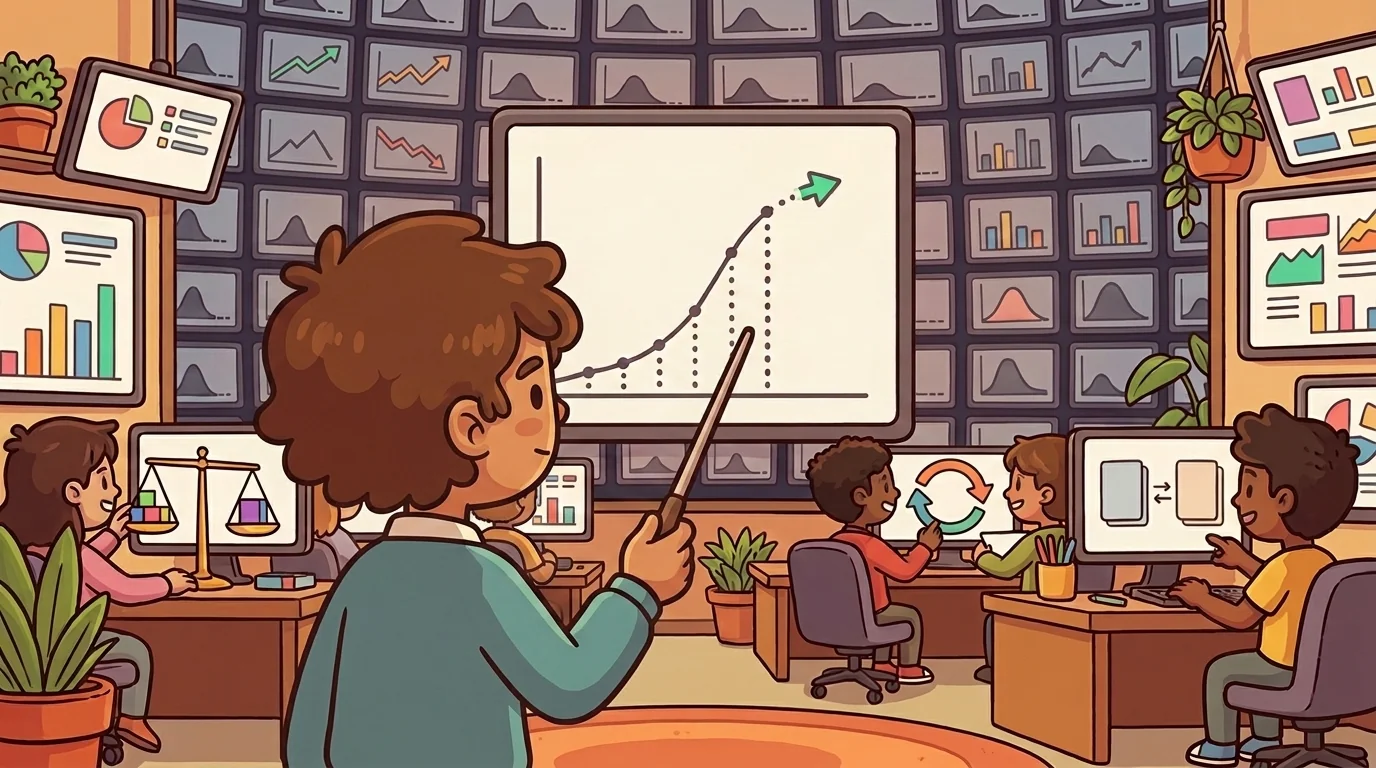
Base taught the crew to defend against the trap with one question, asked before copying any dazzling success: out of how many attempts? One creator got rich from a lucky viral hit — out of how many creators who tried the same and got nothing? A method "worked" once — out of how many times it quietly failed? The moment you count the invisible attempts, most "secret formulas" turn out to be lottery tickets.
"It's not that success is fake," Base said. "It's that one success, with the failures hidden, tells you almost nothing about what will happen to you."
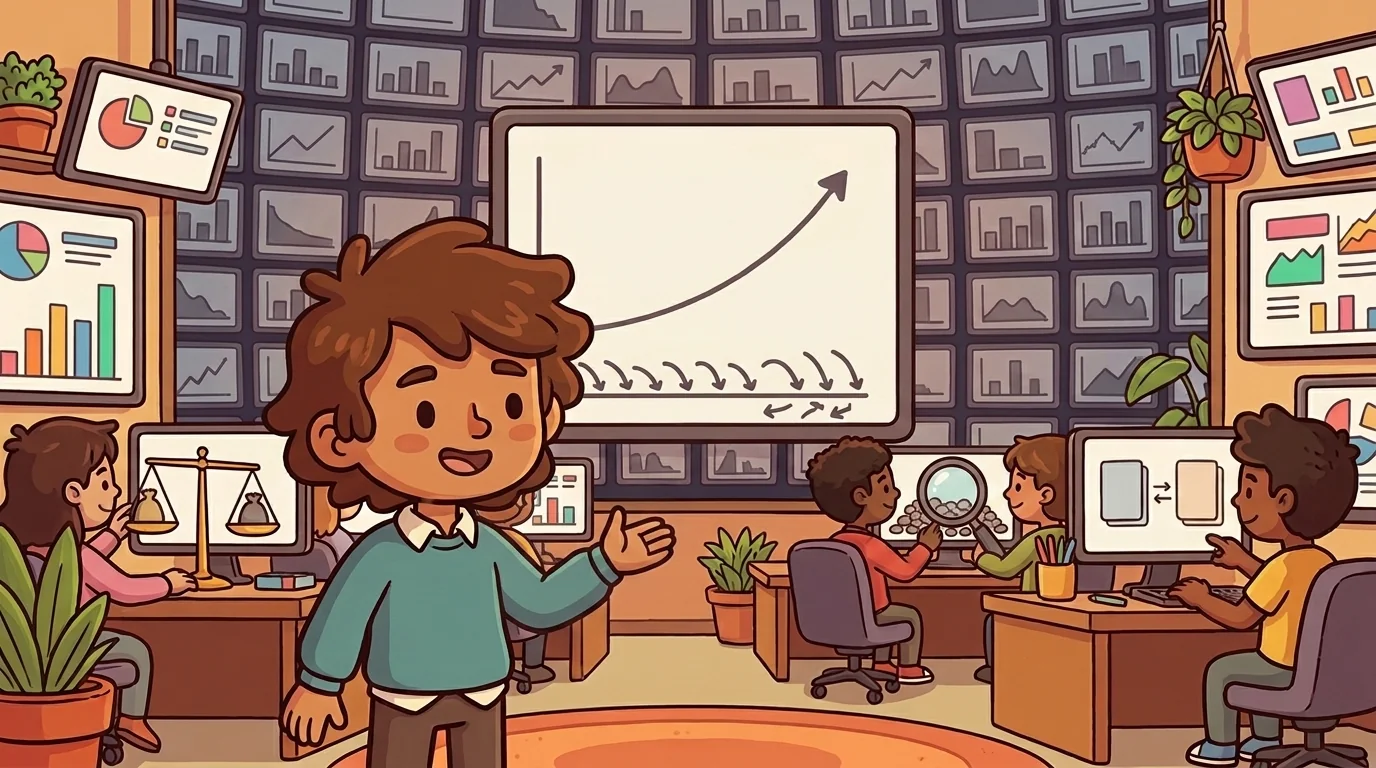
So the crew stopped chasing every viral standout. When a dazzling result tempted them to copy it, they counted the tries first — and usually found a graveyard of flops behind the one shining survivor. They kept building the steady way, judging their choices by how they did on average, not by the rare lucky spike. It made them harder to fool — by others, and by their own hopeful eyes.
"So we ignore success stories?" a crew member asked.
"We complete them," Base said. "For every viral hit you see, thousands you never saw flopped. Ask 'out of how many?' before you believe the pattern. The invisible failures are the missing half of every success story."
The SignalForge ensemble
Base is part of SignalForge's distributed-narrative cast. Each character embodies a different curricular primitive; together they teach the full subject.
-

Chief
Trust is the real metric — read every statistic by asking 'does this build trust that lasts?', not 'did it spike today?' (the editor-in-chief & mentor)
-

Retention
A retention curve shows where viewers leave — the steepest drop marks the exact moment something went wrong, so the shape of the line tells you what to fix
-

Sample
A small sample is noisy — a result from a few viewers can swing by luck; wait for enough data before you trust a difference
-

Split
A fair test changes only ONE thing — keep everything the same except the single variable, or you can never tell which change caused the difference (A/B testing)
-

Curve
Percent growth compounds — growing by the same percent each week bends upward faster and faster, so a small steady rate can overtake a big one-time jump
-

Loop
A feedback loop amplifies whatever it rewards — learn what the algorithm measures and you can read the feed like a designed machine, not random weather
-

Bait
Outrage spreads fast but spends trust — rage-bait travels quickly, then burns credibility and collapses an audience; a number bought with anger is a debt (cautionary)
-

Ledger
Trust is a ledger that builds slowly and crashes fast — many honest acts to earn it, one dishonest act to lose it; the math is not symmetric
-

Sponsor
Weigh return against cost — a deal is only worth it if what you gain exceeds what you give up, and the cost includes money AND trust (ROI / business math)
