Bait
OUTRAGE SPREADS FAST BUT SPENDS TRUST — content designed to make people angry travels quickly through the loop, yet it burns credibility, invites strikes, and collapses an audience; a fast number bought with anger is a debt, not a win
Loading audio…
Press play to listen along. The line being read lights up as you go.
Show full transcript
Loading transcript…
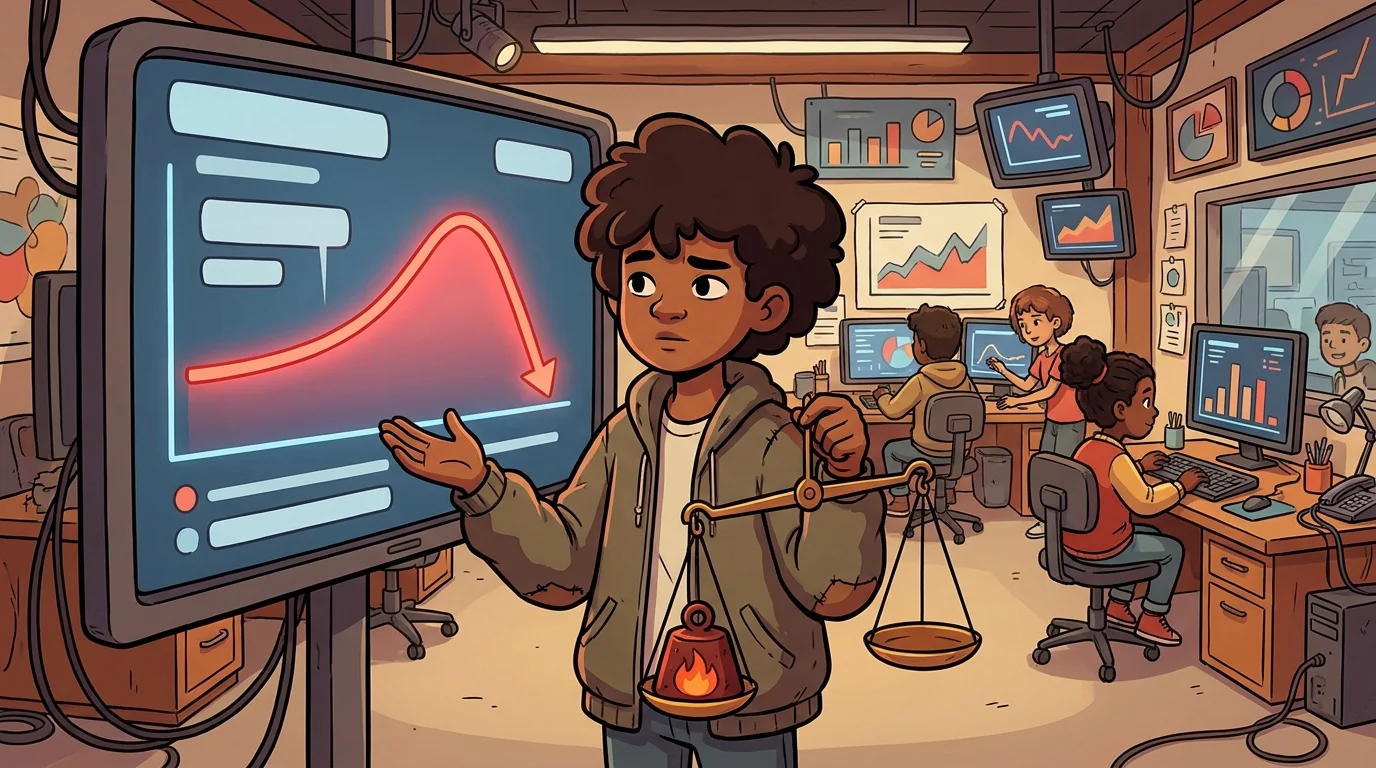
Bait was the crew member who had once fallen for the trap — and now warned everyone else away from it. Bait understood outrage better than anyone, precisely because Bait had learned, the hard way, what it truly costs.
"Anger travels fast," Bait said quietly. "Faster than kindness, faster than facts. The loop loves it. But a number you buy with outrage is a number you're going to have to pay back."

Bait told the crew the story. Once, chasing a fast spike, Bait had posted a video designed to make people furious — a misleading title, a half-truth framed to enrage. It worked, in the worst way. The video exploded. Comments filled with fighting. The reaction-loop (Loop's machine) shoved it everywhere. Overnight, the biggest numbers Bait had ever seen.
"For about a day," Bait said, "I thought I'd cracked the secret."

Then the bill arrived. Viewers who felt tricked marked the video as misleading. The platform, seeing the complaints, gave the channel a strike — a warning that pushed every future video to fewer people. Sponsors read the angry comments and quietly walked away. And the audience Bait actually cared about — the people who came back because they trusted the channel — began to leave, one by one, because a channel that had lied to make them mad wasn't one they wanted in their day.
"The spike lasted a day," Bait said. "The damage lasted months. I'd spent something I couldn't just re-earn by posting again: I'd spent trust."
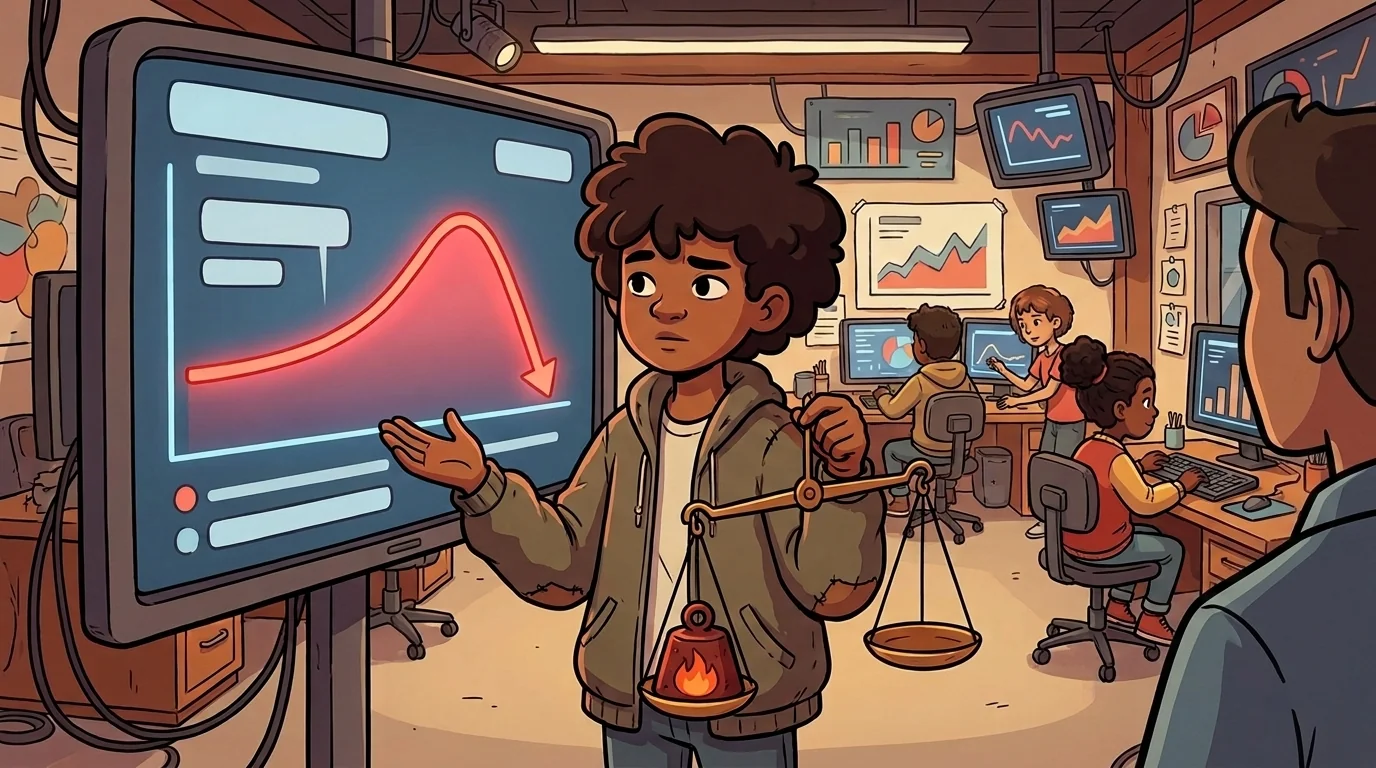
Bait drew the outrage trap for the crew so they'd recognize it. Step one: outrage spreads fast — the loop amplifies anger because anger gets fast reactions. Step two: the fast number feels like winning. Step three: the truth catches up — strikes, lost sponsors, an audience that no longer believes you. "The reach is a loan at a terrible interest rate," Bait said. "You get the number now. You pay it back, with interest, in trust — the one currency you can't refill on demand."
This was the honest part Bait insisted on: rage-bait isn't wrong just because it's mean. It's a bad strategy even on its own selfish terms. It self-destructs. It eats the very audience it's trying to grow.

So Bait became the crew's early-warning system. When a fast, angry idea tempted them — "this'll go viral, everyone will hate it and share it!" — Bait asked the one question that stopped them cold: and then what? And then the strike. And then the sponsors leave. And then the trusting audience, gone. The fast number, unmasked as a debt.
The crew still grew — steadily, honestly, the Chief's way. Slower some weeks. But nothing they built ever collapsed under them, because they never borrowed against their trust.
"So outrage never works?" a crew member asked.
"It 'works' the way a match works," Bait said. "Bright, fast, and then there's nothing left to burn. Rage-bait spreads fast but burns trust — the anger travels, then the audience leaves. A number bought with outrage is a debt, not a win. I paid it once. I'd rather warn you than watch you pay it too."
The SignalForge ensemble
Bait is part of SignalForge's distributed-narrative cast. Each character embodies a different curricular primitive; together they teach the full subject.
-

Chief
Trust is the real metric — read every statistic by asking 'does this build trust that lasts?', not 'did it spike today?' (the editor-in-chief & mentor)
-

Retention
A retention curve shows where viewers leave — the steepest drop marks the exact moment something went wrong, so the shape of the line tells you what to fix
-

Sample
A small sample is noisy — a result from a few viewers can swing by luck; wait for enough data before you trust a difference
-

Split
A fair test changes only ONE thing — keep everything the same except the single variable, or you can never tell which change caused the difference (A/B testing)
-

Curve
Percent growth compounds — growing by the same percent each week bends upward faster and faster, so a small steady rate can overtake a big one-time jump
-

Loop
A feedback loop amplifies whatever it rewards — learn what the algorithm measures and you can read the feed like a designed machine, not random weather
-

Base
Judge by the base rate, not the standout — for every viral hit you see, thousands of similar attempts failed and stayed invisible, so ask 'out of how many tries?'
-

Ledger
Trust is a ledger that builds slowly and crashes fast — many honest acts to earn it, one dishonest act to lose it; the math is not symmetric
-

Sponsor
Weigh return against cost — a deal is only worth it if what you gain exceeds what you give up, and the cost includes money AND trust (ROI / business math)