Retention
A RETENTION CURVE SHOWS WHERE PEOPLE LEAVE — read the line graph left-to-right and the steepest drop marks the exact moment something went wrong, so the shape of the line tells you what to fix
Loading audio…
Press play to listen along. The line being read lights up as you go.
Show full transcript
Loading transcript…
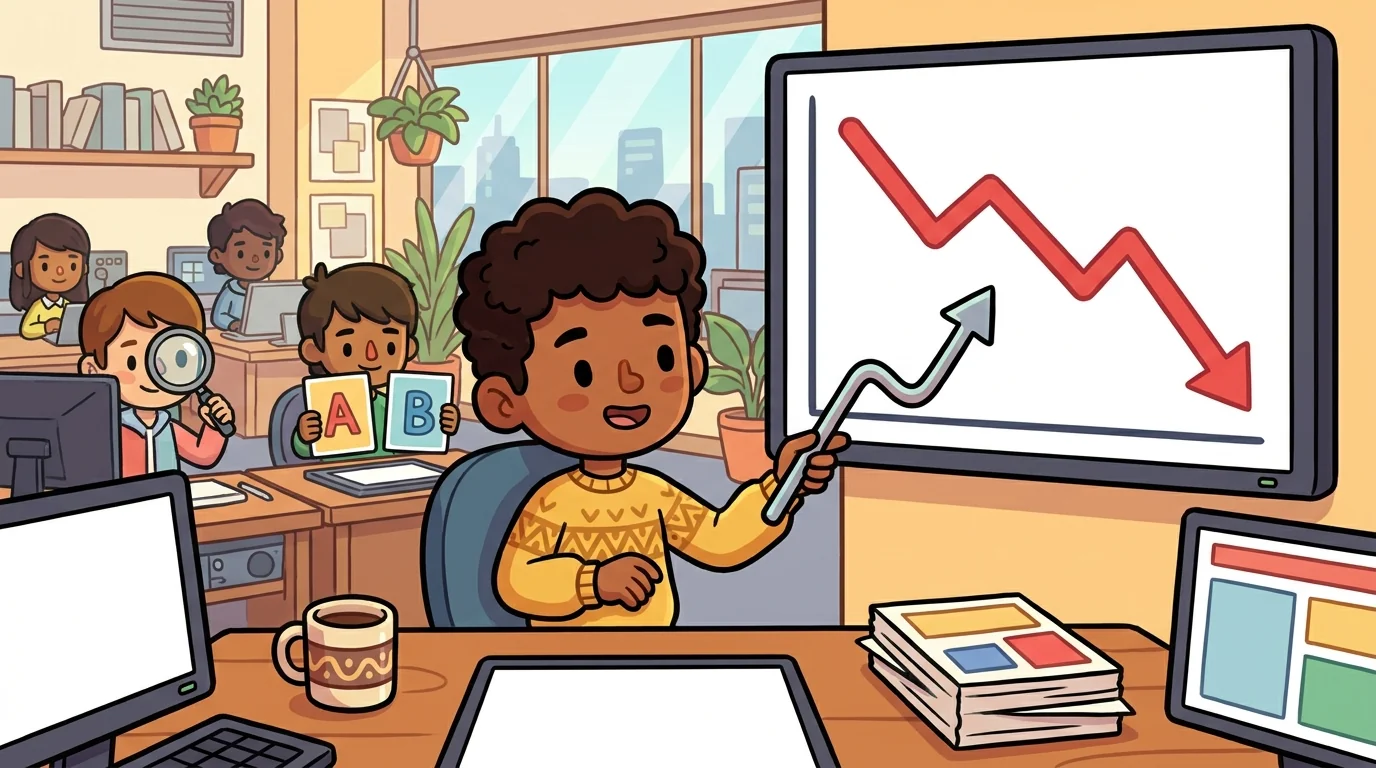
Retention was the crew member who watched the shape of things. While others counted total views, Retention studied a single quiet graph called the retention curve — a line that started tall on the left and told the story of every viewer who slipped away.
"A view just means someone pressed play," Retention explained. "This line tells me something better: it tells me when they left."

The crew pulled up a video that had disappointed everyone. Lots of clicks, but somehow it had flopped. "It's just a bad video," someone grumbled.
"Maybe," said Retention. "But let's read the line first." They traced the retention curve left to right. For the first ten seconds it was almost flat and high — nearly everyone was still watching. Then, at the fifteen-second mark, the line fell off a cliff. A steep, sudden drop. After that it flattened again, low, and coasted to the end.
"There," said Retention, tapping the cliff. "The steepest drop is the moment people left. It isn't a bad video. It's a bad fifteenth second."
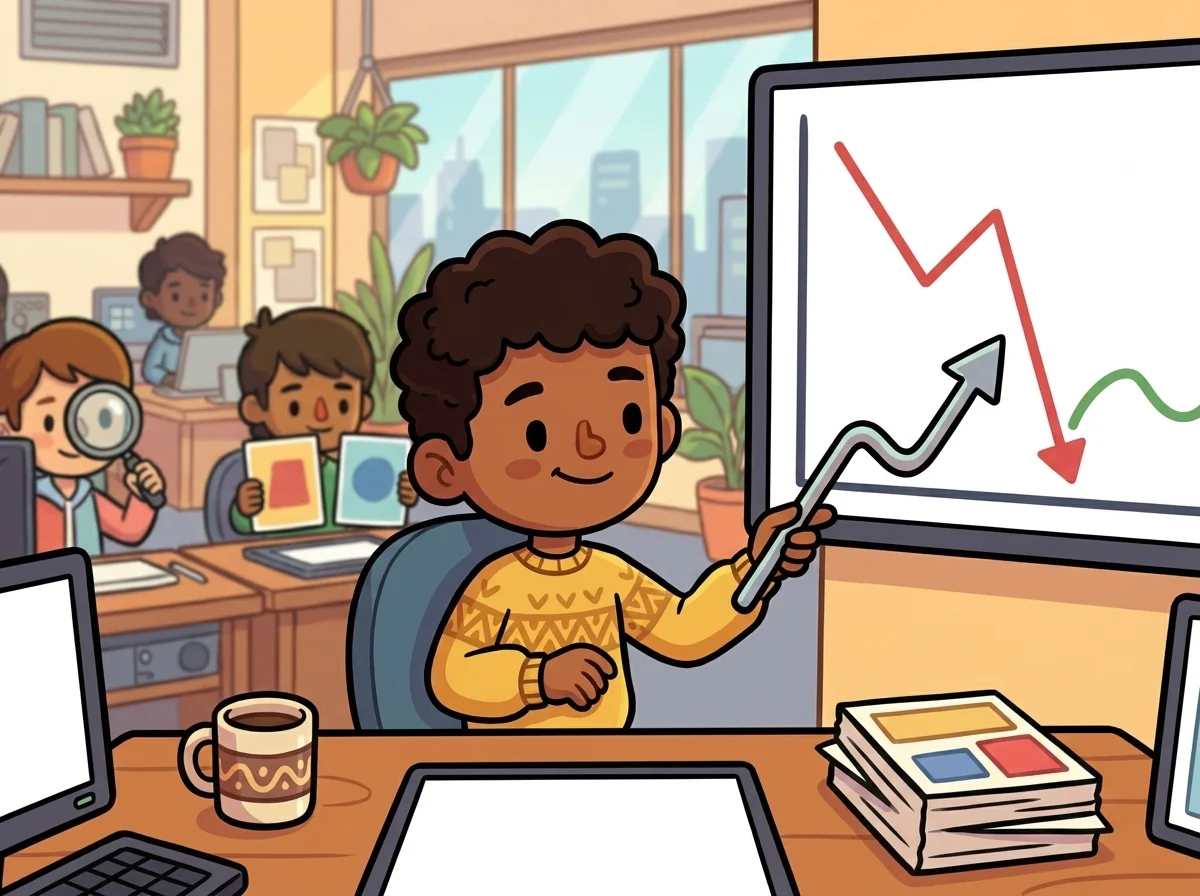
They watched that exact moment together. At fifteen seconds, the video had a long, slow, silent title card — ten dull seconds of nothing before the good part. The curve's cliff lined up perfectly with the boring gap.
Retention smiled. "The line didn't just tell us that people left. It told us where. And where tells us why. A flat, high line means people are hooked. A slow slide means they're slowly bored. A cliff means something specific scared them off — right at that second."
The crew had spent all morning guessing reasons. The graph had held the answer the whole time.
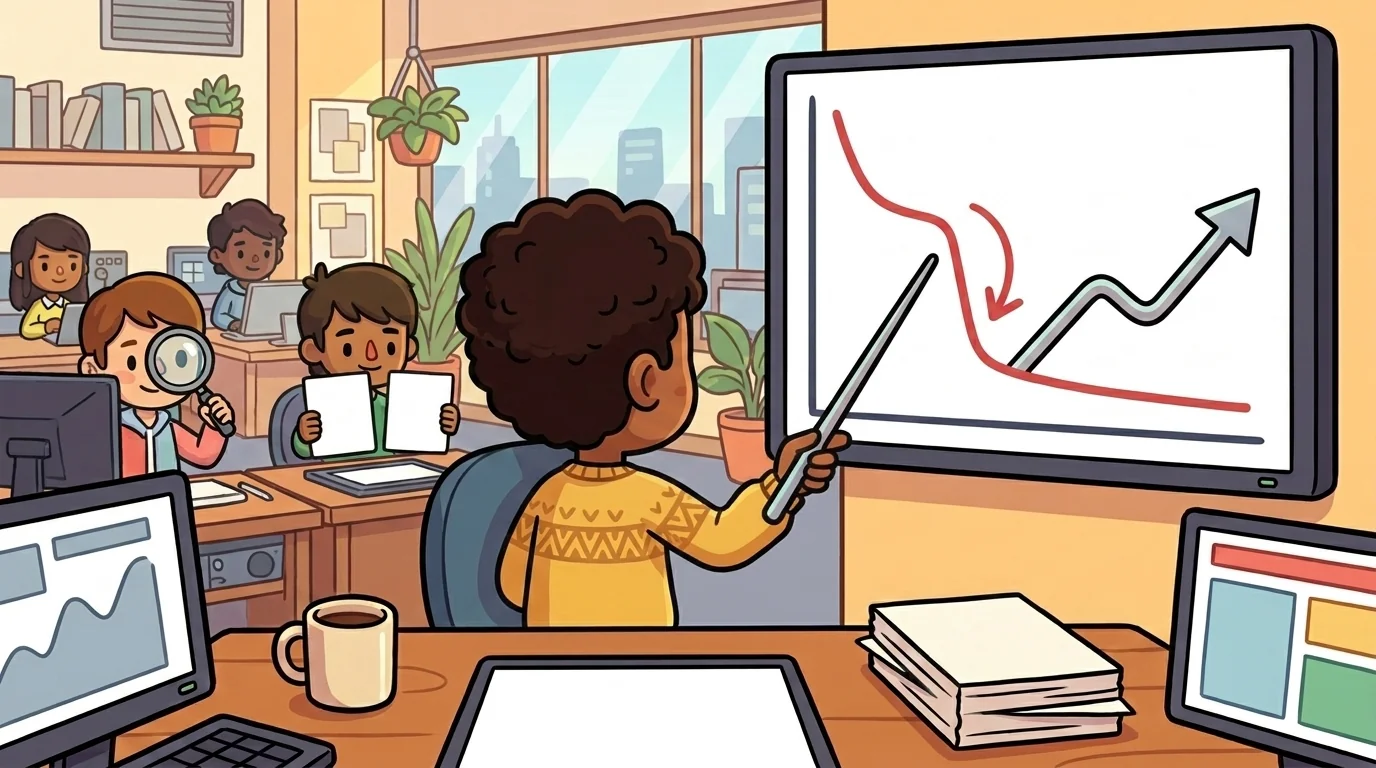
Retention taught the crew to read a curve like a sentence. A tall start meant a strong opening. A gentle downhill was normal — not everyone finishes anything. But a sudden cliff was a clue with an address: go to that exact second and watch what happens there. Fix that one spot, and the whole line could change.
"Don't guess why something failed," Retention said. "Guessing is just your opinion wearing a costume. The curve is evidence. Read the line left to right, find the steepest drop, and go look at that exact moment. That's not a hunch. That's where the room went quiet."

They recut the video, replacing the dull title card with a quick, bright hook. When they published again, Retention pulled up the new curve. The cliff at fifteen seconds was gone — now the line eased down gently, like a hill instead of a canyon. More people reached the good part. More people finished. And they had fixed it not by arguing, but by reading a shape.
"How did you know exactly what to fix?" a crew member asked.
"Because I read the line left to right," Retention said, "and the steepest drop is the moment people left. That's always exactly where to look."
The SignalForge ensemble
Retention is part of SignalForge's distributed-narrative cast. Each character embodies a different curricular primitive; together they teach the full subject.
-

Chief
Trust is the real metric — read every statistic by asking 'does this build trust that lasts?', not 'did it spike today?' (the editor-in-chief & mentor)
-

Sample
A small sample is noisy — a result from a few viewers can swing by luck; wait for enough data before you trust a difference
-

Split
A fair test changes only ONE thing — keep everything the same except the single variable, or you can never tell which change caused the difference (A/B testing)
-

Curve
Percent growth compounds — growing by the same percent each week bends upward faster and faster, so a small steady rate can overtake a big one-time jump
-

Loop
A feedback loop amplifies whatever it rewards — learn what the algorithm measures and you can read the feed like a designed machine, not random weather
-

Bait
Outrage spreads fast but spends trust — rage-bait travels quickly, then burns credibility and collapses an audience; a number bought with anger is a debt (cautionary)
-

Base
Judge by the base rate, not the standout — for every viral hit you see, thousands of similar attempts failed and stayed invisible, so ask 'out of how many tries?'
-

Ledger
Trust is a ledger that builds slowly and crashes fast — many honest acts to earn it, one dishonest act to lose it; the math is not symmetric
-

Sponsor
Weigh return against cost — a deal is only worth it if what you gain exceeds what you give up, and the cost includes money AND trust (ROI / business math)