
Sponsor
WEIGH RETURN AGAINST COST — a deal is worth it only if what you gain exceeds what you give up, and the true cost includes money AND trust AND the opportunity you skip; a big payment that spends more credibility than it returns is a losing deal (net value, not gross)
Loading audio…
Press play to listen along. The line being read lights up as you go.
Show full transcript
Loading transcript…

Sponsor was the crew's negotiator — shrewd, fair, and completely immune to a big number waved in its face. When a young creator ran in thrilled about a sponsorship offer with an impressive payment attached, Sponsor didn't celebrate. Sponsor picked up a pencil.
"A big payment is the gross," Sponsor said. "Nobody gets rich on gross. What matters is the net — what's left after you subtract everything the deal actually costs you. Let's do the real math before you say yes."

Sponsor taught the first Advanced idea: return is worth nothing until you subtract cost.
"Every deal has two sides," Sponsor said. "What you get — the return. And what you give up — the cost. The offer only shows you the shiny return, because that's what makes you sign. Your job is to fill in the cost side yourself, honestly." Sponsor drew a line down the middle. "Return on one side, cost on the other. If return is bigger, it might be a deal. If cost is bigger, it's a loss dressed up as a win. A headline payment tells you the return and hides the cost — so a number that looks huge can still be a losing trade once you fill in the other column."
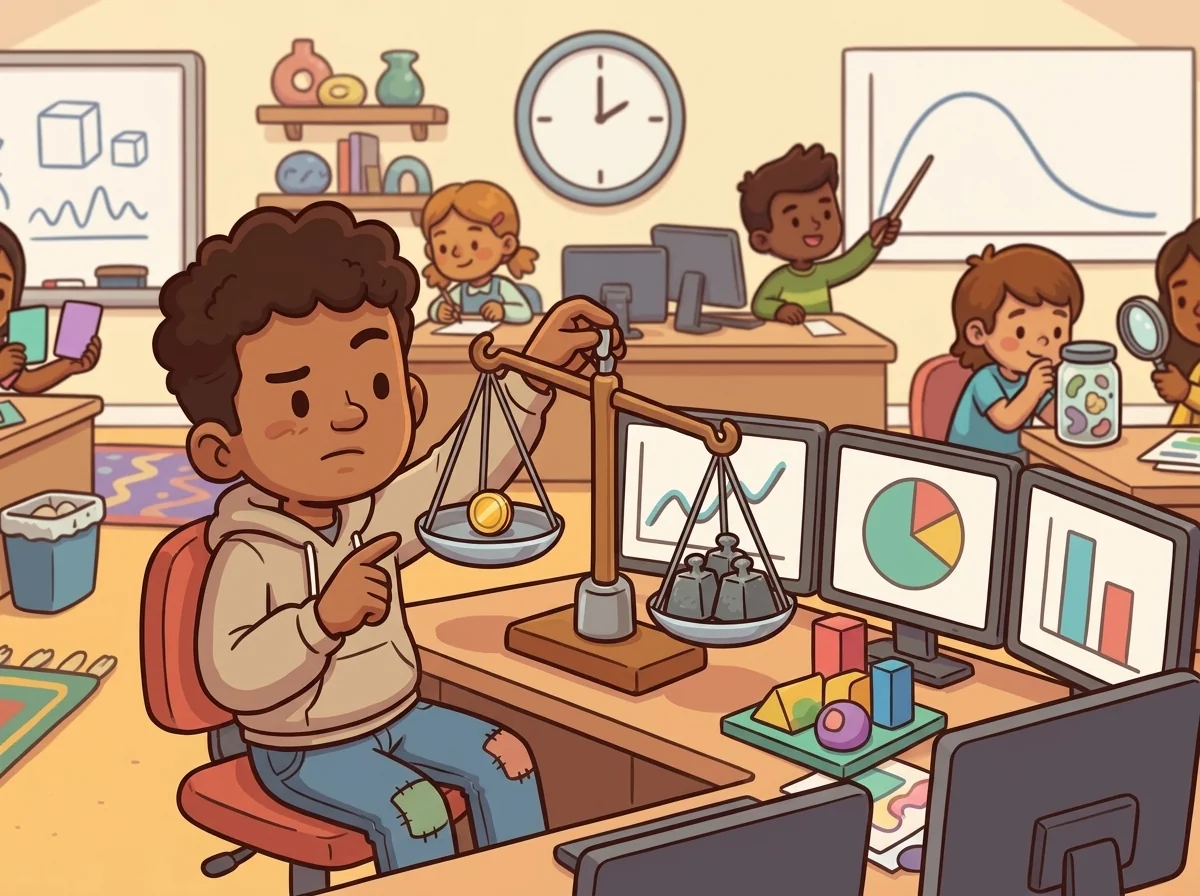
"And here's the cost most people forget," Sponsor said. "It isn't only money. If promoting this product would make your audience trust you less — if it's junk, or misleading, or not something you'd honestly recommend — then the deal costs you trust, and you heard Ledger: trust is the account you can't easily refill. So the true cost column has money-costs and trust-costs. A payment that puts cash in one pocket while quietly draining credibility from the other can leave you poorer than before you took it." Sponsor tapped the trust line. "Always price the trust, not just the dollars."

Then Sponsor taught the subtlest cost of all — opportunity cost.
"There's one more line almost everyone skips," Sponsor said. "When you say yes to this deal, you say no to whatever else you'd have done with that time and that spot. The best thing you gave up is a real cost of saying yes — economists call it opportunity cost. A mediocre deal isn't just mediocre; it's mediocre plus the great thing it crowded out. So the full question isn't 'is this deal good?' It's 'is this deal better than the best thing I'd do instead?' That's a higher bar, and it's the honest one."

The test came when Devi was dazzled by a large offer to promote a product Devi didn't actually believe in.
"But the payment is huge," Devi said.
"That's the gross. Fill in the other column," Sponsor said. Devi wrote it out: the cash, yes — but minus the trust lost promoting something shaky, minus the better project this would crowd out. The net turned negative. "Weigh what you gain against what it costs — in money and trust," Sponsor said, shrewd and fair. "A big payment that spends more than it returns is a losing deal. Never sign the gross. Always do the net."
The SignalForge ensemble
Sponsor is part of SignalForge's distributed-narrative cast. Each character embodies a different curricular primitive; together they teach the full subject.
-

Chief
Trust is the real metric — read every statistic by asking 'does this build trust that lasts?', not 'did it spike today?' (the editor-in-chief & mentor)
-

Retention
A retention curve shows where viewers leave — the steepest drop marks the exact moment something went wrong, so the shape of the line tells you what to fix
-

Sample
A small sample is noisy — a result from a few viewers can swing by luck; wait for enough data before you trust a difference
-

Split
A fair test changes only ONE thing — keep everything the same except the single variable, or you can never tell which change caused the difference (A/B testing)
-

Curve
Percent growth compounds — growing by the same percent each week bends upward faster and faster, so a small steady rate can overtake a big one-time jump
-

Loop
A feedback loop amplifies whatever it rewards — learn what the algorithm measures and you can read the feed like a designed machine, not random weather
-

Bait
Outrage spreads fast but spends trust — rage-bait travels quickly, then burns credibility and collapses an audience; a number bought with anger is a debt (cautionary)
-

Base
Judge by the base rate, not the standout — for every viral hit you see, thousands of similar attempts failed and stayed invisible, so ask 'out of how many tries?'
-

Ledger
Trust is a ledger that builds slowly and crashes fast — many honest acts to earn it, one dishonest act to lose it; the math is not symmetric