Pleat
Fold the extra on purpose, and a flat thing gets room to move
Loading audio…
Press play to listen along. The line being read lights up as you go.
Show full transcript
Loading transcript…
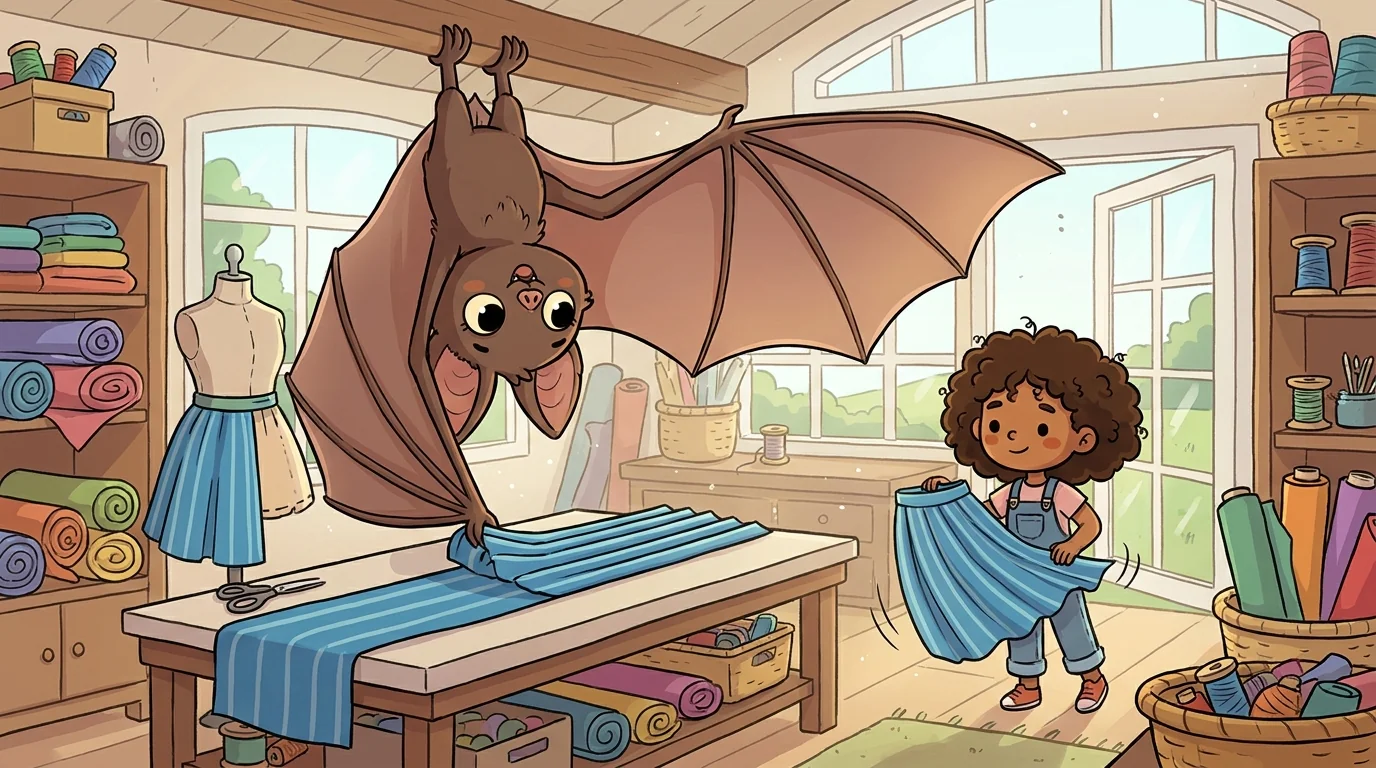
In a breezy corner of StyleForge, a small brown bat hung upside-down beside a skirt, folding a long straight strip of cloth into neat, even ridges.
Pleat had wide soft wings she folded and unfolded as she thought, and a strip of fabric far too long for the waistband it was headed to. Instead of cutting the extra off, she was folding it — tuck, tuck, tuck — into evenly spaced pleats, so a wide sweep of cloth gathered down to a narrow band.
"Isn't that too much fabric?" an apprentice asked. "Why not just cut it to size?"
"Because then it can't move," Pleat said, unfurling one wing to show how it opened. "A flat, tight thing has no give. Watch." She let the pleated cloth swing, and it bloomed open like a fan, then settled closed again. "The extra isn't waste. It's folded up, waiting. When the body walks or spins or sits, the folds open and give it room. Fold the extra on purpose, and a flat thing gets room to move."
The apprentice tried swishing it. "So the fullness is... hiding in the folds?"
"Stored in the folds," Pleat said, pleased. "Flat when it's still. Full when it needs to be. That's the trick of it — room that's there when you need it and tidy when you don't."
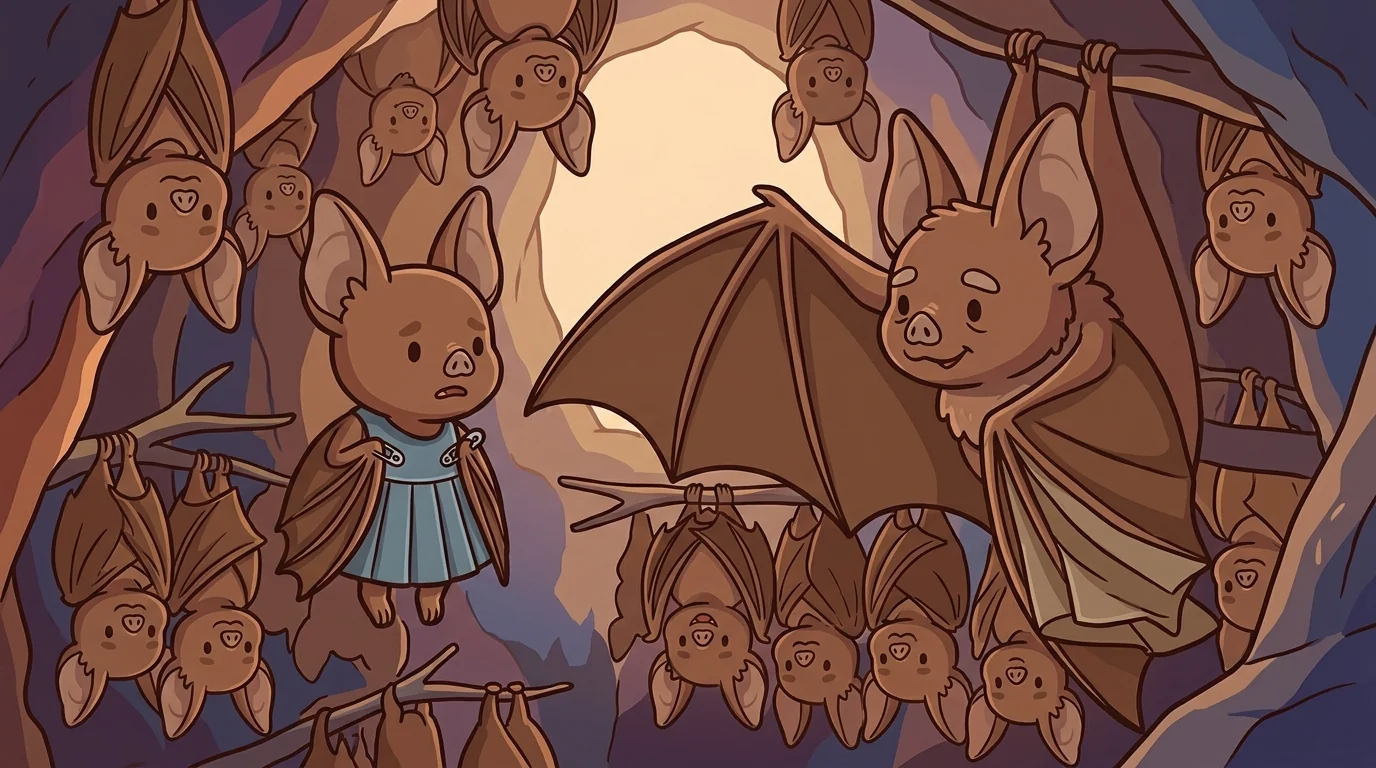
Pleat had learned about stored room when she was small.
She grew up in a crowded roost where everyone folded their wings tight to fit, and little Pleat, wanting to seem sleek and neat, used to pin her wings as flat and small as she could. But pinned flat, she couldn't stretch, couldn't turn, couldn't fly right — and she'd feel cramped and cross, sure that something about her simply didn't fit anywhere.
An old bat, wide-winged and easy, hung beside her one night. "You keep folding yourself down to nothing to fit the perch," she said. "But wings aren't meant to be pinned flat. They're meant to FOLD — packed away small, then opened wide when you need the sky." She spread her own great wings, then folded them into a neat parcel, then spread them again. "See? The bigness doesn't go away. It just waits, folded, until it's time."
Pleat stopped pinning herself flat. She let her wings fold the way wings fold — tidy when resting, wide when flying. The cramped, doesn't-fit feeling loosened into an easy, roomy calm. She could be neat AND have all her span, just by folding instead of cutting away.
"You were never too big," her elder said. "You just needed folds instead of pins."
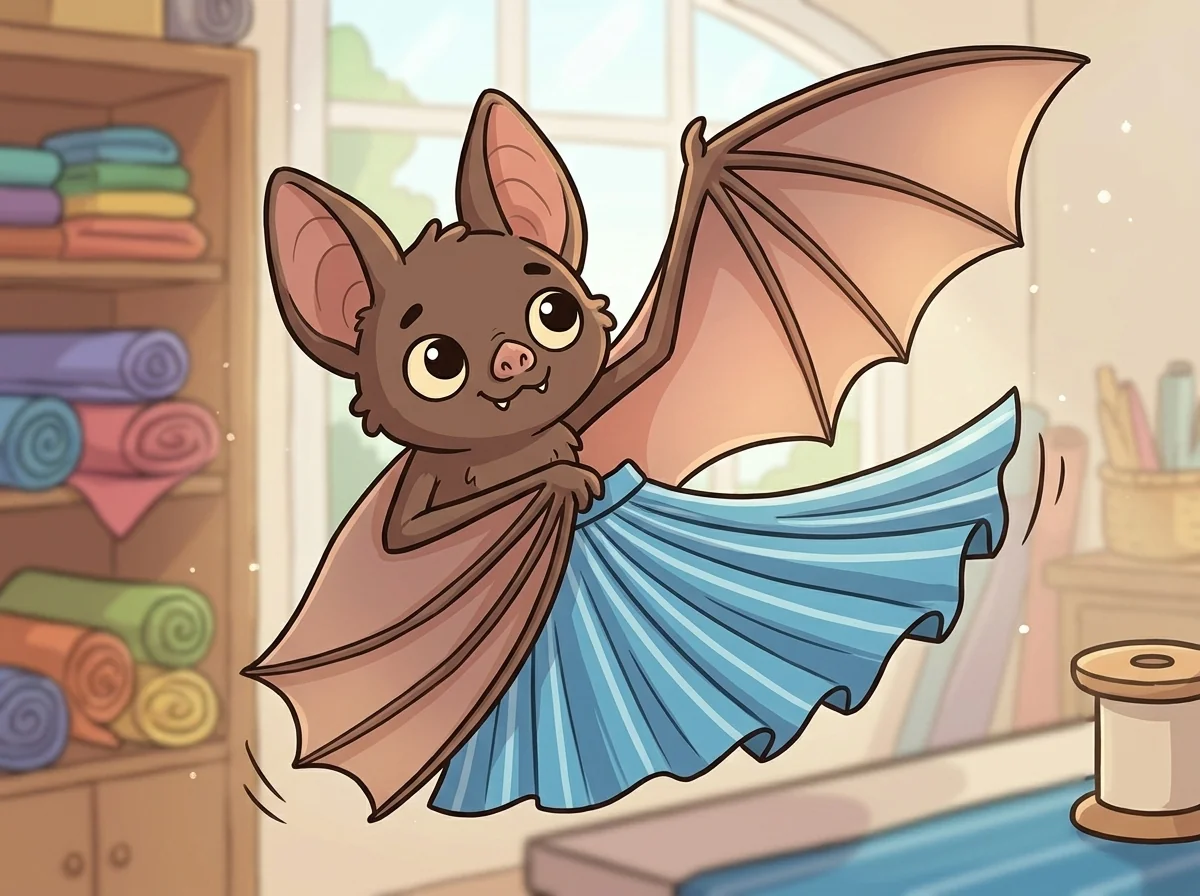
She flew up to StyleForge at twelve, because a place that made beautiful things ought to understand room to move.
Stitch, the old mentor, met her and asked one question. "Why would a maker ever use MORE cloth than the measurement?"
Pleat didn't give a speech. She took a strip three times too wide for a little waistband, and folded it into even knife-pleats until it fit the band exactly. Then she held it up and let it swing, and the folds opened into a full, easy sweep.
"You could have cut it narrow," Stitch said, testing.
"Narrow can't dance," Pleat said. "Narrow can't sit down comfortably. The extra isn't extra — it's folded up, ready to give room the moment the body needs it." She let it swing again. "Tidy when still. Full when moving."
Stitch watched the pleats bloom and settle. "You belong here," Stitch said.
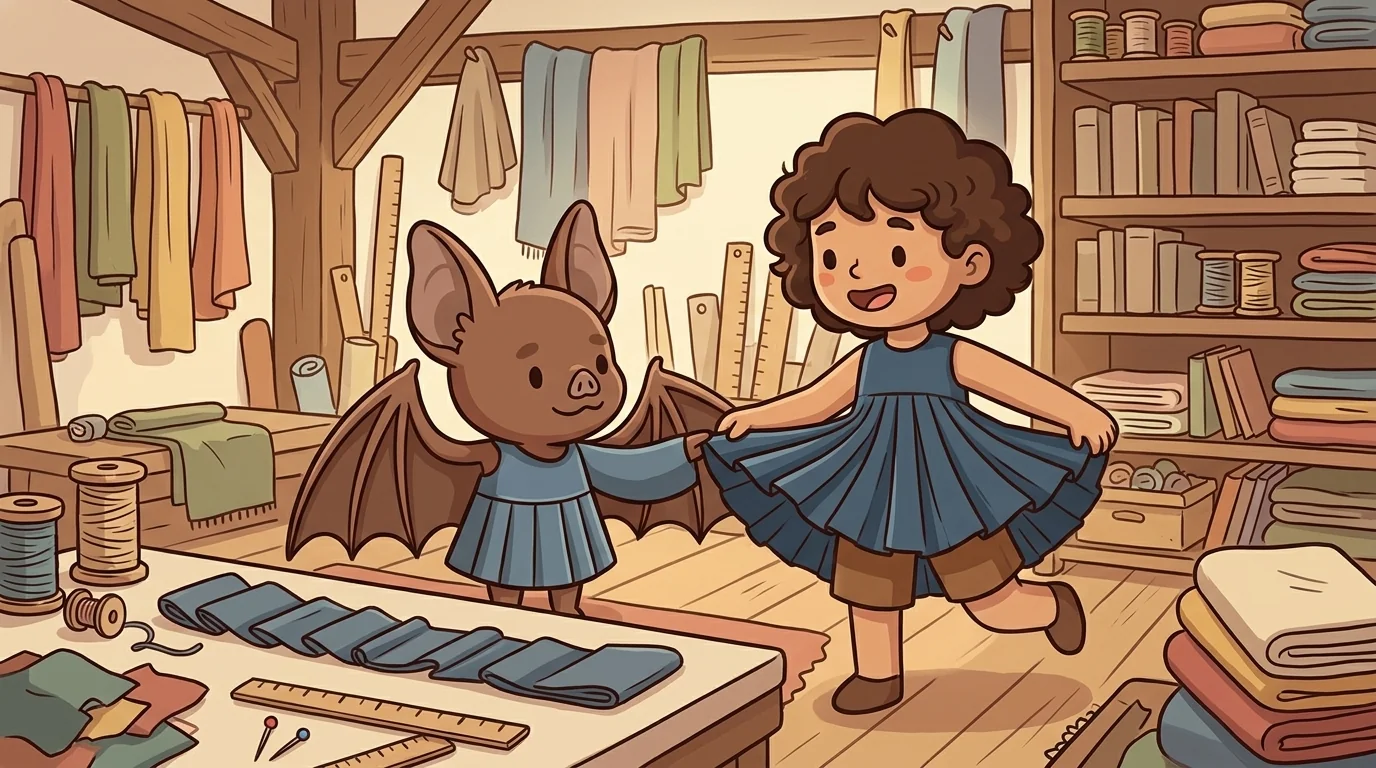
Pleat's workshop was full of cloth that swung, and one afternoon a kid came in tugging unhappily at a stiff, narrow skirt.
"I made it exactly to my measurement," they said. "Snug, like they said. But I can't sit cross-legged, I can't take a big step, I can't do anything. It's like the clothes are telling me to hold still and be small."
Pleat knew that pinned-flat feeling. She had lived it in the roost.
"Clothes should never tell a body to be small," Pleat said. "Let's give this some folds." She unpicked the narrow waist and pinned in a much wider strip, then folded it — tuck, tuck, tuck — into even pleats down to the same waistband. "Same waist. But now look." She helped the kid put it on. "Sit cross-legged."
The kid sat, braced for the pinch — and the pleats simply opened, giving all the room they needed. They stood; the folds closed neat again. They took a huge stride; the cloth bloomed and settled. "Oh," they said, spinning to watch it fan out. "I can MOVE. And it still looks tidy."
"That's the whole secret," Pleat said. "You don't make room by squeezing the body smaller. You make room by folding extra cloth that opens when the body asks. A garment should move when you move — never ask you to hold still."
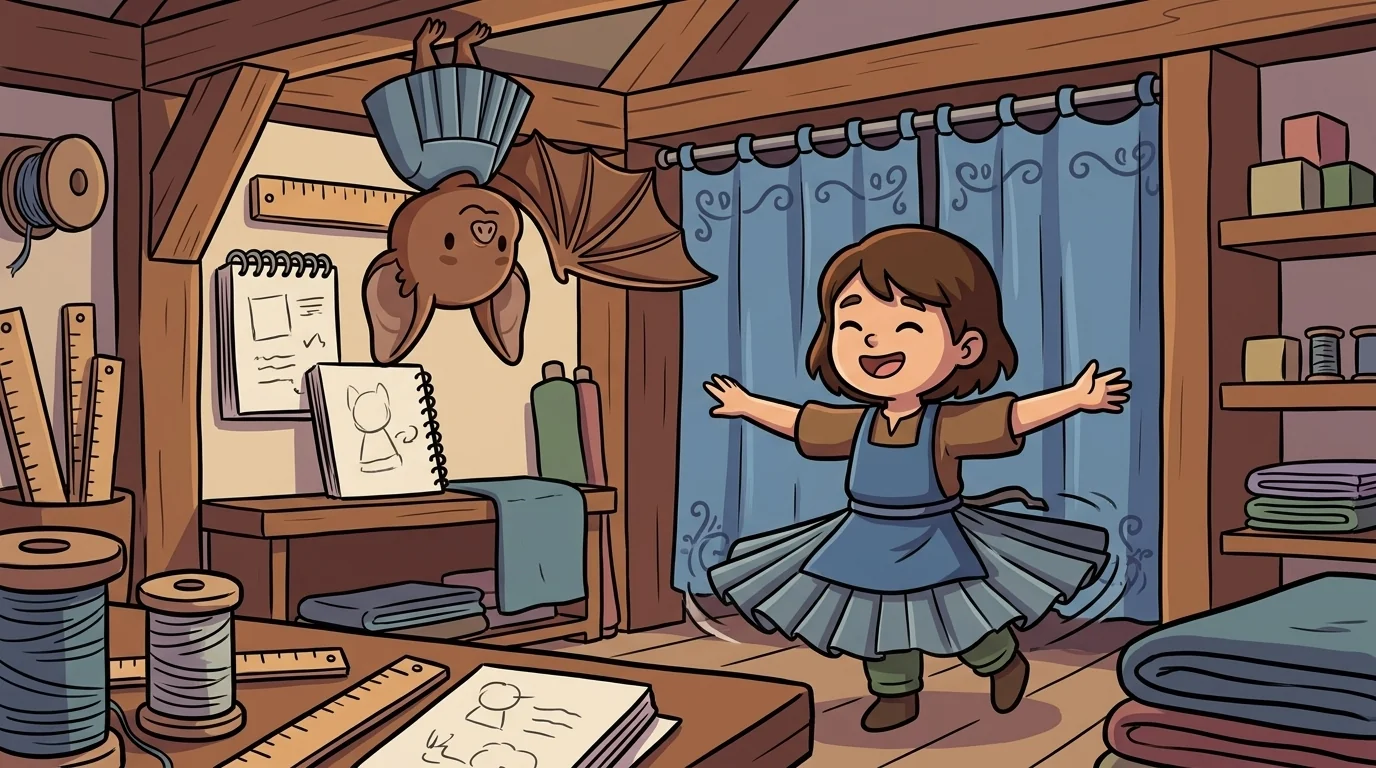
Later, when the workshop had gone quiet, the kid came back, twirling gently, the pleats whispering open and shut.
"When you use all that extra cloth," they said, "and everyone else is cutting theirs snug and sleek... doesn't it feel like you're doing it wrong? Like more is messy?"
Pleat thought of her elder's wings, folding wide then small.
"It used to feel that way," she said. "I pinned myself flat for years to look sleek, and I could barely move. But snug held me still, and folds set me free, and after a while I stopped trying to be small and started making room instead." She swished the skirt. "There's this easy, roomy feeling when your clothes open as you move — like they're on your side, like you can take up the space you need. That's not messy. That's a garment that lets you be a whole moving person."
The kid took a long, unpinched breath and did a slow spin, and Pleat watched the cramped, hold-still worry lift right out of them — the same easy, roomy way hers had, once, up in the crowded roost.
The StyleForge ensemble
Pleat is one of the friends in StyleForge. Each friend shows you one idea by how they act; meet them all and you have the whole subject.
-

Grain
Fabric + textile science — the thoughtful raccoon who treats fabric science as a vocabulary of natural-material decisions ('where does this thread come from? where does it go after? fabric has a beginning and an after')
-
Drape
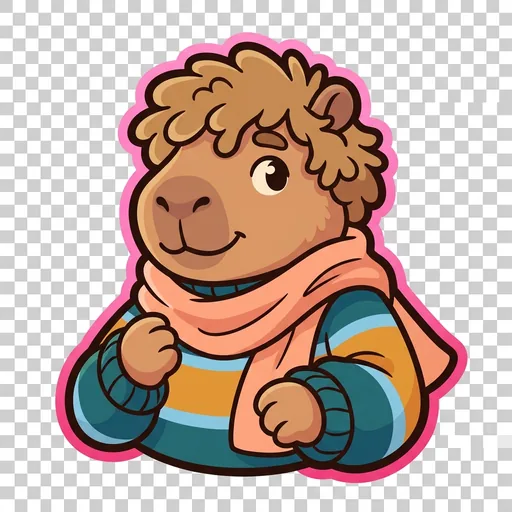
Concept silhouette + fit — the curvy capybara who knows clothes are made to fit people, not the other way round ('fabric meets body; body says what fabric wants to be — listen to both')
-
Cut
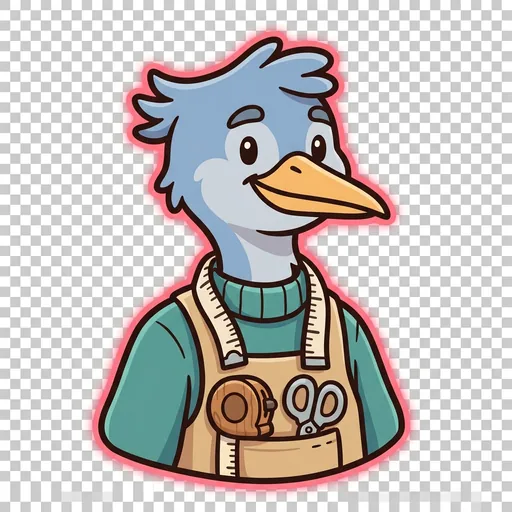
Pattern-making + construction — the precise heron who treats pattern-cutting as careful measure-twice-cut-once practice ('measure first, cut once — the pattern is the promise')
-
Dart
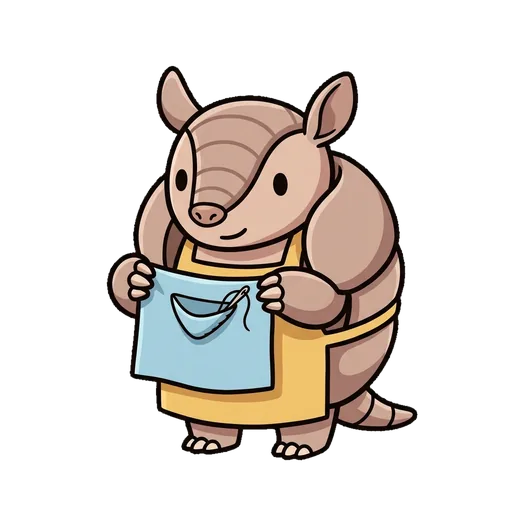
Shaping flat cloth to a real body's curve
-
Baste
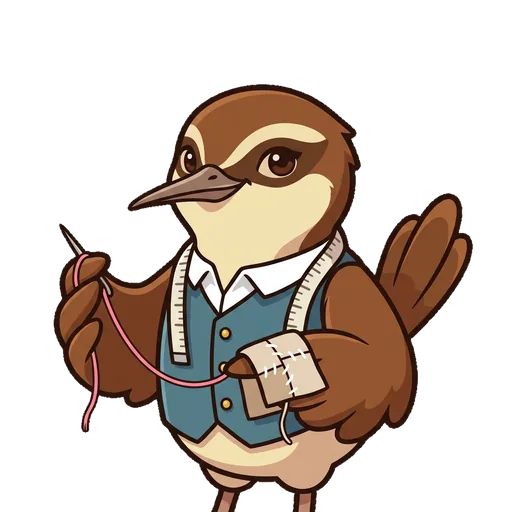
The temporary try-it-first stitch
-

Yoke
The structural anchor that carries and distributes
-

Dye
Color + natural dyeing
-
Trim
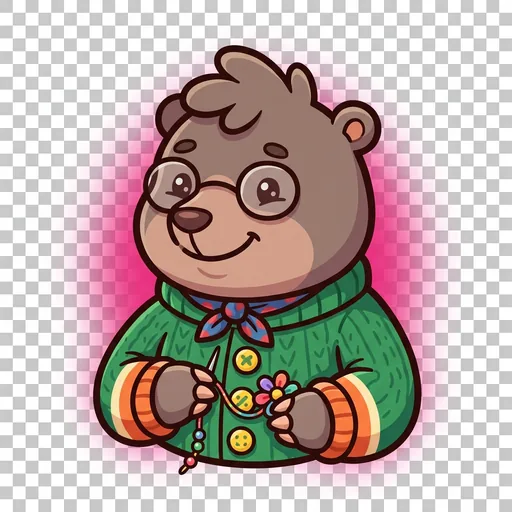
Finishing + embellishment — the steady mole who treats finishing as the small details that make a garment whole ('big shapes finish first, tiny details finish last — hem first, then bead')
-
Fold
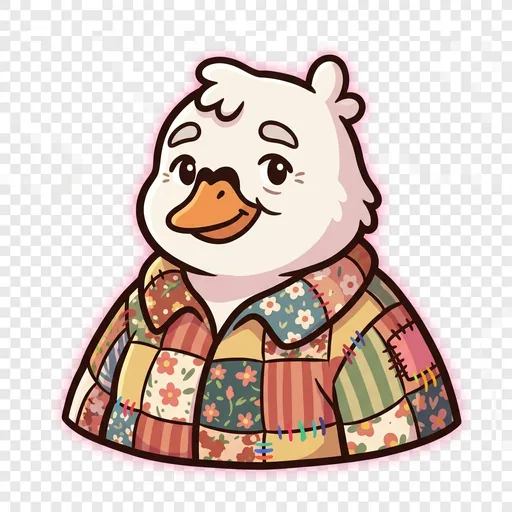
Sustainability + garment care — the wise old swan in a visibly-mended quilted coat who mends, keeps and honours where clothes come from ('make to last, mend to keep, fold to remember — fashion is a long story, not a short trend')