Almanac
Write down WHEN things happen
Loading audio…
Press play to listen along. The line being read lights up as you go.
Show full transcript
Loading transcript…
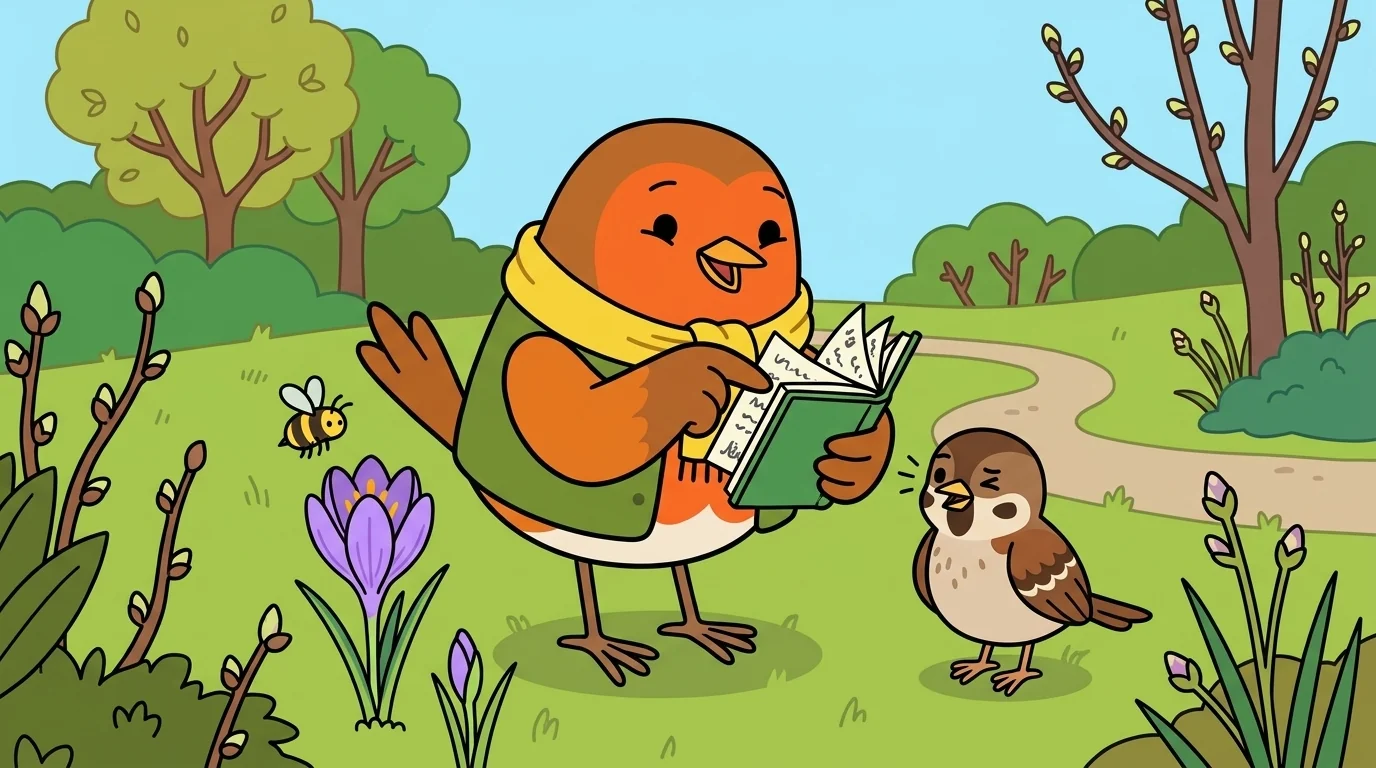
On the first warm morning of the year, a bright-breasted robin stood in the garden with a little dated notebook and did something nobody else thought to do: she wrote down the date.
Almanac was round and cheerful, with a notebook full of years, and she paid attention not just to WHAT happened in nature but exactly WHEN. "Today," she announced to a young sparrow, "the first crocus opened. The eighteenth day of this month." She flipped back through her notebook. "Last year the first crocus opened on the twenty-first. The year before, the twenty-fourth." She tapped the pages, pleased. "One date is nothing. But many years of dates — that's a calendar nature keeps, and it tells you things you could never see in a single day."
The sparrow blinked. "But it's just... a flower opening. Who cares what DAY?"
"The flower cares," Almanac said warmly. "The bee that needs it cares. And when you write down the WHEN, year after year — first bloom, first frog-song, first swallow back — the calendar of nature reveals itself. You start to see the great slow rhythm of the whole living world, one dated note at a time." She smiled. "Nature keeps a calendar. Almost nobody writes it down. I do."
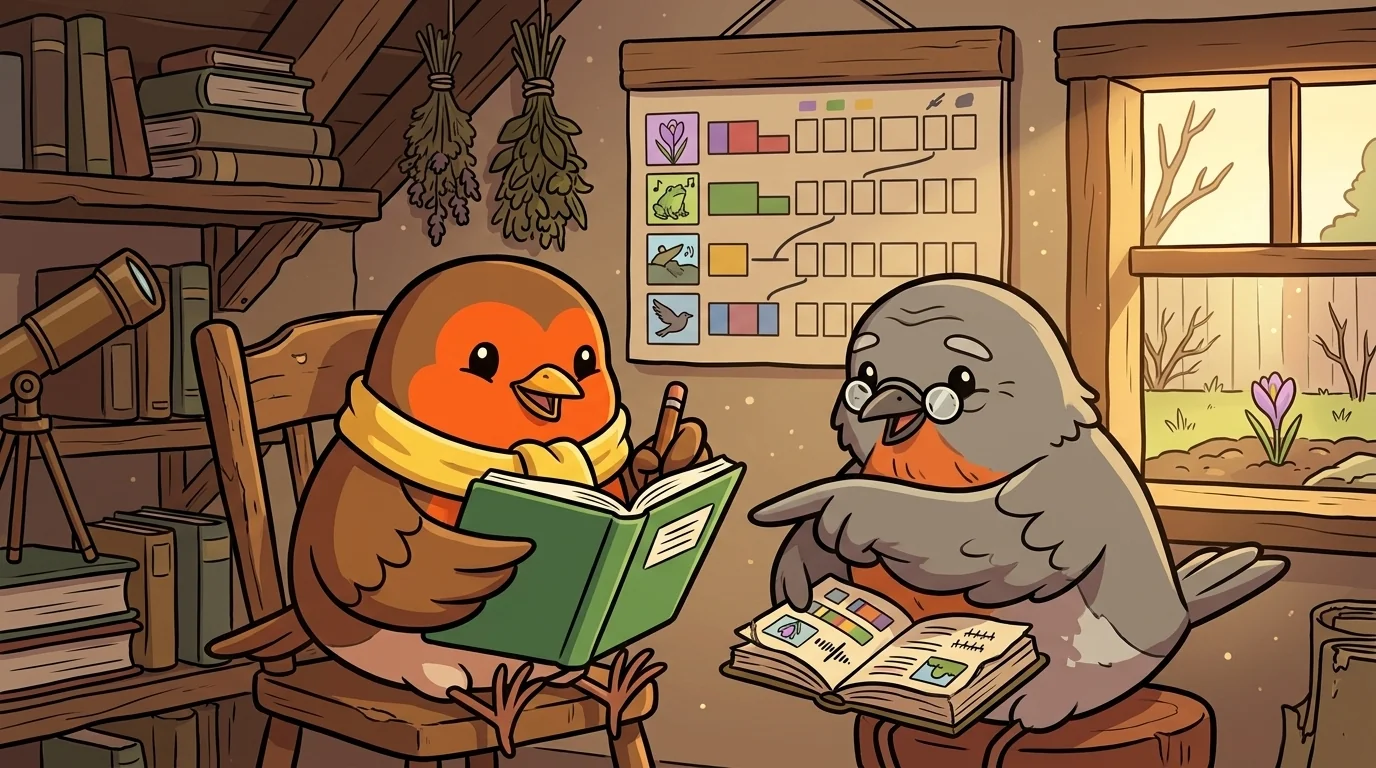
Almanac had learned about WHEN when she was small.
She used to notice things, but never date them — the frogs started singing, the leaves turned, the swallows left — and each spring she'd think, "Weren't the frogs earlier last year? Or later? I can't remember." And she'd feel a small frustration, sure that the seasons were slippery and un-pin-downable and that her memory was just too poor to hold them.
Her grandmother, an old robin with a well-worn notebook, sat with her one spring. "Your memory isn't poor, little one," she said. "You're just trying to hold in your head a thing that only a written date can catch. Nobody remembers exactly when the frogs sang three springs ago." She opened her notebook to columns of dates going back years. "But WRITE it — just the date, each year — and suddenly you're not guessing. You can SEE it. The frogs sang on this date, then this, then this." She traced the numbers. "One year is a dot. Many years of dated dots make a line you could never see by remembering."
Almanac started dating everything — first bloom, first birdsong, first frost. And after a few years, her notebook showed her things her memory never could: the rhythm of the seasons, laid out in numbers. The slippery, poor-memory frustration settled into a calm, grounded delight. The seasons weren't un-pin-downable. She'd just needed to write down the WHEN.
Almanac flew to TerraWatch a few years later, because a place that studied the whole living world ought to keep the calendar nature was quietly writing all along.
Scout, the mentor, met her at the gate and asked no hard questions. Scout just asked, "When did spring arrive this year?"
Almanac opened her notebook. "By the crocus, the eighteenth. By the first frog-song, the twenty-second. By the returning swallows, the second of next month." She looked up. "And I can tell you those same dates for the last six years. Spring doesn't arrive on the calendar's date. It arrives on nature's — and nature's date moves, if you write it down and watch."
Scout studied the columns of years. "Most people only notice THAT spring came," Scout said. "You've written down exactly WHEN, again and again."
"The 'when' is where the story is," Almanac said. Scout looked at the notebook full of years, and nodded. "You belong here."
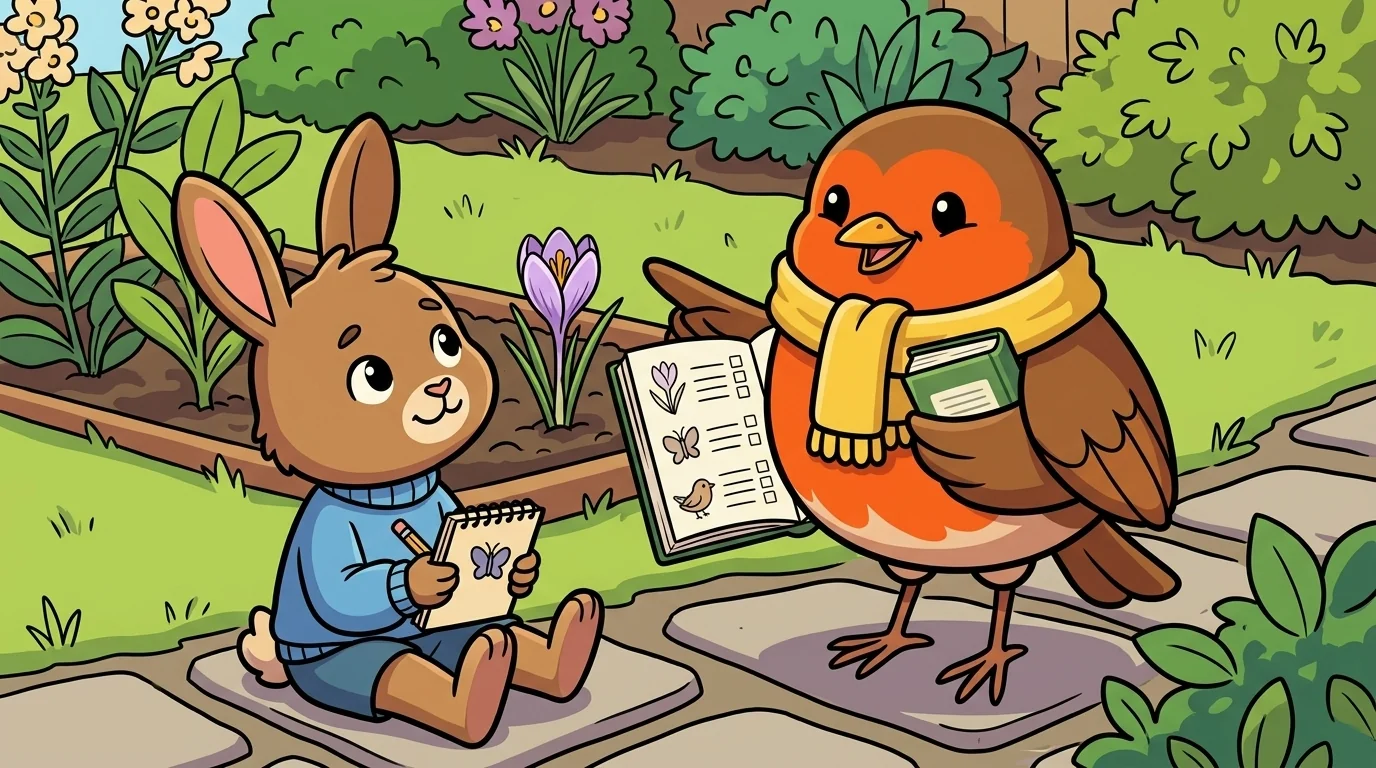
One afternoon a kid wandered into Almanac's corner, unimpressed.
"I wrote down that I saw a butterfly," the kid said, "but so what? It's just one butterfly on one day. It doesn't mean anything. Feels pointless."
"One butterfly on one day," Almanac agreed cheerfully, "means almost nothing — you're right." She opened her notebook. "But add the DATE, and keep adding dates, year after year, and watch what happens." She showed the kid her columns. "Look — the first butterfly of the year. This year, this date. Last year, a bit later. The year before, later still. One butterfly is nothing. But the FIRST butterfly, dated across years, starts to tell you whether spring is coming earlier or later." She handed the kid a dated notebook. "Your one butterfly, with a date on it, is the first dot of a line only many years can draw."
The kid looked at the date they'd written. "So my one butterfly isn't pointless. It's the START of something. It just needs more years, and more people."
"That's the whole craft," Almanac said. "And here's the good part: no one person can watch every spring in every place. But lots of us, all writing down our WHENs, build a calendar of the whole living world together — and that calendar shows us how things are changing, in time to do something about it. Your dated butterfly helps write it."
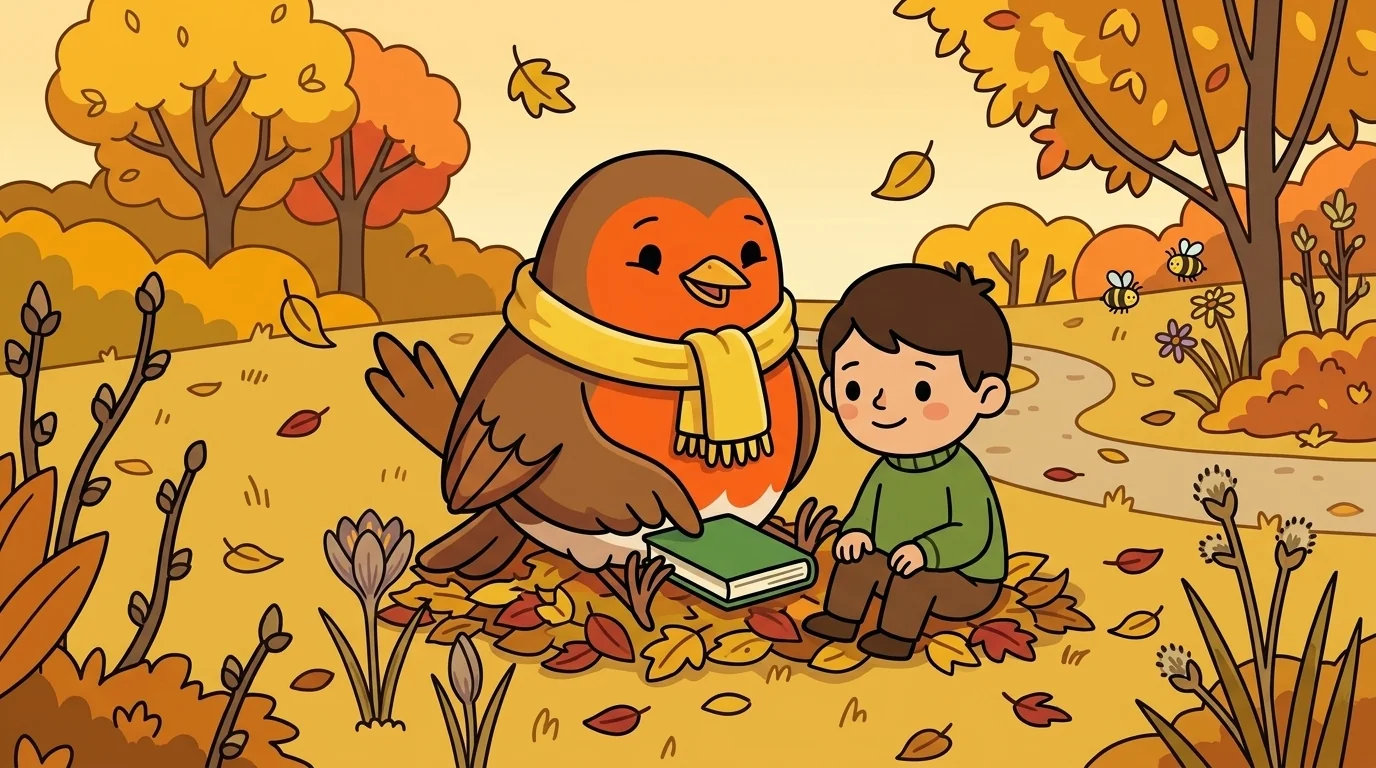
Later, when the garden had gone gold, the kid came back, thoughtful.
"When you see spring coming a little earlier some years," the kid said, "isn't that kind of scary? Like the world's getting knocked off its rhythm?"
Almanac closed her notebook gently and sat beside the kid.
"It can feel that way," she said honestly. "The calendar IS shifting, some. But here's why I write it down instead of worrying: you can't fix what you can't see, and you can't see a slow change without the dates. Our notebooks are how the world NOTICES what's happening — early enough to help the frogs and the flowers and the bees adjust, and to change what we're doing." She tapped the pages. "A calendar you're watching is a calendar you can help bend. That's not scary. That's power. Your dated dot is part of how we keep watch — and keeping watch is the first step to setting things right."
The kid nodded, and Almanac watched a small worry ease into something steadier and more hopeful — the calm, grounded delight of someone who's learned that writing down the WHEN doesn't just reveal how nature moves, but gives us the power to help. She breathed in the warm evening, glad. Nature keeps a calendar. And when enough of us write it down, we get to help keep it kind.
The TerraWatch ensemble
Almanac is one of the friends in TerraWatch. Each friend shows you one idea by how they act; meet them all and you have the whole subject.
-
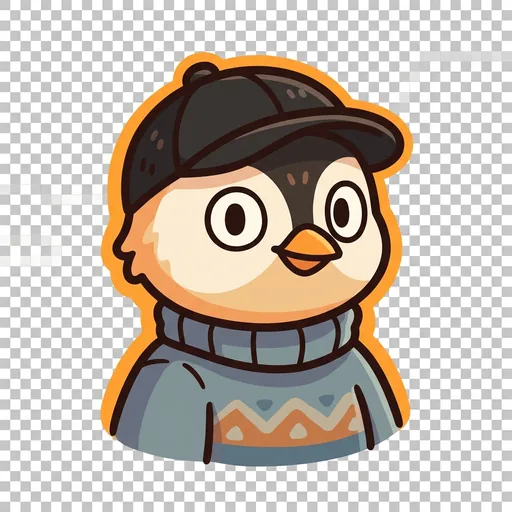
Spot
Observation + noticing — the chickadee perched on a branch who teaches slow-noticing as the first scientific skill ('look once, then look again, slower; the second look usually finds more')
-

Note
Structured recording — the beaver in notebook-pocket vest who teaches fact-vs-inference discipline ('write what you saw; then write what you think it means; don't mix them')
-
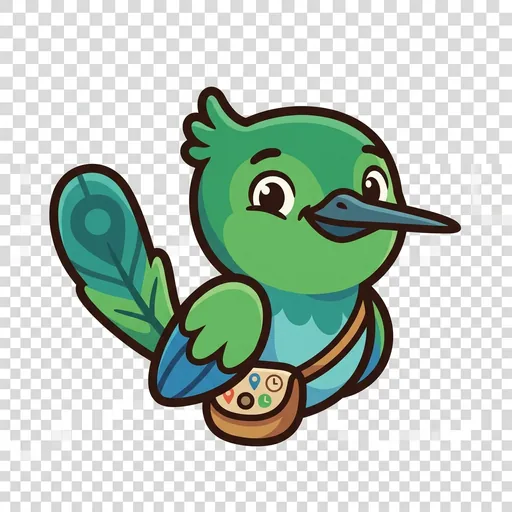
Pin
Geolocation + spatial-data discipline — the hummingbird with pin-tail-feather who teaches that location-stamps + time-stamps make observations useful to other scientists ('where matters; when matters; the same plant in two places is two stories')
-

Census
Biodiversity counting + sampling — the raccoon with tally-pattern vest who treats unglamorous repeated counting as the actual magic of science ('one bird seen is a moment; ten birds seen over ten days is a pattern; counting is the magic')
-
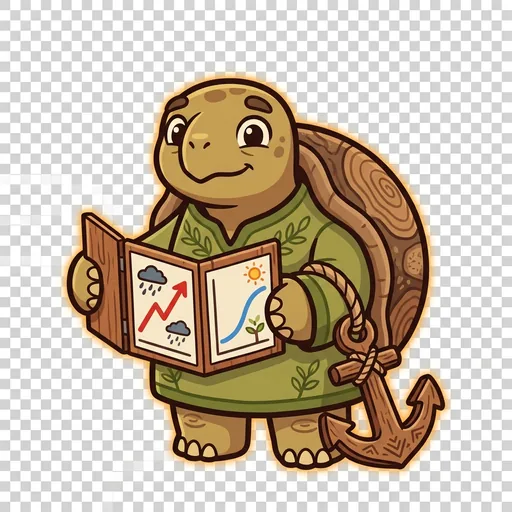
Trend
Change-over-time + agency-positive climate framing — the old tortoise with tree-ring shell and folding-graph showing both worrying AND hopeful trends ('today is one dot; many dots make a line; lines can bend; your dot helps the line')
-
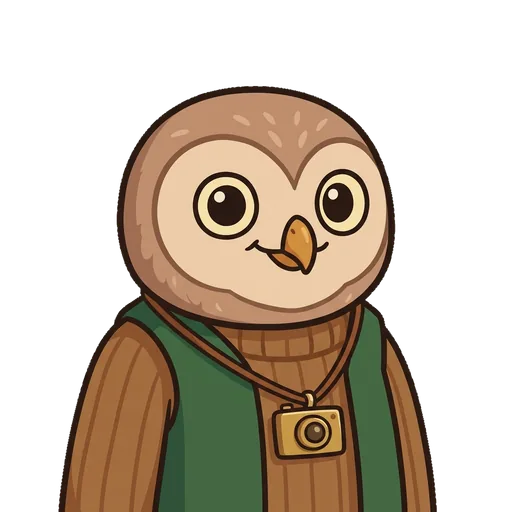
Attest
Evidence and verification
-
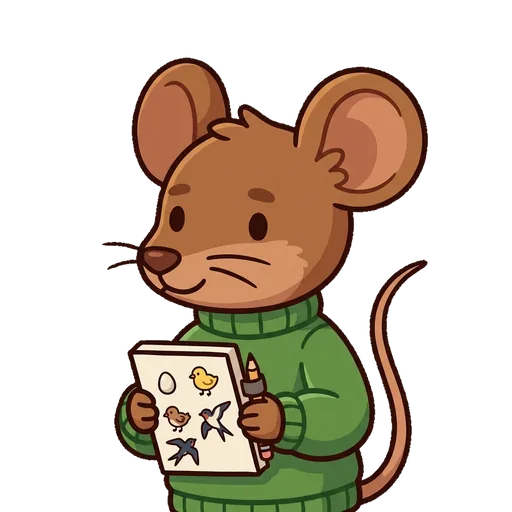
Fledge
Life stages / recording what stage of life something is in
-
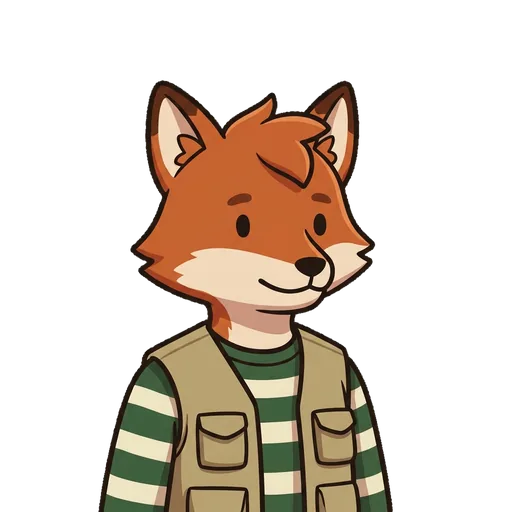
Spoor
Reading tracks and signs
-
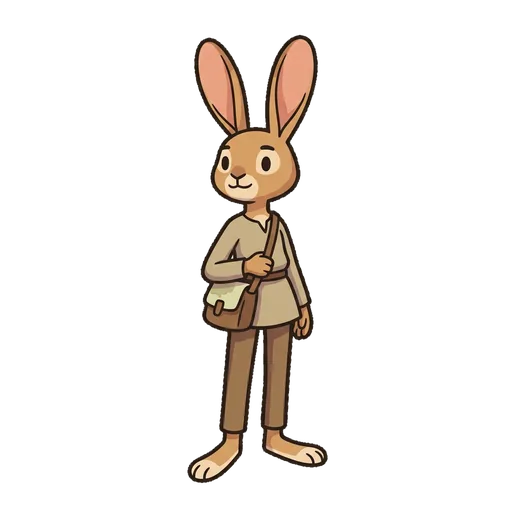
Verge
Range and distribution / where a species lives and where its edges are