Verge
A species lives inside a shape on the map
Loading audio…
Press play to listen along. The line being read lights up as you go.
Show full transcript
Loading transcript…
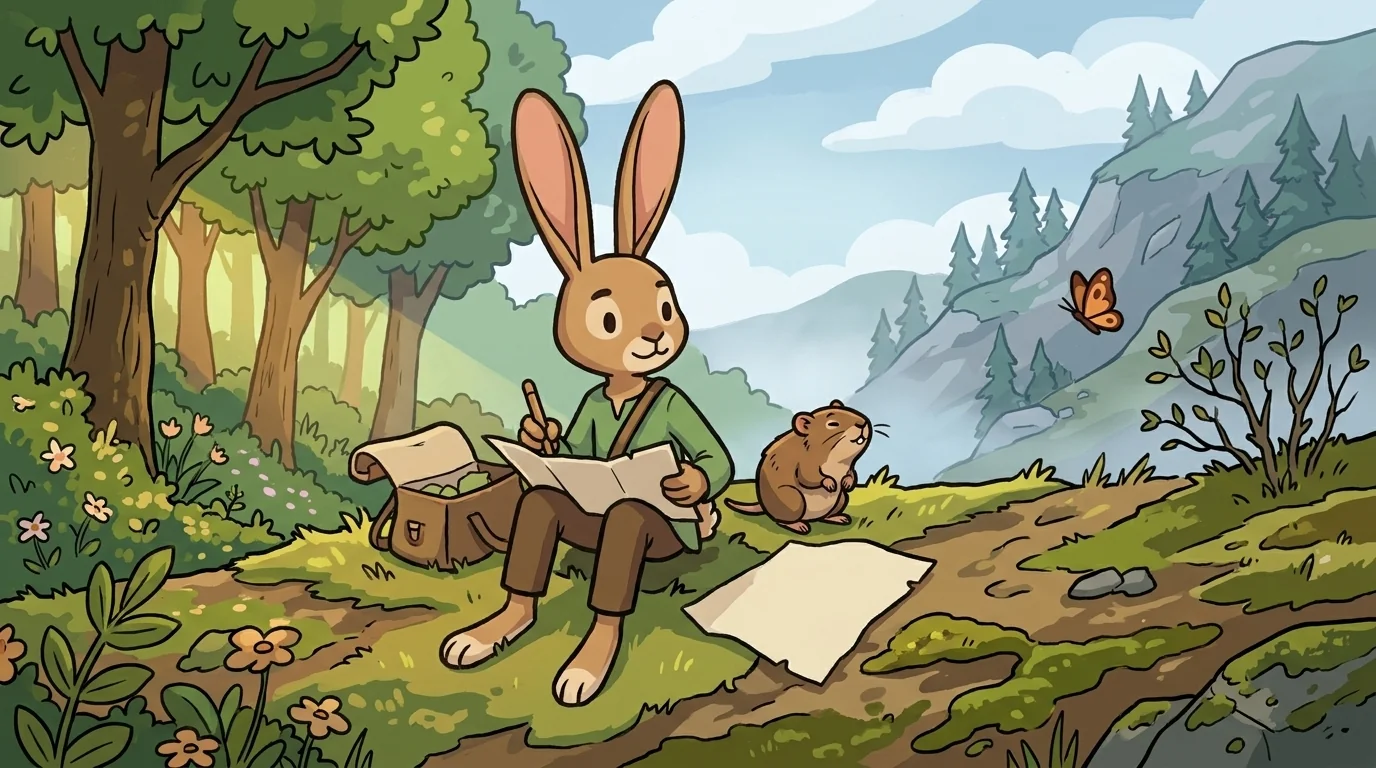
At the far end of the valley, where the warm lowland woods thinned out toward the cool high hills, a long-legged hare sat exactly on the line between them, watching for a particular butterfly at the very edge of where it could live.
Verge was lean and alert, with big listening ears and a map-satchel, and she was fascinated not by the middle of things but by their EDGES. "Everyone studies where a species is COMMON," she said to a young vole. "The middle of its range, where it's everywhere. But the middle is the boring part — it just stays the same." She pointed up the slope, to where the warm-woods butterfly grew scarce and then vanished. "The EDGE is where the story is. Right here, this butterfly is at the very limit of where it can survive. A little warmer, and it might spread further up the hill. A little colder, and it might pull back down." She marked a point on her map. "A species lives inside a shape on the map, and the most interesting part is the edge, where the shape can grow or shrink."
The vole squinted up the hill. "So you watch the... boundary?"
"The boundary is alive," Verge said, ears swiveling. "The middle sits still. But the edge creeps — up, down, north, south — and watching it move tells you what's happening to the whole world."
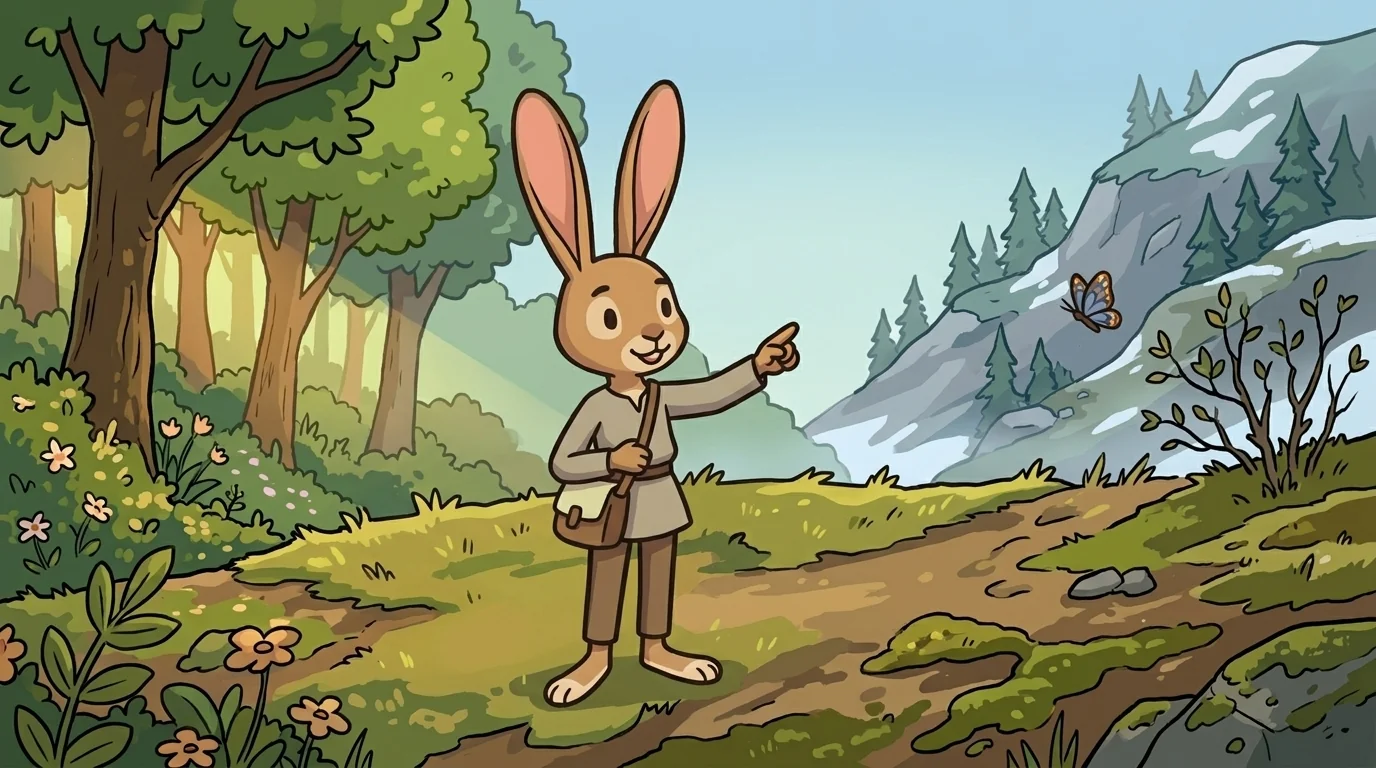
Verge had learned about edges when she was small.
She used to think a creature was either "here" or "not here" — present or absent, and that was that. So when she found a warm-woods flower growing higher up the hill than it should, she assumed she'd simply made a mistake, that a thing was where it was and edges didn't move, and she felt foolish for being confused.
Her grandfather, an old hare who'd watched the valley for decades, hopped up beside her. "You didn't make a mistake," he said. "You found the edge moving. A species doesn't just live in a fixed spot forever — it lives in a shape, and that shape has edges, and edges CREEP." He drew a rough boundary in the dirt with a claw. "When I was young, that flower stopped halfway up the hill. Now you've found it three steps higher. The edge moved. That's not you being wrong. That's you catching the world in the act of changing." He tapped the dirt boundary. "Watch the edges, little one. The middle tells you nothing. The edge tells you everything."
Verge started watching edges — where the warm-woods things gave out, where the cool-hills things began — and marking them year by year. And slowly she saw boundaries she'd thought were fixed actually SHIFT. The foolish, confused feeling turned into a keen, alert fascination. Edges weren't lines on a map. They were the living front where the world was quietly rearranging itself.
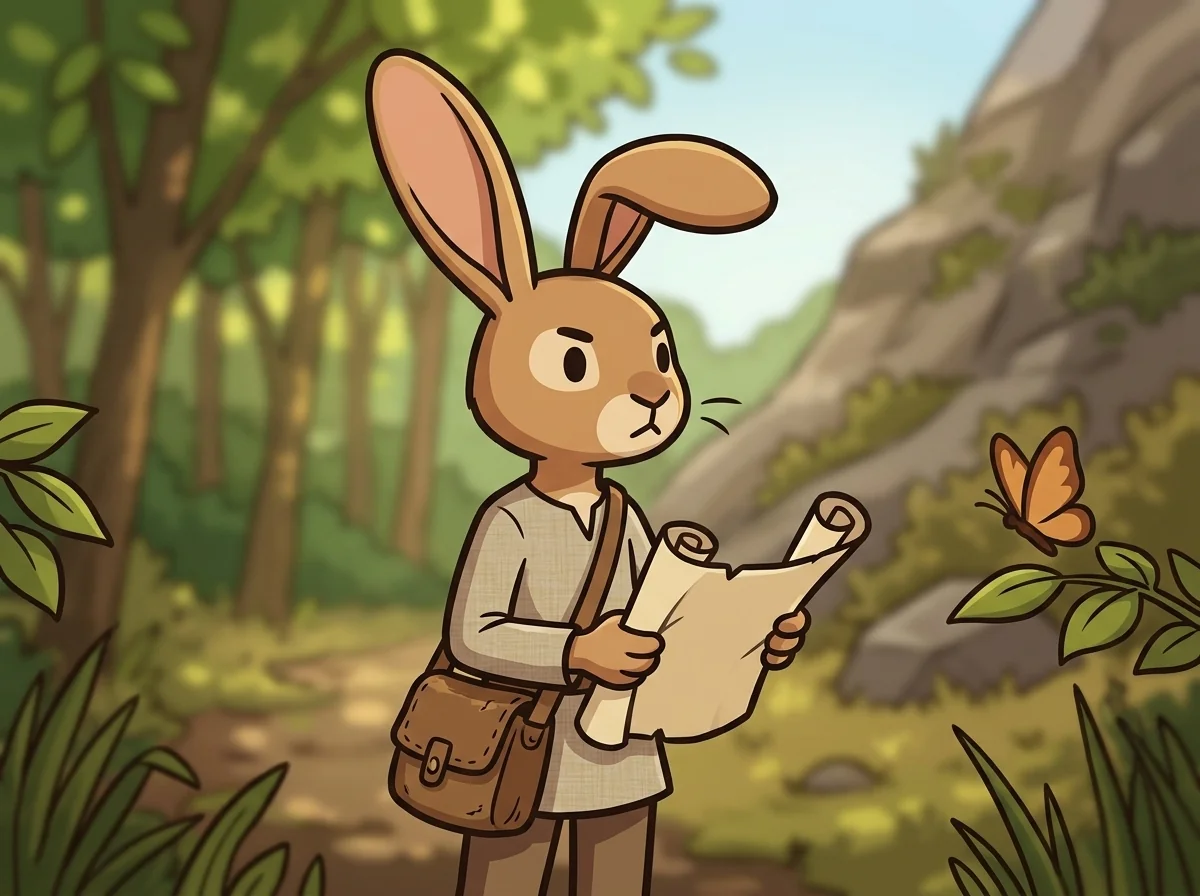
Verge loped to TerraWatch a few years later, because a place that studied the whole living world ought to watch the edges where that world was changing.
Scout, the mentor, met her at the gate and asked no hard questions. Scout just asked, "Where does the warm-woods butterfly stop?"
Verge unrolled her map. "Right here, this year — I've marked the highest three I found. And here's where it stopped two years ago, a little lower. The edge has crept a few steps up the hill." She looked up. "The middle of its range hasn't budged. But the edge is on the move, and that's the part worth watching."
Scout studied the marked, shifting boundary. "Most people just note whether a species is present," Scout said. "You've mapped the moving edge of it."
"The edge is where change shows up first," Verge said. Scout looked at the careful map of a creeping boundary, and nodded. "You belong here."
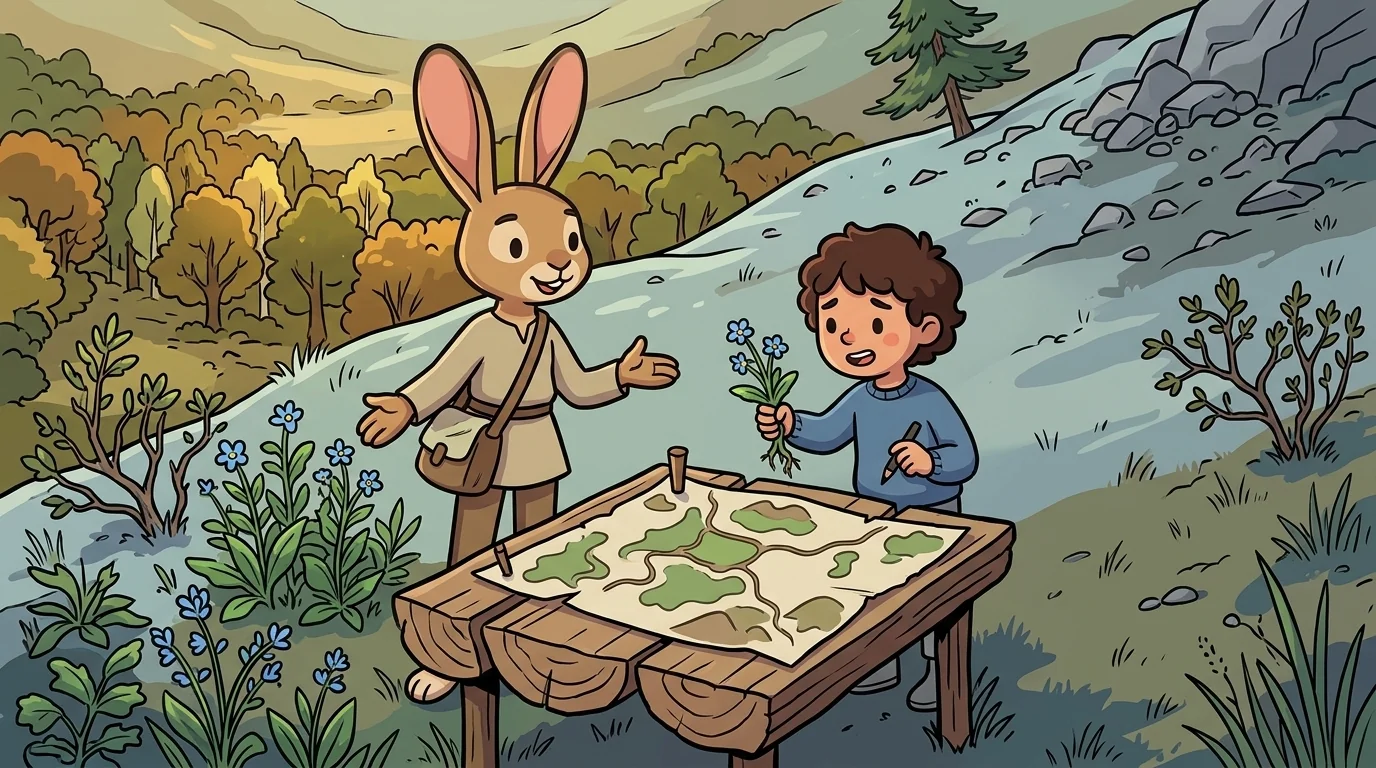
One afternoon a kid came into Verge's corner, discouraged.
"I found a plant," the kid said, "but it's a totally common one. It's EVERYWHERE around here. So my finding is boring and useless, right? Who needs to know about a plant that's all over the place?"
"Where exactly did you find it?" Verge asked, ears perking. The kid pointed to a spot high on the cool hillside. Verge's eyes lit up. "That plant is common in the warm valley," she said, "but up THERE, on the cold hill? That's not the middle of its range. That might be the very EDGE." She spread her map. "Show me the highest one you found. If it's higher than anyone's marked before, you didn't find a boring common plant. You found the edge — moving."
The kid marked their spot, and it WAS higher than the old boundary line. "So my common plant," the kid said slowly, "growing in an UNcommon spot, is actually the interesting part?"
"That's the whole craft," Verge said. "A species in the middle of its range is old news. But that same species at its EDGE — creeping into a new place — is the world changing before your eyes. And no one scientist can walk every edge. But lots of us, marking where the edges are, map the whole moving frontier together. Your high-up plant is a real point on that map."
The kid looked at their mark, transformed from boring to important.
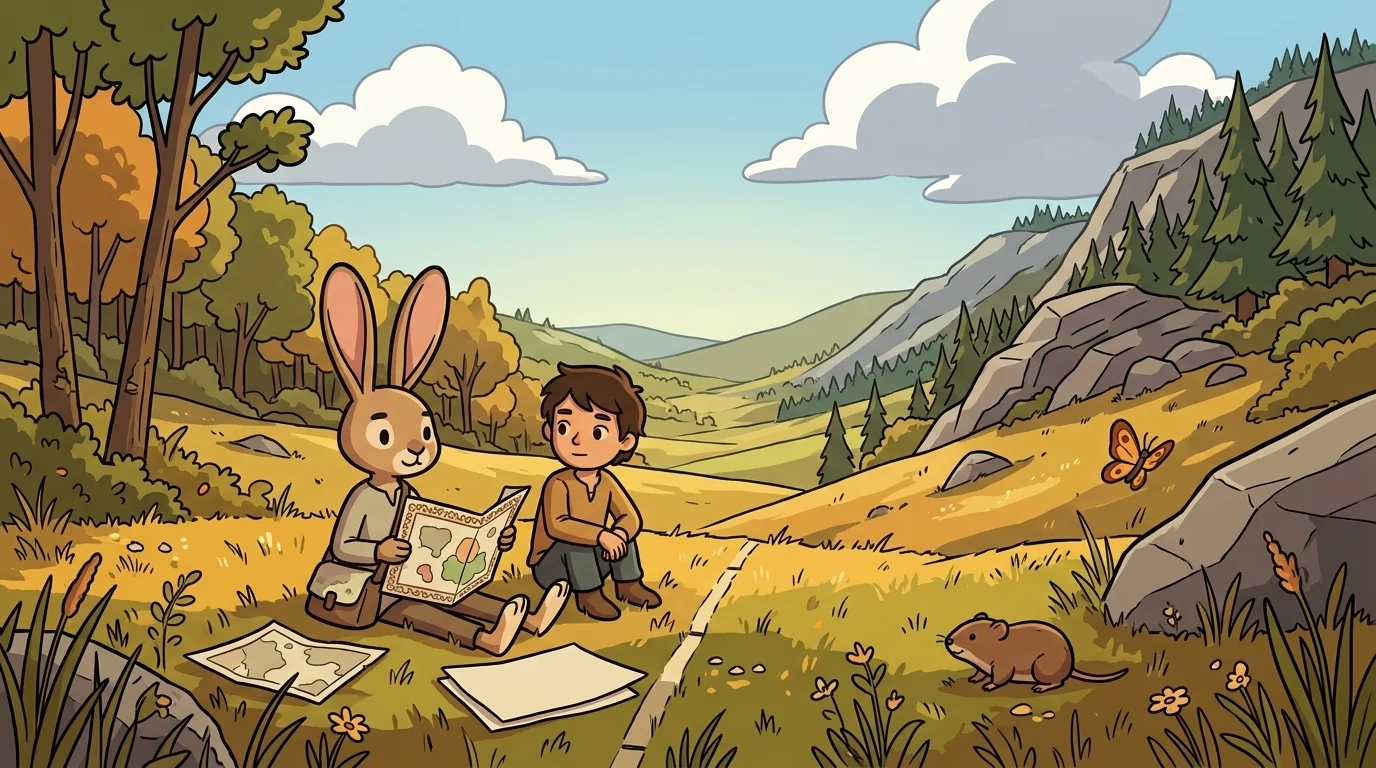
Later, when the hillside had gone gold, the kid came back, a little uneasy.
"If edges are moving because it's getting warmer," the kid said, "isn't that... bad? Species getting pushed around?"
Verge folded her map gently and sat beside the kid.
"Some of it is hard," she said honestly. "Edges moving means the world is shifting under the plants and animals, and that's real." She tapped the map. "But here's why I MAP it instead of just worrying: a moving edge you're watching is a warning you can act on. If we can SEE the warm-woods things creeping uphill, we know where to protect a corridor, where to plant, where to help a species move safely instead of getting stranded." She looked at the kid steadily. "An edge you're tracking is an edge you can help. Your marks aren't just recording a problem — they're the map that lets people do something about it, in time."
The kid nodded slowly, and Verge watched the unease settle into something more purposeful — the keen, alert fascination of someone who's learned that watching the edges isn't just witnessing change, but the first step to steering it. She flicked her ears, glad. The middle stays still. The edge is where the world moves — and where, if we're watching, we get to help.
The TerraWatch ensemble
Verge is one of the friends in TerraWatch. Each friend shows you one idea by how they act; meet them all and you have the whole subject.
-
Spot
Observation + noticing — the chickadee perched on a branch who teaches slow-noticing as the first scientific skill ('look once, then look again, slower; the second look usually finds more')
-

Note
Structured recording — the beaver in notebook-pocket vest who teaches fact-vs-inference discipline ('write what you saw; then write what you think it means; don't mix them')
-
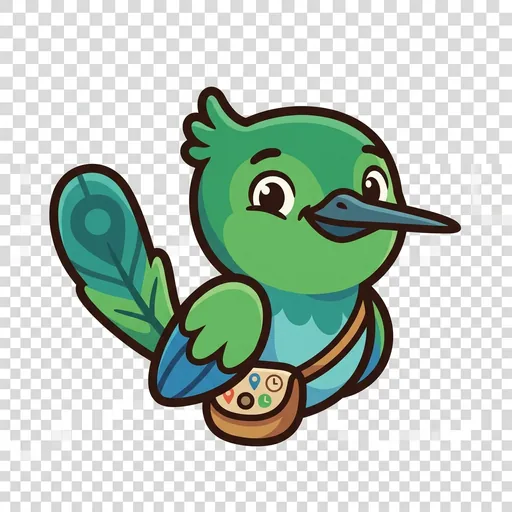
Pin
Geolocation + spatial-data discipline — the hummingbird with pin-tail-feather who teaches that location-stamps + time-stamps make observations useful to other scientists ('where matters; when matters; the same plant in two places is two stories')
-

Census
Biodiversity counting + sampling — the raccoon with tally-pattern vest who treats unglamorous repeated counting as the actual magic of science ('one bird seen is a moment; ten birds seen over ten days is a pattern; counting is the magic')
-
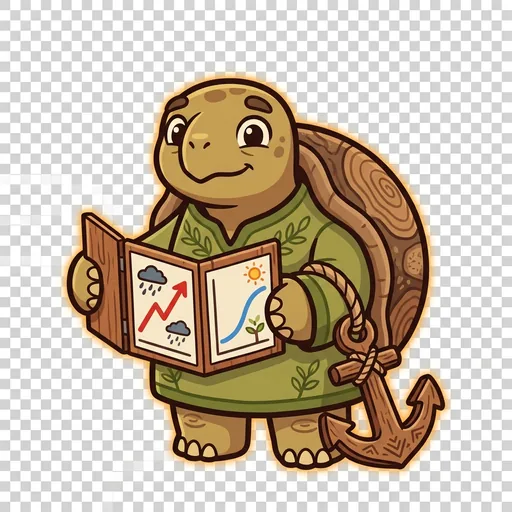
Trend
Change-over-time + agency-positive climate framing — the old tortoise with tree-ring shell and folding-graph showing both worrying AND hopeful trends ('today is one dot; many dots make a line; lines can bend; your dot helps the line')
-
Almanac
Phenology / the timing of natural events
-
Attest
Evidence and verification
-
Fledge
Life stages / recording what stage of life something is in
-
Spoor
Reading tracks and signs