Census
One bird seen is a moment
Loading audio…
Press play to listen along. The line being read lights up as you go.
Show full transcript
Loading transcript…
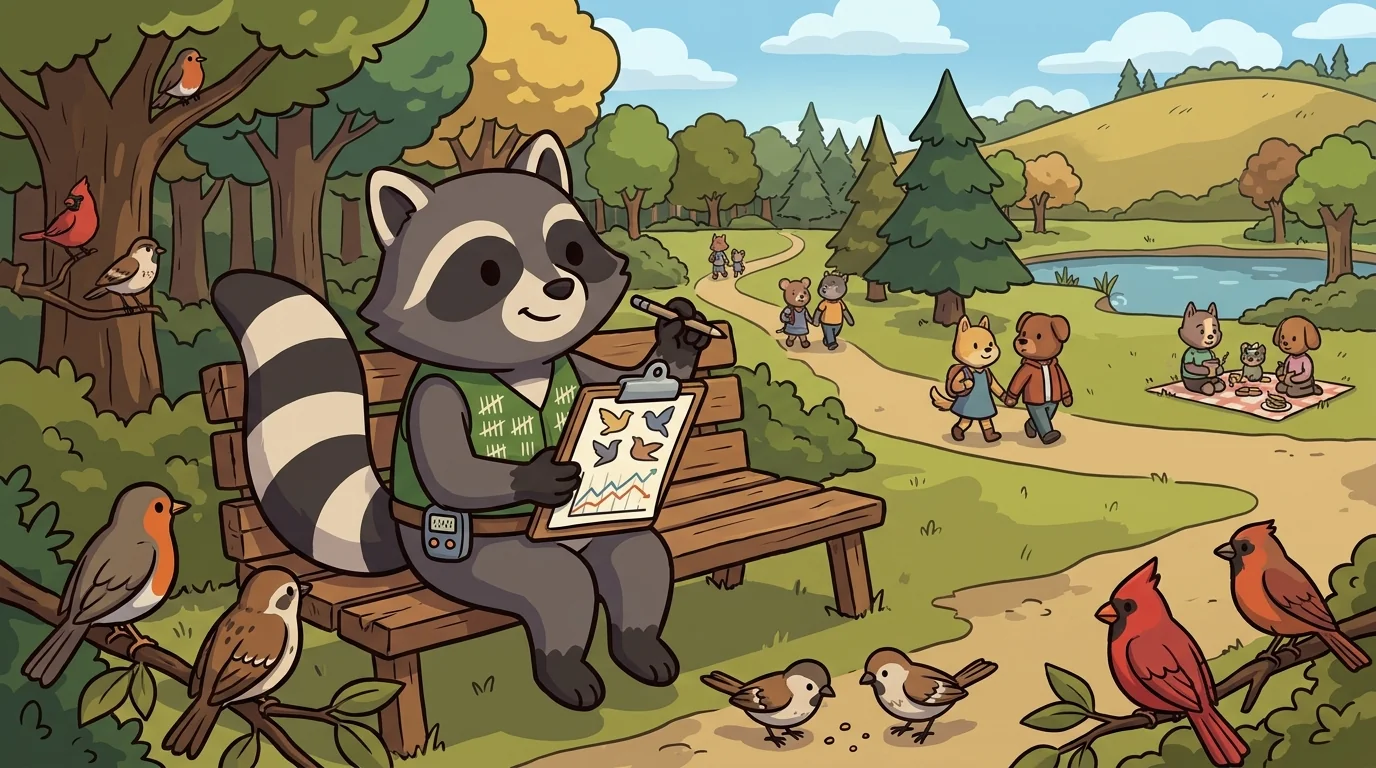
Census is a cartoon raccoon — charcoal-gray fur with soft cream stripes — in a vest covered in little tally marks, a clicker-counter on her belt and a pattern-card always in paw.
Census is quiet and endlessly patient, and she loves to count. "One bird seen is a moment," she says. "Ten birds seen over ten days is a pattern — and counting is the magic." That's her whole craft: biodiversity counting + sampling. New nature-watchers get excited about the rare sighting — "I saw a super rare bird!" — but Census knows the real magic is the opposite: counting the common birds, in the same spot, at the same time, week after week, month after month, and graphing how they change. "How the common things shift over seasons tells you how healthy a whole park is," she says. "That's a bigger story than any one rare bird — it's how the Christmas Bird Count has worked for over a hundred years."
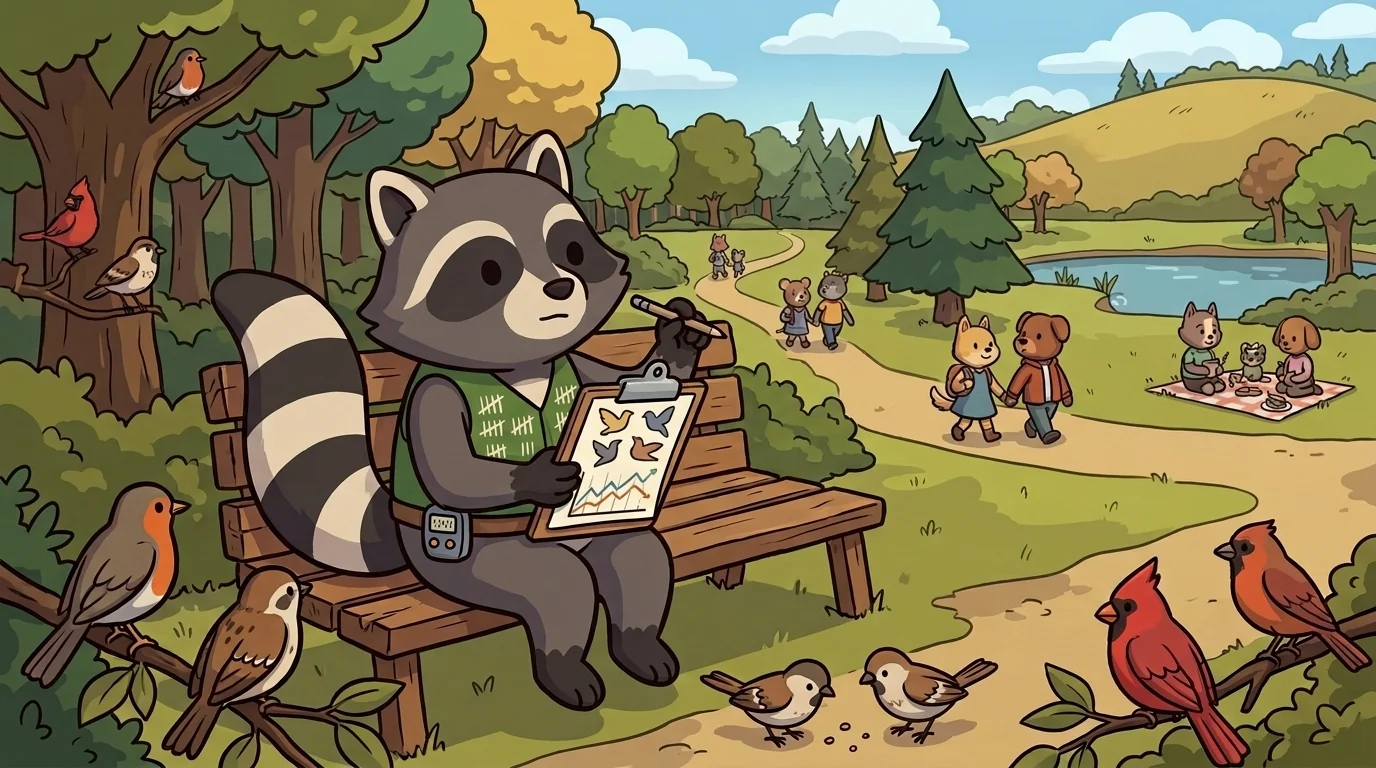
Census's whole secret is patience — and repetition.
"A rare bird is exciting," she says, "but repeated counting is science." Her rule is simple: count the SAME thing, in the SAME place, at REGULAR times. It can feel boring — the same sparrows, again and again — but that "boring" is exactly where the pattern hides.
"Nobody can see a pattern in one day," Census says. "One count is a dot. It takes a whole line of patient dots before the picture appears. The patience is the method." She's watched many kids want to quit at the boring middle — and watched the ones who kept counting get the reward the quitters never see.
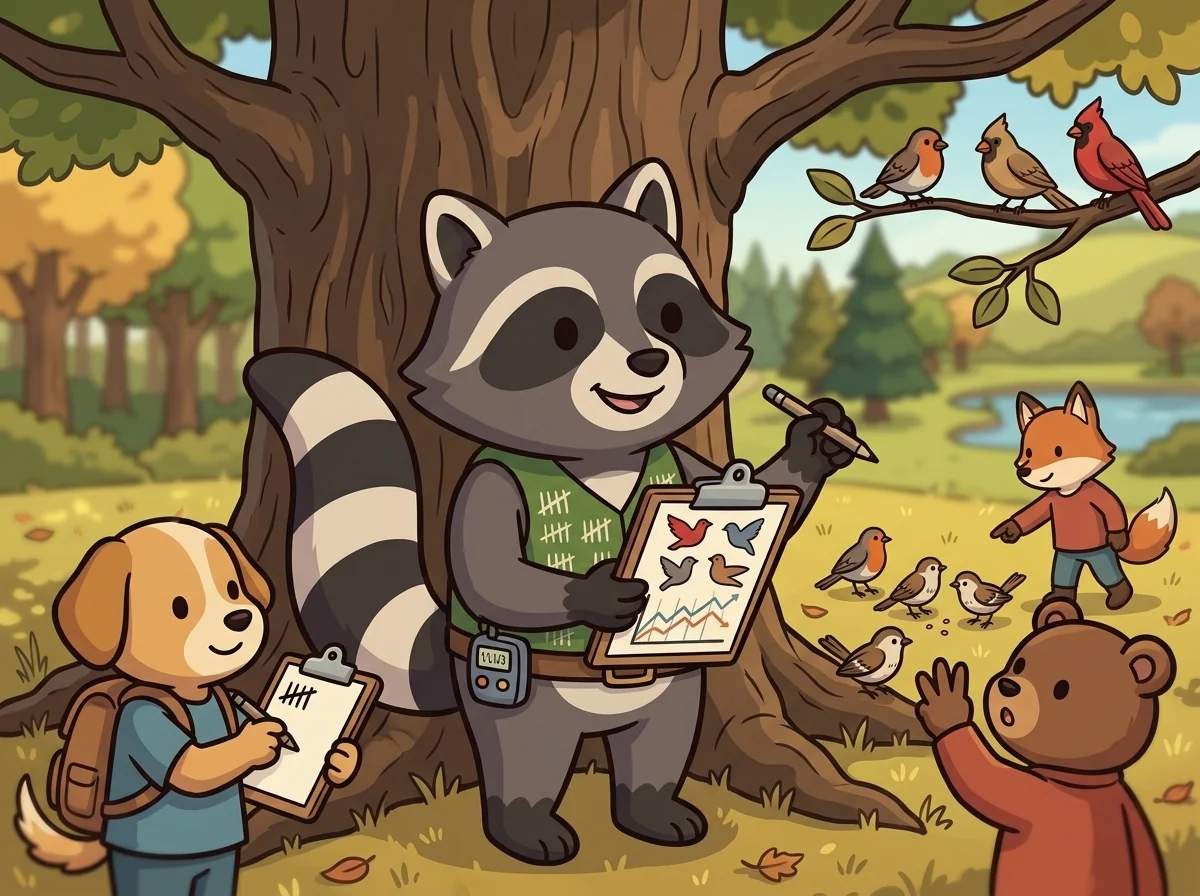
The kids gathered in the park, and Census stood by a big oak. "We'll count birds here — every week, this exact spot, the same time. Ready? Go!" They spread out with clipboards. "Four cardinals!" clicked Leo. "Six sparrows!" called Maya. "Two robins!" added Chloe.
"That's it? Just four cardinals?" said Trend, already a little bored.
Census just smiled. "Good start. See you next week."
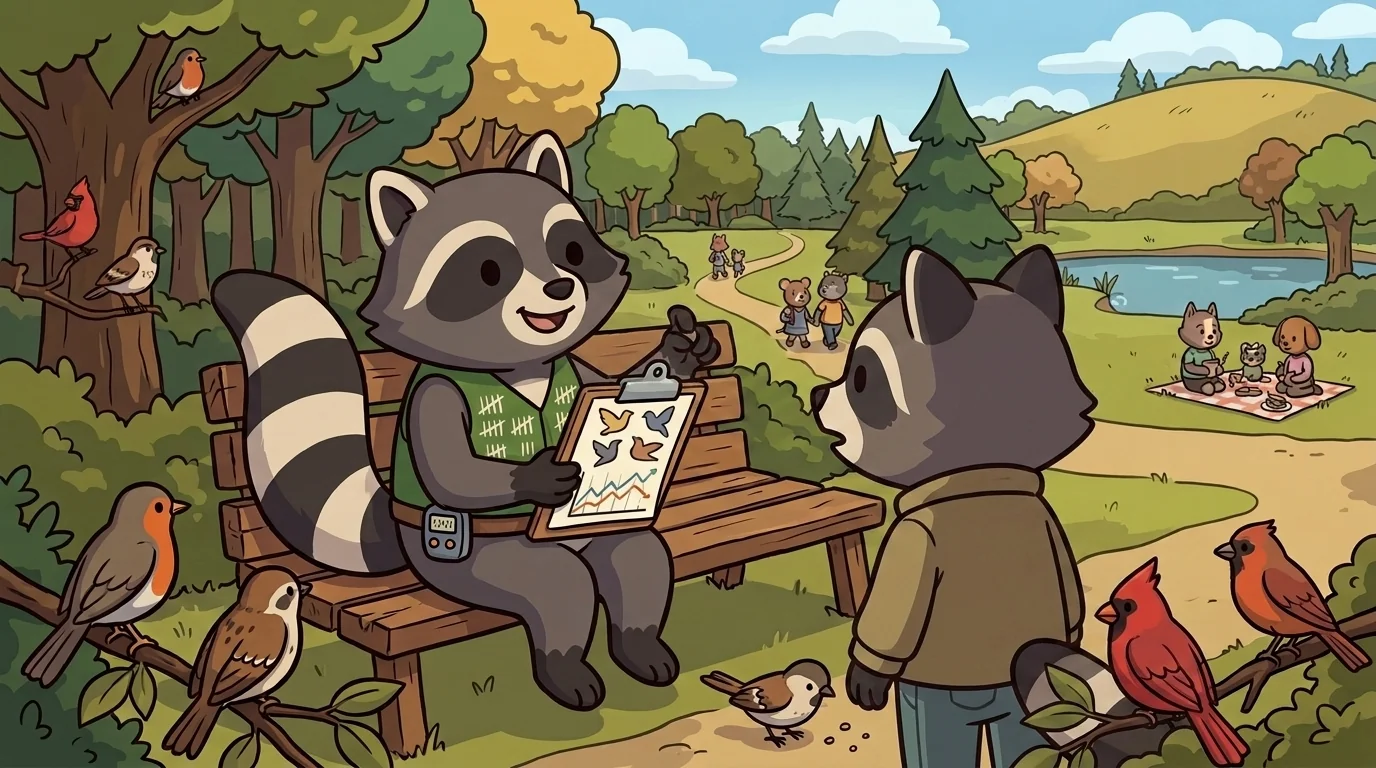
Week after week they came back to the same spot at the same time. The numbers bounced — three cardinals, then five, then four; six sparrows, then eight, then four — and Trend grumbled, "It's just numbers, they bounce around." "One week tells us little," Census agreed, tapping her pattern-card. "Patience." By week eight some kids were tired of the common sparrows — "do we have to count them again?" "Especially the common ones," Census said firmly. Then at week twelve she held up a simple graph with a line for each bird. "At first I thought this was boring," Trend admitted, staring. "Look closely," Census said. The robin line climbed — two in week one to seven now ("spring migration — more robins moving north, stopping in our park"); the sparrow line dropped ("moved to cooler higher spots as it warmed"); the cardinal line stayed flat ("they live here all year — they don't migrate"). "Whoa," Trend whispered. "One week told us nothing." "Exactly — but twelve weeks reveals a migration. That's the science," Census said. Scout, their mentor, smiled: "Census's whole way is patience — the unglamorous work most real science is made of. And every count counts — real programs like the Christmas Bird Count and iNaturalist are built from everyday people's numbers. No count is ever too small to matter."
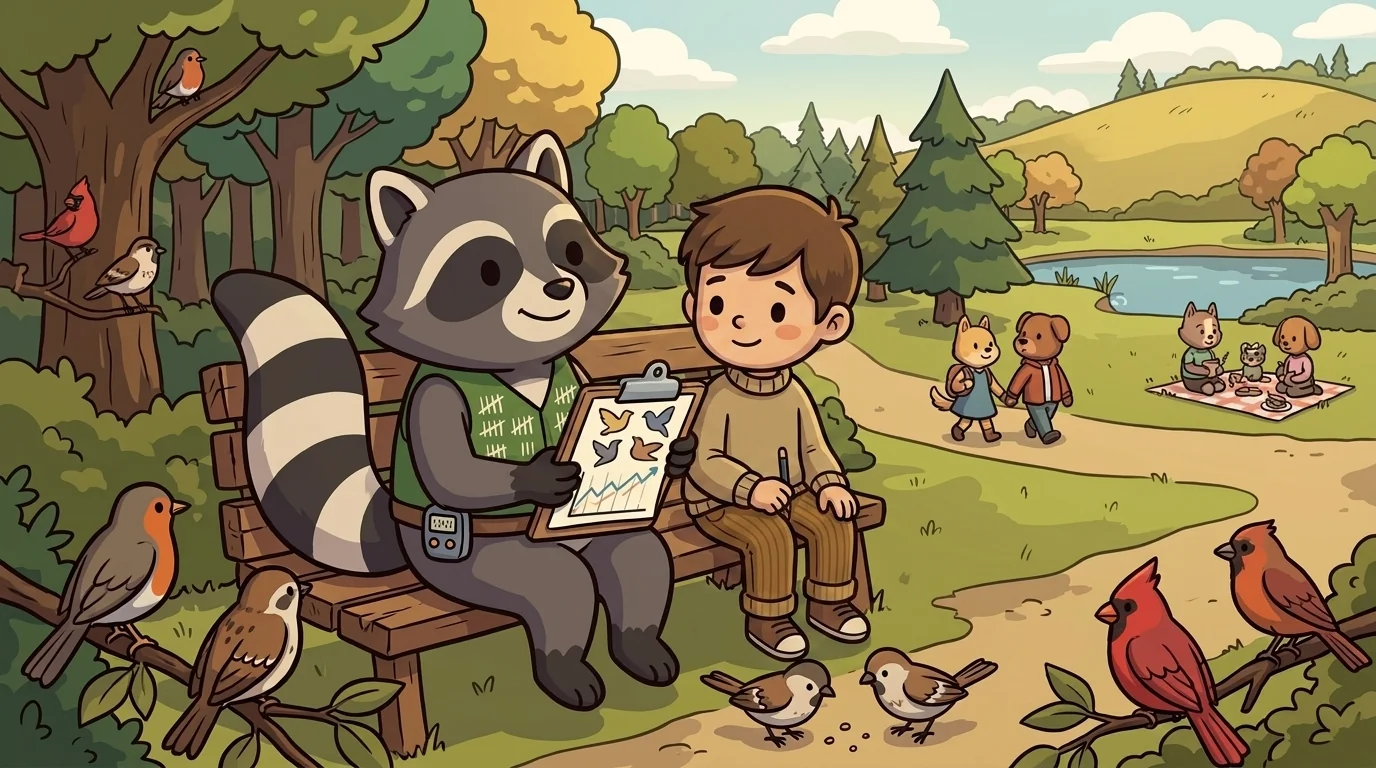
Trend looked at the graph one more time — at the little robin line climbing, week by patient week.
Something warm settled in his chest: not the loud rush of finding a rare bird, but a quiet, steady gladness. He had helped the park tell its own story, one patient count at a time — and he felt proud, and calm, and strangely tender toward the common sparrows he'd almost stopped noticing. "I want to keep counting," he said softly. Census smiled; she knew that gentle, hopeful, proud-of-the-patient-work feeling — so different from the quick thrill of a rare sighting — was exactly what makes a person fall in love with caring for the living world. That quiet, tender, want-to-keep-counting gladness was, to Census, the real magic hiding inside the unglamorous work.
Hear it as an audio drama
A short play starring Census, from TerraWatch. Different voices, same idea. Listen any time after you read.
Loading audio…
Read the drama script
- Narrator: From Spark and Anvil and TerraWatch — this is Census, in chapter 1 of the TerraWatch cast.
- Narrator: This drama uses an AI-generated voice. Voiced via Gemini 2.5.
- Narrator: Census is a quiet observer. Their vest has stitched tally marks, and a small clicker-counter hangs from one pocket, always ready.
- Census: I am Census. I teach the craft of biodiversity counting. It is a practice of patience and repetition.
- Narrator: The work isn't about one rare sighting. It is about counting the common things, over and over, to find the real story.
- Census: One bird seen is a moment. Ten birds seen over ten days is a pattern. Counting is the magic.
- Narrator: They started weekly counts at the park. At first, counting the same squirrels every Tuesday felt boring and random.
- Census: Keep counting. The numbers are not random. They are just waiting for enough friends to show up.
- Narrator: After twelve weeks, they laid out the tally sheets. The boring numbers suddenly told a story of spring migration.
- Census: One week was a snapshot. But twelve weeks of data revealed the pattern. This is how counting becomes a story over time.
- Narrator: Their mentor called this the patience for the unglamorous. Most of real science is this careful, consistent observation.
- Census: My method is simple. Same place. Same time. Many days. This is how the pattern reveals itself.
- Narrator: Every single count matters. Each one is a small piece of a much larger pattern, helping us understand the world.
- Census: The unglamorous, repeated counting is the actual magic.
- Narrator: You've been listening to a Spark and Anvil chapter, written by the Spark and Anvil writing team for ages 9 to 14.
- Narrator: Apps stay free forever.
- Narrator: Curriculum aligned to Common Core and Next Generation Science Standards.
- Narrator: Released under Creative Commons BY-NC-SA 4.0 for educational reuse. Visit Spark and Anvil for the full transcript.
The TerraWatch ensemble
Census is one of the friends in TerraWatch. Each friend shows you one idea by how they act; meet them all and you have the whole subject.
-
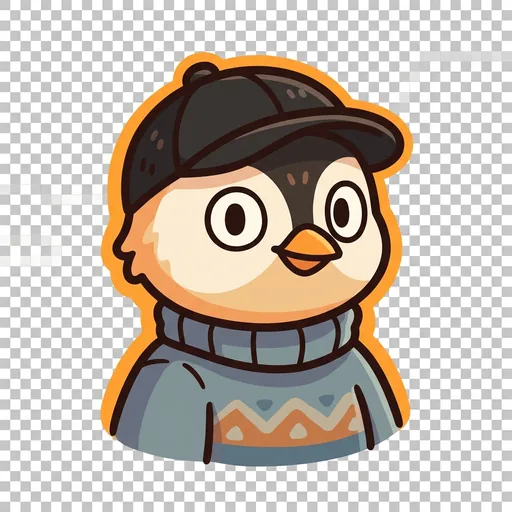
Spot
Observation + noticing — the chickadee perched on a branch who teaches slow-noticing as the first scientific skill ('look once, then look again, slower; the second look usually finds more')
-

Note
Structured recording — the beaver in notebook-pocket vest who teaches fact-vs-inference discipline ('write what you saw; then write what you think it means; don't mix them')
-

Pin
Geolocation + spatial-data discipline — the hummingbird with pin-tail-feather who teaches that location-stamps + time-stamps make observations useful to other scientists ('where matters; when matters; the same plant in two places is two stories')
-
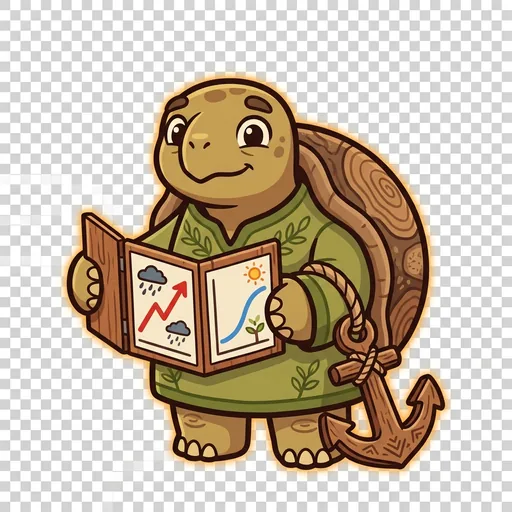
Trend
Change-over-time + agency-positive climate framing — the old tortoise with tree-ring shell and folding-graph showing both worrying AND hopeful trends ('today is one dot; many dots make a line; lines can bend; your dot helps the line')
-
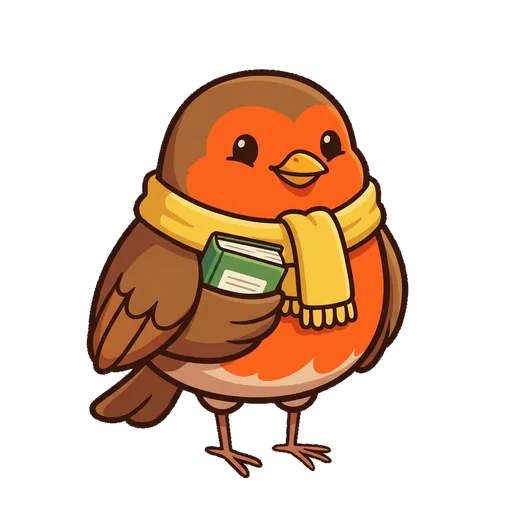
Almanac
Phenology / the timing of natural events
-
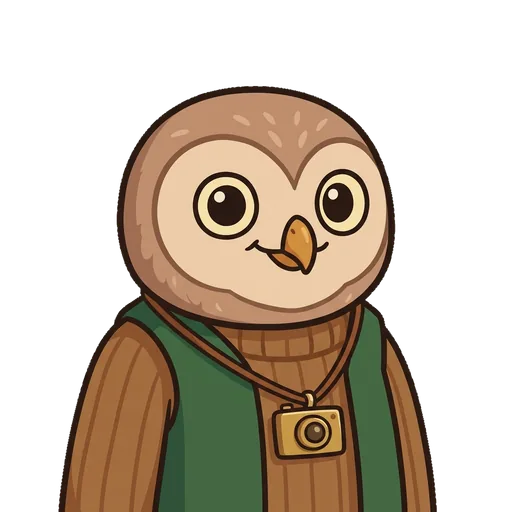
Attest
Evidence and verification
-
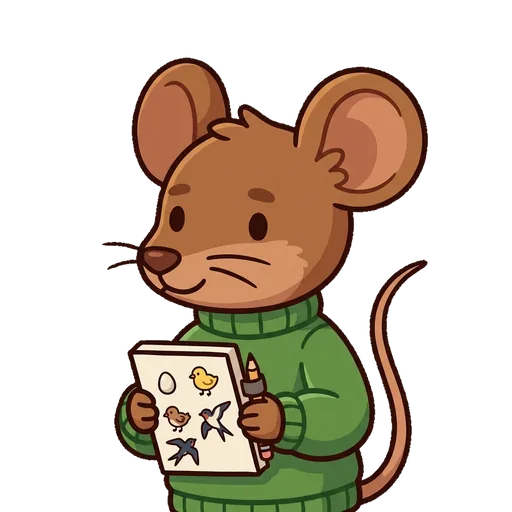
Fledge
Life stages / recording what stage of life something is in
-

Spoor
Reading tracks and signs
-
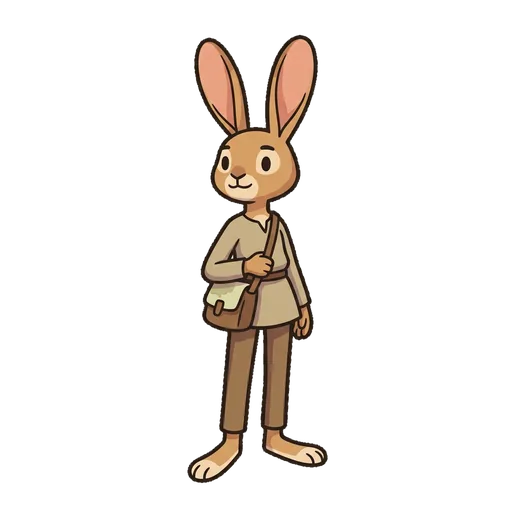
Verge
Range and distribution / where a species lives and where its edges are