Brackett
BRACKETT — seed the knockout so the strongest don't collide in round one, and settle every dispute by the rule that was written down, not by whoever argues loudest.
Loading audio…
Press play to listen along. The line being read lights up as you go.
Show full transcript
Loading transcript…
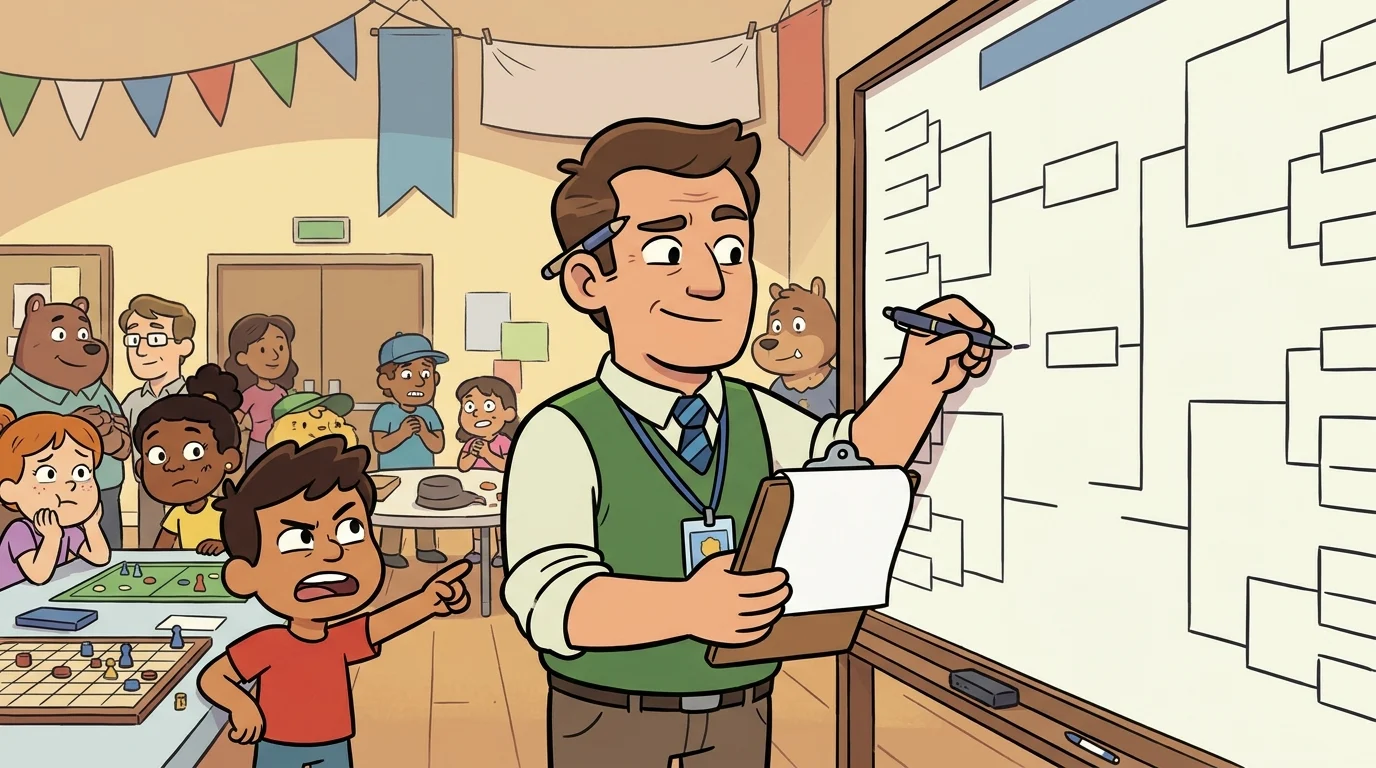
When a TourneyForge event reached its knockout — the single-elimination end, where one loss sends you home — a hush of nerves ran through the hall, and everyone looked to the same place: the big empty bracket pinned to the board, and Brackett standing in front of it with a clipboard and a pen behind his ear.
He wore a green vest and a blue-striped tie and an official's badge on a lanyard, and he filled the bracket in slowly, checking each name against the standings before he wrote it into a slot.
"Just draw them out of a hat," said an impatient older kid. "It's faster."
"It's faster and it's cruel," Brackett said mildly, not looking up. "Draw from a hat, and the two best players might land in the very first match. One of them goes home in round one — not because they were worse, but because the hat hated them." He wrote a name into the top slot. "So I don't use a hat. I seed. The strongest go in far corners of the bracket, so the best don't smash into each other until the very end, when it means something. That's not me picking favorites. That's me making sure the final is actually the two who earned it."
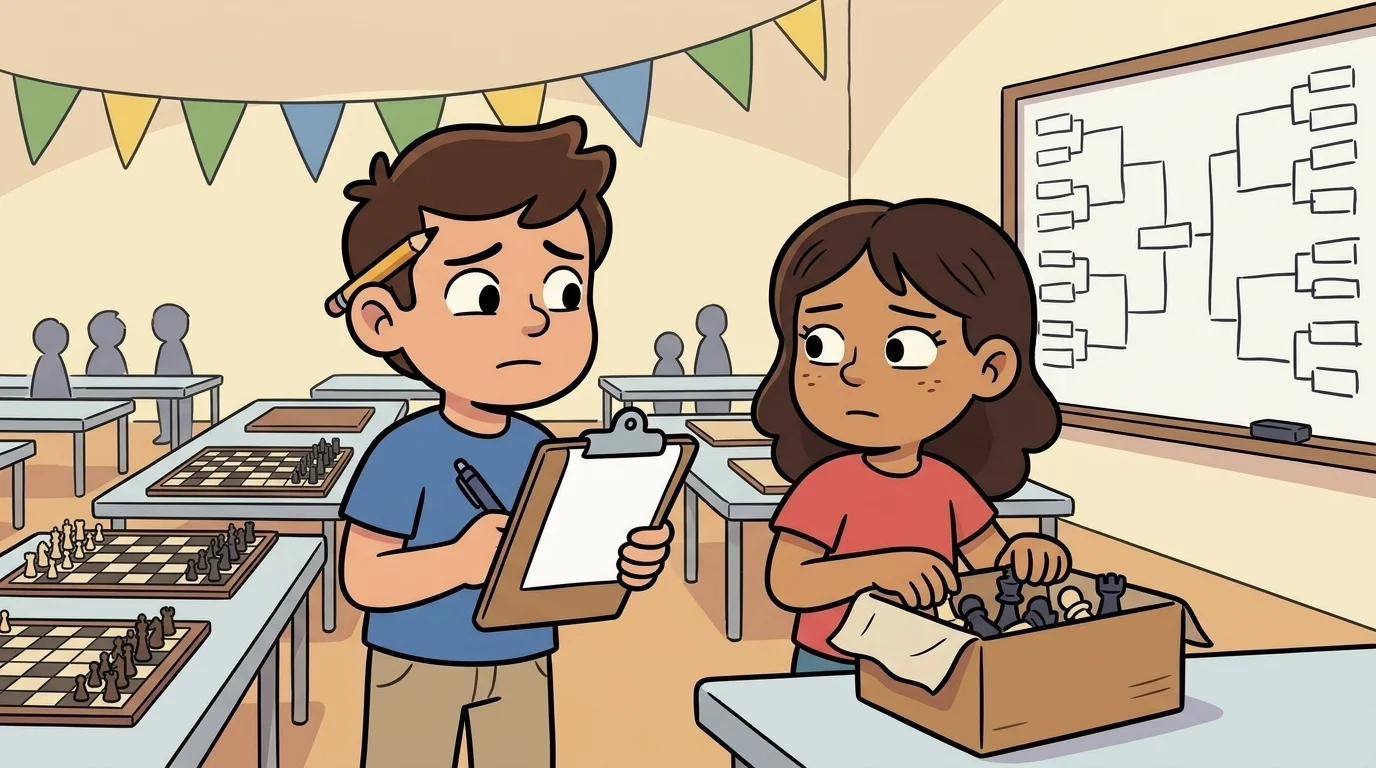
Brackett had seen the cruelty of a bad draw up close, because it had happened to his best friend.
There was a chess tournament in his town when he was ten. His friend Nadia was, everyone quietly knew, the second-strongest player in the whole event. But the matchups were pulled blind from a bag, and the bag put Nadia against the single strongest player in the first round. She fought hard. She lost. And she was out — sent home before lunch, while weaker players she'd have beaten easily coasted through three more rounds because the bag had been kind to them.
Brackett remembered her face as she packed up her set. Not tears. Something quieter and worse — a kind of bewildered flatness. "I'm better than half the kids still in there," she said, not bragging, just stating a true and useless fact. "And I'm going home. How is that the tournament working?"
He hadn't had an answer. He'd felt it, though — a churning wrongness in his gut, the sense of watching a machine grind up the wrong person and call it a result. The winner that day was fine. But the bracket had lied about who the best players were, and nobody seemed to think that was a problem worth fixing.
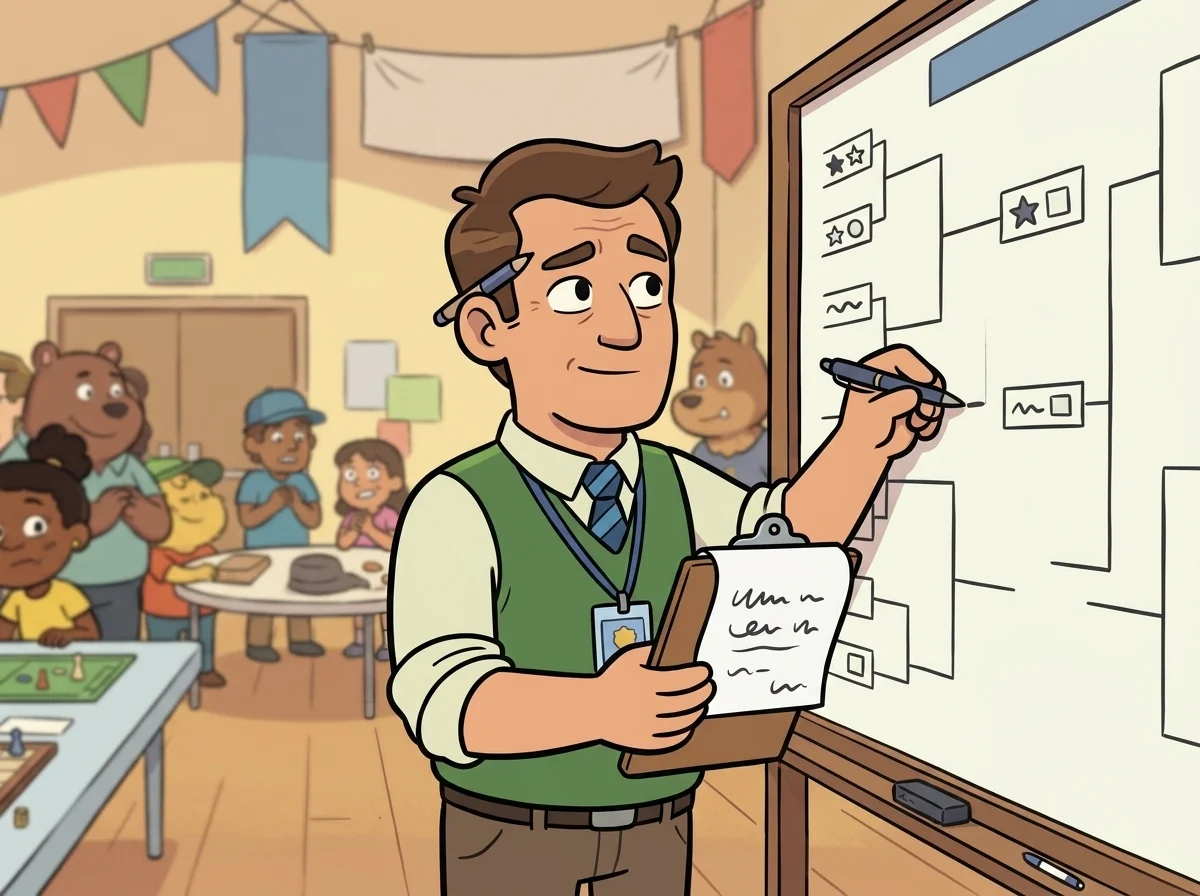
An old arbiter fixed it in his head, one rainy afternoon, with a pencil and a napkin.
Brackett had gone to complain to him — the arbiter ran the grown-ups' club and was known for being fair — and instead of soothing him, the old man drew a bracket on a napkin.
"Watch," he said. "Here's your friend's tournament with a hat." He scribbled the strongest two into round one. "See? Best players collide, one dies early. Garbage." He drew a fresh bracket. "Now here's seeding. I look at the standings first. Strongest player, top slot. Second strongest, all the way at the bottom, as far from the first as the bracket goes. Now they can only meet in the final." He tapped it. "Same players. Same skill. One little bit of care in how you fill the sheet — and suddenly the tournament tells the truth about who's good."
"But what if two people argue about a result?" Brackett asked. "What if it's close?"
The arbiter put the pencil down. "Then you don't settle it with who shouts louder, or who you like. You settle it with the rule that was written down before the game. Every time. Even when it goes against your own friend." He looked at Brackett steadily. "Especially then. The day you bend the rule for someone you love is the day the rule is worth nothing to anyone."
Something clicked into place in Brackett that afternoon and never came loose. The wrongness in his gut finally had a cure: care in the draw, and the rule in the dispute.
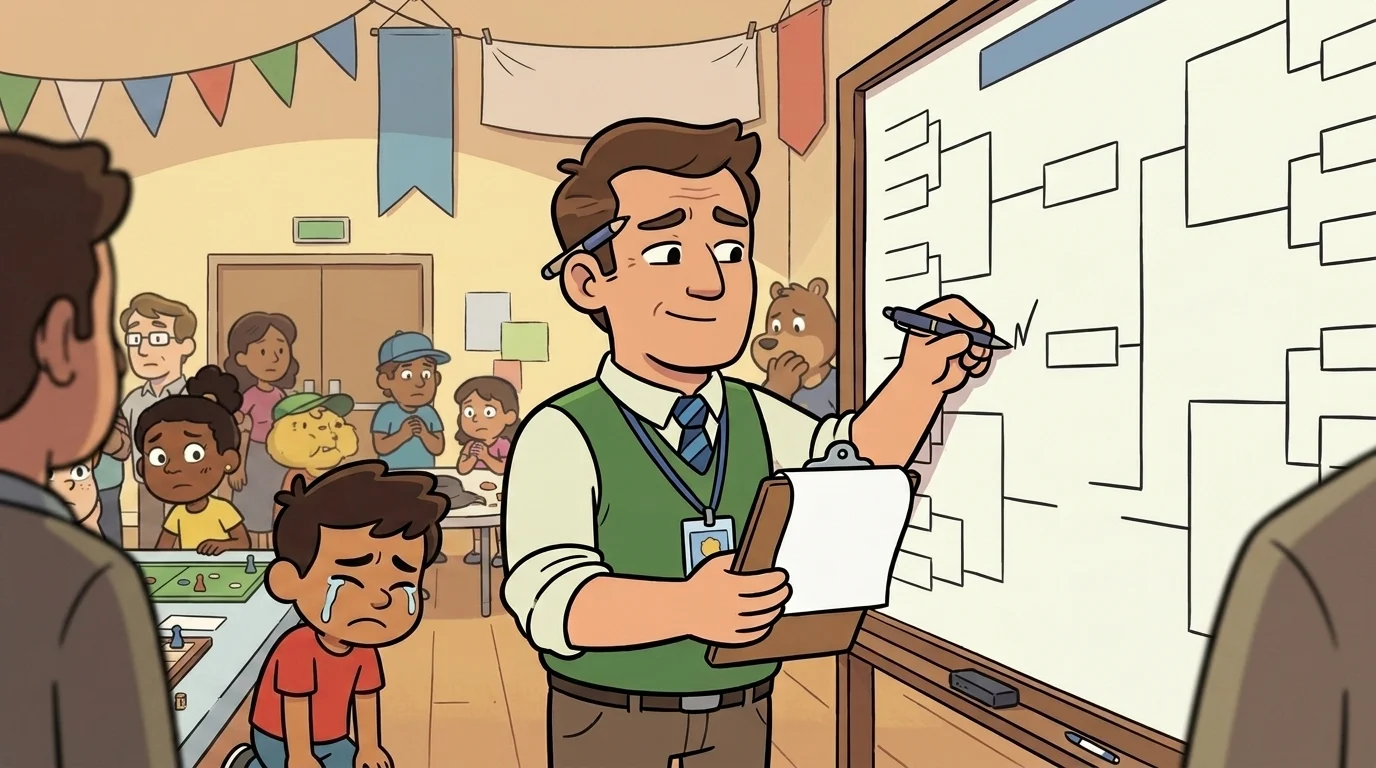
He came to TourneyForge because it ran knockouts every day, and every knockout was a chance to send the wrong kid home early — or not to.
The keeper set him one test. "Two players both claim they won the last move. It's genuinely unclear. One of them is crying. What do you do?"
Brackett didn't hesitate. "I don't decide by who's crying — that's just the loudest kind of arguing. I check what we agreed before the game. If we recorded the moves, I replay them. If there's a rule for an unclear ending, I read it out and apply it, the same way I would if it were my own best friend standing there." He paused. "And then I'm gentle about it. Being fair doesn't mean being cold. It means the crying kid still gets the honest answer — just kindly."
"You'd apply the rule even against a friend?" the keeper asked.
"That's the only way anyone ever trusts me to apply it for them," Brackett said.
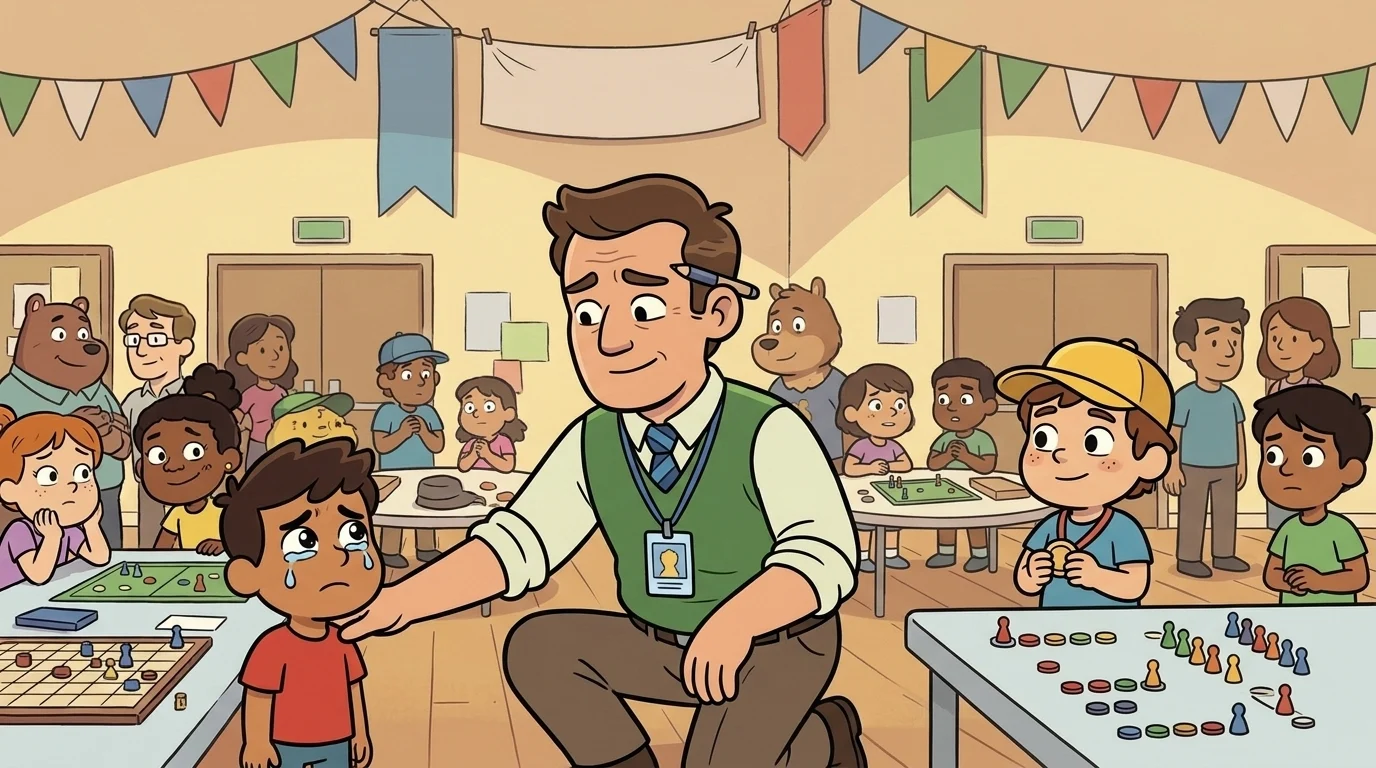
Now, at the front of a tense knockout, two kids were both insisting they'd won a photo-finish of a final move, and one of them — a boy Brackett genuinely liked, who'd been kind to the little ones all day — was blinking back tears.
The hall went quiet. Everyone waited to see if the nice kid would get the nice call.
Brackett pulled the recorded moves and laid them out. He read them once, carefully, then again. And the record was clear: the other player had won, by a single move, fair and square.
He crouched down to the crying boy's level. "I checked the record," he said gently. "You lost the last move by one. I know it doesn't feel good. And I want you to know I checked it exactly as hard as I'd have checked it if it went the other way — because that's the only reason my calls are worth anything." He put a hand on the boy's shoulder. "You played a great tournament. The record just says she got there first."
The boy swallowed hard. And then — this was the part Brackett had spent his whole life hoping to see — he nodded. Not happy. But settled. He believed the call, even though it hurt, because he could see it hadn't been bent for anyone.
Brackett stood and looked at his bracket: every slot seeded with care, every dispute settled by the record, the best two players still alive and heading, as they should, toward each other at the very end. He never needed to win the tournament himself. He only needed the draw to be fair and the calls to be honest — so that no kid in his hall ever went home the way Nadia had, wronged by a careless bag and told it was just how the game worked.
The TourneyForge ensemble
Brackett is part of TourneyForge's distributed-narrative cast. Each character embodies a different curricular primitive; together they teach the full subject.