Chartwell
CHARTWELL — the wall-chart tells the truth, and when two scores tie, the agreed rule breaks the tie — never a favorite, never the loudest.
Loading audio…
Press play to listen along. The line being read lights up as you go.
Show full transcript
Loading transcript…
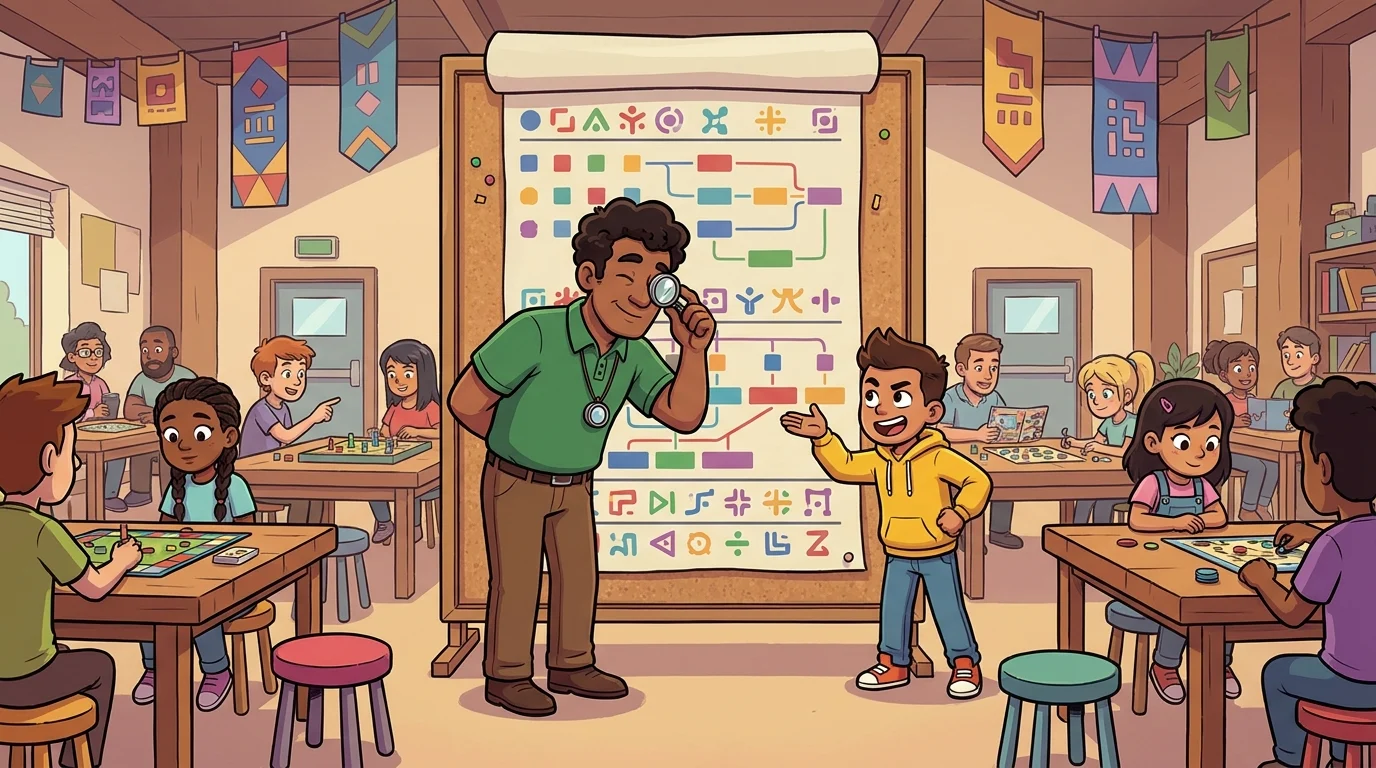
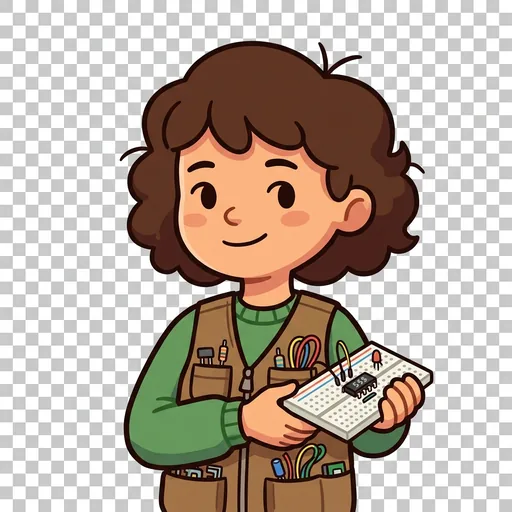
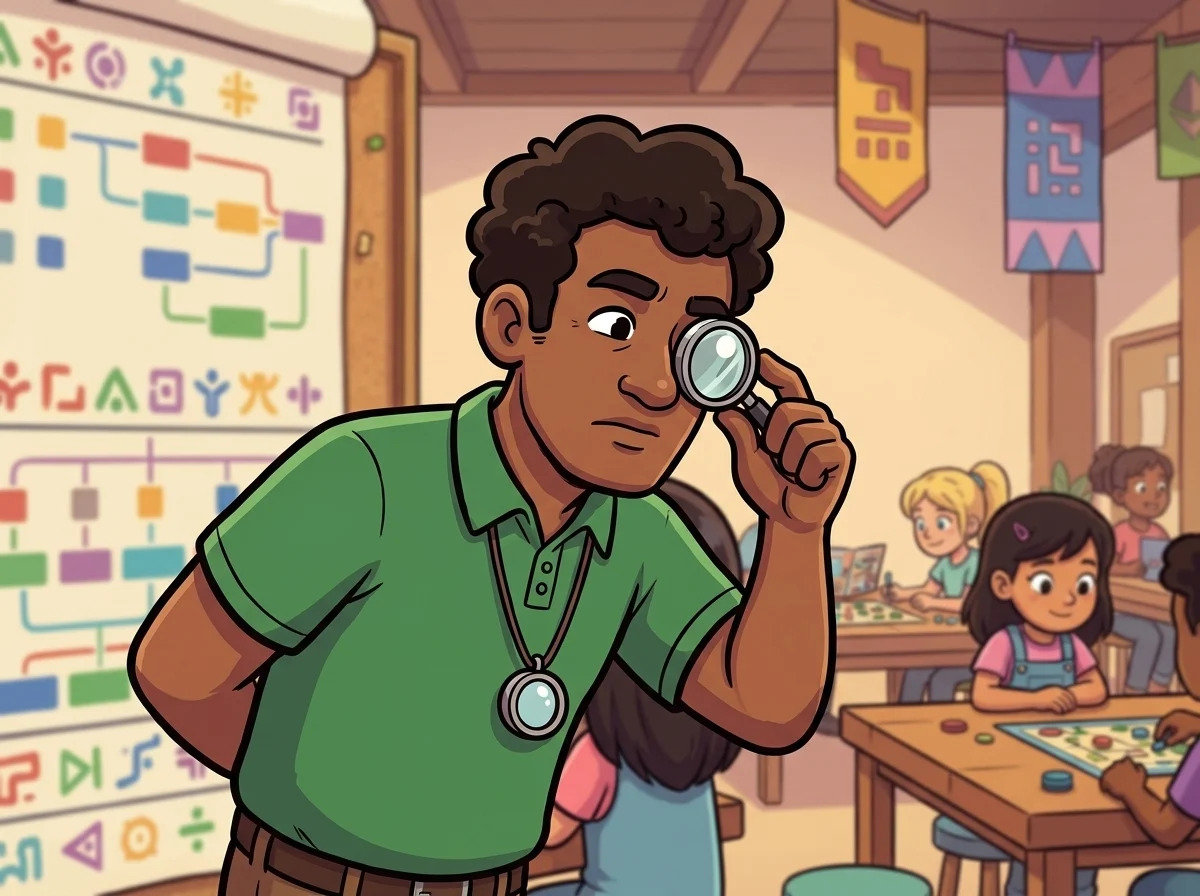
At the back of the TourneyForge hall there was a tall wall-chart, and beside it, almost always, stood Chartwell — green shirt, a small round magnifier on a cord around his neck, dark curls, and a habit of leaning in very close to the numbers as if they might whisper.
The chart held every player's score. Chartwell's whole job was to make sure it told the truth. He wrote each result the moment a game finished, and he checked his own writing twice, and when someone asked "who's winning?" he never guessed — he lifted his little magnifier, read the actual chart, and said the actual name.
"It's obviously me," announced a confident kid with three wins, leaning on the chart. "Just put me first."
Chartwell peered through his magnifier. "You have three wins," he agreed. "So does she." He pointed to a quiet girl two tables over, also on three. "You're tied."
"But everyone knows I'm better."
"The chart doesn't know feelings," Chartwell said, not unkindly. "It knows wins. And when two people tie on wins, I don't ask the room who they like. I use the tie-break we agreed on before the first game — who beat the tougher opponents." He ran his finger along the row. "You played two easy tables and one hard one. She played three hard ones. So the chart puts her first. Not because I like her more. Because that's the rule you said yes to when you sat down."
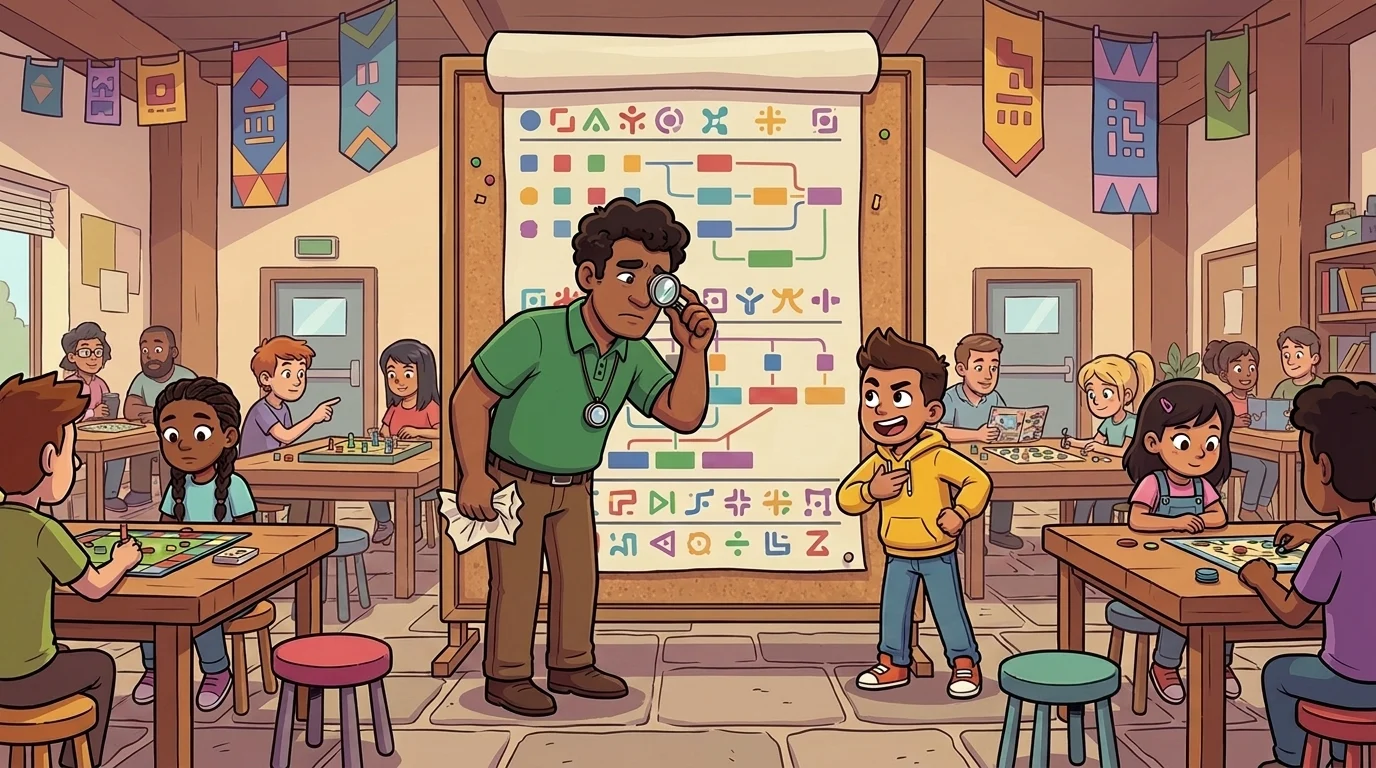
Chartwell had learned to love the honest chart because he had once been robbed by a dishonest one.
At his old school there had been a reading contest — most books finished wins a prize — and Chartwell had read fourteen, more than anyone, and kept a careful list with the date beside each one. But when the results went up, the prize went to a boy who had read nine, because the boy was funny and popular and had told the teacher a good story about how hard his nine had been.
Nobody checked Chartwell's list. Nobody looked at the actual numbers. The winner was chosen by who felt like a winner, and the feeling had a louder voice than the truth.
He remembered standing in front of that results board with his careful list crushed in his fist, a sick, swooping drop in his stomach — the specific dizziness of watching something you know is true be quietly overruled by something everyone would rather believe. He didn't cry. He just felt the world tilt a few degrees and stay tilted. If the real number didn't win, then what was the point of doing the real work?
A librarian set the world back level, though it took her about thirty seconds.
She found him afterward, saw the crushed list, and asked to see it. She read all fourteen dates. Then she took out her own notebook and showed him a column of names and numbers, neat and dated, going back years.
"This is how I run my contests," she said. "I write the rule down before anyone starts. 'Most books, and if two people tie, the one who finished first.' I put it on the wall where everyone can see it. Then when it's over, I don't decide anything. The rule already decided. I just read it out."
"But what if you like one kid more?" Chartwell asked.
"Doesn't matter. That's the point of writing it down early," she said. "A rule you pick before you know who it helps is a fair rule. A rule you pick after is just a favorite wearing a disguise." She handed him a fresh notebook. "Here. Keep the chart for the next one. And when someone tells you a good story about why the numbers should bend — you smile, and you read the numbers anyway."
The tilt in the world came slowly back to level. Not because he'd won the prize — he never got that prize. But because someone had shown him the numbers could be protected, if somebody was willing to stand next to them and read them honestly, out loud, even to the popular kid's face.
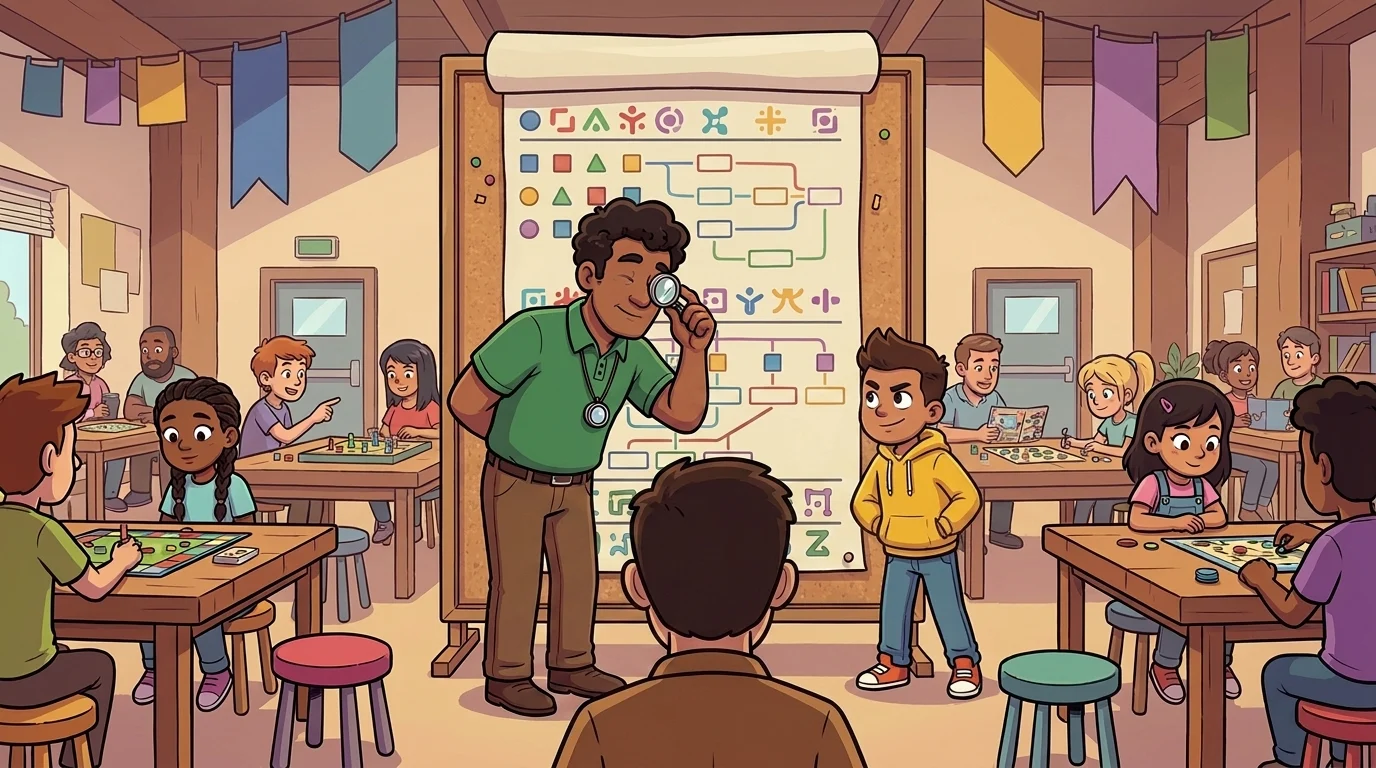
He came to TourneyForge because it had the biggest, most public chart he'd ever seen, and the most people who'd want to argue with it.
The keeper tested him on his first afternoon. "Two players finish tied on wins. One is my nephew. Which goes first on the chart?"
Chartwell didn't even blink. "Whichever the tie-break says — the one who beat the harder opponents. It doesn't matter that he's your nephew. If it did, it wouldn't be a chart, it'd be a favor." He lifted his magnifier. "Where's the rule written down?"
The keeper smiled. "There isn't one yet."
"Then that's the first thing I'll fix," Chartwell said. "You write the tie-break on the wall before round one, so nobody can argue it after. That's the job." And he did.
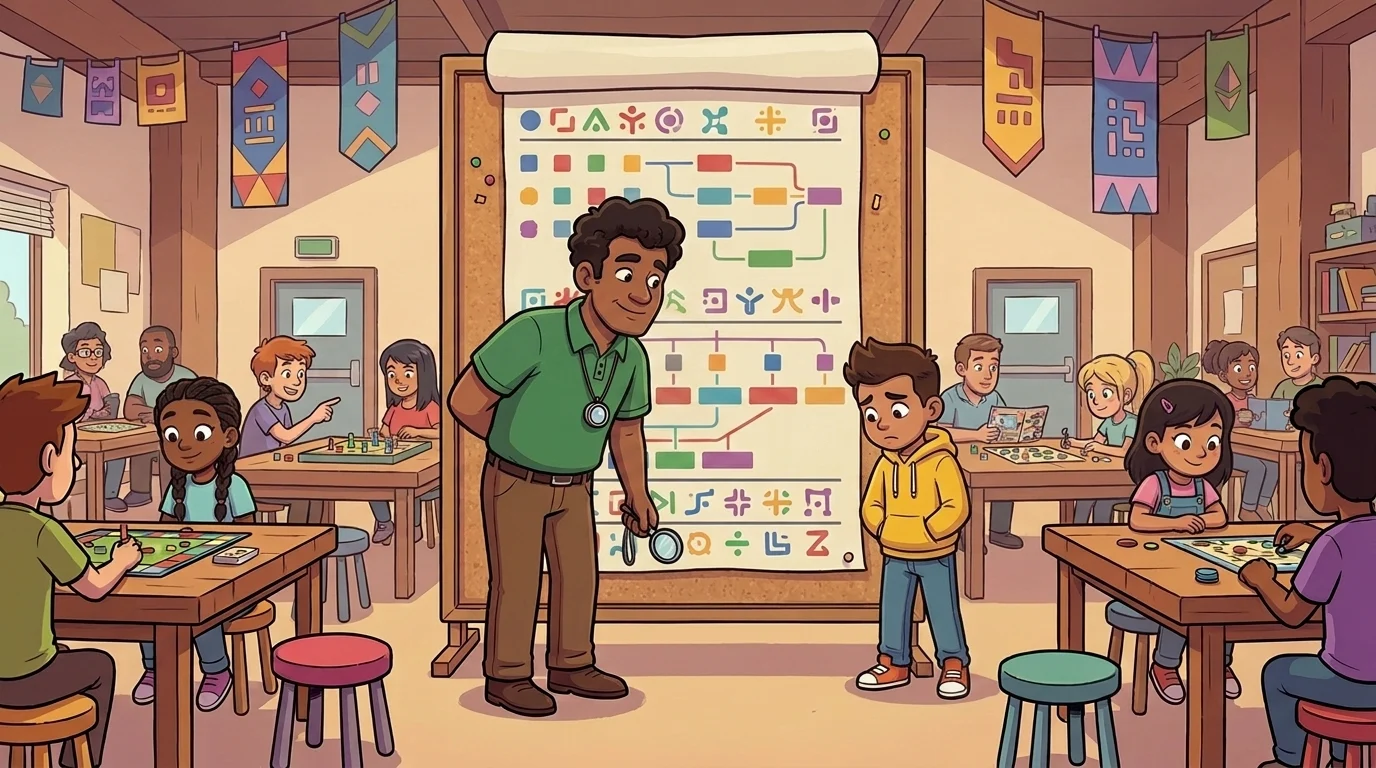
Now the confident kid was still leaning on the chart, still sure the numbers were about to bend his way.
"Come on," he said. "One little change. Just put me above her."
Chartwell looked at him for a long moment, and he thought about a crushed list in a small fist, and a world tilted a few degrees for no good reason. "No," he said gently. "And I'll tell you why I can't, so you don't think it's about you. If I bend the chart for you today because you asked loudly, then tomorrow it bends for whoever asks loudest, and then it's not a chart anymore — it's just a rumor with a frame around it. Everybody stops trusting it. Including you, the day it bends against you."
He turned to the whole hall and read the standings out plainly — the quiet girl first, on the tie-break, exactly as the wall had promised since before round one. He watched the girl's face when she heard her own name at the top: not gloating, just seen. The careful player who'd beaten the hard tables, told the truth about, out loud, in front of everyone.
That was the feeling he'd been chasing his whole life, from the wrong side of it to the right. He never had to be the winner on the chart. He just had to make sure the chart never lied — so that no kid who did the real, hard, quiet work ever again had to stand in front of a board and watch a good story beat the truth.
The TourneyForge ensemble
Chartwell is part of TourneyForge's distributed-narrative cast. Each character embodies a different curricular primitive; together they teach the full subject.