Pairwell
PAIRWELL — a fresh opponent every round, matched close in score, and never the same two twice. good pairing is how everyone gets a fair game.
Loading audio…
Press play to listen along. The line being read lights up as you go.
Show full transcript
Loading transcript…
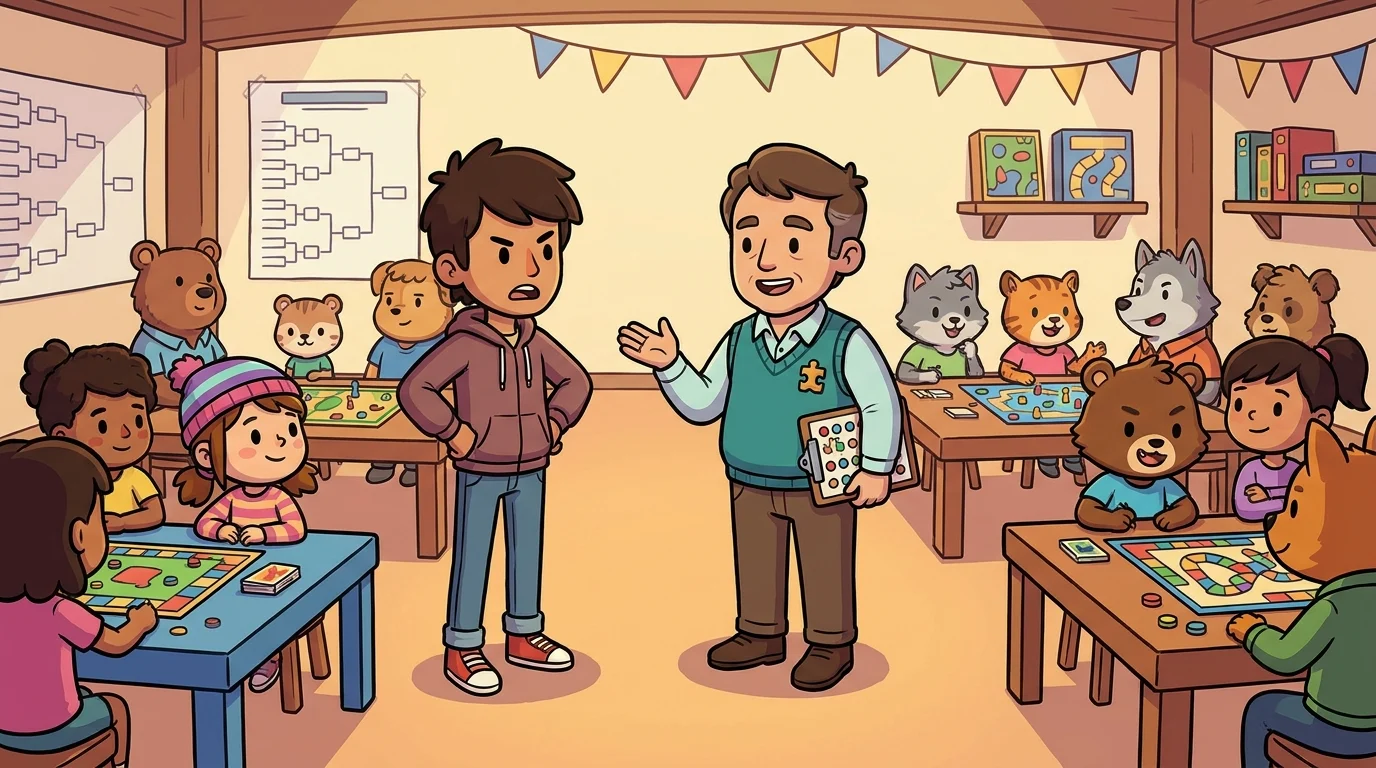
If you watched the TourneyForge hall between rounds, you would see a small commotion at the front, and at the center of it, Pairwell.
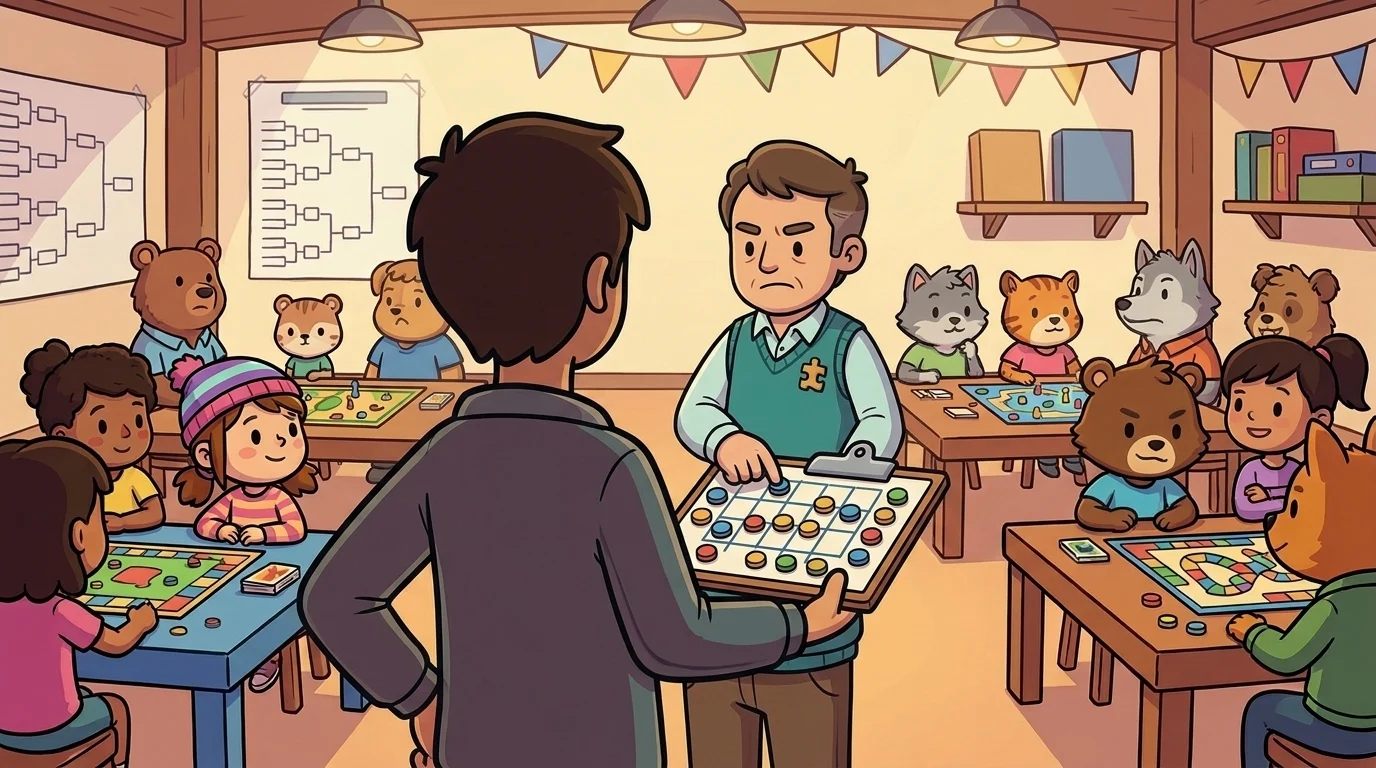
He wore a teal sweater-vest with a little brass puzzle-piece pinned to the chest, and he carried a clipboard covered in small colored tokens — one for every player in the hall. Between every round he moved them around, sliding tokens next to each other, frowning, sliding them apart again, until the whole board of them clicked into a shape only he could see.
"Round two!" he called, and read the pairings off the clipboard. "Blue table four — you're with the girl in the striped hat. Card corner — swap partners, you two just played."
A tall kid put his hands on his hips. "But I beat the girl in the striped hat last time. I want an easy game again."
Pairwell looked at him the way a puzzle-maker looks at a piece jammed in the wrong slot: kindly, and completely unmoved. "You already had that game," he said. "It's done. A fresh round wants a fresh opponent — someone close to where you are now, not where you were an hour ago." He tapped a token near the tall kid's. "She won her last two. You won yours. You're a match. That's not me being mean. That's me giving you a game worth playing."
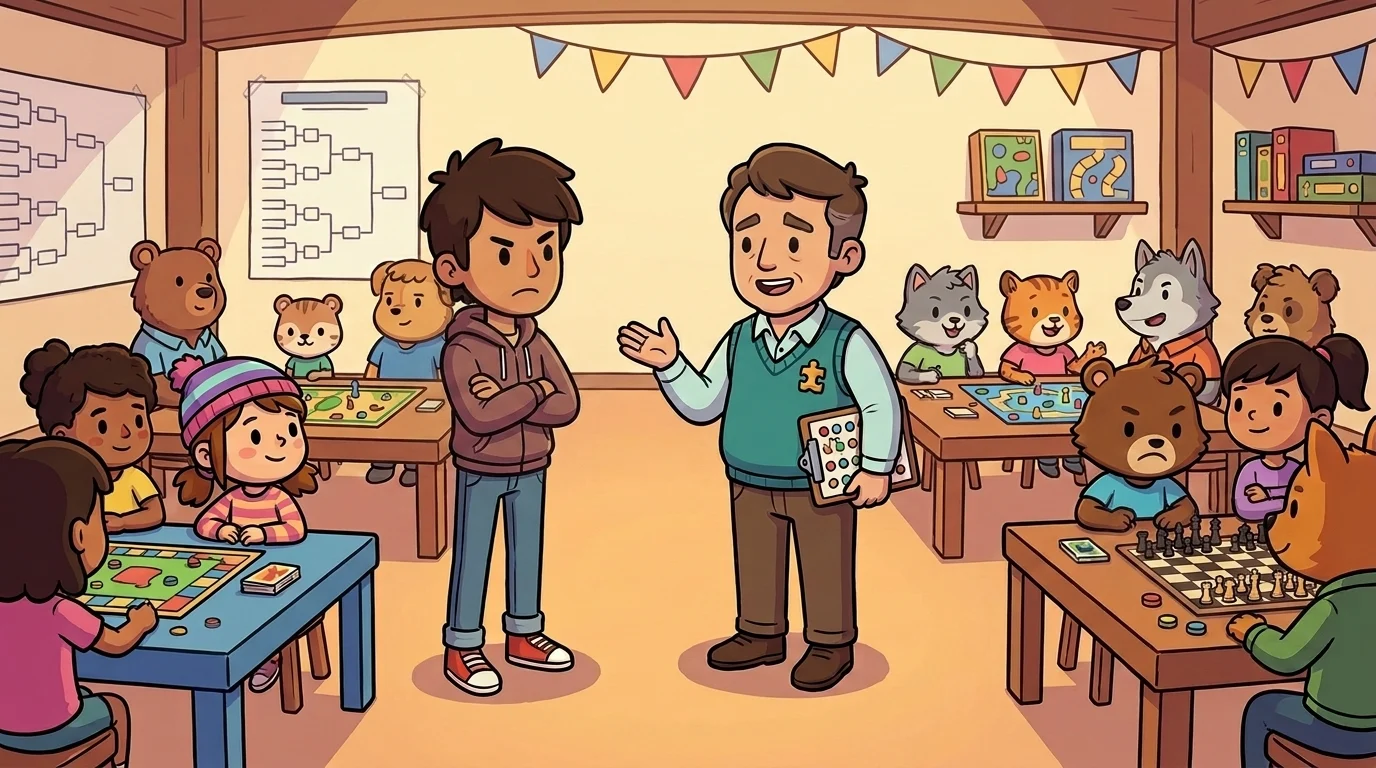
Pairwell knew what a bad match felt like, because for years he had lived inside one.
Where he grew up there were only three kids on his street who liked board games, and one of them was his older cousin, who was simply better at everything and always would be. Round after round, week after week, Pairwell was matched against him — because he was there, because it was easy, because nobody ever thought about who should play whom. And round after round, Pairwell lost.
It wasn't the losing that wore him down. It was the flatness of it. There was no moment where the game could have gone either way, no held breath, no maybe. He always knew the shape of the ending before the middle. After a while he stopped feeling nervous before a game, and that was worse — because when you stop feeling nervous, it usually means you've stopped hoping.
He remembered lying on the floor one afternoon, cheek against the cool wood, the game board still set up above him on the table, and thinking a small grey thought: maybe I'm just not a game person. It wasn't true. But a hundred mismatched games in a row can teach you a lie about yourself, and he'd almost finished learning it.
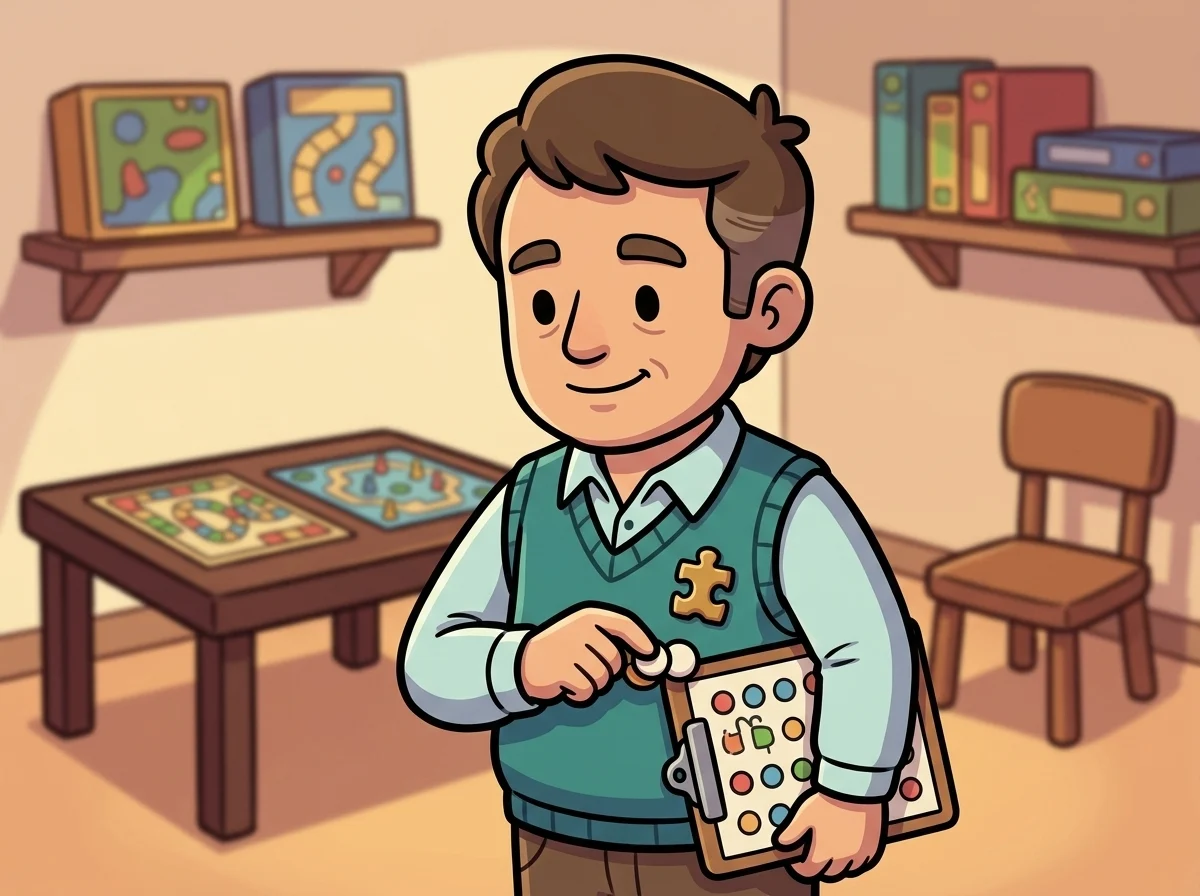
His grandmother fixed it, though she never called it fixing.
She ran a little afternoon club at the library — six kids, one table, a shelf of dog-eared games — and she kept a scrap of paper in her apron pocket with everyone's names on it. Before each game she'd squint at the scrap and then say who played whom, and it was never the same pairing twice, and it was never lopsided.
"Why do you always change it?" Pairwell asked her once. "Wouldn't it be easier to just let us sit where we want?"
"Easier for me," she agreed. "Worse for you. Sit where you want, and the same two friends play each other all afternoon and everyone else waits." She turned the scrap over. "I match you close — you against someone about as good as you, someone you haven't faced yet. That's where the real game lives. Right at the edge where you don't know who'll win." She handed him the scrap. "Here. You do it today. Look at who's had it easy, who's had it hard, and who hasn't played whom. Then make it fair."
He looked at six names for a long time. And when he finally slid them into pairs — this one against that one, close in skill, new to each other — and watched those games actually get tense, watched a kid who always lost lean forward with real hope for the first time, something in his chest that had been lying flat for years stood slowly up.
He came to TourneyForge because it was the biggest tangle of names he had ever seen, and untangling it fairly was the one thing in the world he was sure he was good at.
The keeper handed him a clipboard on his first day and set him a test. "Forty players. Round one is done. Some are winning, some are losing, everyone's tired of who they just played. Give me round two."
Pairwell didn't ask how. He sat down with the tokens and began to slide them — winners near winners, so the games stayed close; no rematch of a pair that had just met; the odd-one-out given the fairest game left over instead of the scraps. It took him nine minutes. When he handed it back, every single player in the hall had a fresh opponent matched close to their own run of luck.
"You didn't help anyone win," the keeper observed.
"I helped everyone have a real game," Pairwell said. "That's a different job. That's mine."
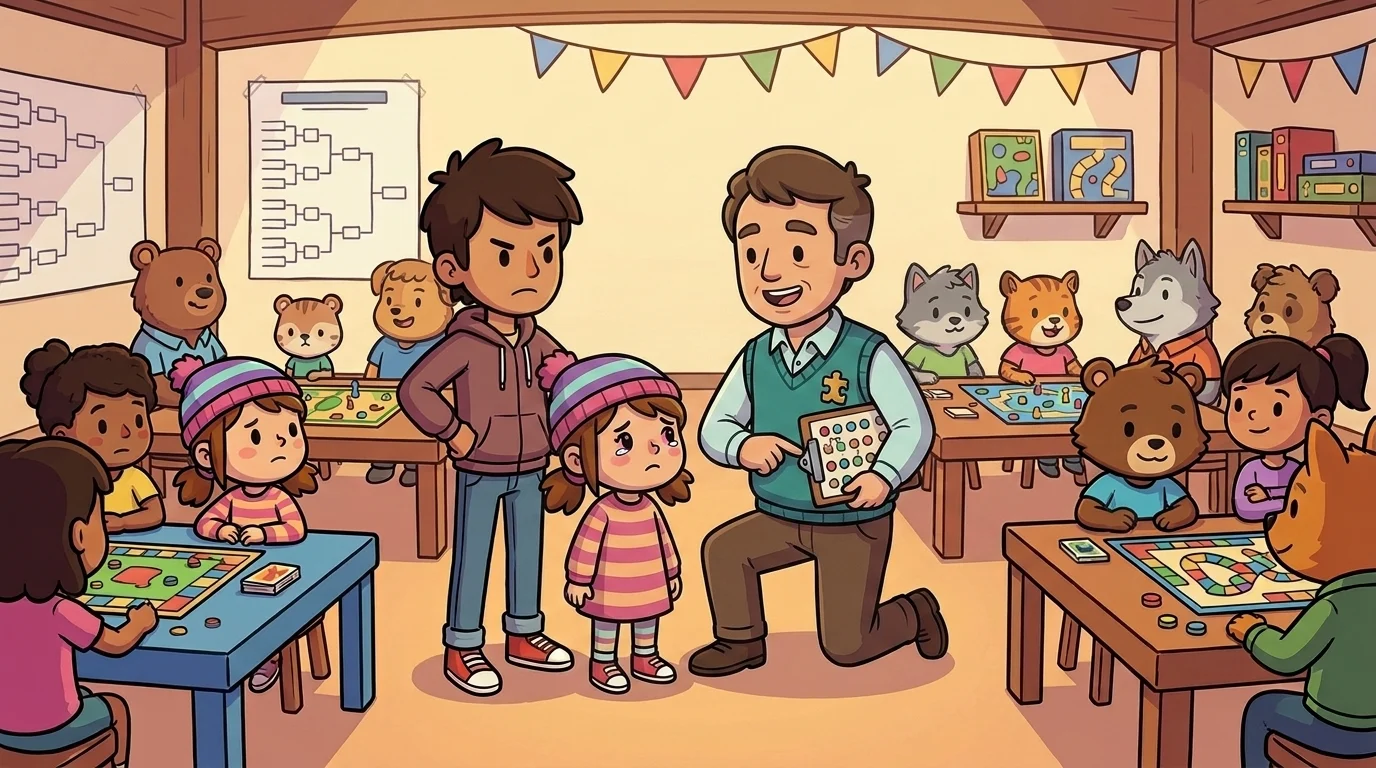
Now a small girl tugged his sleeve between rounds. She had lost both her games so far, and her eyes were pink at the edges.
"Can I just... not play the next one?" she asked. "I always get someone who crushes me."
Pairwell knelt to her level and turned his clipboard so she could see the tokens. "Not here you don't," he said. "Look. You lost twice — so did he, and her, and him." He pointed to three tokens clustered near hers. "I don't pair you against the kid who's winning everything. That's not a game, that's a wall. I pair you with someone who's had exactly the day you've had." He slid her token gently against another. "This girl. She's lost twice too. Neither of you knows who'll win. That's the whole point of a round — the not-knowing."
The girl studied the two touching tokens. He watched the flat, braced-for-a-crushing look leave her face, watched a small dangerous thing come back into it: hope. She nodded and went to her table, and for the first time all day she sat down like someone who thought she might actually win.
Pairwell straightened up and looked out over his clipboard of tokens — forty small colored circles, each one a kid who deserved, every single round, a fresh face across the board and a game that could still go either way. He never got to be the one who won. He just made sure that everyone, every round, got the one thing a hundred mismatched games had once tried to take from him: a game worth being nervous about.
The TourneyForge ensemble
Pairwell is part of TourneyForge's distributed-narrative cast. Each character embodies a different curricular primitive; together they teach the full subject.
-

Roundel
Fair play — the tournament director who starts each round and keeps every game fair (the mentor)
-
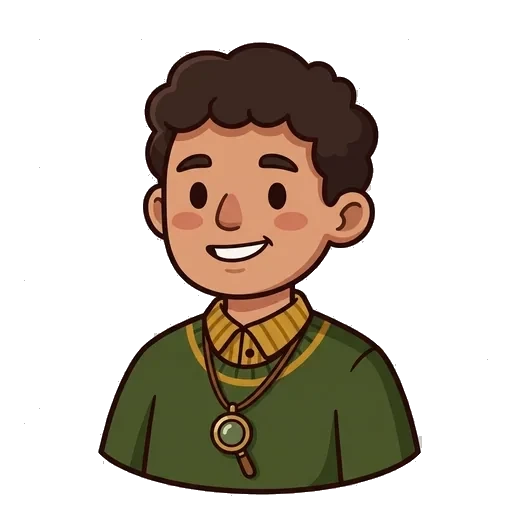
Chartwell
Standings — keeps the wall-chart and breaks ties by the fair rule, so the ranking is honest
-
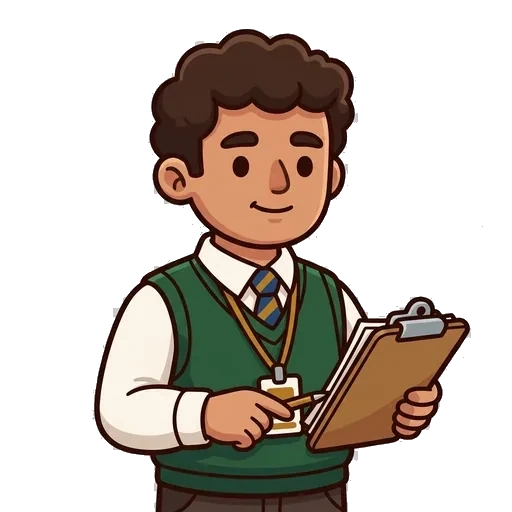
Brackett
The bracket — seeds the knockout for the fairest matchups and settles a dispute by the rule