
Cull
CULL — a handful of true examples proves nothing until you know the pile they were drawn from. always ask what got left out — the sample, not the story.
Loading audio…
Press play to listen along. The line being read lights up as you go.
Show full transcript
Loading transcript…
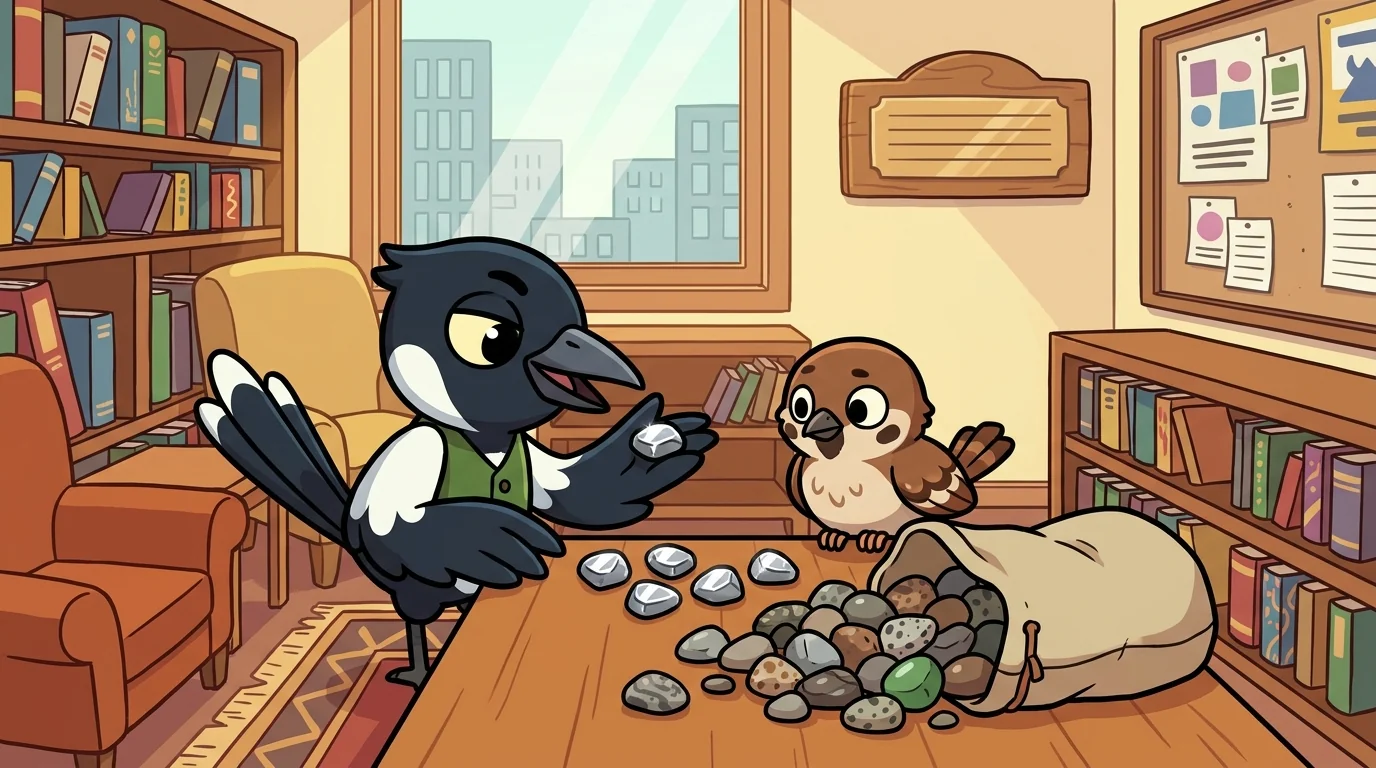
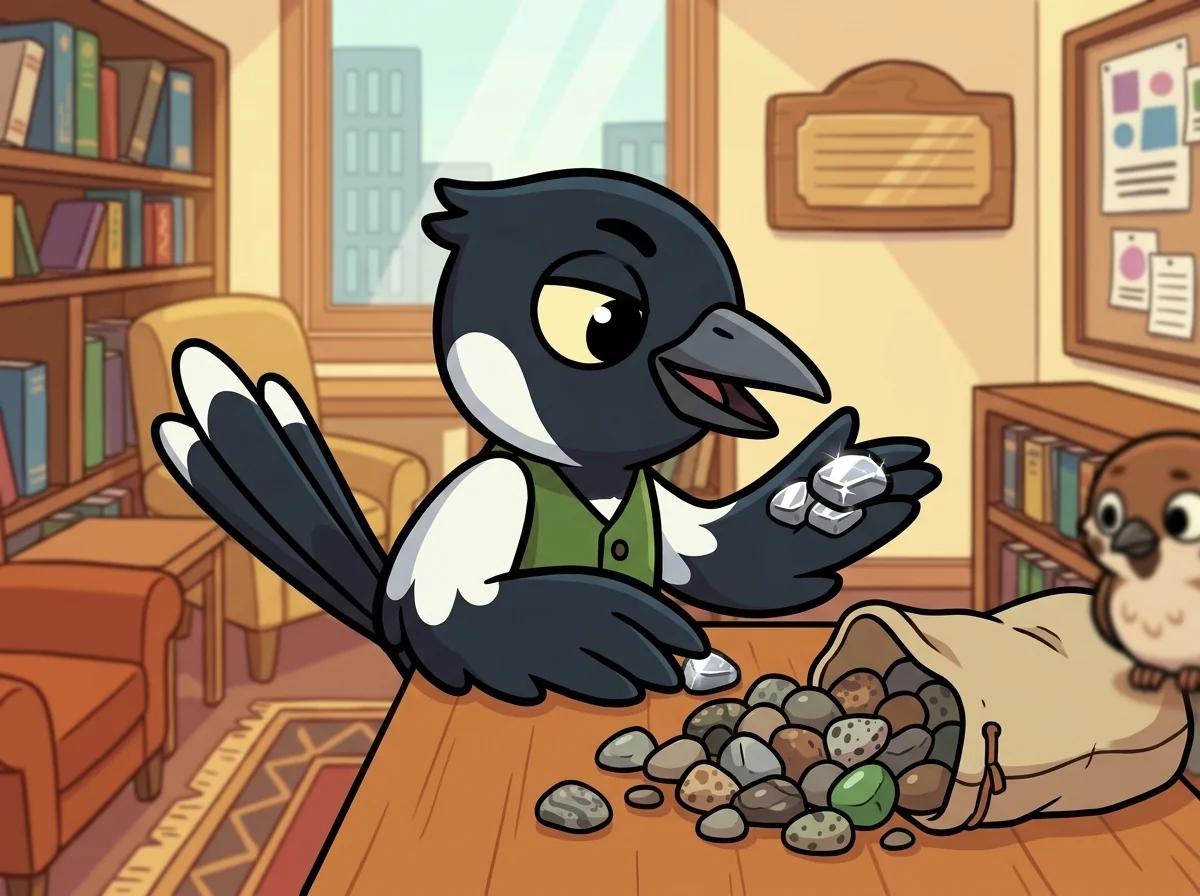
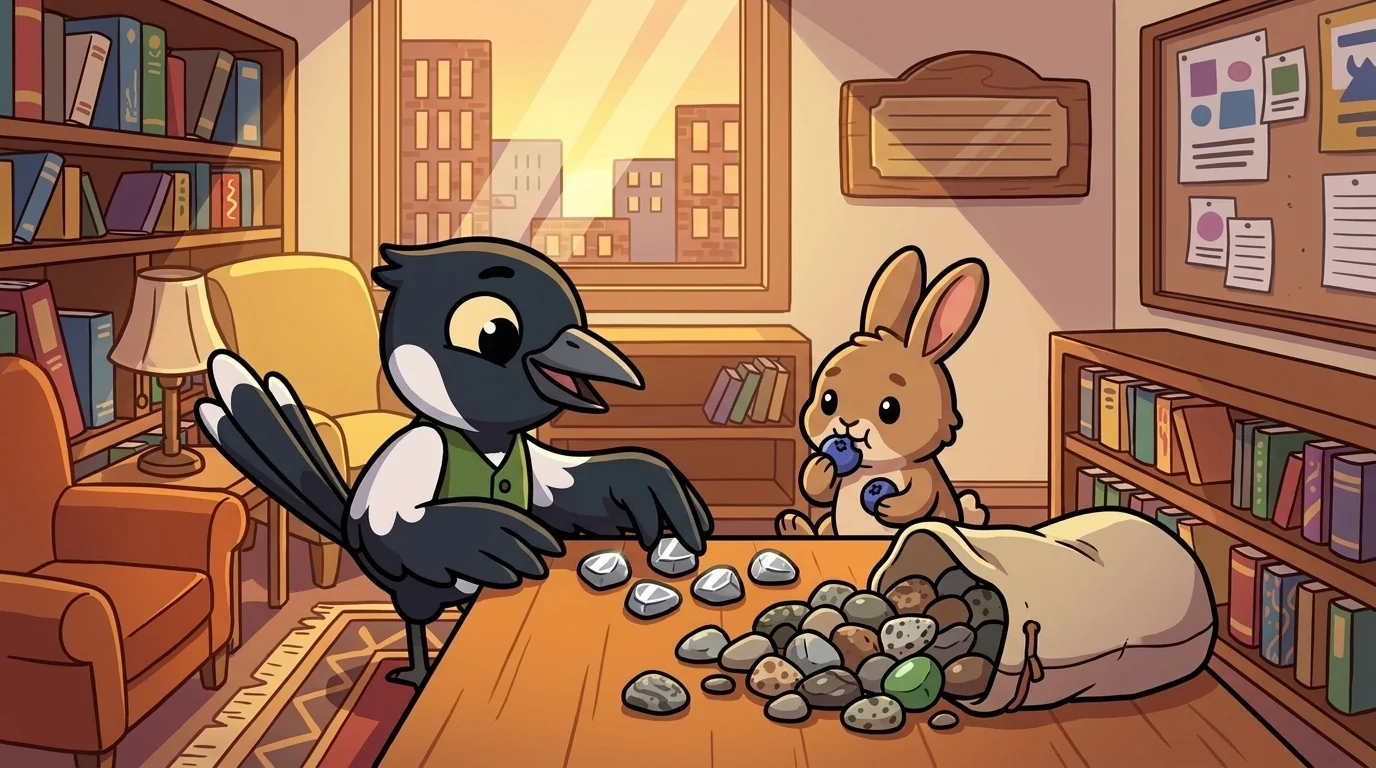
Cull spread five silver stones on the reading-nook table and let a young sparrow believe, for exactly one minute, that the whole river ran with silver. She was a sleek magpie, black-and-white with a bright investigating eye, and she was doing it on purpose. "Every word I said was true," she said, and tipped out her bag: dozens of stones, grey and brown and speckled, one lonely green. "Five silver stones — real. But I chose them. I showed you a sample, and I picked the sample to fit my story. The trick was never a lie. The trick was selection."
The sparrow stared at the mound of not-silver. "So how do I not get caught?"
"You stop asking the question they want you to ask," Cull said. "They want you asking are these examples real? — and they usually are. The question that actually protects you is: what's the pile these came from, and what got left out? A handful can't tell you about a river. Only the whole pile can, or a fair scoop of it — one grabbed without peeking."
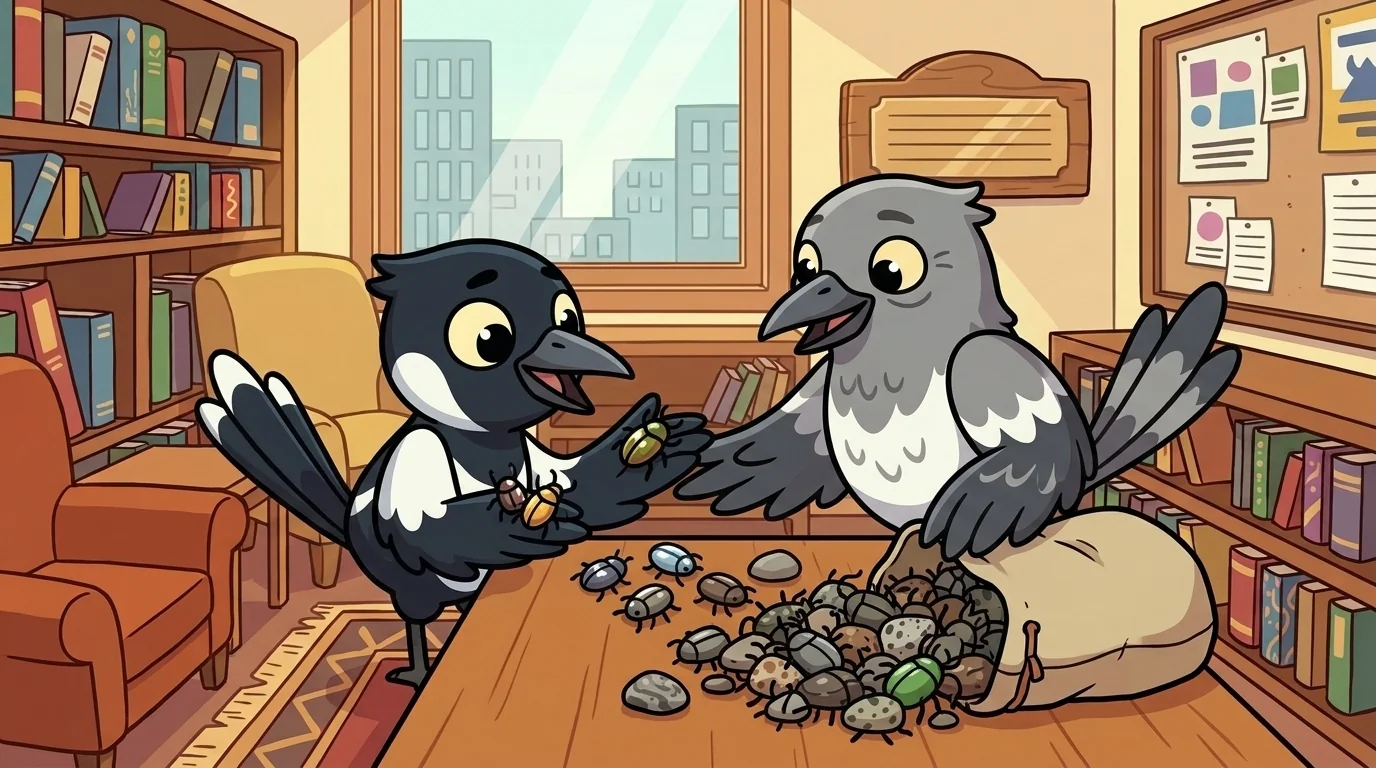
She had learned it the hard way, as a fledgling. An older bird had flashed her three shiny beetles — "the meadow's full of them!" — and she'd hunted all day and come home with almost none, sure she was simply bad at finding things. Her grandmother, an old magpie, had poured out a mix of stones, mostly dull. "You're not bad at finding," she'd said. "You were handed a culled sample and mistook it for the whole meadow. Three shiny out of a thousand dull isn't 'full of them.' Someone reached in and kept only the ones that fit." She'd nudged the pile. "The commonest trick in the world isn't lying about the examples. It's hiding the denominator — the number they came out of. A number on top means nothing without the number underneath."
Cull carried that word — denominator — like a lockpick ever after. A grey afternoon, a worn-out crow slumped onto her stool. He'd spent a whole argument firing striking cases at a classmate and gotten nowhere. "I had so many examples," he said. "Real ones. Why didn't it land?" Cull laid two cards down. "How many did you look at before you chose the ones you brought?" The crow blinked. "The ones that fit, I suppose." "Then you culled your own evidence and never noticed," she said, not unkindly. "You went looking for cases that agreed with you and stopped when you found them. That's the same trick, aimed at yourself. It even has a name — you go hunting only for what confirms you, and the meadow of everything else stays invisible."
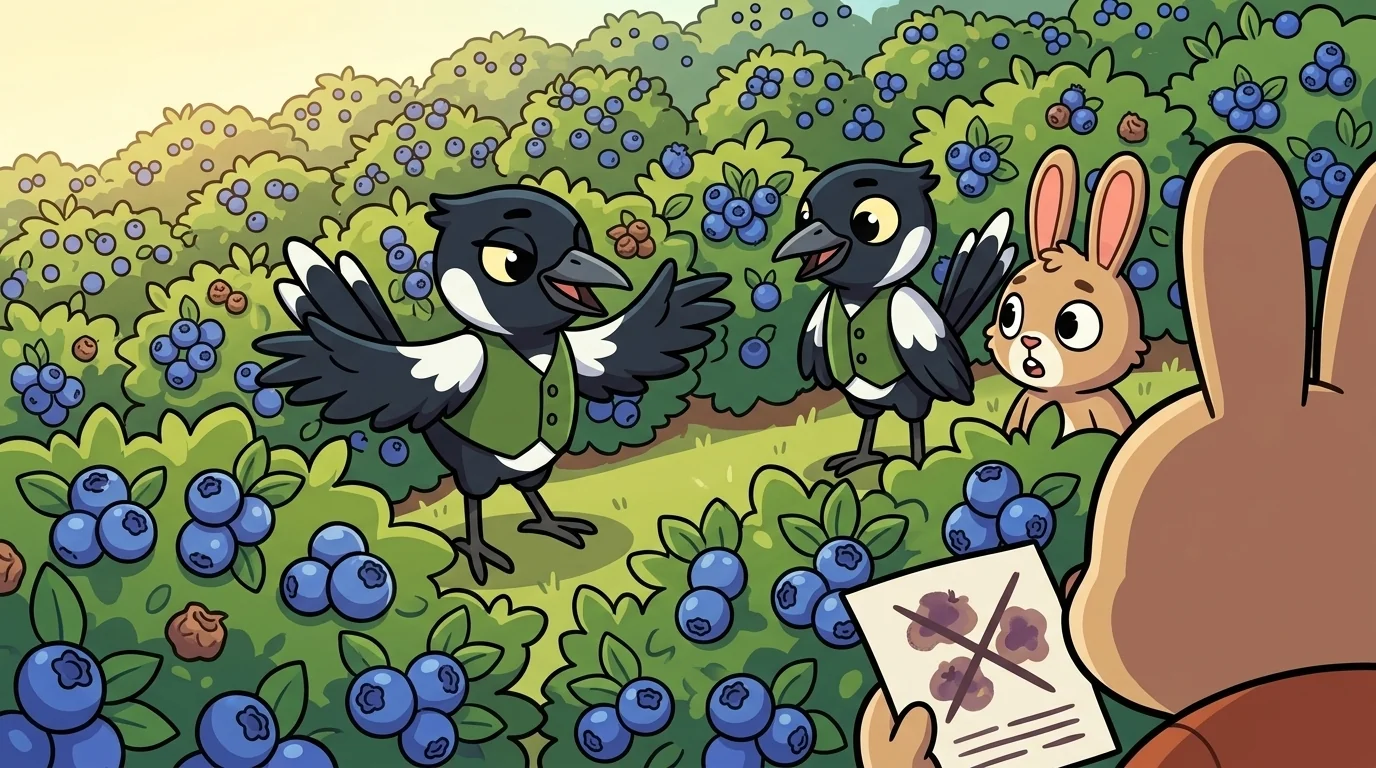
The crow sat with that. "So a pile of true examples can still be a lie."
"A pile of true examples chosen to persuade is exactly how the most convincing lies get built," Cull said. "Nobody has to invent a thing. They just show the silver and pocket the grey." She fanned her cards. "So when someone proves a point with a string of vivid cases, you don't call them a liar. You ask, gently: is this all of them, or the ones that fit? How many are you not showing me? Ask for the pile. Ask for the fair scoop. Watch the certainty come down to its real height."
The crow's shoulders eased. He'd walked in feeling outgunned by his own facts; he left holding a quieter, sturdier thing — the knowledge that he didn't have to out-example anyone, only ask, every time, what got left out. Cull tucked her cards away and felt the small clean gladness of it: not the thrill of winning an argument, but the settled calm of a mind that could no longer be stampeded by a well-chosen handful. A number on top, she thought, and always the patient hunt for the number underneath.
"Never the handful," she murmured. "Always the pile."
The TruthQuest ensemble
Cull is part of TruthQuest's distributed-narrative cast. Each character embodies a different curricular primitive; together they teach the full subject.
-

Claim
Claim-identification — what EXACTLY is being asserted? distinguish claim from opinion from feeling from prediction
-

Weigh
Credibility-evaluation — who's in a position to KNOW? what stake? calibration not verdict (shared design language with DebateForge Weigh)
-

Trace
Evidence-traceback — where does this claim ORIGINATE? what's the chain? open four tabs; follow it back
-

Update
Belief-revision — being WRONG is how knowledge MOVES; visibly carry old-guess and new-guess as data (shared design language with DebateForge Yield)
-

Wonder
Epistemic-humility — 'I don't know yet' is the START of knowing; trust calibrated to evidence; counter-cynicism
-

Prove
Falsifiability — what would change my mind? a belief you could NEVER be proven wrong about isn't strong, it's just stuck
-

Vivid
Anecdote vs. data — one dramatic story feels truer than a hundred quiet ones; ask: is this ONE story, or the whole picture?
-

Norm
Base rates — before you panic at a scary number, ask how OFTEN it usually happens; most 'shocking' things turn out normal
-

Yardstick
Context — 'a lot' and 'a little' mean nothing on their own; always ask: compared to WHAT?