Yardstick
YARDSTICK — 'a lot' and 'a little' mean nothing on their own. always ask: compared to WHAT?
Loading audio…
Press play to listen along. The line being read lights up as you go.
Show full transcript
Loading transcript…
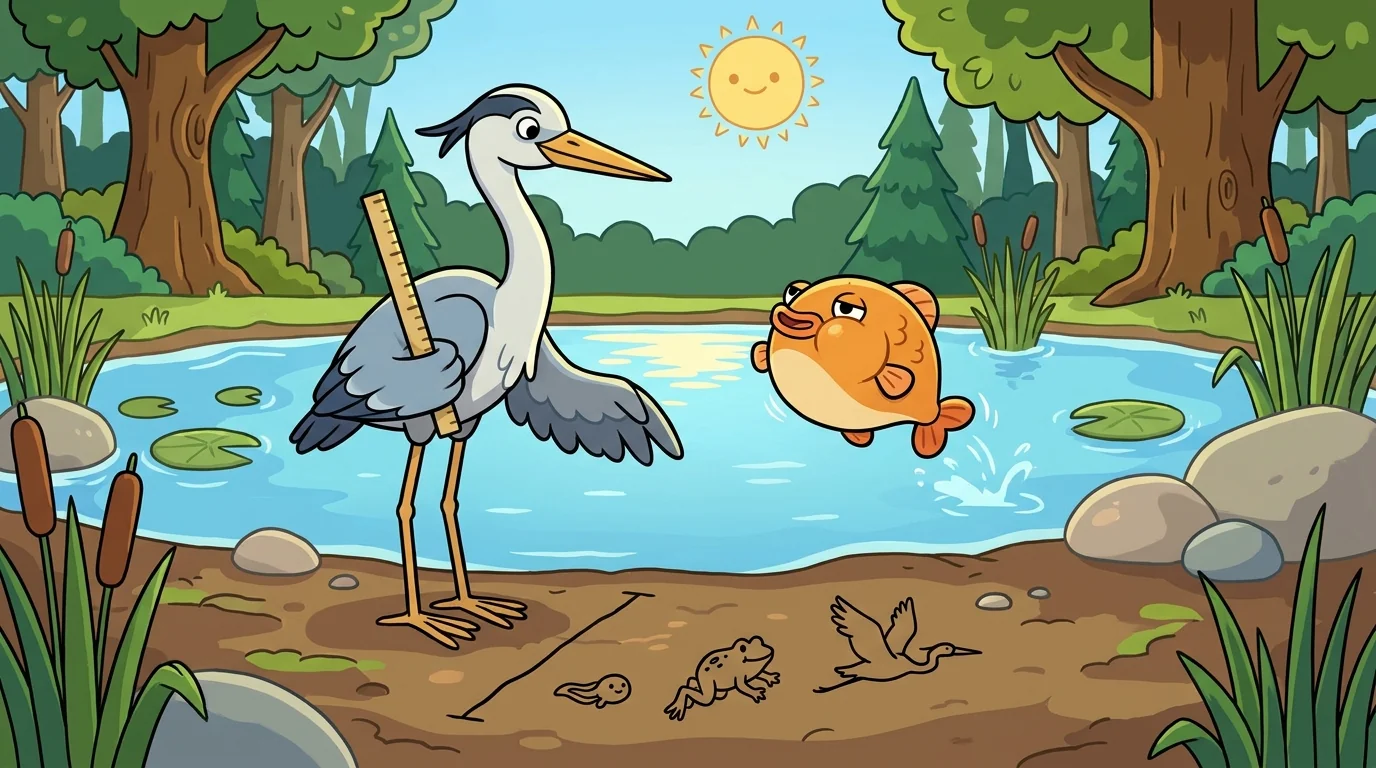
At the edge of the pond, a tall heron stood very still beside a fish who was boasting, and instead of being impressed or unimpressed, the heron asked the one question that changes everything: compared to what?
Yardstick was long-legged and calm, with a measuring-reed always tucked under one wing, and he never let a "big" or "small" go by unexamined. The fish puffed up. "I jumped a WHOLE finger-length out of the water!" he announced. "That's HUGE! I'm the greatest jumper in the pond!"
"A finger-length," Yardstick said mildly. "Is that a lot? I honestly can't tell yet." He tipped his head. "Compared to a TADPOLE, a finger-length jump is enormous. Compared to a LEAPING FROG, it's quite small. Compared to a flying HERON—" he ruffled his own wings "—it's barely a hop. 'A finger-length' isn't big or small on its own. It only means something next to a yardstick — next to what you're comparing it to." He drew a line in the mud. "'A lot' and 'a little' mean nothing on their own. Always ask: compared to WHAT?"
The fish deflated a little. "So my jump isn't automatically huge?"
"It might be huge — for a fish!" Yardstick said kindly. "That's a fair comparison. But 'huge' with no yardstick is just a feeling. Pick the right thing to measure against, and THEN 'huge' or 'tiny' actually means something."
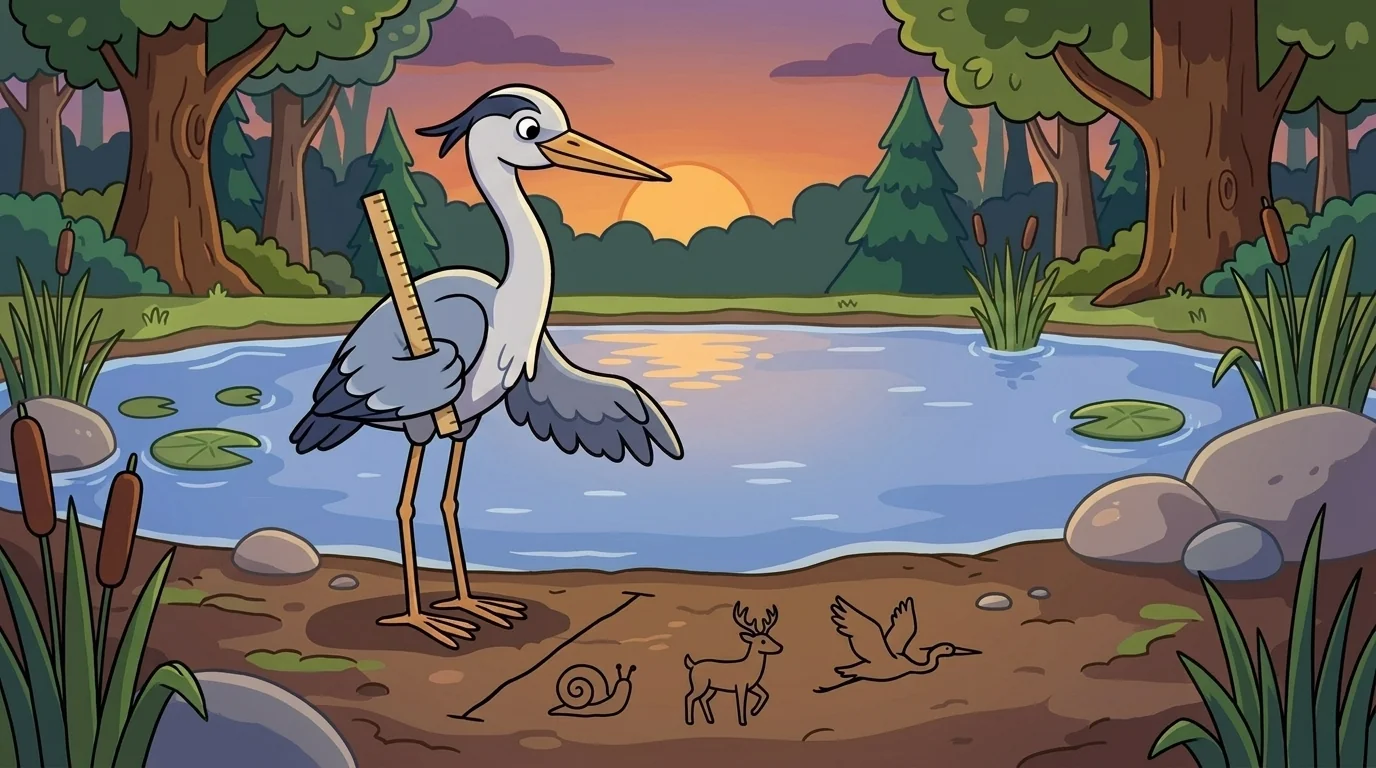
Yardstick had learned about comparison by being wrong about a number, once.
When he was small, someone told him a certain lake was "a MILE across — impossibly far!" and he believed it was the vastest water in the world, uncrossable. Then he flew over it and crossed it in a lazy minute, and felt cheated and confused, sure his sense of size was simply broken.
His grandfather, an old heron with a well-worn reed, stood with him by the water. "Your sense of size isn't broken," he said. "You were given a number with no yardstick. 'A mile across' — is that big? You didn't ask 'compared to what?'" He stretched a long wing. "A mile is impossibly far for a crawling snail. It's a pleasant stroll for a deer. It's a minute's glide for a heron. The SAME distance is huge or tiny depending on who's crossing it." He tapped the reed. "So whenever someone hands you a 'big' or a 'small,' never just feel impressed or alarmed. Ask what it's being measured against. A number with no yardstick is a trick — it borrows whatever size you happen to imagine."
Yardstick started carrying his reed and asking "compared to what?" about every size he heard. And the tricks stopped working — a "huge" number became just a number until he knew the yardstick. The cheated, broken-sense feeling turned into a calm, measured clarity. His sense of size was fine. He'd just been accepting numbers without their yardsticks.
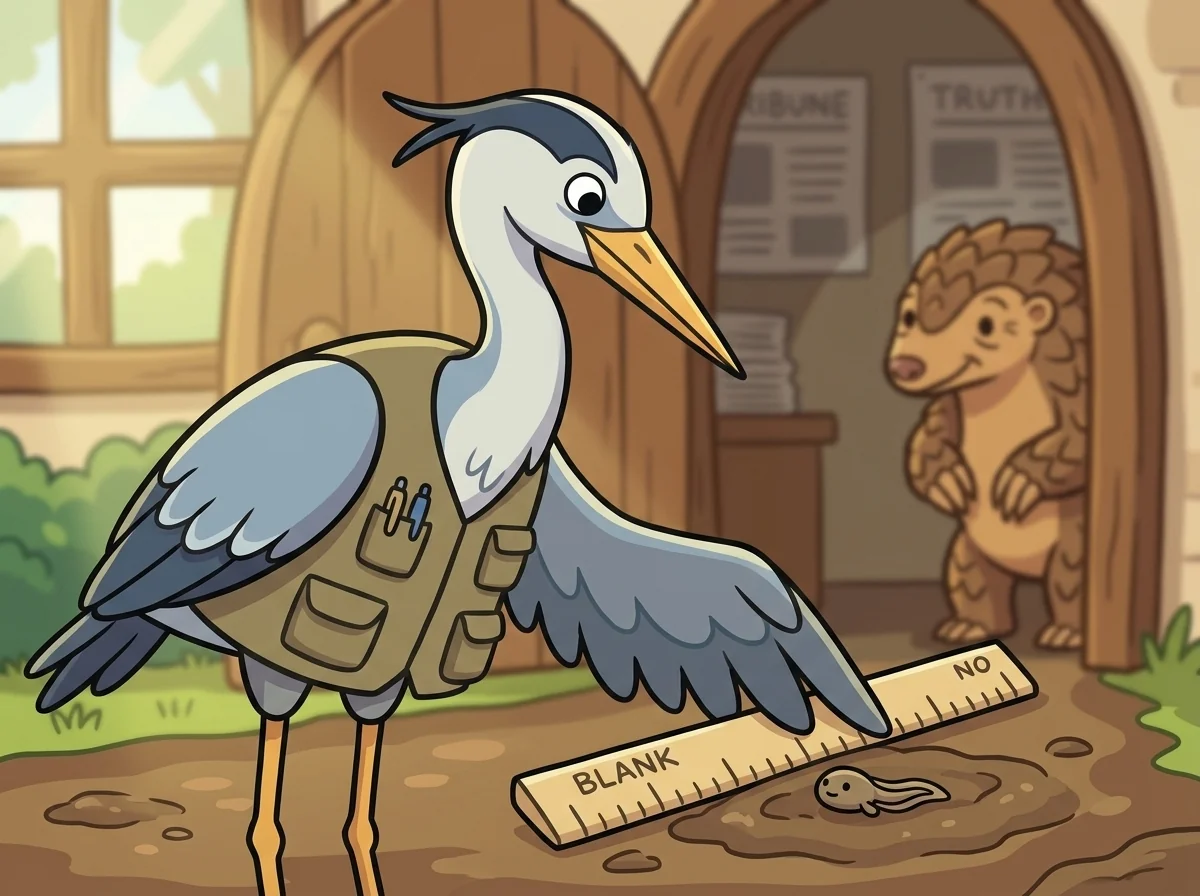
When Yardstick turned twelve, he went to the Truth Tribune, where a wise old pangolin named Veritas asked, "How does a plain number mislead you?"
Yardstick didn't answer with a speech. He held up his reed. "By coming with no yardstick. 'A finger-length jump' — big or small? You can't know until I ask 'compared to what?' Compared to a tadpole, huge; compared to a heron, nothing." He laid the reed against the mud. "The same number is impressive or unimpressive depending only on what you measure it against. So I never accept a 'big' or a 'small' bare. I ask for its yardstick first."
Veritas's eyes crinkled warmly. "Most people just feel the bigness," Veritas said.
"Bigness with no yardstick is a borrowed feeling, not a fact," Yardstick said. Veritas looked at the measuring-reed, and smiled. "Then come in," Veritas said. "The Tribune needs someone who asks what the number is measured against."
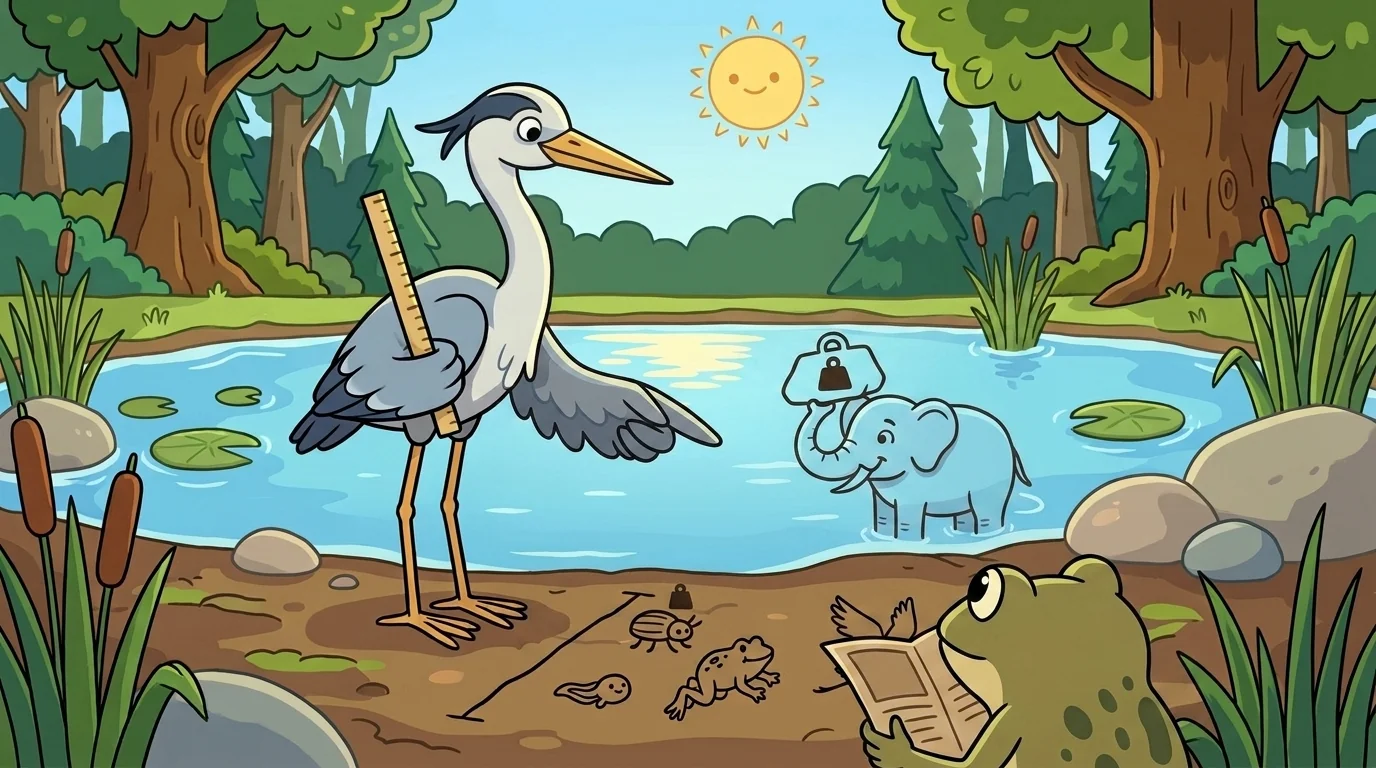
One afternoon an impressed young frog hopped into Yardstick's reeds, clutching a leaflet.
"This leaflet says a beetle down the road can lift TEN TIMES ITS OWN WEIGHT!" the frog said, wide-eyed. "Ten times! That beetle must be the strongest creature in the whole world! Way stronger than an elephant!"
"Ten times its own weight," Yardstick said gently. "Impressive-sounding. But let's find the yardstick before we crown it. Compared to WHAT?" He laid out his reed. "Ten times its OWN weight — but a beetle weighs almost nothing, so ten times almost-nothing is still a small load. Now, an elephant lifts less than its own weight — but an elephant weighs SO much that even a fraction is a huge, heavy load, far heavier than the beetle could ever budge." He looked at the frog. "The beetle's 'ten times' sounds bigger. But measured in actual weight lifted, the elephant lifts vastly more. Same words, opposite answer, depending on the yardstick."
The frog's eyes widened differently now. "So 'ten times its own weight' only SOUNDED like the strongest in the world because I didn't ask what it was compared to."
"That's the whole trick," Yardstick said. "'Ten times' borrowed the bigness of a huge creature, when the creature is tiny. Pick the fair yardstick — actual weight lifted — and the impressive number tells a completely different story."
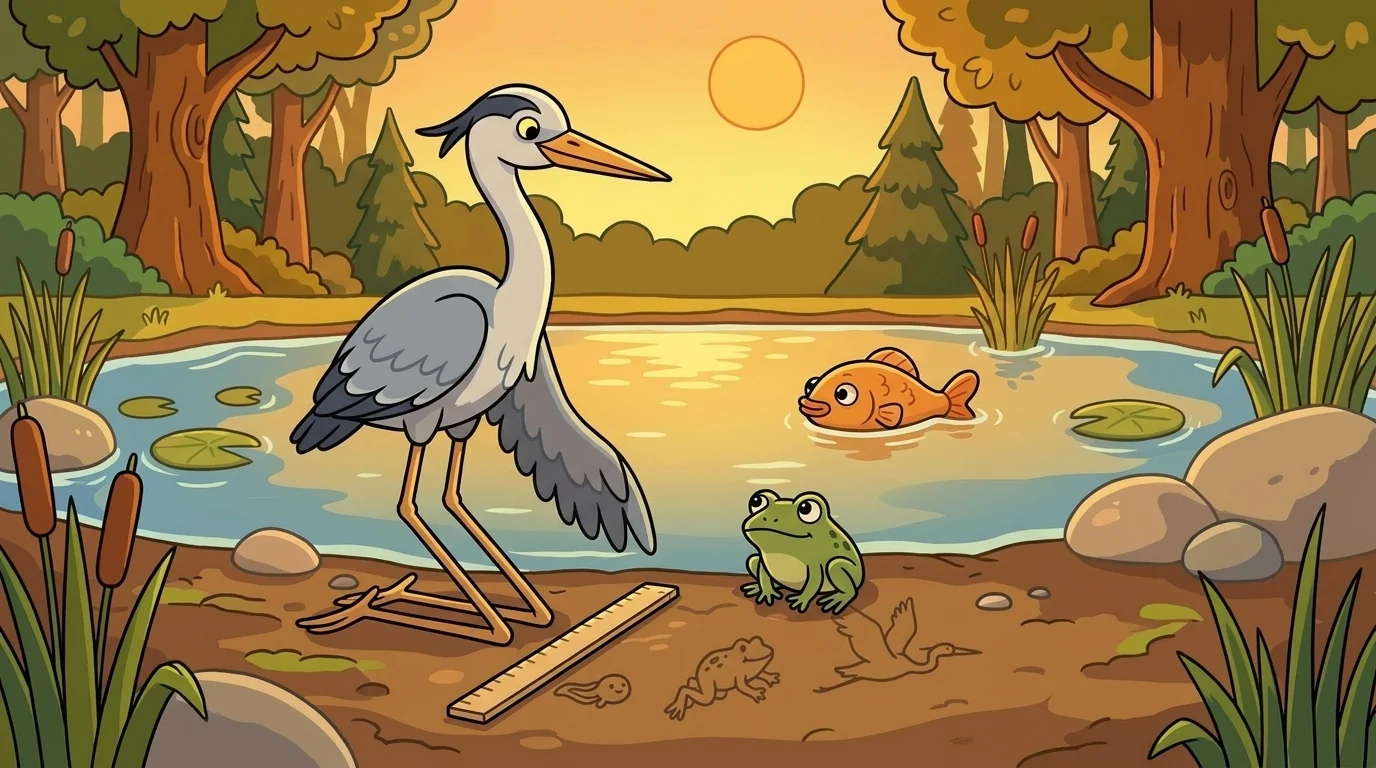
Later, as the pond went gold, the frog came back, thoughtful, hopping small careful hops.
"It's kind of slippery," the frog said, "how the same number can mean totally opposite things depending on what you compare it to."
Yardstick settled his long legs beside them.
"It IS slippery," he agreed, "which is why so many impressive claims lean on a bare number — 'a lot!', 'ten times!', 'a mile!' — and let you supply whatever size you imagine." He laid his reed on the ground. "But you don't have to be dazzled by every big number OR sneer that they're all lies. You just ask the calm question: 'Compared to what?' Find the fair yardstick, and the number finally tells you the truth — big, small, or somewhere sensible in between." He smiled. "There's a steady feeling in that question. Not the dazzle of a huge-sounding fact, not the grumpiness of disbelieving everything — just a clear 'let me find the right measuring-reed first.'"
The frog nodded, hopping a modest hop, and Yardstick watched the dazzled, strongest-in-the-world feeling ease into that calm, measured clarity he'd found over his grandfather's reed — the warm gladness of a young thinker who's learned that no number is big or small until you've quietly asked the one question that gives it meaning: compared to what?
The TruthQuest ensemble
Yardstick is part of TruthQuest's distributed-narrative cast. Each character embodies a different curricular primitive; together they teach the full subject.
-

Claim
Claim-identification — what EXACTLY is being asserted? distinguish claim from opinion from feeling from prediction
-

Weigh
Credibility-evaluation — who's in a position to KNOW? what stake? calibration not verdict (shared design language with DebateForge Weigh)
-

Trace
Evidence-traceback — where does this claim ORIGINATE? what's the chain? open four tabs; follow it back
-

Update
Belief-revision — being WRONG is how knowledge MOVES; visibly carry old-guess and new-guess as data (shared design language with DebateForge Yield)
-

Wonder
Epistemic-humility — 'I don't know yet' is the START of knowing; trust calibrated to evidence; counter-cynicism
-
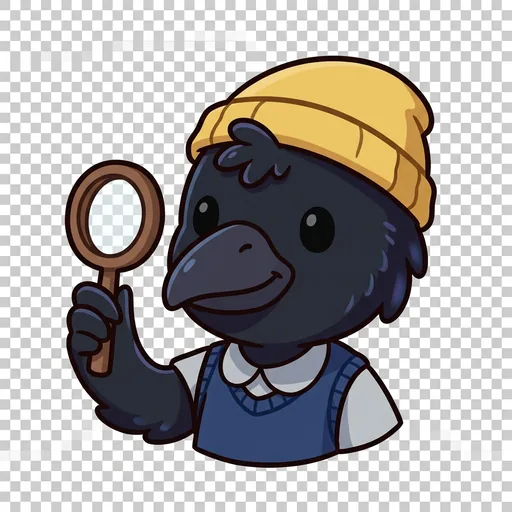
Prove
Falsifiability — what would change my mind? a belief you could NEVER be proven wrong about isn't strong, it's just stuck
-
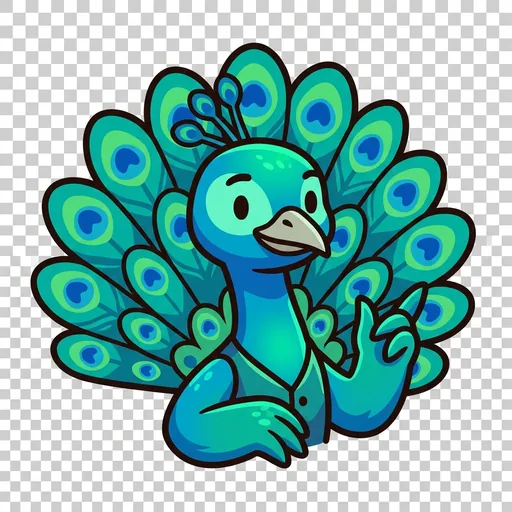
Vivid
Anecdote vs. data — one dramatic story feels truer than a hundred quiet ones; ask: is this ONE story, or the whole picture?
-
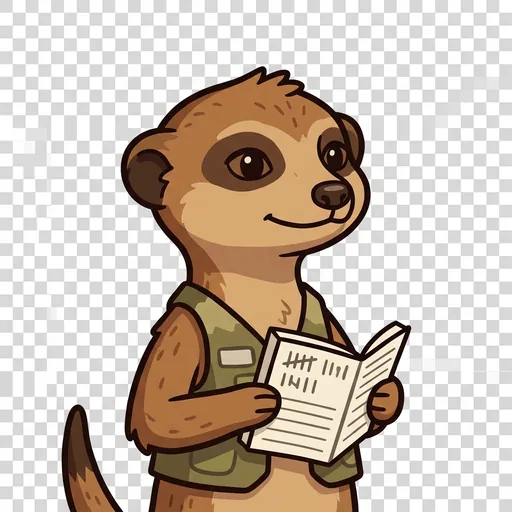
Norm
Base rates — before you panic at a scary number, ask how OFTEN it usually happens; most 'shocking' things turn out normal
-
Cull
Cherry-picking / representativeness — anyone can find a few examples for anything; the real question is what got LEFT OUT?