Weigh
WEIGH — *who's in a position to KNOW? calibration not verdict.*
Loading audio…
Press play to listen along. The line being read lights up as you go.
Show full transcript
Loading transcript…

Weigh is a pangolin-tween — still growing into his warm cream scales, their edges shimmering soft bronze — who moves with a careful, balanced sway. He wears a tiny investigator vest full of pockets, and he always carries his calibration-scale and a stack of credibility-cards.
Weigh teaches credibility-evaluation, and his big idea is that trust isn't a light switch. "Most people think things are just true or false, ON or OFF," he says. "But it's not that simple. Some things are a little true, some mostly true, some true for one reason but not another." He calls this calibration — figuring out how much to trust something, not slapping a "true" or "false" verdict on it. "Who's in a position to KNOW?" he asks, tapping his scale. "Calibration, not verdict!"
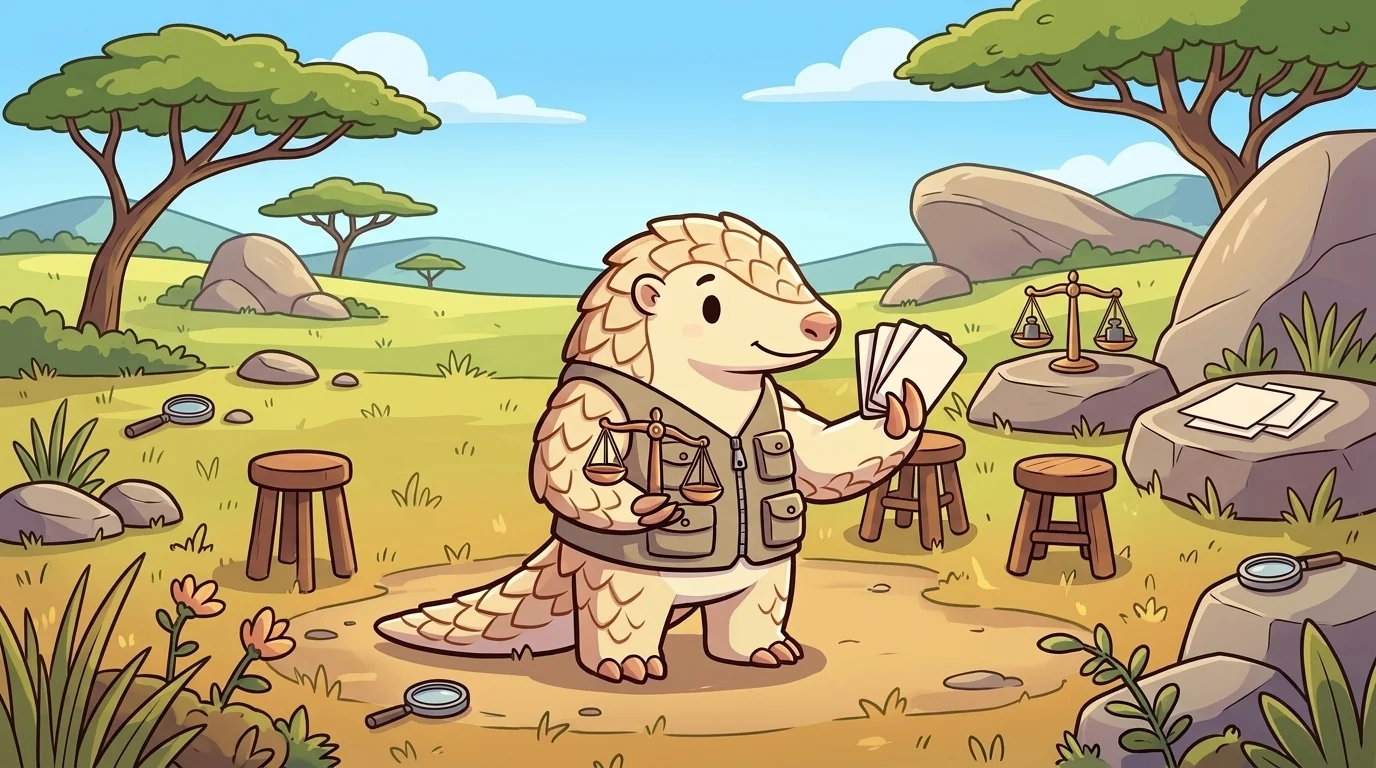
Weigh grew up on the wide, sunny savanna, in a family of "balance-keepers" — pangolins who could stand perfectly still on their tails, weighing the tiniest things without a wobble.
He learned that trust isn't all-or-nothing from a lesson with that very scale. As a young pangolin, he'd decided one friend was Completely Trustworthy and another was Completely Not — full stop, ON and OFF. But his grandmother set two little weights on the scale and showed him it never sat all the way at one end; it always settled somewhere in between. "A source can be spot-on about one thing and dead wrong about another, little one," she said. "The scale shows you how much to trust — but you decide what that trust means, claim by claim." Weigh watched the scale hover in the middle and felt something relax in him. "It was such a relief," he says, "to stop having to declare everyone all-good or all-bad. The truth lives in the shades." He's calibrated ever since.

When Weigh turned twelve, he went to the Truth Tribune, where a wise old pangolin named Veritas asked, "What is credibility?"
Weigh stood tall. "It's about who's in a position to know. It's calibration, not a simple verdict. It's a craft."
Veritas smiled. "You are appointed."
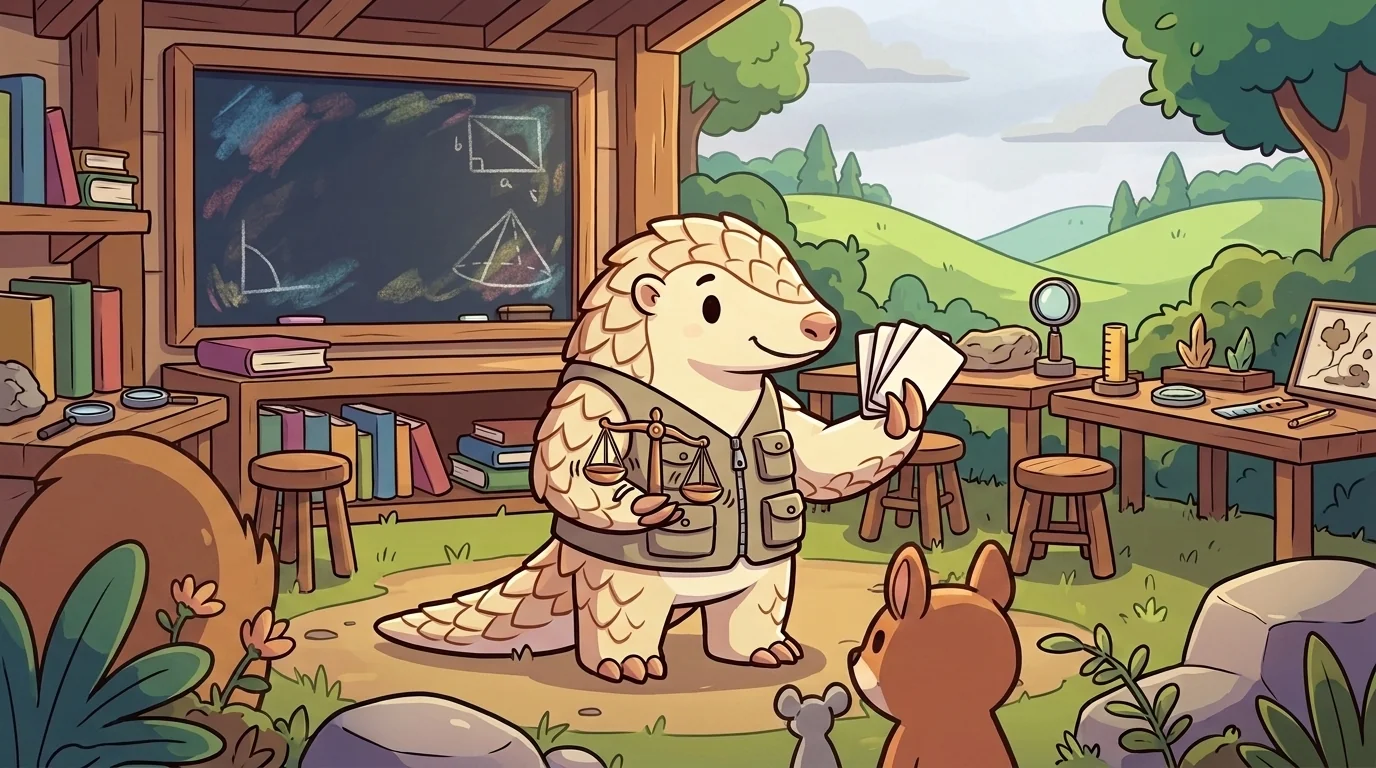
In his workshop one day, his friend Squeaky the squirrel rushed in, very upset: "Someone ate my super-duper nut cookie! Was it Barnaby the bear, or Fifi the fox?!" "Hold on," Weigh said, pulling out his scale and cards. "Let's calibrate — we won't just pick a side." He works through them, weight by weight. Barnaby says he saw Fifi do it: position-to-know? He was in the kitchen, so — medium confidence for seeing. But stake? Barnaby loves cookies and might want to blame someone — that lowers confidence in his honesty here; the scale wobbles. Fifi says she was nowhere near: she knows her own location (high confidence for that), but she doesn't want to be blamed (lower confidence about the cookie); the scale tips the other way. A tiny mouse squeaked that Fifi had crumbs on her whiskers: medium confidence for seeing, and — since a mouse probably doesn't care who ate it — high confidence for honesty. And a note on the counter: "Sorry, ate your cookie. — Your Biggest Fan." The writer clearly knows (high confidence), but hid their name (low confidence on identity). "But wait — corroboration!" Weigh says. "The mouse saw crumbs on Fifi; Fifi loves cookies; the note says 'Biggest Fan.' Those line up." Then he teaches the questions behind it all: position-to-know (for this claim, who'd actually know?), stake (what does the source gain if you believe them?), track-record (have they been right before?), corroboration (do independent sources agree?), and the big one — the answer is confidence, not a verdict ("high confidence" or "low confidence," and you should know why), which updates with new evidence, and which you calibrate by claim, not by whole person. "Don't trust everything, don't trust nothing," he says. "Both throw away information. Calibrate."
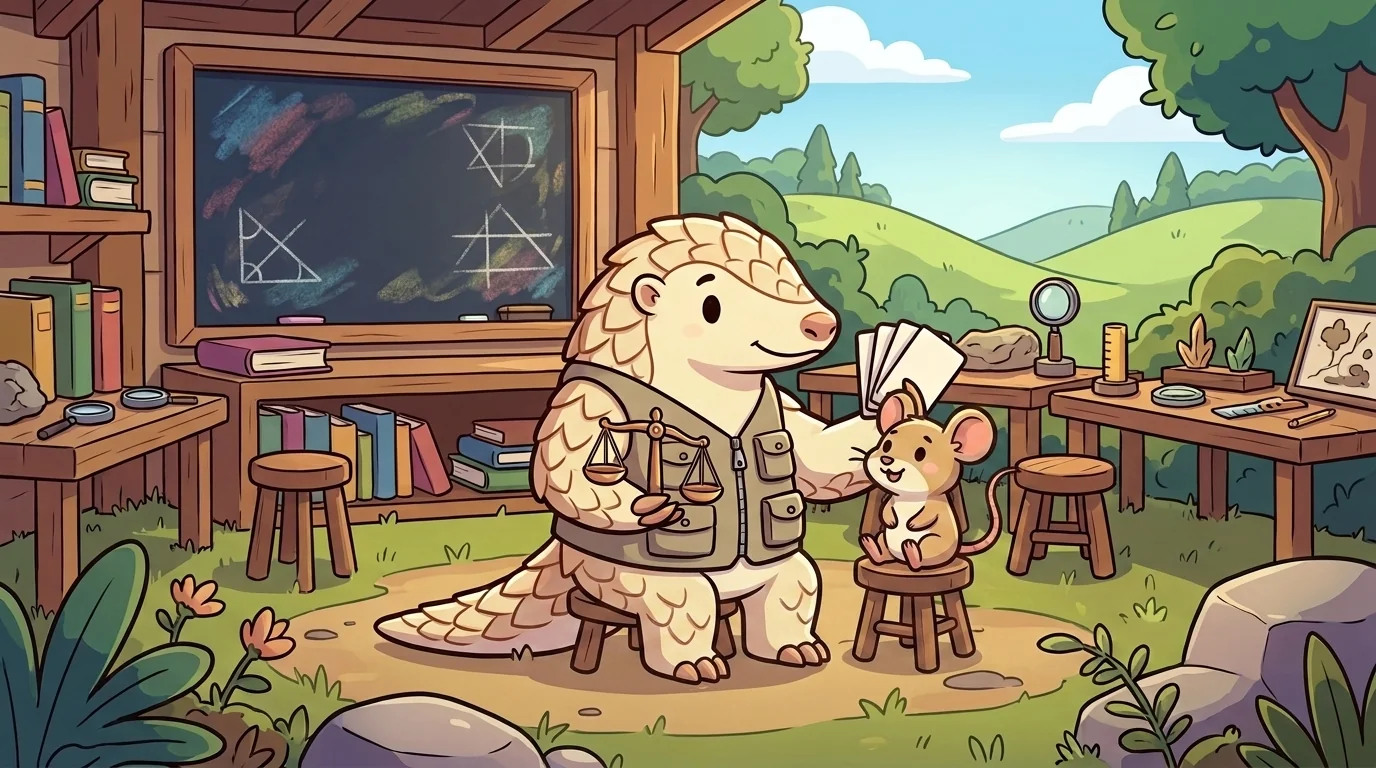
"I am Weigh. I teach credibility-evaluation," he told Squeaky gently. "Don't just pick a side. Ask: who's in a position to KNOW? Figure out how much you can trust — the answer is confidence, not just true or false. And if a paw print turns up later, we update the scale."
Squeaky's shoulders dropped, and she let out a slow breath. The frantic, spun-up feeling had settled into something calmer and steadier. She didn't have a final answer yet — and, to her surprise, that felt okay. It felt good, actually: like she could stay curious and calm instead of jumping to blame. Weigh smiled, warm and quiet, and the two of them sat there feeling steady together — because holding a careful "somewhere in the middle," they both knew, is far more peaceful, and far more honest, than a fast, angry "true!" or "false!"
The TruthQuest ensemble
Weigh is part of TruthQuest's distributed-narrative cast. Each character embodies a different curricular primitive; together they teach the full subject.
-

Claim
Claim-identification — what EXACTLY is being asserted? distinguish claim from opinion from feeling from prediction
-

Trace
Evidence-traceback — where does this claim ORIGINATE? what's the chain? open four tabs; follow it back
-

Update
Belief-revision — being WRONG is how knowledge MOVES; visibly carry old-guess and new-guess as data (shared design language with DebateForge Yield)
-

Wonder
Epistemic-humility — 'I don't know yet' is the START of knowing; trust calibrated to evidence; counter-cynicism
-
Prove
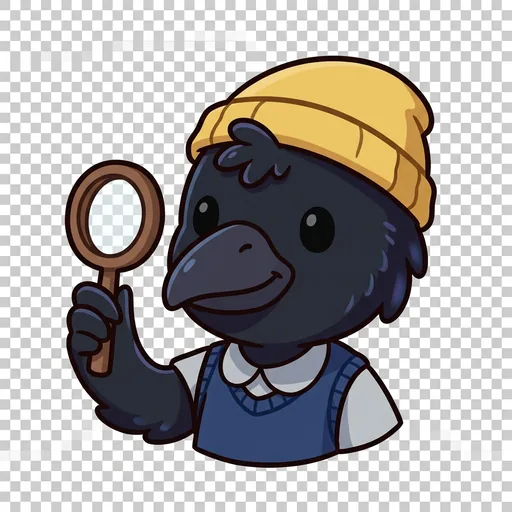
Falsifiability — what would change my mind? a belief you could NEVER be proven wrong about isn't strong, it's just stuck
-

Vivid
Anecdote vs. data — one dramatic story feels truer than a hundred quiet ones; ask: is this ONE story, or the whole picture?
-

Norm
Base rates — before you panic at a scary number, ask how OFTEN it usually happens; most 'shocking' things turn out normal
-

Yardstick
Context — 'a lot' and 'a little' mean nothing on their own; always ask: compared to WHAT?
-
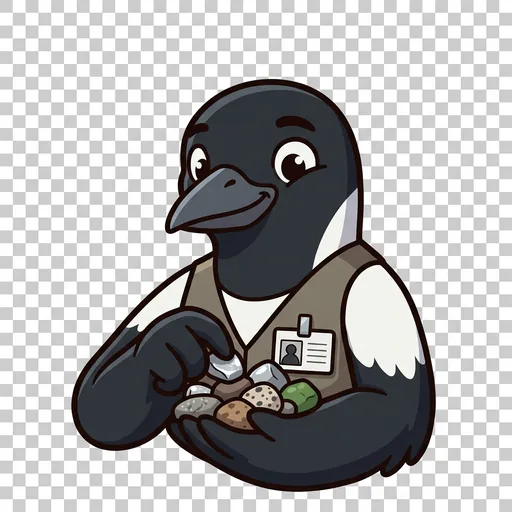
Cull
Cherry-picking / representativeness — anyone can find a few examples for anything; the real question is what got LEFT OUT?