
Yardstick
YARDSTICK — 'a lot' and 'a little' mean nothing alone; a size only has meaning against a reference. always ask: compared to what?
Loading audio…
Press play to listen along. The line being read lights up as you go.
Show full transcript
Loading transcript…
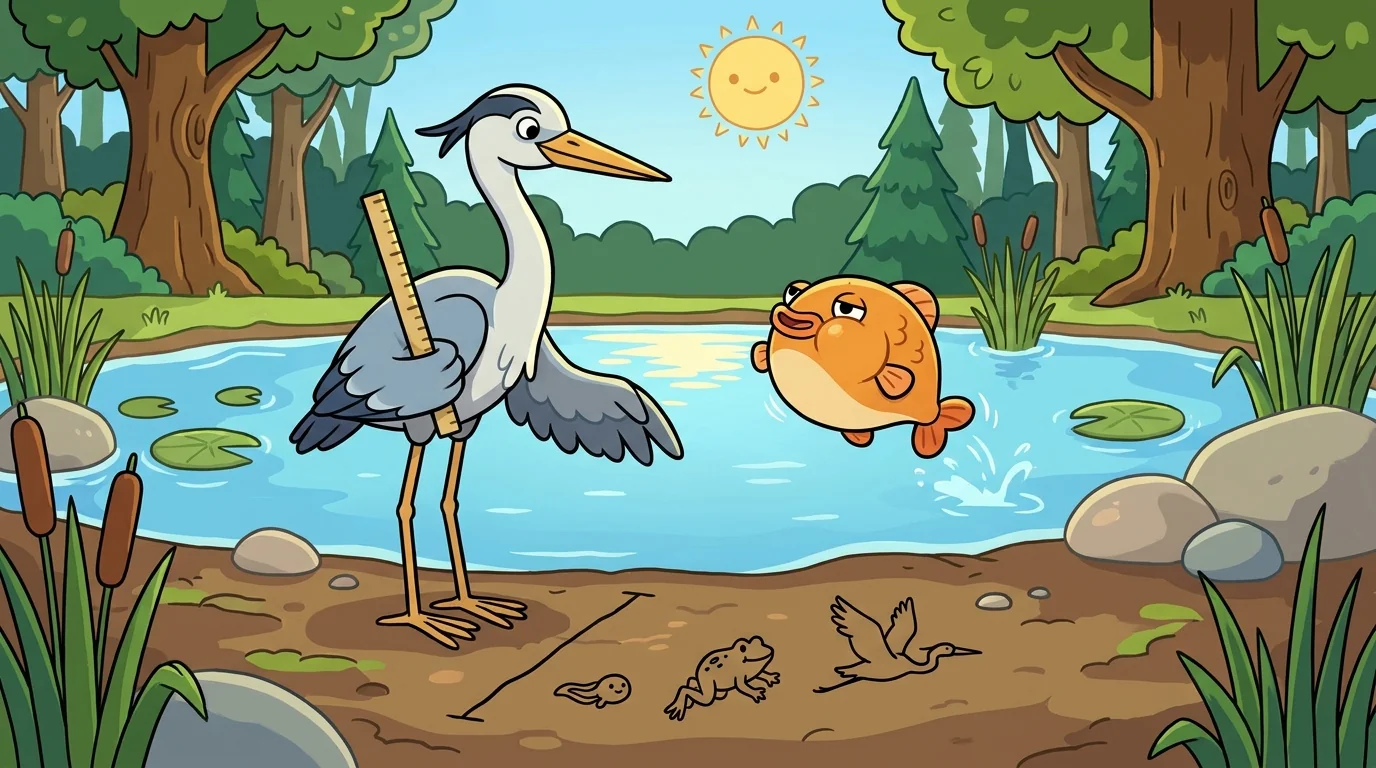
Yardstick stood very still beside a boasting fish, and instead of being impressed or unimpressed, he asked the one question that changes everything. He was a long-legged heron, calm-eyed, a measuring-reed always tucked under one wing, and he never let a big or a small pass unexamined.
"I jumped a WHOLE finger-length out of the water!" the fish announced. "Huge! I'm the greatest jumper in the pond!"
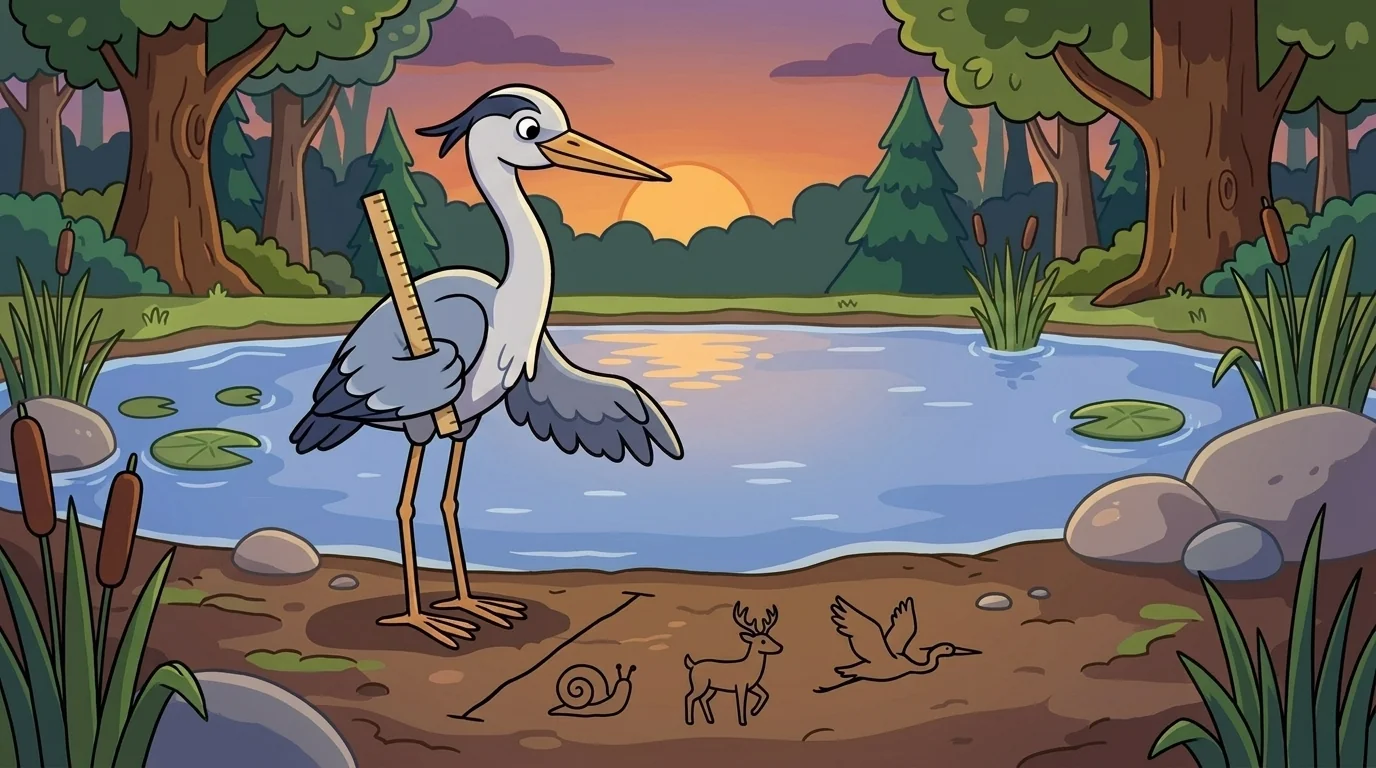
"A finger-length," Yardstick said mildly. "Is that a lot? I honestly can't tell yet, and I'd be foolish to pretend I could." He tipped his head. "Compared to a tadpole, it's enormous. Compared to a leaping frog, it's modest. Compared to a heron in flight—" he ruffled a wing "—it's barely a hop. The jump didn't change size between those sentences. What changed is the thing I set it beside. A number on its own has no size at all. It borrows its bigness or smallness entirely from the reference you compare it against."
The fish deflated. "So my jump isn't automatically huge?"
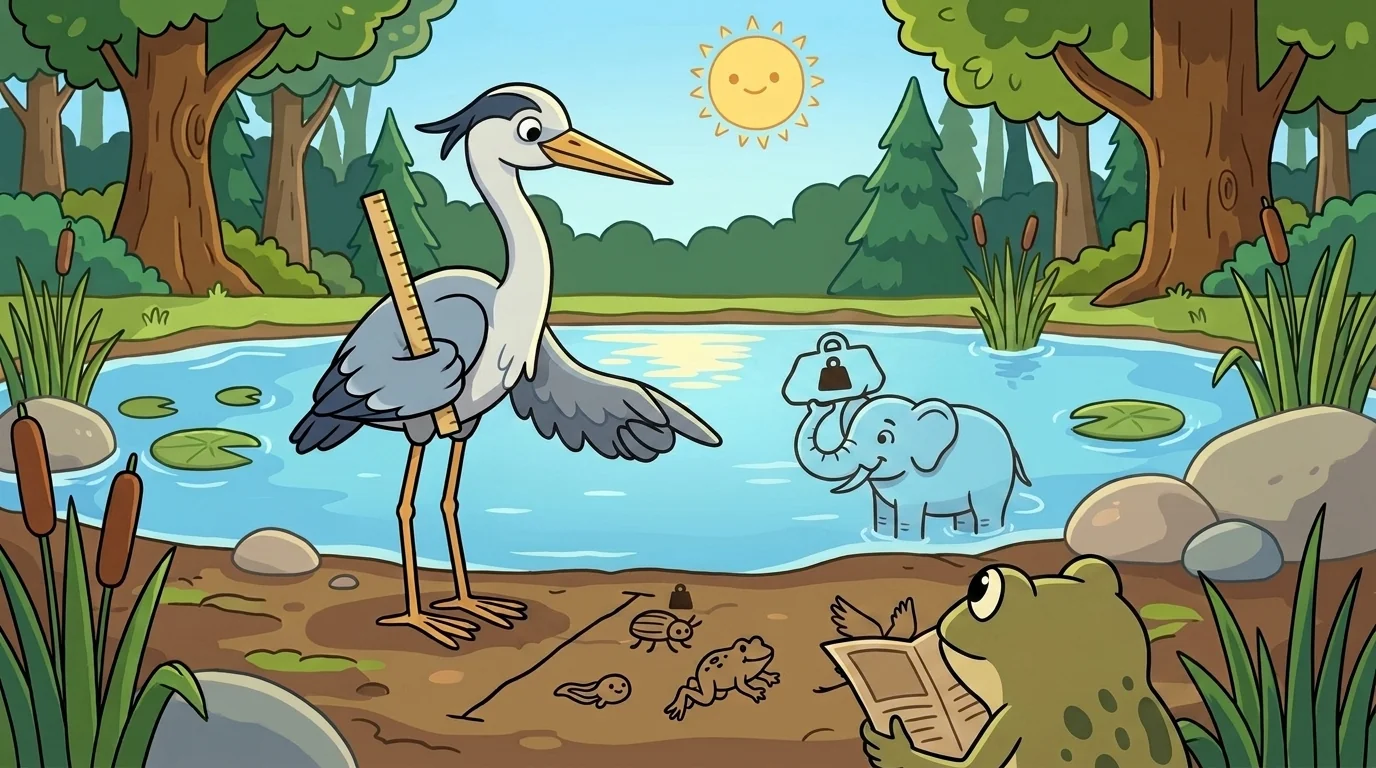
"It may be huge — for a fish," Yardstick said kindly. "And that's the honest comparison, the fair reference class. 'Huge' with no yardstick isn't a fact; it's a feeling waiting for you to supply the ruler yourself. And here's the sly part: whoever hands you the bare number often chooses which comparison you'll reach for — or gives you none, so your fear or your hope picks the ruler. Name the reference out loud and you take that choice back."
He had learned it by being wrong about a number. As a young bird he'd been told a certain lake was "a mile across — impossibly far," and believed it the vastest water in the world, uncrossable. Then he flew over it in a lazy minute and felt cheated, sure his sense of size was simply broken. His grandfather, an old heron with a worn reed, had stood with him at the water. "Your sense of size isn't broken. You were handed a number with no reference. 'A mile' — is that far? You never asked compared to what?" He'd stretched a long wing. "A mile is a lifetime's journey for a crawling snail, a pleasant stroll for a deer, a minute's glide for us. The very same distance is vast or trivial depending on who crosses it — on the reference class you measure against." He'd tapped the reed. "So when someone hands you a big or a small, never just feel impressed or alarmed. Ask what it's measured against — and check that the reference is a fair one, not one picked to make you gasp. A number with no yardstick is a borrowed feeling. A number with the wrong yardstick on purpose is a trick."
Yardstick began carrying his own reed and asking compared to what? of every size he met. And the tricks stopped working — a "huge" figure stayed just a figure until he'd named a fair reference.
Later the fish returned, thoughtful. "But numbers are numbers. Isn't a big number just big?"
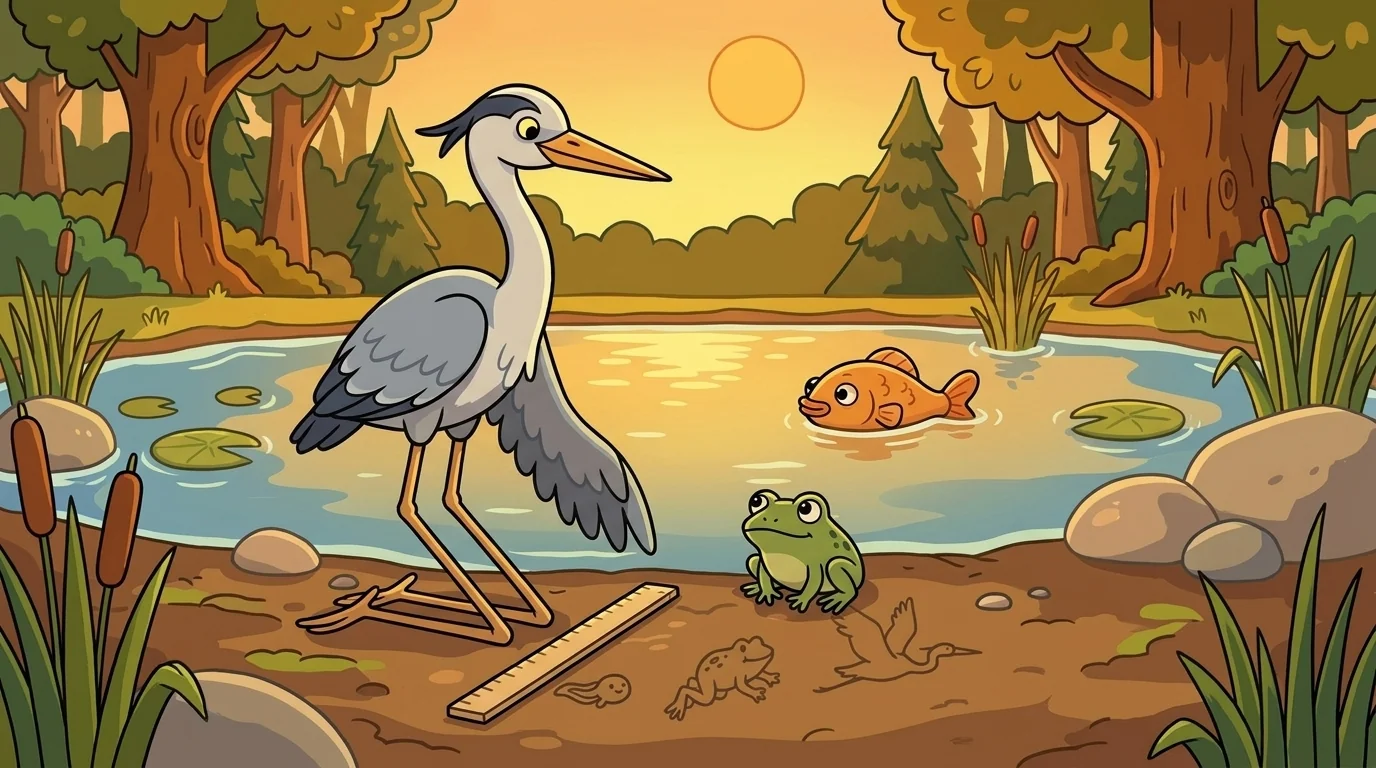
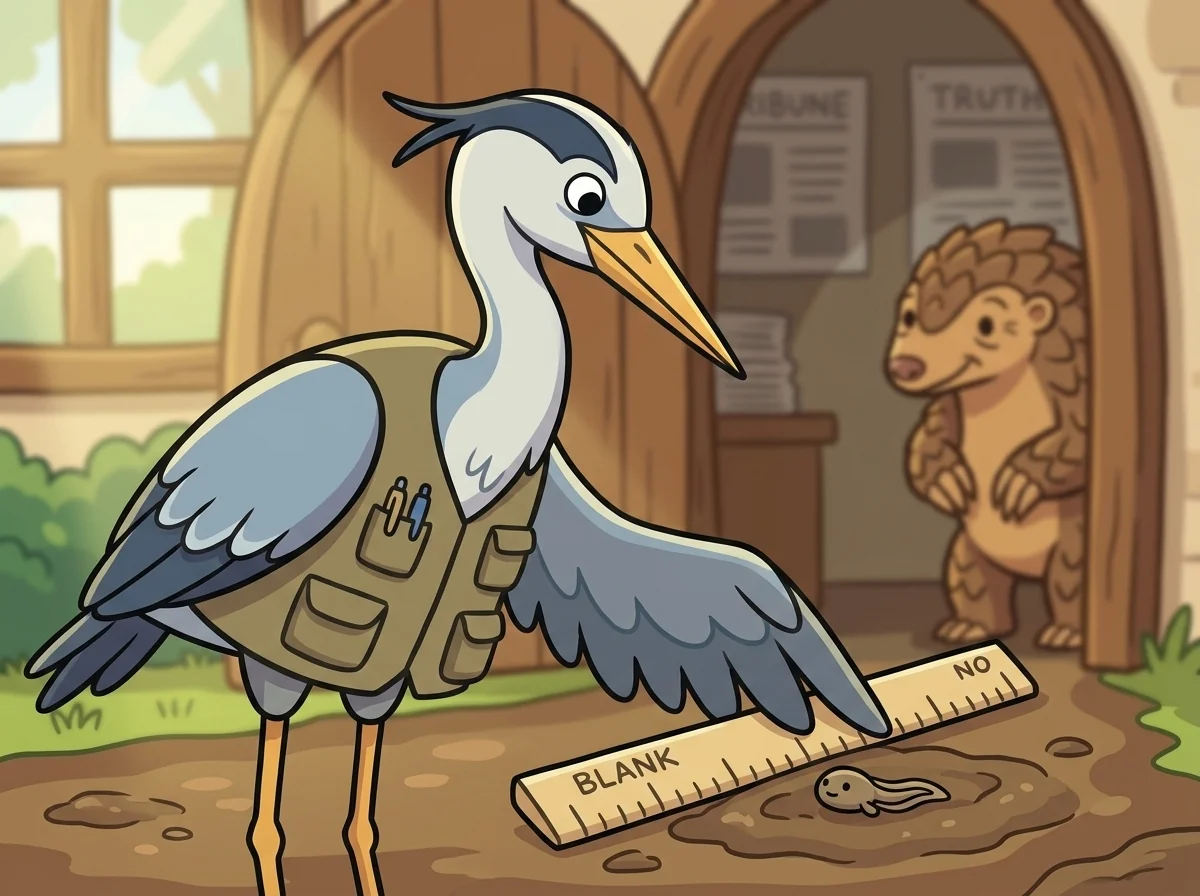
"A count is a count," Yardstick agreed. "But 'big' and 'small' are comparisons wearing a number's clothes — they only mean something relative to something else. Give me the reference and I'll tell you if it's big. Hide the reference and 'big' means only 'the speaker wants you impressed.'" He drew a fair line in the mud beside an unfair one. "Two things, always: name what it's compared to, and ask whether that comparison is honest. Do both, and a size finally tells the truth."
The fish sat with it, and the puffed-up pride and the sudden deflation both settled into something calmer — the knowledge that his jump was neither automatically great nor automatically nothing until he'd chosen an honest yardstick to hold it against. Yardstick watched the fish grow still and felt the measured gladness of his craft: not the thrill of a big number nor the sting of a small one, but the level calm of a size given its fair reference and made, at last, to mean exactly what it meant.
"Compared to what," he murmured, and tucked the reed back under his wing.
The TruthQuest ensemble
Yardstick is part of TruthQuest's distributed-narrative cast. Each character embodies a different curricular primitive; together they teach the full subject.
-

Claim
Claim-identification — what EXACTLY is being asserted? distinguish claim from opinion from feeling from prediction
-

Weigh
Credibility-evaluation — who's in a position to KNOW? what stake? calibration not verdict (shared design language with DebateForge Weigh)
-

Trace
Evidence-traceback — where does this claim ORIGINATE? what's the chain? open four tabs; follow it back
-

Update
Belief-revision — being WRONG is how knowledge MOVES; visibly carry old-guess and new-guess as data (shared design language with DebateForge Yield)
-
Wonder
Epistemic-humility — 'I don't know yet' is the START of knowing; trust calibrated to evidence; counter-cynicism
-
Prove
Falsifiability — what would change my mind? a belief you could NEVER be proven wrong about isn't strong, it's just stuck
-
Vivid
Anecdote vs. data — one dramatic story feels truer than a hundred quiet ones; ask: is this ONE story, or the whole picture?
-
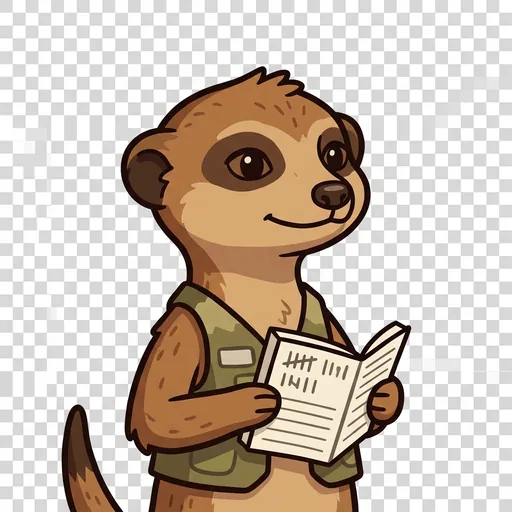
Norm
Base rates — before you panic at a scary number, ask how OFTEN it usually happens; most 'shocking' things turn out normal
-
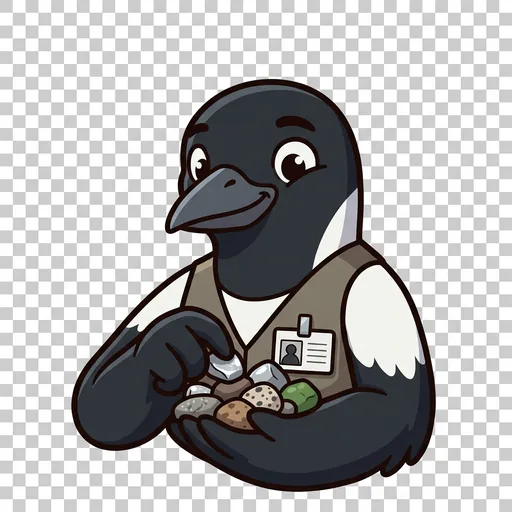
Cull
Cherry-picking / representativeness — anyone can find a few examples for anything; the real question is what got LEFT OUT?