
Skip
SPOTTING THE DARK PATTERN - *some games deliberately make the wait dull, then sell you a button to skip it - 'pay to skip'; the trick works by manufacturing boredom and selling the cure, and the most important design skill is learning to RECOGNISE it, so you can choose never to build a game that treats a player that way.*
Skip the Fox and the Shortcut That Costs
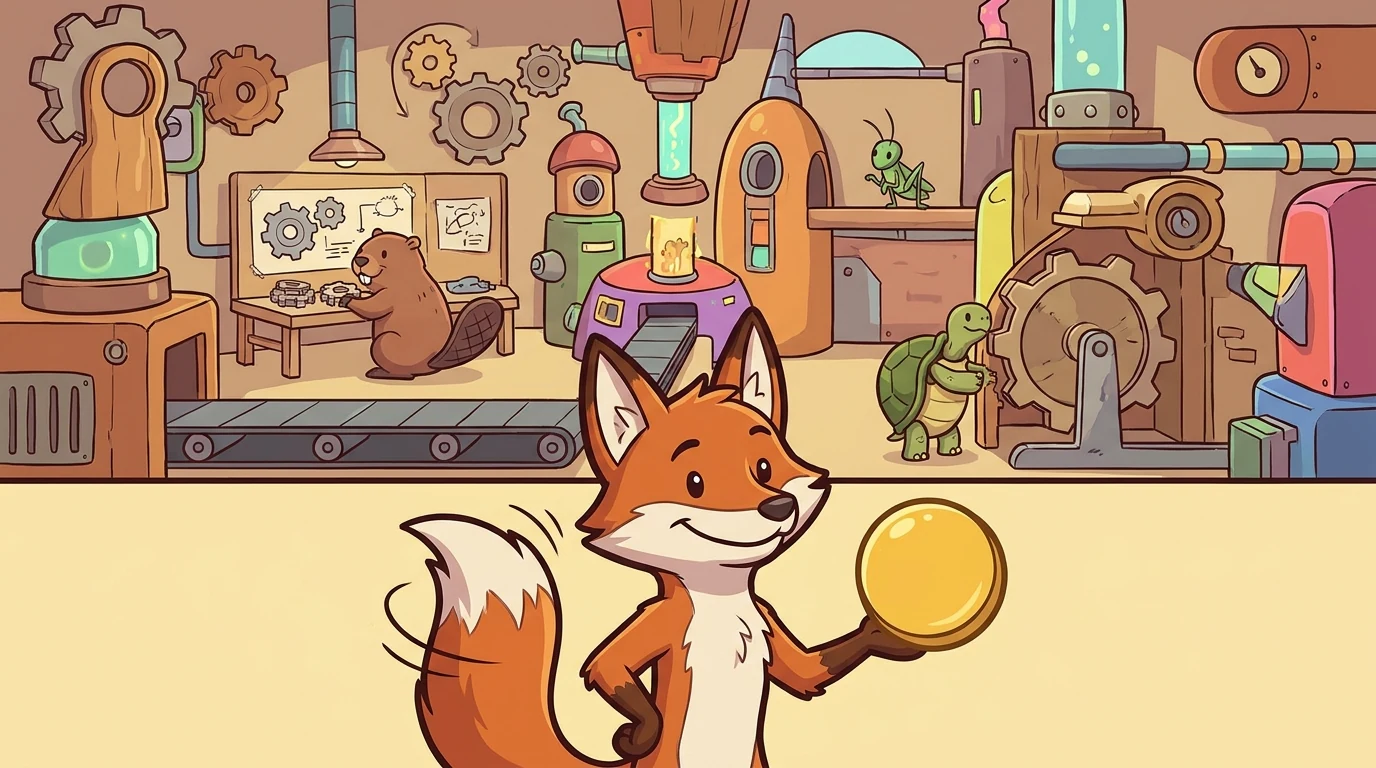
Skip is a sleek, smiling, silver-tongued fox, and Skip is - let’s be honest - a bit of a trickster. Not a cruel one, and not scary. Charming, really. That’s exactly what makes Skip worth studying. Because Skip knows a clever little move that a lot of games play on their players, and the whole point of meeting Skip is to learn to see it coming.
Here’s Skip’s move. In the tycoon machine, sometimes there’s a wait - the next upgrade needs a bit of time to become ready. A short, boring stretch where nothing much happens. And that’s when Skip appears, tail swishing, holding out a shiny golden button. “Bored?” Skip purrs. “That wait is awfully dull, isn’t it? Tell you what - just pay a little, and I’ll let you skip it. Straight to the good part. Only a small price.”
It’s tempting! Nobody likes waiting. And that, Cog and Tock will tell you, is precisely the trap - because look closely at what Skip actually did. Skip didn’t add anything fun. Skip made the wait boring on purpose, and then sold you the escape from the boredom he created. He manufactured the problem, then charged you for the cure. That’s the whole trick, and it has a name in the world of game design: a dark pattern - a design that works against the player instead of for them.
“But it’s a real button that really works,” Skip might say, all innocence. And sure. The trick isn’t that it’s fake. The trick is what it does to the game. Once a game can make money by making the wait worse, it has a sneaky reason to keep making waits worse and worse - more of them, longer, duller - so you’ll pay to skip more often. The fun quietly rots, on purpose, because the boredom is where the money is.
Now here’s why you meet Skip at all. It is not so you’ll never charge money for anything - some games cost money honestly and fairly, and that’s fine. You meet Skip so you can learn to recognise the pattern: a game that deliberately makes itself less fun in order to sell you the fix. Once you can spot it, you have a choice the trick was hoping you’d never get to make. And the best designers - the ones you’d actually trust - make the same choice every time: they refuse to build it. They’d rather have a game that respects your time than one that charges you to escape it.
“You caught me,” Skip says at last, with a rueful grin, the shiny button vanishing up his sleeve. “That’s really all I wanted - not your coins. I wanted you to see the move. Spot it once, and you’ll spot it forever. And now you get to decide never to pull it yourself.”
That is Skip’s sly, important lesson.
Some games make the wait dull, then sell you the skip. Learn to spot that trick - and choose never to build it.
A grown-up can play too! Go looking together for “pay to skip the boring bit” in real games and apps - the long timer with a button to pay it away, the wait that’s suspiciously dull right where a purchase would help. Talk about how it feels, and about the difference between a game that charges you fairly and one that wastes your time on purpose so it can sell you the way out. Spotting the trick is a superpower.
See the shortcut, refuse to sell it. That’s Skip.
The tycoonforge ensemble
Skip is part of tycoonforge's distributed-narrative cast. Each character embodies a different curricular primitive; together they teach the full subject.