Refract
A wave that crosses into a new material and changes speed BENDS
Loading audio…
Press play to listen along. The line being read lights up as you go.
Show full transcript
Loading transcript…

At the clear glass tank behind WaveForge, a young fish hovered where the water met the air and showed a curious otter something that looks like a trick but is really just physics: a straw that seems to snap in half at the surface.
Refract was silver and quick, with wide eyes used to seeing the bent world of underwater. She dipped a straight straw into the tank; above the water it was straight, but at the surface it seemed to bend sharply, so the underwater part looked broken and shifted sideways. The otter gasped. "The straw broke! How'd you do that?"
"The straw's perfectly straight — feel it," Refract said, and the otter did; it was whole. "It only LOOKS broken. Here's why: light travels a little slower in water than in air. And when a wave crosses into a new material and changes speed, it BENDS at the crossing." She traced the light's path. "The light bouncing off the underwater part of the straw slows down as it leaves the water, so it BENDS on its way to your eye — and your eye, following the bent light backward, sees the straw in the wrong place. It's not broken. The light just bent." She smiled. "A wave that crosses into a new material and changes speed bends. That's why a straw looks broken in a glass of water."
The otter squinted at the whole-but-bent-looking straw. "So the straw's fine — the LIGHT is what bent?"
"The light bent because it changed speed," Refract said. "It's not magic, and your eyes aren't broken. Light just travels at different speeds in different stuff — fast in air, slower in water — and every time it changes speed at a boundary, it bends. That's ALL refraction is."

Refract had learned about bending light as a fry.
The first time she tried to snap at a bug floating on the surface from below, she missed — the bug wasn't where it looked. Again and again she lunged and missed, sure she was simply a clumsy, bad hunter, that her aim was hopeless.
Her grandmother, an old fish with knowing eyes, drifted beside her. "You're not clumsy," she said. "You're aiming at where the bug LOOKS, not where it IS. The light from that bug BENDS when it enters the water — because it slows down crossing from air into water — so it reaches your eye from a bent angle, and the bug appears shifted from its real spot." She nudged a young Refract. "Aim a little off from where it looks, toward where the bending says it really is, and you'll hit it." She flicked her fins. "The water isn't lying to you. Light just bends when it changes speed, and once you know HOW it bends, you can aim true."
Refract learned to account for the bend — to aim not where the bug looked, but where the bending told her it truly was — and suddenly she caught bugs every time. The clumsy, bad-hunter feeling turned into a clear, capable confidence. Her aim wasn't hopeless. She'd just been aiming at bent light instead of the real thing.

When she was twelve, Refract swam to WaveForge, where Sonic, her mentor, asked, "What happens when a wave crosses into a material where it moves at a different speed?"
Refract didn't answer with a speech. She dipped a straw into a tank, and it appeared to bend at the surface. "It refracts — it bends," she said. "Because it changes speed. Light goes slower in water than air, so it bends at the boundary, and a straight straw looks broken." She tilted the straw. "It's why a pool looks shallower than it is, why a lens can focus light, why a rainbow splits colors — all the same thing: waves bending when they change speed."
Sonic's eyes crinkled warmly. "Some think the broken straw is an optical trick with no cause," Sonic said.
"The cause is simple — light bends when it slows down," Refract said. "Physics, not magic." Sonic smiled. "Then come in," Sonic said. "WaveForge needs someone who knows why the straw looks broken."
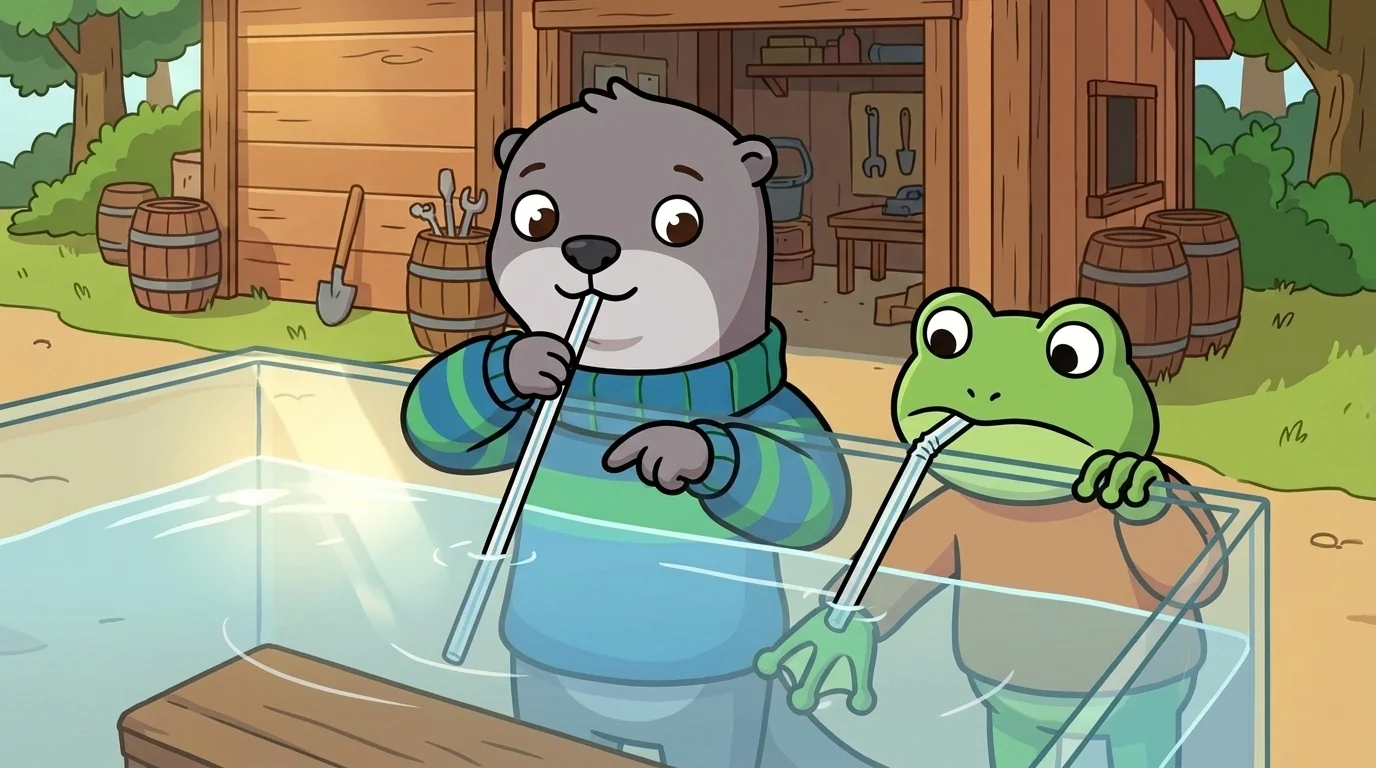
In her workshop one afternoon, a puzzled young frog stared into the tank, distrustful.
"My eyes keep lying to me," the frog said. "The straw looks bent, the pool looks shallow, everything underwater looks WRONG. I feel like I can't trust anything I see. It's frustrating."
"Your eyes aren't lying — they're just faithfully following bent light," Refract said gently. "Let me show you the cause, and it'll stop feeling like a trick." She lowered the straw slowly into the tank, and the frog watched it 'bend' more and more as it crossed the surface. "See — the bending happens exactly at the boundary, where the light changes speed from air to water. Above the surface, straight. Below, shifted. Because that's where the speed change is." She had the frog dip his own paw in and feel the straw's straightness. "The straw's whole. The light bent, at the boundary, because it slowed down. Once you know WHERE and WHY it bends, it's not a lie — it's a clue."
The frog looked from his straight-feeling paw to the bent-looking straw. "So my eyes are honest — they just don't know the light bent on the way. And once I know it bends when it changes speed, the 'lie' becomes a rule I can understand."
"That's the whole craft," Refract said. "Refraction isn't your eyes failing. It's light bending when it crosses into slower or faster stuff — every time, predictably. Lenses, glasses, cameras, your own eyes' lenses — all of them USE this bending on purpose. The 'trick' is the tool."
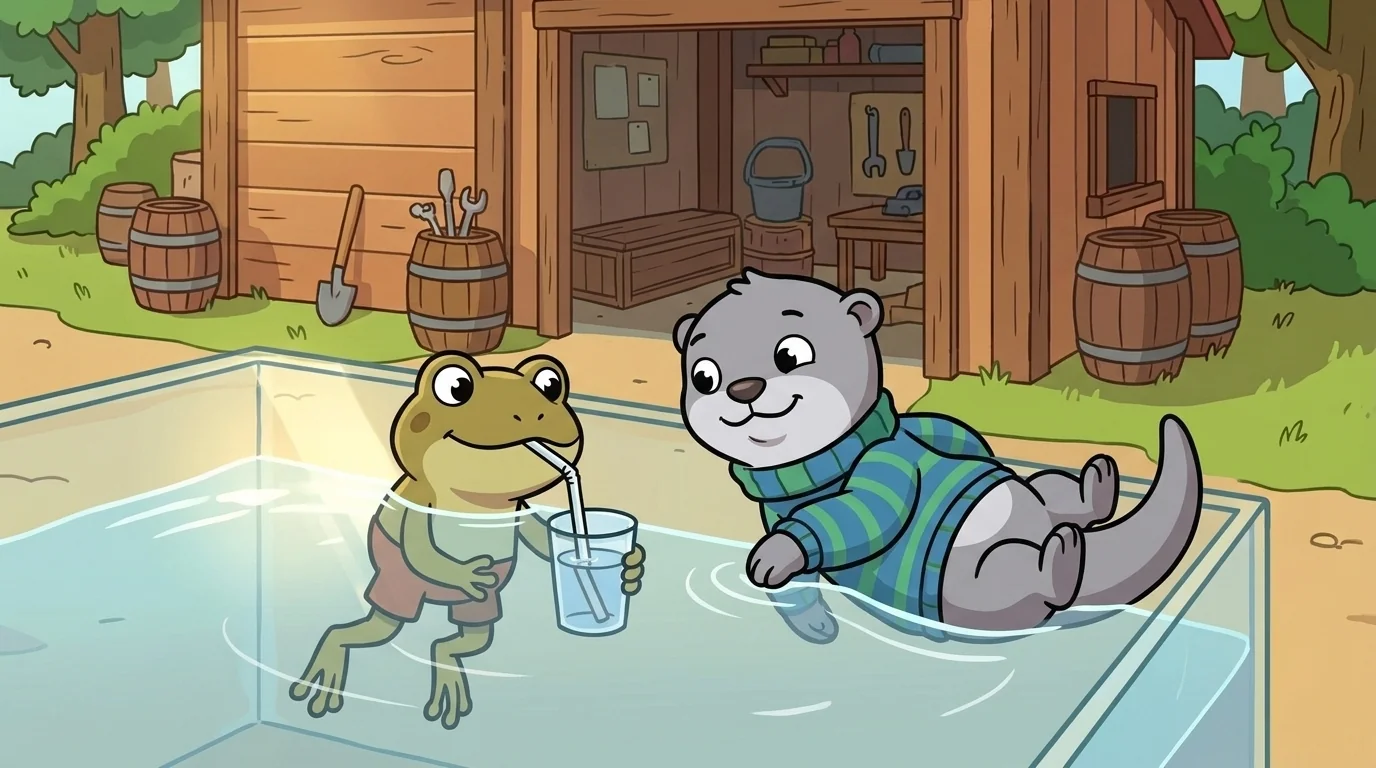
Later, as the tank went still, the frog came back, dipping a straw and watching it 'bend,' delighted now.
"It's kind of amazing," the frog said, "that a straw looking broken is really just light slowing down and bending. I thought it was my eyes glitching."
Refract drifted beside him at the surface.
"So many people think it's an eye-glitch or a trick," she said, "something spooky and untrustworthy." She traced the light's bent path with a fin. "But it's the plainest physics: a wave changes speed when it crosses into new stuff, and changing speed makes it bend. Light in water, sound into warm air, waves rolling toward a beach — all of them bend when their speed changes." She flicked her fins. "There's a clear, settling feeling in that — the moment a distrust-your-eyes illusion becomes a simple, dependable rule. Not a lie, not a glitch — just light, bending as it slows, exactly the same way every time."
The frog nodded, watching the bent straw with new understanding, and Refract watched the my-eyes-are-lying frustration ease into that clear, capable confidence she'd found as a fry catching bugs — the warm gladness of a young learner who's discovered that a broken-looking straw is no trick at all, just a wave bending as it changes speed, honest and predictable once you know why.
The WaveForge ensemble
Refract is one of the friends in WaveForge. Each friend shows you one idea by how they act; meet them all and you have the whole subject.
-

Pulse
Wave basics (frequency + amplitude + wavelength)
-

Meet
Interference (constructive + destructive)
-

Ring
Resonance (natural frequency response)
-

Drift
Doppler / wave-source motion
-

Loop
Standing waves + harmonics
-

Fan
Diffraction / waves spreading around edges and through gaps
-

Muffle
Damping / absorption of wave energy
-

Rebound
Reflection / echoes
-

Wane
Spreading / weakening with distance


