Forage
You don't have to see an animal eat to know its menu
Loading audio…
Press play to listen along. The line being read lights up as you go.
Show full transcript
Loading transcript…
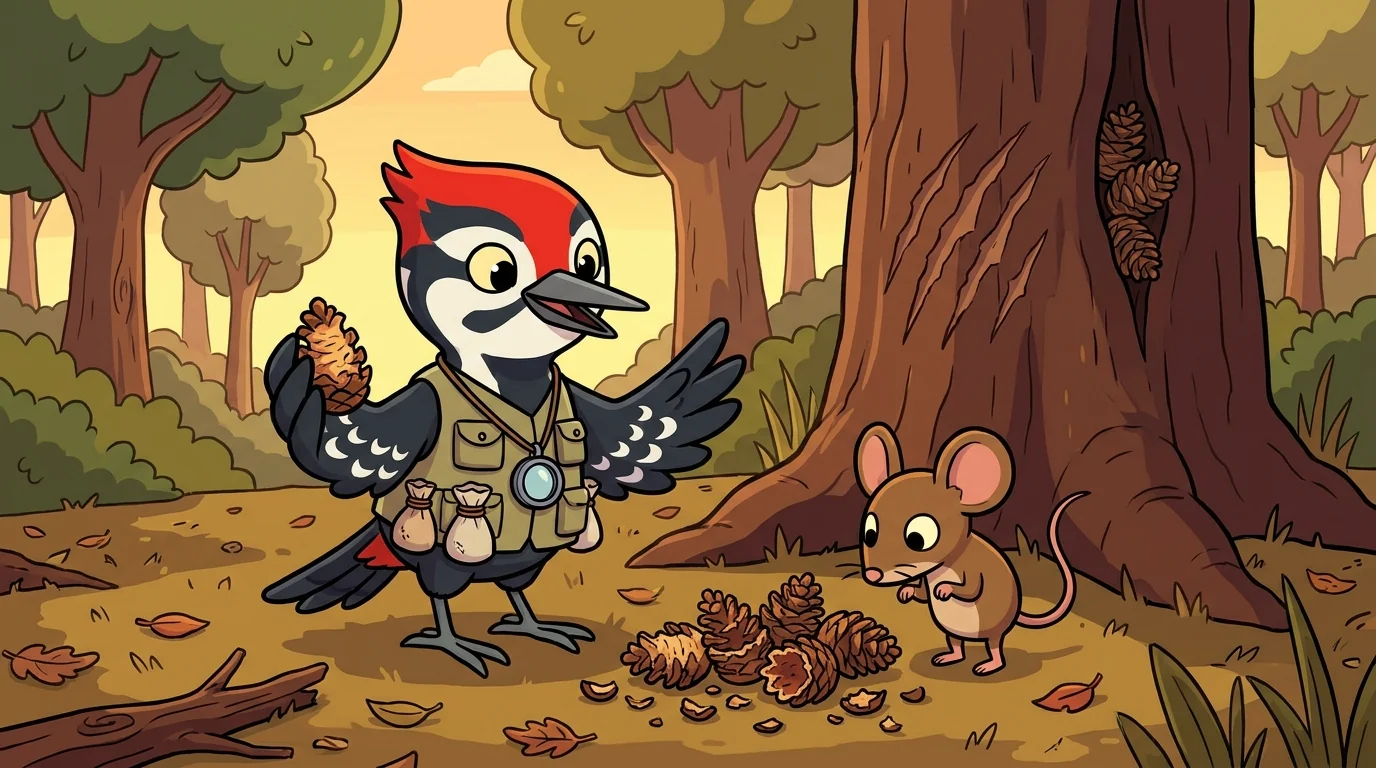
On a bark-scarred tree at the edge of the WildLens woods, a young woodpecker studied a scattering of chewed-open pinecones on the ground and read them like a lunch menu — knowing exactly who had eaten there, though the diner was long gone.
Forage was neat and sharp-beaked, with a field-vest of little sample-bags and a hand-lens on a cord. A young mouse peered at the mess of cone-scraps. "Somebody made a mess," he said. "But there's no animal here. How do you know WHO ate?"
"By what they LEFT," Forage said, turning a stripped cone in her claw. "You almost never catch an animal eating — they're shy, and quick, and gone before you arrive. But they leave their menu behind." She pointed. "See how this cone is stripped clean, scale by scale, and left in a neat pile? That's a squirrel — it sits in one spot and works the cone like corn-on-the-cob." She showed a different cone, hammered open at a wedged crack. "And THIS one was jammed into a bark-crack and hammered — that's one of my kind, a woodpecker, using the tree as a vise. Same forest, two diners, two different leftovers." She smiled. "You don't have to see an animal eat to know its menu. The leftovers, the tools, the marks — they tell you exactly what it lives on."
The mouse looked at the two kinds of chewed cones. "So the LEFTOVERS tell you who ate AND what they eat?"
"Both," Forage said. "A gnawed nut, a cracked snail-shell, a plucked feather, a nibbled leaf with a certain bite-shape — each is a clue to who ate and what they live on. And the best part: I learn all this without ever disturbing the animal. It's off living its life; I just read the menu it left. Watching from a respectful distance — or reading the sign after it's gone — that's how a good naturalist learns."
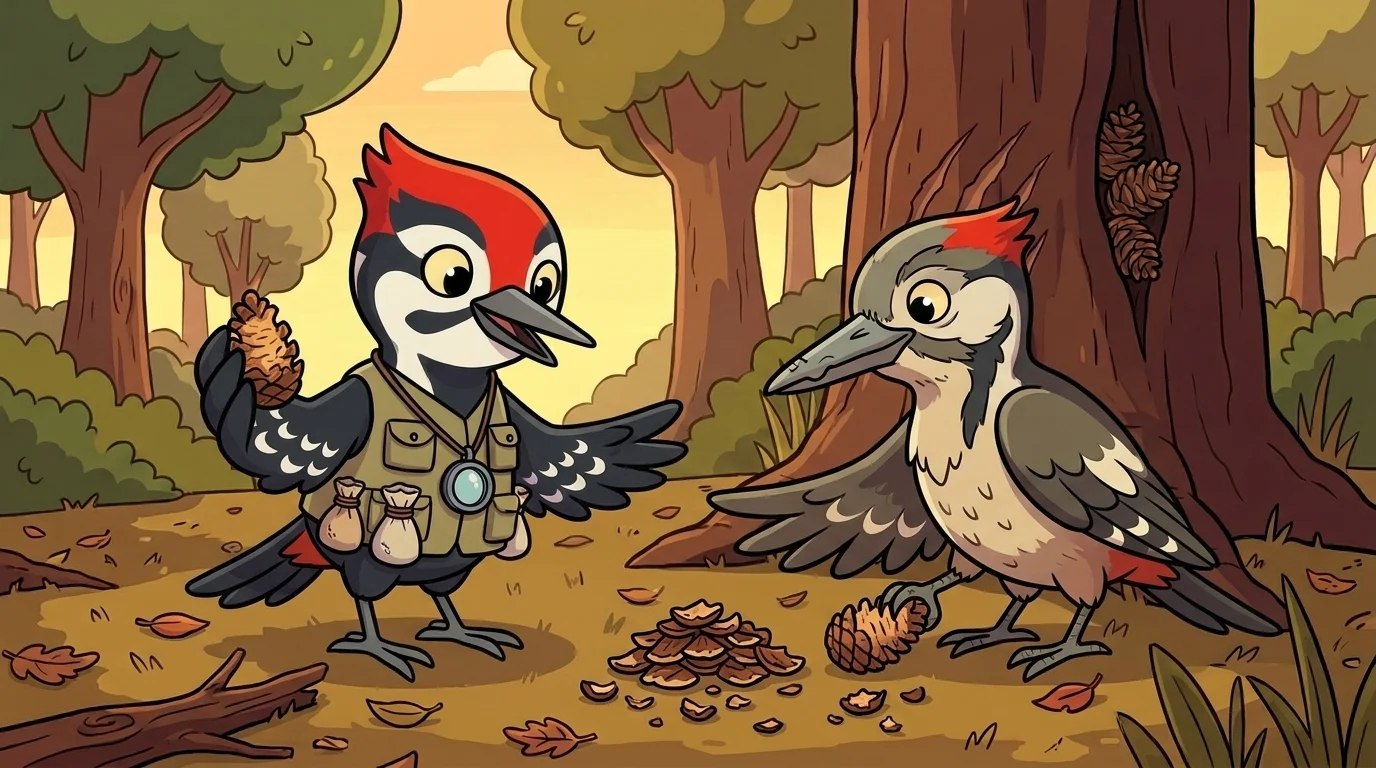
Forage had learned to read leftovers as a fledgling.
The first time she wanted to know what an animal ate, she tried to CHASE it — to fly close and watch it feed — and of course it fled the moment she neared, and she never saw a thing, and she felt like a failure, sure she'd never learn the woods.
Her father, an old woodpecker with a well-worn beak, tapped a chewed cone beside her. "You'll never learn by chasing," he said gently. "Chase an animal and it just runs — you disturb it and learn nothing. But look here." He turned over the cone. "It already TOLD you what it ate, and left the answer on the ground. You don't need to catch it in the act. You read what it left behind, after it's safely gone." He nudged her. "A good watcher doesn't crowd the animal. It reads the clues — the leftovers, the marks — patiently, from a distance or after. You learn more from a quiet look at the leftovers than from a hundred frightened chases."
Forage stopped chasing and started reading — the stripped cones, the cracked shells, the nibbled leaves — and the woods opened up to her, telling her exactly who ate what, without her ever frightening a single creature. The failure feeling turned into a patient, capable calm. She hadn't needed to chase at all. The animals had written their menus in their leftovers, for anyone patient enough to read.
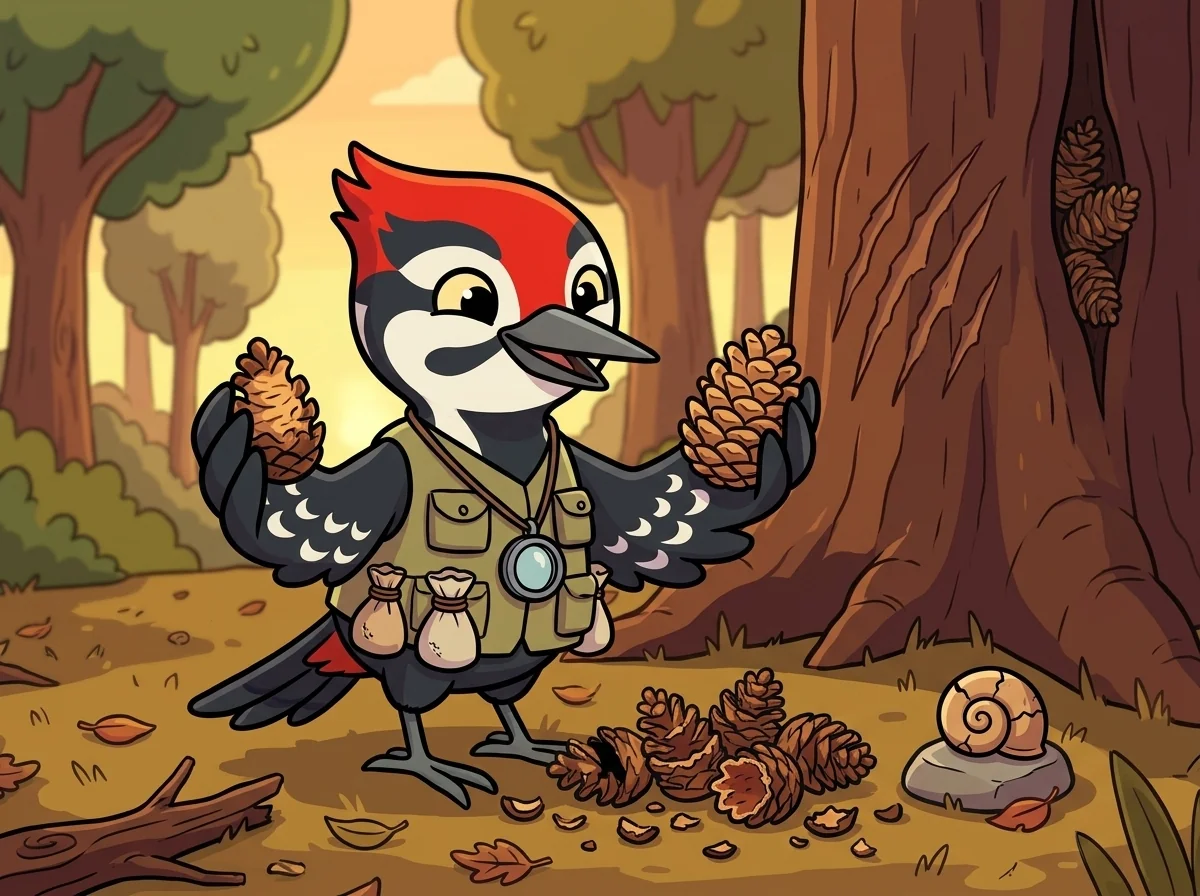
When Forage was twelve, she flew to WildLens, where Lens, her mentor, asked, "How do you learn what a wild animal eats?"
Forage didn't answer with a speech. She held up a stripped pinecone and a hammered one. "From what they leave," she said. "You rarely see an animal eat — but its leftovers tell the whole story. A neatly-stripped cone: squirrel. A hammered, bark-wedged cone: woodpecker. A cracked snail-shell on an anvil-stone: a thrush. Each leftover names the diner and the meal." She tucked the cones into a sample-bag. "And I learn it all without chasing or crowding — reading the sign the animal left, after it's safely gone. Respect the animal; read the leftovers."
Lens's eyes crinkled warmly. "Some try to chase an animal to see it feed," Lens said.
"And frighten it off and learn nothing," Forage said. "The leftovers tell you more, and disturb no one." Lens smiled. "Then come in," Lens said. "WildLens needs someone who reads the menu without crowding the diner."
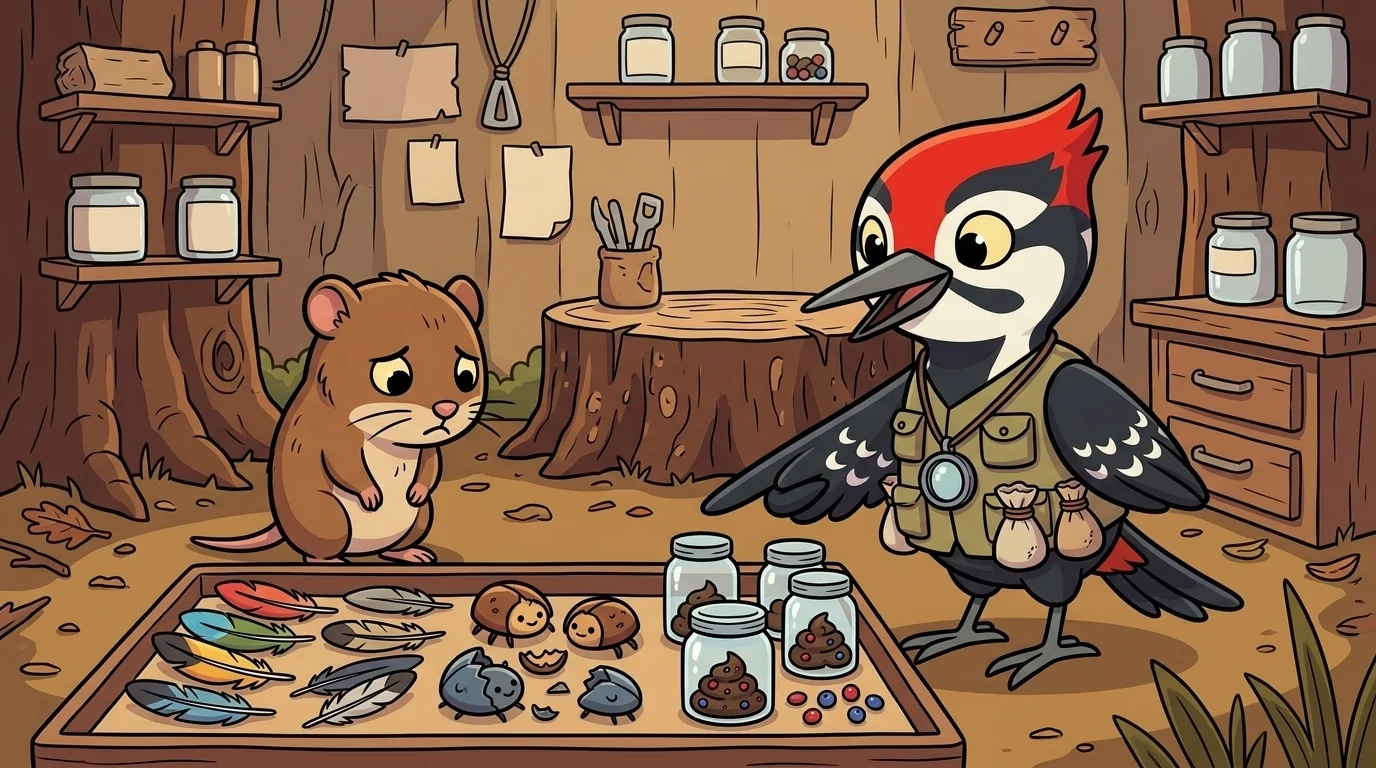
In her workshop one afternoon, a frustrated young vole came in, having failed to watch a fox eat.
"I tried SO hard to see what the fox eats," the vole said. "I crept up on its den for hours, but it always ran off before I could see, and I got nothing. I'm just no good at this."
"You're not bad at this — you were just chasing instead of reading," Forage said gently. "Creeping on its den only scares the fox and teaches you nothing — and it's not fair to the fox, either." She laid out a tray of clues. "Instead, look at what a fox leaves near its trails, well away from the den: here, feathers plucked in a certain way; there, cracked beetle-shells; over here, berry-seeds in its droppings." She pointed to each. "See? Without ever disturbing the fox, these leftovers tell you it eats birds, beetles, AND berries — a fox eats all sorts. You learned its whole menu, and the fox never even knew you were there."
The vole studied the clues. "So I don't have to sneak up and watch it eat — which scares it and doesn't work anyway. I read what it left, and I learn MORE, and I leave it in peace."
"That's the whole craft," Forage said. "The kind, patient way is also the way that actually works. Read the leftovers — the gnawed, the cracked, the plucked, the nibbled — and you'll know exactly what every animal in the woods lives on, without frightening a single one. Knowing the menu is the win. Leaving the diner in peace is how you earn it."
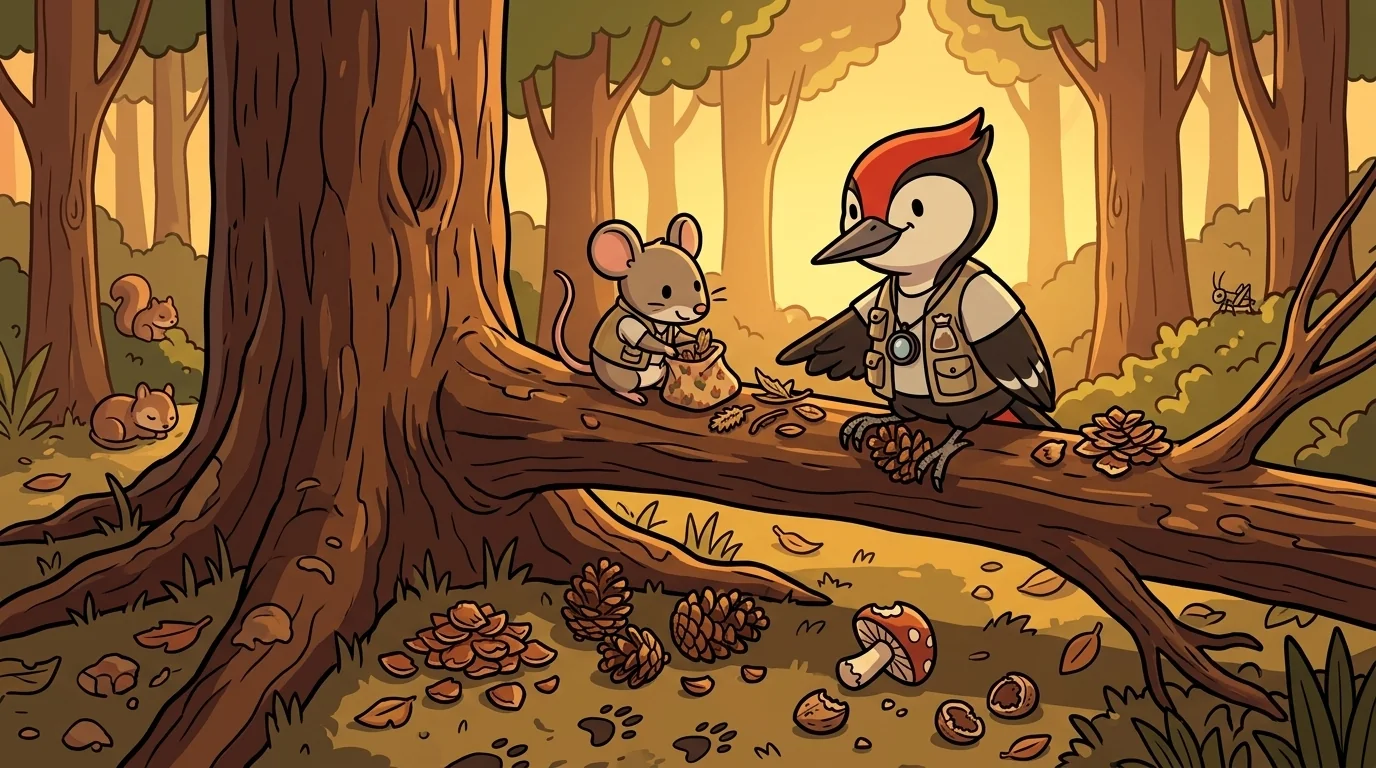
Later, as the light went gold, the vole came back, a sample-bag of clues in paw, content.
"It's kind of wonderful," the vole said, "that I can learn what every animal eats just from the clues, without ever bothering them."
Forage settled on a branch beside him.
"That's the quiet joy of it," she said. "The woods are covered in menus — stripped cones, cracked shells, nibbled leaves, plucked feathers — each one telling you who ate and what they live on." She turned a cone in her claw. "There's a patient, respectful feeling in reading them — not the frantic, fruitless chase, but the calm gladness of learning an animal's whole life from what it left, while it lives that life undisturbed." She tapped the cone. "You don't catch the diner. You read the menu. Know what every animal eats, and never frighten a single one — that's the naturalist's real skill."
The vole nodded, sorting his clues, and Forage watched the frustrated, no-good-at-this feeling ease into that patient, capable calm she'd found as a fledgling reading leftovers — the warm gladness of a young watcher who's discovered that you never need to chase a wild animal to know its life, only to read, patiently and respectfully, the menu it leaves behind.
The WildLens ensemble
Forage is one of the friends in WildLens. Each friend shows you one idea by how they act; meet them all and you have the whole subject.
-
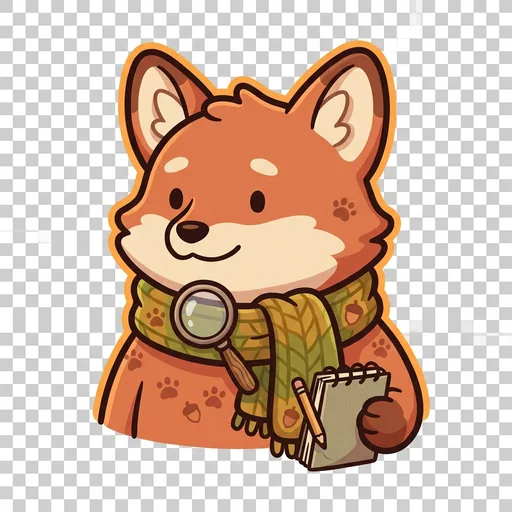
Track
Animal sign reading (footprints, scat, scrapes, scent)
-
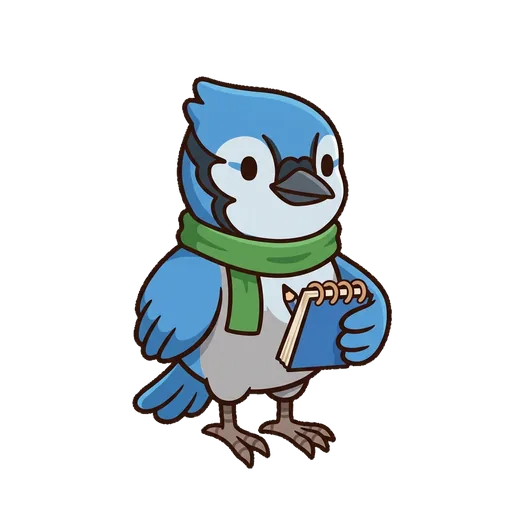
Cache
Food-storing behavior
-
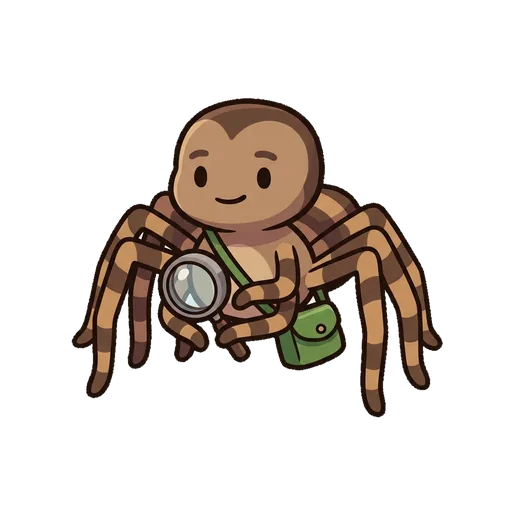
Woven
Food webs; who eats whom links every animal and plant, so a change to one strand tugs on the rest
-
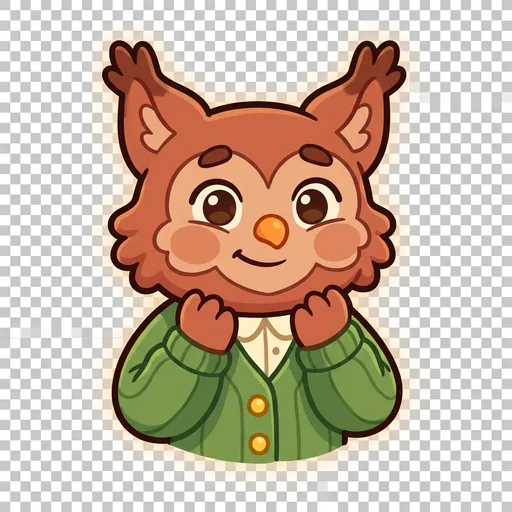
Call
Communication (vocalization, body language, signals)
-
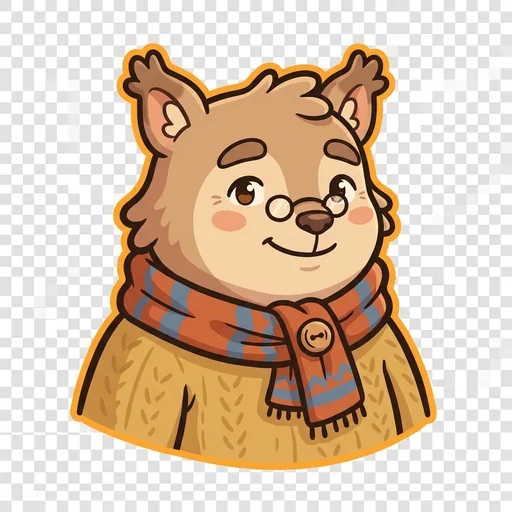
Brood
Social structure (family groups, herds, flocks, solitary)
-
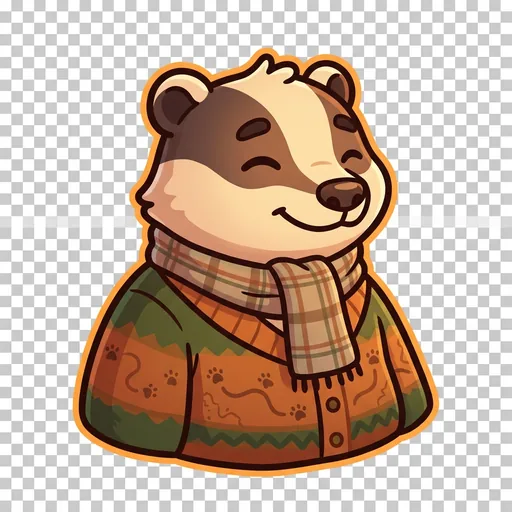
Range
Territory & migration (where animals live, where they go)
-
Roost
Habitat behavior (where & why animals rest, nest, den)
-
Dusk
Activity timing / when animals are active
-
Dapple
Camouflage / concealment
-

Waken
Dormancy / hibernation