Dusk
Every animal has its hours
Loading audio…
Press play to listen along. The line being read lights up as you go.
Show full transcript
Loading transcript…
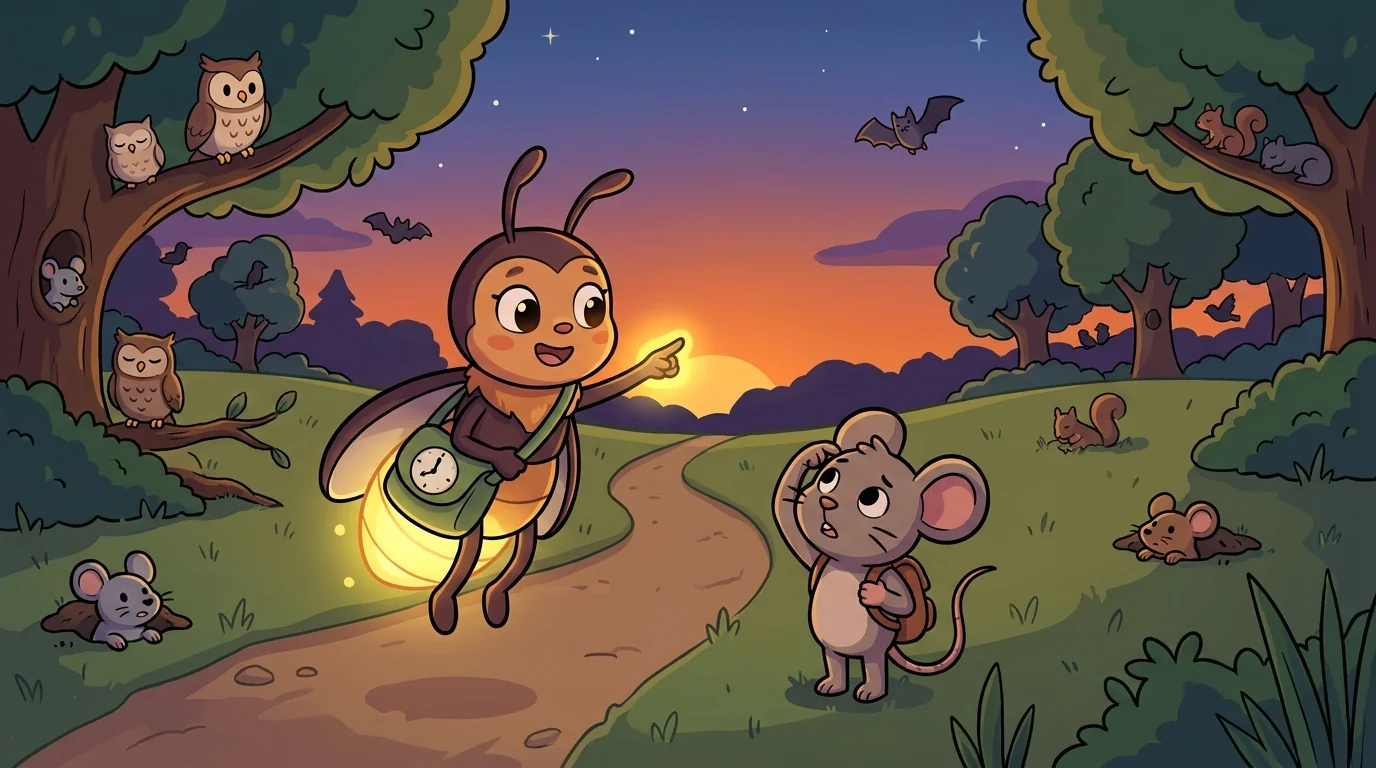
As the day faded to that soft glowing hour between sunset and dark, a young firefly began to glow in the WildLens meadow — right on schedule — and showed a puzzled young mouse why timing, not just place, is the secret to finding animals.
Dusk was small and warm-lit, blinking gently on and off, with a tiny clock tucked in her satchel. The mouse had been hunting for animals all afternoon and found almost none. "The meadow was EMPTY all day," he complained. "No animals anywhere. And now, suddenly, YOU'RE glowing, and I hear things stirring. Where were you all afternoon?"
"Asleep, mostly," Dusk said, blinking. "You looked at the wrong TIME. Every animal has its own hours." She pointed her glow at the dimming sky. "Some animals wake with the sun — the day-shift: most songbirds, butterflies, squirrels. Some wake with the moon — the night-shift: owls, bats, many mice. And some, like me, come alive only at the EDGES of the day, dawn and dusk — that soft in-between hour." She blinked warmly. "You searched the meadow at high noon, when the dusk-and-night animals were all resting, hidden away. Of course it seemed empty. Look at the right TIME, and the animal is there."
The mouse watched more creatures stir as the light faded. "So it's not just WHERE to look — it's WHEN?"
"Both matter, but timing is the one people forget," Dusk said. "The same meadow is a different world at dawn, at noon, at dusk, at midnight — each hour has its own cast of animals, awake and busy while the others sleep. Learn each animal's hours, show up at the right time, and it's there — no chasing, no disturbing, just good timing and patient watching from a respectful distance."
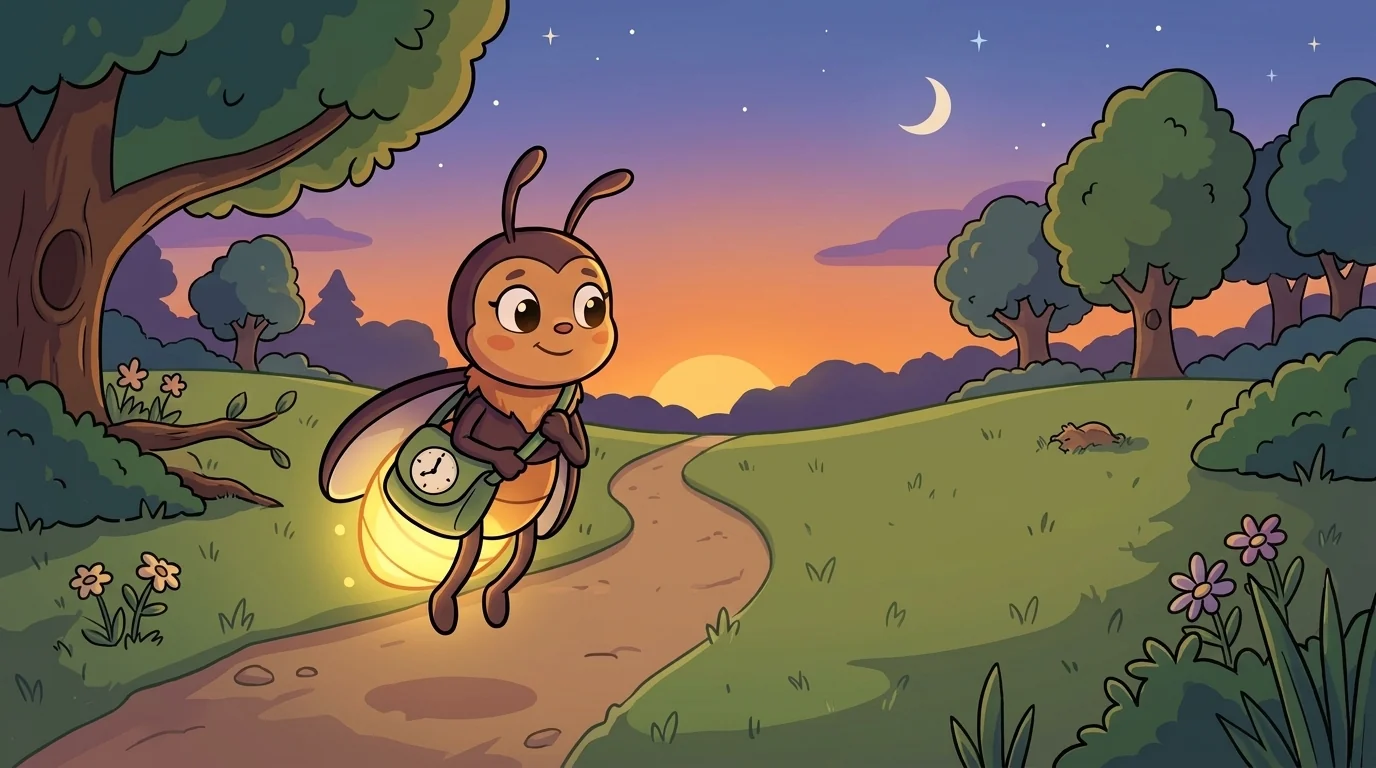
Dusk had learned about animal hours as a young larva.
The first time she went to see the meadow's animals, she went at midday — bright, hot, busy in her own mind — and found the meadow strangely still and empty, and she felt cheated, sure the meadow was lifeless, that there was nothing worth watching at all.
Her grandmother, an old firefly, glowed beside her that evening. "You went at noon, little one," she said gently. "But noon isn't OUR hour, nor the owl's, nor the bat's. The meadow wasn't empty — its dusk-and-night animals were simply asleep, waiting for their time." She blinked toward the darkening sky. "Every creature has its own hours, chosen for good reasons — to avoid the heat, to hunt when prey is out, to hide from day-time dangers. The meadow at midnight is as crowded as at noon — just with different animals." She nudged her. "Don't decide a place is empty. Ask instead: whose HOUR is it? And come back when it belongs to the animal you seek."
Dusk started paying attention to time — coming to the meadow at dawn for the songbirds, at dusk for herself and the moths, at midnight for the owls — and every "empty" place turned out to be full, just at hours she'd been missing. The cheated feeling turned into a patient, well-timed calm. The meadow was never empty. She'd just kept arriving during the wrong shift.
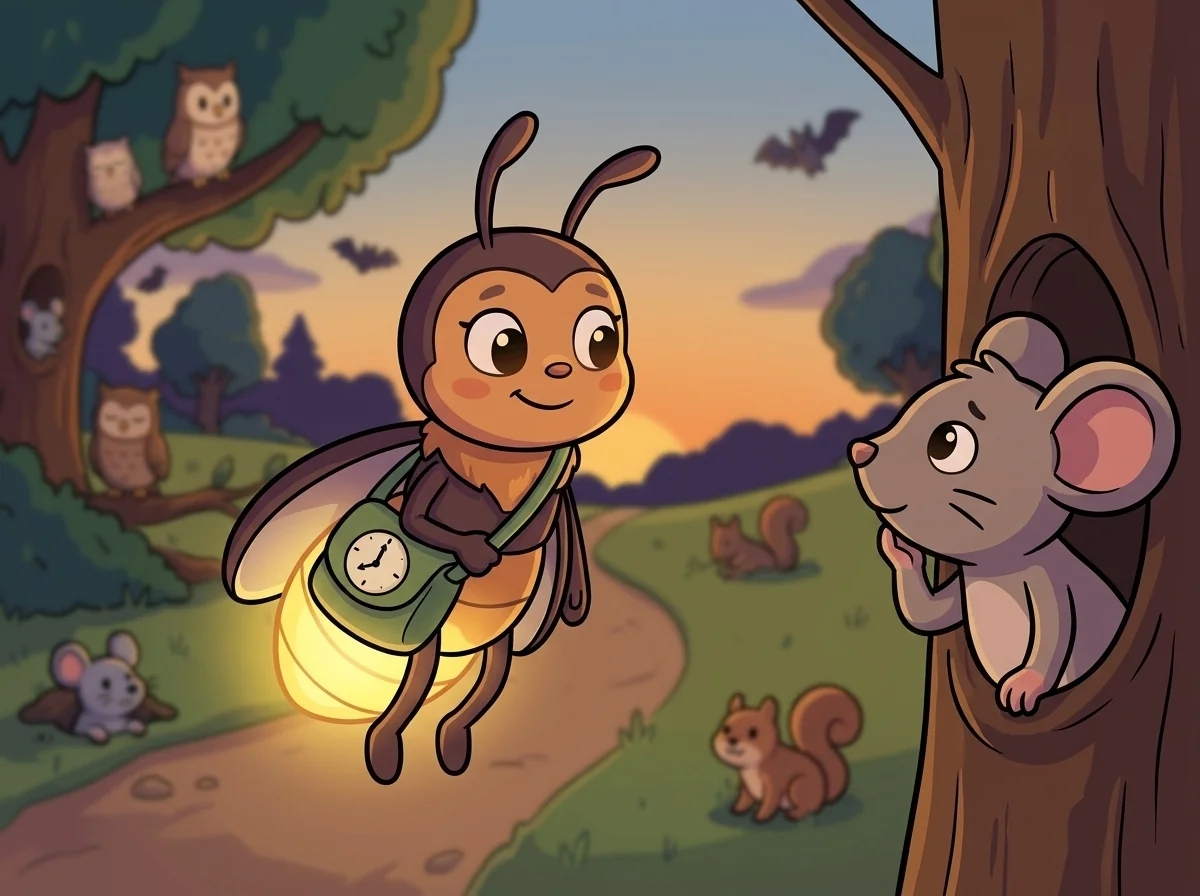
When Dusk was older, she drifted to WildLens, where Lens, her mentor, asked, "Why does a place seem empty of animals at some times and full at others?"
Dusk didn't answer with a speech. She blinked her glow as the light faded. "Because every animal has its own hours," she said. "Day-shift creatures wake with the sun; night-shift ones with the moon; and some, like me, live at dawn and dusk. A place isn't empty — its animals are just off-shift, resting until their time." She showed her little clock. "Search at the wrong hour, and you'll swear the woods are lifeless. Learn each animal's hours, arrive at the right time, and there it is — busy and alive, no chasing needed."
Lens's eyes crinkled warmly. "Some decide a place has no animals," Lens said.
"Every place is full — you just have to come at the right HOUR," Dusk said. Lens smiled. "Then come in," Lens said. "WildLens needs someone who knows each animal's time."
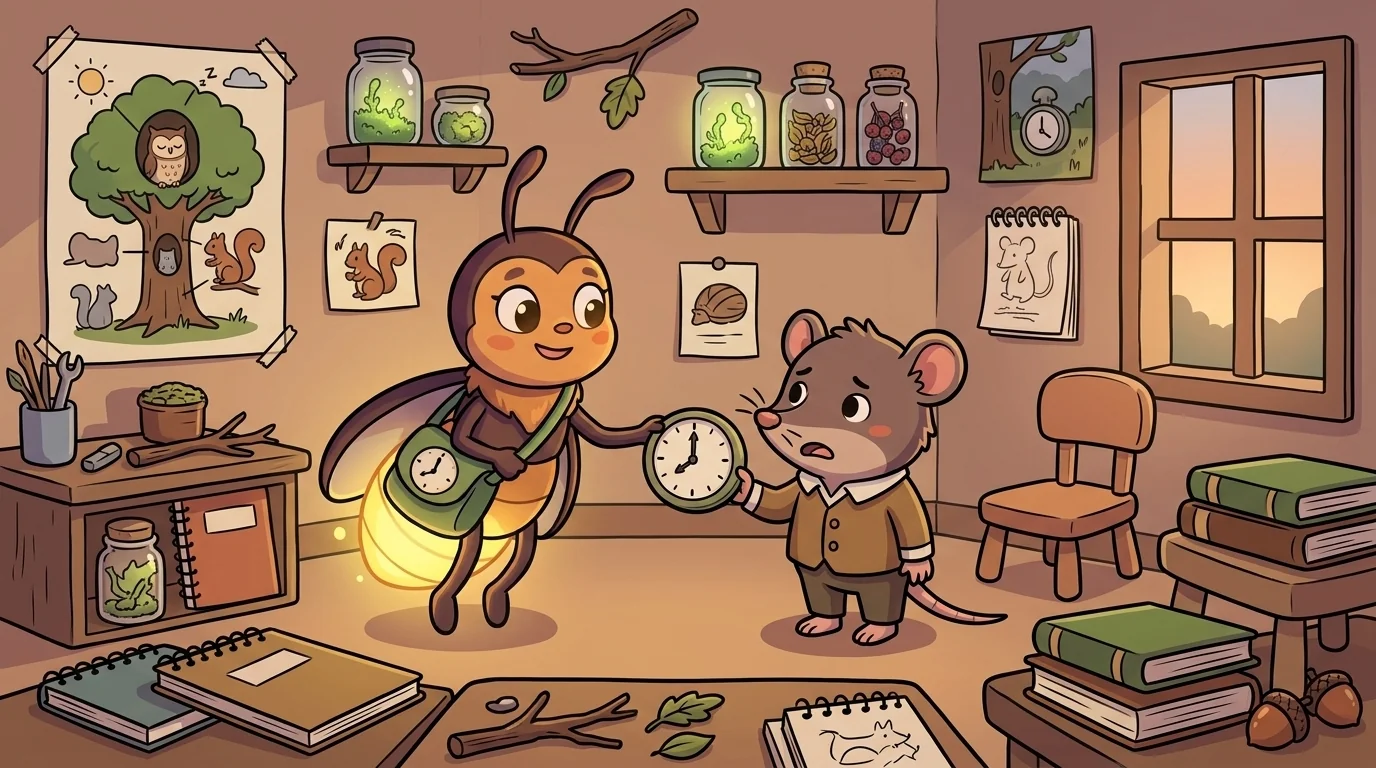
In her workshop one afternoon, a frustrated young shrew came in.
"I want to see owls," the shrew said, "so I sat by their tree ALL DAY, and I never saw one. Not once. I guess there just aren't any owls here. I give up."
"There are almost certainly owls — you just watched at the wrong time," Dusk said gently. She showed her little clock. "Owls are night-shift. All day, while you watched, they were asleep, tucked away, resting for their hours. You'd have to sit there till dark to see one wake." She blinked. "Same with so many animals — bats, most mice, foxes at their most active: they come out at dusk and night. Sitting by the owl's tree all DAY is like waiting at a bakery at midnight and deciding it never opens." She smiled. "Come back at dusk, wait quietly at a respectful distance, and the owl will wake and hunt — right on its own schedule."
The shrew's frustration eased. "So the owls ARE there — I just kept watching during their sleep. If I come at dusk instead, at THEIR hour, they'll be awake."
"That's the whole craft," Dusk said. "A place is never empty of animals — its creatures are just spread across the hours, each awake in its own time while the others sleep. Learn whose hour is whose. Come at the right time. And the animal you seek will be there, living its life on its own schedule — while you watch, patient and unseen, from a respectful distance."
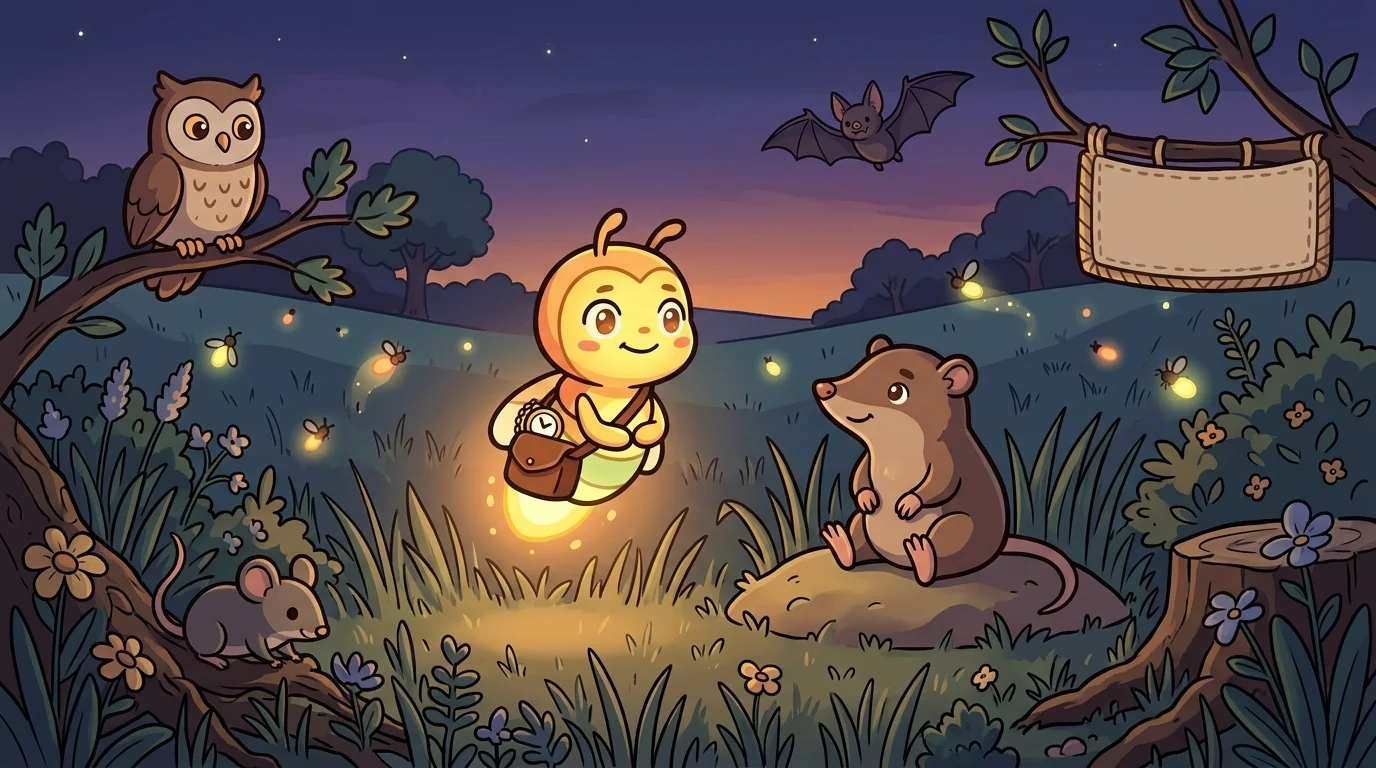
Later, in the deepening dusk, the shrew came back, watching the evening animals stir, delighted.
"It's kind of wonderful," the shrew said, "that the meadow is a totally different, full-of-life place depending on when you come."
Dusk drifted beside him, glowing softly.
"That's the quiet wonder of it," she said. "One place, many worlds — the dawn world, the noon world, the dusk world, the midnight world — each crowded with its own animals, awake while the rest sleep." She blinked her warm light. "There's a patient, well-timed feeling in that — not the frustration of an 'empty' place, but the calm gladness of showing up at the right hour and finding the animal exactly where and when it should be." She glowed against the dusk. "Ask whose hour it is. Come at the right time. And the wild fills up with life, right on its own schedule, for a watcher patient enough to keep its hours."
The shrew nodded, watching the dusk-animals emerge, and Dusk watched the frustrated, give-up feeling ease into that patient, well-timed calm she'd found as a larva learning the meadow's hours — the warm gladness of a young watcher who's discovered that no place is ever truly empty, only spread across the hours, and full of life for anyone who comes at the right time.
The WildLens ensemble
Dusk is one of the friends in WildLens. Each friend shows you one idea by how they act; meet them all and you have the whole subject.
-
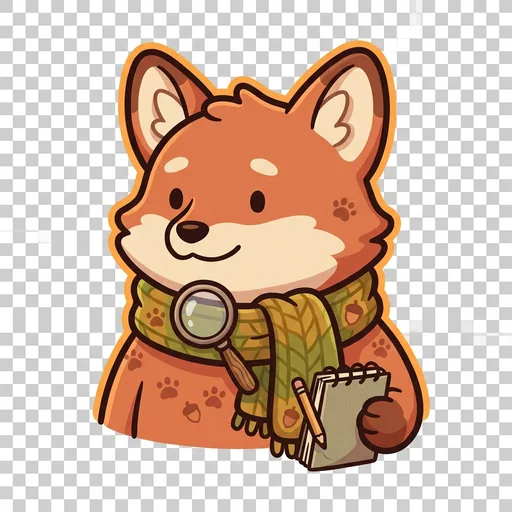
Track
Animal sign reading (footprints, scat, scrapes, scent)
-
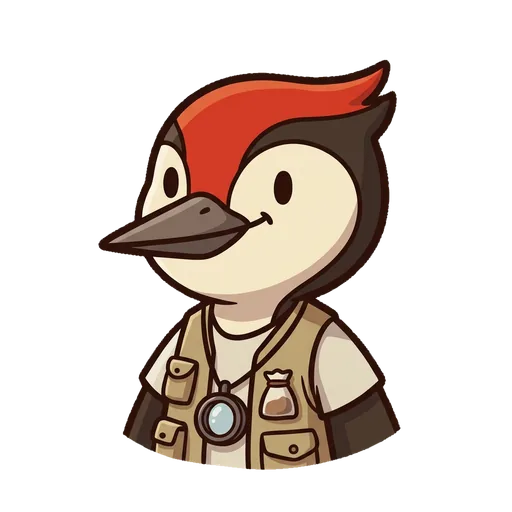
Forage
Diet + feeding sign
-
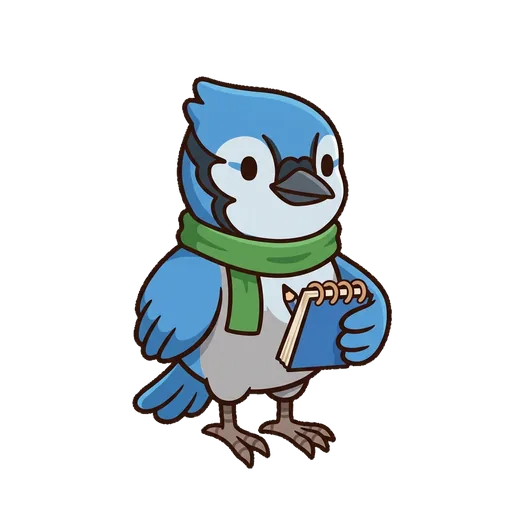
Cache
Food-storing behavior
-

Woven
Food webs; who eats whom links every animal and plant, so a change to one strand tugs on the rest
-
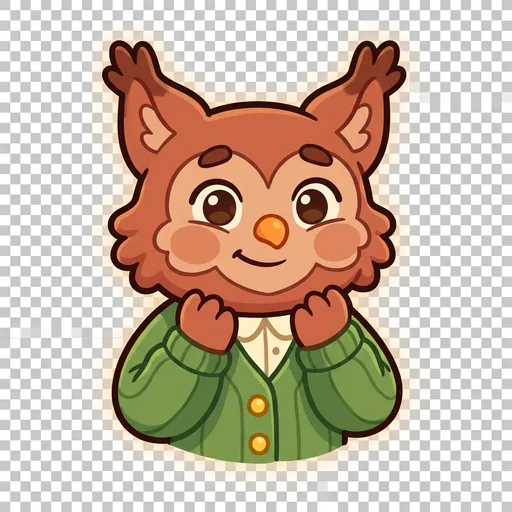
Call
Communication (vocalization, body language, signals)
-

Brood
Social structure (family groups, herds, flocks, solitary)
-

Range
Territory & migration (where animals live, where they go)
-
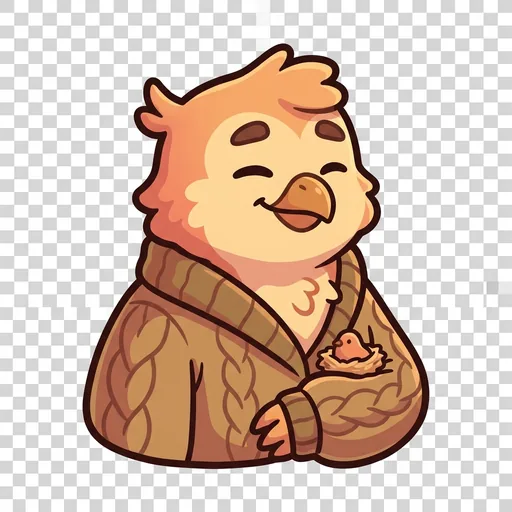
Roost
Habitat behavior (where & why animals rest, nest, den)
-
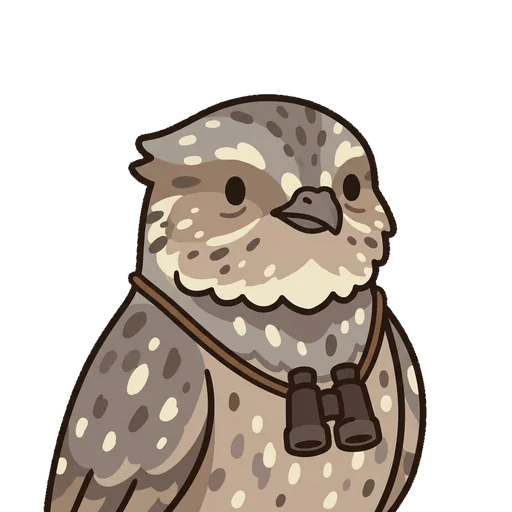
Dapple
Camouflage / concealment
-

Waken
Dormancy / hibernation