Waken
An animal that sleeps through winter isn't gone, and isn't in trouble
Loading audio…
Press play to listen along. The line being read lights up as you go.
Show full transcript
Loading transcript…
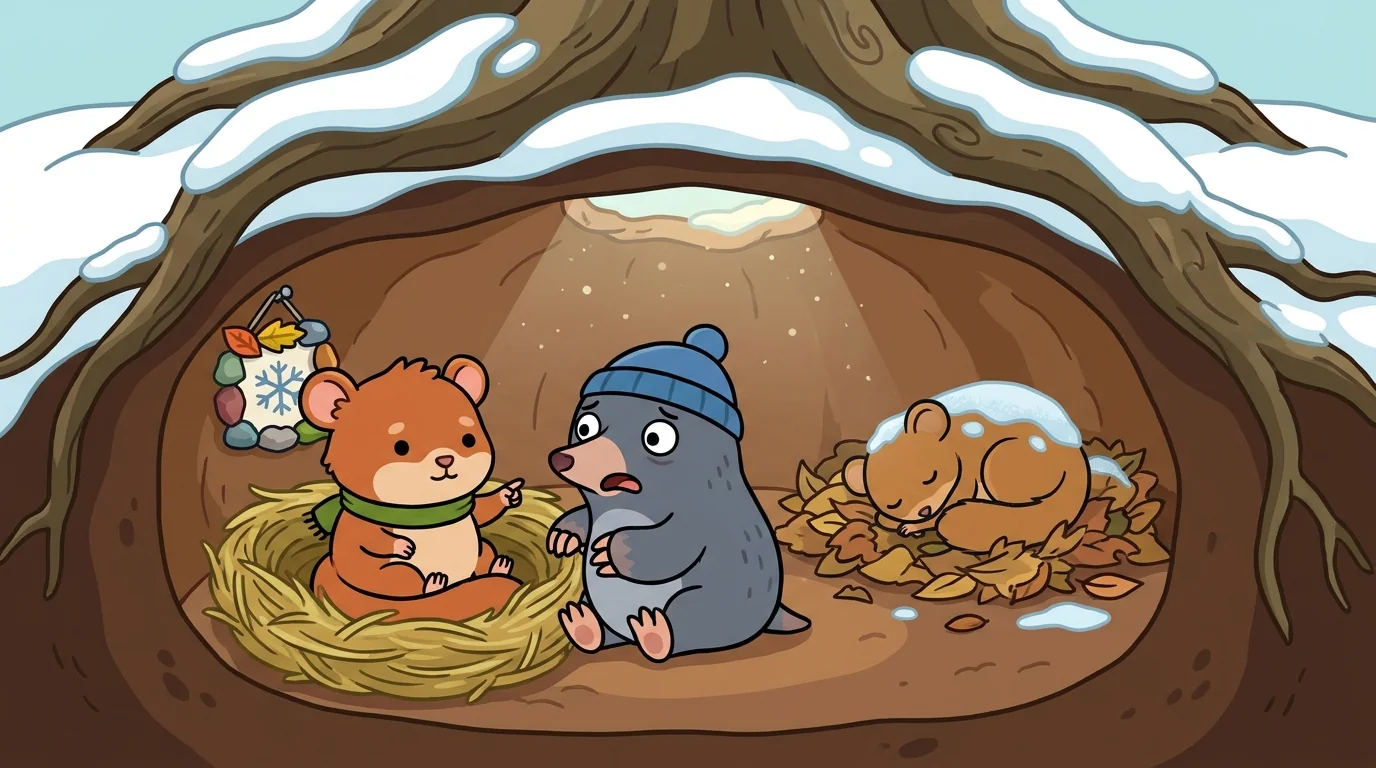
In a cozy hollow under the WildLens roots, a young dormouse curled in a ball showed a worried young mole something that looks alarming but is really the gentlest thing in the woods: an animal so deeply asleep for the winter that it seems, at first, like it might be gone — but isn't, at all.
Waken was tiny and round, wrapped in her tail, warm and slow, with a little seasonal-calendar in her nest. It was deep winter, and nearby, another dormouse lay curled and utterly still. The mole gasped, frightened. "That one's not moving AT ALL!" he whispered. "Is it — is something wrong? Is it gone?"
"Nothing's wrong, and it's not gone," Waken said softly, gently. "It's hibernating — sleeping the deepest, safest sleep there is, all winter long." She nodded at the still dormouse. "In hibernation, an animal slows itself WAY down — its heart barely beats, its breath goes slow and faint, its whole body cools — to save energy through the cold months when there's no food. It looks almost like it's stopped. But it's just deeply, deeply asleep. In spring, when it's warm and food returns, it will slowly wake up, stretch, and carry on." She smiled warmly. "An animal that sleeps through winter isn't gone, and isn't in trouble. It's deeply, safely resting — and the kindest thing is to let it sleep."
The mole crept closer, worried. "Should we wake it up? To make sure it's okay?"
"No — that's the most important part," Waken said gently, guiding him back. "NEVER wake a hibernating animal. Its slow winter sleep is exactly how it survives the cold; if you wake it early, it burns up the energy it needs to last the winter, and it can't easily find food in the snow. Waking it doesn't help — it HARMS." She tucked her own tail closer. "So we watch from a respectful distance, we stay quiet, and we let it sleep. It knows how to survive winter. Our job is simply not to disturb its rest."
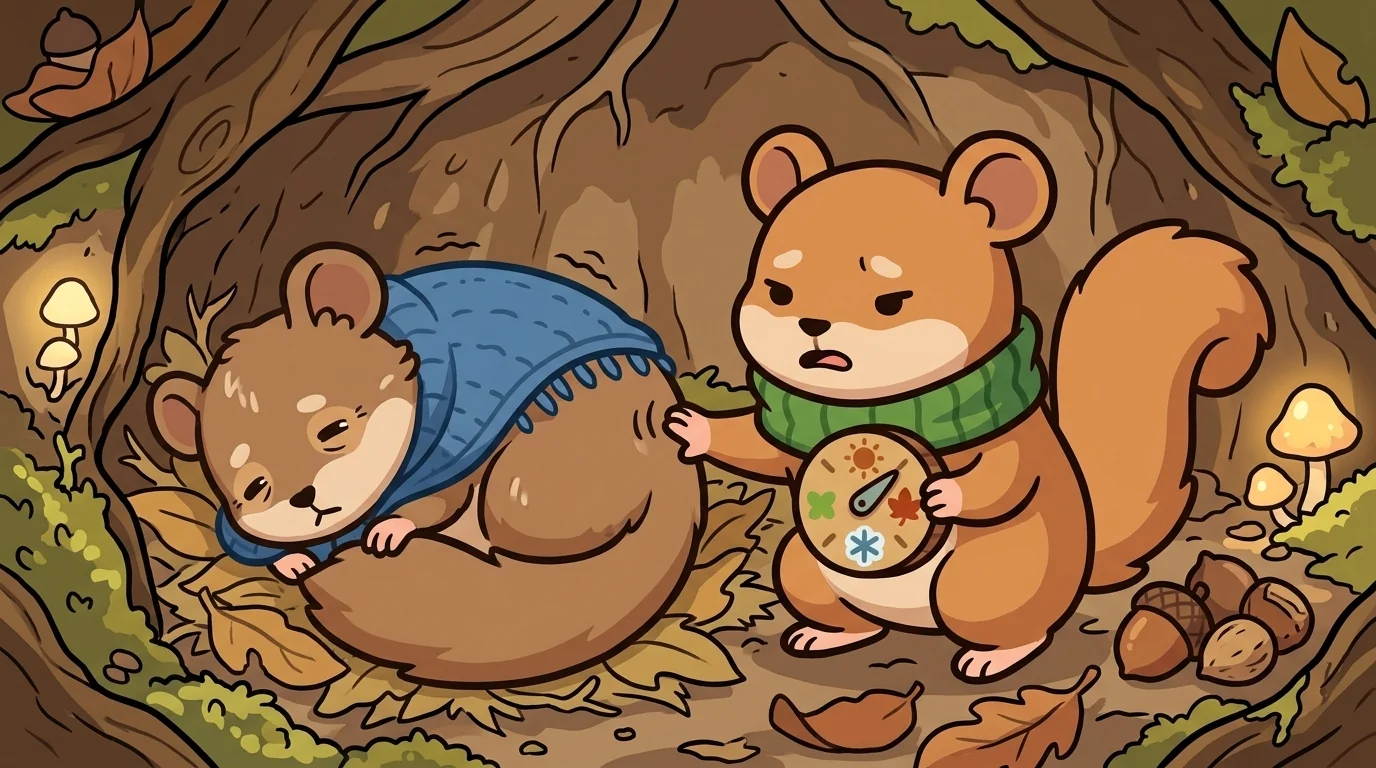
Waken had learned about the winter sleep as a young pup.
The first winter she saw an older dormouse curled utterly still, she panicked — she was sure something terrible had happened, and in her fear she nudged and squeaked and tried to wake it, wanting to help. The older dormouse stirred groggily, confused and shivering in the cold, its precious winter energy spent — and it struggled through the rest of the winter, weakened by being woken. Waken felt awful, sure her fear and meddling had done harm, when she'd only meant to help.
Her grandmother, an old dormouse who had slept through many winters, curled beside her. "You were frightened because you didn't understand," she said gently. "That deep stillness wasn't trouble — it was hibernation, the safe, ordinary winter sleep. Nothing was wrong. And waking it, even out of love, harmed it — it burned the energy it needed to last." She smoothed the young Waken's fur. "A hibernating animal isn't in danger, and it isn't gone. It's resting, exactly as it's meant to, and it will wake in spring on its own. The kindest, most loving thing you can do is NOTHING — watch quietly, and let it sleep."
Waken learned that a still, curled winter-sleeper was no cause for fear or meddling — just an animal safely resting, sure to wake in spring. And she never again disturbed one; she watched, quiet and gentle, and let them sleep. The awful, frightened feeling turned into a tender, reassured calm. The winter sleep wasn't trouble. It was the wild resting safely — and love meant letting it rest.
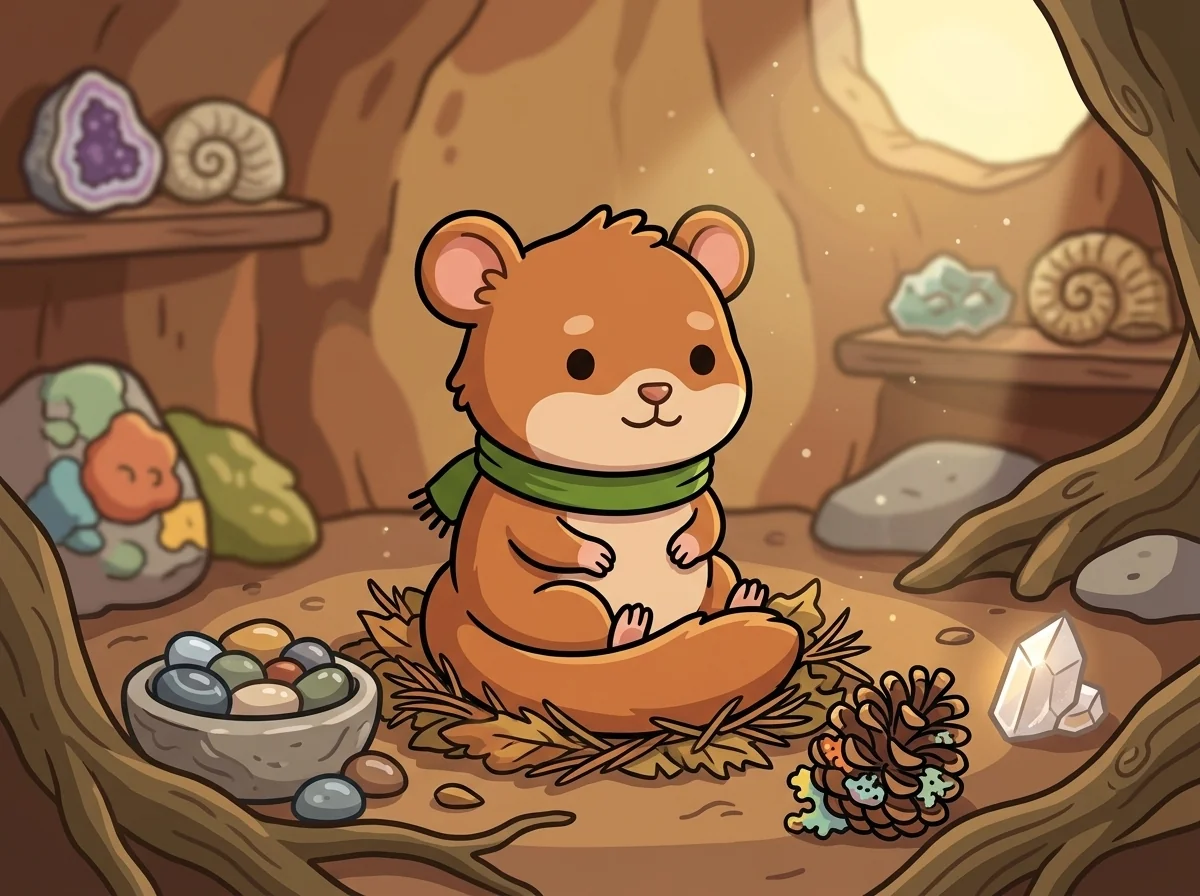
When Waken was older, she padded to WildLens, where Lens, her mentor, asked, "What should you do when you find an animal in its long winter sleep?"
Waken didn't answer with a speech. She curled small, then explained. "Let it sleep," she said. "A hibernating animal isn't gone and isn't in trouble — it's in the deepest, safest rest, slowing itself down to survive the cold months. It will wake on its own in spring." She tucked her tail. "So you never wake it — waking it burns the energy it needs and can harm it. You watch, quiet, from a respectful distance, and you let it rest. The kindest thing is to do nothing at all but let it sleep safely through to spring."
Lens's eyes crinkled warmly. "Some are frightened by the stillness, and try to wake it," Lens said.
"Its stillness is safety, not trouble — and waking it out of worry only harms it," Waken said. "Let it sleep." Lens smiled. "Then come in," Lens said. "WildLens needs someone who guards the winter sleep."
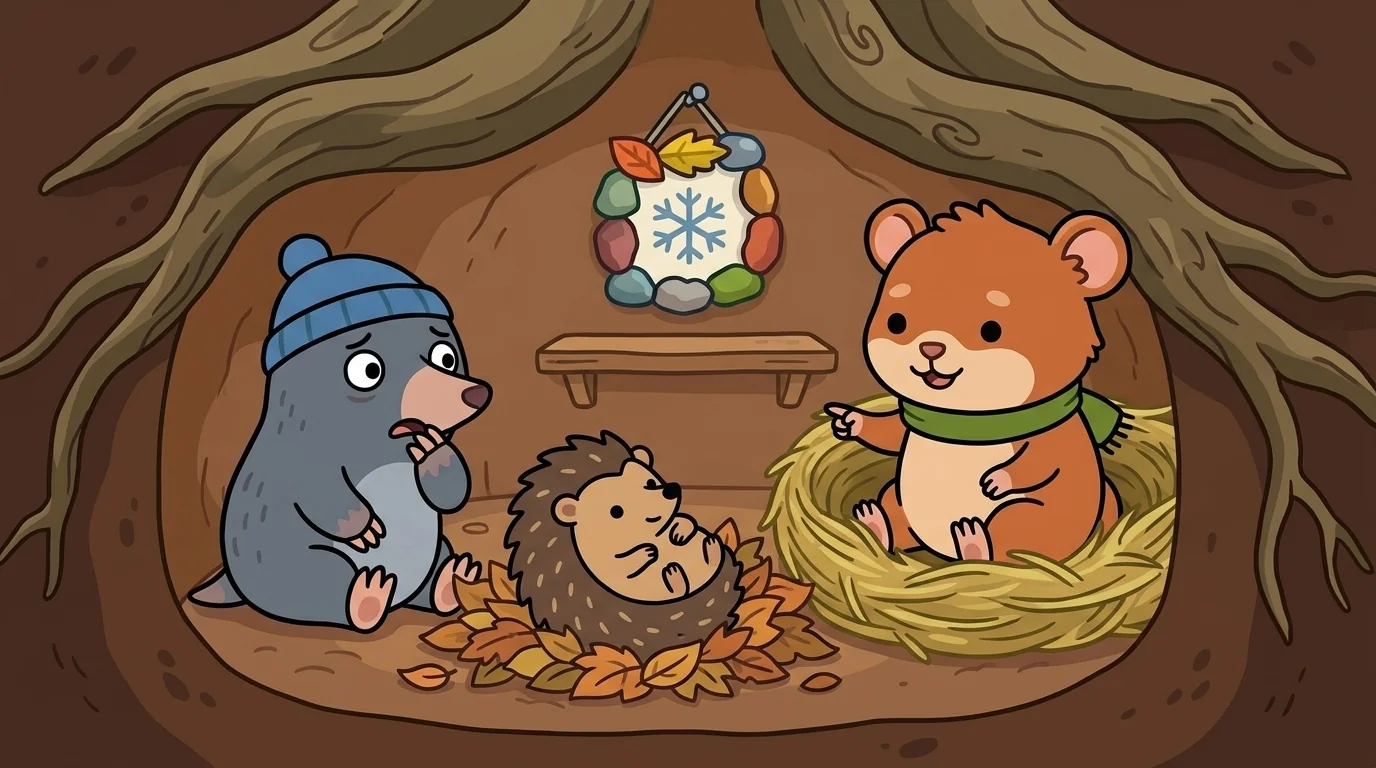
In her workshop one cold afternoon, an anxious young vole came in, upset.
"I found a hedgehog curled up in the leaves, completely still," the vole said, near tears. "I got so scared something was wrong. I almost picked it up to warm it and wake it. Should I have? Is it okay out there?"
"You were right to be gentle, and I'm glad you asked before acting," Waken said warmly. "The hedgehog is okay — better than okay. It's hibernating, in its safe deep winter sleep, curled up exactly as it should be." She showed the vole her seasonal-calendar. "It looks alarmingly still because its body has slowed way down to save energy — but it's just deeply asleep, and it will wake in spring, warm and hungry, and trundle off." She looked at the vole kindly. "And here's the crucial thing: DON'T pick it up or warm it or wake it. That would use up the energy it's saving, and it couldn't find food in the cold, and you'd hurt it by trying to help. The loving thing is to leave it be — cover it back over gently if you disturbed the leaves, and let it sleep."
The vole's tears eased into relief. "So the hedgehog isn't in trouble at all. It's just deeply asleep for the winter, and the kindest thing is to leave it be and let it wake in spring on its own."
"That's the whole craft," Waken said gently. "A winter-sleeper's stillness looks scary if you don't understand it, but it's the wild resting safely, exactly as it should. It will wake when spring comes. And the most loving thing — the naturalist's gentlest rule — is to watch quietly, never disturb, and let it sleep. Caring for a hibernating animal means simply letting it be."
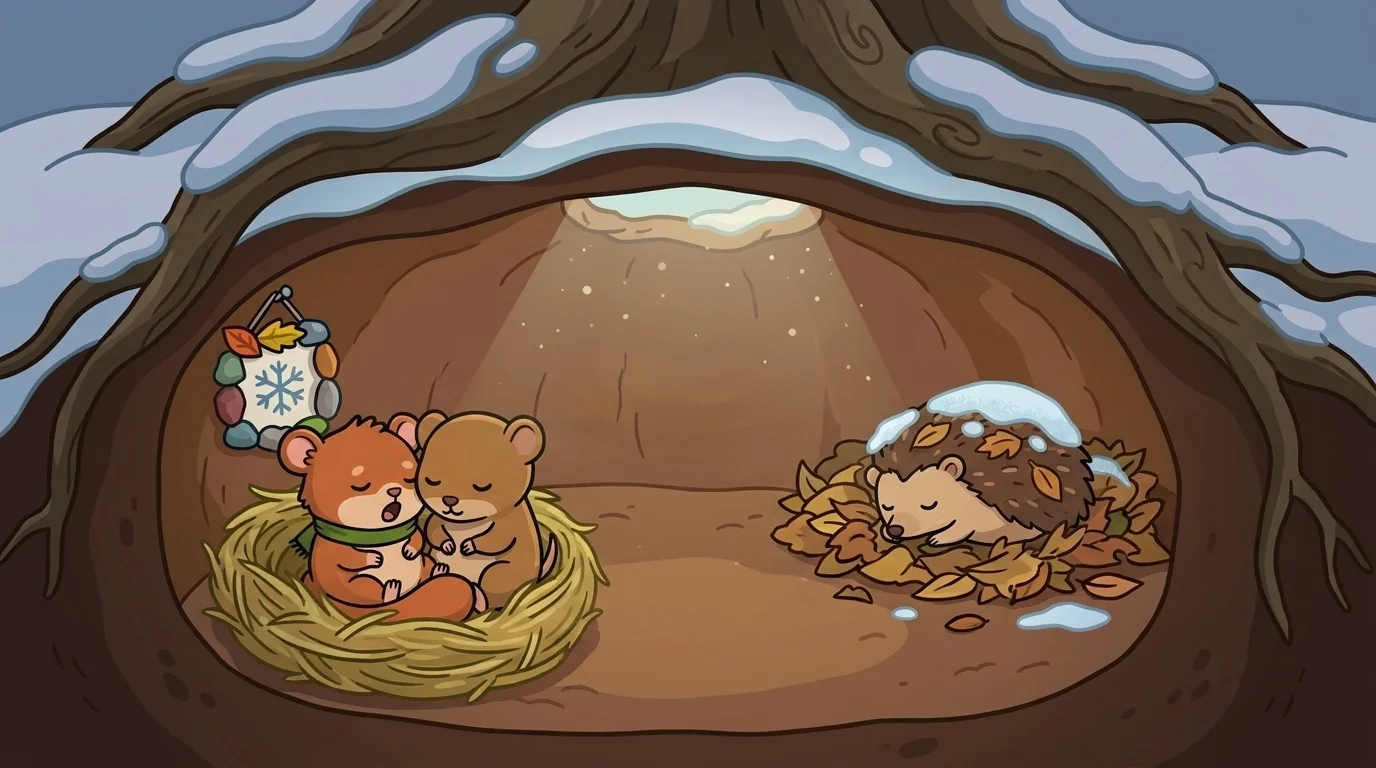
Later, as the winter light dimmed, the vole came back, calmer, having quietly re-covered the sleeping hedgehog's leaves.
"It's kind of comforting," the vole said, "that the still, curled-up animal isn't in trouble — it's just sleeping, and it'll wake up in spring."
Waken curled cozily beside him.
"That's the gentle truth of it," she said. "The winter woods are full of deep sleepers — dormice, hedgehogs, certain frogs and bats — all curled safe, slowed way down, resting through the cold, sure to wake when it warms." She tucked her tail. "There's a tender, reassured feeling in that — not the fear that a still animal is in trouble, but the calm gladness of knowing it's simply, safely asleep, and that the kindest thing you can do is let it rest." She yawned softly. "Don't fear the winter stillness. Don't wake the sleeper. Watch quietly, leave it be, and trust that spring will wake it — gently, on its own."
The vole nodded, settling by the quiet nest, and Waken watched the anxious, something's-wrong feeling ease into that tender, reassured calm she'd found as a pup learning to guard the winter sleep — the warm gladness of a young watcher who's discovered that a still winter-sleeper is no cause for fear, but the wild resting safely, and that love means simply, gently, letting it sleep.
The WildLens ensemble
Waken is one of the friends in WildLens. Each friend shows you one idea by how they act; meet them all and you have the whole subject.
-

Track
Animal sign reading (footprints, scat, scrapes, scent)
-
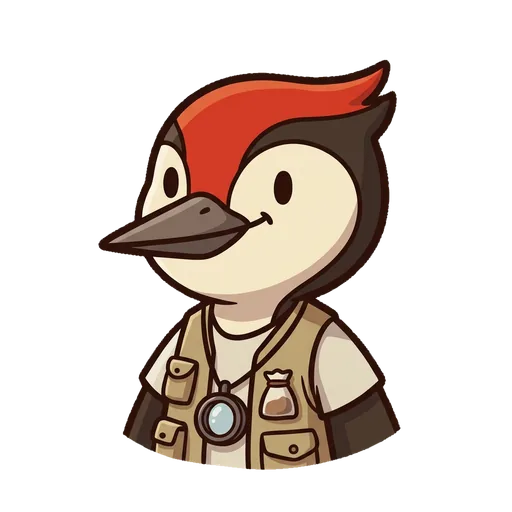
Forage
Diet + feeding sign
-
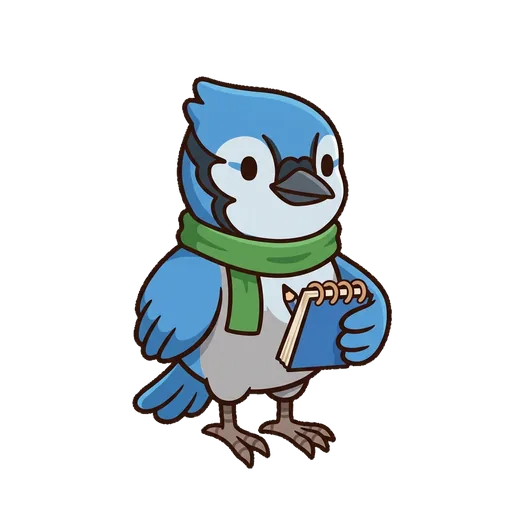
Cache
Food-storing behavior
-

Woven
Food webs; who eats whom links every animal and plant, so a change to one strand tugs on the rest
-

Call
Communication (vocalization, body language, signals)
-

Brood
Social structure (family groups, herds, flocks, solitary)
-

Range
Territory & migration (where animals live, where they go)
-
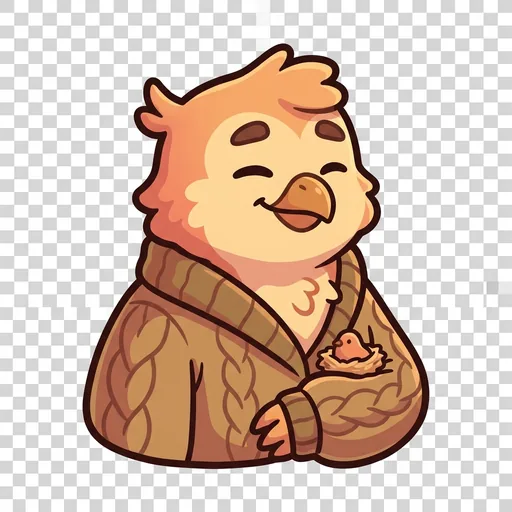
Roost
Habitat behavior (where & why animals rest, nest, den)
-

Dusk
Activity timing / when animals are active
-
Dapple
Camouflage / concealment