Forage and Cache
To understand how an animal survives, read its food TWO ways
Loading audio…
Press play to listen along. The line being read lights up as you go.
Show full transcript
Loading transcript…
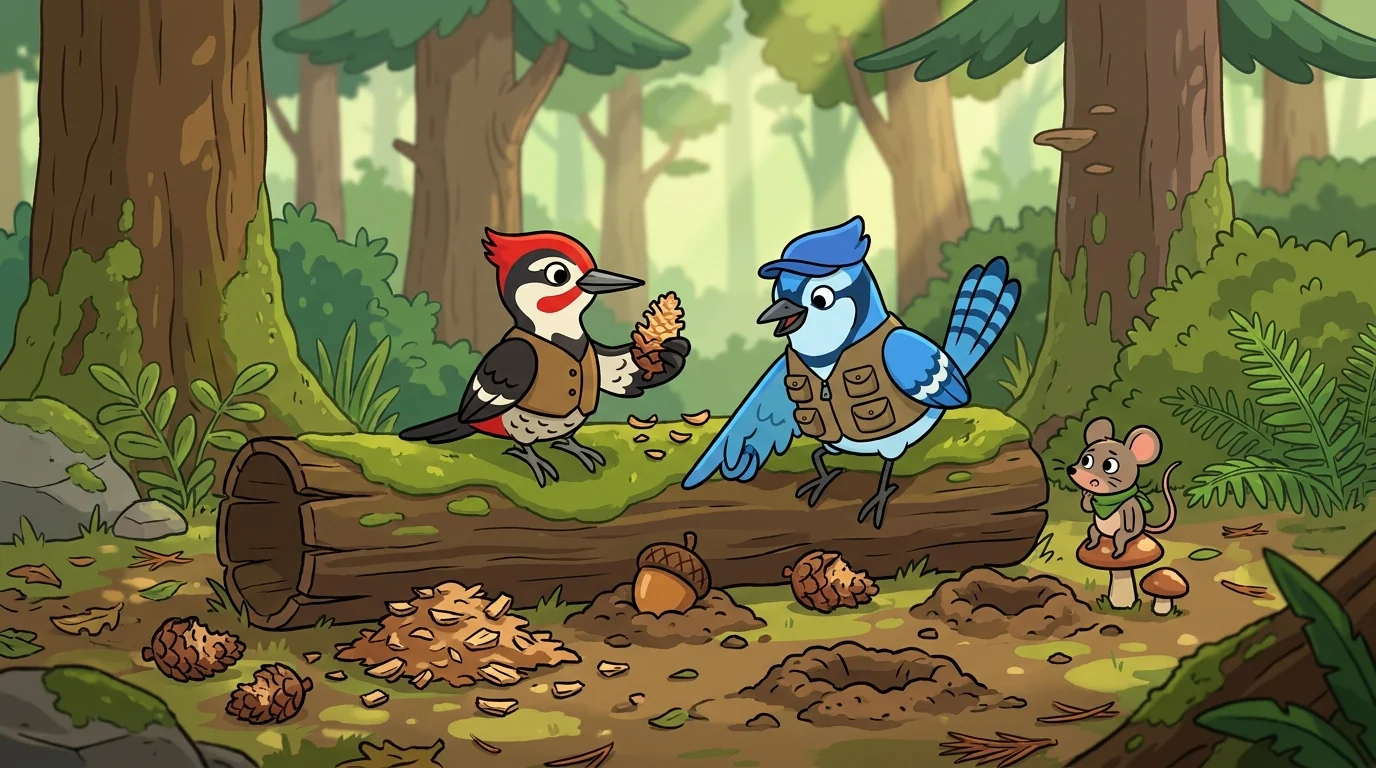
Forage the woodpecker and Cache the jay perched together over a scatter of chewed cones and freshly-buried digs in the WildLens woods, and a young mouse named Fen couldn't tell why the leftover-reader and the hoard-reader always studied the same animal's food side by side.
"Because an animal's food is a two-part story," Cache said, bright blue. "There's what it eats NOW — its everyday menu — that's her." Forage turned a stripped cone in her claw. "And there's what it SAVES for later — its hidden stores for hard times — that's her." Forage held up the cone; Cache pointed to a buried acorn. "To understand how an animal survives, you read both. What it eats now, and what it saves for later — food-in-the-moment plus food-for-the-future is its whole plan for staying alive."
Fen frowned. "But if I know what it eats, don't I know its food?"
"Only half," Forage said. "Knowing what a squirrel eats today tells you its menu. But it says nothing about whether it's PREPARED for winter, when there's nothing to eat. For that, you need to know what it SAVED."
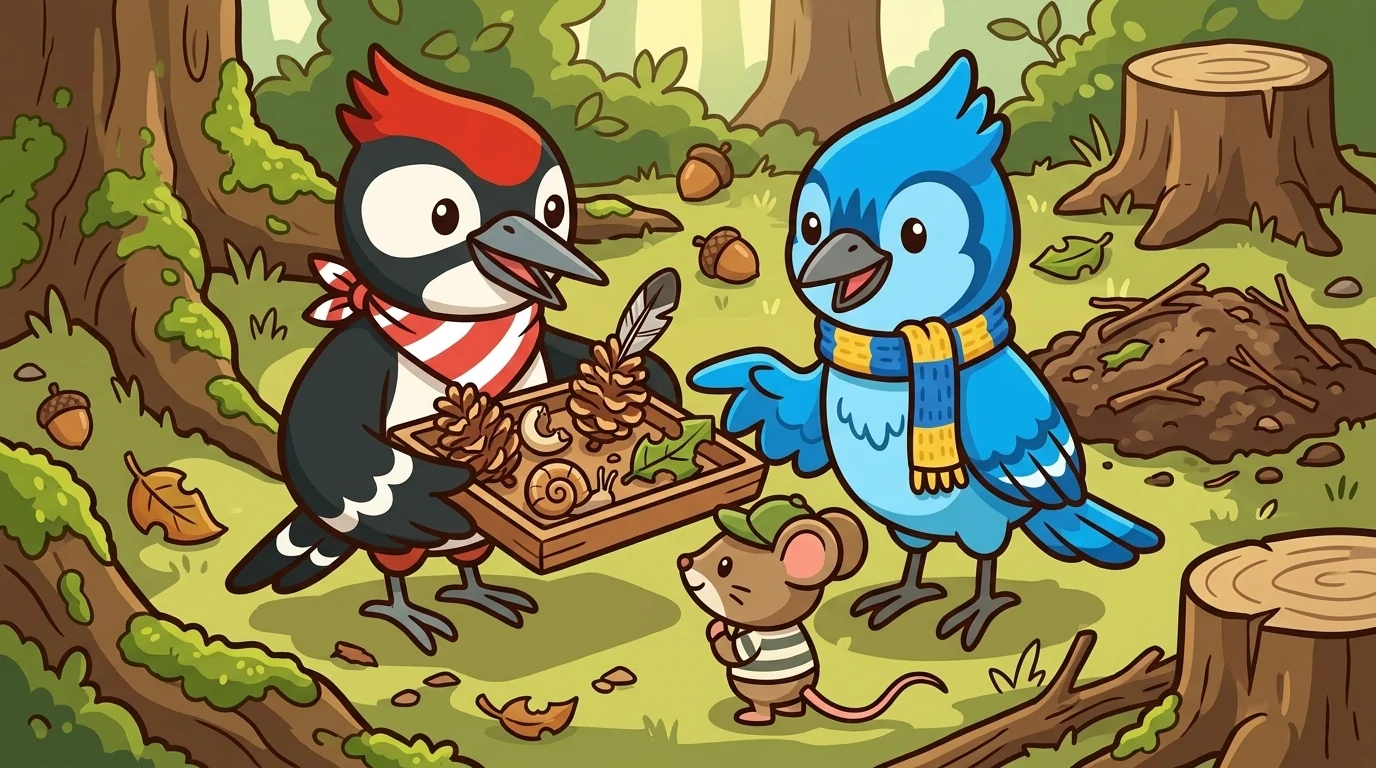
Forage went first, to show the food-in-the-moment.
She spread a tray of feeding-sign — stripped cones, cracked shells, nibbled leaves. "This is foraging — what an animal eats NOW," she said. "I read its leftovers: a neatly-stripped cone means a squirrel; cracked snail-shells mean a thrush; certain bite-marks on leaves mean a certain caterpillar. Each leftover tells me the everyday menu — all without disturbing the animal." She tapped a cone. "So I know exactly what this squirrel eats: seeds, nuts, buds." Fen nodded. "So you know its menu," Fen said. Then Forage paused. "But here's what my leftovers DON'T tell me: what happens when winter comes and all these seeds and nuts are gone, buried under snow? Does this squirrel starve? Or did it PREPARE?" She glanced at Cache. "My leftovers show what it eats today. For whether it planned for tomorrow, I need her."
Fen considered. "So YOUR half — the menu — tells what it eats now... but not whether it's ready for winter."
"Only the now," Forage agreed. "Half the food story. The future is hers."
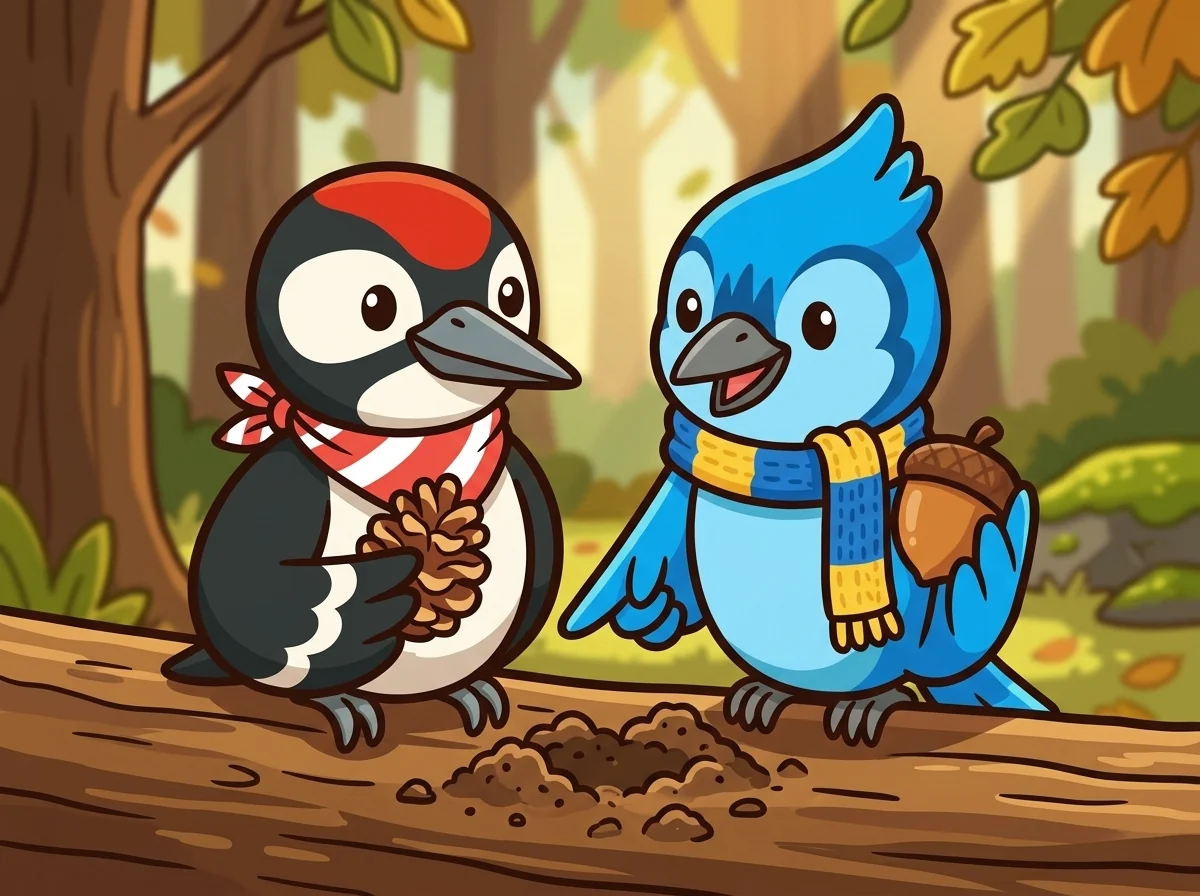
Then Cache took over, to show the food-for-the-future.
She pointed to a scatter of freshly-buried digs. "This is caching — what an animal SAVES for later," she said. "This squirrel didn't eat every acorn it found — it BURIED dozens of them, all over the woods, as hidden stores for winter. Reading the hoards tells me it plans ahead, and how it prepares for the hard, hungry months." She tapped her notebook. "And I read the caches without ever disturbing one — a hoard is the squirrel's winter survival; I note it and leave it safe." Fen nodded. "So you know how it prepares," Fen said. Then Cache looked at Forage's tray. "But the hoards alone don't tell me what the squirrel actually EATS day to day, in the warm months when food is everywhere — what its normal menu is, how it lives when times are good. The caches are just the winter-savings part." She glanced at Forage. "For the everyday menu, I need her."
Fen looked from the woodpecker to the jay. "So HER half — the hoards — shows how it saves for winter... and YOUR half — the leftovers — shows its everyday menu. Together it's the WHOLE food story!"
"Two halves," Cache said. "Food now, and food for later — its whole survival plan."
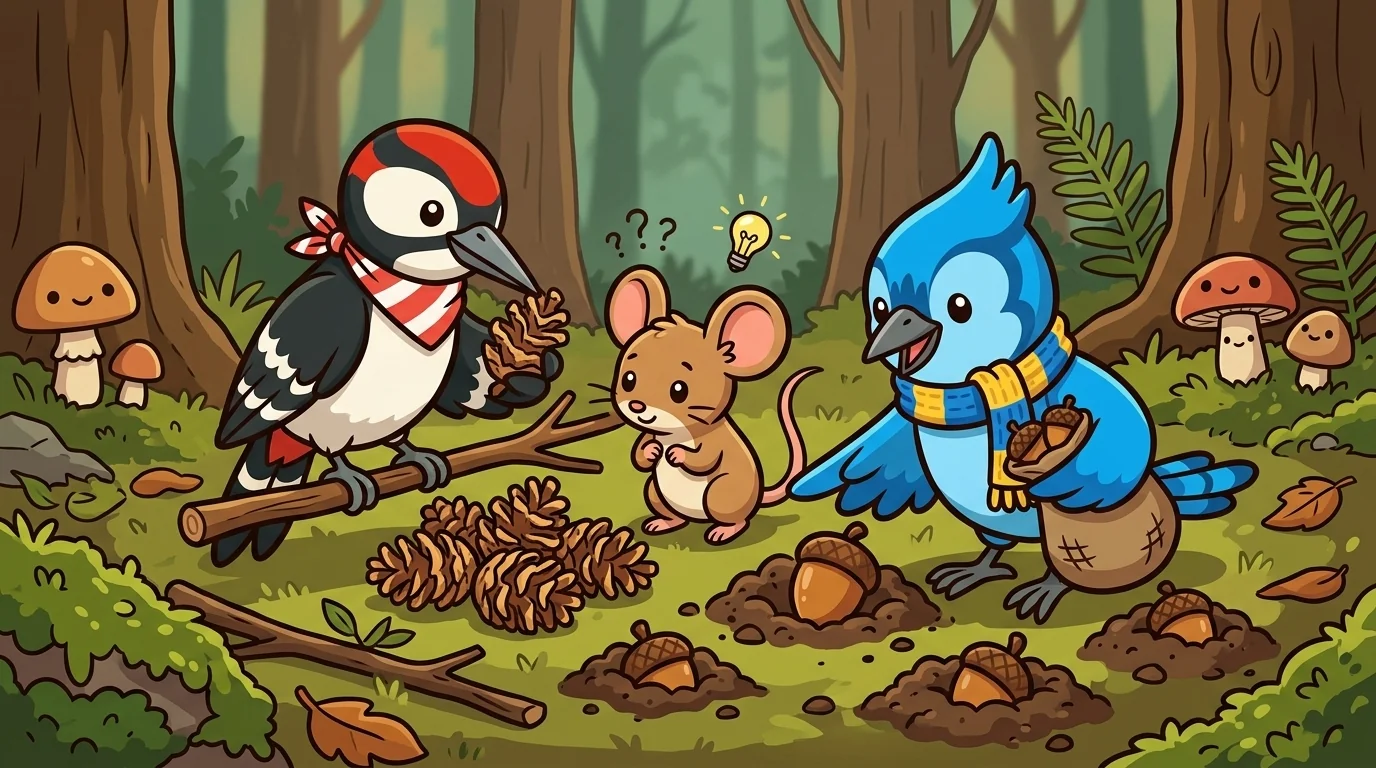
Then Forage and Cache read one squirrel's whole food story TOGETHER, and Fen finally saw how the two halves made a complete life.
Forage read the everyday menu from feeding-sign: this squirrel eats seeds, nuts, buds, mushrooms — its warm-season diet (the food-now half). AND Cache read the hoards: this same squirrel buries dozens of acorns across the woods each autumn — its winter-savings (the food-later half). Together: Fen understood the squirrel's WHOLE way of surviving the year — feasting on the summer's plenty (Forage) AND stashing away enough buried acorns to outlast the barren winter (Cache). And they'd learned every bit of it without disturbing the squirrel or touching a single hoard — reading leftovers and noting caches from a respectful distance.
"OH," Fen breathed. "What it eats NOW plus what it SAVES for later — that's its whole plan for surviving the entire year!"
"That's it," Forage said. Alone, her menu missed how the squirrel survives winter. Alone, Cache's hoards missed the everyday diet. But together — food now AND food for later — they told the squirrel's whole food story. "I read what it eats today," Forage said. "And I read what it saved for tomorrow," Cache said. "Both halves," they said together, "and you understand how an animal survives the whole year round — all without disturbing a single meal, eaten or stored."
Fen tried it: he read a chipmunk's feeding-sign (nibbled seeds — its menu) AND spotted its cheek-stuffed dashes to a burrow larder (its winter store). "It eats seeds now AND stuffs a larder for winter," Fen said. "I know its whole food plan!"
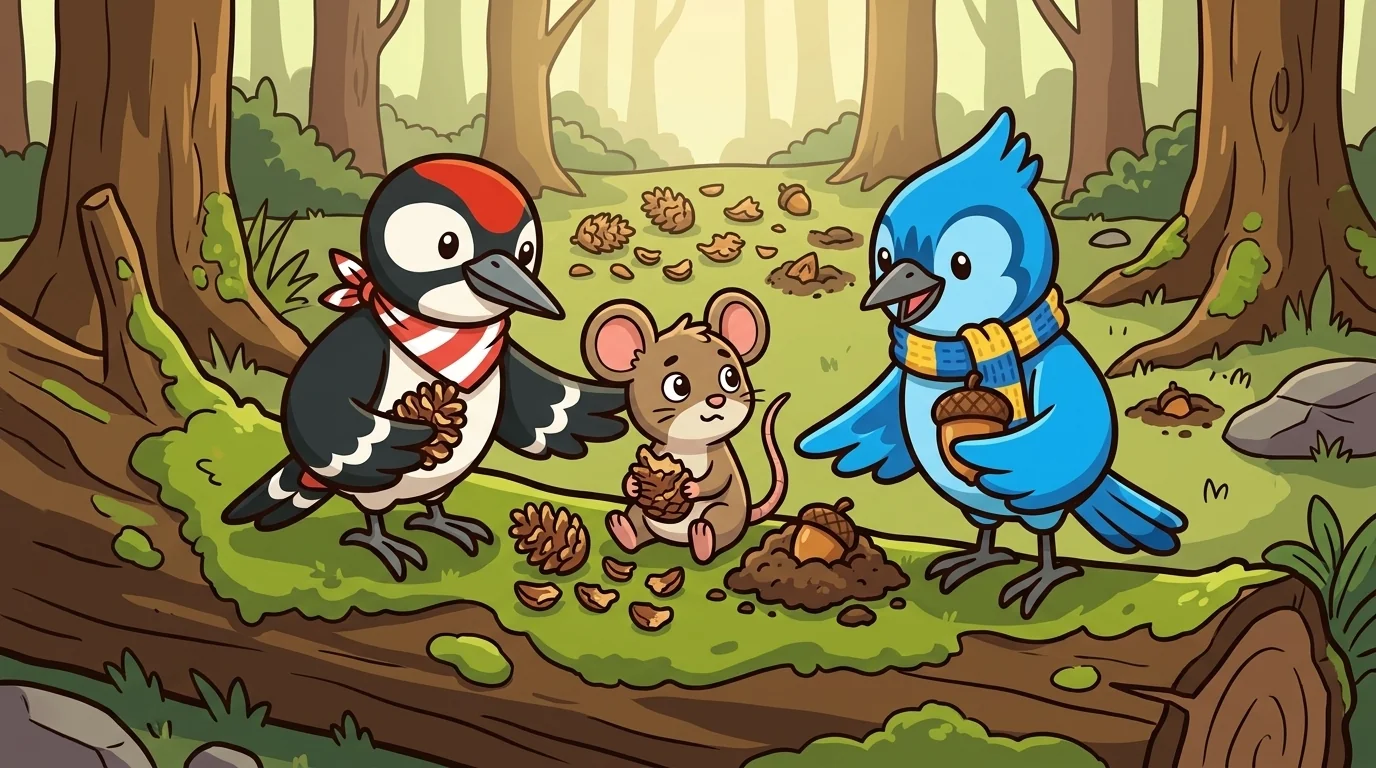
Forage and Cache let the young mouse read the chipmunk's whole story, then turned the lesson toward him.
"You'll understand living things this way," Cache said, "by reading both the now AND the later — what they do today and how they prepare for tomorrow." Forage nodded. "Don't just read an animal's menu. Read its stores too — and you'll see its whole plan for staying alive, across the seasons."
"I always just notice one thing," Fen admitted, "what an animal's eating right now, and think I understand it. And then winter comes and I'm surprised it survives, because I never saw the whole picture."
"You saw half the picture," Forage said gently. She perched by one of Fen's sides, and Cache by the other. "Read what it eats now," Forage said. "And what it saves for later," Cache said. "Both halves, now and future," they said together, "and you understand the whole animal — all without ever disturbing it."
Fen drew a slow breath, holding both halves of the food story, and the never-saw-the-whole-picture feeling eased into a patient, complete understanding — the warm gladness of a young watcher who's discovered that an animal's survival is a two-part story, food-now and food-for-later, readable in leftovers and hoards by anyone patient and respectful enough to read both.
The WildLens ensemble
Forage and Cache is one of the friends in WildLens. Each friend shows you one idea by how they act; meet them all and you have the whole subject.
-
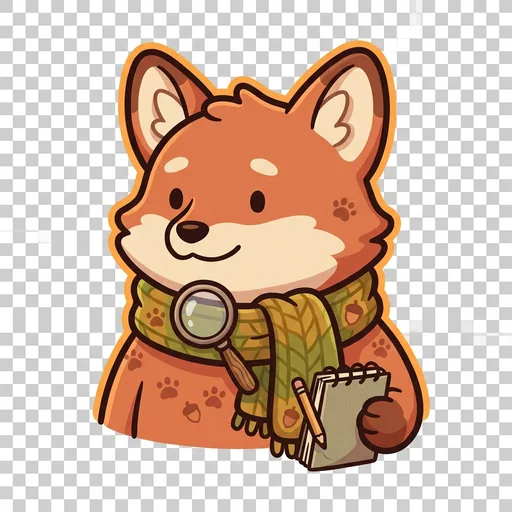
Track
Animal sign reading (footprints, scat, scrapes, scent)
-
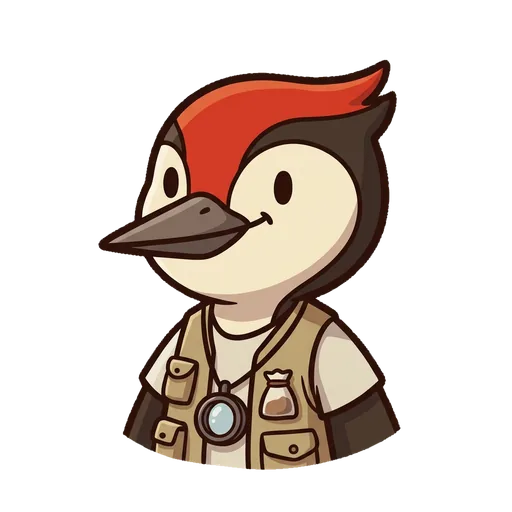
Forage
Diet + feeding sign
-
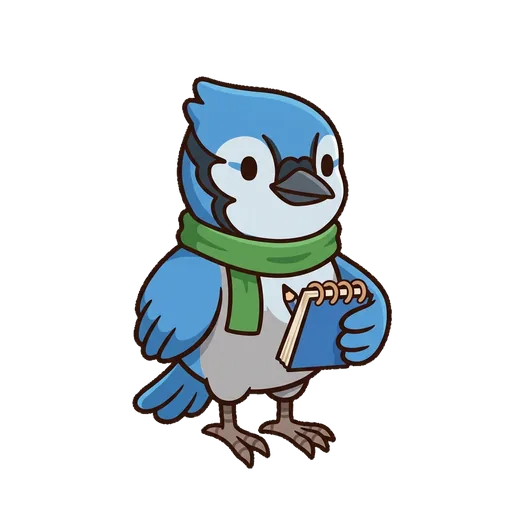
Cache
Food-storing behavior
-
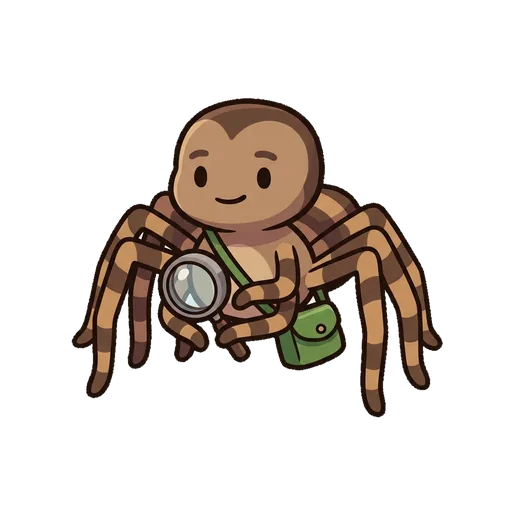
Woven
Food webs; who eats whom links every animal and plant, so a change to one strand tugs on the rest
-
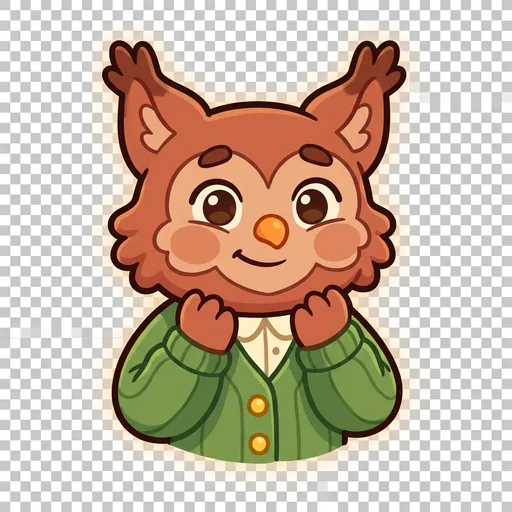
Call
Communication (vocalization, body language, signals)
-
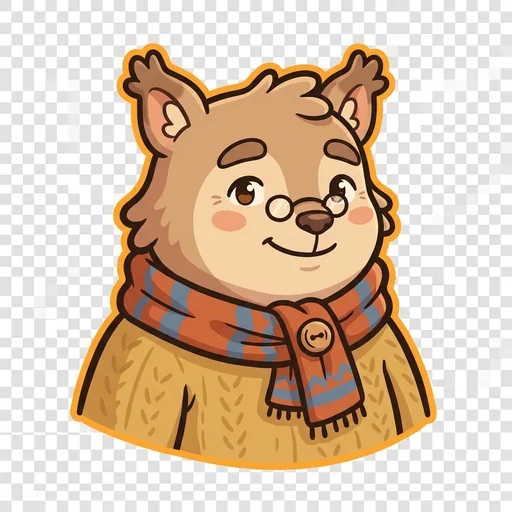
Brood
Social structure (family groups, herds, flocks, solitary)
-

Range
Territory & migration (where animals live, where they go)
-
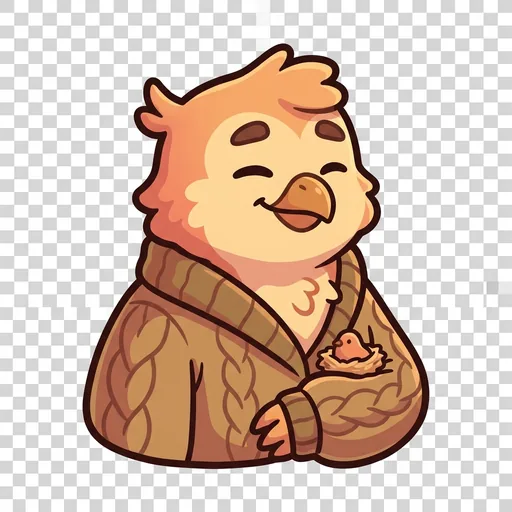
Roost
Habitat behavior (where & why animals rest, nest, den)
-
Dusk
Activity timing / when animals are active
-
Dapple
Camouflage / concealment
-
Waken
Dormancy / hibernation



