Gullwick, the Island That Shares · Reader · ages 6-8
Listen along
Loading audio…
Read by an AI-generated voice. The words on this page are the transcript.
Chapter 1. Back Across the Water
The hammer rang once. A spark jumped off the anvil and did not go out. It waited. They followed.
Lan had been waiting for it for a week. Every morning she had walked past the anvil on the Green on her way to the bakery, and every morning it had just been an anvil. Cold, black, and a bit rusty at the edges. Then, on Saturday, while Grandmother was hanging out the washing and Beto was taking apart a doorbell, the hammer rang by itself and the spark jumped up and hung there, the size of a ladybird, the colour of a candle.
"Beto," said Lan. "It's back."
Beto put down the doorbell. He looked at the spark the way he looked at anything he did not understand yet, which was hard and for a long time.
"Sparks go out," he said.
"You said that last time."
"It was true last time too," said Beto. "It just wasn't true about this one."
The spark drifted down the lane, past the print shop and the mending shed, and down the steps to the jetty, where the little green ferry was puffing in the cold. It settled on the rail like a moth.
The ferry horn blew once.
This time Lan did not wait for Beto to explain what it meant. She was at the rail before the rope was off the post.
The ferry chugged out into the grey. For a while there was only fog and the slap of water. Then Gullwick came out of the fog the way it always did: gulls first, then the lighthouse, then the bridge.
There was a bridge this time. Well, a quarter of one. The first span stretched out from the bakery side, solid and dry, and on the end of its last plank Lan could just make out the word she had laid there herself. FAIR.
After that, the bridge stopped. Beyond the first span there was a second gap, and the sea ran through it, brown and fast and cold.
Chapter 2. Seven Planks
Poppa Pike was standing at the end of the first span with his pencil behind his ear and his round glasses steamed up. He waved a fin as the ferry bumped the jetty.
"You came back," said Poppa Pike.
"I said I'd try," said Lan. "And I asked Grandmother first."
"That's a promise you counted," said Poppa Pike, and his eyes crinkled. "Good. Because I've got another job."
He walked them out along the first span. The planks were firm under their feet. At the far end the old posts of the second span stuck up out of the water like two thin fingers.
"Seven planks for this one," said Poppa Pike. "It's shorter than the first. Seven planks, and not one fewer."
Beto looked back along the island. "Can we ask about spares again?" he said. "Gilly might have some now."
Poppa Pike shook his head. "Everybody gave their spares last time. The Commons store is empty, too. Ambo gave the last of it for the first span, and it hasn't filled up again yet."
Lan's stomach dropped a little. Last time had been hard enough. This time there were no spares at all.
"Then where do we get them?" asked Beto.
Poppa Pike smiled. It was a slow, wide, fishy smile. "It's Drift Day," he said.
Chapter 3. The Patches
The long beach was on the far side of the mill, and today it was full.
All along the sand the islanders had laid out painted stones in a long row of boxes, like a hopscotch that went on and on. In the middle of each box stood a wooden stick with a number on it. The numbers started at two at one end of the beach and went all the way up to twelve at the other. The stick for seven was the oldest. It had snapped once, long ago, and somebody had splinted it with a twist of copper wire. Beside the wire, small and neat, they had scratched a tiny hammer.
There were flags. There was a stall selling hot seaweed buns. There was a band, which was mostly a gull with a trumpet. Families sat on blankets above the high-tide line, and children ran up and down the patches in bare feet, shrieking at the cold.
"What happens on Drift Day?" asked Lan.
Something small and red landed on her shoulder. It was a ladybird with seven black spots and a pair of white dice tucked under one arm.
"Hello again," said the ladybird. "I'm Lucky. That's my name, not my opinion."
"I remember," said Lan.
"After a big storm, the sea brings wood back," said Lucky. "Bits of fence, bits of boat, bits of somebody's shed. Twelve tides today. Each tide tumbles the wood in the shallows, and it lands in one of the patches. We play it like two dice. The number the wood lands on is the total."
"Like rolling," said Beto.
"Like rolling," said Lucky. "But here's the rule. A plank only stays if somebody is watching that patch. Nobody watching? The next wave takes it straight back out to sea."
Lan looked along the beach. Two, three, four, five, all the way to twelve. Eleven patches. And only a handful of them had anybody standing in them at all.
"Which patch do you watch?" she asked.
"Seven," said Lucky. "Always seven. Six ways to make seven."
Chapter 4. The Promise, Again
The first tide came in slowly. The waves rolled up the beach, foamed around the painted stones, and slid back. When the water had gone, there was a plank lying in patch six. Nobody was standing in patch six. A moment later the next wave licked it off the sand and carried it away.
"Oh," said Lan.
The second tide came in. When it went out, there was a plank in patch seven. Lucky flew down and sat on it.
"Mine," said Lucky, cheerfully. "Well. The bridge's."
Lan was already running the sum in her head. Seven was the best patch. Lucky said so. Seven had six ways. So all the planks would come to seven. It was obvious.
"I promise we'll get all seven planks from the seven patch," she said. She said it very fast, the way she always said things that were obvious. "Quick, everybody stand on seven! Beto! Over here!"
Beto came over. So did three curious rabbits from the blanket nearest the band, and a heron who wasn't sure what was going on but liked being included. They all squeezed into patch seven around Lucky, standing on one foot to fit.
The third tide came in.
When it went out, there was a plank lying in patch eight, just next door.
Nobody was in patch eight. Everybody was in patch seven, watching seven, because Lan had promised. The plank lay there for a second, shining wet. Then a wave came up, and slid it off the sand, and it was gone.
The fourth tide brought a plank to patch five. That one went too.
Lan stood very still in the crowded patch. Her ears were going hot again. She could feel them glowing.
"I counted on seven every time," she said.
"Most isn't the same as always," said Beto quietly. He didn't say it to be clever. He just said it, the way he said what was inside a clock once he had opened it up.
Lan looked at the empty patches on either side of her. Six had had a plank. Eight had had a plank. And they had all been standing next door, looking the other way, because of her promise.
"I don't understand it," she said. "Seven is the best. Why doesn't it always come?"
Chapter 5. Dot's Shells
"Ah," said a voice by her feet. "Now that's a question worth a bucket of shells."
A round beetle in a green jumper was standing at the edge of patch seven with a bucket and a magnifying glass. His jumper had a button missing and a little pocket with a pencil in it.
"This is Dot," said Lucky. "Dot counts things."
"Count every way, not just the first one," said Dot. "That's the trick. Most people stop at the first way they think of. Let me write it down."
He tipped the bucket out on the sand. It was full of small shells: white ones and brown ones.
"White shells for the first die," said Dot. "Brown shells for the second. One and one."
He laid one white shell and one brown shell side by side.
"One and two." A white, then two browns. "Two and one." Two whites, then one brown. "Now, are those the same?"
"Yes," said Lan. "They both make three."
"They make the same total," said Dot. "But they're not the same way. One and six is one way. Six and one is another. If you roll a red die and a blue die, the red one could be the six, or the blue one could. Two different ways to land."
Beto crouched down. "So you have to count both."
"Careful, careful, one pair at a time," said Dot.
So they did. Beto laid shells, and Lan laid shells, and Dot checked each pair through his magnifying glass and made a mark in his notebook. Six rows of six. It took a long time, but the sea was a long way out by then, and the next tide was slow to come.
At last there were thirty-six pairs of shells on the sand, in six long rows.
"Thirty-six ways in all," said Dot. "Two dice can only land thirty-six ways. Now. How many of them make seven?"
They found them. One and six. Two and five. Three and four. Four and three. Five and two. Six and one.
"Six," said Lan.
"How many make six?"
Lan counted. One and five, two and four, three and three, four and two, five and one. "Five."
"And eight?"
"Two and six, three and five, four and four, five and three, six and two. Five as well."
"And two?"
Lan looked for a long time. There was only one. One and one.
"One way," she said.
"One way," said Dot. "Same as twelve. Six and six."
Lan sat back on her heels and looked at the shells. Seven had six ways. That was the most. But six and eight had five each, which was almost as many. And all of them together were still only part of the thirty-six.
"So seven is the best," she said slowly, "but it isn't the only one. Six and eight are nearly as good."
"Now you're counting," said Dot, and he looked as pleased as if she had given him a present.
Chapter 6. Petal's Hill
The pairs of shells were all mixed up together in their six long rows. It was hard to see the whole picture.
"Here, let me," said someone, and a small spotted beetle hopped over the stones. She was red with black dots, and she carried a curly green leaf as if it were a parasol.
"This is Petal," said Lucky. "She keeps the patch piles."
"The more ways, the taller it grows," said Petal. "That's all you need to know. Watch."
She began to move the shells. She put all the pairs that made two in one little pile, at the left. All the pairs that made three in the next pile. Four in the next. All the way along to twelve.
The pile for two had one pair of shells in it. The pile for three had two. Four had three. Five had four. Six had five. Seven had six. And then the piles got smaller again. Eight had five. Nine had four. Down and down, until twelve had just one pair at the right-hand end.
When she had finished, the piles made a shape. Low at both ends, and tallest in the middle. Like a little hill, made of shells.
"Look at the hill, not the top of it," said Petal. "Everyone stares at seven, because it's the tallest. But the whole middle of the hill is tall."
She pointed with her leaf. "Six, seven and eight together have sixteen ways. That's nearly half of all the thirty-six."
Beto did it in his head. "Five, and six, and five. Sixteen."
"Watch where the piles grow," said Petal. "If you want planks, you don't all stand on the top of the hill. That's what you did this morning. You all stood on one pile and the wood landed on the next one."
Lan went red, but Petal wasn't being unkind. She was just being very sure, which Petal always was.
"Then what do we do?" asked Lan.
"Spread out along the hill!" said Petal. "Somebody on six. Somebody on eight. Lucky stays on seven, because she always does."
"I always do," agreed Lucky.
"I'll go on six," said Beto.
"I'll go on eight," said Lan. Then, after a moment, she added, "And I won't promise anything. I'll just watch."
Chapter 7. The Afternoon Tides
The rabbits went back to their blanket. The heron wandered off. Beto stood in patch six. Lan stood in patch eight. Lucky stayed on seven, in the middle, and Dot and Petal sat on a painted stone between them, with the shell hill drawn in the sand beside them.
The tides came in, one after another, and the whole beach watched.
The fifth tide went to seven. Lucky flew down onto the plank. "Seven!" she sang.
The sixth tide went to nine, and nobody was there, and it washed away. Lan felt her heart twist, but she didn't move. You couldn't stand on every patch.
The seventh tide went to eight.
"Mine!" said Lan, and she threw herself on the plank so fast she landed on her knees in the wet sand. It was a good plank, long and pale, with a nail hole at one end.
The eighth tide went to six, and Beto caught it. He didn't throw himself on it. He just walked over and picked it up and turned it over to look at the nail holes, because he was Beto.
The ninth tide went to seven again. Lucky caught it. That made three planks for Lucky altogether, counting the one from the morning.
The tenth tide went to three. Nobody was near three. It floated away.
The eleventh tide went to eight again. Lan didn't throw herself on this one. She had learned. She just stepped forward and put her hand on it before the wave could change its mind.
Eleven tides gone. One left. They carried what they had up the beach and laid the planks out in a row next to the shell hill. Lucky had three. Lan had two and Beto had one, so they had three between them.
"Three and three," said Beto. "Six."
"Six," said Poppa Pike, who had come down to see. He tapped his pencil against his teeth. "One short."
Chapter 8. One Short, Again
One short.
Lan sat down on the painted stone next to Dot. It was the same feeling as last time. One short was always worse than five short. Five short was a big job you could start. One short was a small job that might never happen.
The sun was low over the lighthouse. Only one tide was left. The beach had gone quiet. Families were folding their blankets. The gull had stopped playing the trumpet and was eating a bun.
"Which patch will the last one go to?" Lan asked.
"Can't know," said Dot. "Seven is most likely. That's all."
Lan looked along the beach. Seven, where Lucky was. Six and eight, where she and Beto had been. Then further out, the patches got emptier and emptier. Nine, ten, eleven, twelve at one end. Five, four, three, and then, all by itself at the very far end, patch two.
"Two never comes," said Lan. "It only has one way."
Then she noticed that somebody was sitting in patch two.
It was a snail. He was wearing a striped knitted hat, red and yellow and green, pulled down over his eye stalks, and he was surrounded by little flowers that he had planted in a ring round the stick. He looked as if he had been sitting there all day. He probably had.
Lan walked down the whole length of the beach to see him. It took a while. The beach was long.
"Hello," she said. "Have you been here all day?"
"I'll wait. I'm good at waiting," said the snail. "I'm Twobble. Two is a fine number."
"But it hardly ever comes," said Lan. "Dot showed us. Two only has one way out of thirty-six. Seven has six."
"Not never. Just not often," said Twobble. "Everybody says two never comes. They're wrong. It comes. It just comes slowly. Slow is still going somewhere."
"How many planks have you caught today?" asked Lan.
"None," said Twobble.
He didn't seem upset about it. He smiled under his hat.
"My patch is quiet, not empty," said Twobble.
Lan didn't know what to say to that. So she sat down beside him in patch two, on the cold sand, to keep him company. It seemed rude to walk all the way down the beach and then just walk all the way back.
Beto came and sat down too. After a while, so did Lucky, and Petal, and Dot, until there was quite a little crowd in patch two, which had probably never happened before.
"This is silly," whispered Beto. "We're all standing on two. That's the least likely patch on the whole beach."
"I know," said Lan. "I'm not watching it because it's likely." She thought of Dot's shells, the one lonely shell for two. "There's one tide left and we need one plank. It could land anywhere. Dot's hill says where it will probably go, not where it will go. If it's two, somebody has to be here, or it floats away like the six did this morning."
"Twobble's here," said Beto.
"Twobble's slow," said Lan, kindly. "So am I staying."
Chapter 9. The Last Tide
The last tide came in.
It came in slowly, the way the last tide of the day always does. The waves curled up the beach, foamed between the painted stones, and slid back. The wood tumbled in the shallows. It rolled. It settled.
One and one.
A long, grey plank slid up the sand and stopped right in front of Twobble, in patch two, with a soft wet bump.
For a moment nobody said anything at all.
Then the wave started to slide back, and the plank started to slide with it. Twobble lifted one foot, very slowly, the way a snail does everything. Lan jumped. She landed with both feet on the plank, and the wave went back without it.
"My patch is quiet, not empty," said Twobble.
Petal shrieked. Lucky did a loop in the air. Dot wrote something in his notebook and underlined it twice. Beto said, "That's incredible," and then said, "Actually, it isn't. It was always one in thirty-six," and then said, "No, it is incredible," and gave up.
Lan just looked at the plank.
"Six and one makes seven," said Beto.
"Seven," said Poppa Pike, who had come all the way down the beach behind them. He was smiling his slow, wide smile again. "Seven planks, and not one fewer."
Lan looked from the plank to Twobble. "If you hadn't waited all day," she said, "I would never have come down here."
"And if you hadn't come," said Twobble, "it would have floated away. Then I'm glad we both waited."
Chapter 10. Likely
"Everybody lays one," said Poppa Pike. "That's the rule for bridges."
They carried all seven planks up the beach and out along the first span. The water in the second gap was high and fast. Poppa Pike hung over the edge with his hammer.
Lucky laid the first plank, by sitting on it until it was nailed down. Petal and Dot laid one together, which took a long time, because Dot wanted to check it was straight. Beto laid one. Poppa Pike laid two, because his fins were strong. Lan laid one.
Twobble laid the last one.
He took a very long time. He went along the plank one slow inch after another, pulling it into place with his whole shell. Nobody hurried him. Nobody minded. The sun went down while he was doing it, and the lighthouse came on, and Poppa Pike drove the last nail by lighthouse light.
When the plank was down, Lan crouched to look at the end of it.
Somebody, a long time ago, had carved a word into the wood. It said LIKELY.
"What does it mean?" asked Lan.
"What do you think it means?" said Poppa Pike.
Lan thought about the shell hill, and patch seven, and patch two, and Twobble sitting there all day.
"It means seven is likely," she said. "But likely isn't always. And two is rare. But rare isn't never."
"That's what the old builders thought too," said Poppa Pike. "Or something like it. They didn't write the whole sentence down. Planks aren't big enough."
The second span held. Two spans of the bridge stretched out over the water now, FAIR and LIKELY, side by side. Two more gaps were still to go.
The ferry horn blew twice.
"Two means home," said Lan and Beto together.
They ran back along the jetty. The spark was waiting on the rail. The ferry chugged out into the evening, and Gullwick went small behind them: the bridge first, then the lighthouse, then the gulls, and somewhere on the long dark beach, a snail in a striped hat, going slowly home.
The spark dimmed to a warm dot and settled back on the anvil. The Green was just the Green again.
Back on the Green
That evening Grandmother got out the old board game with the snakes on it. It used two dice. Tí sat on Grandmother's knee and rolled for both of them.
Lan needed a seven to win. She rolled a four, and moved four squares, and did not win. Last week she would have sulked about it. This time she only said, "Seven is likely. Likely isn't always."
Then Tí rolled. One and one. He shrieked and clapped and knocked both dice off the table.
"Rare isn't never," said Lan, and she laughed, and crawled under the table to find the dice.
Tell the story back to someone in your own words. Then cover the names on one page and guess who is talking. Who could the island not have done without, and why?
Saved. The next chapter will be here whenever you come back.
Who you met
-
 Poppa Pike The bridge is built by everyone laying one plank from IslePals
-
 Lucky With two dice, seven has the most ways to come up from SevenPals
-
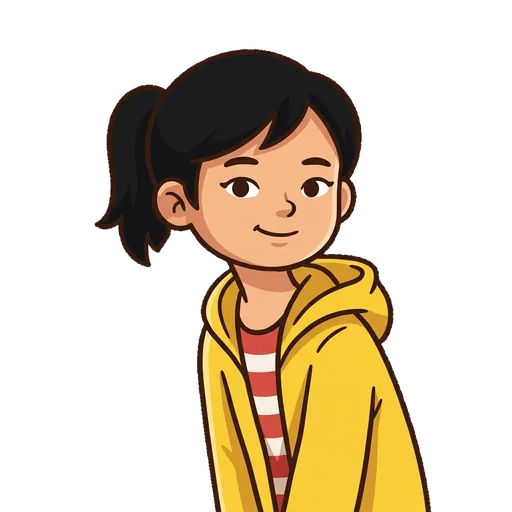 Lan a child of the Green Goes first; makes a friend in a minute
-
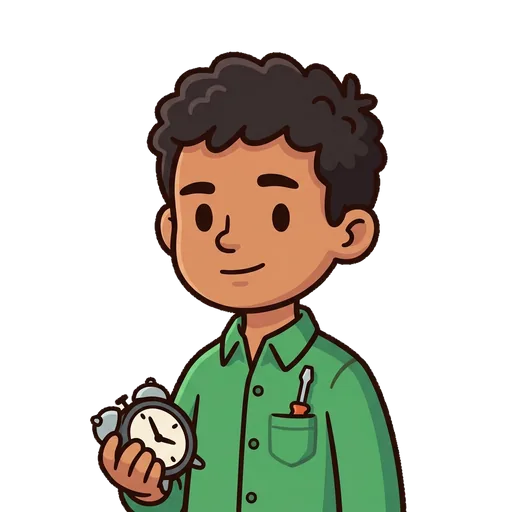 Beto a child of the Green Takes things apart
-
 Dot Count every way, one careful step at a time from SevenPals
-
 Petal The more ways a total has, the taller its pile grows — a hill, tallest in the middle from SevenPals
-
 Twobble Rare is not never — two has one way, so it comes, just not often from SevenPals
Every recurring character has a short tune, so you can tell who is on stage before a word is said. The tunes play only when you tap, and the Reading Access sound switch turns them off.
The Honest Page
Which parts of this story are true, stretched or made up?
True
- Two dice can land thirty-six ways. Seven can be made six of them, more than any other total.
- Six and eight can each be made five ways. Two and twelve can each be made only one way.
- Six, seven and eight together make sixteen of the thirty-six ways, nearly half.
- The most likely total is not the total you get every time. A rare total still turns up sometimes. Source
Stretched
- The twelve tides in this story were chosen by the writer. Seven came up three times. What we simplified: On a real day of twelve rolls, seven might come up once, or four times, or not at all; about twice is what you would expect.
Made up
- Drift Day, the numbered patches and the talking beetles and snail are made up. Real tides do not roll dice.