
Kithe
Clear boundaries: an enduring shared community first agrees who is a member and what they hold in common
Kithe and the Circle in the Sand
Kithe ran a shared garden at the edge of the village, and for a whole muddled season it did not work at all.
The trouble was nobody could say who the garden was for. Some days a dozen hands turned up to weed; other days the beds sat dry because everyone assumed it was somebody else’s turn. Tools wandered off. A cart of strangers rolled through and helped themselves to the ripe beans, and when Kithe said “those were ours,” they blinked and said, “Ours? Whose? There’s no sign, no list, nothing — how were we to know?”
And they had a point. That stung, but they had a point.
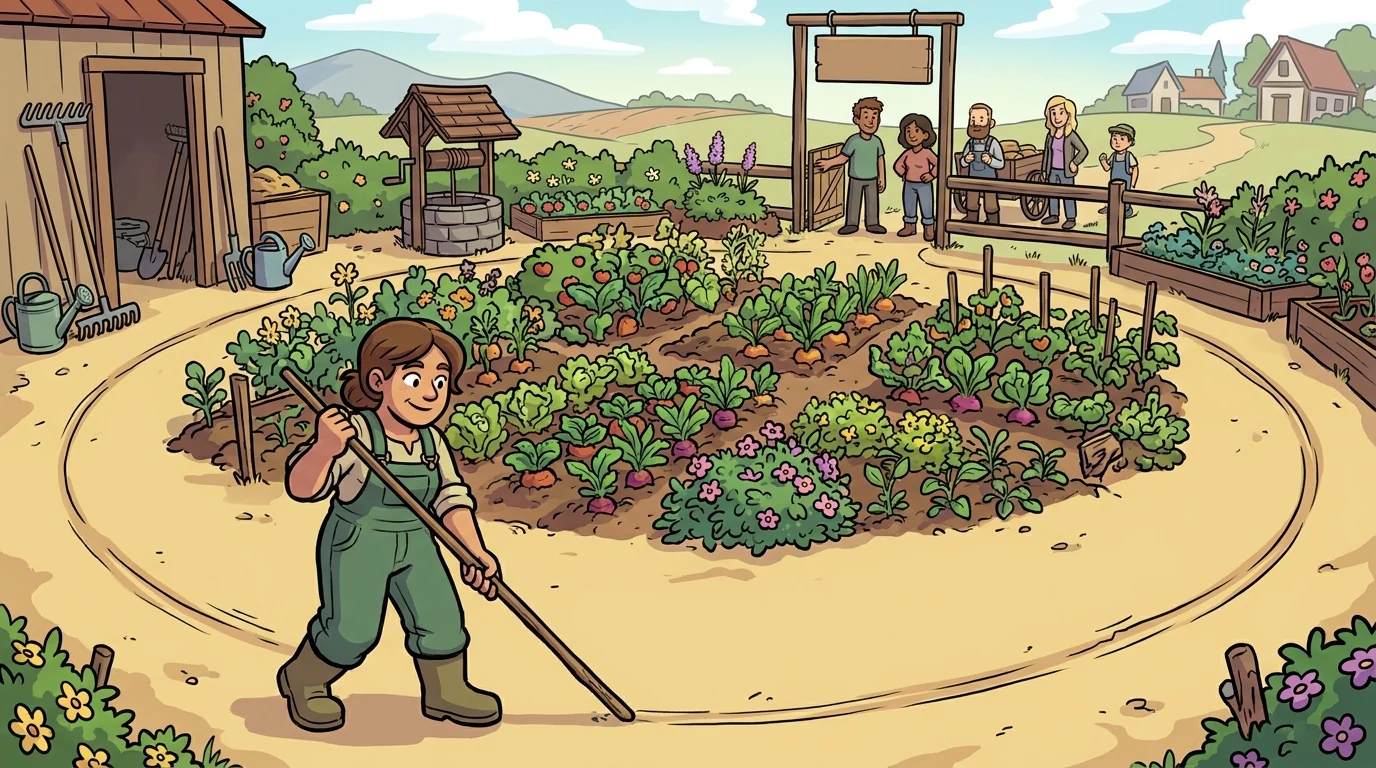
So Kithe did a very small thing that changed everything. She took a stick and drew a wide circle in the sand around the garden, and beside the gate she hung a simple board. On it she wrote who the garden was for — the families of the lane, and any friend a family brought along — and what the garden was: these beds, these tools, this well. Nothing fancy. Just clear.
The strangers came back the next week and read the board. “Ah,” said the leader. “It’s a lane garden. Ours is three lanes over.” And they went home to their own, and there was no quarrel, because there was nothing to quarrel about — everyone finally knew the edges.
But here is the part Kithe was proudest of. Her circle was not a wall. It had a gate, and the board did not say keep out; it said here’s who we are, come find us if you’d like to join. A new family moved to the lane that spring, and because the board named them in — “the families of the lane” — they simply walked through the gate and picked up a trowel, and belonged from the first morning.
“A boundary isn’t for shutting people out,” Kithe told the new family as they planted. “It’s so everyone knows what we’re looking after together, and who’s looking after it. Muddle comes from not knowing. Belonging comes from knowing.”
The garden thrived after that — not because the rules got strict, but because the edges got clear. People care for a thing far better when they know it is theirs to care for.
Kithe patted the board at the gate, its letters plain and kind. “Draw the circle first,” she said. “A community works when everyone knows who’s in it and what you share.”
The charterforge ensemble
Kithe is part of charterforge's distributed-narrative cast. Each character embodies a different curricular primitive; together they teach the full subject.