
Crux
SUMMARY (Advanced) — *the mean is a balance point that every value pulls on; the median is a rank that only the middle can move.* On a skewed pile a few extreme values drag the mean toward the long tail while the median stays with the crowd — so the summary you pick is a claim about the shape, and choosing the flattering one instead of the fitting one is a quiet lie.
Loading audio…
Press play to listen along. The line being read lights up as you go.
Show full transcript
Loading transcript…
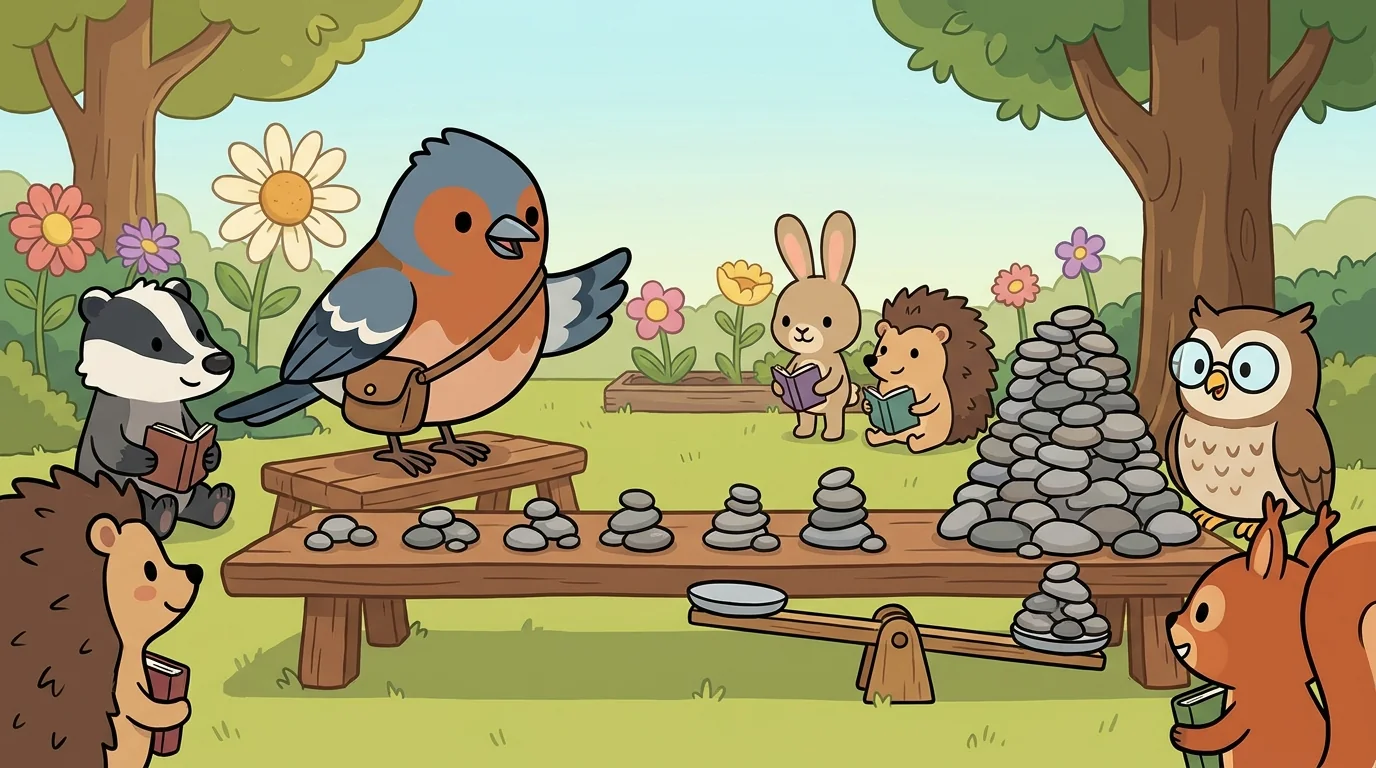
The morning the reading club posted nine books, the average reader, Crux was the only one who asked the club to lay the numbers back out in a line, from fewest to most, before anyone believed it.

He was a chaffinch, plump and neat, slate-blue cap and rust-warm breast, a small balance-beam in his satchel and a pouch of counting-pebbles. To Crux a summary was not a fact you looked up; it was a choice you defended. "There are three ways to say what's typical," he told the club, setting three pebbles apart. "The mean — add everything, divide by how many. The median — sort them and take the one dead in the middle. The mode — the value that turns up most. They agree when the pile is even. They part company the instant it isn't." He tapped the posted nine. "So the first question is never what's the average — it's what shape is this pile, because the shape decides which average is honest."
He lined the readers' counts along the bench, low to high. Eight small heaps of two or three books; one towering heap of forty from a single bookish owl. "Watch what the forty does to each summary," he said. "The mean is a balance point — imagine the whole line laid on my beam. Every count presses down where it sits, and the one heap of forty presses so far out on the end that it tips the pivot all the way up to nine, a value eight of the nine readers are below. One extreme reader didn't make anyone else read more; it just dragged the balance point out toward itself." He slid a pebble to the middle of the sorted line. "The median doesn't care how heavy the far heap is — only how many heaps sit on each side. The middle reader finished three. Pile forty onto that owl, or four hundred, and the median never budges, because rank can't be bought by size."
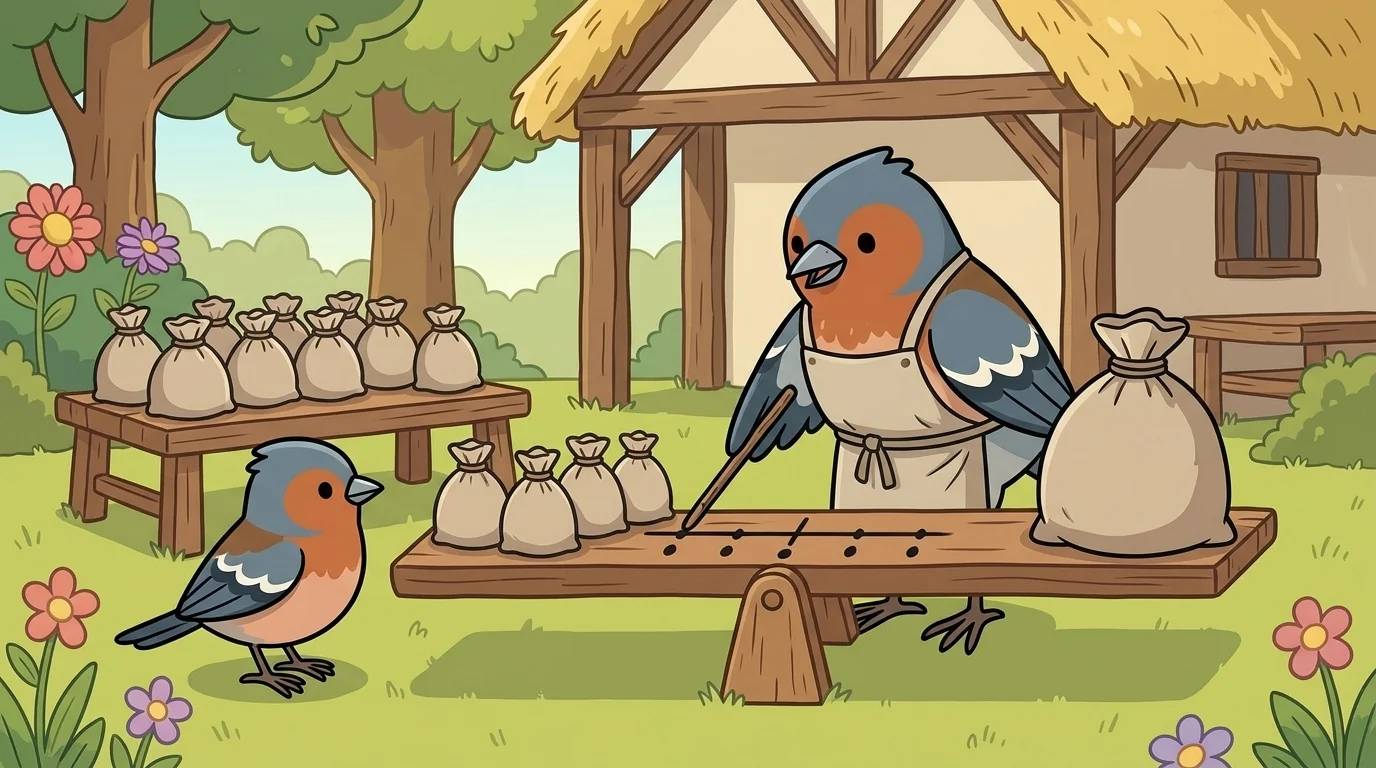
Crux had learned the difference in the weigh-house before he had the words for it. His family balanced sacks of grain against stone weights so trades stayed fair, and he still remembered his father settling an argument about the "usual" sack. One farmer swore the usual sack was enormous — he'd hauled a giant just last week. Crux's father set ten of that farmer's ordinary sacks on the beam one after another; nine landed at a plump, sensible weight and the tenth was nearly double. "The one you remember," his father had said, tapping the nine clustered marks, "and the one that's typical are almost never the same. Memory keeps the strange one. The pile keeps the true one." Years later Crux would put it in the academy's language: a distribution with one long tail is skewed, and on a skewed distribution the mean chases the tail while the median holds the center. Same lesson. Better vocabulary.
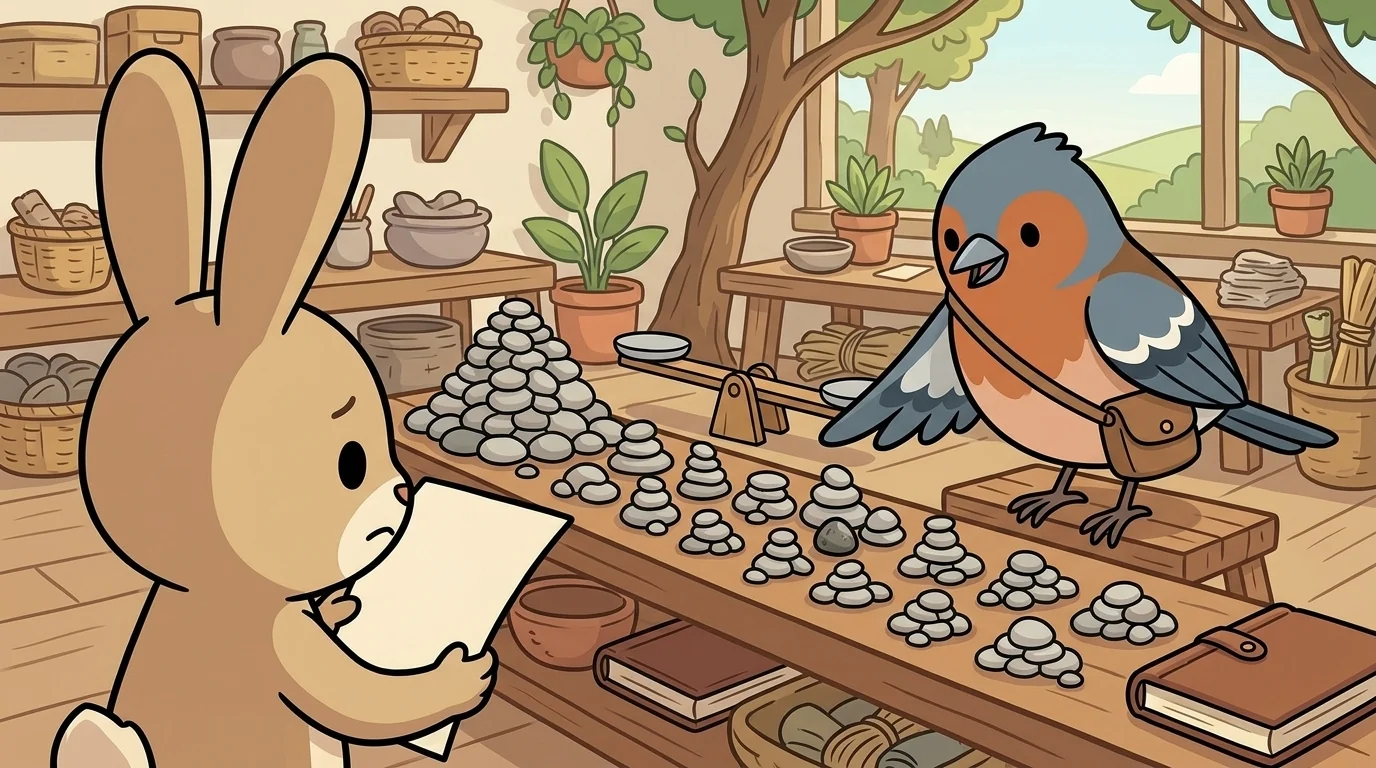
In his workshop a rabbit named Sorrel brought a chart. "Our village is rich," she said. "Average savings, two hundred coins." Crux spread the numbers into heaps: nearly every family at ten or twenty coins, and one manor on the hill at nine thousand. "There's your two hundred," he said, resting a wing by the giant heap. "One fortune, shared out on paper across everyone, hauls the mean up to two hundred — a figure no ordinary family here has ever held." He set a pebble at the middle of the sorted line. "The median family has about twenty. Report that, and note the one great fortune off to the side, and a reader sees the village as it is: mostly modest, one big house." He caught her frown before it formed. "The two hundred isn't a lie — it's a real sum, done a real way. It's a bad fit, chosen because it flatters. And when someone reaches for the mean on a pile this lopsided, ask what the median would have said, and why they didn't reach for it."

Sorrel redrew the chart around the median, the great fortune marked plainly off to one side. It looked less grand and far more like her street. "It felt grander the other way," she admitted. "Grand and wrong," Crux said. "You stopped letting the one big house speak for every small one. Now nobody who reads this feels foolish when they visit and find it plain." He tapped the honest middle. "When the pile is even, the mean is fine — often better. When it's skewed, the median tells the truer story, and an honest report shows the shape so the reader can judge for themselves. Report the summary and the skew, and you've hidden nothing."
He slid his balance-beam back into his satchel, and something in his chest came level and quiet — the calm of a pivot that sat where the crowd sat, steady no matter how heavy the one heap beside it grew. The weigh-house beam back home would swing and settle, swing and settle, and Crux felt easy and unhurried, certain that the rememberable value and the typical value are seldom the same, and that saying which is which is the whole of an honest summary.
The DataForge ensemble
Crux is part of DataForge's distributed-narrative cast. Each character embodies a different curricular primitive; together they teach the full subject.
-

Catch
Data collection — who-what-why-when posture (every dataset has a collector + purpose + omissions)
-

Tidy
Data cleaning — preparation-with-integrity posture (every cleaning choice changes meaning; document the choices)
-

Graph
Data visualization — shape-of-the-story posture (which chart tells the truth, not the loudest one)
-

Tell
Interpretation — correlation-not-causation posture (data shows patterns; humans interpret; confidence not certainty)
-

Guard
Data ethics — bias-privacy-harm-consent posture (who benefits, who's harmed, who decided; structurally present in every kit from kit 6)
-

Cull
Representative sampling — fair-sample posture (a sample must mirror the whole; who gets left out silently bends the story)
-

Ladle
Rates & fair comparison — like-for-like posture (compare rates and fair portions, not raw totals; a bigger pot isn't a bigger share)
-

Stray
Reading the outlier — the-one-that-doesn't-fit posture (an outlier is a question to ask, not noise to delete; find out why before you drop it)
-

Waver
Uncertainty & margin — confidence-not-certainty posture (every estimate carries a margin of error; show the wobble honestly instead of hiding it)